

A fire flower can mean more than one thing. It may describe a real bloom with red, orange, and yellow petals, the famous power-up from Mario games, a Japanese word connected with fireworks, or a quest item in Blox Fruits. That mix is exactly why the search results can feel confusing.
When I first researched this topic, I expected to find one official fire flower name. Instead, I found several unrelated plants that share fiery colors, flame-shaped petals, torch-like flower spikes, or common names such as fire lily and flame azalea. I also found that many lists skip toxicity, climate limits, and the difference between a flower, shrub, vine, and tree.
This guide fixes that problem. You will find 18 real flowers that look like flames, a simple buying guide, growing advice, safety notes, symbolism, and clear answers about Mario, Princess Peach, Japan, and Fire Flower Blox Fruits. You can use it to choose a plant for your yard, a container, an indoor space, a bouquet, or a themed garden.
What Is a Fire Flower in Real Life?
There is no single botanical species officially named “the fire flower.” The phrase is a visual or common-name label used for plants that resemble flames, embers, torches, or fireworks. A real-life fire flower may have curled petals, upright spikes, intense warm colors, or a bloom shape that seems to move like fire.
That distinction matters when you shop. A listing labeled “fire lily flower” could refer to Gloriosa superba, Clivia miniata, Hippeastrum species, or even an orange lily, depending on the seller and region. Always check the scientific name before buying a bulb, seed packet, or live plant.
Searches such as “fire plant flower,” “fire flower plant,” and “flower that looks like fire” describe an appearance, not one universal plant. Your best choice depends on light, winter temperatures, space, and safety.
My guide to flowers that start with F can help you compare other F-named plants. The guide to dark flowers also pairs well with the red and orange choices below.
Quick List of Fire Flower Names
The table below separates the plants by form and difficulty. I recommend starting here before reading the longer profiles, especially if you are choosing between a container plant and a permanent landscape feature.
| # | Fire flower name | Plant type | Flame effect | Best use | Difficulty |
|---|---|---|---|---|---|
| 1 | Gloriosa lily | Tuberous climbing perennial | Curled red and yellow petals | Trellis or large pot | Advanced |
| 2 | Red hot poker | Herbaceous perennial | Torch-shaped spikes | Sunny border | Easy |
| 3 | Plumed celosia | Annual | Feathered flame plumes | Pots and beds | Easy |
| 4 | Crocosmia ‘Lucifer’ | Corm perennial | Arching scarlet sprays | Borders and cut flowers | Easy |
| 5 | Firecracker plant | Tender perennial | Glowing red tubes | Containers and pollinator beds | Easy |
| 6 | Flame azalea | Deciduous shrub | Candle-like orange flowers | Woodland edge | Intermediate |
| 7 | Blanket flower | Annual or perennial | Red-yellow ember rings | Dry sunny beds | Easy |
| 8 | Mexican sunflower | Annual | Hot orange disks | Pollinator garden | Easy |
| 9 | Butterfly weed | Native perennial | Dense orange flame clusters | Native garden | Easy |
| 10 | Torch ginger | Tropical rhizome | Large torch-like bracts | Tropical landscape | Advanced |
| 11 | Royal poinciana | Tropical tree | Scarlet canopy | Large warm-climate yard | Advanced |
| 12 | Flame vine | Tropical vine | Masses of orange trumpets | Pergola or fence | Intermediate |
| 13 | Canna lily | Rhizomatous perennial | Tall red-orange blooms | Containers and borders | Easy |
| 14 | Orange lily | True bulb lily | Upward orange cups | Cottage garden | Intermediate |
| 15 | Clivia | Evergreen perennial | Orange flower clusters | Indoor container | Intermediate |
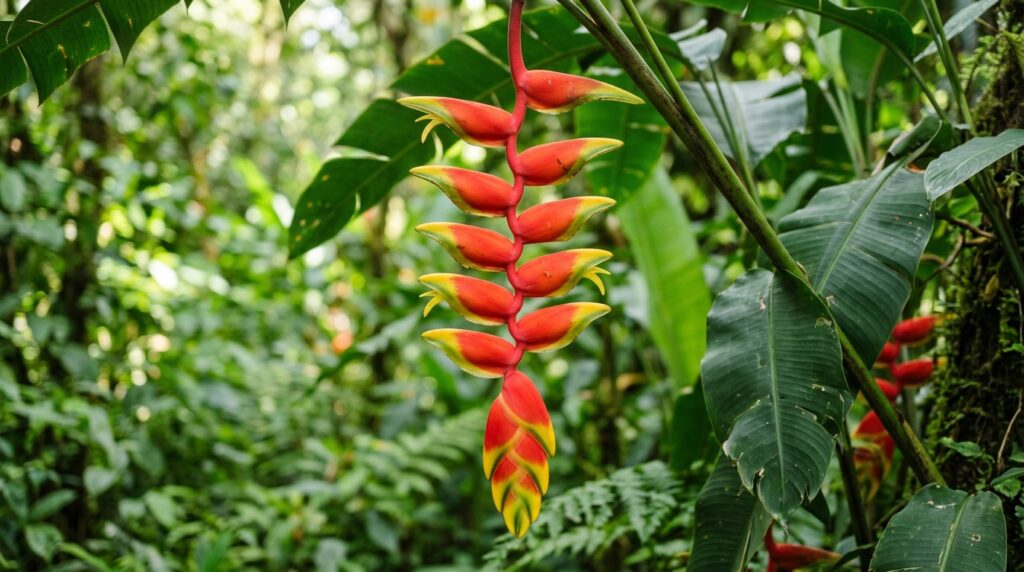
| 16 | Lobster-claw heliconia | Tropical perennial | Hanging red-yellow bracts | Tropical garden | Advanced |
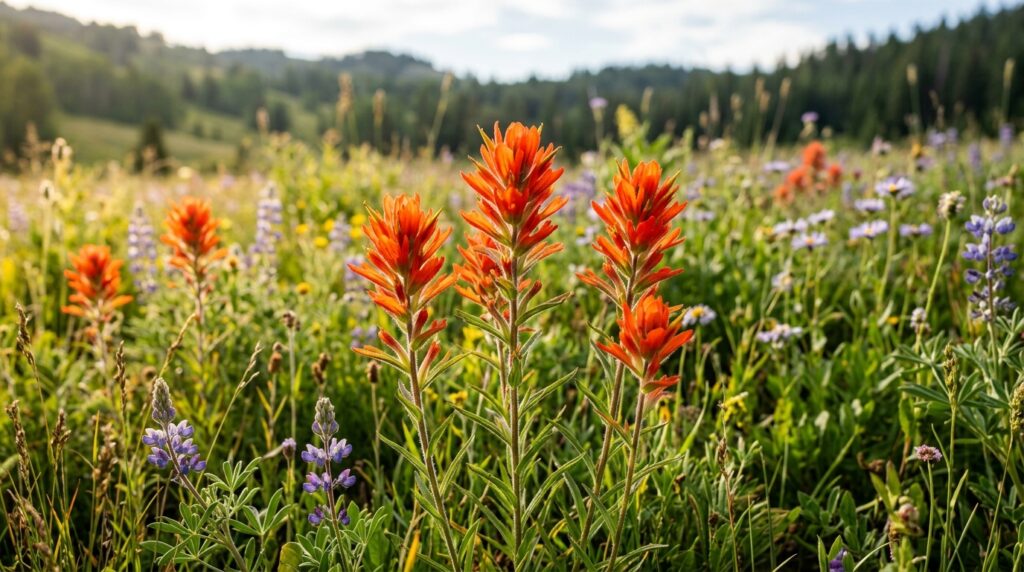
| 17 | Indian paintbrush | Hemiparasitic wildflower | Red flame-like bracts | Meadow planting | Advanced |
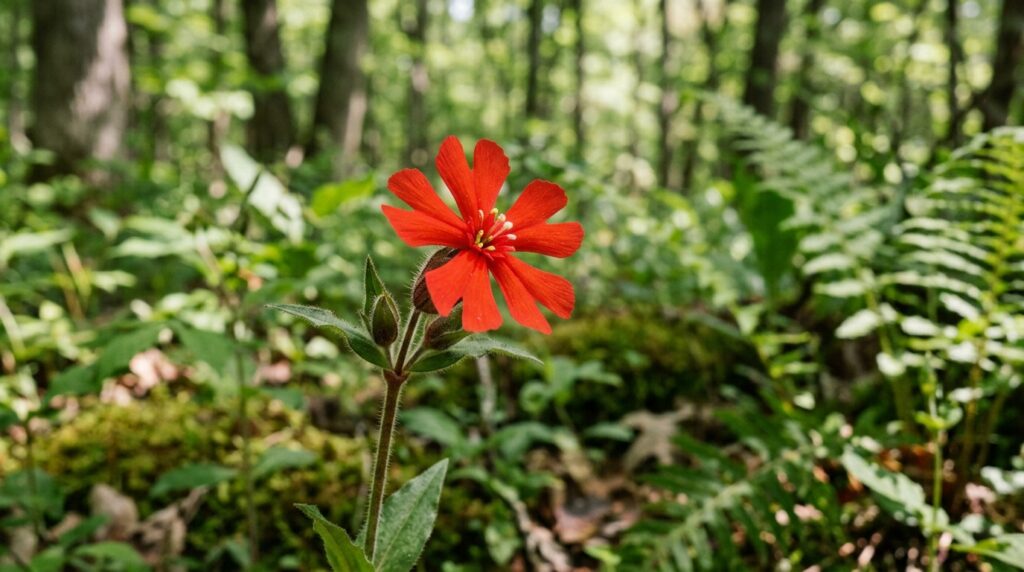
| 18 | Fire pink | Native short-lived perennial | Scarlet star-shaped blooms | Rocky woodland edge | Intermediate |
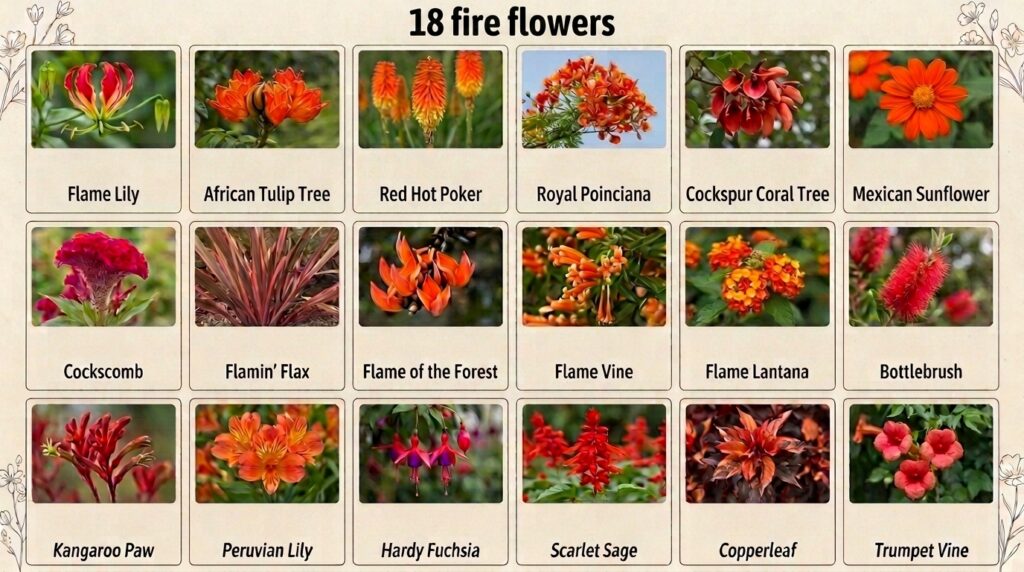
18 Fire Flowers That Can Bring a Flame Effect to Your Garden
1. Gloriosa Lily
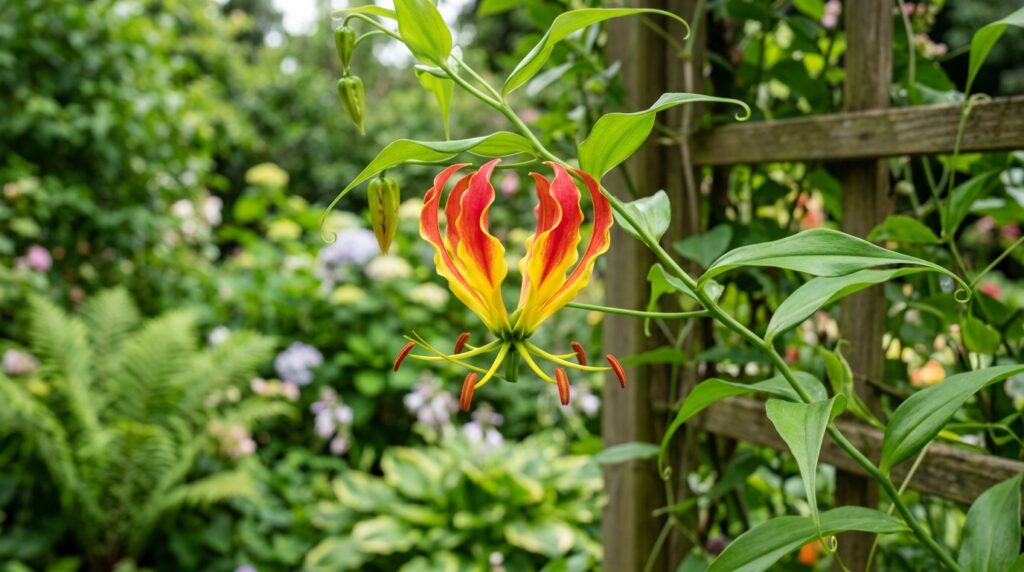
Gloriosa lily is the closest real-life match to a fantasy fire flower. Its narrow petals bend backward and ripple at the edges, while the color usually shifts from yellow near the center to orange or scarlet at the tips. The bloom looks like a flame frozen in motion.
This tuberous climber needs support because its leaf tips form tendrils that grip nearby structures. It prefers rich, well-drained soil and warm conditions, but it is not a casual choice for a family garden because every part contains toxic compounds. I would grow it only where children and pets cannot touch or chew it.
2. Red Hot Poker
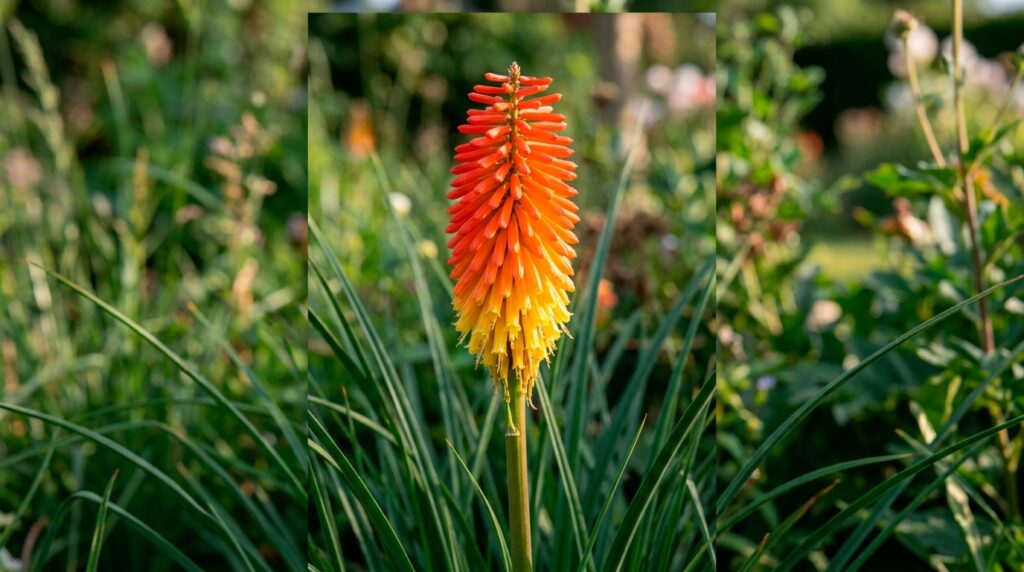
Red hot poker creates one of the strongest torch effects in a sunny garden. Tall stems hold dense cylinders of small flowers, often red at the top, orange in the middle, and yellow near the base. From a distance, each spike looks like a burning torch.
Give it full sun and well-drained soil, especially in winter, because a wet crown can cause decline. I recommend it for beginners who want a tall statement plant without having to manage a vine or a tropical tuber.
3. Plumed Celosia
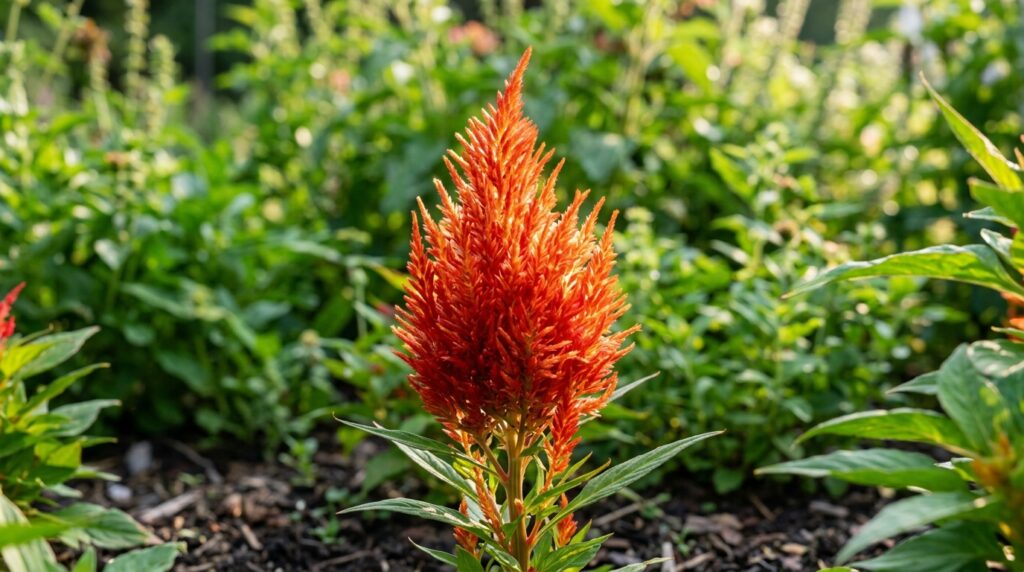
Plumed celosia is one of the easiest answers when someone asks for a flower that looks like fire. Its upright plumes can be red, orange, yellow, pink, or mixed, and the soft texture makes the bloom look like a flickering flame. The botanical name is also linked to a Greek word meaning “burning”.
Celosia loves heat, full sun, and well-drained soil. It grows quickly from seed and performs well in containers, but its roots should not sit in wet soil.
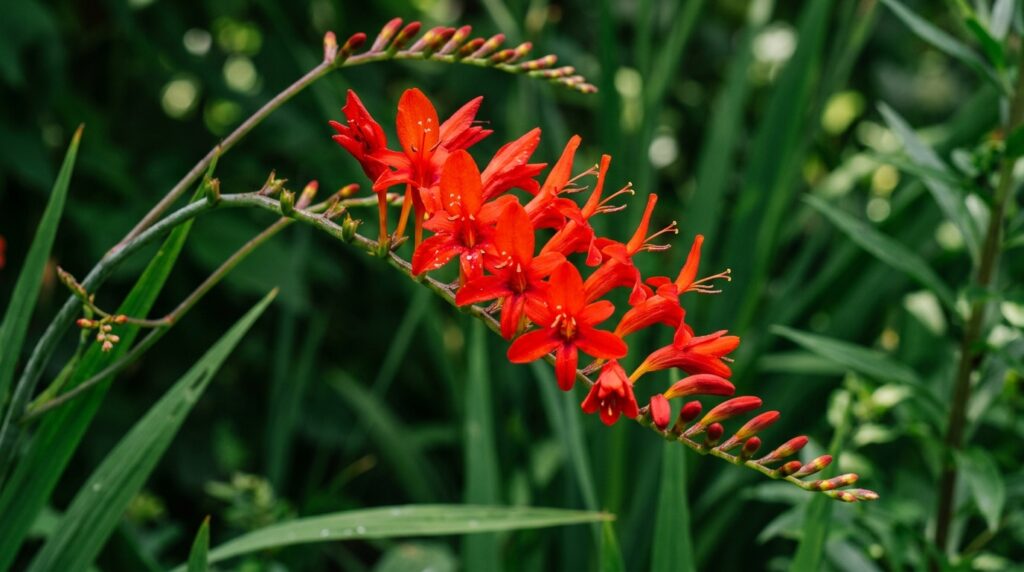
4. Crocosmia ‘Lucifer’
Crocosmia ‘Lucifer’ produces arching stems lined with bright scarlet flowers. The buds open in sequence, so the stem can look like a trail of sparks moving along a curved wire. Hummingbirds also visit the tubular flowers.
Plant the corms in sun or light shade with moderately moist, well-drained soil. Divide crowded clumps when flowering weakens; the stems also work well in vases.
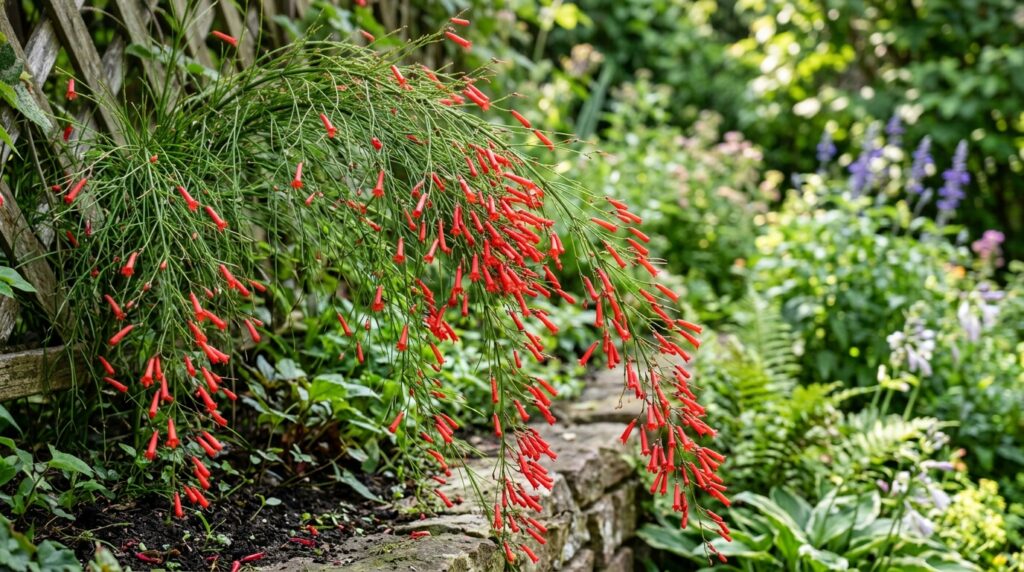
5. Firecracker Plant
The firecracker plant has slim red-orange tubes tipped with a darker color. They resemble tiny glowing firecrackers or sparks suspended among glossy leaves. The flowers are smaller than those of canna or gloriosa, but the plant can produce them for a long season.
Cuphea is a tender perennial in warm areas and is commonly grown as an annual elsewhere. It handles heat, attracts hummingbirds, and likes evenly moist soil without standing water.
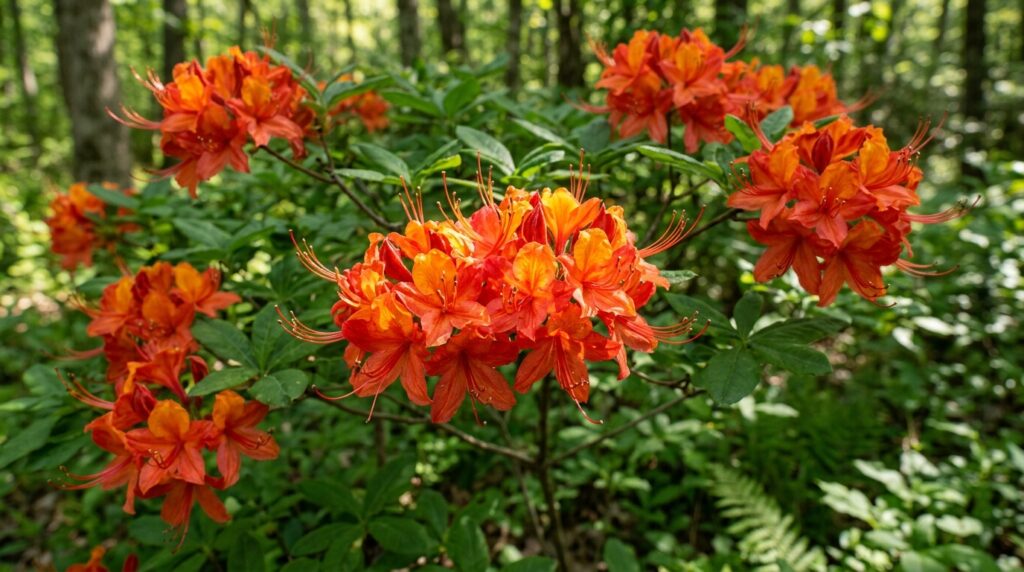
6. Flame Azalea
Flame azalea is a native deciduous shrub with yellow, orange, or reddish flowers. Its upright buds and narrow flower tubes can resemble candle flames. Unlike many tropical fire flowers, this shrub belongs in a woodland-style garden with acidic soil and filtered light.
It needs more room than an annual. Protect it from harsh afternoon sun, avoid dense clay, and check the soil pH, as azaleas often struggle in alkaline soil.
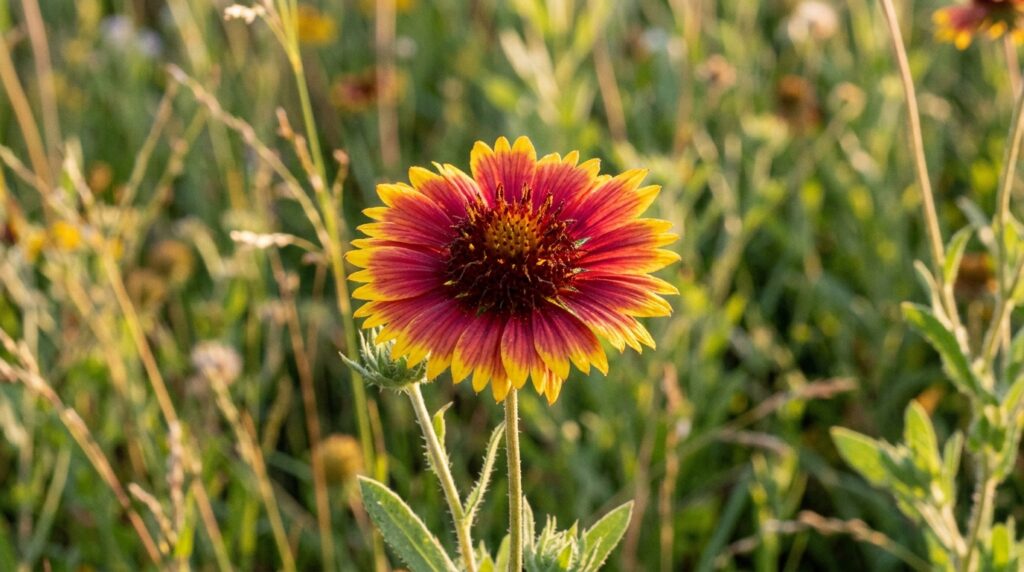
7. Blanket Flower
Blanket flower has daisy-shaped blooms with rings of burgundy, red, orange, and yellow. The color pattern looks less like one tall flame and more like a glowing coal with a bright outer edge. It is especially effective when planted in a broad drift.
Gaillardia prefers full sun and sharp drainage. It handles dry conditions and needs little fertilizer; deadheading can encourage more bloom.
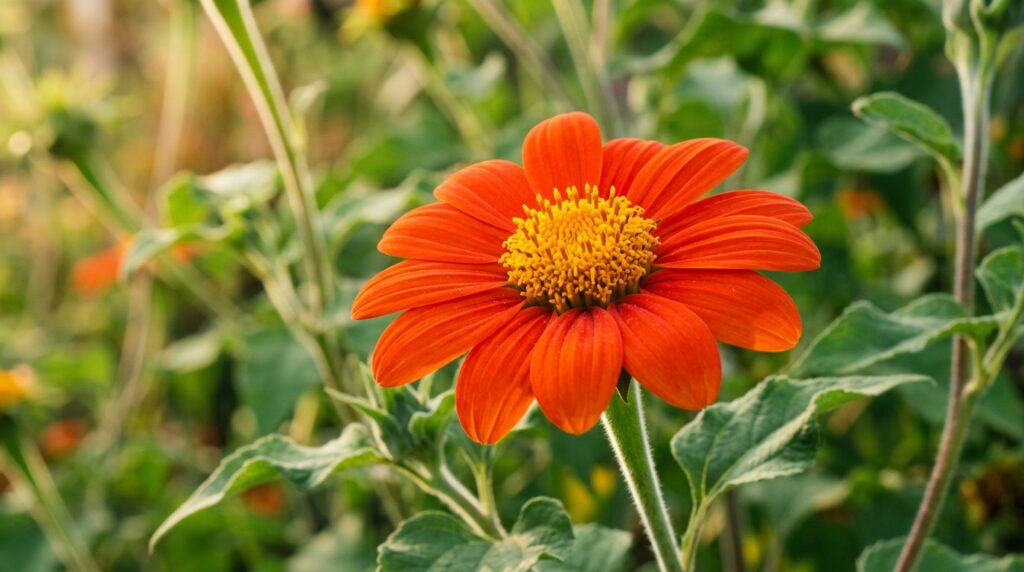
8. Mexican Sunflower
Mexican sunflower is a fast-growing annual with vivid orange-red blooms. The flowers sit above a tall, branching plant and attract bees and butterflies from midsummer into fall. In sunlight, the petals can look like a ring of flame around the raised center.
It performs best in full sun and average, well-drained soil. Give it space and consider staking in exposed locations, as it can become tall and floppy in rich soil.
9. Butterfly Weed
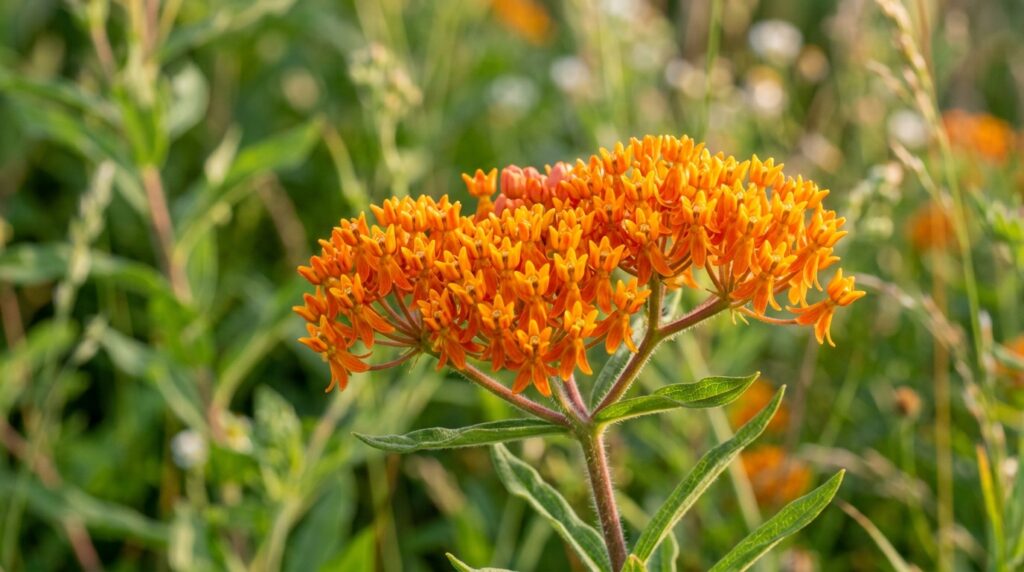
Butterfly weed forms dense clusters of orange flowers that resemble small flames gathered into a dome. It is a native milkweed and supports monarch caterpillars, while its flowers serve many other pollinators. That ecological value makes it more than a color plant.
Its deep roots prefer to stay undisturbed. Plant it in full sun and well-drained soil, allow time for establishment, and wear gloves because the sap can irritate skin.
10. Torch Ginger
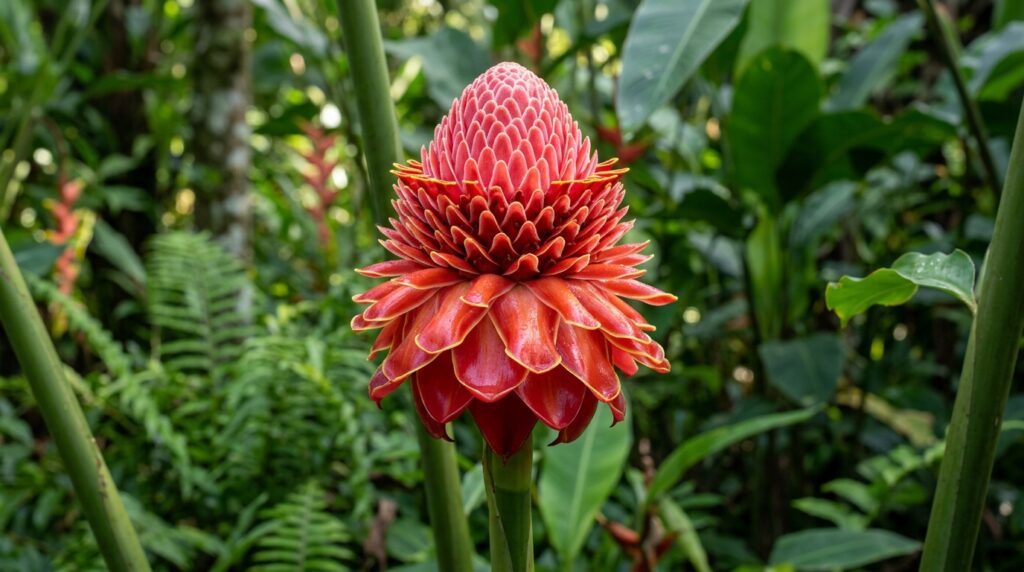
Torch ginger produces a large cone-shaped inflorescence on a separate stalk rising from the rhizome. The red or pink bracts overlap like a sculpted torch, while the leafy shoots can become very tall in tropical conditions. It creates an architectural effect that smaller flowers cannot match.
It wants warmth, humidity, moisture, and room for a large rhizomatous clump. I recommend it only for a greenhouse-like environment or a genuinely tropical garden.
11. Royal Poinciana
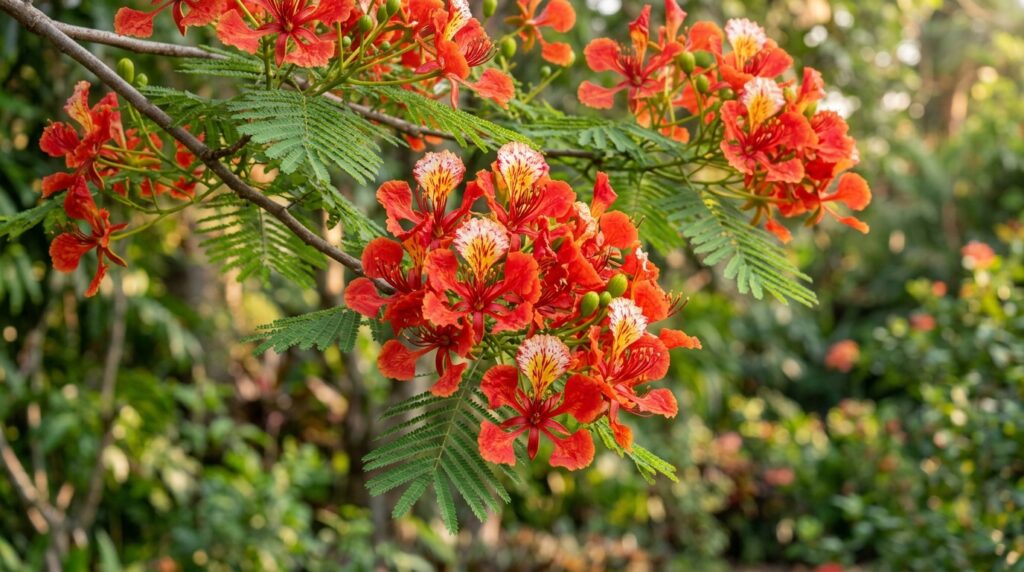
Royal poinciana is the best answer to the phrase “fire flower tree.” A mature tree can spread a broad canopy filled with scarlet-orange flowers, creating the appearance of a crown on fire. Its fine, fern-like foliage makes the flower color look even brighter.
The tree needs a frost-free setting, full sun, and considerable space. It can reach roughly 30 to 40 feet with a wider crown, and seed-grown plants may take years to flower.
12. Flame Vine
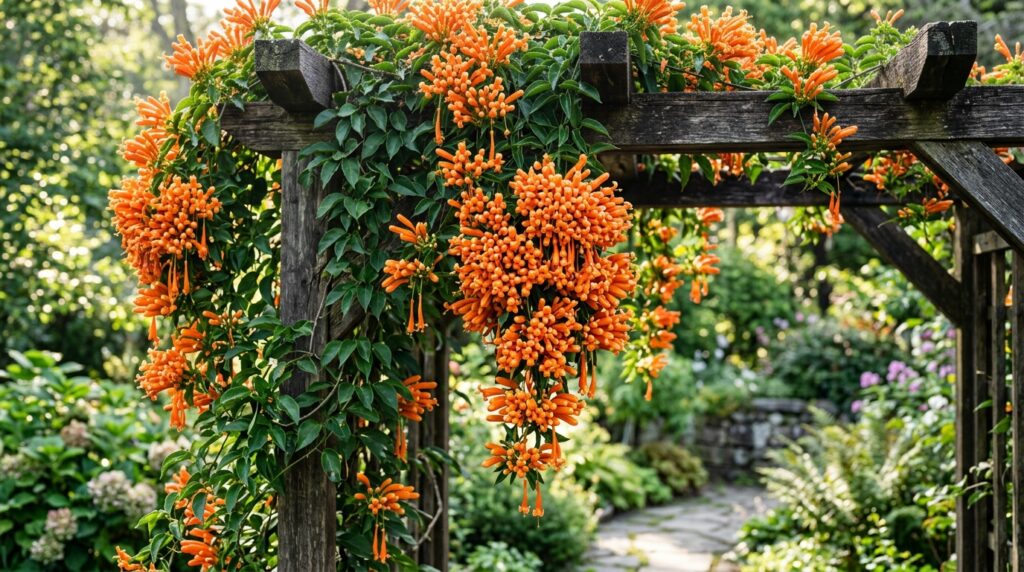
Flame vine, or Pyrostegia venusta, covers supports with masses of narrow orange trumpet flowers. When it blooms heavily, a wall or pergola can look like it has been draped in flowing fire. The effect is strongest when the vine hangs over an edge where the clusters remain visible.
This vigorous vine needs sturdy support and regular control. Check regional guidance before planting, and keep it away from gutters, rooflines, and weak fencing.
13. Canna Lily
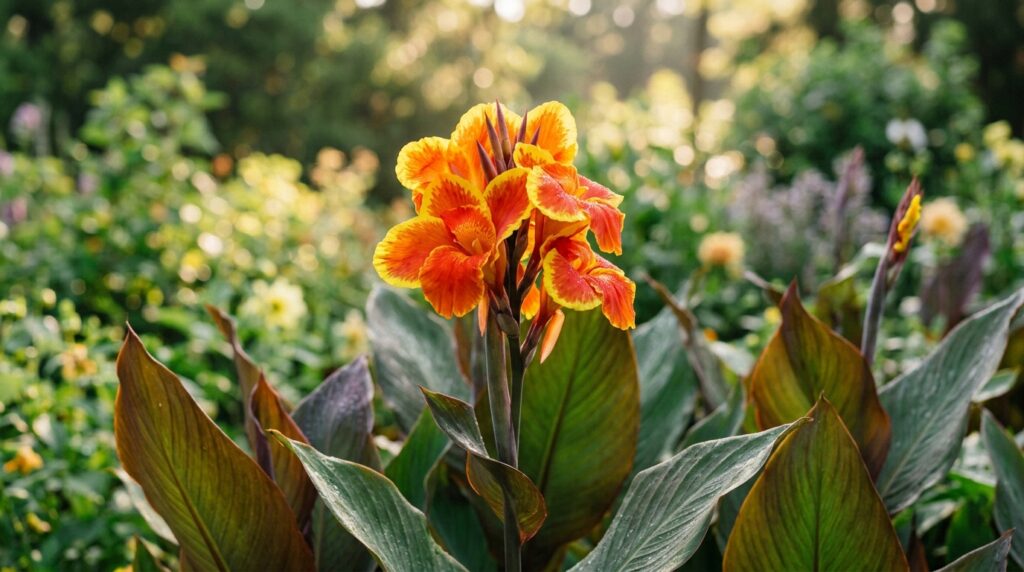
Canna lily combines large tropical leaves with red, orange, yellow, or mixed flowers. Some cultivars have striped or dark foliage, which makes the warm blooms look like flames rising above smoke. It is one of the easiest ways to create a bold tropical theme in a large container.
Cannas prefer sun, rich soil, warmth, and reliable moisture with drainage. In cold regions, lift the rhizomes after frost or treat the plants as annuals.
14. Orange Lily
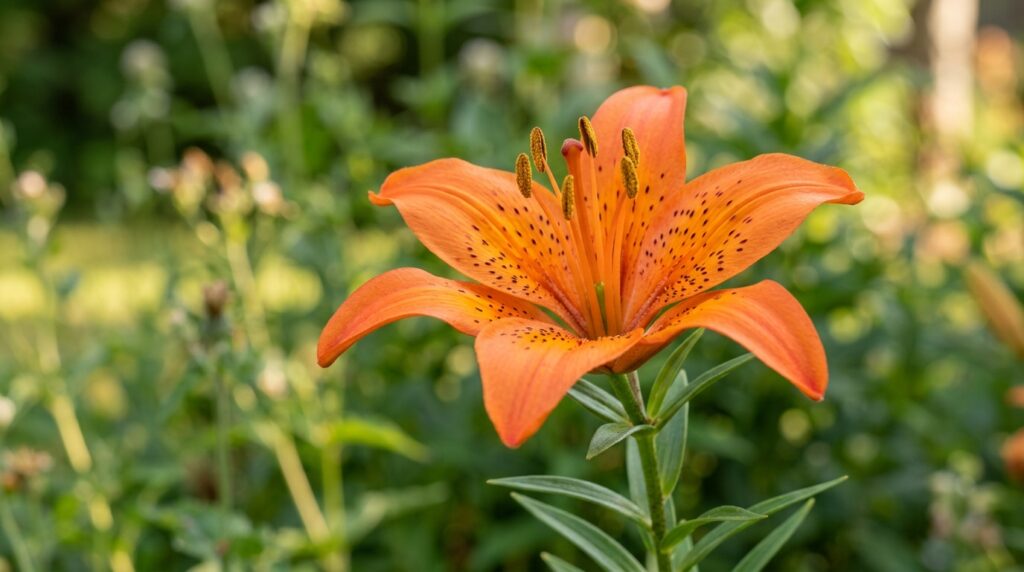
The orange lily, Lilium bulbiferum, has upward-facing orange blooms marked with dark spots. Its petals do not curl as dramatically as gloriosa, but the strong color and upright form still create a clear flame effect. It also works well as a cut flower.
Give it sun to partial shade and humus-rich, well-drained soil. Like other true lilies, it is dangerous to cats, including through leaves, pollen, petals, and vase water.
15. Clivia
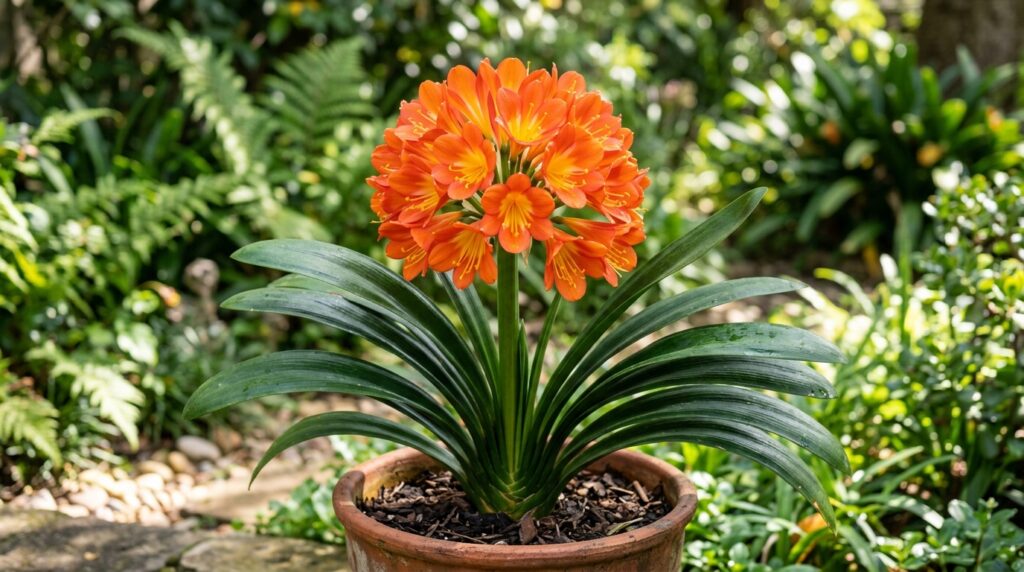
Clivia is also called natal lily or bush lily, and some sources use the common name fire lily. It produces a cluster of trumpet-shaped orange or scarlet flowers above dark, strap-like leaves. The rounded cluster looks like a controlled indoor flame.
Clivia suits bright indoor spaces without intense midday sun. It likes being slightly root-bound and needs a cool, drier rest period to bloom well; keep it away from chewing pets and children.
16. Lobster-Claw Heliconia
Lobster-claw heliconia produces hanging red and yellow bracts that resemble a chain of flames. The true flowers are small and sit within the showy bracts, so what you notice first is the dramatic structure rather than ordinary petals. It is widely used in tropical arrangements.
Heliconia needs warmth, humidity, fertile soil, and consistent moisture. It is best for tropical landscapes or protected growing spaces; canna is easier for most beginners.
17. Indian Paintbrush
Indian paintbrush refers to species in the genus Castilleja. The colorful structures that look like red or orange flames are mostly bracts surrounding smaller flowers. Many species are partly parasitic on nearby plants, which is why they can be difficult to establish alone in a normal flower bed.
Treat it as a habitat project, not a standard bedding plant. Match the species to your region, use suitable host plants, and buy nursery-propagated material.
18. Fire Pink
Fire pink is a native perennial with brilliant scarlet, deeply notched petals. Each flower resembles a small red star or a spark against green woodland foliage. It is a more delicate choice than the tropical plants in this guide.
It prefers rocky woodland slopes and open, well-drained sites. Because it can be short-lived and locally protected, source it from a responsible native-plant nursery.
How to Choose the Right Fire Flower Plant
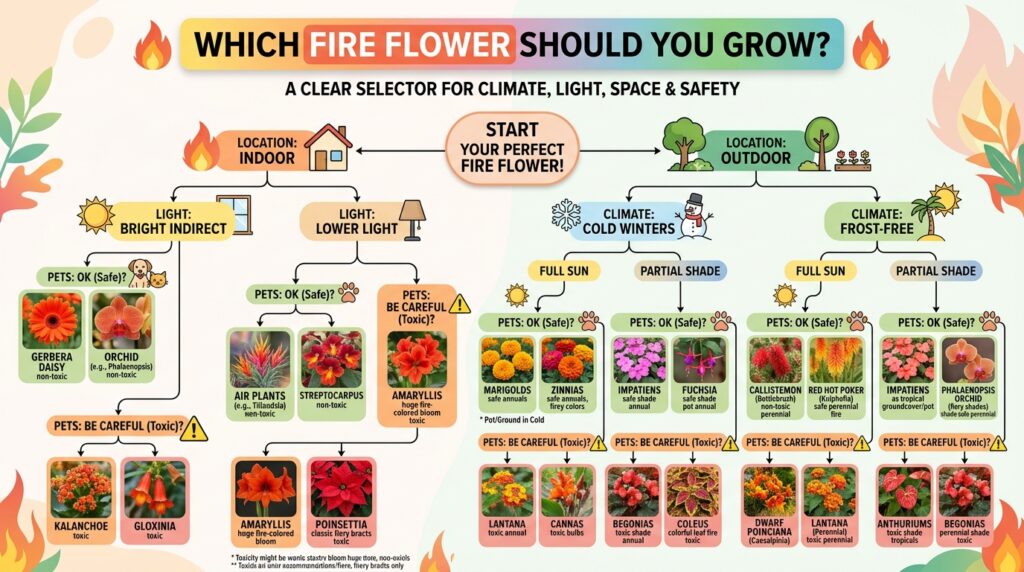
Start with plant form, not color. An annual, climbing tuber, shrub, tropical tree, and indoor clivia solve very different garden problems, even when all look fiery.
Use this simple filter:
- For a beginner container: Choose plumed celosia, firecracker plant, or a compact canna. They give fast color and are easier to replace if winter conditions are unsuitable.
- For a sunny perennial border: Choose red hot poker, crocosmia ‘Lucifer,’ blanket flower, or butterfly weed. These plants combine warm color with a structure that returns or reseeds.
- For a native-style garden: Choose butterfly weed, flame azalea, fire pink, or a regionally appropriate Indian paintbrush. Local soil and habitat matching matter more than forcing a tropical look.
- For an indoor collection: Choose clivia before gloriosa. Clivia is slower but more manageable, while gloriosa needs support and stricter safety precautions.
- For a large warm-climate property: Consider royal poinciana, flame vine, torch ginger, or heliconia. Check the mature size before planting, as these are not small accent plants.
Most flame-colored flowers need strong light, but flame azalea and clivia prefer protection from harsh midday sun. Confirm vague common names with the scientific name and a reliable plant database.
Drainage matters too. Many bulbs and dry-border plants decline in waterlogged soil, while tropical ginger and heliconia need more consistent moisture.
How to Grow Flowers That Look Like Flames
Before planting, check direct sun, drainage after rain, and mature width. A beautiful flower can still be wrong for the location.
Use containers with drainage holes and a mix suited to the plant. Large cannas also need heavy pots so wind does not tip them.
Water deeply, then adjust the next watering to the species and weather. New perennials need closer attention than established drought-tolerant plants.
Feed with restraint. Blanket flower and Mexican sunflower can become soft and leafy in overly rich conditions, while container-grown cannas and cuphea may need regular nutrients during active growth. My fertilizer dosage guide explains how to read N-P-K numbers and avoid guessing with concentrated products.
Deadheading can extend bloom, while leaving some native seed heads supports birds and reseeding. Choose the balance that fits your goal.
Common Mistakes I Would Avoid
- Buying by common name alone: “Fire lily” can refer to different plants with varying care needs and toxicity levels. Confirm the scientific name on the label and receipt.
- Ignoring mature size: Royal poinciana, torch ginger, flame vine, and heliconia can overwhelm a small space. Measure before planting and allow access for pruning.
- Treating every orange plant as drought-tolerant: Tropical plants often need dependable moisture even when their color suggests heat. Match watering to biology, not appearance.
- Overfeeding for more blooms: Excess nitrogen can produce leaves at the expense of flowers. Follow the label and reduce feeding when growth becomes weak or overly lush.
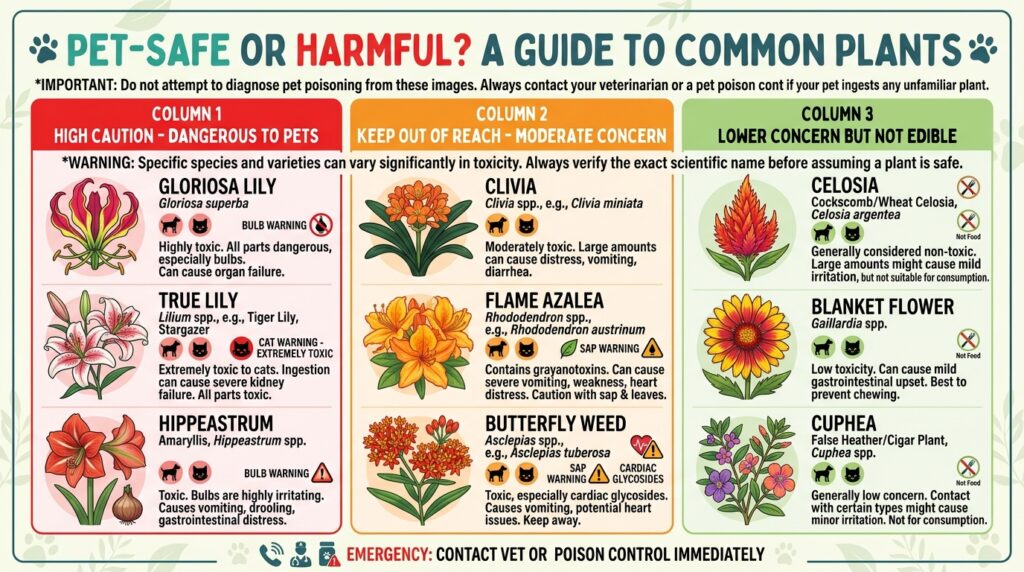
- Skipping pet-safety checks: True lilies, amaryllis relatives, gloriosa, and azaleas need special caution. Use current toxic-plant guidance for the exact species.
Is the Fire Flower Plant Poisonous?
The phrase is too broad for a simple yes-or-no. Some plants called fire flower or fire lily are toxic, so the scientific name is essential.
Gloriosa superba is highly toxic if eaten because it contains colchicine-related compounds. Hippeastrum species, often sold as fire lily or amaryllis, are considered toxic to dogs and cats, with the bulb especially hazardous. Fire lily toxicity guidance notes vomiting, diarrhea, and potentially more severe signs after large ingestion.
True lilies, such as Lilium bulbiferum, pose a major danger to cats. Azaleas contain grayanotoxins, and clivia is an amaryllis relative that should be kept away from chewing pets. Butterfly weed can irritate skin and is not a snack plant, even though it has important value for monarch caterpillars.
Never use “natural,” “lily,” or “flower” as proof of safety. Keep the plant tag and contact a veterinarian or poison-control service quickly after suspected ingestion.

What Does the Fire Flower Symbolize?
A real fire flower can symbolize energy, courage, transformation, passion, survival, and renewal. There is no single fixed meaning because “fire flower” is not one species.
Gloriosa lily can suggest glory or ambition, a red hot poker can express confidence, and a flame azalea can suggest returning warmth. Surrounding flowers can shift the message.
Fire also has two sides. It can represent danger and destruction, but it can also represent light, warmth, purification, and a fresh start. I would use a fire-themed planting near an entrance, creative workspace, or celebration area when the goal is confidence and movement.
Deep scarlet feels intense, orange feels energetic, and yellow adds optimism. Dark foliage adds drama, while blue flowers make warm colors look brighter.
Is the Fire Flower Rare?
Celosia, blanket flower, canna, crocosmia, and red hot poker are widely sold. Their appearance is unusual, but the plants are not rare.
Gloriosa lily is less common in ordinary stores because it needs warmth, support, careful storage, and safe handling. Fire pink is uncommon or protected in parts of its native range, and some Indian paintbrush species have specialized habitat needs. Rare status can also vary by state or locality, so a plant may be locally scarce even when the species is secure elsewhere.
Online sellers sometimes use “rare” loosely. Check the scientific name, cultivar, propagation method, and seller reputation before paying extra.
What Is the Fire Flower in Japan?
In Japan, “fire flower” commonly points to hanabi, the Japanese word for fireworks. The word is written with characters associated with flower and fire, and it describes fireworks blooming across the night sky. It is a cultural and visual expression, not the name of one Japanese plant.
Summer fireworks festivals are a major seasonal tradition, and official travel information describes hanabi as “flowers of fire.” The link makes sense because a firework expands like a flower, reaches full bloom for a moment, and then disappears. That brief beauty also connects naturally with ideas of impermanence and memory.
You can copy the hanabi effect with round flowers, radiating petals, and several heights. Mexican sunflower, blanket flower, crocosmia, and airy grasses work well together.
Mario Fire Flower, Princess Peach, and the Fictional Meaning
The Mario Fire Flower is a fictional power-up, not a plant you can grow. In the games, the Fire Flower changes Mario into Fire Mario and lets him throw fireballs. An official activity page describes the Fire Flower power-up as giving Mario that ability.
Searches for “fire flower mario” often show a round flower with a face-like center and red, orange, yellow, or white sections, depending on the game art. Its design is symbolic rather than botanical. Gloriosa lily, celosia, and red hot poker resemble real flames more closely than the game item does.
The phrase “Princess Peach Fire Flower” usually refers to Peach using the power-up to become Fire Peach in games such as Super Mario 3D World, or to the Fire Peach scene in The Super Mario Bros. Movie. It should not be confused with the transformations in Princess Peach: Showtime!, which has its own themed roles and abilities.
A Mario-inspired garden can use a round bed with red, orange, yellow, white, and green plants. Celosia, marigolds, alyssum, and compact cannas suggest the palette without copying character art.
Fire Flower Blox Fruits and Draco V2
The Fire Flower Blox Fruits item is a game material used in the Draco Race V2 quest. It is separate from real flowers and separate from the Mario power-up. In the quest, players obtain Fire Flowers as drops after meeting the relevant requirements and taking the quest.
How Many Fire Flowers for Draco V2?
You need five Fire Flowers for Draco V2. Community documentation says collecting more than five serves no additional purpose for that upgrade, and the Draco progression also includes a level requirement and a payment after the collection step. Because live games can change, check the current in-game quest text after updates.
The keyword has mixed intent: gardening, Mario, Japanese language, or a Blox Fruits quest. Keeping these meanings separate prevents confusion.
Expert Tips for Building a Fire-Themed Garden
Use shape as well as color. Mix vertical torches, curled petals, low ember-colored flowers, and airy spark-like sprays.
Build the display in layers. Put blanket flower or celosia at the front, butterfly weed or crocosmia in the middle, and red hot poker or canna at the back. A dark fence, a charcoal pot, or deep-purple foliage can serve as the night sky behind a flame.
Plan overlapping bloom seasons. Flame azalea can start in spring, followed by red hot poker and butterfly weed, then Mexican sunflower, celosia, canna, and blanket flower.
Repeat colors without repeating every plant. Three groups of orange placed across a bed create rhythm, while one isolated orange flower can look accidental. I recommend repeating one reliable anchor plant, then adding two unusual focal plants for variety.
Pros and Cons of Fire Flower Plants
Start with one plant that matches your conditions. One healthy pot teaches more than six rare tubers with conflicting needs.
Frequently Asked Questions
What Is the Best Fire Flower for Beginners?
Plumed celosia is the easiest starting point because it grows quickly, handles summer heat, and works in containers or beds. Blanket flower and Mexican sunflower are also forgiving in sunny, well-drained locations, while firecracker plant is excellent for a warm patio pot.
Is There a Real Fire Flower Like the Mario Fire Flower?
There is no exact botanical version of the Mario item. Gloriosa lily is the closest match to real flames, while a round red-and-yellow blanket flower is closer to the game item’s circular color pattern. The best real-life choice depends on whether you value shape or color.
Can I Grow a Fire Flower Indoors?
Clivia is the most practical indoor choice from this list. Gloriosa can also grow in a container, but it needs strong light, a support, seasonal dormancy, and careful handling because it is toxic. Celosia can be displayed indoors briefly, but it usually performs better outside in strong sun.
Which Fire Flower Attracts the Most Pollinators?
Butterfly weed is one of the most valuable because it provides flowers for pollinators and leaves for monarch caterpillars. Mexican sunflower, cuphea, crocosmia, blanket flower, and red hot poker also attract bees, butterflies, or hummingbirds. Choose native species when ecological support is your main goal.
What Is the Best Fire Flower Tree?
The royal poinciana is the most dramatic fire-flower tree because a mature specimen can cover its broad canopy with scarlet-orange blooms. It needs a frost-free climate and a large site, so it is not suitable for most small yards. In cooler areas, use a flame azalea shrub or a large canna container for a smaller effect.
Final Thoughts
A fire flower is not one single plant. It is a useful idea that connects real flame-shaped blooms, fiery garden colors, Japanese fireworks, Mario power-ups, and a Blox Fruits quest item. Once you separate those meanings, choosing the right answer becomes much easier.
For most beginners, I recommend celosia in a container, blanket flower in a dry sunny bed, or butterfly weed in a native pollinator garden. For maximum drama, gloriosa lily, torch ginger, flame vine, and royal poinciana deliver a stronger effect, but they also demand more space, warmth, or caution.
Choose one plant that fits your real conditions, then build the fire theme around it, using repeated reds, oranges, and yellows, with contrasting dark foliage. Your garden will look more intentional, and you will avoid buying a beautiful plant that cannot thrive in its final location.