


Soursop has one of the most confusing reputations in the world of tropical fruit. You may have heard that this prickly green fruit is banned, that its leaves are dangerous, that soursop tea is illegal, or that governments restrict it because it supposedly has powerful cancer-fighting properties. But the real answer to why is soursop illegal is much more complicated—and in many cases, the word “illegal” is simply misleading.
Soursop, scientifically known as Annona muricata and also called graviola or guanabana, is a tropical fruit that has been eaten traditionally in many parts of the world. Its creamy white flesh is used in drinks, desserts, smoothies, juices, and frozen products, while the leaves have a long history of traditional use. The confusion begins because different countries regulate fresh fruit imports, herbal products, dietary supplements, and medical claims in different ways.
The U.S. Food and Drug Administration currently maintains an Import Alert for guanabana (soursop), which may lead people to assume the entire fruit is prohibited. However, an import alert is not the same as a blanket ban on all soursop products or on eating the fruit itself. The FDA’s alert specifically addresses certain imported soursop products and explains concerns related to contamination with soursop seeds and the presence of potentially neurotoxic acetogenins.
There is another layer to the story. The FDA has taken enforcement action against companies that marketed soursop capsules, leaves, and tea as treatments for serious diseases such as cancer. In one notable FDA warning letter involving soursop products, the agency explained that products promoted to cure, treat, or prevent diseases may be classified as drugs and require FDA approval.
So, if you have been searching for why soursop is illegal, the short answer is this: soursop is not universally illegal, but certain forms, imports, ingredients, and health claims may face restrictions or enforcement actions. Understanding that distinction is the key to separating fact from viral rumors.
Is Soursop Actually Illegal?
The first thing to understand is that “soursop” can refer to several very different products. Fresh fruit, frozen pulp, juice, dried leaves, soursop tea, capsules, extracts, seeds, and concentrated bitters are not automatically treated the same way under food and drug regulations.
This is why a person might see soursop at a grocery store while another person hears that it is “banned.” Both observations can appear contradictory when, in reality, they may involve completely different products and regulatory categories.
For example, a food product containing soursop may be regulated differently from a capsule advertised as a cancer treatment. Similarly, a fresh fruit shipment crossing an international border may face agricultural inspection requirements that do not apply to a commercially processed product.
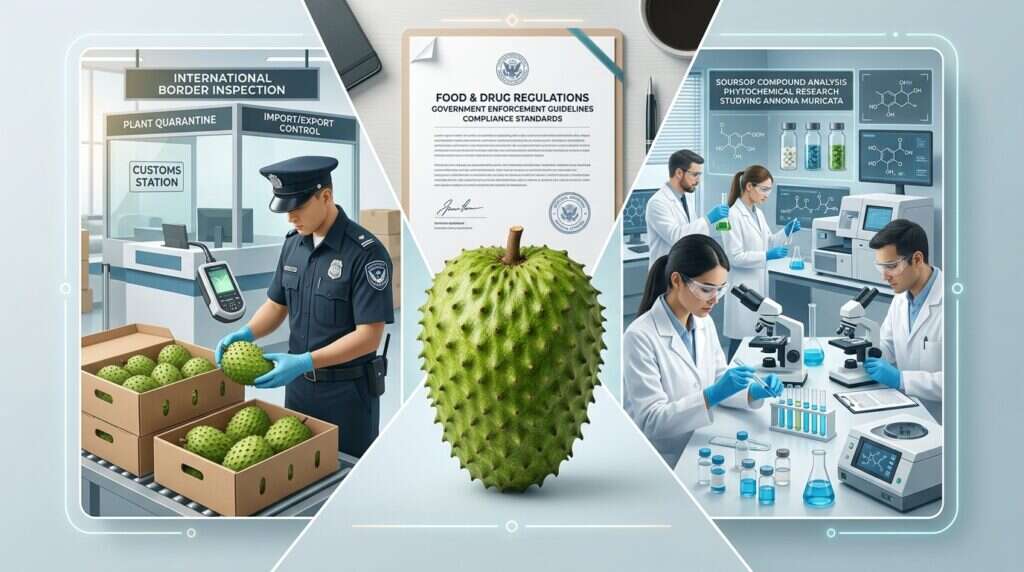
The distinction is especially important because food safety regulations and medical regulations serve different purposes. Agricultural authorities are concerned about pests and diseases entering through imported plant material. In contrast, health regulators are concerned about product safety, misleading claims, contamination, and whether a product is being marketed as an unapproved medicine.
The FDA’s current import alert for guanabana illustrates this distinction. The alert describes concerns involving soursop fruit and plant parts, including the possibility of seed material in processed products, rather than declaring that every soursop fruit or every soursop product is illegal.
The four issues behind the “illegal” label
When people ask why is soursop illegal, they are usually referring to one or more of these issues:
- Restrictions on certain fresh fruit imports.
- Agricultural rules designed to prevent pests from entering a country.
- Concerns about seeds and potentially toxic plant compounds.
- Enforcement against products making unsupported disease-treatment claims.
These issues are often combined online, creating the impression that soursop itself has been completely banned.
That conclusion is too broad.
A better way to think about the situation is that different soursop products can have different legal and regulatory statuses. A fruit sold as food is not automatically equivalent to a concentrated herbal extract, and a tea marketed as a beverage is not necessarily treated the same as a tea promoted as a cancer treatment.
Why Is Soursop Illegal or Restricted in Some Places?
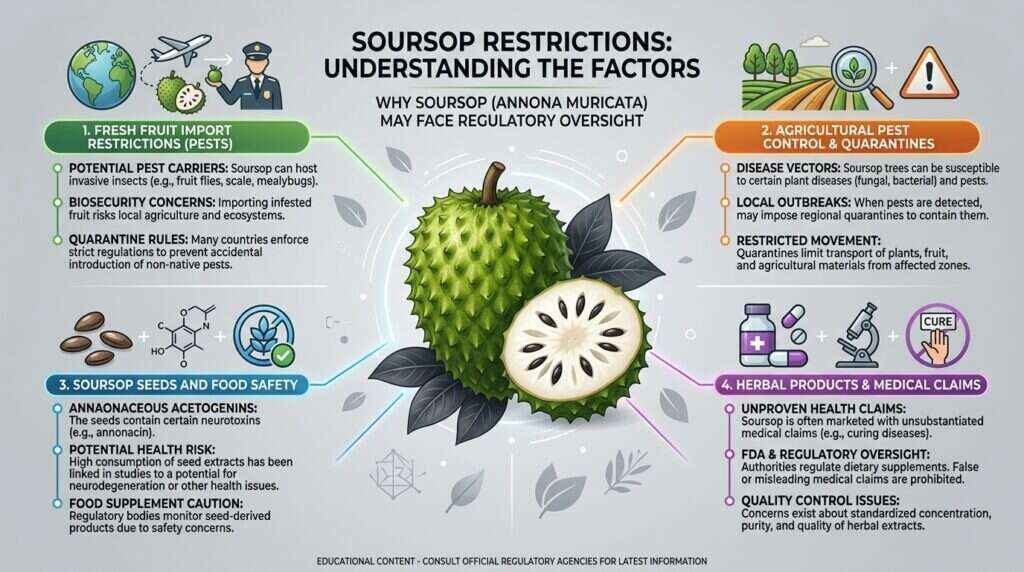
The reasons behind soursop restrictions generally fall into two broad categories: agricultural biosecurity and health-product regulation.
Agricultural biosecurity is about protecting crops and ecosystems. Fresh fruits and plants can potentially carry insects, larvae, fungi, bacteria, or other organisms that authorities do not want introduced into new environments.
This is not unique to soursop. Many countries have strict rules governing the international movement of fresh fruits and plant materials. The UK’s official classification guidance, for example, lists soursop under its trade classification as Annona muricata, demonstrating that the fruit is recognized within normal food and trade systems rather than being treated as an inherently prohibited substance.
The second issue is health regulation. Soursop has become popular in the alternative-health market, particularly because laboratory studies have examined compounds found in the plant. But laboratory findings do not automatically prove that a food or supplement can prevent or cure disease in humans.
That distinction becomes extremely important when discussing cancer.
Soursop and cancer claims
Some laboratory research has found that compounds from Annona muricata can affect cancer cells under experimental conditions. These findings are scientifically interesting, but they do not establish that eating soursop or drinking soursop tea can cure cancer.
This is precisely why regulators have acted against companies making aggressive medical claims. In its warning letter to Amazing Sour Sop, the FDA cited claims that soursop products could kill cancer cells, treat cancer, and address several other diseases. The agency stated that the products were being marketed as drugs and were not approved for those intended uses.
The FDA also includes Amazing Sour Sop products in its broader list of illegally sold cancer treatments. The issue here is not that every soursop fruit is classified as an illegal cancer treatment; rather, it is that products marketed with unapproved claims to treat disease can violate drug regulations.
This is one of the biggest reasons the internet has created confusion around the question why is soursop illegal.
The fruit and the medical claims are two separate questions.
Why Does the FDA Restrict Some Soursop Products?
The FDA’s current import alert is one of the most important documents to understand when researching soursop restrictions. According to the agency, the alert concerns the detention of certain guanabana products without physical examination and identifies specific concerns involving soursop seeds and acetogenins.
The alert notes that soursop fruit, leaves, and bark contain acetogenins, while the seeds contain high levels of these compounds. It also describes historical incidents involving imported guanabana beverages in which seed material was found.
This does not mean that every soursop product is automatically illegal.
Instead, it means that certain imported products may face increased regulatory scrutiny due to food safety concerns.
That distinction matters for consumers. When a product is detained at the border, the reason may involve contamination, undeclared ingredients, agricultural concerns, or regulatory noncompliance. It does not necessarily mean the underlying fruit has been declared illegal for everyone to eat.
Why are soursop seeds a concern?
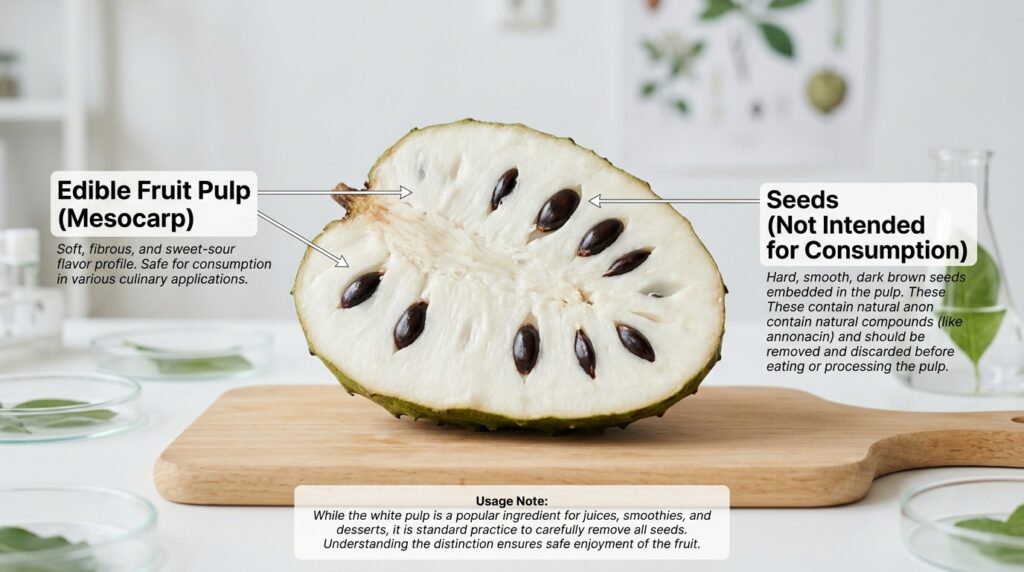
Soursop seeds are not normally considered an edible part of the fruit. They contain acetogenins, a group of compounds that have attracted scientific attention because of their biological activity.
Research published in PubMed on annonacin and neurotoxicity has examined this major acetogenin associated with Annona muricata. Laboratory research has shown that annonacin can interfere with mitochondrial complex I and can be toxic to certain neurons under experimental conditions.
Other research has investigated possible links between consumption of Annonaceae plants and atypical parkinsonism in Guadeloupe. These studies are important, but they do not prove that ordinary consumption of soursop fruit causes Parkinson’s disease in everyone who eats it. The evidence is complex, and much of the strongest mechanistic evidence comes from laboratory or animal research.
This is why responsible health information should avoid two extremes.
It would be inaccurate to say that soursop is completely harmless in all forms and amounts. It would also be inaccurate to claim that the fruit itself is universally banned because it is a proven neurotoxin.
The more accurate conclusion is that some compounds in soursop have raised legitimate scientific safety questions, particularly with concentrated or repeated exposure. At the same time, the risks associated with ordinary dietary consumption remain less clearly established.
Is Soursop Banned in the UK?
The question Is Soursop Banned in the UK? often appears in searches because people see claims that soursop is prohibited in several countries.
There is no simple basis for saying that all soursop is banned there. Soursop is recognized as a fruit within official food and trade classifications, and the legal status of a specific product depends on factors such as its form, ingredients, import requirements, labeling, and any health claims made about it.
The important distinction is between a food and a medicinal claim.
A food containing soursop is not automatically equivalent to a product claiming to treat cancer, diabetes, high blood pressure, or another disease. Products sold with medicinal claims may be subject to different regulatory requirements than ordinary foods.
Therefore, if you see someone claiming that “soursop is banned in the UK,” treat that statement cautiously. The more useful question is: Which soursop product, from which source, and under what regulatory category?
That is the question that usually reveals what is really happening.
Is Soursop Illegal in the US?
The question Is Soursop Illegal in the US requires another important distinction.
Soursop is not simply prohibited as a fruit nationwide. However, the FDA maintains an import alert concerning guanabana or soursop, and this is likely one reason the internet contains claims that the fruit is “banned.” The current alert targets certain imported soursop products and addresses safety concerns regarding acetogenins, particularly in seeds.
An import alert is not the same as a law making every soursop fruit illegal to possess or eat.
The regulatory situation can also depend on whether the product is sold as food, a dietary supplement, or a product that makes disease-treatment claims. For example, the FDA has previously taken action against companies that promoted soursop products with unsupported claims of cancer treatment.
This is why consumers should be cautious about headlines that say “soursop is banned.” The more accurate question is often: What soursop product is being discussed, where did it come from, and how is it being marketed?
Is Soursop Illegal in Canada?
The question Is Soursop Illegal in Canada? has a similar answer: the word “illegal” is too broad to accurately describe the situation.
Canada has its own food safety, natural health product, and agricultural import systems. A fresh fruit shipment, a herbal supplement, and a product making therapeutic claims may all be regulated differently.
Consumers should therefore avoid assuming that a restriction on one type of soursop product means that all soursop is prohibited.
The same principle applies to Soursop Bitters, capsules, powders, and teas. The legal status of a product can depend heavily on how it is formulated, labeled, imported, and marketed.
When a product claims to treat or cure a disease, regulators may treat that claim very differently from a simple statement that the product is a traditional herbal beverage.
Is Soursop Illegal in Australia?
The question Is Soursop Illegal in Australia is also more complicated than a simple yes-or-no answer.
Australia has strict biosecurity controls designed to prevent pests and diseases from entering the country. Fresh fruits and plant materials can therefore face stringent import requirements, and the rules may depend on the product’s origin and processing method.
These restrictions should not automatically be interpreted as a complete ban on soursop as a food.
The same basic principle applies elsewhere: fresh fruit imports, processed foods, herbal products, and therapeutic goods may be regulated under separate systems.
If you are importing or purchasing soursop products, the safest approach is to check the current requirements of the relevant government authority rather than relying on social media claims that use the word “banned” without explaining which product is actually affected.
Is Soursop Good for You?
Now that the legal confusion is out of the way, another important question remains: Is soursop good for you?
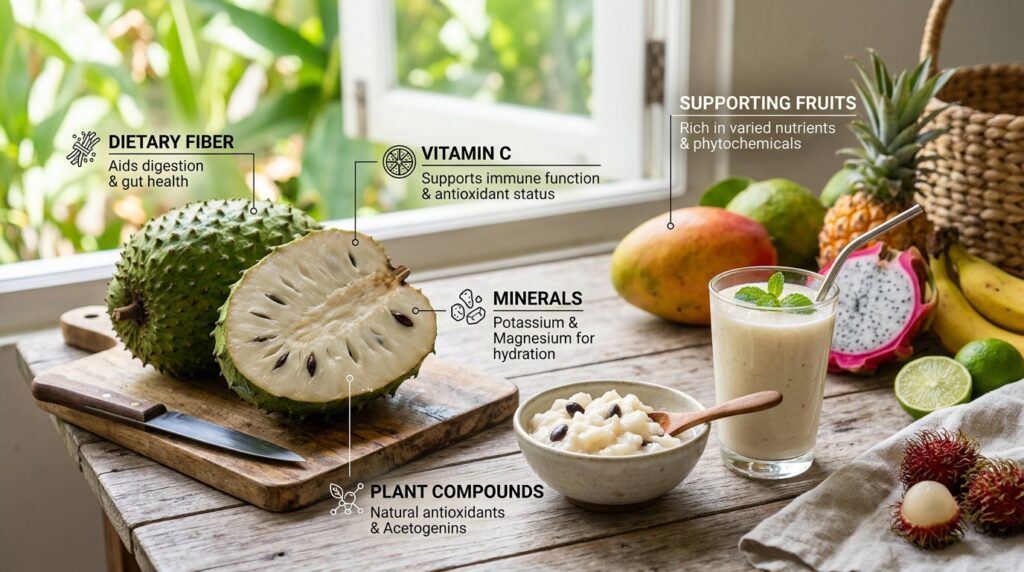
As a fruit, soursop can contribute nutrients and variety to a balanced diet. The flesh contains carbohydrates and dietary fiber and provides vitamins and minerals, although its exact nutritional contribution depends on the serving size and the rest of the person’s diet.
The fruit is also naturally sweet and relatively energy-dense compared with some lower-sugar fruits, so portion size can matter for people who are monitoring carbohydrate or sugar intake.
The biggest mistake is to turn a nutritious fruit into a miracle medicine.
Soursop can be part of a healthy diet without being promoted as a cure for cancer or other serious diseases. This balanced approach is consistent with the evidence and avoids confusing traditional use with proven clinical treatment.
For more practical information about making healthy food choices at home, you can also explore related healthy eating and food information on HomeUpright.
The 15 Health Benefits of Soursop Leaves: What Is Actually Supported?
Searches for 15 health benefits of soursop leaves often return long lists that present every possible effect as if it were proven.
That approach is misleading.
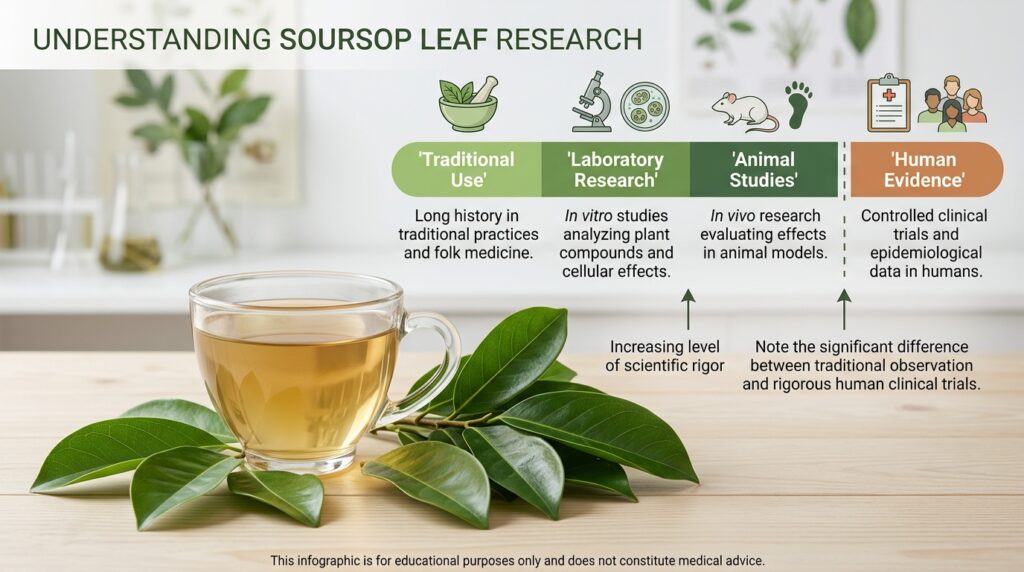
A more responsible way to discuss soursop leaves’ benefits is to explain which areas researchers have investigated and clearly separate laboratory findings from proven human benefits.
Below are 15 areas associated with traditional use or scientific investigation. These should be understood as potential or researched effects, not 15 established medical benefits.
1. Antioxidant Activity
Soursop leaves contain plant compounds that have demonstrated antioxidant activity in laboratory research.
Antioxidants are important because oxidative stress is involved in many biological processes. However, laboratory antioxidant activity does not automatically prove that drinking soursop leaf tea prevents disease in humans.
2. Anti-Inflammatory Potential
Some research has investigated compounds in Annona muricata for possible anti-inflammatory effects.
This is an interesting area of research, but the evidence does not justify using soursop leaves as a replacement for prescribed anti-inflammatory treatment.
3. Antimicrobial Activity
Laboratory studies have explored whether extracts from soursop leaves may inhibit certain microorganisms.
These findings can help scientists identify compounds worth studying. They should not be interpreted as proof that soursop tea can treat an infection.
4. Possible Blood Sugar Effects
Some animal and laboratory research has investigated the potential effects of soursop compounds on glucose metabolism.
This is one reason people sometimes promote soursop tea for diabetes. However, there is insufficient high-quality human evidence to recommend it as a treatment for diabetes.
If you take medication that lowers blood sugar, adding a concentrated herbal product without medical advice may create unnecessary risks.
5. Possible Blood Pressure Effects
Research has also examined whether compounds from soursop may influence blood pressure.
This is another area where caution is important. If an herbal product has a real physiological effect, it could potentially interact with medications or affect people differently.
6. Traditional Digestive Uses
Soursop leaves have been used traditionally in some cultures for digestive complaints.
Traditional use can provide valuable clues for researchers, but traditional use alone does not establish clinical effectiveness.
7. Possible Antiparasitic Activity
Certain laboratory studies have investigated compounds from Annona muricata for activity against parasites.
Again, laboratory results are not the same as a proven treatment in people.
8. Possible Anticancer Activity in Laboratory Research
This is perhaps the most discussed claim.
Researchers have studied acetogenins and other compounds because they can affect cellular processes in laboratory settings. However, this does not mean that soursop leaves or tea have been proven to cure cancer.
Anyone with cancer should follow evidence-based medical advice and should never replace prescribed treatment with an unproven herbal remedy.
9. Possible Pain-Related Effects
Some preclinical studies have examined whether soursop extracts may influence pain pathways.
This is scientifically interesting but not enough to establish a safe or effective pain treatment for humans.
10. Possible Liver-Related Effects
Some research has explored the effects of soursop compounds on liver-related biological processes.
The evidence is not strong enough to recommend soursop leaf preparations as a liver detox or treatment.
11. Possible Kidney-Related Effects
Researchers have also investigated soursop extracts in animal and laboratory models involving kidney function.
This should not be confused with proof that soursop tea cleanses or repairs human kidneys.
12. Potential Effects on Cellular Oxidative Stress
The plant’s phytochemicals have attracted attention for their interactions with oxidative processes.
This may help scientists understand how plant compounds work, but it does not automatically translate into a measurable health benefit from drinking tea.
13. Traditional Relaxation Uses
Some people use herbal teas as part of a relaxing routine.
If someone enjoys a mild herbal beverage as a calming ritual, that is different from claiming the beverage treats anxiety, insomnia, or another medical condition.
14. Possible Immune-Related Research
Because soursop contains various bioactive compounds, researchers have explored potential effects on immune-related biological pathways.
There is still a major difference between studying these compounds in the laboratory and proving that soursop leaf tea improves immunity in humans.
15. General Interest in Traditional Medicine
Perhaps the most meaningful “benefit” of studying soursop leaves is that traditional knowledge can guide modern research.
Scientists can investigate plants that have been used for generations, identify their compounds, and determine whether any have genuine therapeutic potential. That process requires careful clinical testing rather than relying on testimonials.
Soursop Tea: Why Is It So Popular?
Soursop tea is usually made from dried or fresh soursop leaves. It has become popular because of traditional herbal practices and the enormous amount of health content circulating online.
Some people drink it as a relaxing herbal beverage, while others consume it because they believe it may support immunity, digestion, blood pressure, blood sugar, or even cancer treatment.
The last claim requires particular caution.
The FDA’s 2017 warning letter shows exactly how a soursop tea can become a regulatory problem when marketing crosses the line from describing a traditional beverage to claiming that the product treats or cures serious diseases.
What are the claimed soursop tea benefits?
The most commonly discussed soursop tea benefits include:
- Antioxidant activity.
- Traditional use for relaxation.
- Potential anti-inflammatory activity.
- Traditional digestive use.
- Possible effects on blood sugar.
- Possible effects on blood pressure.
- Interest in antimicrobial compounds.
- Traditional use for general wellness.
However, these claims should not be treated as established medical outcomes.
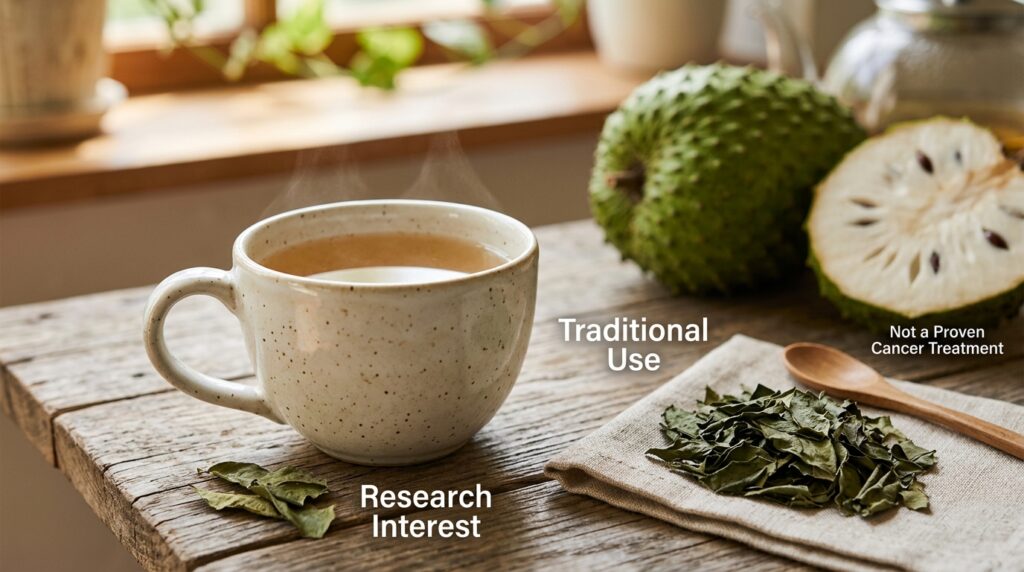
Memorial Sloan Kettering Cancer Center’s Graviola information for patients explains that graviola has been promoted as an alternative cancer therapy. Still, there is no proof that it provides benefits for cancer patients. The same source also notes potential interactions with medicines that lower blood sugar or blood pressure.
This is an important point for anyone who regularly drinks soursop tea.
“Natural” does not automatically mean “risk-free.”
Soursop Side Effects: What Should You Know?
Soursop side effects are another area where internet articles often provide either too little information or far too much certainty.
The safety profile may depend on which part of the plant is consumed, how much is consumed, how frequently it is used, and whether the preparation is concentrated.
The fruit eaten as food is different from a concentrated extract. A leaf infusion is different from a capsule containing powdered plant material. Seeds are different again.
This is why it is difficult to make one universal statement about “soursop safety.”
Potential concerns with soursop products
Some of the concerns discussed in scientific literature include:
- Possible neurotoxicity associated with acetogenins.
- Potential interactions with blood-pressure medication.
- Potential interactions with blood-sugar-lowering medication.
- Concerns about concentrated extracts.
- Possible problems with long-term, repeated exposure.
- Risk from consuming the seeds.
- Uncertainty about the appropriate dose of herbal preparations.
Research published in PubMed on neurotoxicity of Annonaceae dietary supplements found neurotoxic effects in laboratory testing of certain dietary supplements and plant extracts from the Annonaceae family. However, laboratory toxicity findings do not automatically establish the same level of risk from normal dietary consumption of the whole fruit.
Another important issue is medication interaction.
Memorial Sloan Kettering notes that graviola may lower blood sugar and blood pressure, which could interact with medications that have similar effects.
If you take medication for diabetes or hypertension, discussing regular soursop tea or concentrated herbal products with a healthcare professional is a sensible precaution.
Soursop Seeds: Why Should You Avoid Eating Them?
The soursop seeds are one of the most important parts of the fruit to understand.
Unlike the soft white pulp, the hard black seeds are not considered a normal edible part of soursop. They contain acetogenins and should not be intentionally consumed.
The FDA’s import alert specifically highlights concerns involving soursop seeds and notes that seed material has been found in certain imported soursop beverages.
This explains why processing quality can matter.
A product made from properly separated fruit pulp is not the same as a product contaminated with crushed or broken seeds. This is one reason food processing and manufacturing controls are important when buying packaged soursop products.
What should you do if you eat soursop?
If you eat fresh soursop, the practical approach is simple:
- Eat the soft flesh.
- Remove the hard seeds.
- Do not intentionally chew or grind the seeds.
- Do not make homemade preparations from the seeds.
- Be cautious with concentrated extracts of unknown strength.
- Purchase packaged products from reputable manufacturers.
- Avoid products making dramatic disease-treatment promises.
The goal is not to create unnecessary fear around a tropical fruit.
The goal is to understand that different parts of the plant have different safety considerations.
Soursop Bitters: Are They Safe?
Soursop Bitters are another product that can be difficult to evaluate because the word “bitters” can refer to different herbal formulations.
Some products contain soursop leaves or extracts alongside multiple other botanicals. This makes it difficult to determine exactly which ingredient is responsible for a claimed effect—or a possible side effect.
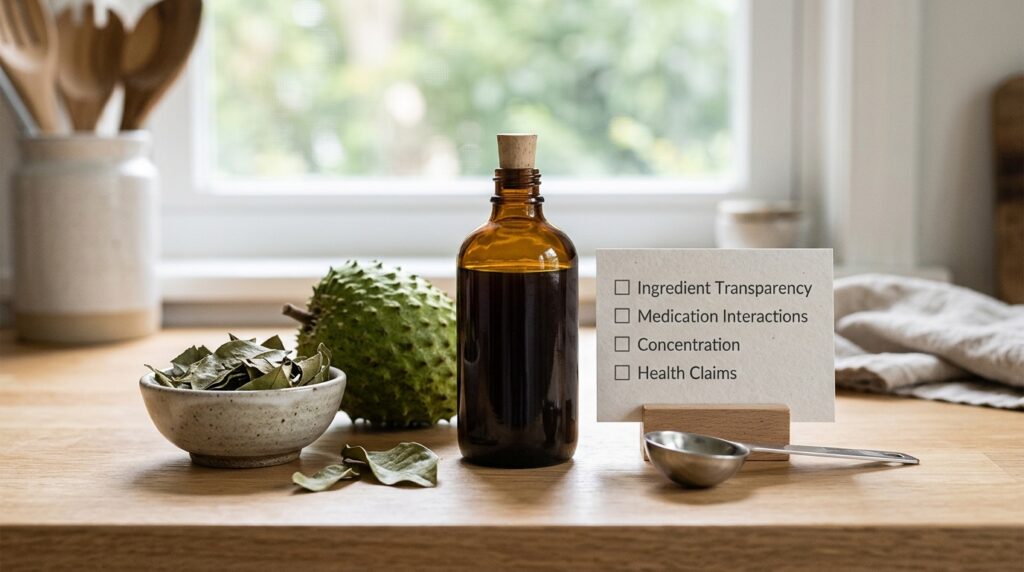
The first thing to check is the ingredient list.
If a bottle contains numerous herbs, roots, bark, and concentrated extracts, the product’s safety profile may differ markedly from that of ordinary soursop fruit.
The second thing to check is the marketing language.
If a product claims to cure cancer, reverse diabetes, eliminate hypertension, or replace prescribed medication, that should immediately raise a red flag. The FDA’s enforcement history shows that unapproved disease-treatment claims can create serious regulatory problems for sellers.
Consumers should also be aware that herbal bitters can vary considerably in concentration and manufacturing quality.
A reputable label should clearly identify ingredients, serving instructions, and manufacturer information. Avoid products with mysterious proprietary blends that make dramatic health promises but provide little information about what is actually inside.
Does Soursop Cure Cancer?
This is arguably the most important myth to address when discussing why is soursop illegal.
Soursop has attracted attention because certain compounds from the plant have shown biological activity in laboratory research. Some studies have reported effects against cancer cell lines or in animal models.
But this does not prove that soursop cures cancer in humans.
Memorial Sloan Kettering states that graviola is promoted as an alternative cancer therapy but that there is no proof of benefit for cancer patients.
The FDA’s enforcement actions reinforce the same principle from a regulatory perspective. Companies cannot simply take laboratory findings and turn them into claims that a tea, capsule, or leaf product cures cancer without meeting the legal requirements that apply to drugs.
This is an important example of how misinformation spreads.
A laboratory study may show that a compound affects cancer cells.
A headline then says the fruit “kills cancer.”
A social-media post turns that into “soursop is 10,000 times stronger than chemotherapy.”
Finally, another post claims the government banned soursop because pharmaceutical companies are afraid of it.
That entire chain can be built on a small piece of legitimate scientific research that has been exaggerated at every stage.
The responsible conclusion is much simpler: soursop compounds are scientifically interesting, but soursop has not been established as a replacement for proven cancer treatment.
Soursop vs. Soursop Supplements: Why the Difference Matters
One of the most useful things consumers can learn is that whole foods and concentrated supplements are not interchangeable.
Eating a portion of fruit means consuming a complex mixture of water, fiber, carbohydrates, vitamins, minerals, and plant compounds in their natural food matrix.
A capsule or extract may concentrate specific compounds.
This difference is relevant when considering potential toxicity.
Research on annonacin has raised questions about neurotoxicity because the compound can interfere with mitochondrial energy metabolism in experimental models. Studies have investigated its effects on dopaminergic neurons and other brain cells.
However, scientists still need more research to determine exactly how laboratory findings translate to real-world human consumption patterns.
That is why a responsible article should not claim that eating one serving of fresh soursop will cause neurological disease.
At the same time, it is reasonable to be cautious about consuming concentrated products every day for long periods when the long-term human safety data are limited.
Why Do Some People Think Soursop Is Banned?
The internet has created a perfect environment for confusion around this fruit. A person sees an import alert. Someone else sees an FDA warning letter. Another person reads a study about annonacin. A fourth person sees that fresh fruit is difficult to find in some markets.
All four facts are then combined into one dramatic statement: “Soursop is illegal.” But that statement leaves out the most important details.
The reality is that different authorities regulate different parts of the supply chain.
Agricultural agencies may control imports to reduce pest risks. Food regulators may investigate contaminated or improperly processed products. Drug regulators may take action against companies making unauthorized disease claims. Scientists may study potential toxicity.
These are separate issues.
Once you understand that, the question why is soursop illegal becomes much easier to answer.
It is usually not because governments have declared the entire fruit illegal.
Instead, restrictions can arise because of how the product enters the country, what part of the plant it contains, how it is processed, and what the seller claims it can do.
Expert Tips for Buying and Consuming Soursop
If you enjoy soursop or are considering trying it, a few practical habits can help you make more informed choices.
1. Know which part you are consuming
The flesh, leaves, seeds, bark, and concentrated extracts are not identical. The fact that one part is traditionally consumed does not automatically mean every part is safe to ingest.
2. Treat seeds as non-edible
Remove the seeds from the fruit rather than chewing them. Avoid products that contain crushed or powdered soursop seeds unless they have a legitimate, clearly documented purpose and safety information.
3. Be skeptical of miracle claims
If a product claims to cure several unrelated diseases at once, that is a warning sign. Extraordinary health claims require strong evidence.
4. Don’t confuse laboratory research with human evidence
A test-tube study can help scientists discover interesting compounds. It cannot by itself prove that a fruit, tea, or supplement treats a disease in humans.
5. Consider medication interactions
People taking medication for blood pressure or blood sugar should be particularly careful with concentrated herbal products, as interactions may occur.
6. Choose transparent products
Look for clear ingredient lists and reputable manufacturers. Avoid products that hide their ingredients behind vague proprietary blends.
7. Don’t replace medical treatment
If you have cancer, diabetes, hypertension, or another serious condition, do not replace prescribed treatment with soursop tea, Soursop Bitters, or supplements.
8. Remember that “natural” is not the same as “risk-free”
Plants contain biologically active chemicals. Some can be beneficial, some can interact with medication, and some can be harmful at certain doses.
Pros and Cons of Soursop
| Potential Advantages | Potential Concerns |
|---|---|
| Provides variety as a tropical fruit | Seeds should not be intentionally consumed |
| Contains dietary fiber | Some plant compounds have raised neurotoxicity concerns |
| Can be used in smoothies and beverages | Long-term safety of concentrated products is uncertain |
| Has traditional herbal uses | Medical claims are often unsupported |
| Contains bioactive plant compounds being studied | May interact with blood-pressure or blood-sugar medications |
| Available in fresh, frozen, and processed forms | Import rules can vary by country and product |
The most balanced approach is to see soursop as a food with interesting traditional and scientific history—not as a miracle cure and not as a universally forbidden fruit.
How to Tell Fact From Fiction About Soursop
When you encounter a viral claim about soursop, ask five questions.
First, is the source talking about the fruit or a supplement?
This single distinction can change the entire discussion.
Second, is the source referring to a laboratory study or a human clinical trial?
Laboratory evidence can be valuable, but it does not automatically translate into medical effectiveness.
Third, is the source discussing an import restriction or a complete ban?
These are not the same thing.
Fourth, is the claim about safety or legality?
A product can be legal but still have potential health risks. Conversely, a product can face an import restriction even when the underlying food is not universally illegal.
Fifth, does the claim come from an official regulator or a viral social-media post?
For regulatory questions, official agencies are usually the best place to start.
This approach is useful not only for soursop but for almost every trending food and herbal remedy.
The Bottom Line: Why Is Soursop Illegal?
So, why is soursop illegal?
The most accurate answer is that soursop is not simply or universally illegal. The controversy stems from several issues that are often conflated.
Fresh soursop and processed soursop products may be subject to agricultural and food safety regulations. Certain imported products may receive additional scrutiny, particularly when regulators have concerns about contamination or the presence of seeds. The FDA’s current import alert specifically discusses guanabana products and concerns involving soursop seeds and acetogenins.
Soursop has also become controversial because of its reputation as a natural cancer remedy. Scientific research has investigated potentially active compounds, but major medical authorities do not recognize soursop as a proven cancer treatment. Companies that market soursop products as cures or treatments can face regulatory action because such claims may result in the products being treated as unapproved drugs.
There are also legitimate scientific questions about acetogenins such as annonacin. Experimental research has found neurotoxic effects, and researchers have investigated possible relationships between Annonaceae consumption and atypical neurological disorders. However, the evidence should be interpreted carefully rather than converted into the unsupported claim that ordinary consumption of soursop fruit inevitably causes neurological disease.
The most sensible conclusion is therefore neither “soursop is perfectly safe” nor “soursop is completely banned.”
The truth lies somewhere in between.
Soursop is a tropical fruit with nutritional value, traditional uses, scientifically interesting compounds, and legitimate safety questions. The exact risks and restrictions depend on whether you are talking about fresh fruit, leaves, seeds, tea, bitters, supplements, extracts, or imported products.
If you are interested in food safety, herbal products, and practical nutrition, continue exploring HomeUpright’s food and everyday health resources for more evidence-based guides.
Frequently Asked Questions
Is soursop illegal?
No, it is misleading to say that all soursop is illegal. Different forms of soursop can be subject to different regulations involving imports, food safety, supplements, and medical claims.
Why is soursop illegal in some places?
Restrictions may relate to agricultural biosecurity, imported product quality, seed contamination, or the marketing of soursop products with unauthorized medical claims. The exact rule depends on the country and the specific product.
Is soursop good for you?
Soursop can be eaten as a fruit and provides dietary fiber and other nutrients, but it should not be considered a proven treatment for cancer or other serious diseases. The safety of concentrated supplements and long-term herbal preparations is less certain than ordinary food consumption.
Are soursop seeds safe to eat?
Soursop seeds should not be intentionally eaten. They contain acetogenins and are a concern in food processing, so consumers should separate the seeds from the edible fruit pulp.
Can soursop tea cure cancer?
There is no reliable evidence that soursop tea cures cancer. Although laboratory research has investigated compounds from Annona muricata, reputable medical sources do not consider soursop a proven replacement for cancer treatment.
Final Thoughts
The biggest lesson from the debate around soursop is that a headline can be technically based on a real event and still give readers the wrong impression.
Yes, there are import restrictions on soursop.
Yes, regulators have taken action against companies making unsupported cancer claims.
Yes, researchers have raised legitimate questions about compounds found in the plant.
But none of those facts automatically means that every soursop fruit, tea, or product is illegal.
If you have been searching why is soursop illegal, the answer is to look beyond the word “banned.” Ask what form of soursop is involved, what country is regulating it, whether the issue concerns imports or health claims, and whether the evidence comes from human research or laboratory experiments.
That is where the real story begins.
The best approach is simple: enjoy foods for what they genuinely offer, be cautious with concentrated herbal products, avoid consuming soursop seeds, and never rely on unproven natural remedies as substitutes for appropriate medical care.
For more practical guides on food, home, and everyday living, explore additional articles from HomeUpright and share this guide with anyone who has wondered whether soursop is truly banned.