



Quick Answer: How to Remove Honey Stains
Scrape away excess honey gently with a spoon or dull knife. For washable clothes, rinse the stain from the back with cool water, apply liquid laundry detergent, let it sit for 5–10 minutes, then wash according to the care label. Check that the stain is completely gone before using a dryer. For carpet, remove excess honey first, then blot with a mild dish-soap-and-water solution without rubbing.
How to Remove Honey Stains From Clothes, Carpet & Fabric
Honey is sticky, but most honey stains are removable if you treat them before applying heat. The best method depends on where the spill landed, because washable clothing, carpet, delicate fabrics and hard surfaces need slightly different treatment.
This guide shows you how to remove fresh and dried honey stains from clothes and carpet, what to do with delicate materials, and which mistakes to avoid so you do not make the stain harder to remove.
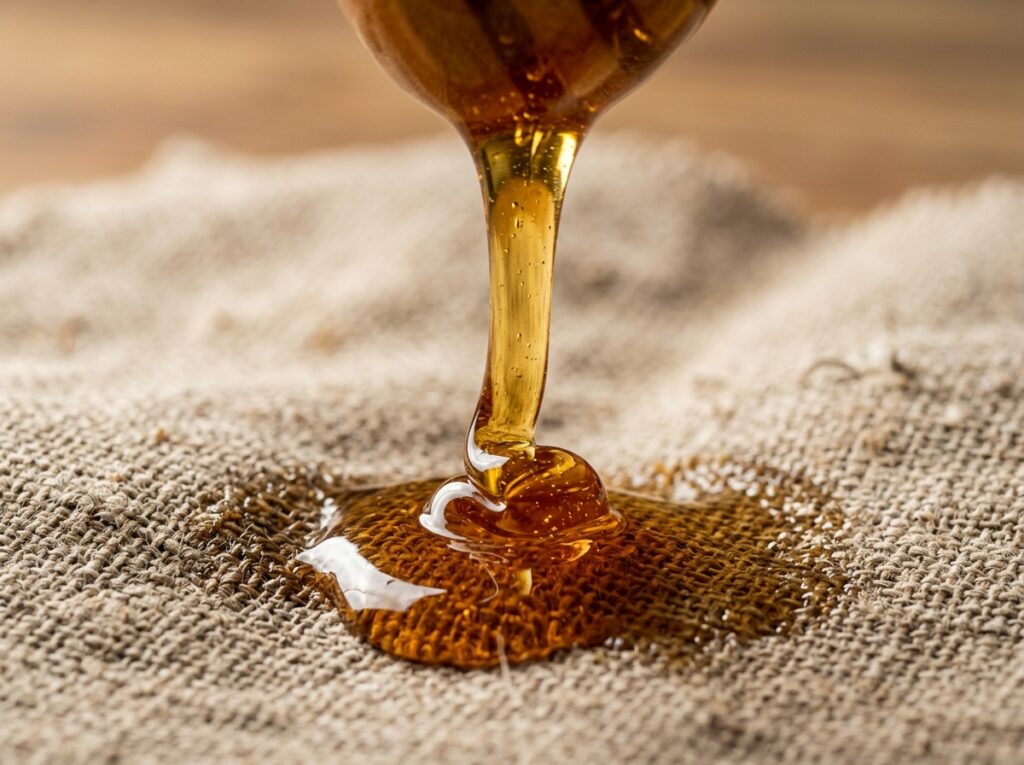
What You’ll Need Before You Start
You don’t need a cabinet full of speciality products to handle this. Most of what works is already sitting in your kitchen or laundry room, and having it staged before you start saves precious minutes while the stain is still fresh.
- A dull knife, spoon, or plastic scraper to lift excess honey without pushing it deeper
- Liquid dish soap (a grease-cutting formula works well because honey behaves similarly to a thick syrup)
- Cool or lukewarm water, never hot, for the first rinse
- A clean white cloth or paper towel for blotting
- An enzyme-based laundry pretreatment or oxygen-based stain remover for set-in spots
- White vinegar, diluted, for hard surfaces like tile and vinyl
- A soft-bristled brush or old toothbrush for grout lines and carpet fibers
How to Remove Honey Stain From Clothes (Step-by-Step)
For most washable clothing, the treatment depends on whether the honey is still fresh or has already dried. Check the care label first, then use the appropriate method below.
Removing a Fresh Honey Stain From a Shirt
A fresh spill is the easiest version of this problem, and acting within the first few minutes dramatically improves your odds of a complete removal. Follow this sequence and resist the urge to rub the area, since rubbing pushes sticky sugar deeper into the weave instead of lifting it out.
- Scrape off any excess honey with a spoon or dull knife, working from the outer edge of the stain toward the center so you don’t spread it further.
- Turn the garment inside out and run cool water through the back of the fabric for several minutes, which pushes the honey out of the fibers rather than deeper in.
- Apply a small amount of liquid dish soap directly onto the stain and work it in gently with your fingers or a soft toothbrush.
- Let the soap sit for five to ten minutes so it has time to break down the sugar bond.
- Wash the garment on the warmest setting the fabric care label allows, but never use hot water until you’ve confirmed the stain is fully gone.
- Air-dry or line-dry the item first. A dryer’s heat can permanently set any trace of honey that’s still hiding in the fibers.
This same sequence is what makes how to remove a honey stain from a shirt such a manageable job when you catch it early, and it’s nearly identical to what you’d do for any other sugar-based spill like syrup or soda.
Removing a Dried or Set-In Honey Stain
Dried honey behaves differently because the sugars have already partially crystallized and bonded with the fabric surface. You’ll need a bit more patience here, but the stain is still very much removable.
- Soak the garment in cool water for 15 to 20 minutes to begin softening the crystallized sugar before you touch it.
- Apply an enzyme-based pretreatment or oxygen-based stain remover directly to the spot and let it work for the time listed on the product label, usually 10 to 15 minutes.
- Gently agitate the area with a soft brush, checking frequently so you don’t damage delicate weaves.
- Rinse thoroughly with cool water, then wash as usual, checking the stain is gone before it ever goes near a dryer.
- Repeat the pretreatment step if any shadow of the stain remains, since it’s far easier to treat honey twice than to fight a heat-set stain once it’s baked in.
If you’re wondering how to get a honey stain out of clothes that have already been through the wash once and dried, don’t panic. It just means the sugar has hardened further, and you may need two or three rounds of the soak-and-treat cycle above instead of one.
Honey Stains on Silk, Wool, and Other Delicates
Delicate protein-based fibers like silk and wool need a gentler hand because their structure is more vulnerable to both heat and friction than sturdy cotton or denim. The core rule stays the same: keep the water cool and skip the scrubbing. But a few adjustments matter here specifically.
- Blot rather than rub, using a clean white cloth pressed gently against the stain instead of dragging it across the fabric.
- Use a wool-safe or silk-safe detergent rather than a standard heavy-duty formula, which can be too harsh for protein fibers.
- Add a small amount of white vinegar to the rinse water to help neutralize residue and prevent the stain from attracting dust as it dries.
- Lay the item flat to air dry rather than hanging it, since wet delicate fabric can stretch out of shape on a hanger.
Treating silk and wool this carefully is the difference between a stain that disappears completely and one that leaves a faint, permanent watermark behind; protein fibers are simply less forgiving of shortcuts than cotton is.
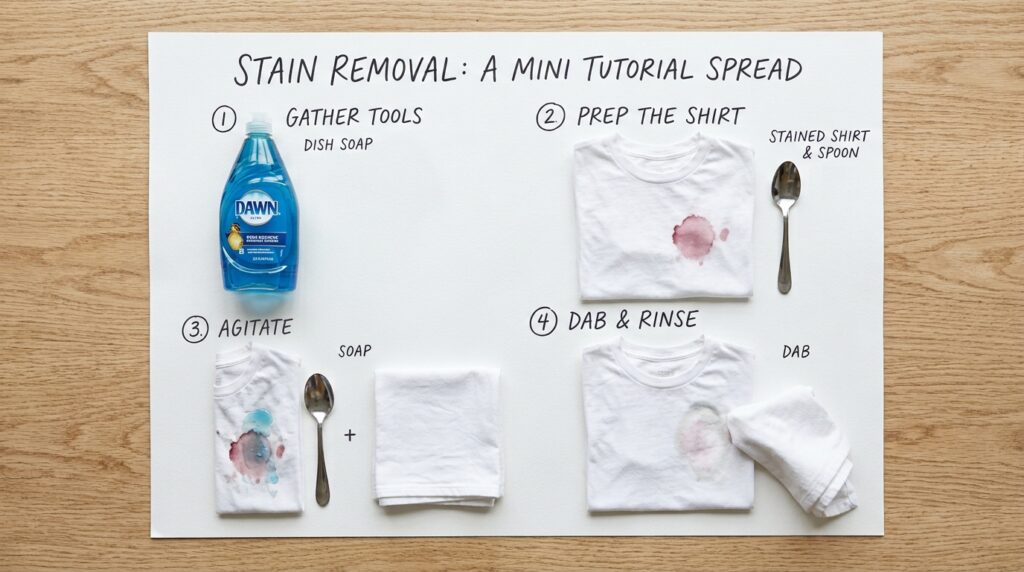
How to Remove Honey Stains From Carpet
Carpet fibers trap sticky residue in a way flat fabric doesn’t, so the scrape-and-blot approach needs a slightly different order of operations. The goal is to lift as much honey as possible before you introduce any liquid, since wet honey on carpet has a tendency to spread into a wider stain the moment you add water carelessly.
Start by scraping up every bit of visible honey you can with a spoon, working carefully so you don’t press it further into the pile. Mix one tablespoon of dish soap with two cups of warm water in a bowl, then dip a clean cloth into the solution and blot the stained area, moving from the outside edges inward. Switch to a fresh section of cloth frequently, because reusing the same soiled spot just transfers sugar back onto the carpet instead of lifting it away.
Once the soapy residue is blotted up, go back over the spot with a cloth dampened in plain water only, since leftover soap actually attracts new dirt over time and can make the treated area look dingy well after the honey itself is gone. Press dry towels firmly into the area to pull out as much moisture as possible, then let the spot air dry completely, ideally with a fan angled toward it to speed things along.
If your carpet is prone to soil buildup in high-traffic zones, it’s worth reading through our full guide to lifting grease and food residue from carpet fibers on Home Upright, since many of the same blotting and rinsing principles apply whether the spill is honey, oil, or a sauce.
If you’re dealing with a darker drink stain instead, see our guide on how to remove coffee stains from carpet.
How to Remove Honey Mustard Stain
Honey mustard contains ingredients that can leave a stronger colored stain than plain honey. Remove excess sauce, rinse washable fabric from the back with cool water, and pretreat before washing. For a complete treatment method, see our guide to how to remove mustard stains from clothes.
| Stain Type | Best First Treatment | Water Temperature | Key Risk If Rushed |
|---|---|---|---|
| Fresh honey (clothes) | Dish soap + cool water | Cool | Heat caramelizes sugar into a set stain |
| Dried honey (clothes) | Enzyme pretreatment, soak first | Cool, then warm wash | Skipping the soak leaves crystallized sugar behind |
| Honey mustard (clothes) | Powder detergent + oxygen bleach paste | Cool rinse, hot wash | Turmeric dye sets permanently if not flushed first |
| Honey mustard (carpet) | Vinegar + hot water blot | Warm | Scrubbing spreads the yellow dye further |
| Honey on tile/grout | Dish soap, then diluted vinegar | Warm | Vinegar can etch natural stone if left too long |
How to Remove Honey Stains From Tiles
Hard flooring is genuinely the easiest surface to treat, which is good news if a jar shattered across the kitchen floor. Wipe up the bulk of the spill with a damp cloth or paper towel first, then mop the area with warm water and a few drops of dish soap to dissolve any remaining stickiness.
Grout lines are the part that actually causes trouble, because the porous surface traps sugary residue in a way smooth tile never does. Dip a soft-bristled brush into the soapy water and work it into the grout lines using small circular motions, since Hunker’s guide to cleaning sticky tile floors notes that grout requires extra scrubbing attention specifically because it doesn’t repel liquid the way glazed tile does.
If a hazy film remains after mopping, a diluted white vinegar solution (roughly one part vinegar to four parts water) breaks down leftover sugar residue on ceramic and porcelain tile effectively. Be careful with natural stone tile like marble or travertine, though, since the acid in vinegar can etch the surface if it sits too long, so rinse with plain water promptly after applying it. For a deeper seasonal clean once the honey itself is gone, our step-by-step grout restoration guide walks through how to get discolored grout lines looking new again.
Why Honey Stains Are So Stubborn (And How to Use That Against It)
Honey is mostly glucose and fructose, two simple sugars that are naturally hygroscopic, meaning they draw moisture from the surrounding air. That’s part of why a honey stain can feel tacky again days later even after you thought it was dry, and it’s also the reason honey clings so aggressively to fibers instead of just sitting on top of them the way a water-based spill would.
The single most important fact to remember is that honey is water-soluble. According to Iowa State University Extension’s AnswerLine program, sugar-based stains like honey respond best to cool water treatment rather than hot water, because heat can cause sugars to caramelise against the fibres and lock the discolouration in permanently. That single detail explains why so many people who reach for the hottest tap water they can stand end up with a stain that’s harder to remove than the one they started with.
There’s a second reason honey is trickier than a simple sugar spill: it also contains trace enzymes, pollen, and wax particles left over from the hive, all of which can leave a faint yellowish tint behind even after the sticky sugar itself has rinsed away. That’s why a two-step approach- first dissolving the sugar, then treating any remaining discoloration; consistently outperforms a single detergent pass, especially on fabrics that already have a light or white base color.
Common Mistakes That Make Honey Stains Worse
A surprising number of “failed” honey stain treatments aren’t actually failures of the method. They’re failures of sequencing. These are the mistakes that show up again and again, and avoiding them matters more than which specific soap or spray you reach for.
- Using hot water first. Heat caramelizes the sugar in honey almost instantly, and a caramelized stain bonds to fibers in a way plain honey never does.
- Scrubbing instead of blotting. Aggressive rubbing spreads sticky sugar sideways into clean fibers instead of lifting it out, which is exactly how a small drip turns into a wide smear.
- Drying before confirming the stain is gone. A dryer’s heat has the same caramelizing effect as hot water, and it can lock in a stain that a second wash would have removed completely.
- Vacuuming a fresh spill on carpet. This just transfers stickiness onto the vacuum roller, which then spreads it onto more of the carpet the next time you clean.
- Using vinegar on natural stone. Vinegar’s acidity is excellent on ceramic and porcelain but can etch marble, travertine, and other natural stone surfaces if it isn’t rinsed away quickly.
Expert Tips for Preventing Honey Stains in the First Place
Cleaning up a spill well is useful, but avoiding one altogether is even better, and a few small habit changes cut down on honey accidents significantly. According to guidance published by the National Honey Board, the industry’s federally recognized research and promotion organization, honey’s viscosity naturally increases in cool conditions and decreases when warmed slightly, which is worth knowing before you reach for a jar straight out of a cold pantry and pour with more force than you meant to.
- Use a dipper with a built-in drip catch, or set the honey jar on a small plate so any drips land somewhere easy to wipe instead of on carpet or clothing.
- Warm a crystallized honey jar gently before pouring, since forcing a thick, stubborn stream out of a jar is one of the most common ways honey ends up flying off a spoon and onto a shirt.
- Keep a damp cloth within arm’s reach whenever honey comes out for breakfast or baking, so a drip gets caught within seconds rather than minutes.
- Store honey jars away from counter edges, especially in households with young kids or pets who might knock a container over reaching for something else.
Pros and Cons of the Most Common Honey Stain Removal Methods
| Method | Pros | Cons |
|---|---|---|
| Dish soap + cool water | Gentle on most fabrics, widely available, works on fresh stains fast | Less effective alone on fully dried or set-in stains |
| Enzyme-based pretreatment | Breaks down set-in sugar residue well, safe for most washable fabrics | Requires dwell time, not ideal for delicate silk |
| White vinegar solution | Excellent on tile, grout, and hard surfaces | Can etch natural stone, too acidic for some delicate fibers |
| Oxygen-based bleach paste | Very effective on turmeric-based honey mustard stains | Not colorfast on all fabrics; always spot-test first |
| Hydrogen peroxide | Lifts stubborn yellow tinting from carpet and whites | Can lighten colored fabric or carpet if overused |
When It’s Worth Calling a Professional
Most honey stains never need to leave your kitchen sink, but a few situations genuinely call for a professional cleaner instead of another round of DIY treatment. Upholstered furniture with delicate or antique fabric, wool area rugs with intricate dye work, and anything labeled “dry clean only” all carry a real risk of permanent damage if a home remedy goes wrong, so it’s worth weighing the cost of a professional cleaning against the value of the item itself.
A second scenario worth flagging is a honey stain that’s been sitting for weeks rather than hours, especially on carpet or upholstery where the sugar has had time to attract dust, oxidize slightly, and bond more deeply into the fibers. At that point, a carpet cleaning service with access to hot-water extraction equipment and professional-grade enzyme treatments can often succeed where a spot treatment at home has already been tried and failed. There’s no shame in escalating a stubborn stain. It simply means the sugar has had more time to work its way into the material than a quick blot-and-rinse can undo.
How Long Honey Stain Removal Actually Takes
Setting realistic expectations helps avoid the common mistake of giving up on a treatment too early or, worse, reaching for something harsher out of frustration. A fresh honey drip on clothing typically takes no more than ten to fifteen minutes from the first scrape to tossing the item in the wash, which is genuinely one of the fastest stain-removal jobs in ordinary laundry care.
A dried or set-in stain is a longer process, usually requiring a 15-to-20-minute soak followed by a treatment period of another 10 to 15 minutes before washing, and it isn’t unusual to need two full cycles of that sequence for a stain that’s a day or two old. Carpet and grout treatments tend to fall in between, since the blotting process itself takes patience even though each individual step is quick, and rushing the rinse-and-dry stage is what most often leads to a soap residue that looks like a leftover stain days later.
Frequently Asked Questions
Does honey stain permanently if it’s left to dry?
Not usually, though a fully dried stain takes more patience than a fresh one. Soaking the area in cool water to soften the crystallized sugar before treating it with an enzyme cleaner is typically enough to lift even a stain that’s been sitting for a day or two.
Can I use hot water to remove a honey stain faster?
It’s better to avoid hot water until you’ve confirmed the honey is completely gone, since heat causes the sugar in honey to caramelize against the fibers, which can turn a treatable stain into a permanent one. Cool or lukewarm water should always be your first move.
Is there a difference between removing honey and removing honey mustard stains?
Yes, and it’s an important one. Plain honey is mostly sugar and responds well to dish soap and cool water, while honey mustard also contains turmeric, a natural dye that needs an oxygen-based or powder detergent treatment to fully lift, as noted in extension research on mustard stain removal.
Will vinegar damage my tile or countertop while removing a honey stain?
Diluted vinegar is safe on ceramic and porcelain tile. Still, it should be avoided or used sparingly on natural stone surfaces like marble or granite, since the acid can etch the surface over time if it isn’t rinsed away promptly.
Final Thoughts
Honey stains look intimidating because the sticky residue seems to spread the moment you touch it, but the underlying chemistry is actually on your side. Keep the water cool, blot instead of scrub, and confirm the stain is fully gone before any heat touches the fabric, and you’ll handle everything from a fresh drip on a sleeve to a dried honey mustard smear on the carpet without much trouble at all. If you’re tackling a bigger cleanup project this week, browse more practical, tested guides over on Home Upright for room-by-room stain and cleaning solutions that go beyond the basics.