



If you type how to plant succulents into Google right now, you will get a hundred pages that all say the same three things: use well-draining soil, don’t overwater, give it light. That advice is not wrong, but it is not the whole story, and it is why so many beginners still end up with a mushy, see-through stem sitting in a pretty pot within a month. I killed my first three succulents this exact way before I figured out what nobody was telling me: the pot, the soil, and the water schedule all have to work together, not separately.
This guide is longer than most because I am telling you the parts that usually get skipped: how to actually plant succulents in containers so the roots do not sit in wet soil, what changes when you move them indoors versus outside, and the propagation tricks (leaf, cutting, water, and no-soil methods) that most blog posts either rush through or get slightly wrong. By the end, you will know exactly how to plant succulents in pots, care for them through the seasons, and multiply the ones you already own for free.
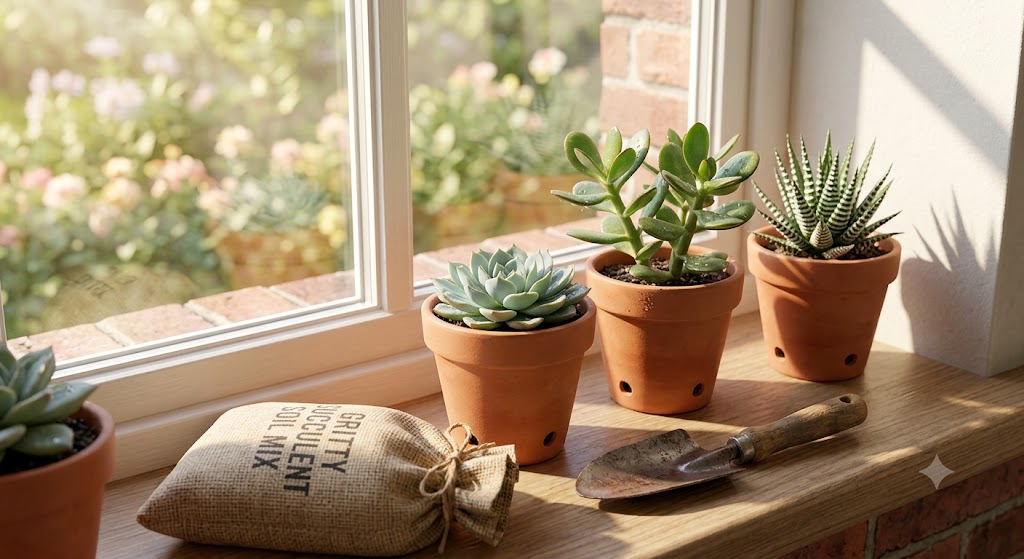
Why Succulents Grow Differently Than Other Houseplants
Before you plant a single succulent, it helps to understand why the normal plant rules do not apply here. Succulents store water inside their thick, waxy leaves and stems, which is exactly what lets them survive weeks without rain in their native habitats. That storage system is also the reason overwatering kills more succulents than neglect ever does. The roots are built for dry stretches, not constant moisture.
According to SDSU Extension, succulents are represented in more than 40 plant families and grow naturally on every continent except Antarctica, which is why you will find such wildly different shapes, from flat rosettes to columns to trailing vines. What they nearly all share is that same water-storing tissue, and that single trait should guide almost every planting decision you make from here on.
This is also why the standard bag of potting soil from the garden center is usually the wrong choice. Regular potting mix is designed to hold water for thirsty plants like ferns or tomatoes. Succulents need the opposite: a mix that drains fast and dries out completely between waterings.
There is also a biological reason succulents behave this way, and it is genuinely useful to know before you plant one. Most common houseplants use photosynthesis, in which their leaf pores open during the day to absorb carbon dioxide, allowing moisture to escape at the same time. Succulents instead rely on a process called Crassulacean Acid Metabolism, or CAM, in which the leaf pores stay closed during the heat of the day and open only at night to take in carbon dioxide, which is then stored and used for photosynthesis once the sun is back out.
Ask A Biologist at Arizona State University explains that this night-time gas exchange is precisely what allows desert plants to lose far less water than ordinary plants. In practical terms for your planting routine, it means a succulent is metabolically built to go long stretches without water, so watering it on the same schedule as a fern or a pothos runs counter to its biology rather than supporting it.
Choosing the Right Pot and Soil Before You Plant
Getting this step right solves about 80% of succulent problems before they start. I learned this the hard way after my first echeveria rotted from the base up in a cute ceramic pot with no hole in the bottom. It looked perfect on my shelf, but it killed the plant in three weeks.
Pot requirements:
- Always choose a container with at least one drainage hole. Illinois Extension notes that a high-light, well-drained container setup is one of the biggest factors in a healthy succulent garden.
- Terracotta and unglazed clay pots are ideal because their porous material allows excess moisture to evaporate through the walls, not just the bottom.
- If you love a pot without a hole, use it as a decorative outer sleeve, keeping the succulent in its plastic nursery pot inside it, and lift it out to water.
Soil requirements:
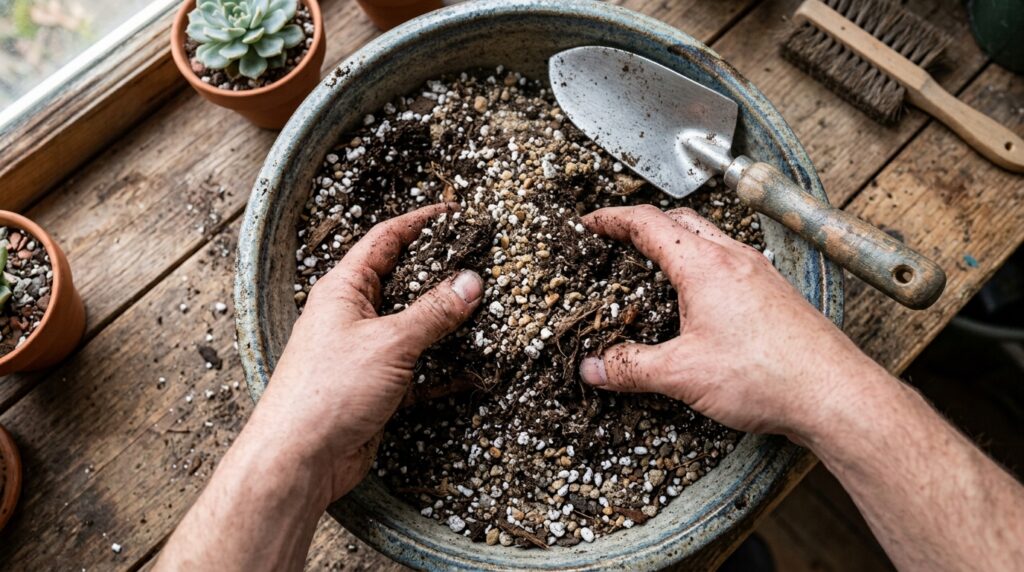
Succulents need a gritty, fast-draining mix, not standard potting soil. You can buy a bag labeled specifically for cacti and succulents, or mix your own. Here is the ratio I actually use at home, which matches what most extension offices recommend:
| Mix Type | Ratio | Best For |
|---|---|---|
| Store-bought cactus/succulent mix | Ready to use | Beginners, small pots |
| DIY basic mix | 1 part potting soil + 1 part coarse sand | Indoor pots, general use |
| DIY gritty mix | 1 part potting soil + 1 part perlite + 1 part coarse sand or pumice | Outdoor pots, wetter climates |
UMN Extension suggests testing a mix by moistening it and squeezing it in your hand. If it holds a loose clump that falls apart easily when poked, the drainage is about right. If it stays packed like mud pie, add more sand or perlite.
How to Plant Succulents in Containers, Step by Step
This is the core process for how to plant succulents in pots, whether you bought a nursery six-pack or are repotting something that has outgrown its container.
- Let the soil dry out first. If you are repotting an existing succulent, stop watering it about a week beforehand so the roots are dry and less likely to snap or bruise.
- Add a layer of gritty mix to the new pot, filling it about a third of the way, and add coarse gravel at the very bottom if the pot has no drainage hole (this will not replace real drainage, but it slows waterlogging).
- Gently remove the succulent from its old container by tipping the pot sideways and easing the plant out by the base of the stem, not by pulling on the leaves.
- Loosen the root ball slightly with your fingers to release compacted soil, especially if roots are circling the bottom.
- Set the plant in the new pot so the base of the leaves sits just above the soil line, then backfill around the roots with more mix, pressing gently — not packing it tight.
- Wait 3 to 7 days before the first watering. This gives any bruised or broken roots time to heal, which matters more than people think; watering fresh-planted roots too soon is a common cause of early rot.
- Water thoroughly once you do water, letting it run out of the drainage hole completely, then let the pot dry all the way before the next watering.
If you are planting several succulents together in one container, leave enough space between each plant for its mature size. A mistake I made in my first arrangement was packing five rosettes into a 6-inch pot, which looked great for a month but became a tangled, rotting mess by summer because there was no airflow between the leaves.
How to Plant Succulents Indoors
Planting succulents indoors follows the same basic steps as above, with a few adjustments that matter much more indoors than outdoors in the ground.
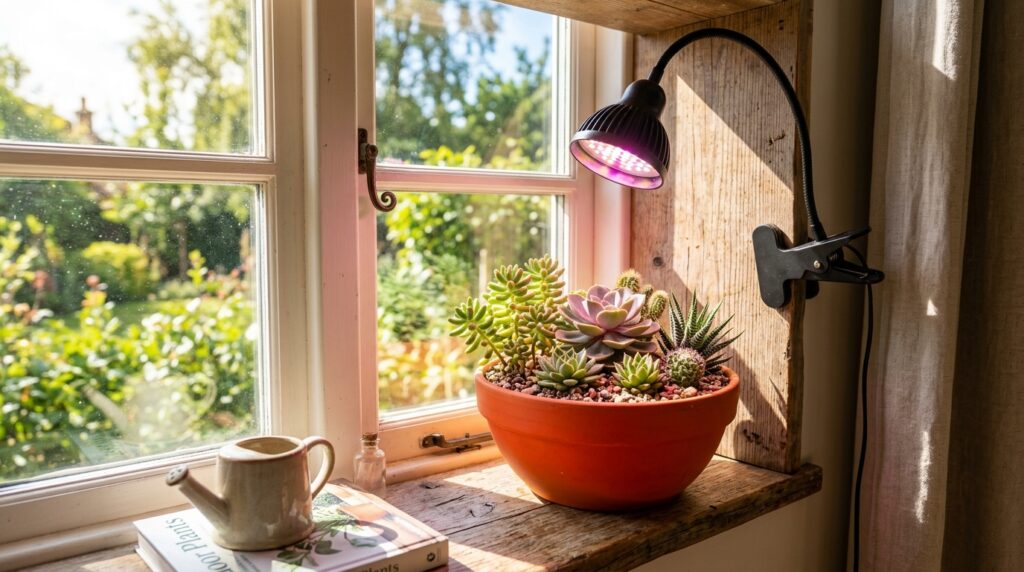
- Light is the biggest limiting factor indoors. WVU Extension points out that succulents need plenty of light to thrive, and a bright, sunny windowsill is the minimum starting point. A south- or west-facing window is usually your best bet in a US home.
- Rotate the pot every week or two so all sides of the plant get even light. Otherwise, it will stretch and lean toward the window, a problem called etiolation.
- Skip the saucer of standing water. If you use a drip tray under an indoor pot, empty it after each watering instead of letting the pot sit in a puddle.
- Indoor succulents dry out slower than outdoor ones because there is no wind or direct sun baking the soil, so you will water less often than you might expect. Check the soil with a finger before assuming it needs water.
- If your indoor light is genuinely limited (a north-facing apartment window, for example), a small grow light positioned 6 to 12 inches above the plant for part of the day can make a real difference, something confirmed by UMN Extension’s guidance on supplementing natural light for cacti and succulents.
How to Plant Succulents Outside
If you are planting directly in your garden rather than a container, there is one extra step people skip: checking whether your climate can support succulents left outdoors year-round, versus treating them as a seasonal container plant you bring inside before frost.
- Check your USDA hardiness zone before planting succulents directly in the ground. Many popular varieties, like sempervivum (hens and chicks) and some sedums, handle cold winters well, while echeverias and most aloes need to come indoors before the first frost.
- Choose a spot with excellent natural drainage, ideally a slope or raised bed, since garden soil in a flat, low spot tends to hold water after rain, just like a bad potting mix.
- Amend heavy clay soil with the same coarse sand-and-grit ratio used for container mixes before planting, working it into the top 8 to 12 inches of soil.
- Space plants for their mature spread, not their nursery-pot size, since outdoor succulents often grow wider than expected once they are in the ground with room to spread.
- If you like the idea of pairing succulents with other low-maintenance, visually striking plants in the same bed, HomeUpright’s guide to dark flowers covers several dramatic, drought-tolerant options that share similar sun and soil needs.
Illinois Extension notes that many gardeners keep succulent containers outdoors for the warm months and move them indoors before temperatures drop, which is a lower-risk approach than planting tender varieties permanently in the ground if you are not sure your zone can support them year-round.
How to Plant Succulents for Beginners: Start With These
If this is your first attempt, skip the delicate, expensive varieties you see on plant influencer accounts and start with something nearly impossible to kill. This was the single biggest mindset shift for me. I stopped buying whatever looked prettiest at the store and started buying what was actually forgiving.
- Jade plant (Crassula ovata): thick, sturdy leaves and very tolerant of missed waterings.
- Sempervivum (hens and chicks): cold-hardy and often survives outdoors year-round in temperate US zones.
- Haworthia: handles lower light better than most succulents, good for apartments without a bright window.
- Snake plant (Sansevieria): technically a succulent, extremely tolerant of neglect and low light.
- Echeveria: beautiful rosette shape, slightly less forgiving than the plants above but still a solid beginner choice with bright light.
Common beginner mistakes to avoid, based on what actually went wrong for me and for me I have talked to since:
- Watering on a fixed schedule (every Sunday, for example) instead of checking if the soil is actually dry.
- Using a pot with no drainage hole because it matched the decor.
- Placing a new succulent in direct, intense afternoon sun immediately, which can scorch leaves that have not adjusted from a shaded nursery greenhouse.
- Fertilizing too often; succulents need very little, and HomeUpright’s fertilizer dosing guide is worth reading before you feed any potted plant, succulents included, since over-fertilizing is just as damaging as overwatering.
How to Plant Succulent Cuttings
Stem cuttings are the fastest way to turn one leggy or overgrown succulent into several new plants, and it is also how you rescue a plant that has stretched too tall and toppled over.
- Water the parent plant a few days beforehand so the stem and leaves are fully hydrated before you cut.
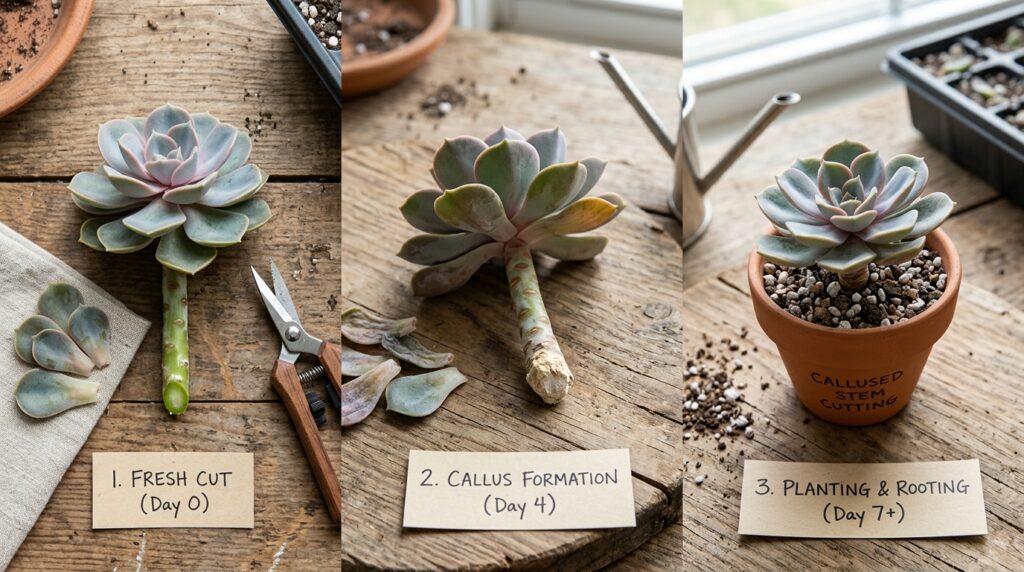
- Cut a healthy section of stem, 3 to 6 inches long, using clean, sharp scissors or pruning snips. Iowa State Extension recommends removing the lower leaves from the bottom half of the cutting before letting it dry.
- Let the cut end callus over by leaving it on a dry tray or plate, out of direct contact with soil, for several days. This callus prevents the open wound from rotting when it comes into contact with soil or water.
- Plant the callused cutting in the same gritty succulent mix described earlier, burying just the bare bottom section where the leaves were removed.
- Hold off on watering for about a week, then water lightly and let the soil dry fully before watering again while the cutting establishes roots.
The stump left behind on the parent plant is not wasted, either — the existing root system will often push out several new baby rosettes right where the cutting was removed, which is a fast way to end up with more plants than you started with.
How to Plant Succulents from Cuttings and Leaves (Full Propagation Guide)
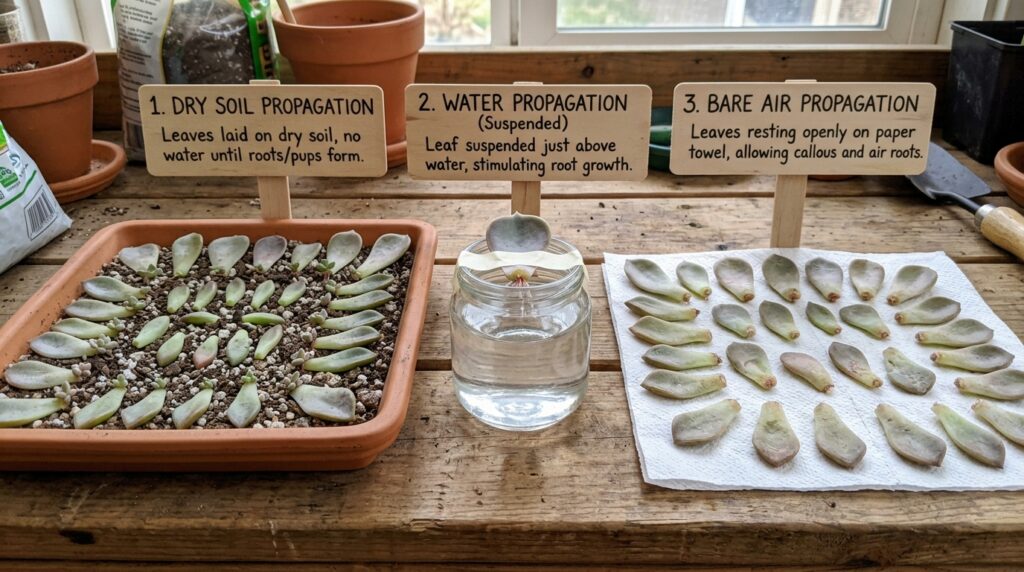
This is the part most guides rush through, but it is genuinely the most rewarding step once you understand it, because a single healthy succulent can realistically produce dozens of new plants for free. There are three separate methods, and picking the wrong one for your situation is usually why a propagation attempt fails.
Method 1: Leaf Propagation in Soil (most common)
- Gently twist a healthy, plump leaf from near the base of the plant, side to side, until it detaches cleanly. A leaf that snaps and leaves part of itself behind on the stem usually will not root.
- Let the leaf callus for 2 to 3 days on a dry tray, out of direct sun.
- Lay the calloused end on top of dry succulent soil. Do not bury it and do not water it yet.
- Wait for tiny roots or a miniature rosette to appear at the base; this can take anywhere from two weeks to two months, depending on the species.
- Once you see roots, you can begin lightly misting around them, gradually increasing the amount of water as the baby plant grows and the original leaf shrivels and detaches on its own.
Method 2: Water Propagation
This works especially well if you want to actually watch the roots develop, since a clear glass jar lets you check progress without disturbing the leaf.
- Follow the same callusing step first. This is non-negotiable even for water propagation, since a fresh, uncallused cut absorbs too much moisture and rots.
- Suspend the calloused leaf or stem tip so only the very end touches the water’s surface, using a jar with a narrow opening or a piece of plastic wrap with holes poked through it to hold the leaf in place.
- Change the water every few days to keep it from stagnating.
- Once roots have developed to a reasonable length, transfer the cutting into gritty succulent soil rather than leaving it in water indefinitely.
Method 3: Air (Dry) Propagation: How to Plant Succulents Without Roots
This method answers a question many beginners ask: can you actually plant a succulent leaf or cutting that has no roots yet? Yes — this is the entire point of air propagation, and it is often the safest method for beginners because there is no soil or water to accidentally over-apply.
- Callus the leaf or cutting as usual, then simply lay it in a shallow tray in a bright, well-ventilated spot with no soil and no water at all.
- The leaf survives on its own stored moisture while it grows roots in response to sensing dry conditions. Adding water early actually interrupts this process and increases the risk of mold.
- Once visible roots or a tiny new rosette appears, move the cutting to soil and begin light watering as described in Method 1.
MSU Extension is direct about why this callusing step cannot be skipped in any of the three methods: a cutting placed straight into damp soil before the wound has sealed over will rot before it ever gets the chance to root.
How Often to Water Succulent Plants
Watering frequency is the most-searched succulent question, and the honest answer is that there is no universal schedule. It depends on the season, pot material, and whether it’s indoors or outdoors. That said, here is a realistic starting point.
| Season | Indoor Watering | Outdoor Watering |
|---|---|---|
| Spring / Summer (active growth) | Every 1–2 weeks, when soil is fully dry | Every 1–2 weeks, adjusted for rainfall |
| Fall / Winter (dormant) | Every 3–4 weeks | Every 4+ weeks or as needed |
The safest rule, and the one I actually follow now, is to insert a finger about an inch into the soil before watering. If it feels dry all the way down, water thoroughly until it drains out the bottom. If any dampness remains, wait a few more days and check again. A succulent’s fleshy leaves store enough water that it can comfortably go without water for a while. What it cannot recover from as easily is roots sitting in soggy soil.
Warning signs to watch for:
- Squishy, translucent, or yellowing bottom leaves almost always mean overwatering or root rot.
- Wrinkled, deflated-looking leaves usually mean the plant is thirsty and needs water sooner than your current schedule allows.
- Leaves dropping at the slightest touch can point to either extreme, so check soil moisture before assuming which direction to correct in.
Light and Feeding: The Two Things Beginners Underestimate
Succulents need far less food than most houseplants, but they need a lot more light than most people assume, and getting this ratio backward is a quiet, common cause of slow decline.
Most succulents want at least 6 hours of bright light a day, and outdoor plants generally tolerate more direct sun than the same species would indoors, where the light is filtered through glass and less intense than people assume. For feeding, a diluted liquid fertilizer applied every second or third watering during the spring and summer growing season is plenty. Skip fertilizing entirely in fall and winter when the plant is dormant and not actively using extra nutrients.
If you are unsure how to dilute or measure this correctly, HomeUpright’s fertilizer dosing guide breaks down safe ratios for potted plants generally, which applies directly here since succulents are especially sensitive to over-feeding.
A Simple Succulent Care Calendar
Once your succulents are planted, care shifts with the seasons more than people expect. Here is the rough calendar I actually follow, adjusted for whichever US region you are in.
- Spring: Growth picks up as light and temperatures increase. This is the best time to repot anything that outgrew its container over winter, start new propagations, and resume light fertilizing.
- Summer: Peak growing season. Watering frequency increases slightly, especially for outdoor pots exposed to heat and wind, but always let the soil dry between waterings rather than watering on a fixed schedule. This is also prime time for taking stem cuttings, since the parent plant recovers fastest during active growth.
- Fall: Growth slows as days shorten. Begin tapering off fertilizer, and if you keep tender varieties outdoors for summer, plan to bring them inside before the first frost in your area.
- Winter: Most succulents go semi-dormant. Cut watering back to roughly once a month or even less, keep plants away from cold drafts and heating vents alike, and hold off on fertilizing entirely until growth resumes in spring.
Treating these four periods differently, rather than using one watering and feeding routine all year, is one of the simplest changes that made the biggest difference for my plants once I started paying attention to it.
Troubleshooting Common Succulent Problems
- Stretching toward the window (etiolation): almost always a light problem. Move the plant to a brighter spot or rotate it regularly, and know that a severely stretched succulent will not return to its compact shape. You may need to cut and re-root it instead.
- Root rot: caused by overwatering or a pot without drainage. Remove the plant, trim away any black or mushy roots with clean scissors, let it dry out for a few days, and replant in fresh, dry mix.
- Mealybugs or scale: wipe them off with a cotton swab dipped in rubbing alcohol, a simple method recommended by WVU Extension and one of the few pest issues succulents commonly face.
- Sunburned or scorched leaves: brown or white patches on leaves that were recently moved into stronger sun than they were used to. Ease plants into brighter light gradually over a week or two instead of switching abruptly.
Expert Tips for Long-Term Success
- Water in the morning rather than the evening, so any moisture on the leaves or soil surface has the whole day to evaporate before cooler night temperatures set in.
- Repot into a slightly larger container roughly once a year, since succulents left in the same crowded pot for too long can develop tightly bound, unhealthy roots.
- Keep a small, dedicated bag of gritty succulent mix on hand at all times. It is far cheaper to buy once than to keep guessing with regular potting soil.
- Label your propagation trays if you are rooting more than one variety at once. It is easy to forget which leaf came from which plant once several trays are going at the same time.
Pros and Cons of Growing Succulents
- Extremely low water and maintenance needs once established.
- Easy and nearly free to multiply by leaf cuttings or division propagation.
- Wide range of shapes and colors suited to both indoor and outdoor spaces.
- Tolerant of inconsistent care, making them forgiving for beginners and busy households.
- Very sensitive to overwatering compared to most common houseplants.
- Slower growers, so results from propagation take weeks to months, not days.
- Popular varieties are not cold-hardy and need to be moved indoors before frost.
- Requires more direct light than many people have available in a typical apartment.
Frequently Asked Questions
How do I plant succulents in containers with no drainage holes?
Use the pot as a decorative outer cover, and keep the succulent in its original plastic nursery pot with drainage holes. Lift the inner pot out to water thoroughly, let it drain completely, then set it back inside the decorative pot.
How often should I water succulent plants indoors?
Water only when the soil is completely dry, generally every 1 to 2 weeks in spring and summer and every 3 to 4 weeks in fall and winter. Always check with a finger rather than following a fixed calendar schedule.
Can I plant succulent leaves that have no roots yet?
Yes, this is exactly what air or dry propagation is for. Let the leaf callus for a few days, then lay it on dry soil or in a tray with no water at all until roots or a new rosette appears on its own.
What is the best soil mix for planting succulents?
A gritty, fast-draining mix works best, either a store-bought cactus and succulent blend or a homemade mix of potting soil combined with coarse sand, perlite, or pumice in roughly equal parts.
Can succulents survive outdoors year-round?
Some can, particularly cold-hardy types like sempervivum and many sedums, while others such as echeveria and most aloes need to be brought indoors before the first frost. Check your specific USDA hardiness zone and variety before leaving succulents in the ground through winter.
Final Thoughts
Planting succulents is genuinely simple once you stop treating them like a regular houseplant. The pot needs a hole, the soil needs to be gritty, and the water needs to wait until the roots ask for it. Everything else (indoor versus outdoor placement, propagation method, which variety to start with) is just a variation on those same three rules.
Start with one forgiving plant, get the soil and pot right, and resist the urge to water it out of habit rather than actual need. Once you have that first one thriving, propagating your own collection from leaves and cuttings is the fun part, and it costs you nothing but a little patience.
If you are setting up a wider garden or container area around your succulents, browse HomeUpright’s full Outdoor & Garden section for more plant-specific guides, and check the fertilizer dosing guide linked above before feeding anything else in your collection.