



I did not plan on becoming the person who knows the difference between an Aster and an Astilbe. It happened by accident, on a Saturday morning three summers ago, when I stood in a garden center parking lot with a torn-out magazine page and a cart full of pots, each with the same tag: “sun to part shade.” That was the day I started really paying attention to flowers that start with A, and I have not stopped since.
If you are here because you are planning an alphabet garden, picking blooms for a baby shower, or just curious what flowers begin with the letter A, you are in the right spot. I have grown a lot of these myself, killed a few of them (sorry, Astilbe, I watered you wrong), and pulled in real data from extension offices, the ASPCA, and the USDA so you are not just getting a list. You are getting what actually works.
Let me walk you through it, from tiny annual groundcovers to towering flowering trees, plus which ones are safe if you have a curious dog or a cat that likes to nibble.
Quick Facts: Flowers That Start With A
Before the full list, here is the short version. I wish someone had handed me this table before my first trip to the nursery.
| Category | Popular “A” Flowers | Best For |
|---|---|---|
| Annuals | Alyssum, Ageratum, Angelonia, Annual Phlox | Fast color, borders, pots |
| Perennials | Aster, Astilbe, Achillea, Agastache, Aquilegia | Comes back every year |
| Bulbs & Tubers | Allium, Amaryllis, Alstroemeria, Agapanthus | Cut flowers, dramatic shape |
| Shrubs & Trees | Azalea, Abutilon, Acacia, Apple Blossom | Structure, spring color |
| Pink Options | Astilbe, Alstroemeria, Anemone, Azalea | Bouquets, cottage gardens |
Annual Flowers That Start With A
Annual flowers finish their whole life cycle, from seed to bloom to seed again, in one growing season. I love them for one simple reason: if I mess up the color scheme, I only have to live with it until the first frost, not for years.
Alyssum (Sweet Alyssum)
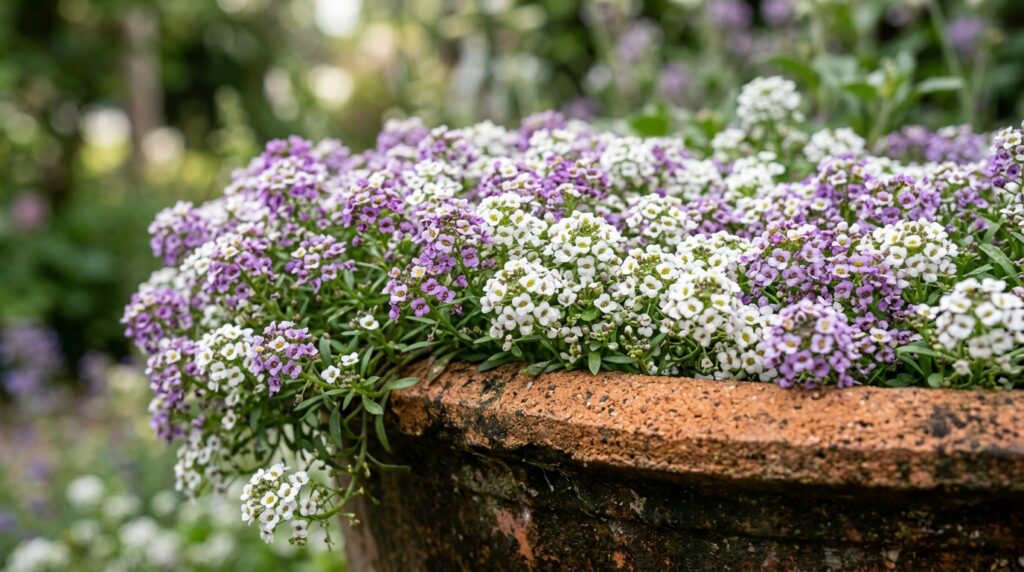
Alyssum was the very first “A” flower I ever planted, and it is still the one I recommend to anyone who says they have a brown thumb. The tiny white, pink, or purple blooms grow in a low, honey-scented carpet, and they will spill over the edge of a pot in a way that looks intentional even when it was not. I tuck it along the front of my garden beds every spring because it fills gaps quickly and attracts bees with minimal effort.
Ageratum
Ageratum gives you fuzzy, powder-puff blooms in blue, purple, or white, and it holds its color right through the hottest part of summer, which is more than I can say for half of my other annuals. It stays compact, so it works well as a border plant in front of taller flowers.

Angelonia (Summer Snapdragon)
If you live somewhere with a brutal, sticky summer, Angelonia is worth trying. Mine kept blooming through a July heat wave that flattened everything else in the bed. It has slim spikes of purple, pink, or white flowers and barely needs deadheading.

Annual Phlox
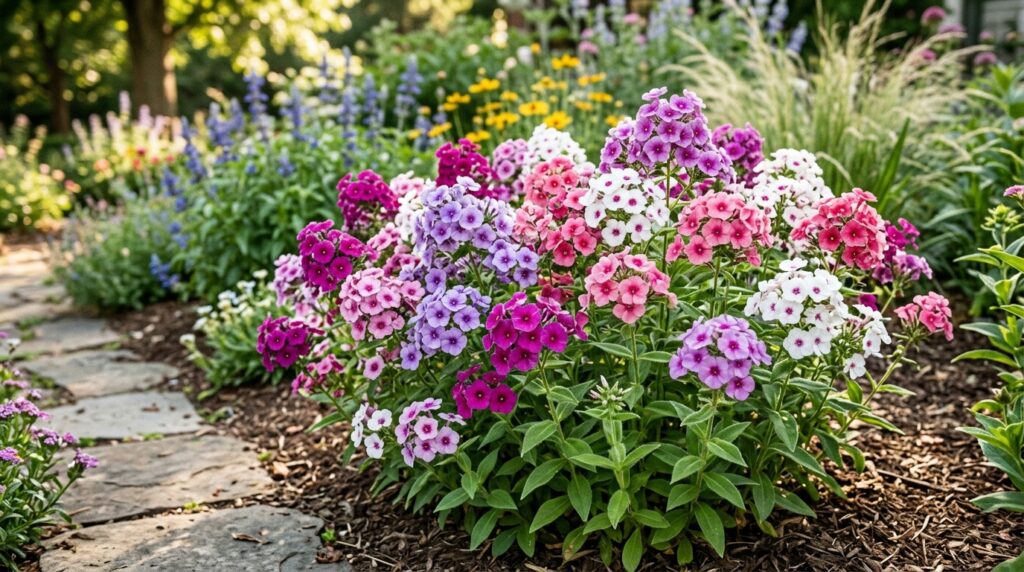
Annual phlox (Phlox drummondii) brings clusters of star-shaped flowers in shades of pink, red, and purple, and it tolerates a bit of shade better than most sun-loving annuals. It is a favorite for cottage-style borders where you want a soft, cloud-like effect.
Amaranthus
Amaranthus, sometimes called Prince’s Feather, is the drama queen of the annual world. Its long, cascading plumes come in deep red, purple, or gold, and one plant alone can anchor an entire bed. I grew it once as a background plant and it ended up stealing every conversation at a backyard dinner party.

African Daisy (Osteospermum)
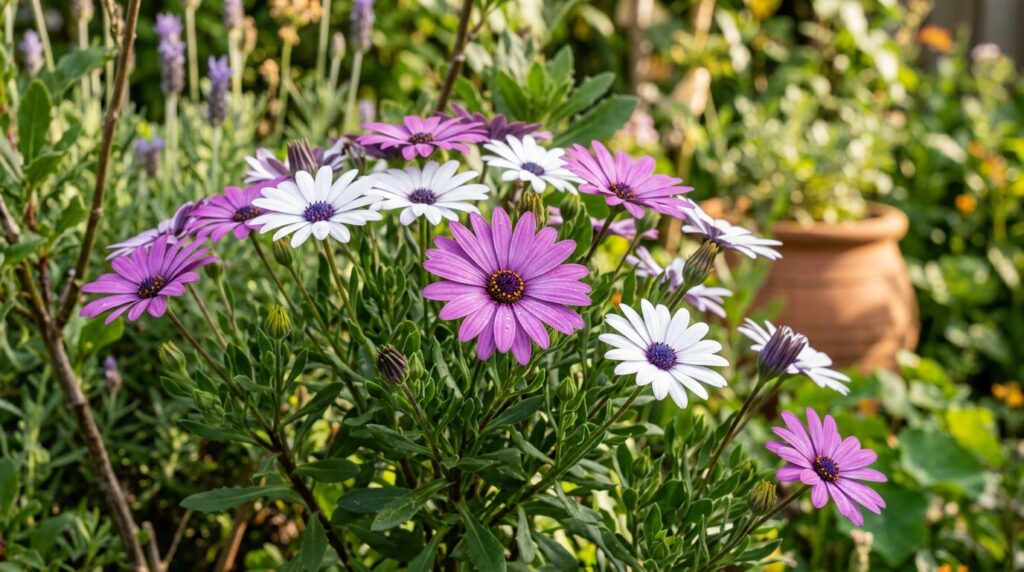
African Daisy gives you cheerful, daisy-shaped blooms in white, purple, orange, and yellow, often with a dark blue or purple center that almost glows. I like it in containers on a patio because it closes up at night and opens again with the morning sun, which my kids find oddly fascinating, and it holds up well in the heat of a long summer without much fuss.
Ammi (False Queen Anne’s Lace)
Ammi is less common in home gardens, but florists love it for the airy, lace-like white flower clusters that fill out a bouquet without competing with the main blooms. If you grow cut flowers at all, it is worth tucking a few seeds into a corner bed, since a single plant produces enough stems to fill several vases over the season.

Perennial Flowers That Start With A
Perennials come back on their own year after year, making them a better long-term investment if you are building a garden rather than just decorating for a season. These are the plants I actually trust with my time.
Aster
Aster is probably the most recognizable perennial flower that starts with A. It waits until late summer and fall to bloom, right when most of the garden is winding down, and it fills that gap with daisy-like purple, pink, and white flowers that pollinators absolutely love. I planted mine near a fence line and by September it is the only thing in the yard still buzzing with bees.

Astilbe
Astilbe is the plant I killed twice before I got it right. It wants shade and consistently moist soil, not the full sun spot I originally gave it. Once I moved it under a tree, the feathery pink-and-red plume-shaped flowers finally took off. If you have a shady, damp corner that nothing else will grow in, this is your answer.

Achillea (Yarrow)
Achillea, commonly called Yarrow, is nearly the opposite of Astilbe. It wants heat, sun, and dry soil, and it will punish you with root rot if you baby it with extra water. The flat, daisy-like clusters come in yellow, red, pink, and white, and they are fantastic for cut-flower arrangements because they last over a week in a vase.

Agastache (Anise Hyssop)
Agastache smells faintly of licorice when you brush against it, and hummingbirds treat it like a buffet. It grows tall spikes of purple or orange tubular flowers and handles poor soil better than almost anything else on this list.

Anemone (Windflower)
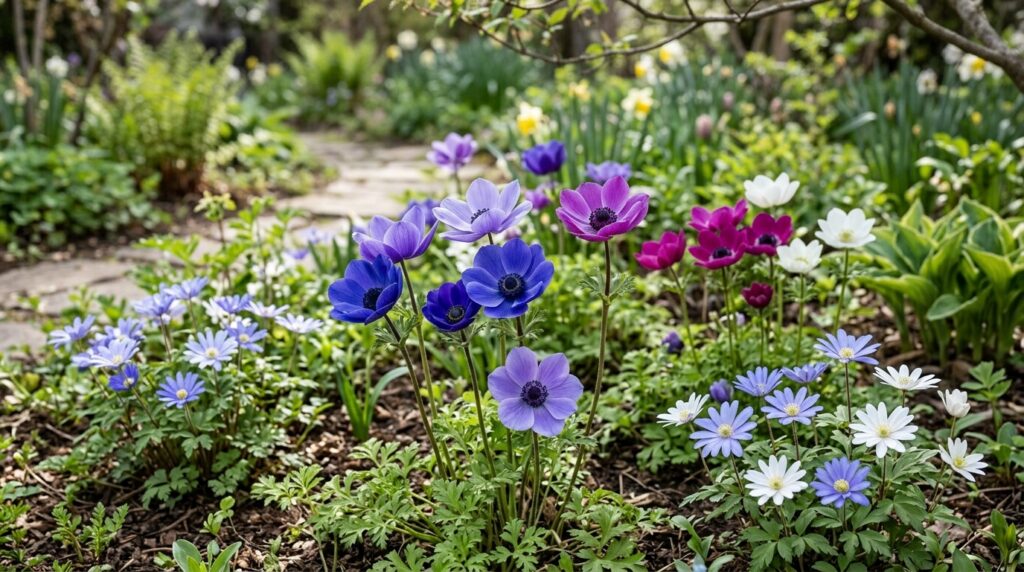
Anemone, also called windflower, has delicate petals that genuinely do sway in the lightest breeze. Depending on the type, it blooms in spring or fall, in shades of white, pink, purple, or red with a dark center that almost looks painted on.
Aquilegia (Columbine)
Aquilegia, better known as Columbine, has one of the strangest and most beautiful flower shapes I have ever grown. The spurred, star-shaped blooms come in nearly every color combination and are a magnet for hummingbirds in spring.

Angelica
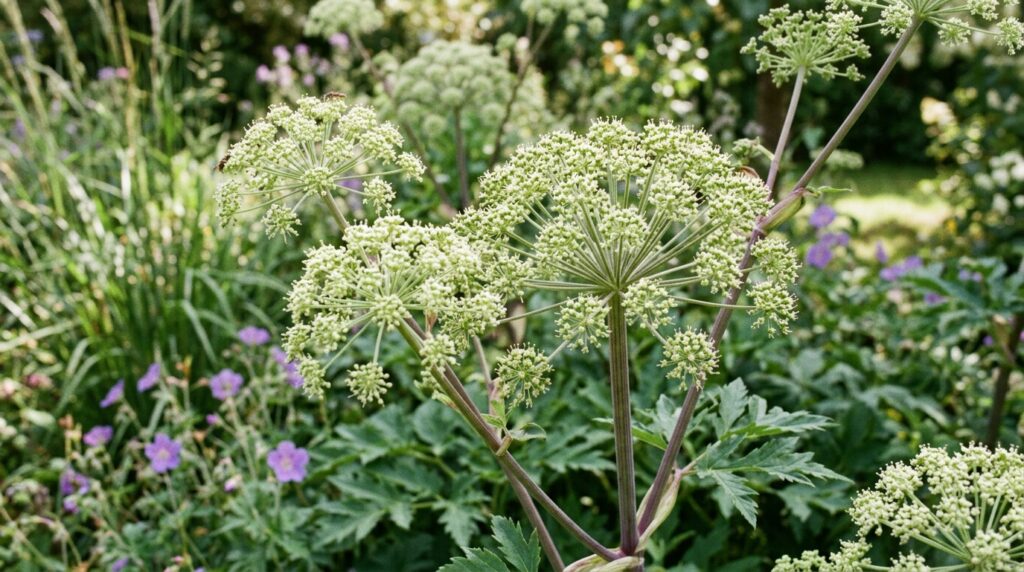
Angelica is a tall, architectural perennial that most people notice for its structure before they notice the flower itself. It produces large, umbrella-shaped clusters of small white or greenish-white blooms, and it has a long history as both a garden ornamental and a medicinal herb. I keep one in the back of a border simply because nothing else on this list gives the same vertical presence.
Anthericum (St. Bernard’s Lily)
Anthericum is a lesser-known perennial with slender, star-shaped white flowers on tall, wiry stems. It works well in a naturalized or cottage-style planting where you want something delicate rather than showy, and it tends to be more drought-tolerant than its delicate look suggests.

Arabis (Rock Cress)
Arabis forms a low, spreading mat covered in small white or pink flowers in early spring, making it a favorite for rock gardens and the edges of stone walls. It handles poor, rocky soil far better than most flowering perennials, which is exactly why gardeners lean on it for tricky spots.

Flowers That Start With A That Grow From Bulbs
Bulb flowers store their own food underground, which is why so many of them can survive winter and come roaring back the next spring without any help from you.
Allium (Ornamental Onion)
Allium gives you those perfectly round, globe-shaped purple flower heads that look almost like they were designed on a computer rather than grown in dirt. According to Longfield Gardens, most allium bulbs are winter-hardy in USDA hardiness zones 3 through 8 and prefer full sun and well-drained soil. I planted a row of them along a walkway, and they bloomed right between my last tulips and the first irises, so the color never had a gap.

Amaryllis
Amaryllis is the flower everyone recognizes from holiday catalogs, with its huge, trumpet-shaped blooms in red, white, or pink. It is usually grown indoors from a bulb during the winter months and makes a genuinely impressive centerpiece. One important note: keep it away from pets, which I cover in the safety section below.

Alstroemeria (Peruvian Lily)
Alstroemeria is one of the best cut flowers on this entire list. The blooms last up to two weeks in a vase, far longer than most cut flowers I have bought at the grocery store, and they come in nearly every shade except true blue.

Agapanthus (Lily of the Nile)
Agapanthus sends up tall, leafless stems topped with a burst of small blue or white flowers arranged in a perfect sphere. It handles heat and even short dry spells better than most bulbous flowers, making it a favorite for gardeners in warmer regions.

Flowering Shrubs and Trees That Start With A
Not every “A” flower is a small garden plant. Some of the most striking ones grow on shrubs or trees, and they bring structure that annuals and bulbs simply cannot.
Azalea
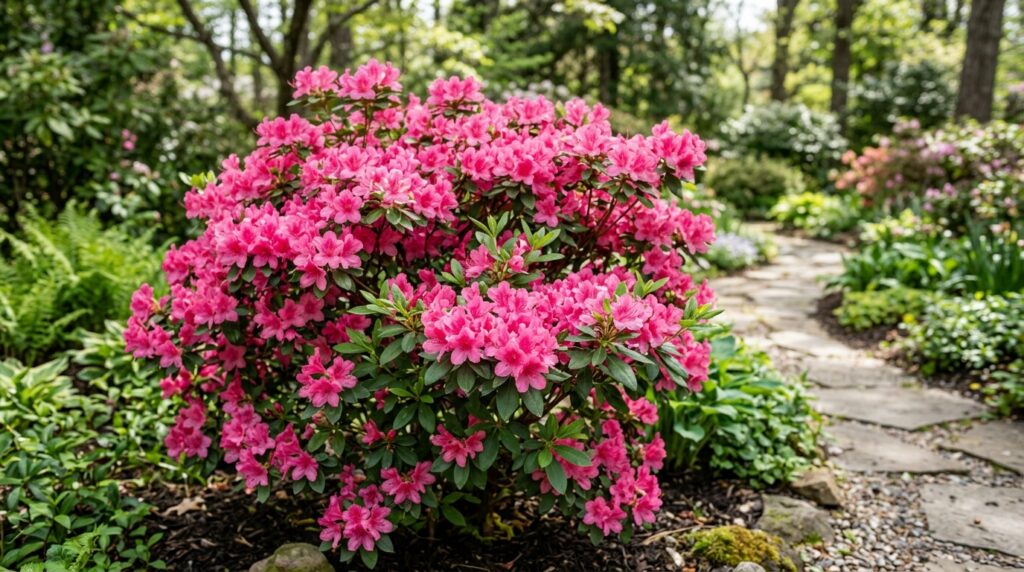
Azalea is the shrub that turns entire neighborhoods pink, red, and white every spring. It belongs to the Rhododendron family and prefers acidic, well-drained soil with dappled shade. It is genuinely one of the most photographed spring flowers in the country, but it is also one you need to keep away from pets and grazing animals, which I explain in detail below.
Abutilon (Flowering Maple)
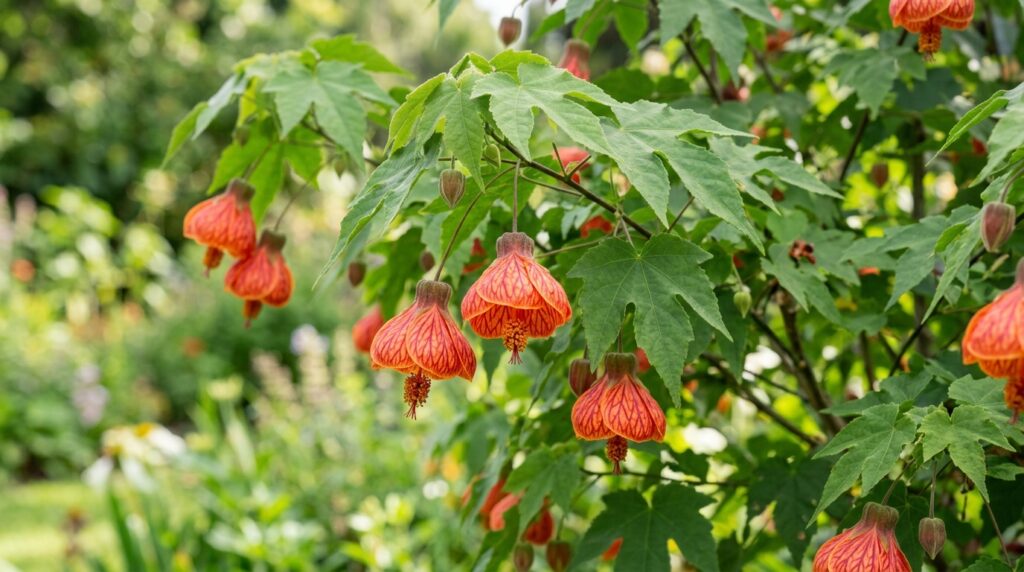
Abutilon has soft, maple-shaped leaves and pendulous, bell-shaped flowers that hang like little paper lanterns in shades of orange, yellow, red, or pink. It is not related to true maple trees at all; the name comes purely from the leaf shape.
Acacia
Acacia produces fluffy, spherical yellow or cream flower clusters against fern-like foliage. It is native to Australia and Africa and thrives in warm, dry climates, making it a popular choice in xeriscaped or drought-tolerant gardens.

Apple Blossom
Apple Blossom might be the most quietly important flower on this list. According to Almanac.com, the apple blossom is the official state flower of both Michigan and Arkansas, and it draws in bees and native pollinators every spring, which makes it critical for the apple crop that follows in fall.

Pink Flowers That Start With A
If you searched for pink flowers that start with A specifically, here is your shortlist, pulled straight from the plants above:
- Alstroemeria – long-lasting cut flower, ideal for bouquets
- Astilbe – feathery plumes, best for shaded, moist beds
- Anemone – delicate petals with a dark center, spring or fall bloomer
- Azalea – shrub-sized spring color, needs acidic soil
- Aster – late-season daisy-like blooms in soft pink shades
- Amaryllis – bold, trumpet-shaped indoor bloom for winter
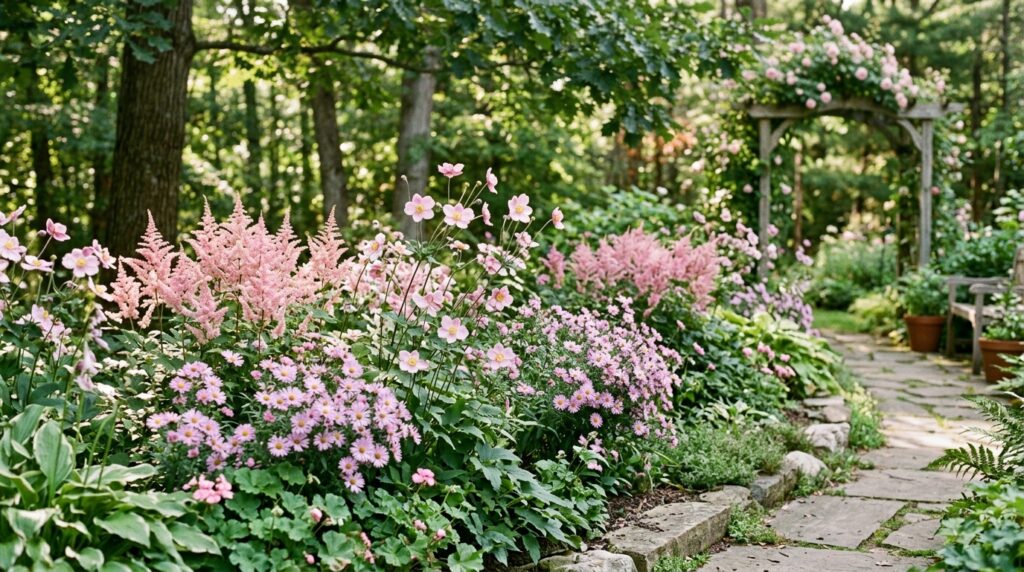
I get asked a lot whether pink “A” flowers work well together in one bed, and honestly, they do. I mixed Astilbe and Anemone under a tree last spring, and the layered pink tones looked far more intentional than my planning actually was.
Flowers That Start With A for Girls, Gifts, and Bouquets
A lot of people land on this page because they are naming a daughter, planning a baby shower, or picking a bouquet with a meaning attached. A few “A” flowers carry symbolism worth knowing:
- Amaryllis often symbolizes pride, determination, and radiant beauty, which is part of why it shows up so often in winter gift arrangements.
- Aster is tied to patience and daintiness, and it happens to be the official birth flower for September.
- Alstroemeria represents friendship and devotion, which is why florists lean on it heavily for mixed bouquets meant to say “thinking of you.”
- Azalea carries a softer meaning of temperance and taking care with fragile things.
If you are building a nursery garden or a themed bouquet, pairing Aster with Alstroemeria gives you a full range of texture, from soft daisy shapes to bold trumpet blooms, without leaving the letter A at all.
Are Any Flowers That Start With A Toxic to Pets?
This is the part most flower lists skip, and it is the part I actually care about most, because I have a dog who treats my flower beds like a salad bar. Before you plant anything on this list, it is worth checking the ASPCA’s official toxic and non-toxic plant list, because “natural” does not automatically mean “safe.”
| Flower | Toxic to Dogs/Cats? | Notes |
|---|---|---|
| Amaryllis | Yes | Bulb is most concentrated; can cause vomiting and lethargy |
| Azalea | Yes | Toxic to pets and livestock; even small amounts are risky |
| Allium (all types) | Yes | Every Allium species, including ornamental ones, is toxic |
| Aster | Yes | Listed among flowers to keep away from pets |
| Alyssum | Not listed as toxic | Generally considered a safer garden choice |
| Angelonia | Not listed as toxic | Commonly used in pet-friendly plantings |
The ASPCA’s dog-specific plant list confirms that Allium species, including ornamental onion, chives, and leeks, pose a hemolytic risk to dogs and cats, no matter how pretty the flower head looks. I learned this the hard way when my dog dug up an allium bulb before it even had a chance to bloom, and I spent an anxious hour on the phone with our vet. He was fine, but I moved every remaining bulb behind a fence the next weekend.
If you have pets and still want the look of Allium, plant it in a raised bed or somewhere your animals genuinely cannot reach the bulb, not just the flower.
My Honest Experience Growing “A” Flowers
I want to be straight with you here instead of just handing you a pretty list. Out of everything above, three plants earned a permanent spot in my yard, and two got pulled out within a season.
Alyssum and Aster are the ones I will always replant. Alyssum is nearly foolproof, and Aster rewards you exactly when the rest of the garden looks tired. Agastache became a permanent resident too, mostly because I got tired of buying hummingbird feeders that attracted more wasps than birds; if you deal with the same issue, I actually wrote a whole guide on how to keep bees away from hummingbird feeders that pairs well with planting Agastache instead.
Astilbe, on the other hand, failed twice in full sun before I accepted it needed shade and steady moisture. And Amaranthus, while gorgeous, grew so tall and wide that it shaded out three smaller plants next to it before I finally staked and thinned it back.
If there is one lesson from three years of trial and error, it is this: match the plant to your actual soil and light, not the spot you wish had better sun. A soil test and the right feeding schedule matter more than the flower name. I keep a simple routine using the same approach I laid out in how to dose fertilizer for plants, and it has significantly reduced my plant losses since that first rough summer.
Where “A” Flowers Fit Best in Your Home and Yard
Once you have picked your flowers, placement matters almost as much as plant choice. Low, spreading types like Alyssum work beautifully as edging around succulent beds, since both plants tolerate similar drainage needs and the contrast in texture looks intentional rather than accidental.
If you are drawn to deeper, moodier color palettes rather than the classic bright look, several “A” flowers pair naturally with darker blooms. I covered a full palette of moody, near-black blooms in my guide to dark flowers, and pairing something like a deep purple Aster with those varieties creates a striking contrast border that photographs beautifully in fall light.
Expert Tips for Growing Flowers That Start With A
A few habits made the biggest difference for me once I stopped guessing and started paying attention to what each plant actually needed:
- Test before you plant, not after. A cheap soil pH test told me why my first Azalea struggled; my soil was closer to neutral than the acidic range it wanted, and adding sulfur to the bed fixed it within a season.
- Group by water need, not just by color. I used to plant Achillea next to Astilbe because I liked the color combination, and both suffered because one wanted dry soil and the other wanted constant moisture. Now I zone my beds by watering needs first.
- Deadhead annuals like Alyssum and Ageratum regularly. Removing spent blooms keeps the plant producing new flowers instead of going to seed early, which can cut a bloom season short by weeks.
- Check bulb depth before you plant Allium or Amaryllis. Planting too shallow is the single most common mistake I see, and it leads to weak stems that flop over once the flower head gets heavy.
- Give tall varieties like Amaranthus and Angelica room to breathe. Overcrowding blocks airflow and makes powdery mildew far more likely by midsummer.
Pros and Cons of Building a Garden Around “A” Flowers
- Huge variety across annuals, perennials, bulbs, and shrubs, so you can build an entire themed garden from this letter alone
- Several options, like Aster and Agastache, are strong pollinator plants for bees and hummingbirds
- Bloom times overlap well, with early spring Anemone through late fall Aster giving you nearly year-round color
- A few standout options, including Amaryllis, Azalea, and Allium, are toxic to pets and need careful placement
- Sun and water needs vary widely within the group, so you cannot treat every "A" flower the same way
- Some bulb types, like Amaryllis, need to be brought indoors or replanted seasonally in colder zones
Common Mistakes to Avoid
Looking back at my own early mistakes, most of them fall into the same few categories, and I see other beginners repeat them constantly:
Planting sun-lovers like Achillea in a shaded bed and wondering why they get leggy and stop blooming is one of the most common issues. The same happens in reverse with Astilbe, which scorches and browns quickly in direct afternoon sun. Another frequent mistake is overwatering bulbs like Allium and Amaryllis; both prefer to dry out between waterings, and soggy soil is the fastest way to rot the bulb before it ever blooms. Finally, many beginners skip checking pet toxicity entirely, which is an easy step to add before you finalize your plant list for the season.
Growing Conditions at a Glance
Here is a quick reference table so you are not flipping back and forth through the article while you plan your beds.
| Flower | Sun Needs | Soil | Bloom Season | Type |
|---|---|---|---|---|
| Alyssum | Full sun | Well-drained | Spring to fall | Annual |
| Ageratum | Full sun | Moist, well-drained | Summer to fall | Annual |
| Aster | Full sun | Well-drained | Late summer, fall | Perennial |
| Astilbe | Part to full shade | Moist | Early to mid-summer | Perennial |
| Achillea | Full sun | Dry, well-drained | Summer | Perennial |
| Allium | Full sun | Well-drained | Late spring | Bulb |
| Amaryllis | Bright indirect light | Well-drained | Winter (indoor) | Bulb |
| Azalea | Part shade | Acidic, well-drained | Spring | Shrub |
For a broader look at your own local climate before you commit to any of these, the USDA Plant Hardiness Zone Map lets you enter your ZIP code and see exactly which zone you fall into, which matters most for the perennials, bulbs, and shrubs on this list rather than the annuals.
Frequently Asked Questions
What flowers begin with the letter A?
Some of the most common ones include Alyssum, Aster, Amaryllis, Allium, Azalea, Astilbe, Achillea, Anemone, Aquilegia, and Agastache, covering annuals, perennials, bulbs, and flowering shrubs.
What are common “A” flowers for beginners?
Alyssum and Aster are the two I recommend most to beginners. Alyssum tolerates mistakes well and fills space quickly, while Aster is nearly maintenance-free once established and blooms reliably every fall.
Which plant starts with A that is safe for pets?
Alyssum and Angelonia are generally considered safer choices around pets, though you should always confirm current status on the ASPCA’s official plant list before planting, since guidance can be updated.
Are there perennial flowers that start with the letter A?
Yes. Aster, Astilbe, Achillea, Agastache, and Aquilegia are all true perennials that return year after year without needing to be replanted.
What flowers that start with A work well for a pink garden theme?
Alstroemeria, Astilbe, Anemone, and Azalea all bloom in soft pink tones and pair well together in a cottage-style or shaded pink border.
Final Thoughts
Flowers that start with A cover more ground than most people expect, from a tiny fragrant Alyssum carpet to a full-flowering Azalea shrub taking over a corner of the yard. My honest advice after three years of trial and error: start with one annual and one perennial from this list, get a feel for your own soil and light, and build outward from there. That is exactly how my own garden grew from one torn magazine page into something I am actually proud to walk through every morning.
If you are working on the rest of your outdoor space at the same time, take a look at my guide on how to plant succulents for a low-maintenance companion bed, or check my notes on dark flowers if you want to build a moodier, more dramatic border around your new A-named blooms.