



If you searched for flowers that start with B, you probably already know a few. Begonia. Bluebell. Maybe bougainvillea if you have traveled somewhere warm. But the letter B hides a lot more than that, and some of these flowers surprised me the first time I planted them.
I got curious about this list two summers ago, when a neighbor gave me a handful of black-eyed Susan seeds and told me they would “just take care of themselves.” I did not believe her. I was wrong. That one plant sent me down a rabbit hole of B flowers, and I ended up with a whole bed of them by the following spring.
This guide is not just a copy-paste list. I am going to walk you through annuals, perennials, wildflowers, blue blooms, and a few tropical showstoppers that all start with the letter B. You will get real growing information, USDA zones where they matter, and honest notes on what worked and what flopped in my own yard. If you already read my piece on flowers that start with A, think of this as the next chapter in that same alphabet garden project.
What Is a Flower B? Quick Answer First
Before the full list, let me answer the question a lot of people type into Google: what is a flower B? It simply means any flower whose common name begins with the letter B, like begonia, bluebonnet, or bee balm. It is not a species or a category in botany. It is just a naming convenience, the same way “flowers that start with a” groups together things as different as asters and amaryllis.
That said, B flowers as a group tend to lean toward two things. A lot of them are pollinator favorites (bee balm, black-eyed Susan, butterfly bush), and a lot of them show up in classic bouquets (baby’s breath, bells of Ireland, bachelor’s button). Keep that in mind as you read, because it will help you decide which ones actually fit your garden or your vase.
Quick Reference Table: Flowers That Start With B
I built this table first for myself, honestly, because I kept forgetting which B flowers were annuals and which came back every year. Save it, screenshot it, whatever works for you.
| Flower Name | Type | Typical Color | USDA Zone | Sun Needs |
|---|---|---|---|---|
| Baby’s Breath | Annual/Perennial | White, pink | 3-9 | Full sun |
| Bachelor’s Button | Annual | Blue, pink, white | 2-11 | Full sun |
| Balloon Flower | Perennial | Blue, purple, white | 3-8 | Full sun/part shade |
| Baptisia (False Indigo) | Perennial | Blue, purple, yellow | 3-9 | Full sun |
| Bee Balm (Monarda) | Perennial | Red, pink, purple | 3-9 | Full sun/part shade |
| Begonia | Annual/Tender perennial | Red, pink, white, orange | 9-11 (grown as annual elsewhere) | Part shade |
| Bellflower (Campanula) | Perennial | Blue, purple, white | 3-8 | Full sun/part shade |
| Bird of Paradise | Tropical perennial | Orange, blue | 9-11 | Full sun |
| Black-Eyed Susan | Biennial/short-lived perennial | Yellow, gold | 3-9 | Full sun |
| Bluebonnet | Annual wildflower | Blue | 6-8 (native range) | Full sun |
| Bougainvillea | Tropical vine | Pink, purple, orange | 9-11 | Full sun |
| Butterfly Bush (Buddleja) | Shrub | Purple, pink, white | 5-9 | Full sun |
| Butterfly Weed | Perennial | Orange | 3-9 | Full sun |
| Bells of Ireland | Annual | Green | 4-10 (grown as annual) | Full sun |

Annual Flowers That Start With B
Annuals are the flowers I recommend to anyone just getting into gardening, because you get color the same season you plant, and there is no long-term commitment if you decide you do not like where you put them.
Baby’s Breath
Baby’s Breath, botanically Gypsophila, is that cloud of tiny white flowers florists tuck into almost every bouquet. It is one of the flowers that starts with the letter b that most people already know without realizing it has a name. It grows on thin, wiry stems and produces dozens of small blooms per plant, which is why it works so well as a filler flower.
In my own garden, I planted it along a border where I wanted something soft between taller perennials. It self-seeded the next spring without any help from me, which was a nice surprise. It likes full sun and prefers slightly alkaline soil, so if your soil test comes back acidic, a bit of garden lime helps.

Bachelor’s Button
Also called cornflower, Bachelor’s Button is a wildflower beginning with B that has been a cottage garden staple for generations. Its true blue color is genuinely rare in the flower world, though breeders have also produced pink, white, and even near-black cultivars. It grows quickly from seed, tolerates poor soil, and attracts bees with little fuss.
I tried direct-sowing this one straight into a patch of average clay soil I had not amended at all, mostly out of laziness, and it still bloomed within about ten weeks. If you want a low-effort flower that starts with b for a first garden bed, this is a strong candidate.

Begonia
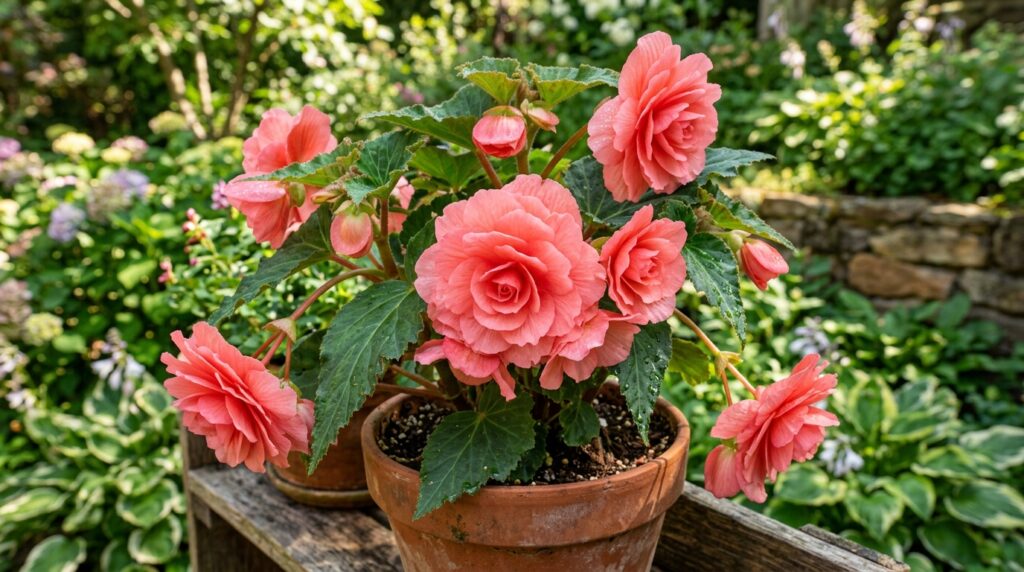
Begonia is a massive genus, with over a thousand species, ranging from waxy-leaved bedding begonias to the dramatic, ruffled blooms of tuberous begonias. Most gardeners outside tropical zones grow them as annuals or bring the tubers indoors for winter. They prefer part shade, which makes them one of the few B flowers that actually do better out of direct afternoon sun.
I kept a tray of wax begonias on a shaded porch step for one summer, and they barely needed deadheading. That low-maintenance habit is probably why begonias show up in so many “easiest flowers for beginners” lists.
Bells of Ireland
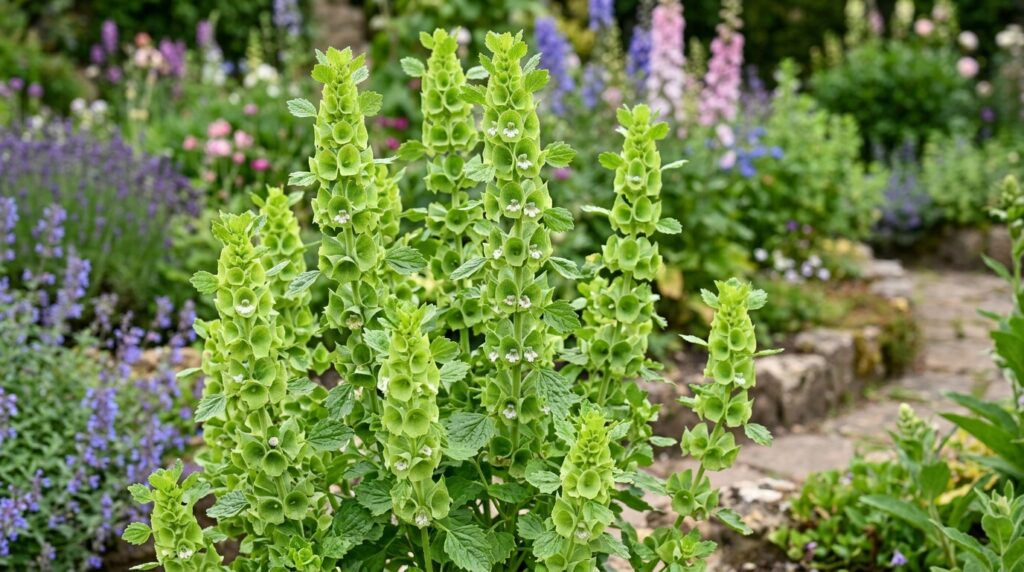
Bells of Ireland is a striking green flower, and yes, the flower itself is green, which throws people off the first time they see it. The actual blooms are tiny and white, tucked inside those larger green, bell-shaped calyxes that give the plant its name and its dramatic vertical spikes. Florists love it for height and texture in arrangements.
It can be a little finicky to start from seed since it needs a cold period before it will germinate well, something growers call stratification. I chilled my seeds in the fridge for about two weeks before sowing, and germination improved noticeably compared to my first attempt straight from the packet.
Perennial Flowers That Start With B
Perennials come back year after year, which makes them a better long-term investment even though they usually take a season or two to fill in properly.
Bee Balm (Monarda)
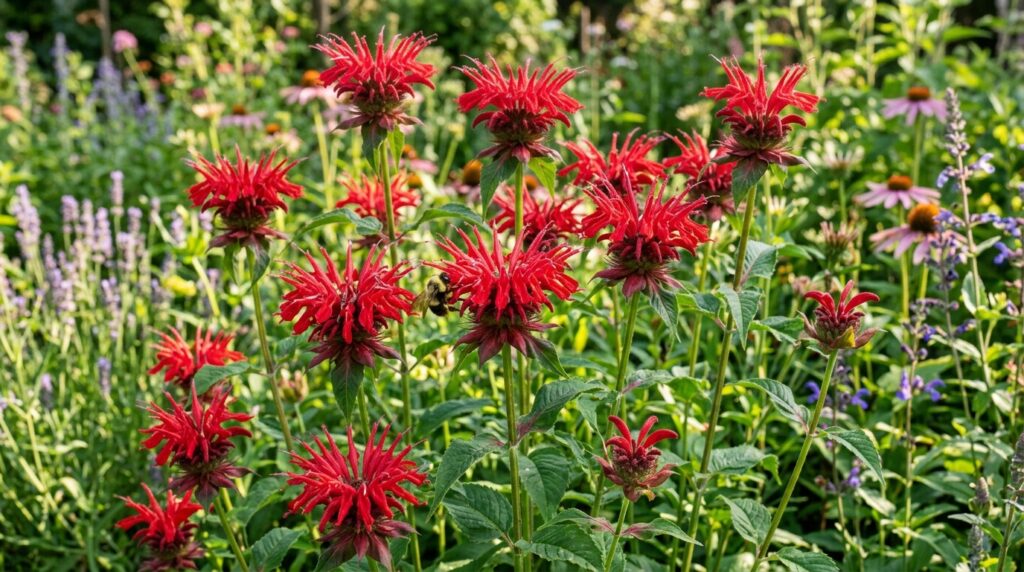
Bee balm, also called Monarda or wild bergamot, might be my favorite entry on this whole list. It is native to North America, and according to Clemson’s Home & Garden Information Center, it is a fantastic pollinator plant that draws hummingbirds, bees, butterflies, and plenty of other beneficial insects, which matched exactly what I saw in my own yard within the first summer.
Bee balm grows two to four feet tall and blooms in mid-summer with shaggy, firework-shaped flower heads in red, pink, or purple. It is a member of the mint family, so it does spread by underground runners, but I have found it far easier to control than actual mint. Plant it in full sun with decent airflow, since crowded plants are prone to powdery mildew.
My honest experience: my first bee balm plant developed powdery mildew by August because I planted it too close to a fence, which created poor air circulation. I moved a division the following spring, gave it more room, and the mildew never came back. If you want to attract pollinators without dealing with disease headaches, spacing matters more than any spray.
Baptisia (False Indigo)
Baptisia, sometimes called false indigo or wild indigo, produces tall spikes of pea-like flowers in blue, purple, or yellow. It is native to prairies and open woodlands across much of the eastern and central United States, and it is genuinely one of the toughest perennials I have grown. Once established, it barely needs watering and shrugs off drought.
The one thing I will warn you about is patience. Baptisia takes two to three years to really hit its stride because it is building a deep taproot underground before it puts energy into top growth. Do not judge it by its first season.

Black-Eyed Susan
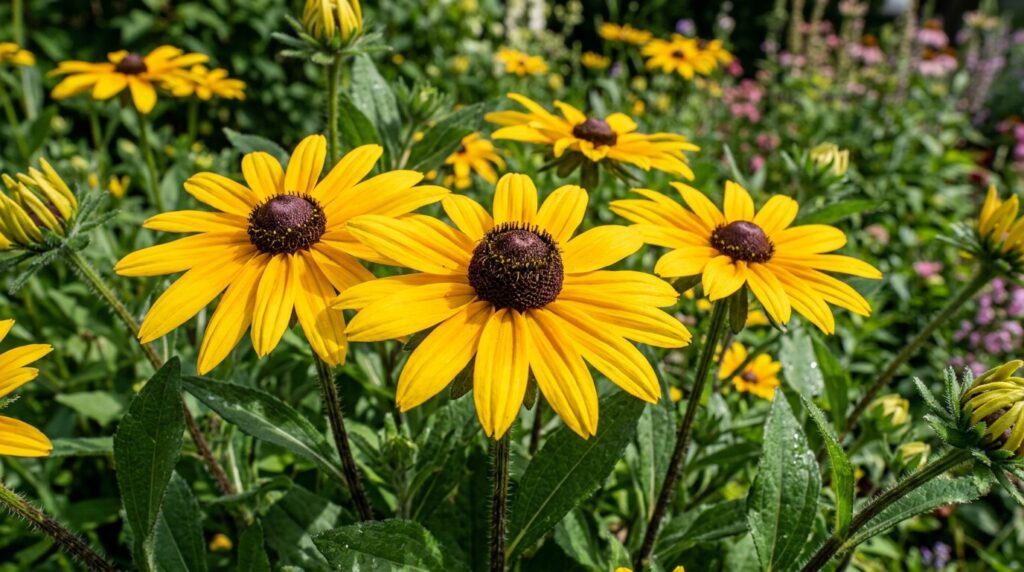
This is the plant that started my whole B-flower obsession. Rudbeckia hirta, or black-eyed Susan, is a cheerful yellow wildflower with a dark brown center, and it is remarkably forgiving. According to the Missouri Botanical Garden Plant Finder, it is a common native wildflower that turns up naturally in open woods, prairies, fields, and roadsides across the state, which tells you how little fuss it needs to thrive.
It blooms from early summer through the first frost in most regions, is hardy in USDA zones 3 through 9, and self-seeds readily. Birds love the seed heads in fall and winter, so I leave mine standing instead of cutting them back until early spring.
Bellflower (Campanula)
Bellflower, or Campanula, gets its name from the bell-shaped blooms that dangle from slender stems in shades of blue, purple, and white. There are dozens of species, from low-growing groundcover types to taller border varieties. It prefers full sun to part shade and cooler summers, so if you live somewhere with brutal, humid heat, expect it to struggle a bit in August.

Butterfly Bush (Buddleja)
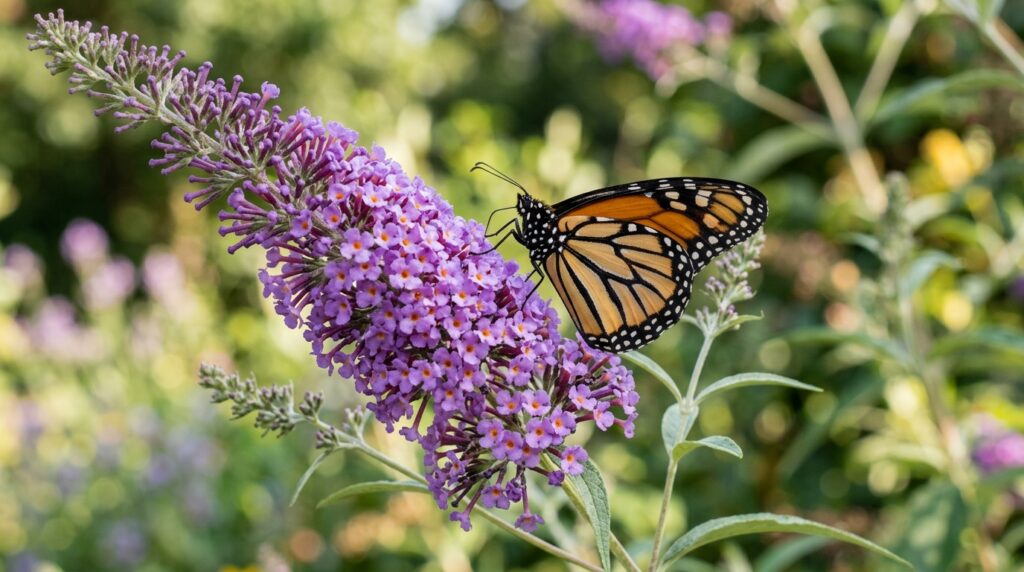
Butterfly bush is a fast-growing shrub that produces long, cone-shaped flower clusters loaded with nectar. It is genuinely one of the best flowers that start with the letter B for pulling in butterflies from a distance, sometimes within a few feet of blooming. One important note before you plant it: Buddleja davidii is considered invasive in several states, including parts of the Pacific Northwest and mid-Atlantic, because it self-seeds aggressively outside cultivation. Check your local extension office before planting, and consider a sterile cultivar if invasiveness is a concern in your area.
Blanket Flower (Gaillardia)
Blanket flower earns its name from the way established clumps carpet a bed with warm, daisy-like blooms in red, orange, and yellow banding. It is native to parts of the central and western United States, tolerates poor, sandy soil without complaint, and keeps flowering through summer heat that stops many other perennials cold. I added a few blanket flower plants to the sunniest, driest corner of my yard, the spot where almost nothing else survived a full season, and it has been the one bed I genuinely do not have to think about since.

Bugloss (Brunnera)
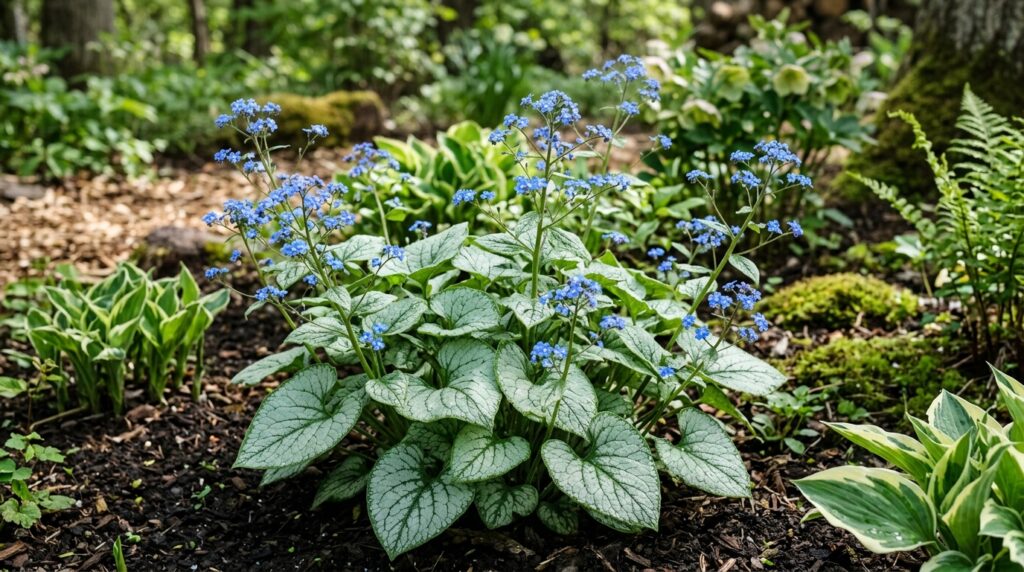
Bugloss, often sold as Siberian bugloss or Brunnera macrophylla, produces airy sprays of tiny blue flowers in early spring that look remarkably similar to forget-me-nots. Unlike most flowers on this list, it actually prefers shade and cooler conditions, which makes it a nice pairing with begonia in a shaded bed. Its heart-shaped, often silver-veined leaves stay attractive long after the blooms fade, giving you season-long structure rather than a short burst of color.
Wild Flowers Beginning With B
If you want flowers that fit a meadow, roadside strip, or low-maintenance native bed, these are worth a look.
Bluebonnet
Bluebonnet is probably the single most recognizable wildflower on this list, at least if you have ever driven through Texas in springtime. According to the Texas State Historical Association, the Texas Legislature adopted the bluebonnet as the official state flower back on March 7, 1901. The designation was later expanded in 1971 to cover several related Lupinus species growing across the state.
Bluebonnets are true wild annuals, native to Texas and parts of the surrounding region, and they are notoriously difficult to establish outside their native range. If you want to try growing them, sow seed in the fall, scarify the hard seed coat first with a light sandpaper rub or an overnight hot-water soak, and plant in well-drained, slightly alkaline soil. I tried growing bluebonnets from seed in my own yard, which sits well outside their native Texas range, and got a thin, scraggly patch at best. If you are not gardening in the right soil and climate for them, buying a few transplants from a specialty native nursery will save you a season of disappointment.

Butterfly Weed
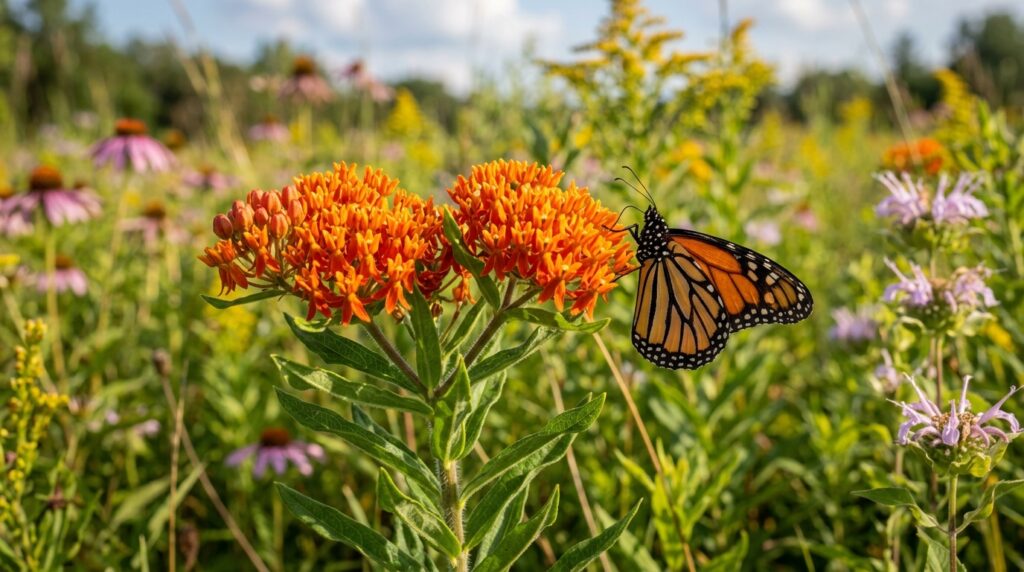
Butterfly weed, a type of milkweed (Asclepias tuberosa), produces clusters of bright orange flowers and is a critical host plant for monarch butterfly caterpillars, as the Lady Bird Johnson Wildflower Center documents in detail. It is drought-tolerant once established and thrives in poor, sandy soil where other flowers struggle. If you are building a pollinator garden alongside bee balm and black-eyed Susan, butterfly weed rounds out the trio nicely.
Bachelor’s Button (Wild Form)
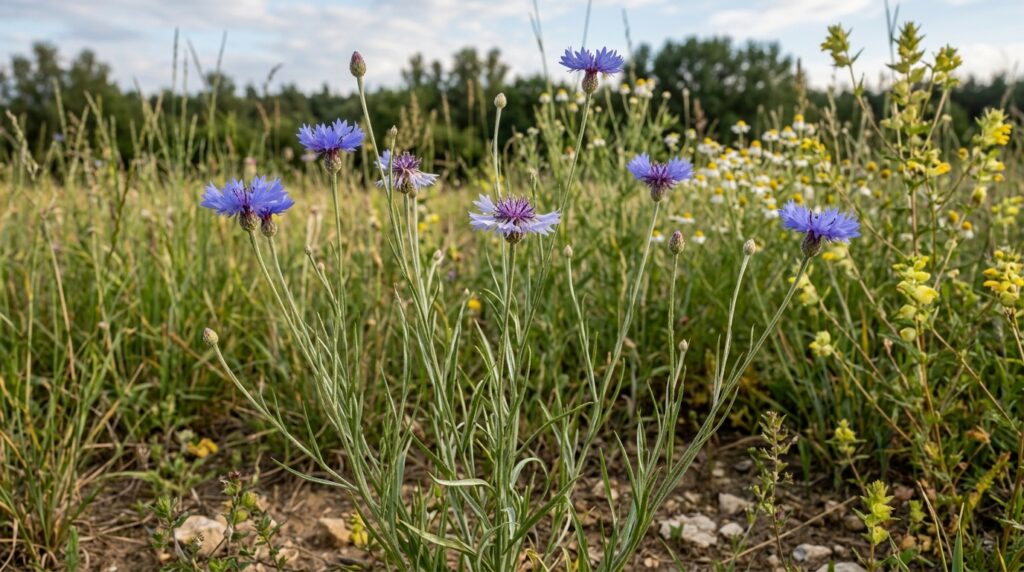
Beyond the cultivated garden version mentioned earlier, wild cornflower still grows along roadsides and field edges in many parts of the country, a holdover from its long history as a European farm weed that hitched a ride to North America centuries ago.
Blue Flowers That Start With B
True blue is rare in the plant world, so if that is specifically what you are after, this shortlist should help.
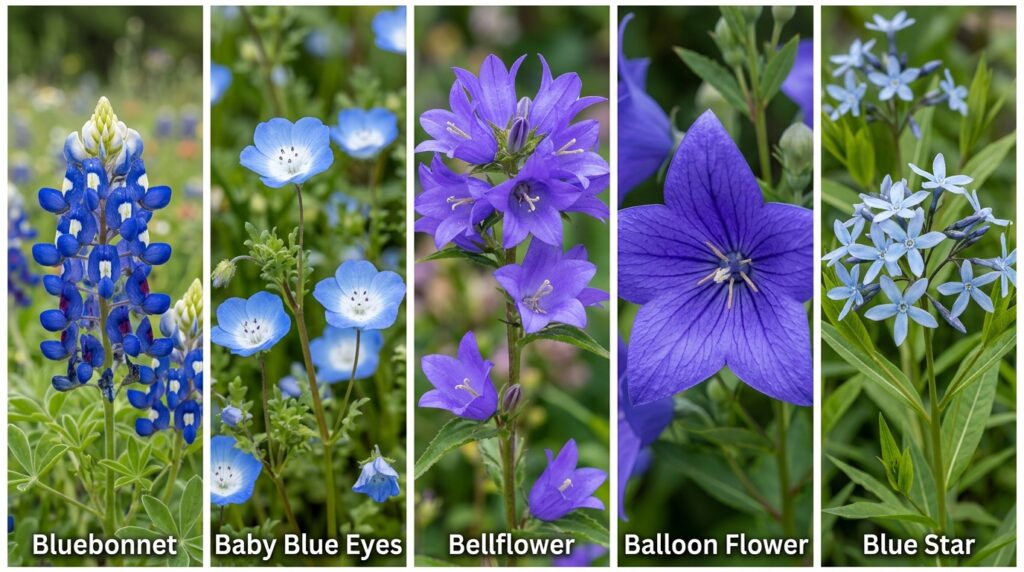
- Bluebonnet: The classic true-blue wildflower, discussed above.
- Baby Blue Eyes (Nemophila menziesii): A low-growing annual with pale blue, five-petaled flowers and a lighter center. It prefers partial shade and cool spring weather, and it tends to fade once summer heat sets in.
- Bellflower (Campanula): Many species bloom in true blue and purple shades, and they pair beautifully with yellow flowers like black-eyed Susan for contrast.
- Balloon Flower (Platycodon grandiflorus): Named for its balloon-shaped buds that pop open into star-shaped blue or purple flowers. It is a slow-growing but long-lived perennial, hardy from zones 3 through 8.
- Blue Star (Amsonia): Technically a stretch since some cultivars lean more lavender, but the straight species produces genuinely blue, star-shaped flower clusters in spring and brilliant gold foliage in fall.
Tropical and Exotic Flowers That Start With B
Not every B flower is suited to a temperate backyard bed. A few need warmth, humidity, or a container you can bring indoors for winter.
Bird of Paradise
Bird of Paradise (Strelitzia reginae) produces one of the most dramatic blooms in the plant world, an orange-and-blue flower shaped like a tropical bird’s head and crest. It is native to South Africa and grows outdoors year-round only in USDA zones 9 through 11. Elsewhere, it makes a striking houseplant or patio container specimen that you bring inside before the first frost.

Bougainvillea
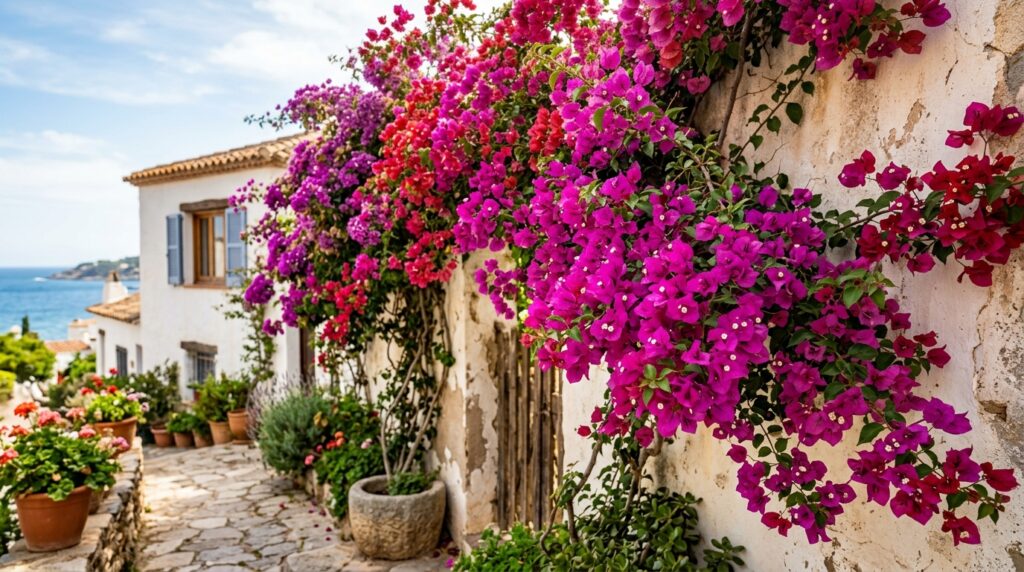
Bougainvillea is known for its colorful bracts rather than its true flowers, which are small and white, tucked inside the vivid, papery pink, purple, or orange bracts everyone associates with the plant. It is a vigorous, thorny vine that thrives in hot, dry climates and full sun, and it is a common sight climbing walls and fences across the Mediterranean, the Gulf Coast, and Southern California.
B Flowers for Cut Arrangements and Bouquets
If you are searching partly for wedding or bouquet inspiration, these B flowers show up again and again in floral design.
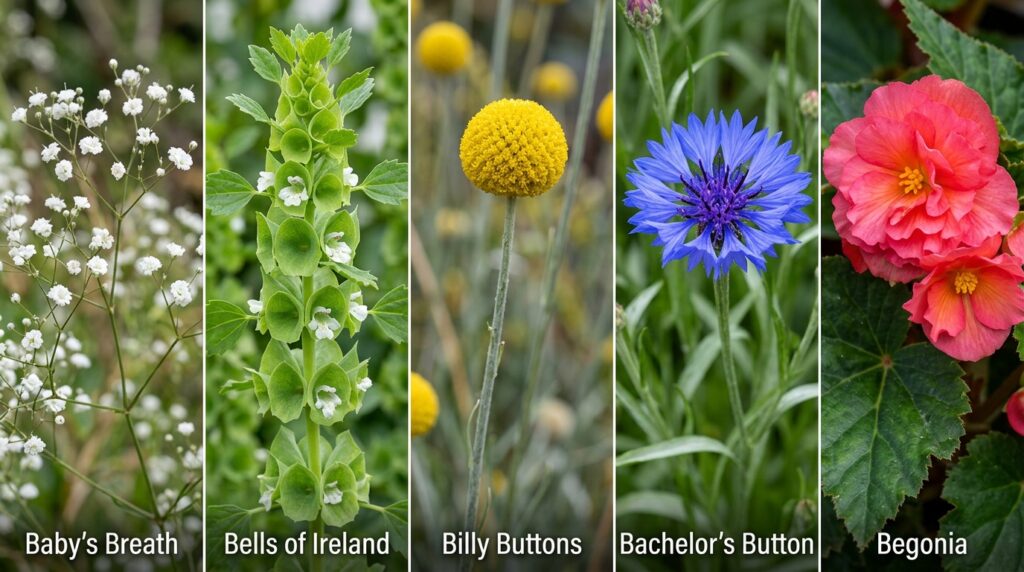
- Baby’s Breath: The classic filler flower, discussed above.
- Bells of Ireland: Adds height and unusual green texture.
- Billy Buttons (Craspedia): Small, round, golden pom-pom flowers on wiry stems, a favorite for dried arrangements because they hold their color and shape for years.
- Bachelor’s Button: True blue is genuinely hard to find in cut flowers, which makes cornflower a designer favorite.
- Begonia: Less common in cut arrangements, but tuberous begonia blooms hold up surprisingly well in short-stem floating arrangements.
Pros and Cons of Popular B Flowers
| Flower | Pros | Cons |
|---|---|---|
| Bee Balm | Pollinator magnet, long bloom season | Prone to powdery mildew if crowded |
| Black-Eyed Susan | Extremely low maintenance, self-seeds | Can spread aggressively if not deadheaded |
| Bluebonnet | Stunning drifts, drought-tolerant once established | Very hard to grow outside native range |
| Butterfly Bush | Fast-growing, dramatic bloom clusters | Invasive in some states, check locally first |
| Begonia | Thrives in shade, low fuss | Not cold-hardy, must overwinter indoors in most zones |
| Baby’s Breath | Great filler, self-seeds readily | Needs alkaline soil to really thrive |
More Flowers That Start With B
To round out a genuine list of 35, here are more real B flowers worth knowing, even if they did not each get their own full section above.
Bergenia
Also called elephant ears for its large, rounded leaves, this shade-tolerant perennial sends up pink or white flower clusters in early spring. Hardy in zones 3 through 8.

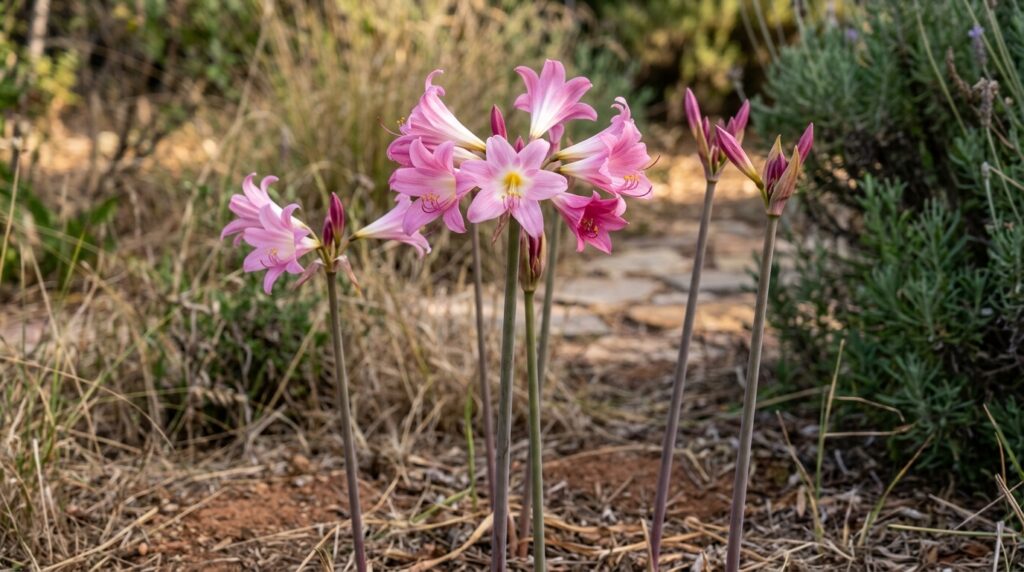
Belladonna Lily (Amaryllis belladonna)
A bulb that produces tall, leafless stems topped with fragrant pink trumpet flowers in late summer or fall, after the foliage has already died back.
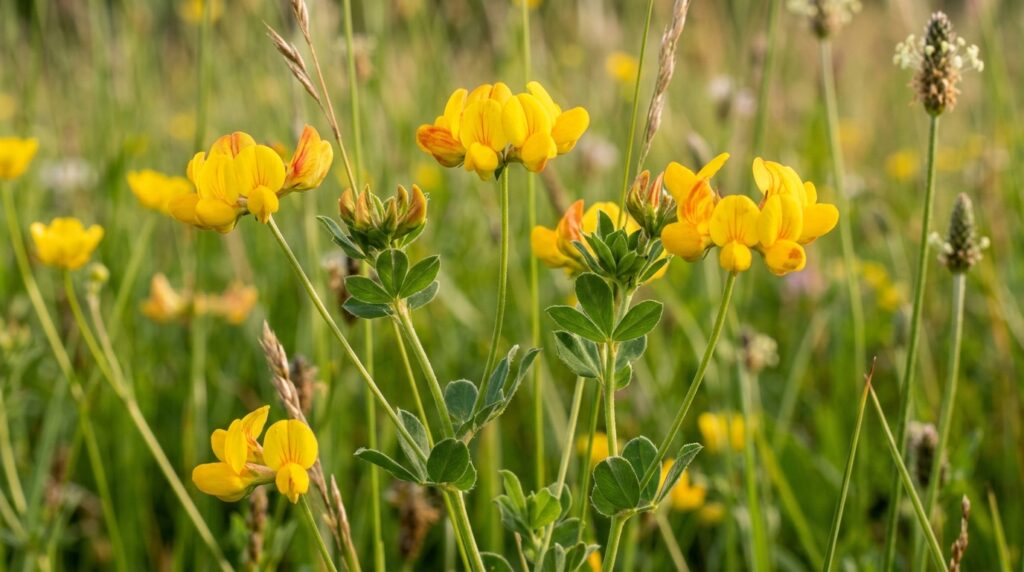
Bird’s-Foot Trefoil
A low-growing yellow wildflower common along roadsides and meadows, named for its clawed, bird-foot-shaped seed pods.
Basket Flower (Centaurea americana)
A tall Texas native with thistle-like lavender-pink blooms, closely related to bachelor’s button and popular in native seed mixes.

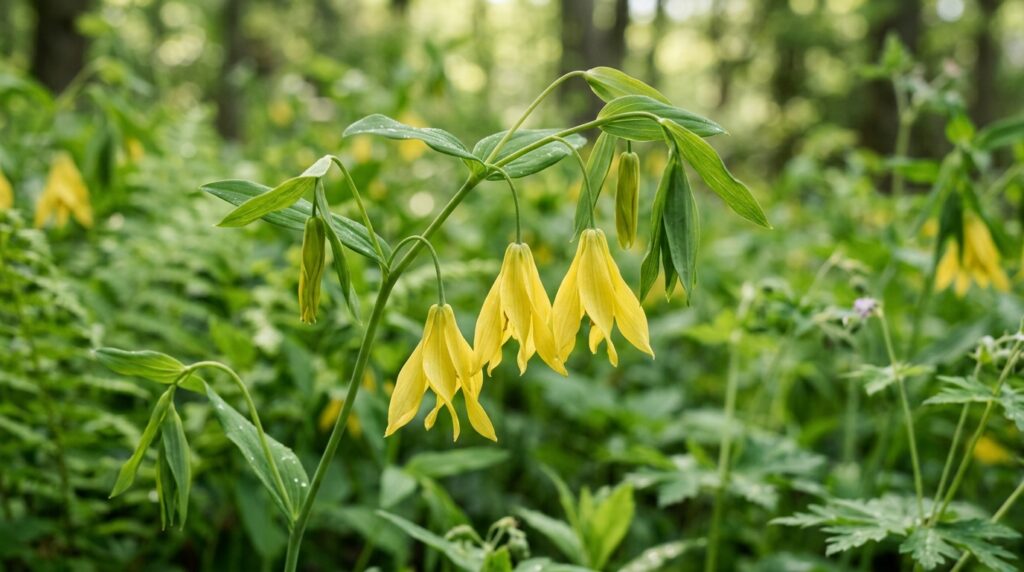
Bellwort (Uvularia)
A native woodland wildflower with drooping, pale yellow, bell-shaped blooms that appear in early spring before the tree canopy fills in.
Broom (Cytisus/Genista)
A shrub covered in small, yellow, pea-like flowers each spring, often used on slopes and banks where little else will grow.

Bugleweed (Ajuga)
A fast-spreading groundcover with short spikes of blue flowers in spring, useful for filling in shady, difficult patches of lawn.

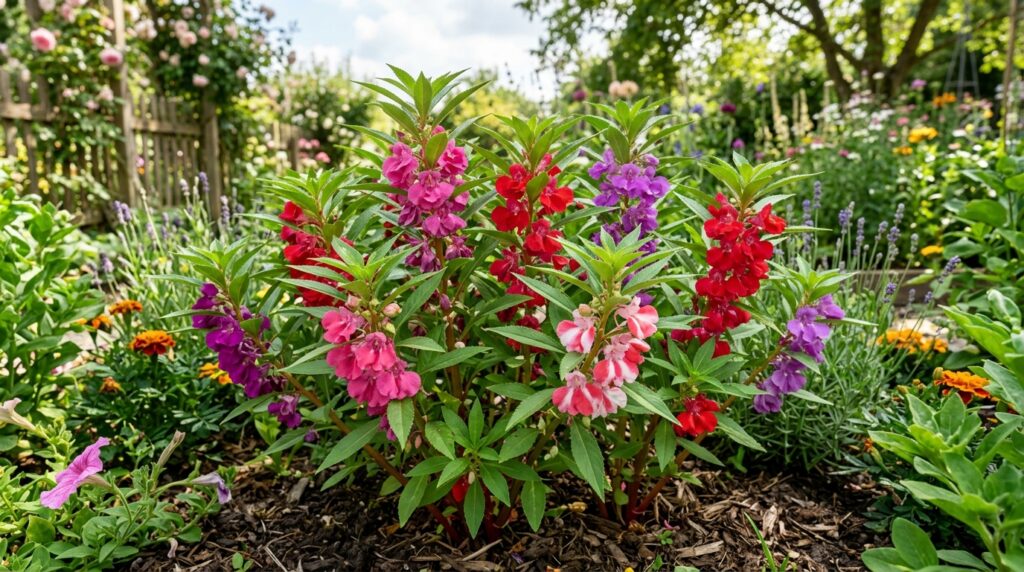
Balsam (Impatiens balsamina)
An old-fashioned cottage-garden annual with pink, red, or white flowers, a common sight in grandmothers’ gardens before modern impatiens hybrids took over.
Bloodroot (Sanguinaria canadensis)
A native spring ephemeral with a single white flower per stem, blooming briefly in early spring woodlands before the leaves fully unfurl.

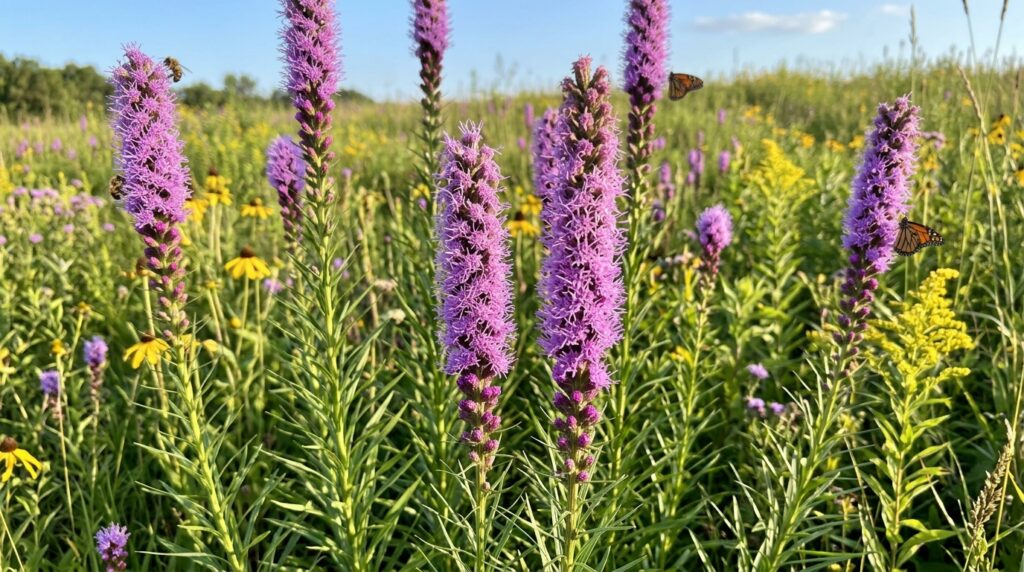
Blazing Star (Liatris)
A native prairie perennial with tall, purple, bottlebrush-shaped flower spikes that bloom from the top down, a strong pollinator and cut-flower choice.
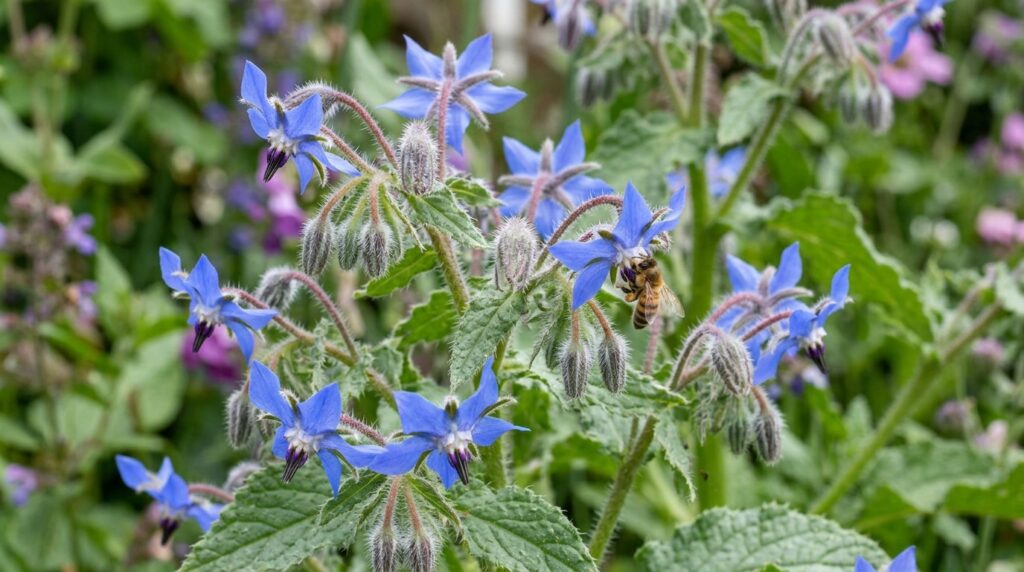
Borage
An herb garden staple with true-blue, star-shaped edible flowers often used to garnish drinks and salads.
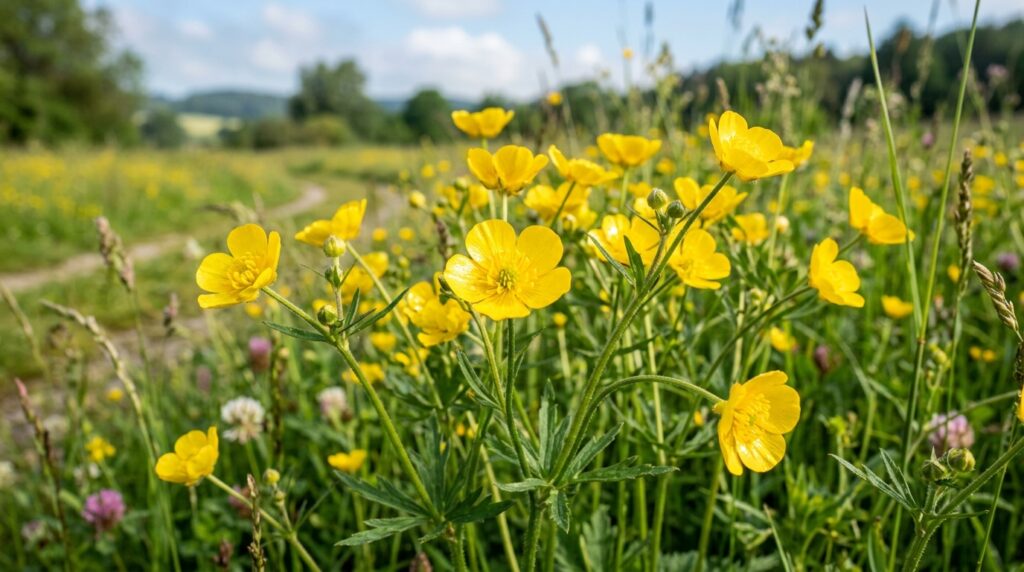
Buttercup (Ranunculus)
A glossy, bright yellow wildflower common in lawns and meadows across much of North America and Europe.
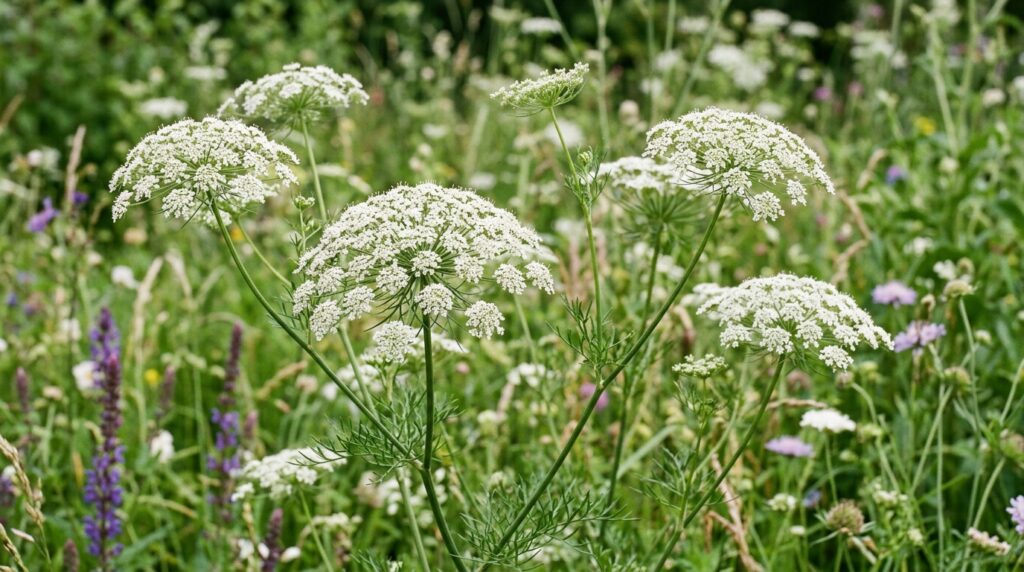
Bishop’s Flower (Ammi majus)
A lacy white umbel that closely resembles Queen Anne’s lace, popular with florists as an airy filler flower.
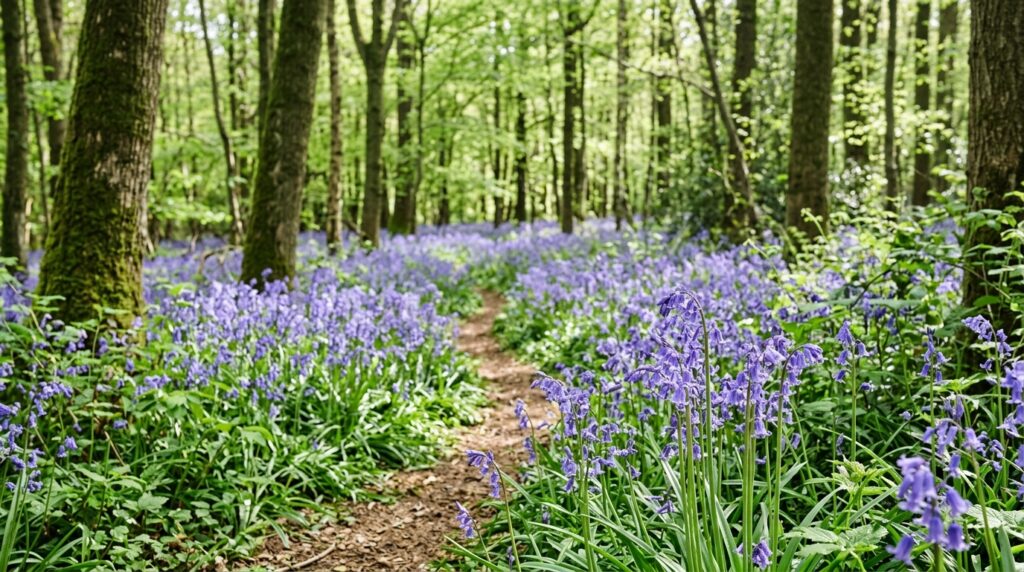
Bluebell
Depending on the region, this refers to English bluebell or Virginia bluebell, both native or naturalized woodland flowers with nodding, bell-shaped blue blooms in spring.
Boronia
An Australian native shrub with small, fragrant, bell-shaped flowers, often grown for its scent in warm-climate gardens.

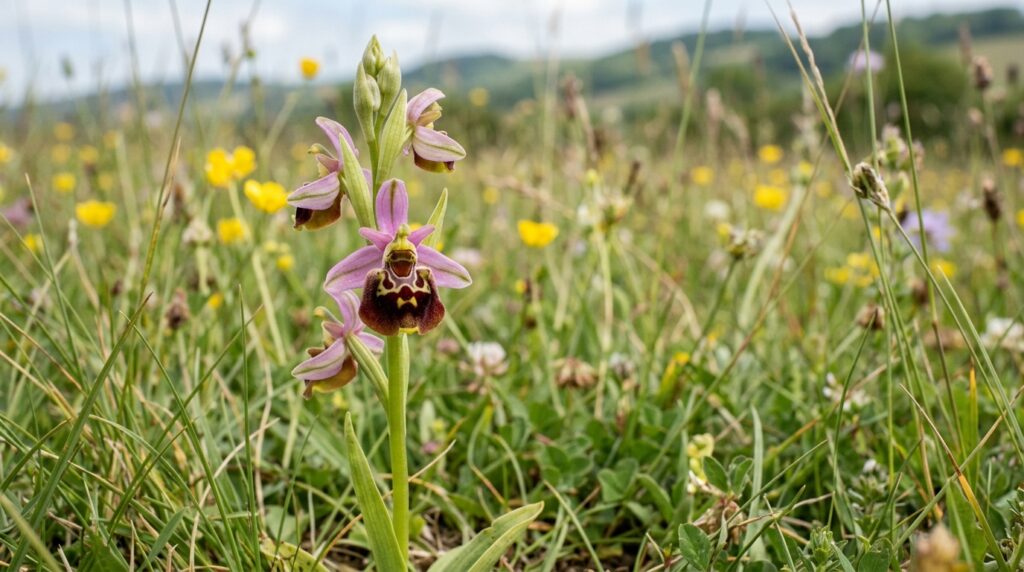
Bee Orchid (Ophrys apifera)
A European wild orchid whose flowers mimic the shape and color of a female bee to attract male bees for pollination, one of the more unusual tricks in the plant world.
My Honest Experience Growing B Flowers
I want to be upfront about something most flower lists will not tell you: not every flower on this list performed the same in my own garden, and your results will vary based on your soil, your climate, and honestly how much attention you remember to give things in July when it is ninety degrees outside.
Bee balm and black-eyed Susan were my biggest wins by far. Both practically grew on their own after the first season, and both pulled in more bees and butterflies than anything else I planted that year. Bluebonnet, on the other hand, was a genuine flop for me, and I mostly blame my own soil and climate rather than the plant itself. If you live outside the Texas Hill Country and its similar limestone soils, I would recommend buying a few nursery transplants rather than starting from seed, at least for your first attempt.
Begonias were my low-effort win for a shady porch spot where almost nothing else bloomed well. If you have a part-shade area that never quite works for sun-loving flowers, that is where I would slot begonias in.
Expert Tips for Growing B Flowers Successfully
- Match sun exposure to the flower’s native habitat. Prairie natives like black-eyed Susan and bluebonnet want full sun, while begonia and bellflower tolerate or prefer part shade.
- Space pollinator plants generously. Bee balm and butterfly bush both need airflow to avoid powdery mildew, something I learned the hard way. The Old Farmer’s Almanac has a solid planting-distance guide if you want exact spacing numbers for your variety.
- Check invasive status before planting butterfly bush. A quick search of your state’s extension office website will tell you if Buddleja davidii is restricted where you live.
- Feed sparingly, not heavily. Most of these B flowers, especially the wildflower types, actually bloom better in leaner soil. If you do fertilize, my guide on how to dose fertilizer for plants has explained how to get the right amount without overdoing it.
- Leave seed heads standing through winter. Birds rely on black-eyed Susan and coneflower seed heads for food when little else is available.
- If you are also growing hummingbird feeders nearby, bee balm and butterfly bush can pull in a lot of bee traffic too, so it helps to read up on how to keep bees away from hummingbird feeders if you want to keep the two separate.

Frequently Asked Questions
What is a flower that starts with B and blooms all summer?
Black-eyed Susan is one of the most reliable choices, typically blooming from early summer through the first fall frost. Bee balm also has a long bloom window, generally from June through August depending on your region.
What is the most common flower that starts with B?
Begonia is likely the most widely grown, since it is sold as a bedding annual in garden centers across the country every spring. In the wildflower category, black-eyed Susan is probably the most common flower that starts with the letter B in North America.
Are bluebonnets hard to grow outside of Texas?
Yes, generally. Bluebonnets are adapted to the limestone-based, alkaline soils and specific climate of their native Texas range, and they tend to struggle in acidic or heavy clay soils elsewhere. If you are set on growing them outside that range, starting from nursery transplants rather than seed usually gets better results.
Which flowers that start with B are good for beginners?
Bachelor’s button, black-eyed Susan, and begonia are all forgiving choices for new gardeners. They tolerate a range of soil types, do not demand constant attention, and give visible results within one growing season.
Do B flowers attract bees and butterflies?
Many of them do, which is part of why this letter has so many pollinator favorites. Bee balm, butterfly bush, butterfly weed, and black-eyed Susan are all known for attracting bees, butterflies, and sometimes hummingbirds.
Can I grow flowers that start with B in containers?
Yes, quite a few of them. Begonia, bachelor’s button, and dwarf bee balm cultivars all do well in pots on a patio or balcony. Bougainvillea and bird-of-paradise are also frequently grown in large containers so they can be moved indoors before frost in cooler climates.
Where to Buy Seeds and Plants
A quick note on sourcing, since a few readers of my A-to-Z flower guides have asked where I actually buy from. For native wildflowers like black-eyed Susan, bluebonnet, and butterfly weed, I have had the best luck with regional native plant nurseries rather than big-box garden centers, since the seed stock tends to be better suited to local soil and climate. For garden standards like begonia, bachelor’s button, and baby’s breath, any reputable seed catalog or local nursery works fine, since these are widely adapted and forgiving.
One habit that has served me well: buy bee balm, baptisia, and other pollinator perennials as small starts or divisions rather than seed if you can, since seed-grown perennials of these types can take an extra year or two to reach blooming size. Annuals like bachelor’s button and bells of Ireland, on the other hand, are cheap and fast enough from seed that starting from a packet makes more sense.
Final Thoughts
Flowers that start with B turned out to be a much bigger and more interesting category than I expected when I first started digging in. You have got tough native wildflowers like bluebonnet and black-eyed Susan, pollinator powerhouses like bee balm and butterfly bush, shade-loving begonias, and true-blue rarities like balloon flower and bellflower. There is genuinely something here for almost any garden style or skill level.
If this list helped you plan your own bed, I would start small, maybe with black-eyed Susan or bachelor’s button since both are so forgiving for a first attempt. And if you are just getting into gardening in general, my beginner-friendly guide to planting succulents is a good next stop, along with my roundup of dark flowers if you want to explore the moodier end of the color spectrum next.
What B flower are you planting first? I would genuinely love to know if bee balm treats you as well as it treated me.