



If you are searching for how to remove avocado stains, I am guessing you just looked down and saw a bright green smear on your favorite shirt. Maybe it happened while you were making guacamole, or maybe your toddler decided your jeans needed a little extra color. Either way, you are in the right place, and you do not need to panic.
I have dealt with avocado stains more times than I would like to admit. Between weekly avocado toast and a kitchen where chopping boards never seem big enough, I have stained shirts, jeans, a cream sofa cushion, and even my kitchen rug. What I learned along the way is that most online advice tells you only half the story. It tells you to use dish soap, which is true, but it does not explain why some stains come out in one wash while others linger for weeks even after you scrub them. That difference usually comes down to timing, water temperature, and understanding what is actually in that stain. I want to walk you through all of it here, not just a quick list of steps.
Why Does Avocado Even Stain in the First Place?
Before I give you the steps, it helps to know what you are actually fighting. Avocado stains are stubborn for two reasons, but most articles mention only one.
The first reason is fat. Avocados are one of the fattiest fruits you will ever eat, and that is not a bad thing on your toast. According to USDA FoodData Central, raw avocados contain roughly 14.7 grams of fat per 100 grams, most of it healthy monounsaturated fat. That oil is exactly what soaks into fabric fibers and holds on tight, just like a drop of cooking oil spreads and clings to a napkin.
The second reason is chemistry, which genuinely surprised me when I first read about it. Avocados contain an enzyme called polyphenol oxidase, or PPO. When the fruit’s cells are damaged, whether by a knife, a bite, or fabric rubbing against it, this enzyme reacts with oxygen in the air and with the fruit’s natural phenolic compounds, forming a brown-green pigment. It is the exact same process that makes a cut avocado turn brown on your counter within minutes, a reaction that Live Science breaks down in detail when explaining why cut avocado darkens so fast. On fabric, that means the stain is not just sitting on top of the fibers. It is actively forming and darkening while you decide what to do about it.
So an avocado stain is really two stains stacked on top of each other: an oil stain and a pigment stain. That is why a method that only tackles one of them, like just rinsing with water, almost never works completely.
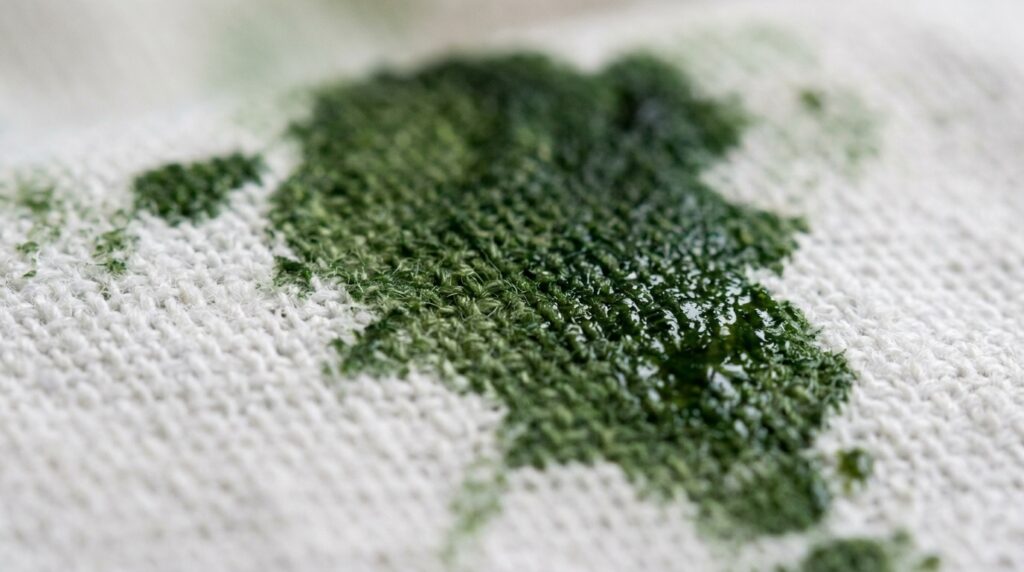
Is Hot or Cold Water Better for Avocado Stains?
This is one of the most searched questions about avocado stains, and honestly, the answer is a little more nuanced than most cleaning blogs admit.
For the oil part of the stain, warm water genuinely helps. Heat loosens fat molecules, making them easier for soap to break down, which is why grease-cutting dish soap works best when the water is not ice-cold.
For the pigment part of the stain, cold water is safer. The American Cleaning Institute has noted that hot water can cause certain stains to set permanently into fabric, and pigment-based stains behave the same way. Heat can essentially “cook” the stain into the fabric’s weave, making it far harder to lift later. This is why Cleanipedia’s guide to stain temperatures consistently recommends starting with cold water for anything containing natural pigments, then moving to warmer water only once the color has already been mostly removed.
My personal rule after ruining one too many white shirts: always rinse and pretreat in cold water first. Only use warm water in the final wash, and only after you have already worked in dish soap and the color has visibly faded. If you go straight to hot water while the green color is still strong, you risk locking it in.
How to Remove Avocado Stains From Clothes
Here is the method I actually use now, refined after a lot of trial and error. This works for cotton, denim, and most everyday fabrics.
What you will need:
- A dull knife or spoon
- Liquid dish soap (a degreasing formula works best)
- Cold water
- An old toothbrush or soft-bristled brush
- Your regular laundry detergent
Steps:
- Scrape, do not wipe. Use the edge of a spoon or a dull knife to lift off any solid avocado sitting on top of the fabric. Wiping with a paper towel at this stage usually just smears the oil deeper into the weave, so resist the urge.
- Flush from the back. Turn the garment inside out and run cold water through the back of the stain. This pushes the avocado particles out and away from the fabric instead of forcing them further in, a trick I picked up from Purex’s own stain lab guide, which recommends flushing cold water through the back of the fabric to clear particles trapped between the weave.
- Apply dish soap directly. Put a small amount of liquid dish soap right on the stain and gently rub the fabric together, or use the toothbrush in soft circles. Let it sit for 10 to 15 minutes so the soap has time to break down the oil.
- Rinse and check. Rinse with cold water and look at the fabric under good light. If green is still visible, repeat step 3 before moving on. Do not wash the item yet if any color remains.
- Wash as usual, but check before drying. Launder in the warmest water the care label allows. Before you put it in the dryer, inspect the spot one more time. Heat from a dryer will set any remaining trace of oil or pigment, turning a faint mark into a permanent one.
This same “scrape, flush, treat, check before drying” order works for most food and grease stains, not just avocado. I use nearly the same routine for dry-erase marker stains, just with a different solvent instead of dish soap. Once you understand the process’s logic, you can adapt it to almost anything spilled on you.
How to Remove Avocado Stains From a White Shirt
White fabric shows every trace of green, so this is where people usually panic the most. The good news is that white clothes give you one extra tool that colored fabric does not: bleach.
After you have followed the dish soap steps above and the stain has faded but not fully disappeared, try one of these:
- Hydrogen peroxide (3%): Dab a small amount directly onto the remaining stain and let it sit for 10 minutes before rinsing. It is gentler than chlorine bleach and less likely to damage the fabric.
- Oxygen bleach (like OxiClean): Soak the shirt in a basin of warm water with a scoop of oxygen bleach for up to several hours to treat stubborn, set-in marks.
- Chlorine bleach: Only use this as a last resort on 100% cotton whites, following the product instructions exactly, since it can weaken fibers over time.
I keep a small bottle of hydrogen peroxide under my sink specifically for this. It has saved two white shirts that I genuinely thought were done for.
How to Remove Avocado Stains From Jeans
Denim is thicker and more forgiving than a dress shirt, which actually works in your favor. You can use the same dish soap method, but you can also be a little more aggressive since denim holds up well to scrubbing and stronger detergent.
- Pretreat with a generous amount of liquid detergent poured directly onto the stain.
- Let the jeans sit for 30 minutes instead of the usual 10 to 15, since denim is denser and takes longer for the soap to penetrate.
- Scrub gently with a stiff brush, working from the outside of the stain toward the center.
- Wash in the warmest water your jeans allow, since most denim can handle more heat than delicate fabrics.
If your jeans are dark or raw denim, avoid hydrogen peroxide and bleach entirely, since these can lighten the dye and leave a faded patch that is honestly more noticeable than the original stain.
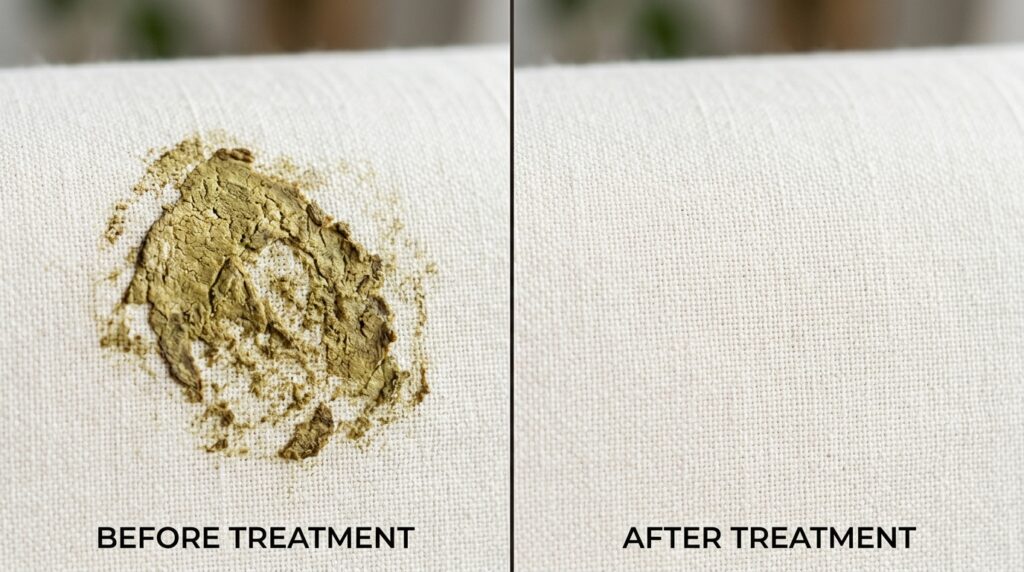
How to Remove Avocado Stains From Delicate Fabrics (Silk, Wool, Linen)
Delicate fabrics need a gentler touch, and this is where I have made some of my worst mistakes. Silk and wool fibers are more fragile than cotton or denim, and they react badly to vinegar, hydrogen peroxide, and vigorous scrubbing.
- Silk: Stick to dish soap only. Mix a tiny amount with cool water, dab it onto the stain with a soft cloth, and let it sit for no more than 5 minutes before rinsing. Skip vinegar entirely, since the acidity can weaken silk fibers over time.
- Wool: Blot gently with a wool-safe detergent diluted in cool water. Never wring or twist wool fabric, as this can permanently distort the fibers. Lay it flat to dry instead of hanging it.
- Linen: It is more absorbent than cotton, so avocado oil penetrates faster. Treat it within the first 15 minutes, if at all possible, using an enzymatic dish soap to break down the fat before it fully bonds to the fibers.
For anything you would normally send to the dry cleaner, like a silk blouse or a wool blazer, it is often worth taking it in rather than risking a DIY treatment. I learned this after trying to treat a silk scarf myself and ending up with a faint water ring that was arguably worse than the original stain.
How to Remove Avocado Stains From Carpet
Carpet is trickier because you cannot flush it under a tap or throw it in a washing machine. I learned this the hard way when a bowl of guacamole tipped over during a game night.
Steps for carpet and upholstery:
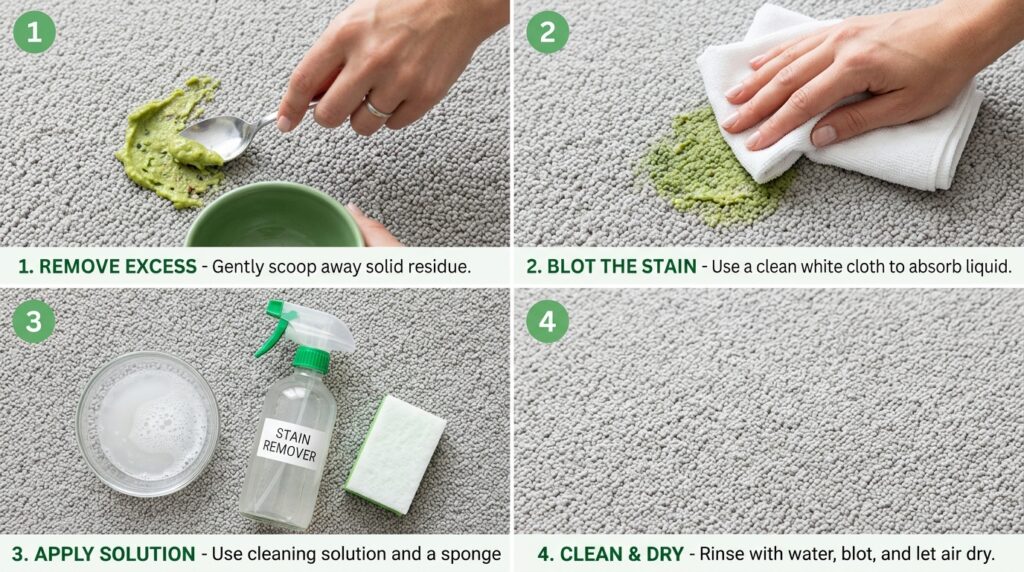
- Scoop up as much solid avocado as you can with a spoon, working from the outer edge inward.
- Blot, never rub, with a dry white cloth to lift excess moisture and oil. Rubbing pushes the stain deeper into the carpet fibers and can spread it wider.
- Mix a solution of 1 tablespoon liquid dish soap, 1 tablespoon white vinegar, and 2 cups of cold water.
- Apply the solution to a clean white cloth, not directly onto the carpet, then blot the stain repeatedly, switching to a fresh section of cloth as it picks up color.
- Rinse by blotting with a cloth dampened in plain cold water to remove any soap residue, then blot dry with a fresh towel.
- If a faint green tint remains, dab a small amount of 3% hydrogen peroxide onto the spot and let it sit for 10 minutes before blotting again. Always test hydrogen peroxide on a hidden patch of carpet first, since it can lighten certain fibers.
For wool carpets or antique rugs, skip the vinegar and hydrogen peroxide altogether and call a professional cleaner instead. Natural fibers can react unpredictably to acidic solutions, and it is not worth the risk on an expensive rug.
What About Leather Furniture and Car Seats?
Leather behaves very differently from fabric, and I found this out the hard way after a guacamole incident on my car’s leather seat. Oil from avocados can permanently darken leather if it soaks in, so speed matters even more here than with fabric.
- Blot immediately with a dry cloth, never a wet one, to soak up as much oil as possible before it penetrates the leather’s surface.
- Use a small amount of leather cleaner or a mild soap formulated specifically for leather, applied with a soft microfiber cloth.
- Avoid dish soap on leather. It is too harsh and can strip the leather’s natural finish over time, leaving a dull or discolored patch.
- Condition the leather afterward with a leather conditioner to restore any moisture lost during cleaning.
If the stain has already darkened the leather, a professional leather restoration service is usually your best option, since home remedies can make discoloration worse rather than better.
How Long Does Avocado Stain Removal Actually Take?
This is something almost nobody mentions, and it genuinely affects how you should plan your evening if you have just spilled guacamole on your favorite shirt.
- Fresh stains (treated within 30 minutes): Usually 15 to 30 minutes of active treatment, plus a normal wash cycle. Most fresh stains are fully gone after one round.
- Stains treated within a few hours: Expect 30 to 45 minutes of treatment, sometimes with a short soak, plus laundering.
- Overnight or dried stains: Plan for a 6- to 8-hour soak, or overnight, followed by active treatment and a wash. Some old stains need two full treatment cycles across two days.
- Carpet and upholstery stains: These take longer overall because you cannot rush a soak or a machine wash. Budget at least an hour of active blotting and treating, with drying time on top of that.
I always tell people the same thing: the clock starts the second the avocado touches the fabric, not when you finally get around to treating it. Every hour you wait adds real time to the eventual cleanup.
How to Remove Old Avocado Stains
Old, dried avocado stains are a different challenge because the oil has had time to oxidize and the pigment has had time to bond with the fibers. This is exactly the scenario that the research on enzymatic browning explains: once PPO finishes converting those phenolic compounds into pigment, the color becomes chemically locked in rather than sitting loosely on the surface.
Here is what actually works on set-in stains:
- Soak first, always. Fill a basin with cool water and a scoop of oxygen-based stain remover or enzyme detergent, then let the item soak for at least 6 hours, or overnight for really stubborn spots.
- Use a baking soda paste for extra lift. Mix baking soda with a small amount of water into a thick paste, spread it over the stain, and let it sit for 30 minutes. It helps draw out old, oxidized oil before you go in with soap again.
- Repeat before you give up. Old stains rarely disappear in one round. I usually need two or three cycles of soaking, treating with dish soap, and checking before I see real progress.
- Skip the dryer entirely until the stain is 100% gone. This is non-negotiable. Drying a shirt with even a faint trace of avocado left will bake that mark in permanently.
If you have tried all of this and a faint shadow remains, it likely means the pigment fully bonded with the fabric dye or fibers. At that point, a professional dry cleaner with access to solvent-based treatments is genuinely your best bet, rather than risking damage with repeated harsh scrubbing at home.
Does Avocado Leave a Stain? Can It Actually Be Removed?
Short answer: yes, avocado does leave a stain almost every time it touches fabric, thanks to its high fat content and that PPO enzyme reaction I mentioned earlier. But yes, it can absolutely be removed in the vast majority of cases, especially if you treat it within the first hour or two.
Avocado stains fall into a “moderately difficult” category, harder than something like fresh grass or dirt, but easier than set-in grease from motor oil or old blood. In my experience, fresh stains treated within 30 minutes come out almost completely nine times out of ten with just dish soap and cold water. Stains left to dry overnight take more effort but are still very much fixable using the old-stain method above.
Best Way to Remove Avocado Stains: Quick Comparison Table
I get asked constantly which method is actually the best, so here is an honest comparison based on what I have tested myself and what cleaning experts recommend.
| Method | Best For | Pros | Cons |
|---|---|---|---|
| Liquid dish soap | Fresh stains on any washable fabric | Cheap, always on hand, breaks down oil fast | Needs repeating on set-in stains |
| Dish soap + white vinegar | Carpet and upholstery | Tackles both oil and pigment | Not safe on natural stone or wool rugs |
| Hydrogen peroxide (3%) | White clothes, lingering color | Gentle bleaching without damaging most fabric | Can lighten colored fabric or dark denim |
| Enzyme-based stain remover | Old, dried, or set-in stains | Breaks down fat and protein at a molecular level | Needs a long soak time, up to several hours |
| Oxygen bleach (OxiClean) | Stubborn white fabric stains | Strong on old stains, safe for most whites | Slower acting than chlorine bleach |
| Chlorine bleach | Last resort on 100% cotton whites | Very effective on pigment | Weakens fibers, unsafe for colors |
If I had to pick just one product to keep under the sink for avocado emergencies, it would be a grease-cutting dish soap. It handles the majority of stains on its own, and it is gentle enough to use on almost any fabric.
Tools I Keep on Hand for Avocado Emergencies
After enough guacamole disasters, I finally put together a small kit that lives in my laundry cupboard. It has saved me more than a few last-minute panics before dinner guests arrive.
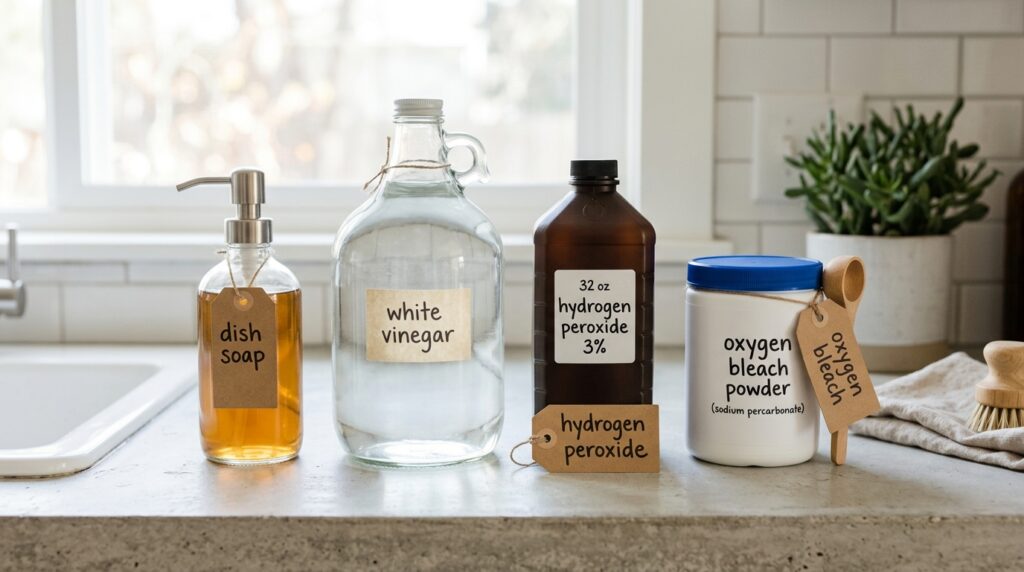
- A grease-cutting liquid dish soap. This does most of the heavy lifting for fresh stains and costs almost nothing compared to specialty stain removers.
- White vinegar. Useful for carpet and upholstery, and doubles as a general household cleaner, so it never goes to waste.
- 3% hydrogen peroxide. My go-to for white clothing once the bulk of the stain is gone. A small brown bottle from the pharmacy lasts a long time.
- An enzyme-based stain remover or laundry booster. Worth having for old or dried stains, since enzymes break down fat and pigment at a level regular soap cannot reach on its own.
- A soft-bristled toothbrush dedicated to laundry. I keep one specifically for this so I am not tempted to reuse my actual toothbrush, which, yes, has happened before.
- A stack of clean white cloths. Colored cloths can transfer dye onto wet fabric, so plain white ones are safer for blotting.
None of this needs to be expensive. Almost everything on this list is something most households already have in the house, and the total cost of a dedicated kit is usually under $15.
My Honest Mistakes (Learn From Them)
I want to be upfront about the things I got wrong before I figured out a system that actually works.
I used to throw stained clothes straight in the wash. I assumed the washing machine would handle it, and half the time the stain came out set instead of gone, because the machine’s warm cycle cooked the oil right into the fibers. Now I never wash an avocado-stained item without pretreating it first.
I scrubbed way too hard. My instinct with any stain used to be to attack it aggressively with a brush. With avocado, that just pushed the oil deeper and spread the pigment across a wider area. Gentle, patient dabbing genuinely works better than force.
I dried clothes before checking properly. This is the mistake that cost me an entire white shirt. I saw a faint shadow, decided it was probably fine, and tossed it in the dryer. The heat set what was left, and no amount of treatment afterward brought it back. I now hold every item up to a bright window before it goes anywhere near heat.
Expert Tips to Prevent Avocado Stains Before They Happen
A little prevention goes a long way, especially if avocado toast is a regular thing in your house like it is in mine.
- Wear an apron when prepping avocado, especially if you are mashing or blending it, since that releases even more oil than slicing does.
- Keep a stain pen or a small bottle of dish soap in your bag if you eat avocado toast or guacamole on the go, so you can treat a spill within minutes instead of hours.
- Act within the first 30 minutes whenever possible. The enzymatic browning reaction that causes the pigment to darken takes time to fully develop, so the faster you rinse, the lighter the stain will be.
- Never let a stained item sit in a hamper for days. The longer avocado sits, the more the oil oxidizes and bonds with the fabric, turning an easy fix into a stubborn one.
Frequently Asked Questions
Can avocado stains be removed?
Yes, in most cases. Fresh avocado stains treated within the first hour respond very well to dish soap and cold water. Older, set-in stains take more effort with soaking and enzyme cleaners, but they are usually still fixable.
Does avocado leave a stain?
Almost always, yes. Avocado’s high fat content combined with its natural pigments and the polyphenol oxidase enzyme means it reacts with air and fabric to leave a greenish, oily mark, similar to how it browns when left cut on the counter.
Can avocado come out of clothes?
Yes. Scraping off the excess, flushing with cold water, treating with dish soap, and checking carefully before drying will remove avocado from most clothing. Old or dried stains may need an overnight soak with an enzyme-based stain remover.
Is hot or cold water better for avocado stains?
Start with cold water to prevent the pigment from setting, then move to warm water only during the final wash once most of the color is already gone. Hot water too early can permanently lock in the stain.
How do I remove avocado stains from a white shirt specifically?
Follow the dish soap method first, then use 3% hydrogen peroxide or oxygen bleach on any remaining trace of color. Chlorine bleach can be used as a last resort on 100% cotton whites, but check the care label first.
Final Thoughts
Avocado stains feel dramatic in the moment, especially when they land on something you love wearing, but they are genuinely one of the more manageable food stains once you understand what is actually happening in the fabric. The oil needs a degreaser, the pigment needs cold water and patience, and heat is your enemy until the stain is completely gone.
I still eat avocado toast most mornings, and I still occasionally drop a piece on myself, but it no longer sends me into a panic. If you found this guide useful, take a look at my guide on removing honey stains next, since sticky food stains follow a surprisingly similar logic, or check out how to remove candle wax from a jar if oil-based messes around your home are becoming a recurring theme, as they are in mine.