


How to Remove Pet Stains Naturally From Carpet, Floors, and Sofas
A fresh pet accident is easier to manage when you act quickly. Grab a white towel, absorb the liquid, and check the surface before reaching for vinegar or baking soda.
The tricky part is what happens afterward. A stain can disappear while urine remains in the carpet backing or cushion filling. A yellow mark can also remain after cleaning because the original color has changed.
Learning how to remove pet stains naturally means choosing a gentle method that suits the material. Start with physical removal and controlled rinsing. Use a cleaner only when needed, and avoid treating every accident with the same homemade mixture.Before you start
- Blot urine promptly and lift vomit or feces without pressing it into the surface.
- Check care instructions and test cleaning solutions in a hidden area.
- Use small amounts of liquid on carpets and upholstery, then remove residue.
- Natural ingredients can still damage dyes, finishes, and delicate fibers.
- A returning smell may require treatment beneath the visible surface.
Choose the Right Method for Your Surface
First, identify what you are cleaning. Synthetic carpet, a viscose rug, a leather sofa, and a wood floor have different limits.
Then identify the problem: fresh liquid, dried waste, visible discoloration, or lingering odor. These may need separate treatments.Which cleaning method should you use?
| Surface | First response | Next step | Main mistake to avoid |
|---|---|---|---|
| Water-safe synthetic carpet | Blot and rinse sparingly. | Test dilute detergent; use a suitable urine cleaner for persistent odor. | Soaking the backing. |
| Fabric sofa | Lift solids and absorb liquid. | Check the upholstery code before treatment. | Pouring liquid into cushion filling. |
| Hardwood or engineered wood | Blot immediately. | Use a finish-approved cleaner and dry. | Vinegar, abrasive paste, or standing water. |
| Laminate or luxury vinyl | Wipe up the accident. | Clean with a compatible product. | Flooding seams. |
| Ceramic or porcelain tile | Remove waste and wipe. | Treat remaining soil or grout odor with a compatible cleaner. | Ignoring grout and sealer restrictions. |
| Natural stone | Blot promptly. | Use a stone-approved cleaner. | Acidic or abrasive household ingredients. |
| Washable white clothing | Rinse with cool water. | Pretreat and wash according to the label. | Heat drying before checking the stain. |
For delicate rugs, stop after absorbing the accident if the care instructions prohibit wet cleaning. HomeUpright’s guide to cleaning a viscose rug safely explains why even water can leave permanent changes.
How to Remove Pet Stains Naturally From Carpet
The following method suits ordinary synthetic carpet that allows water-based spot cleaning. Follow the manufacturer’s instructions if they differ.
1. Absorb Fresh Urine
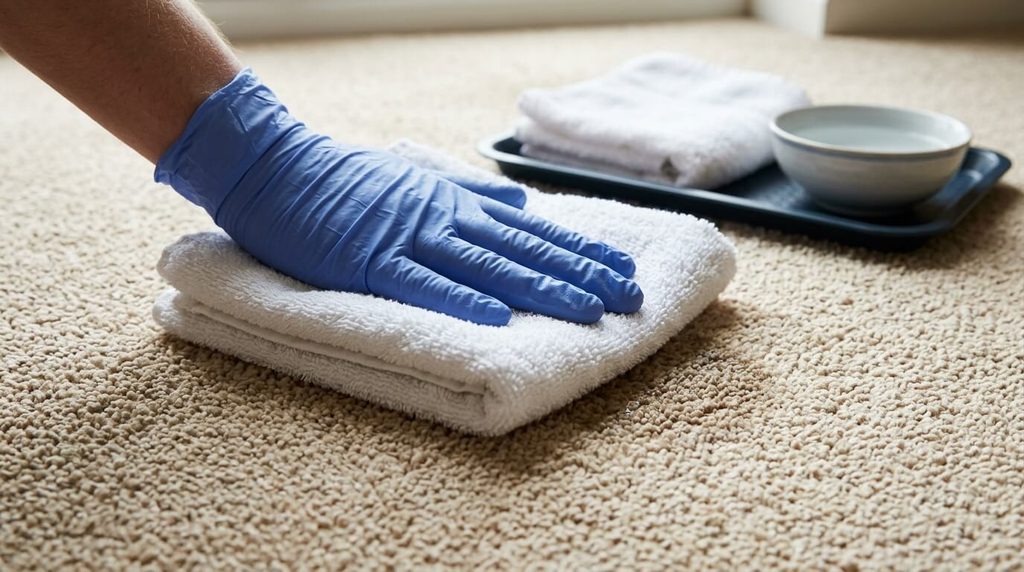
Place a folded white towel over the spot and press steadily. Lift it, replace it when wet, and continue until little moisture transfers. Avoid rubbing. It spreads the liquid and can roughen the fibers. For a removable rug, check whether the accident reached the floor underneath. Protect that floor before continuing.
2. Use a Controlled Cool-Water Rinse
Apply a small amount of cool water to the affected fibers, then blot it out with a fresh towel. Repeat in small passes. Do not pour a bowl of water over the spot. In its pet-stain cleanup guidance, Humane World for Animals recommends absorbing fresh urine and rinsing with cool water. This is a useful starting point when the material permits wet cleaning.
3. Treat Remaining Surface Soil
If the spot remains visibly dirty, use a tested dilute detergent solution:
- ¼ teaspoon clear liquid hand-dishwashing detergent.
- 1 cup lukewarm water.
Choose a detergent without bleach or lanolin. Do not substitute automatic dishwasher detergent or laundry detergent. The Carpet and Rug Institute’s pet-urine bulletin provides this dilution for carpet spot treatment. It is a mild cleaning option, though it is not a strictly natural formula.
Test the solution in a hidden area and allow that patch to dry. If you see color transfer or a texture change, stop. Otherwise, dampen a white cloth with the solution. Blot from the outside of the stain toward the center, using a clean part of the cloth as soil transfers.
4. Remove Cleaner Residue
Use a separate cloth lightly dampened with plain water to remove detergent. Follow each pass with a dry towel. Continue while residue transfers, keeping the carpet as dry as practical. More detergent is not necessarily more effective. The Carpet and Rug Institute’s spot-cleaning instructions emphasize thorough residue removal because leftover cleaner can attract dirt.
5. Dry and Reassess
Press the area with dry towels and improve airflow with a fan. Keep pets and furniture away until the carpet is dry. Then check both appearance and odor. If the surface looks clean but still smells, switch to appropriate urine treatment rather than repeating detergent indefinitely.
Can Vinegar and Baking Soda Remove Pet Stains?
They have limited uses, but neither is a universal pet-stain remover.
When Vinegar May Be Appropriate
The Carpet and Rug Institute lists 1 cup ordinary white vinegar mixed with 2 cups water in its carpet spot-treatment guidance. This is a conditional carpet treatment, not a recipe for wood, stone, or every upholstery fabric. Only use it if your carpet manufacturer permits vinegar and a hidden test dries without changes. Use ordinary 5% white vinegar, not stronger cleaning vinegar.
Apply sparingly through a cloth and blot dry. Do not add it over another cleaner unless the instructions permit that sequence. Guidance differs: Humane World’s urine-cleaning advice cautions that strong vinegar odors may encourage renewed scent marking. You can skip vinegar and use a compatible pet-urine product instead.
What Baking Soda Can Do
Baking soda may help with mild residual surface odor. It cannot reliably remove urine from carpet padding or cushion foam. If your carpet and vacuum instructions allow fine powder, use a light dusting on a clean, dry area. Keep pets away, then remove it thoroughly. Avoid thick layers or wet paste. Trapped powder can be difficult to extract, and some vacuums are unsuitable for fine-powder pickup.
Why Fizzing Does Not Prove Stain Removal
Vinegar and baking soda react with each other, producing carbon dioxide and neutralizing much of their acidity and alkalinity. The bubbles do not tell you whether urine has been removed. What matters is lifting the residue, reaching the contaminated area, and drying the material correctly.
How to Clean Pet Vomit and Feces
Wear gloves and keep children and pets away. Remove the waste before applying liquid.
For Vomit
Lift loose material with a plastic spoon or stiff cardboard. Work inward rather than spreading it across the surface—blot remaining liquid. On water-safe synthetic carpet, use the tested dilute detergent solution described above, remove residue, and dry. If yellow or orange color remains, choose a stain treatment approved for the carpet. Do not assume a stronger homemade mixture will remove it: pigments or acidity may have changed the original dye.
For Feces or Diarrhea
Lift solid waste carefully. For diarrhea, use disposable towels to absorb the mess without grinding it into the fibers. Clean the remaining residue using a method suitable for the surface. Bag the waste, clean reusable tools, and wash your hands after removing gloves.
Stain removal is different from disinfection. When disinfection is needed on a compatible hard surface, use a product labeled for that purpose and follow its contact-time and rinsing instructions. Large accidents on carpet or upholstery may require professional cleaning, especially when contamination reaches backing or filling.
How to Remove Old Pet Urine Stains and Odors
Old urine may extend beyond the visible mark or sit below the surface. A light spray across the center may miss much of it. Choose an enzyme or bio-enzymatic cleaner specifically labeled for pet urine and compatible with the material. Check the full instructions rather than relying on the word “natural” on the bottle.
Follow the Product’s Treatment Sequence
- Confirm compatibility. Check the surface, fibers, finish, and intended use.
- Account for previous cleaners. Remove incompatible residue as instructed.
- Patch-test. Judge the dried result before treating a visible area.
- Apply the stated amount. Avoid both inadequate coverage and uncontrolled soaking.
- Allow the full contact time. Do not immediately blot away a product that needs time to work.
- Complete the required drying or extraction process.
- Reassess after drying. Repeat only as directed.
Do not layer vinegar, peroxide, disinfectant, and enzyme cleaner together. The Carpet and Rug Institute’s urine bulletin explains that urine can damage carpet dyes and backing. Some remaining discoloration is permanent, even when cleaning removes the waste.
If correctly performed treatment does not resolve the smell, have a professional inspect the padding or subfloor. More surface cleaner may not reach the source.
How to Remove Pet Stains Naturally From a Sofa
Find the upholstery care tag before applying liquid. Common cleaning codes include:
- W: Water-based upholstery cleaning.
- S: Solvent-based cleaning.
- W/S or S/W: Specified water- or solvent-based treatments.
- X: Vacuuming or light brushing only.
As shown in Ashley’s furniture-care instructions, these codes guide product selection. The sofa manufacturer’s detailed directions take priority.
Water-Safe Fabric
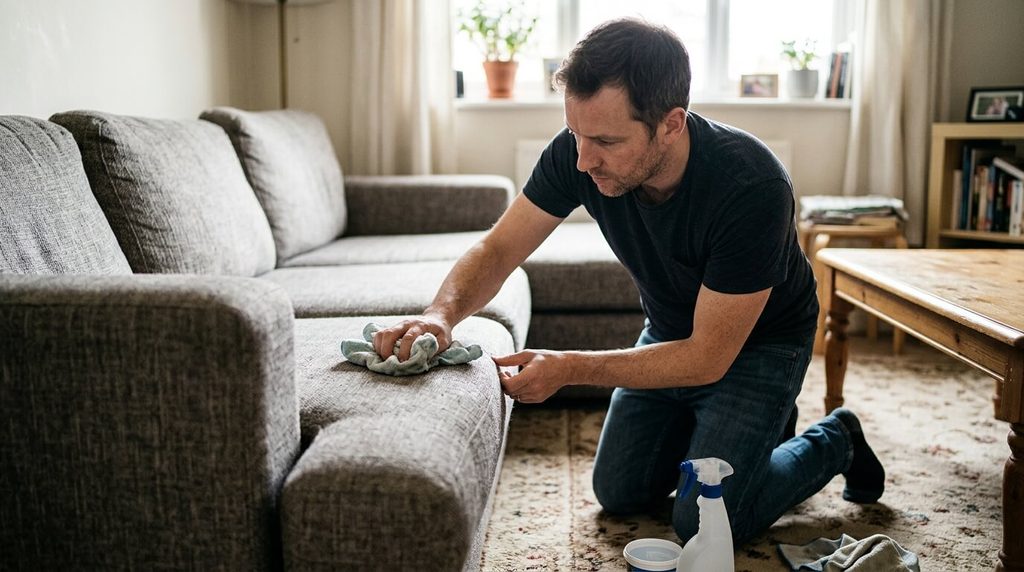
Lift solids and blot liquid. Use an upholstery-approved cleaner sparingly, following its instructions for application and residue removal. Work from the stain’s edge inward. Blot dry and improve airflow without using a hair dryer or heater.
Do not automatically transfer the carpet recipe to your sofa. Upholstery fabrics can develop water rings or react differently to detergent. HomeUpright’s guide to removing tea stains from sofas and fabrics explains more about care codes and controlling moisture.
Soaked Cushions and Delicate Materials
A zipper does not guarantee that a cushion cover is machine washable. Check the care label before removing it. If urine reached the foam, cleaning the cover may leave the smell behind. Ask an upholstery cleaner or the furniture manufacturer whether the filling can be treated or replaced. Leather, suede, silk, and vintage upholstery need material-specific care. Avoid household vinegar and peroxide experiments on these surfaces.
How to Remove Pet Stains Naturally From Floors
Absorb the accident promptly, then choose a method suited to the flooring.
Hardwood and Engineered Wood
Blot with a dry cloth. Clean with a product suitable for the finish, use minimal moisture, and dry promptly. The National Wood Flooring Association’s maintenance guidance recommends immediate spill cleanup and avoiding wet or steam mops. Skip vinegar, abrasive baking soda paste, and unapproved peroxide treatments. Darkening, raised edges, or persistent odor at a seam may require professional assessment.
Laminate and Luxury Vinyl
Wipe up the accident, use a compatible cleaner, and dry the seams. Do not assume a carpet enzyme cleaner is also suitable for the floor. Check the label for the exact material. If laminate has swollen, surface cleaning cannot restore its original shape.
Ceramic or Porcelain Tile
Remove waste and use a tile-compatible cleaner. For lingering grout odor, select a pet-urine treatment approved for both tile and grout. Keep liquids controlled near baseboards and floor edges. Check sealer restrictions before treatment.
Natural Stone
Use a cleaner suitable for the stone and its sealer. Avoid vinegar, lemon juice, and abrasive powders. A dull or pale patch may be etching rather than removable dirt. Additional acid will not repair it.
Concrete
Porous concrete may hold urine below the visible surface. Use a urine-treatment product labeled for concrete, checking compatibility with any coating. Extensive indoor contamination may need professional extraction and assessment.
How to Remove Urine Stains From White Clothes
White fabric can still contain delicate fibers, elastic, or finishes that restrict treatment. Read the garment label first.
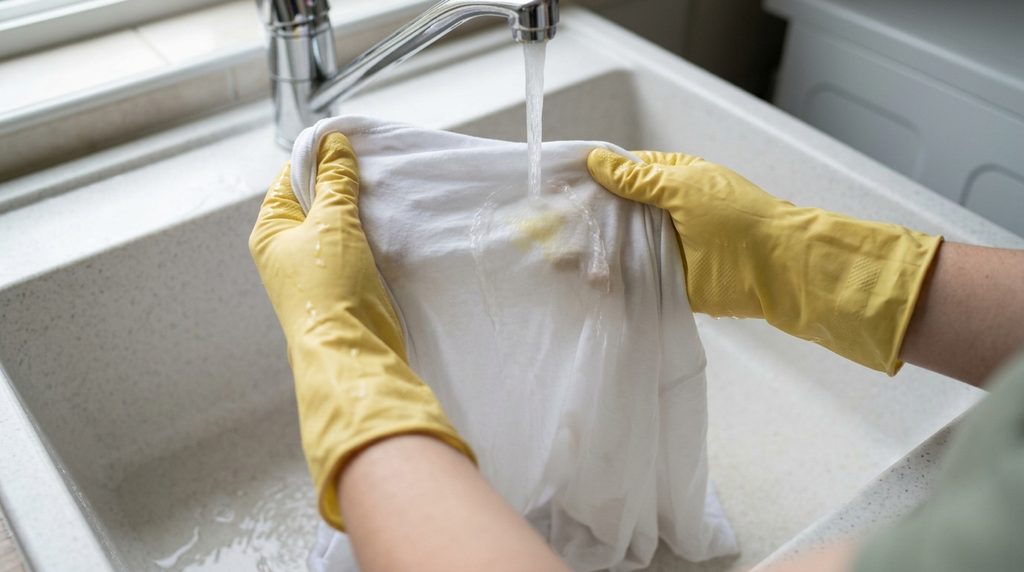
- Rinse with cool water. Flush from behind the mark when practical.
- Pretreat with suitable laundry detergent. Follow its stated waiting time.
- Wash according to the care label. Use the correct detergent dose.
- Inspect before heat drying. Repeat treatment if yellowing or odor remains.
- Air-dry while checking the result.
For persistent yellowing on compatible washable fabric, a labeled oxygen-bleach soak may help. Follow the garment and product instructions. Oxygen bleach is a formulated cleaning option, not a chemical-free remedy. It is unsuitable for some fibers. Use the American Cleaning Institute’s stain-removal guide to check fabric-appropriate treatment rather than assuming all white garments tolerate the same products.
Avoid These Common Cleaning Mistakes
- Scrubbing: It spreads waste and can distort fibers.
- Flooding: Liquid carries contamination into padding, cushion filling, and flooring seams.
- Leaving cleaner behind: Residue can attract dirt and create a returning patch.
- Covering odor with fragrance: A pleasant smell does not confirm that urine is gone.
- Increasing the concentration: Stronger solutions can damage dyes and finishes.
In its vinegar safety advice, Poison Control explains that vinegar mixed with chlorine bleach can release irritating chlorine gas. Use one compatible treatment at a time.
Why the Stain or Smell Comes Back
The returning symptom can help identify the next step.
- The same outline reappears: Residue may be moving upward from deeper layers during drying.
- The patch collects dirt: Cleaner may remain in the fibers.
- The cover is clean, but the cushion smells: The filling may be contaminated.
- A floor seam smells: Liquid may have entered the joint or material underneath.
- The patch becomes lighter: Dye loss or finish damage may have occurred.
Stop adding products if you see color loss, swelling, stiffness, or a spreading water ring. Professional help is useful for large accidents, soaked cushions, valuable rugs, repeated contamination, and persistent odor after correctly performed treatment.
Prevent Repeat Accidents
Keep gloves, white towels, a plastic spoon, and the correct cleaner together so you can respond quickly. Use washable throws or protective covers where your pet rests. Check bathroom access, litter-box cleanliness, and changes in routine.
If a previously trained pet suddenly starts having accidents, speak with a veterinarian. Cleaning will not address an underlying health problem. Once the area is fully clean and dry, temporarily restrict access if your pet keeps returning to it. Focus on the cause and a workable routine rather than punishment.
Conclusion
Knowing how to remove pet stains naturally starts with prompt blotting, careful solid removal, and a method suited to the surface. Use controlled moisture, remove cleaner residue, and check the result after drying. Household ingredients have limits. Persistent urine odor may need a compatible enzyme treatment, while contaminated padding, soaked cushions, or damaged flooring may require professional help.
Prepare your cleanup kit before the next accident. For other household spills, explore HomeUpright’s practical cleaning guides and choose a method matched to the material.Frequently asked questions
What is the best homemade pet stain remover?
No single recipe suits every surface. Start with blotting and a controlled cool-water rinse on water-safe materials. For compatible synthetic carpet, a tested solution of ¼ teaspoon suitable hand-dishwashing detergent in 1 cup lukewarm water can help with surface soil. Persistent urine odor needs an appropriate urine-treatment product.
Does vinegar permanently remove pet urine odor?
Not reliably. It has a limited role on compatible carpet, but it cannot guarantee removal of urine in padding, foam, or porous flooring. Use a surface-compatible pet-urine product when odor persists.
Can baking soda remove old pet urine stains?
Baking soda may help with mild surface odor, but it is not a dependable treatment for old urine deposits. These may require an appropriate urine cleaner, controlled extraction, or treatment beneath the surface.
How do you remove pet stains naturally from a sofa?
Lift solids and blot liquid with a white towel. Check the upholstery care code before applying cleaner. Use an approved product sparingly on water-safe fabric. Solvent-only or vacuum-only upholstery, and soaked cushion filling, need specialist advice.
How do you remove urine stains from white clothes?
Rinse with cool water, pretreat with suitable laundry detergent, and wash according to the care label. Inspect before heat drying. A labeled oxygen-bleach soak may help with remaining yellowing when the fabric permits it.
Can you use hydrogen peroxide on pet stains?
Only when the material’s care instructions permit it. Peroxide can bleach dyes and alter finishes. A labeled stain-removal product provides clearer directions than an improvised mixture. Do not combine peroxide with vinegar.
Should you steam-clean pet urine from carpet?
Avoid steam treatment as the first response to urine stains and odors. Start with absorption and suitable urine treatment. If extraction is needed, follow the carpet and equipment instructions or consult a professional cleaner.
Why does the stain remain after the smell is gone?
The remaining color may be dye damage rather than removable waste. Urine and previous cleaning attempts can change carpet color. Stop increasing cleaner strength and ask a professional to assess the mark.