


How to Remove Dog Hair From Clothes Before and After Washing
Dog hair on clothes does not always mean the clothes need washing. A clean shirt may only need a lint roller or gentle brushing after you sit beside your dog. When a garment also needs laundering, removing the visible hair first gives you a better starting point.
The most practical way to remove dog hair from clothes is to work in stages. Lift off loose fur, wash according to the care label, and check for remaining strands after drying. Choose the gentlest suitable tool instead of repeatedly washing or scrubbing the garment.What to know
- Remove visible hair before washing instead of expecting the washer to collect everything.
- Use a rubber glove or suitable clothes brush when a lint roller is unavailable.
- Choose the method around the garment’s fabric and care instructions.
- Keep heavily covered pet bedding separate from ordinary clothing.
- Clean collected hair from tools and appliances before handling more laundry.
Choose your routine: one shirt, a full load, or no dryer
Start by deciding whether you need a quick touch-up or a complete laundry routine. This prevents unnecessary washing and helps you choose an appropriate tool. Use the table below as a starting point, then check the garment’s care label before proceeding.The right starting point for your clothes
| Your situation | Start here | Finish with |
|---|---|---|
| One clean shirt to wear now | Pick off clumps, then use a suitable roller or brush. | Check cuffs, seams, and the back under good light. |
| A full load of washable clothes | Remove the visible layer from each garment. | Wash loosely loaded, dry as directed, and inspect. |
| No lint roller available | Try a clean rubber glove or appropriate clothes brush. | Remove gathered hair from the tool between passes. |
| Dry clothes approved for tumble drying | Consider a brief air-only tumble after removing clumps. | Inspect the garment and clean collected hair afterward. |
| Clothes that must air-dry | Remove hair by hand before washing. | Let the garment dry as directed, then brush or roll gently. |
| Delicate or dry-clean-only clothing | Use gentle, fabric-appropriate surface removal. | Ask a professional cleaner if hair remains embedded. |
How to remove dog hair from clothes with a lint roller
A lint roller is a convenient first choice for loose surface hair on suitable clothing. Lay the garment on a clean surface and keep the section you are rolling smooth. Use light pressure, replacing the adhesive sheet when it becomes covered.
Work through the main panels before checking smaller areas. Sleeves, cuffs, pocket edges, and seams can hold strands that you miss during the first pass. Turn the garment over and inspect the back before you decide it’s finished.
For thick buildup, pick off loose clumps before using the roller. This keeps the adhesive from filling immediately and makes the remaining work easier to see. Test a hidden area first if the garment has a fragile print, delicate finish, or loose fibers.
How to remove dog hair from clothes without a lint roller
A clean rubber glove or fabric-appropriate clothes brush can help when you have no roller. Neither requires adding a laundry product or running a machine. Start with a small section to check whether the method removes hair without damaging the fabric.
Use a clean rubber glove
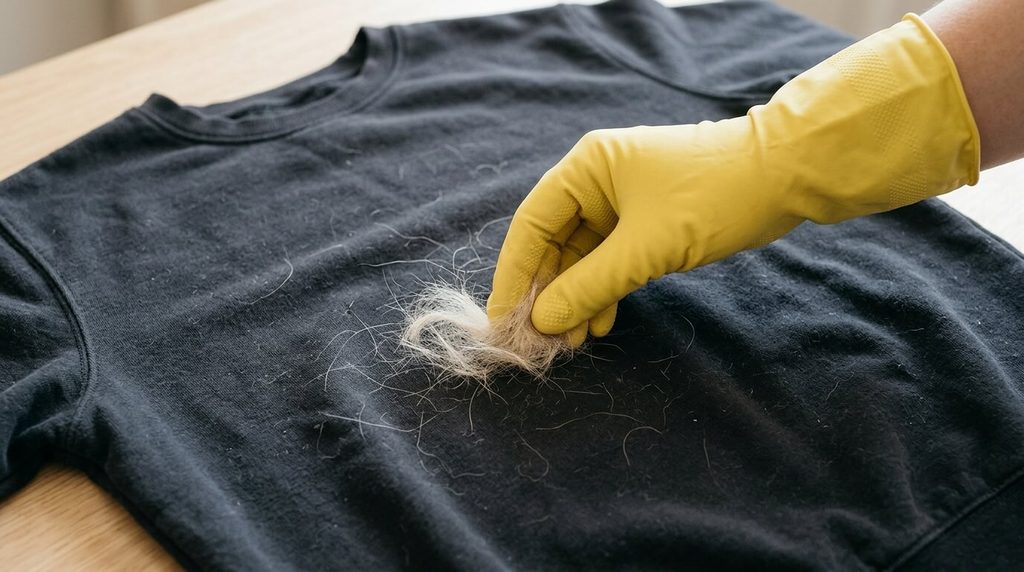
Lay the clothing flat and gently smooth a gloved hand along the fabric. Following the rubber glove method, move along the fabric direction rather than rubbing aggressively. Gather loosened hair into small clumps and lift them away before moving to the next area.
Start with a dry glove that is free of cleaning chemicals, grease, or other residue. For washable, water-safe fabric, you can test a barely damp glove on an inconspicuous area. Stop if the glove leaves marks, transfers color, or changes the surface.
Try a suitable clothes brush
Support the garment so brushing does not stretch it. The manufacturer’s clothes-brushing instructions recommend brushing along the fabric’s grain rather than against it. Use light strokes and clean collected hair from the brush as you work.
Choose a garment brush suited to the material. A stiff household cleaning brush is not a safe substitute for delicate clothing. If the brush catches fibers or leaves the surface rougher, stop using it.
Use a barely damp cloth for a small area
A clean, lightly damp cloth is a cautious option for washable fabric that tolerates water. Test a hidden area, then wipe a small section gently in one direction. Lift off gathered hair and allow the fabric to dry before judging the result.
Keep tape as an occasional fallback
Mild adhesive tape may lift a few surface strands from suitable fabric when no roller is available. Test first, press lightly, and peel it away gently. Avoid strong packing tape, duct tape, and repeated adhesive use on delicate fibers or decorative finishes.
How to remove dog hair from clothes in the dryer
There are two different dryer steps to understand. The first is a brief tumble of dry, hairy clothing before washing, while the second is drying wet laundry after the wash. Both depend on the garment’s care label, and neither suits clothing that prohibits tumble drying.
The dog-hair removal guidance lists a dryer as an option for suitable garments, along with other removal methods. Tumbling may loosen hair so some of it collects in the lint filter. Embedded strands can still require a separate hand-removal step.
Before washing: a brief no-heat tumble
Use this approach only for garments approved for tumble drying. Remove thick clumps first and clean the lint filter before loading. Follow your appliance’s instructions when selecting an air-only or no-heat cycle.
- Place a small, loose load in the drum.
- Select the approved air-only or no-heat setting.
- Try a short interval, such as five minutes, then inspect.
- Remove the clothing and lift off remaining visible strands.
- Clean collected hair from the lint filter and accessible drum surfaces.
The short interval is an inspection point, not a guaranteed treatment time. If the hair remains firmly caught, avoid extending the cycle repeatedly without checking the garment. Switch to a suitable brush or glove method instead.
After washing: dry according to the label
Wet clothes need the drying method specified for their fabric. Use the permitted cycle and temperature rather than choosing high heat solely because hair remains. Once the clothing is dry, inspect it and finish remaining strands with a gentle tool.
Do you need dryer sheets or dryer balls?
Neither is essential for the basic routine. If you use one, follow its directions and check whether the garment permits the product. Don’t assume dryer balls collect every strand or that softening products suit all technical fabrics.The official dryer fire safety guidance explains why lint-filter and vent maintenance matter for household safety. Treat these tasks as part of ordinary appliance care, including after hairy loads. Use your machine’s manual for the maintenance procedure specific to its design.
How to remove dog hair from clothes in the washing machine
Prepare the clothing before starting the wash. The manufacturer’s pet-hair laundry guidance recommends removing as much visible hair as possible before using a standard washer. That first step reduces how much loose fur enters the load.
Separate heavily covered items
Keep dog blankets and other heavily covered textiles separate from ordinary clothing. Continue sorting by color, fabric, and care requirements as you normally would. Removing hair does not make incompatible laundry items safe to wash together.
If a garment also has a pet stain, address that problem separately. Learning how to remove pet stains naturally can help you identify surface-specific precautions before choosing a treatment. Follow the garment’s instructions rather than applying a cleaner intended for another material.
Leave room for clothes to move
Place the load loosely in the drum rather than pressing items down to fit more. The manufacturer’s washer loading advice explains that tightly packed clothing cannot move or rinse properly. Reduce the load size if items have little room to move.
Use suitable detergent and settings
Choose the wash temperature and cycle allowed by the care label. Measure detergent according to the product directions and your appliance’s requirements. More detergent or hotter water won’t remove visible hair.
Consider an additional rinse only when suitable for the appliance and load. It may help, but it cannot guarantee embedded strands will disappear. Inspect the clothes after washing before deciding what to do next.
How to remove dog hair when you do not have a dryer
A dryer is optional for this routine. Remove the visible layer with a suitable roller, glove, or brush, then wash according to the care label. Hang or lay the garment to dry as directed and inspect it once dry.
Finish remaining surface strands with a gentle tool. Keep the garment on a clean surface while you do this so it doesn’t immediately collect more hair. If the clothing still has extensive buildup, review your preparation and load size before repeating the entire wash.
Home remedies: what helps and what to skip
The simplest home remedies for removing dog hair from clothes focus on lifting it off. A clean rubber glove and a suitable clothes brush are a great place to start. Don’t add household ingredients to the washer as your first response to a hairy garment.
Vinegar is not an essential hair-removal ingredient
Check the appliance instructions before putting vinegar in the machine. The manufacturer’s washing-machine vinegar guidance warns that acidity can damage components such as rubber seals and hoses over time. Begin with physical hair removal and an approved laundry routine instead.
Baking soda does not replace lifting off hair
You don’t need to sprinkle baking soda on clothing just because it is covered in fur. Hair removal and odor treatment are different tasks. If you also need to address an odor, choose a treatment appropriate for the garment and appliance.
Avoid abrasive tools
Skip scouring pads, sharp scrapers, and tools designed for durable upholstery unless their instructions expressly permit use on your garment. Test any fabric tool in a hidden area before treating the visible surface. Stop if fibers pull, the finish changes, or the material starts to pill.
Choose a gentler approach for difficult fabrics
Black clothing
Light-colored hair shows easily on black clothing, so inspect the garment in good lighting. Remove clumps first, then make controlled passes with a suitable roller or brush. Check the back, cuffs, pocket edges, and seams before putting it on.
Fleece and textured sweatshirts
Work in small areas instead of rubbing across the entire garment. Clear gathered hair from the tool frequently so it does not move onto the next section. Stop before repeated friction changes the fabric’s raised surface.
Wool and delicate knitwear
Use a brush appropriate for the material, and support the garment while you work. Avoid strong adhesive and pressure that stretches the knit. Follow the drying label, remembering that a no-heat setting still involves tumbling.
Silk, lace, and embellished garments
Lift loose strands carefully without dragging a tool across fragile fibers or decorations. Don’t assume moisture, tape, or brushing is safe just because it works on cotton. Ask a professional cleaner for advice when the hair cannot be removed gently.
Workout clothing
Check the label for heat and softening-product restrictions. Remove surface hair first, then use the recommended washing and drying routine. Pay attention to stretchy panels and finishes during your hidden-area test.
What to do when clothes still have dog hair after washing
Repeating the same wash isn’t always the best next step. Look at where the hair remains and whether the problem affects one garment or the whole load. Use the pattern to decide what part of your routine to change.
A few strands remain on one garment
Dry it as directed and finish with a suitable roller or brush. Focus on the affected area instead of re-treating the whole garment. A small amount of local cleanup may be all it needs.
Most of the load is covered
Check whether a heavily covered blanket or garment entered the washer without preparation. Review the load size and inspect the drum for visible hair. Fix those issues before adding more clothing.
Hair stays embedded in one fabric
Try another gentle method rather than increasing pressure. A roller may lift surface strands, while a glove or appropriate brush gathers the hair it misses. If the material begins to change, stop and seek advice for that fabric.
Hair returns after you get dressed
Inspect the chair, bed, car seat, or couch that touches your clothes. The removal method may have worked, but hair may have transferred again from another surface. Keep clean clothing away from those areas while dressing and storing it.
Clean the washer after heavily covered loads
Check the drum, door glass, and accessible seal folds for collected hair. Lift visible buildup with a cloth and dispose of it rather than washing clumps down a drain. Follow the appliance manual before opening filters or removing parts.
For front-loaders, follow the manufacturer’s instructions for cleaning the washer door seal. Use the recommended products and precautions for your machine. Follow its prescribed maintenance cycle when needed rather than substituting a universal homemade recipe.

Keep dog hair from returning to clean laundry
Protect the clothing after you remove the hair. Fold it on a clean table, check the laundry basket, and store it in closed drawers or a closet. Avoid leaving clean garments on your dog’s favorite resting spot.
Keep a removal tool near the place where you dress. Use washable covers on frequently shared seating and clean those surfaces regularly. These habits help you address the source instead of repeatedly touching up the same clothes.
Appropriate grooming can also reduce loose hair around the home. The dog grooming and shedding guidance explains that the right routine depends on coat type. Choose suitable grooming tools and ask your groomer or veterinarian when you are unsure.
Conclusion
The most practical approach to how to remove dog hair from clothes is to lift off visible fur before laundering. Use a suitable roller, glove, or brush, then follow the garment’s washing and drying instructions. Finish remaining strands locally and clean the tools or appliance surfaces that collected them.
Start with one affected garment and check the result before treating a full load. Switch methods when a tool misses embedded hair, rather than increasing pressure or repeating washes blindly. Keep cleaned clothing away from hairy surfaces to make your work last longer.Frequently asked questions
What is the fastest way to remove dog hair from clothes?
A lint roller is a convenient option for loose surface hair on suitable fabric. Pick off thick clumps first, then roll lightly and replace loaded sheets. Check seams, cuffs, and the back before wearing the garment.
How do I remove dog hair without a lint roller?
Try a clean rubber glove or a fabric-appropriate clothes brush. Work on small sections and remove collected hair from the tool between passes. Test first and stop if the fabric surface changes.
Should I put hairy clothes in the dryer before washing?
You can consider a brief air-only tumble if the care label permits tumble drying. Remove clumps and clean the lint filter before starting. Skip this method for garments labeled do not tumble dry, even when no heat is used.
Why does dog hair remain after washing clothes?
Hair may remain caught in the fabric, transfer from another item, or persist in a tightly packed load. Remove visible buildup before washing and leave room for movement. Inspect both the clothing and washer before deciding whether another wash is needed.
Can I remove dog hair from clothes without a dryer?
Yes, a dryer is optional. Remove visible hair with a suitable hand tool, wash as directed, and air-dry according to the label. Once dry, gently brush or roll any remaining surface strands.