


30 Flowers That Start With K for Gardens, Pots, and Plant Lovers
Flowers that start with K include kalanchoe, kangaroo paw, kerria, kalmia, kingcup, king protea, knautia, and kniphofia. The letter also gives us flowering trees, fragrant shrubs, small wildflowers, and unusual container plants. Some are familiar nursery choices, while others need a more specialized growing setup.
This guide covers 30 distinct flowering plant entries, without counting alternate names as separate additions. Some are known by a common name, such as kingcup, while others are commonly recognized by a botanical name, such as kniphofia. Each profile explains what to look for and what matters before planting.
Find a flower that fits your space
- For spring flowers, consider kerria, kingcup, Kobus magnolia, and Korean spice viburnum.
- For containers, florist kalanchoe and suitable kohleria selections offer colorful flowers.
- For sunny borders, investigate knautia, Korean mint, kalimeris, and appropriate kniphofia cultivars.
- For moist shade, kirengeshoma provides pale yellow late-summer blooms.
- For wetter ground, kingcup and kosteletzkya deserve a closer look.
- Use botanical names to avoid confusion between unrelated plants sharing similar common names.
Flowers That Start With K: Quick Comparison
Use this table to find a name or narrow down a planting shortlist. The growing settings are starting points, not complete care instructions. Flowering time, winter survival, and mature size can vary with the species, cultivar, and local conditions.
Compare 30 K flower names
| Flower name | Botanical identity | Flower appearance | Growing consideration |
|---|---|---|---|
| Kalanchoe | Kalanchoe blossfeldiana | Clusters in red, orange, yellow, pink, or white | Bright containers; protect from frost |
| Kalmia | Kalmia latifolia | White to pink cups with darker markings | Acidic, moist but well-drained soil |
| Kangaroo paw | Anigozanthos species and hybrids | Fuzzy tubular flowers in several colors | Choose for local climate or protected cultivation |
| Kerria | Kerria japonica | Yellow single or double flowers | Partly shaded shrub borders |
| Kingcup | Caltha palustris | Glossy yellow spring flowers | Consistently moist or wet ground |
| King protea | Protea cynaroides | Large heads with prominent colored bracts | Specialist sunny planting |
| King’s spear | Asphodeline lutea | Yellow star-shaped flowers on upright stems | Sun and good drainage |
| Kirengeshoma | Kirengeshoma palmata | Hanging creamy-yellow bells | Moist, sheltered shade |
| Kiss-me-over-the-garden-gate | Persicaria orientalis | Drooping pink flower clusters | Check regional spread concerns |
| Knautia | Knautia macedonica | Crimson pincushion-like heads | Sunny, well-drained borders |
| Kniphofia | Kniphofia species and hybrids | Upright spikes in warm or softer colors | Check cultivar size and winter drainage |
| Kobus magnolia | Magnolia kobus | White, sometimes pink-tinged spring flowers | Allow room for a tree |
| Kolkwitzia | Kolkwitzia amabilis | Pink bells with yellow throats | Roomy shrub borders |
| Korean mint | Agastache rugosa | Purple to lavender flower spikes | Sun and well-drained soil |
| Kosteletzkya | Kosteletzkya pentacarpos | Pink, hibiscus-like flowers | Sunny, moisture-retentive sites |
| Kachnar | Bauhinia variegata | Pink to pale purple orchid-like flowers | Check local invasive status |
| Kaempferia | Kaempferia species | Small flowers; appearance varies by species | Protected tropical or subtropical conditions |
| Kākābeak | Clianthus species | Hanging red, beak-shaped flowers | Use cultivated sources and check climate suitability |
| Kalimeris | Kalimeris incisa, also listed as Aster incisus | Pale blue to lilac daisies with yellow centers | Sun to partial shade |
| Kalmiopsis | Kalmiopsis leachiana | Rosy-pink flowers on a small evergreen shrub | Specialist planting with suitable soil |
| Kalm’s St. John’s wort | Hypericum kalmianum | Yellow flowers with prominent stamens | Check regional suitability and mature spread |
| Kennedia | Kennedia rubicunda | Dark red pea-shaped flowers | Space or support for vigorous growth |
| Kidney vetch | Anthyllis vulneraria | Rounded clusters, commonly yellow | Sun and well-drained soil |
| King’s mantle | Commonly sold as Thunbergia erecta | Blue-violet flowers with yellow throats | Warm-climate shrub or protected container |
| Kohleria | Kohleria species and hybrids | Tubular flowers, often with contrasting markings | Bright filtered light and frost protection |
| Korean spice viburnum | Viburnum carlesii | Fragrant pale flowers opening from pink buds | Sun to partial shade; allow shrub space |
| Kousa dogwood | Cornus kousa | Small flowers surrounded by conspicuous bracts | Well-drained soil and room for a tree |
| Kōwhai | Sophora species, including S. microphylla | Hanging yellow pea-shaped flowers | Check species identity and winter tolerance |
| Krigia | Krigia dandelion | Small yellow, dandelion-like heads | Suitable naturalistic planting |
| Kunzea | Kunzea ambigua | Fluffy creamy-white flowers | Check mature form and local winter suitability |
30 Flowers That Start With K
1. Kalanchoe
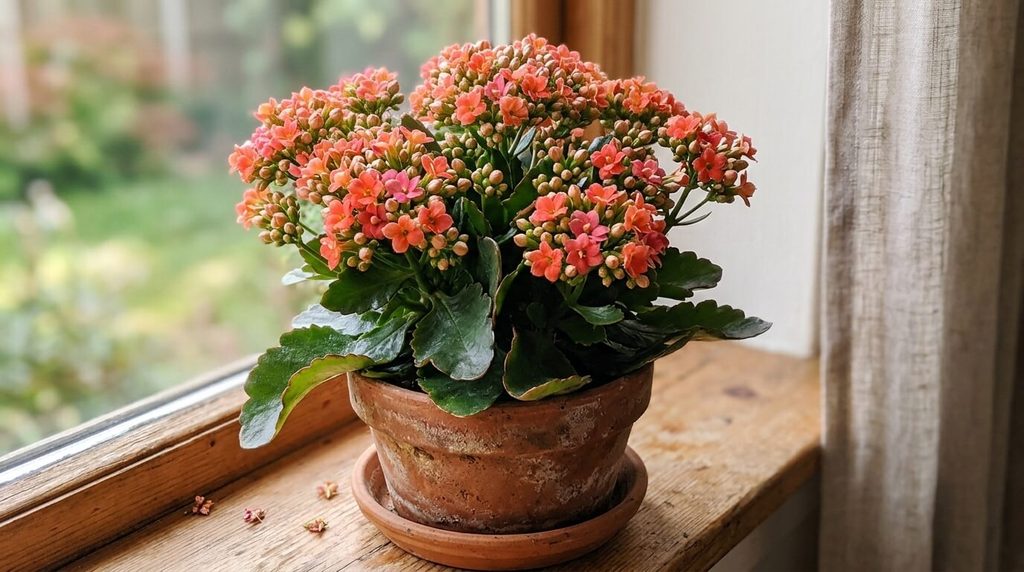
Florist kalanchoe, Kalanchoe blossfeldiana, has thick, glossy leaves and clusters of small flowers. Red, orange, yellow, pink, and white selections are available. Single-flowered plants have a different appearance from double-flowered forms with layered blooms.
Provide bright light and a freely draining container mix. Let the soil dry between waterings rather than keeping it constantly damp. In much of the United States, frost protection makes it more suitable as a houseplant or seasonal container than a permanent outdoor planting.
2. Kalmia
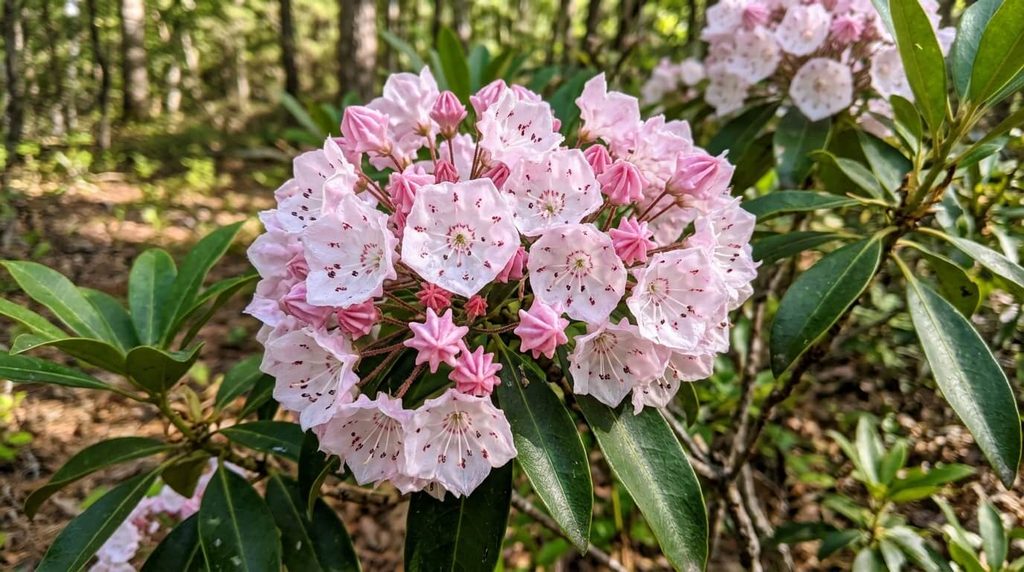
Kalmia latifolia, commonly called mountain laurel, is an evergreen shrub native to eastern North America. Its flowers open into small cups, usually white to pink with darker markings. The shaped buds add interest before the blooms open.
The growing requirements for mountain laurel favor acidic, moist but well-drained soil, with partial shade often providing a useful setting. Avoid treating it as a solution for waterlogged ground. Check the cultivar’s mature size, and remember that mountain laurel is poisonous if eaten.
3. Kangaroo Paw
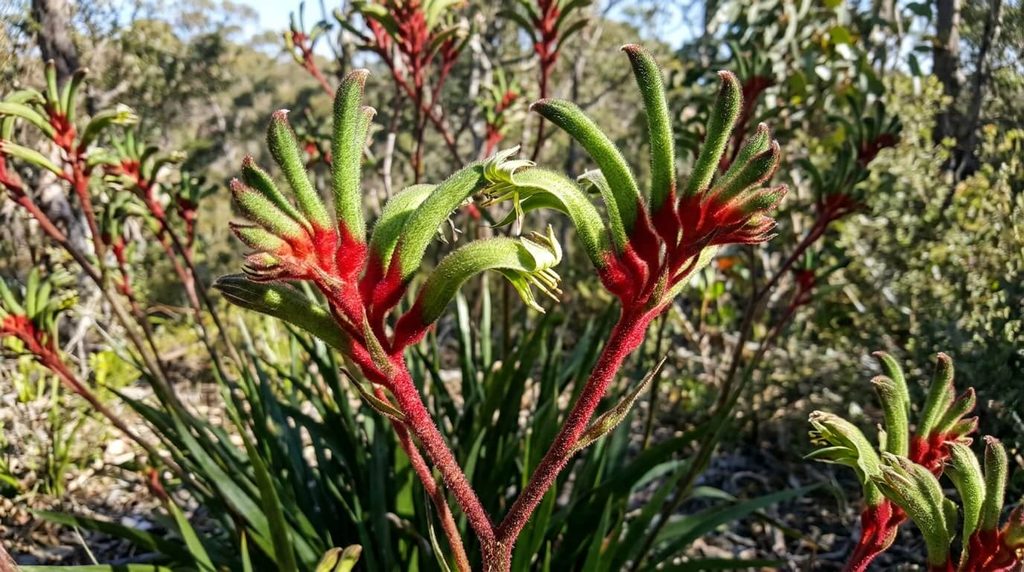
Kangaroo paw refers mainly to Anigozanthos species and their garden hybrids. Fine hairs cover the tubular flowers and contribute to their colors. Tall flowering stems rise above narrow leaves, giving the plant a distinctive outline.
The botanical guide to kangaroo paws explains the differences within this group. Flower color, height, and growing performance vary by species and selection. In colder areas, plan for protected container cultivation rather than assuming year-round outdoor survival.
4. Kerria
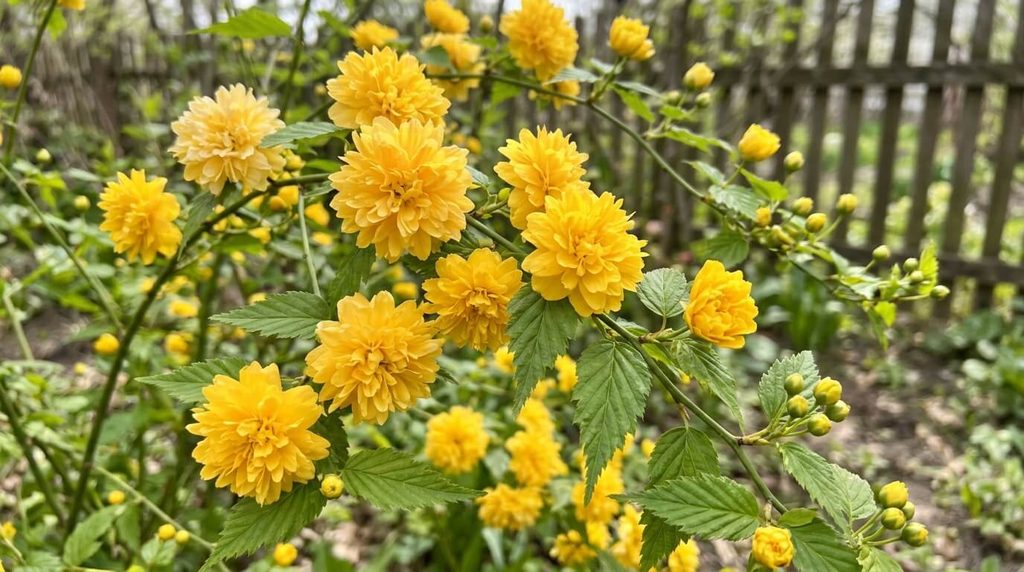
Kerria japonica has arching green stems and yellow spring flowers. Single-flowered forms have open, five-petaled blooms. Double-flowered cultivars produce fuller, rounded flowers.
Partial shade can help protect the flower color from fading in strong sun. Allow room for spreading growth and remove unwanted suckers where necessary. Because it flowers on the previous season’s wood, poorly timed pruning can reduce the next display.
5. Kingcup
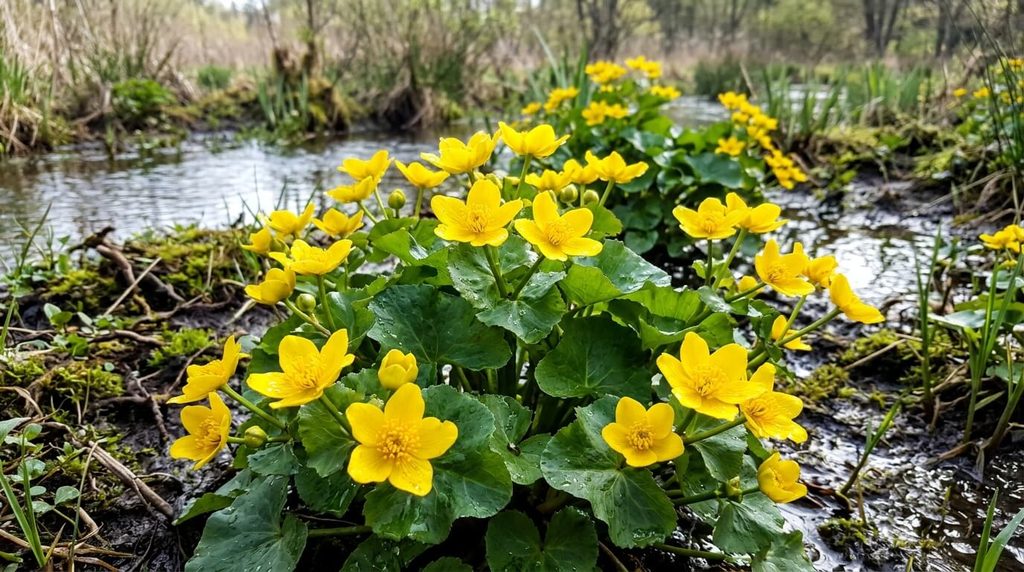
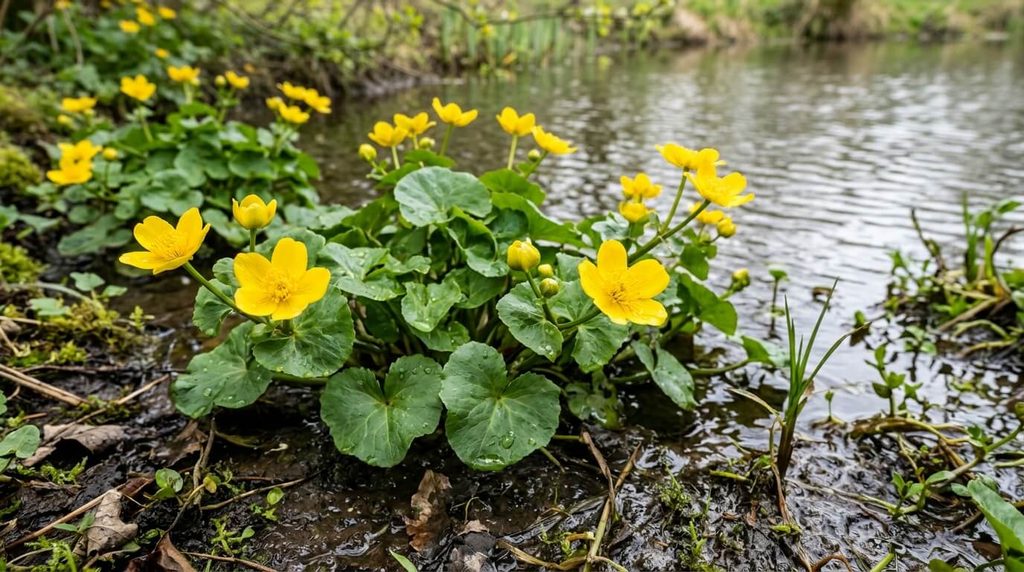
Kingcup is a common name for Caltha palustris, usually called marsh marigold in the United States. It produces bright yellow spring flowers above rounded to kidney-shaped leaves. It is not related to bedding marigolds in the genus Tagetes.
Choose consistently moist or wet ground, such as a suitable pond margin. A dry raised bed is a poor match for its needs. Buy nursery-propagated plants and do not assume the flowers are edible.
6. King Protea
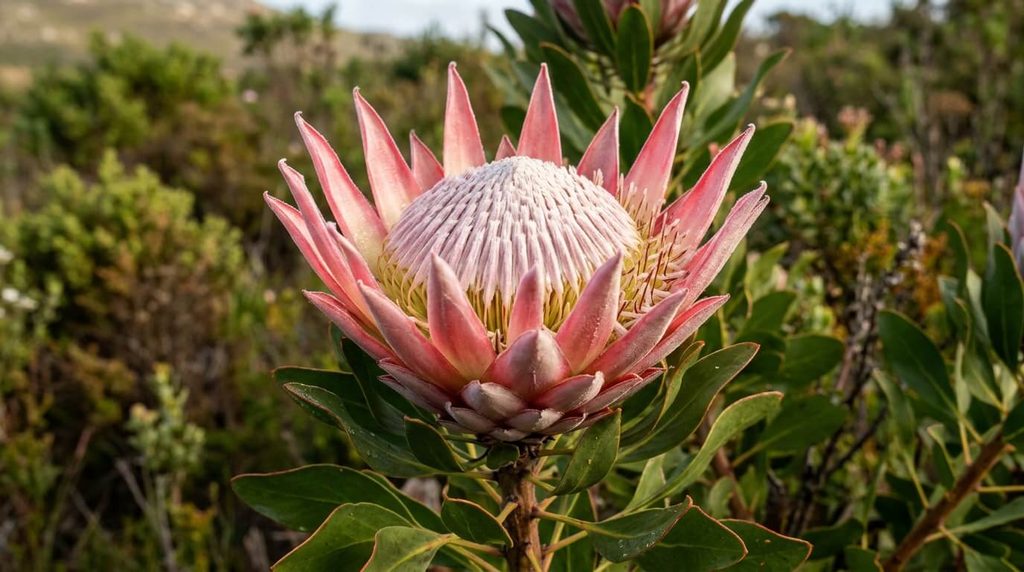
King protea (Protea cynaroides) produces large flower heads surrounded by prominent colored bracts. Those outer structures may be pink, red, or cream. The center contains many small flowers rather than one enormous ordinary bloom.
The cultivation profile for king protea describes a specialist shrub. Confirm drainage, feeding requirements, and winter protection before buying. It is not a general substitute for a hardy border perennial.
7. King’s Spear
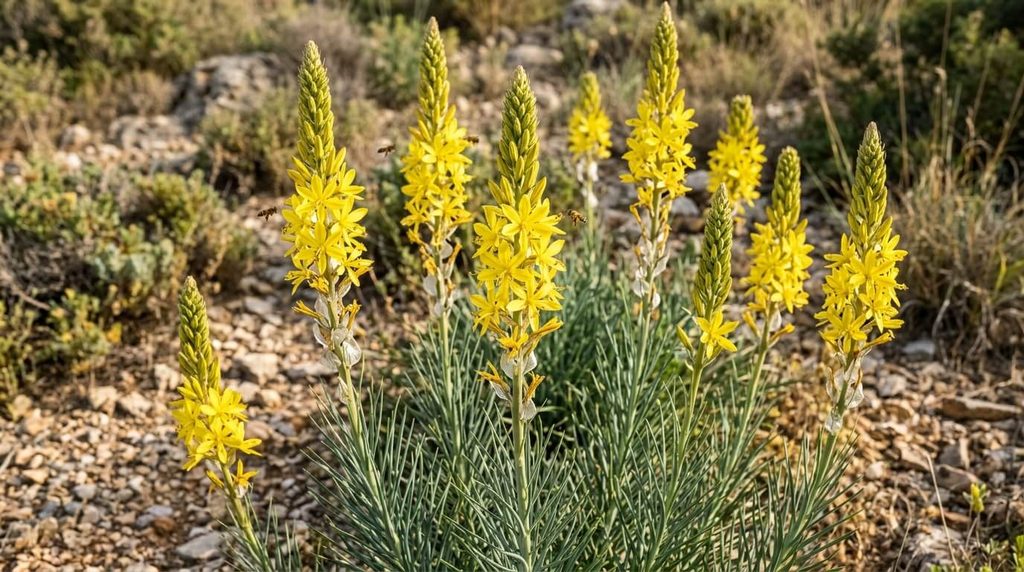
King’s spear, Asphodeline lutea, carries yellow, star-shaped flowers along upright stems. Narrow foliage gives it a lighter base than many broad-leaved perennials. It typically flowers in late spring.
Choose sun and well-drained soil. Place it where neighboring growth will not hide the flower stems. Check local winter suitability rather than transferring advice from a different climate without adjustment.
8. Kirengeshoma
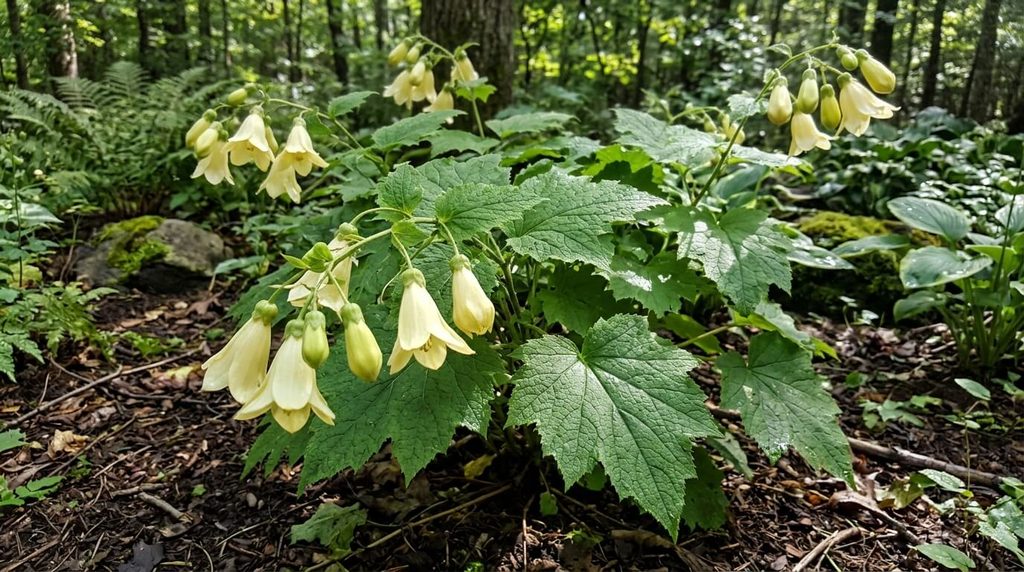
Kirengeshoma palmata, or yellow wax bells, has broad, lobed leaves and hanging creamy-yellow flowers. The foliage provides interest before the late-summer blooms appear. It suits a softer woodland-style display rather than a bright bedding scheme.
The growing profile for yellow wax bells favors moist, humus-rich soil and sheltered shade. Avoid a dry strip beside hot pavement. Give the clump room and check that nearby tree roots will not leave it short of moisture.
9. Kiss-Me-Over-the-Garden-Gate
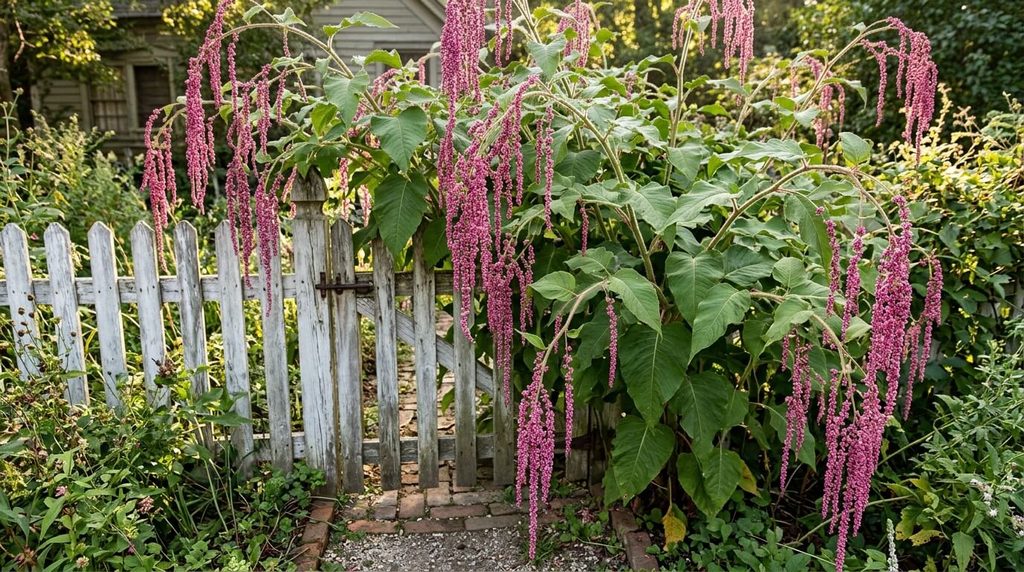
Kiss-Me-Over-the-Garden-Gate is Persicaria orientalis, also encountered as Polygonum orientale. This tall annual has drooping rose-pink flower clusters. It needs more room than a compact bedding annual.
The plant profile for Persicaria orientalis warns about aggressive self-seeding and invasive behavior in parts of the Southeast. Check local guidance before planting. Attractive flowers are not a reason to overlook a plant’s ability to escape the intended bed.
10. Knautia
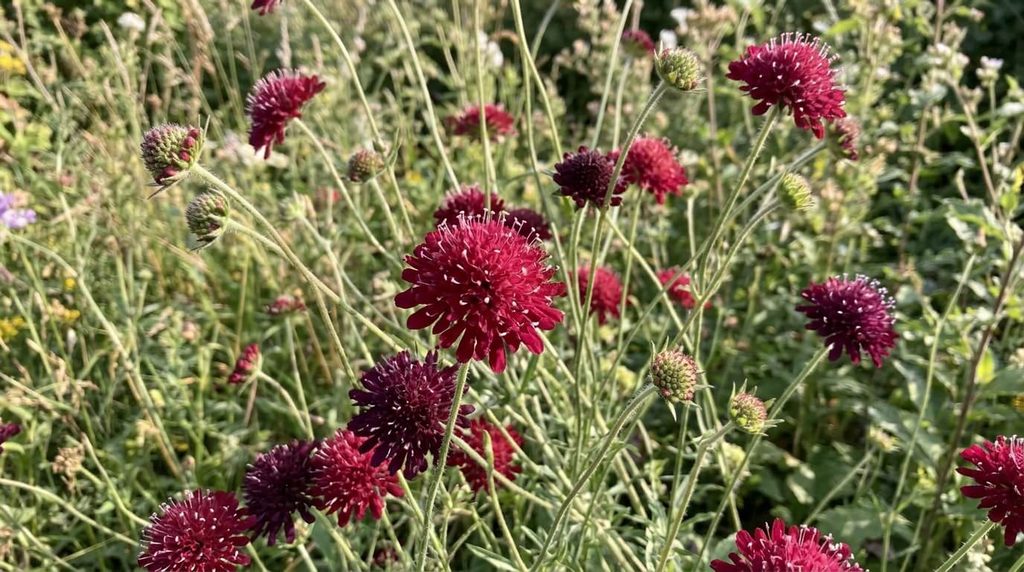
Knautia macedonica produces deep crimson, pincushion-like flower heads. Branching stems hold the flowers above the foliage. This open habit creates small points of color among neighboring plants.
Provide sun and well-drained soil. Check the selected plant’s height so taller growth does not hide the blooms. Use the botanical name when shopping because “scabious” can describe several different plants.
11. Kniphofia
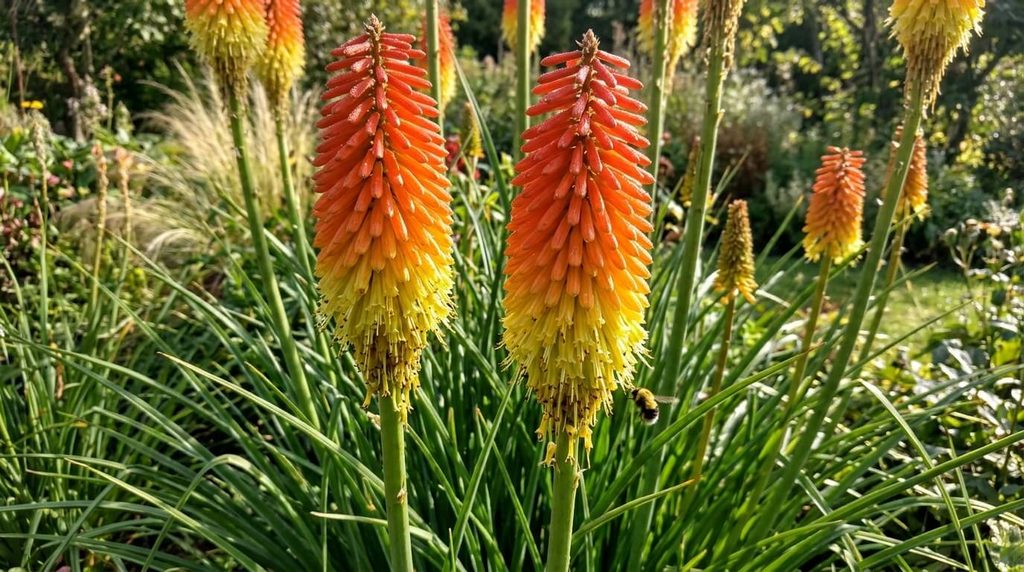
Kniphofia is commonly called red hot poker or torch lily. Its upright spikes may combine red, orange, and yellow, although softer-colored selections are also available. Narrow leaves form a clump below the flowers.
Height and flowering period vary across the group. Check the cultivar instead of expecting every plant to match one photograph. Good drainage matters, especially where wet winter soil can damage roots.
12. Kobus Magnolia
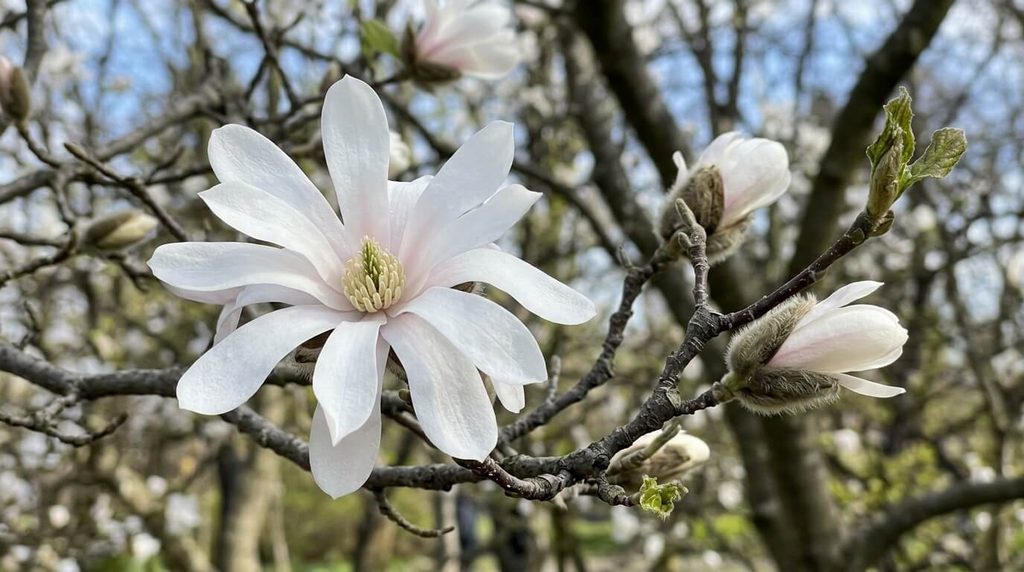
Kobus magnolia (Magnolia kobus) is a deciduous flowering tree. White, sometimes pink-tinged blooms open early in spring, often before the leaves. Young plants may flower lightly, so patience is important.
Allow room for the mature crown and roots. Late frost can damage early flowers even where the tree itself is winter-hardy. Avoid buying it solely for an immediate floral display.
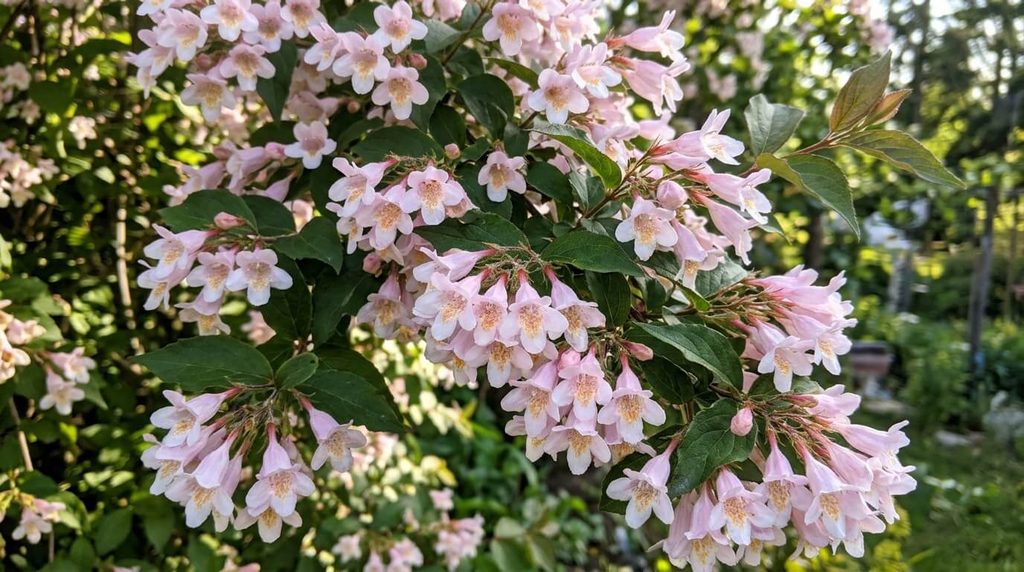
13. Kolkwitzia
Kolkwitzia amabilis, commonly called beautybush, produces sprays of pink bells with yellow throats. Arching branches give a mature shrub a loose, fountain-like form. The main flower display arrives in spring.
Leave enough room for that natural shape. Repeated tight trimming can remove flowering growth and spoil the effect. Because it blooms on older wood, consider pruning timing before cutting back heavily.
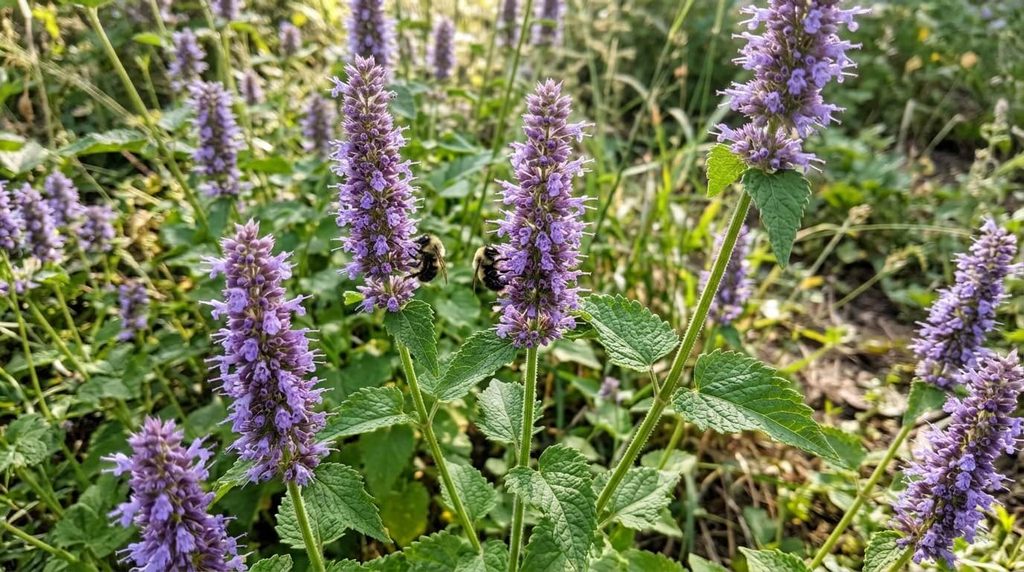
14. Korean Mint
Korean mint, Agastache rugosa, has upright purple-to-lavender flower spikes. The common name begins with K, while the botanical name begins with A. Its flowers attract pollinators when the plant is grown in suitable conditions.
Provide sun and well-drained soil. Check the mature dimensions of the selection you buy. Do not assume the word “mint” means it has the same growth habit or uses as every familiar culinary mint.
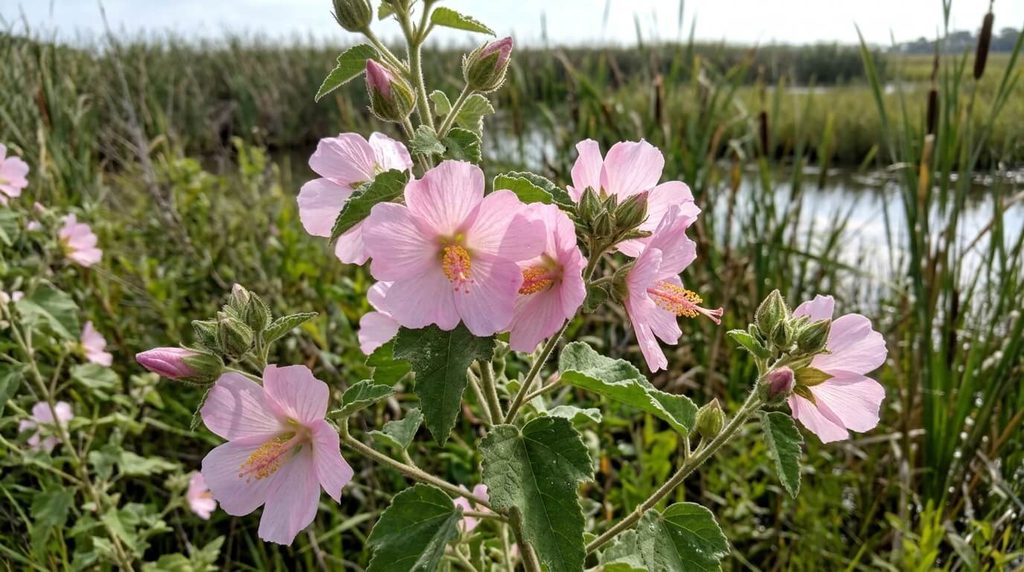
15. Kosteletzkya
Kosteletzkya pentacarpos, often listed as Kosteletzkya virginica, is commonly called seashore mallow. Pink, hibiscus-like flowers appear on a taller plant with an airy habit. In suitable conditions, flowering can continue from summer into fall.
The growing notes for seashore mallow describe sunny, moisture-retentive sites. Consider it for a rain garden or other damp planting area. Check its regional native range rather than assuming it is native throughout the United States.
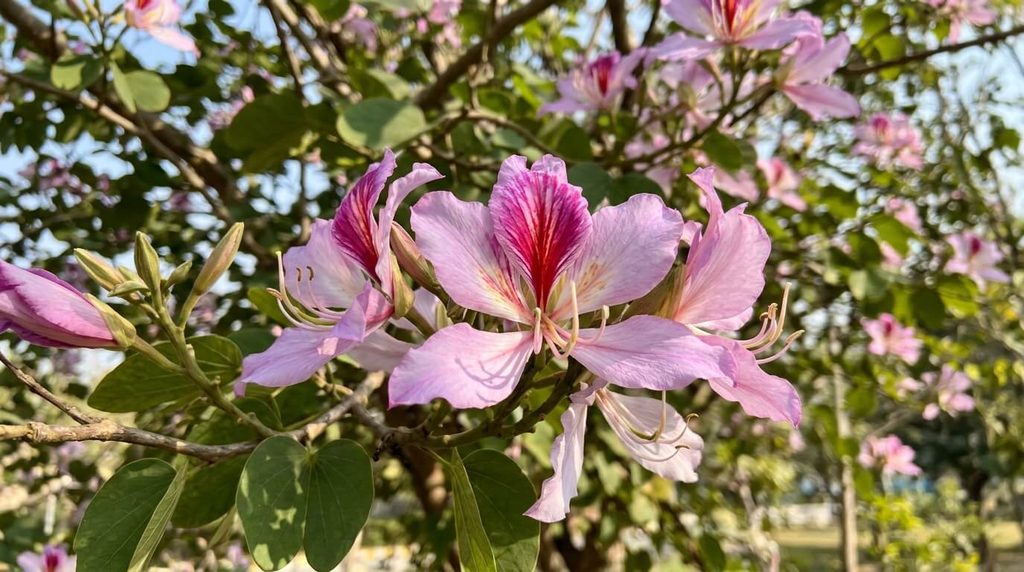
16. Kachnar
Kachnar is a regional common name associated with Bauhinia variegata, also called orchid tree or mountain ebony. Its pink to pale purple flowers have broad, unequal petals. Two-lobed leaves help distinguish the plant when it is not flowering.
This is a warm-climate tree, not a small garden flower. Check the regional assessment of Bauhinia variegata because it is considered invasive in South Florida. Where planting is appropriate, allow room for its spreading crown.
17. Kaempferia
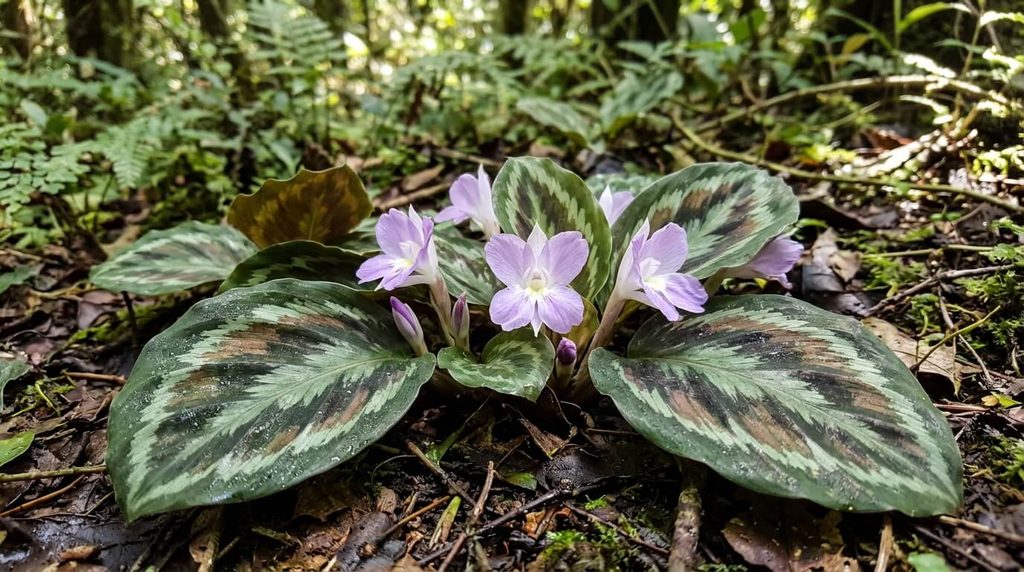
Kaempferia is a genus in the ginger family, often called peacock ginger. Some garden selections combine patterned leaves with small flowers. Flower color, foliage, and growth habits vary by species.
The growing notes for peacock ginger describe container cultivation as an option outside suitable warm climates. Identify the plant before deciding how to overwinter it. Its dormancy needs matter as much as its appearance during active growth.
18. Kākābeak
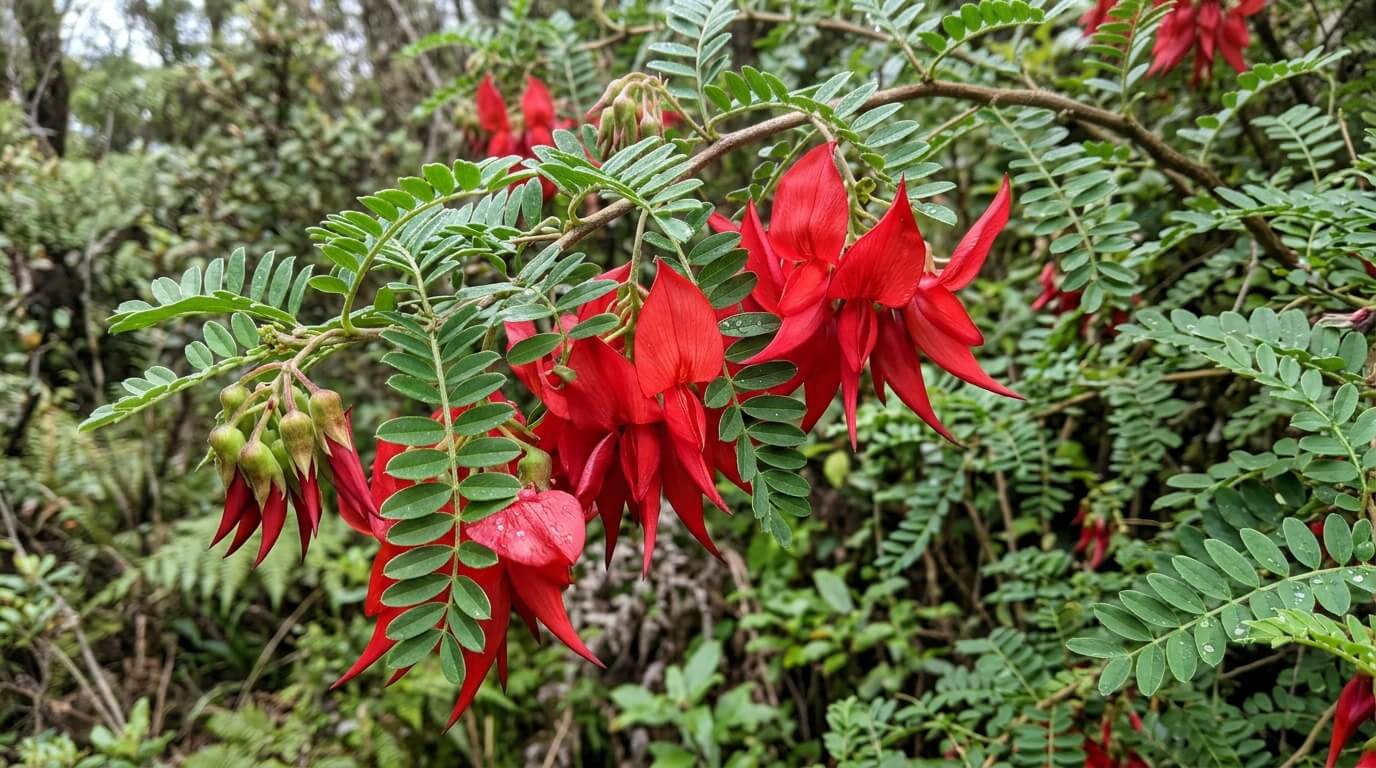
Kākābeak refers to Clianthus, including Clianthus puniceus and Clianthus maximus. Hanging red flowers curve into a shape resembling a parrot’s beak. The clusters stand out against leaves made up of small leaflets.
The kākābeak conservation profile explains that both species are seriously threatened in the wild. Obtain plants only through legitimate cultivated sources. Confirm climate suitability and winter protection before treating one as a permanent US garden shrub.
19. Kalimeris
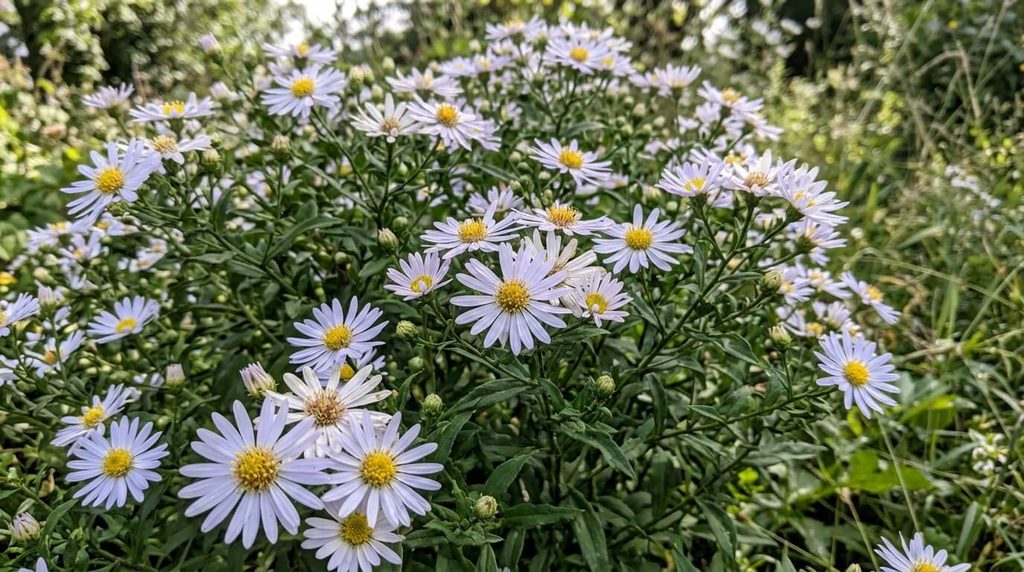
Kalimeris is known as Kalimeris incisa, also listed as Aster incisus. Small, daisy-like heads have pale blue to lilac rays and yellow centers. Branching stems create a lighter display than large, heavy flower heads.
Sun to partial shade and moist, well-drained soil provide a useful starting point. Check the cultivar’s mature height and spread. The two botanical names refer to the same entry here and should not be counted twice.
20. Kalmiopsis
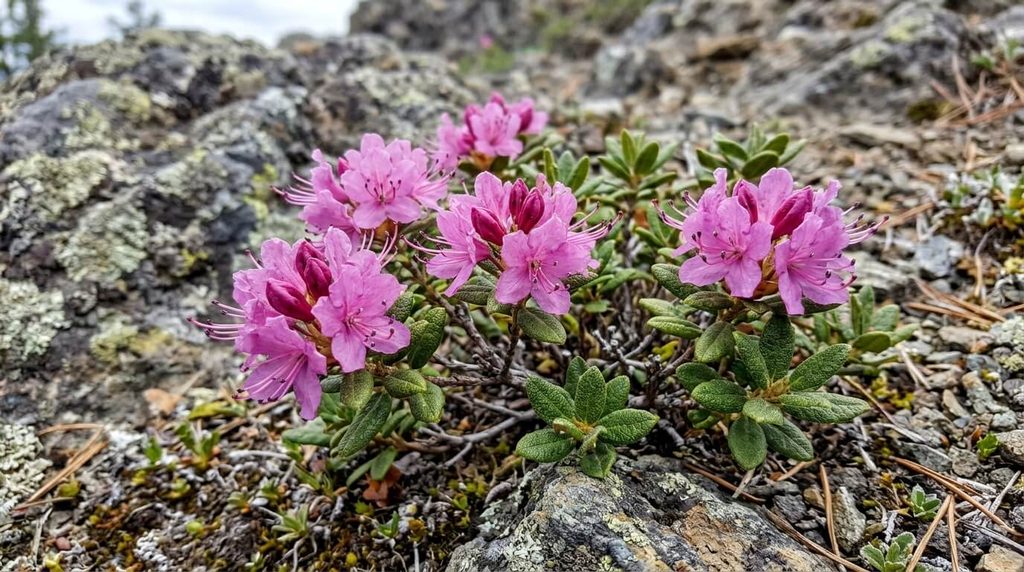
Kalmiopsis leachiana is a small evergreen shrub associated with Oregon. Glossy leaves surround clusters of rosy-pink flowers near the shoot tips. Its compact form gives it a different role from a larger flowering shrub.
The cultivation guidance for kalmiopsis recommends humus-rich, lime-free soil that stays moist but drains well. A suitable rock garden or carefully managed container may offer better control than a general mixed bed. Treat it as a specialist choice rather than assuming small size means easy care.
21. Kalm’s St. John’s Wort
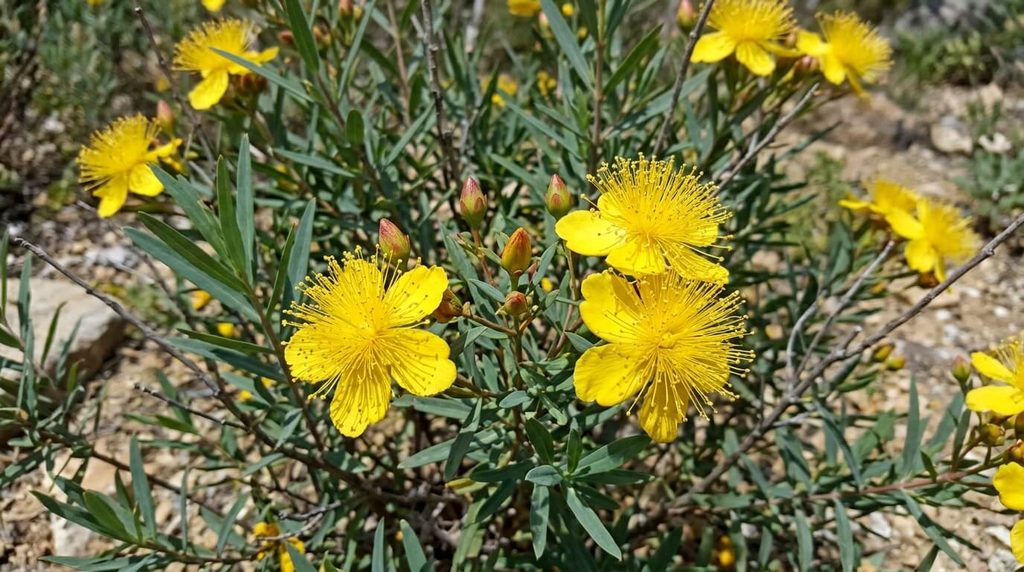
Kalm’s St. John’s wort, Hypericum kalmianum, is a compact shrub with yellow summer flowers. Numerous stamens give the centers a softly tufted appearance. Despite the similar name, it looks quite different from kalmia.
The plant is native to parts of eastern Canada and the northern United States. Check regional suitability and allow for the selected plant’s mature spread. Do not confuse it with another Hypericum or use its common name as a basis for medicinal use.
22. Kennedia
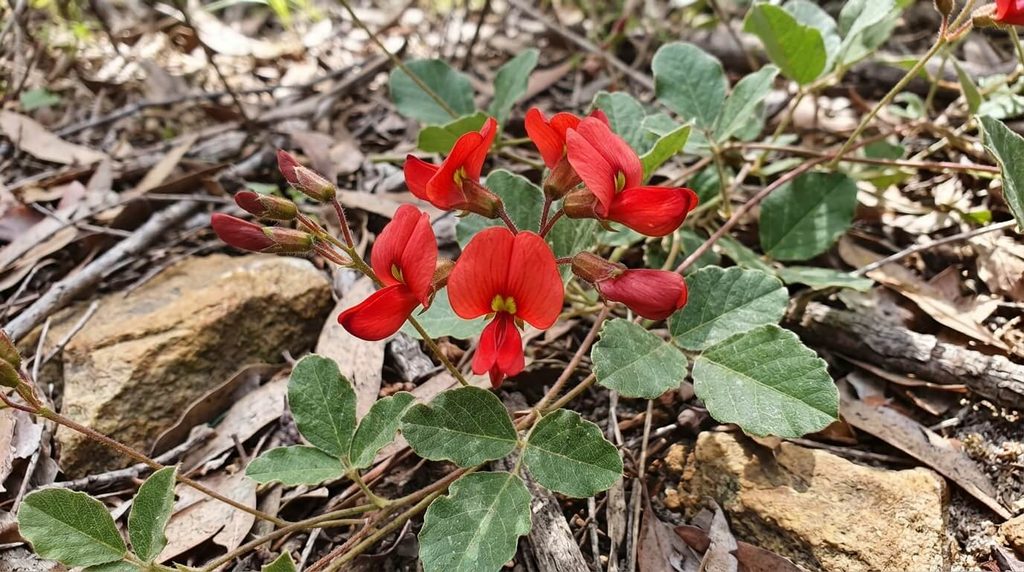
Kennedia includes Australian climbers and ground-covering plants. Kennedia rubicunda, called dusky coral pea, carries dark red, pea-shaped flowers. Its leaves have three leaflets, providing another identification clue.
The profile for dusky coral pea describes vigorous twining or ground-covering growth. Provide support or enough space rather than expecting a compact accent plant. Check winter protection needs outside suitable mild climates.
23. Kidney Vetch
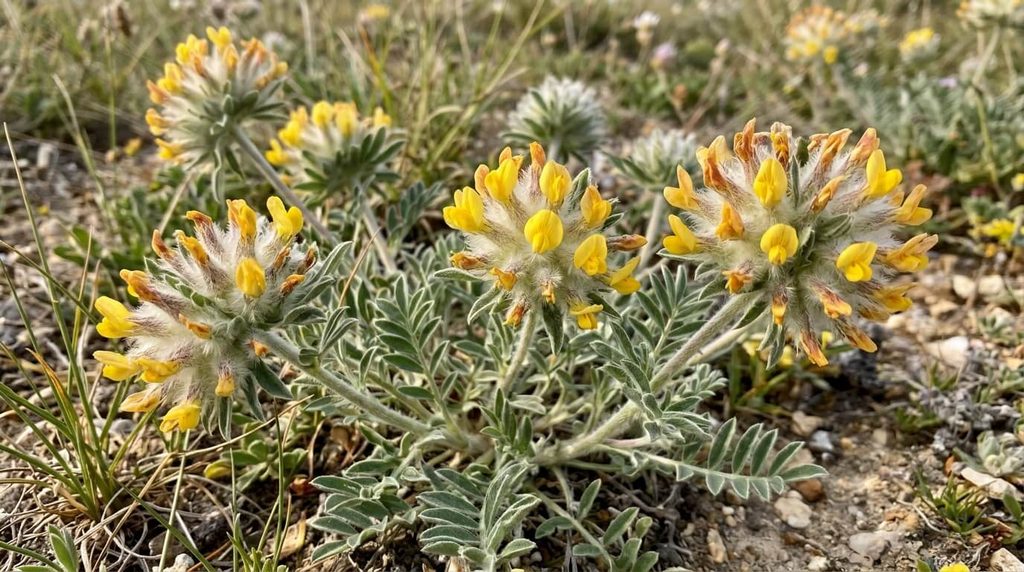
Kidney vetch, Anthyllis vulneraria, produces rounded clusters of small pea-like flowers, commonly yellow. Silky hairs around the clusters add texture. Depending on the form and conditions, it may grow as an annual or short-lived perennial.
Choose sun and well-drained soil rather than a heavily watered bedding scheme. It can suit an appropriate gravel garden or informal planting. Confirm the botanical name because other Anthyllis species also have names containing “kidney vetch.”
24. King’s Mantle
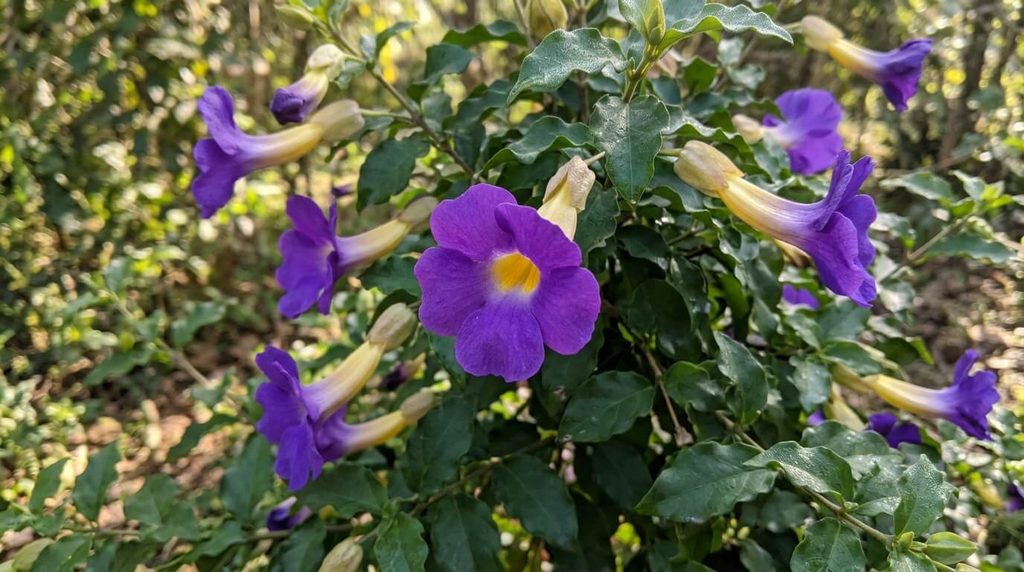
King’s mantle is commonly sold as Thunbergia erecta. Blue-violet flowers have a contrasting yellow throat. Unlike the black-eyed Susan vine, another familiar thunbergia, king’s mantle has a shrubby habit.
It belongs in a suitable warm climate or protected growing setup. Investigate container cultivation if your winters are cold. Check the exact plant rather than assuming all thunbergias climb or reach the same size.
25. Kohleria
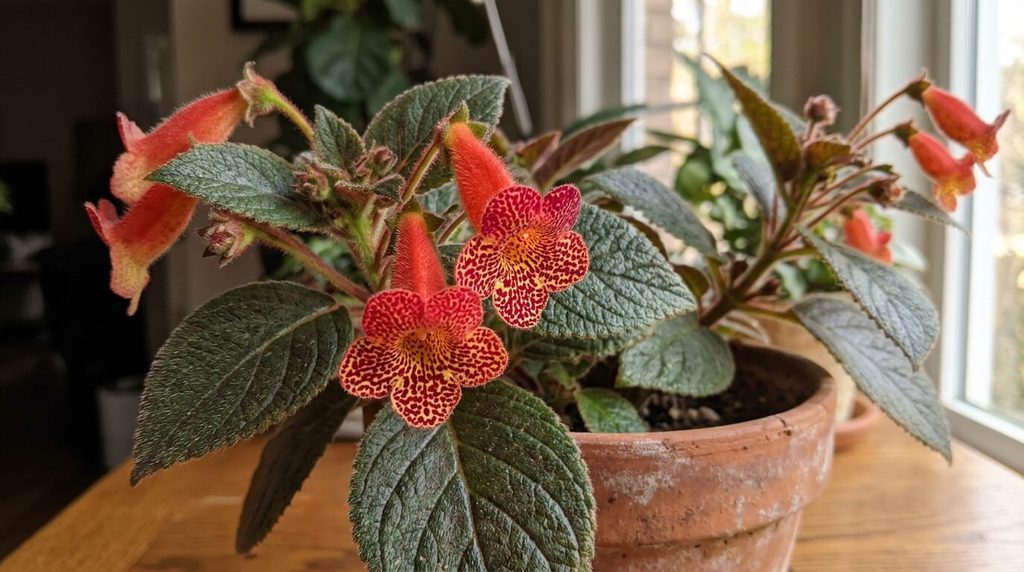
Kohleria includes plants with tubular flowers and often softly hairy leaves. Kohleria hirsuta has orange-red flowers with yellow spotting on part of the opening. Garden hybrids can look different, so identify the selection.
The growing guidance for woolly kohleria favors bright filtered light and frost protection. It suits a protected container collection better than an exposed cold-climate bed. Keep the medium well-drained and follow the particular plant’s care requirements.
26. Korean Spice Viburnum
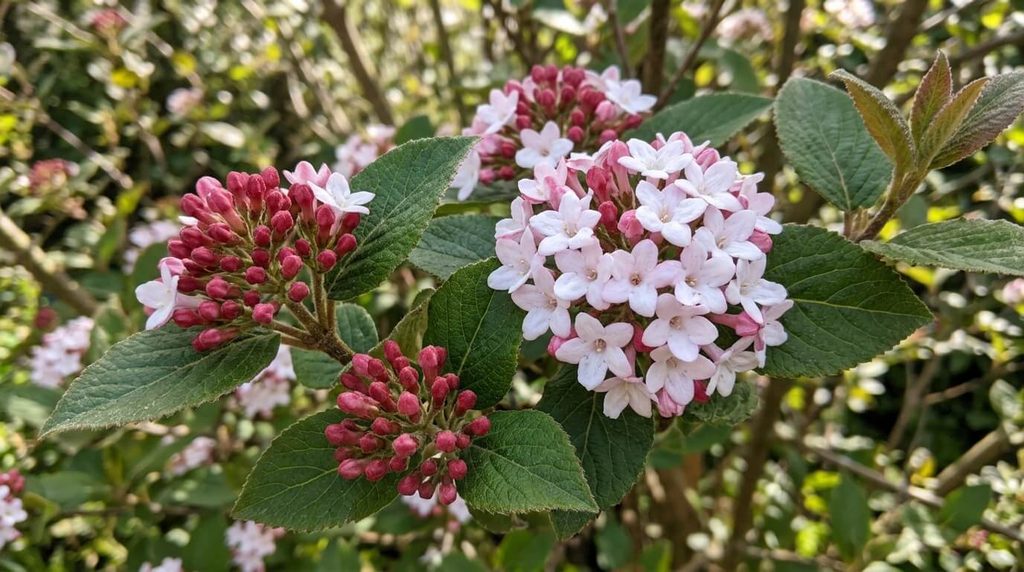
Korean spice viburnum, Viburnum carlesii, is a deciduous shrub grown for fragrant spring flowers. Pink buds open into pale flower clusters. Placing it near a frequently used path makes the scent easier to enjoy.
Provide sun to partial shade and moist, well-drained soil. Check mature dimensions before planting beside a walkway or window. Since it flowers on older wood, prune after flowering when pruning is needed.
27. Kousa Dogwood
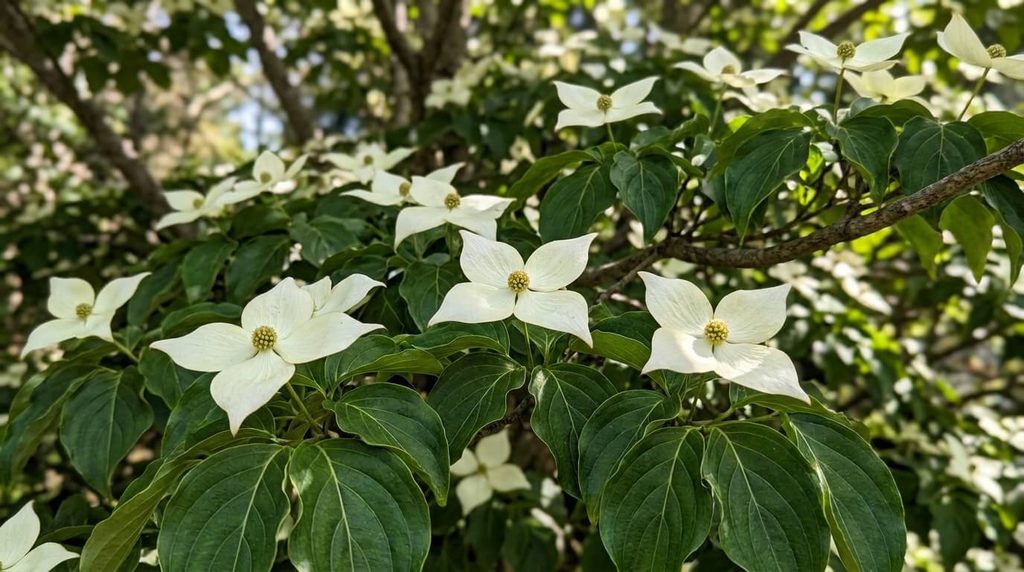
Kousa dogwood, Cornus kousa, has small central flowers surrounded by conspicuous bracts. The bracts are commonly white, with pink forms available in cultivation. Its display generally follows the familiar native flowering dogwood and appears among fresh leaves.
The growing requirements for Kousa dogwood prefers well-drained soil and enough room for a tree. Avoid persistently waterlogged ground. Compare locally native alternatives too, particularly when habitat value is a main planting goal.
28. Kōwhai
Kōwhai is a New Zealand common name for several Sophora species, including Sophora microphylla. Hanging yellow flowers have a pea-flower shape. Small leaflets give the foliage a fine texture.
Botanical identification matters because the name covers more than one species. Confirm mature size and winter tolerance before planting in the United States. Do not copy New Zealand flowering months directly into a Northern Hemisphere garden calendar.
29. Krigia
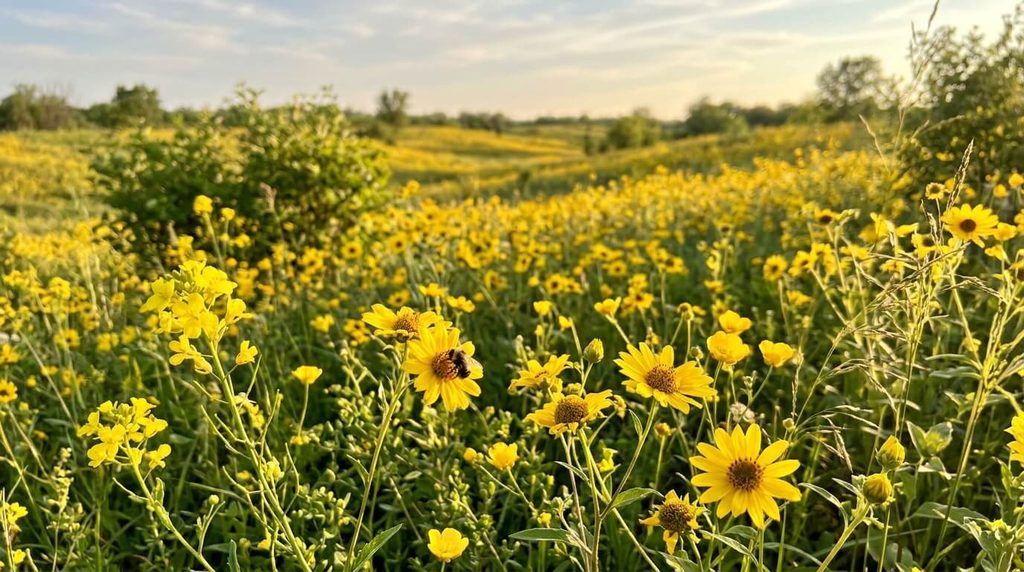
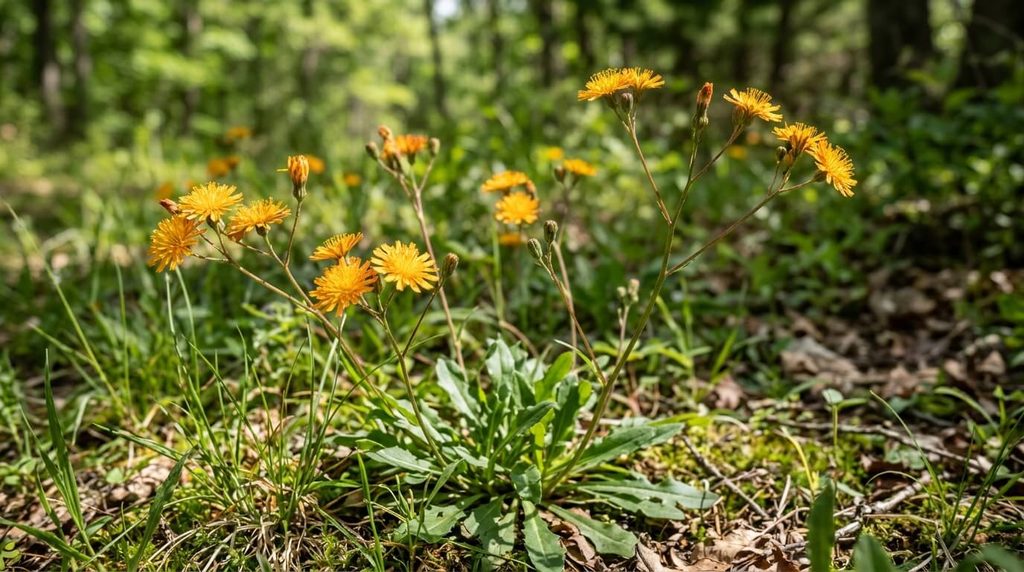
Krigia is a genus of small flowering plants in the daisy family. Krigia dandelion, called potato dwarf dandelion, produces yellow, dandelion-like heads. It is distinct from the familiar lawn dandelion in the genus Taraxacum.
The profile for Krigia dandelion describes a North American perennial that spreads through underground growth. Consider it for suitable naturalistic planting rather than a formal display of large flowers. Check its regional native range and growing requirements first.
30. Kunzea
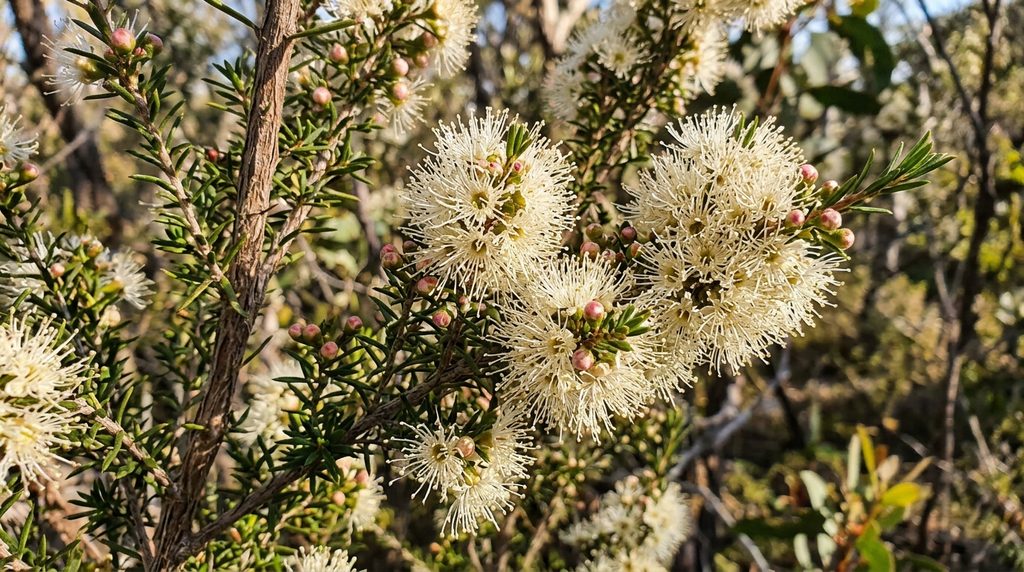
Kunzea includes flowering shrubs in the myrtle family. Kunzea ambigua carries masses of creamy-white flowers with prominent stamens. Those stamens give the flowers their fluffy appearance.
The growing profile for Kunzea ambigua describes variation in its natural growth habit. Check the selected plant’s mature dimensions and local winter suitability. Interpret Australian flowering information by season rather than transferring the months directly to a US calendar.
Which Spring Flowers Start With K?
Kerria, kingcup, Kobus magnolia, kolkwitzia, and Korean spice viburnum are useful spring-flowering examples. Kalmia commonly flowers from late spring into early summer. King’s spear and Kousa dogwood add more options later in spring, depending on location.
These plants should not automatically share a bed simply because they flower in the same season. Kingcup needs wet ground, while King’s spear needs good drainage. Kousa magnolia and Kousa dogwood also need more space than a small perennial border can provide.
Choose the growing setting before choosing the name. A partly shaded shrub border suggests different options from a sunny gravel garden or pond edge. Then check the selected plant’s local flowering period and mature dimensions.
How to Choose K Flowers for Your Space
For Sunny Borders
Knautia, Korean mint, kalimeris, and suitable kniphofia selections are useful starting points. Check mature heights so taller plants don’t hide smaller flowers. Good drainage and local winter suitability remain important even when every plant on the shortlist prefers sun.
“Well-drained” does not mean a plant never needs watering. It means excess water can move away instead of leaving roots persistently saturated. Newly planted specimens still need establishment care.
For Shade and Damp Ground
Kirengeshoma suits a moist, sheltered shade garden. Kerria can work in partial shade, while kalmia needs an appropriate acidic, well-drained site. Shade alone does not make a location suitable if competing roots leave the soil dry.
Kingcup and kosteletzkya belong on a wetter-ground shortlist. Their moisture needs differ from plants chosen for dry borders. Consider sunlight and soil moisture together rather than deciding based on either factor alone.
For Containers and Protected Growing
Kalanchoe and kohleria offer flowering options for suitable indoor or protected conditions. Kaempferia and some kangaroo paws may also work well in containers with the right care. Identify the plant before deciding how much light, water, or winter protection it needs.
A pot does not automatically make a large or tender plant easy to manage. Consider the mature size, drainage, and space available during winter. Plan the protected location before buying something that cannot remain outside.
For an Alphabet Garden
A letter theme can introduce plants you might otherwise overlook. It should guide the design without overriding your yard’s conditions. Three well-matched plants are more useful than ten incompatible choices.
If you are continuing the alphabet, explore flowers that start with J for additional names and ideas. Compare them by size, season, and growing needs before combining them. The planting can feel connected without every plant receiving identical care.
Flower Names That Start With K for a Girl
Kerria and Kalmia are direct botanical possibilities if you want a flower-inspired girl’s name. They are genuine plant names, though that doesn’t mean they are common personal names. When making a shortlist, consider pronunciation, spelling, and family preference.
Kerria connects with a yellow spring-flowering shrub, while Kalmia connects with mountain laurel. Those are clear botanical associations. Claims that either name means something like “everlasting beauty” would need a separate linguistic source.
Common Names, Plant Safety, and Responsible Buying
Common names vary between regions and sometimes refer to several plants. Kingcup and marsh marigold identify the same entry here, while kniphofia and red hot poker are also counted once. Botanical names help you check what a seller or reference actually means.
Safety needs the same attention to identity. The pet-toxicity information for kalanchoe identifies it as toxic to dogs and cats. Don’t assume a familiar houseplant is safe for pets.
Check regional spread concerns before introducing nonnative plants. A plant can look great in a photo yet be unsuitable for your local landscape. Use legitimate nursery sources and avoid collecting wild plants, particularly species with conservation concerns.
Conclusion
Flowers that start with K range from small potted succulents to flowering trees. Kerria brings spring yellow, knautia adds summer crimson, and kirengeshoma offers pale bells for moist shade. The wider list also includes fragrant shrubs, climbers, wetland plants, and specialist choices.
Start with the botanical identity, then check light, moisture, mature size, and local suitability. Keep vigorous self-seeders and tender plants out of an automatic “easy flowers” category. The right choice is a K flower that fits the space and care you can provide.
What is a familiar flower that starts with K?
Kalanchoe is a familiar example, particularly as a flowering potted plant. Kangaroo paw, kerria, and kniphofia are other recognizable choices. Familiarity varies with local climate and nursery availability.
Which flowers beginning with K bloom in spring?
Kerria, kingcup, Kobus magnolia, kolkwitzia, and Korean spice viburnum are spring-flowering examples. Kalmia commonly flowers from late spring into early summer. Exact timing depends on location, weather, and the plant you choose.
Which K flowers can grow in shade?
Kirengeshoma suits moist, sheltered shade. Kerria can work in partial shade, while kalmia needs an appropriate acidic, well-drained site. Check soil moisture as carefully as sunlight before planting.
Can you grow flowers beginning with K indoors?
Florist kalanchoe and suitable kohleria selections can be grown indoors with appropriate care. Their light and watering needs differ, so follow the instructions for the specific plant. Check pet safety before choosing where to place them.
Do all these plants have botanical names beginning with K?
No, some qualify through their common names. Kingcup is Caltha palustris, Korean mint is Agastache rugosa, and Kousa dogwood is Cornus kousa. Others, including Kalmia, Knautia, and Kniphofia, begin with K botanically.