


If you are looking for flowers that start with J, jasmine, jonquil, Japanese iris, Johnny jump-up, Jacob’s ladder, and Joe-Pye weed are excellent places to begin. However, the complete collection is more diverse than those familiar names suggest.
Some J flowers thrive in damp shade, while others need hot sun and sharply drained soil. You will also find fragrant vines, spring bulbs, flowering shrubs, tropical houseplants, and even a full-sized flowering tree.
Rather than simply giving you a long alphabetical list, this guide groups the flowers by how you might actually use them. That makes it easier to find a J flower that fits your garden, climate, and available space.
Quick Answer
The best-known flowers beginning with J include jasmine, jonquil, Johnny jump-up, Japanese iris, Japanese anemone, and Joe-Pye weed. Less familiar choices include Jerusalem sage, jewelweed, Jupiter’s beard, jungle flame, jewel orchid, and Jack-in-the-pulpit.
For an easy first choice, consider Johnny jump-up for containers, jonquil for spring color, or Jacob’s ladder for partial shade. Joe-Pye weed is a better option when you need a tall pollinator plant for consistently moist ground.
18 Flowers That Start With J at a Glance
If you simply want the names first, here are all 18 flowers in this guide. The detailed sections below explain what makes each plant different and where it is most likely to thrive.
| Flower | Type | Typical color | Best for |
|---|---|---|---|
| Jasmine | Vine | White | Fragrance and trellises |
| Jonquil | Bulb | Yellow | Spring color |
| Johnny Jump-Up | Viola | Purple, yellow, white | Containers and edging |
| Japanese Camellia | Shrub | Pink, red, white | Cool-season flowers |
| Jacob’s Ladder | Perennial | Blue, violet, white | Partial shade |
| Japanese Primrose | Perennial | Pink, red, purple, white | Damp shade |
| Japanese Iris | Perennial | Purple, blue, pink, white | Moist borders |
| Jack-in-the-Pulpit | Woodland perennial | Green, purple | Shade gardens |
| Jewelweed | Annual | Orange | Wildlife gardens |
| Joe-Pye Weed | Perennial | Pink-purple | Pollinator gardens |
| Japanese Anemone | Perennial | Pink, white | Late-season color |
| Jerusalem Sage | Shrub | Yellow | Dry, sunny sites |
| Jupiter’s Beard | Perennial | Pink, red, white | Dry banks and walls |
| Jerusalem Artichoke | Perennial | Yellow | Edible gardens |
| Jacaranda | Tree | Lavender-blue | Large landscapes |
| Jungle Flame | Shrub | Red, pink, orange, yellow | Warm climates |
| Justicia | Varies | Varies | Patios and indoor growing |
| Jewel Orchid | Orchid | White | Indoor growing |
Fragrant and Early-Season J Flowers
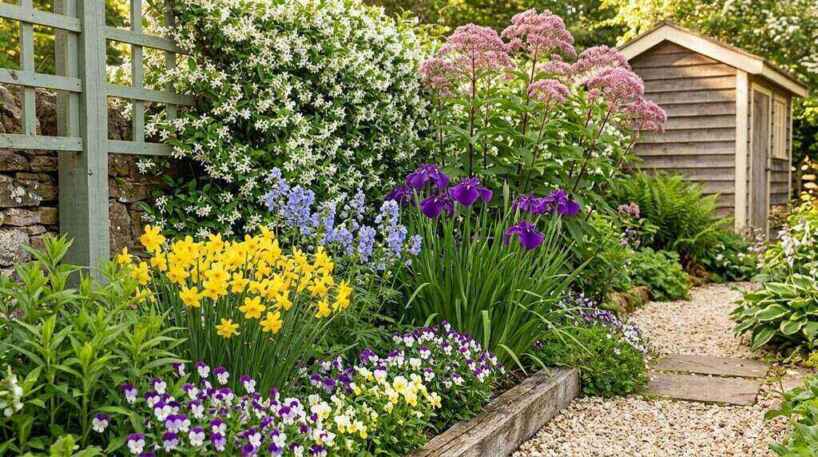
The first group includes plants that earn their place through fragrance or early flowers. They are especially useful near entrances, patios, paths, and windows where their scent or seasonal color can be appreciated.
1. Jasmine
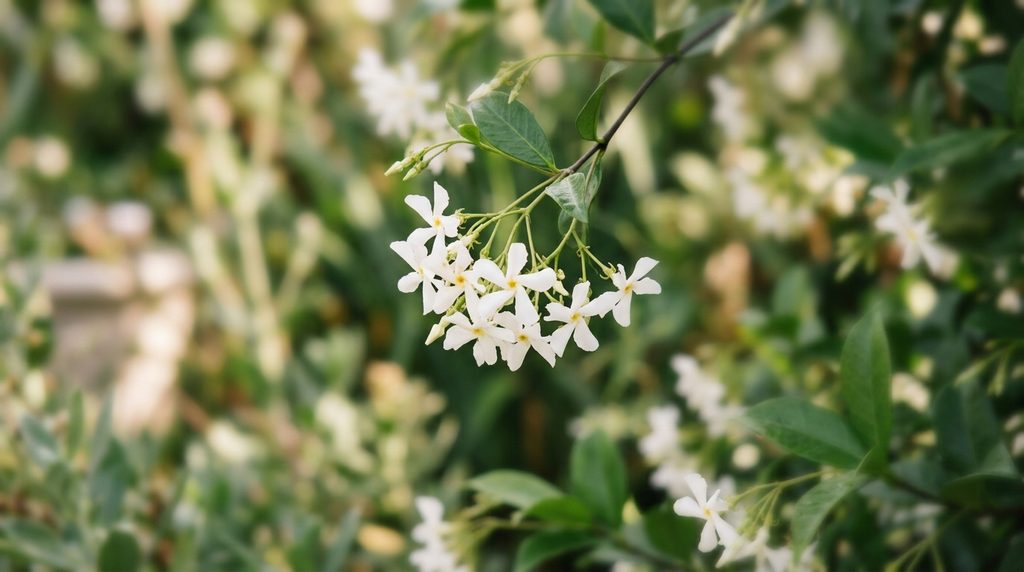
A single flowering jasmine vine can transform a plain trellis into a fragrant garden feature. Common jasmine, or Jasminum officinale, produces pink buds that open into delicate white stars, usually from late spring through warmer parts of the year.
This is a vigorous climber rather than a small bedding flower, so provide a pergola, fence, arch, or other sturdy support. The common jasmine growing profile recommends sun to partial shade and moist, well-drained soil enriched with organic matter.
Cold winters can damage common jasmine. In cooler conditions, growing it in a large container allows you to move it to a protected location when temperatures drop.
2. Jonquil
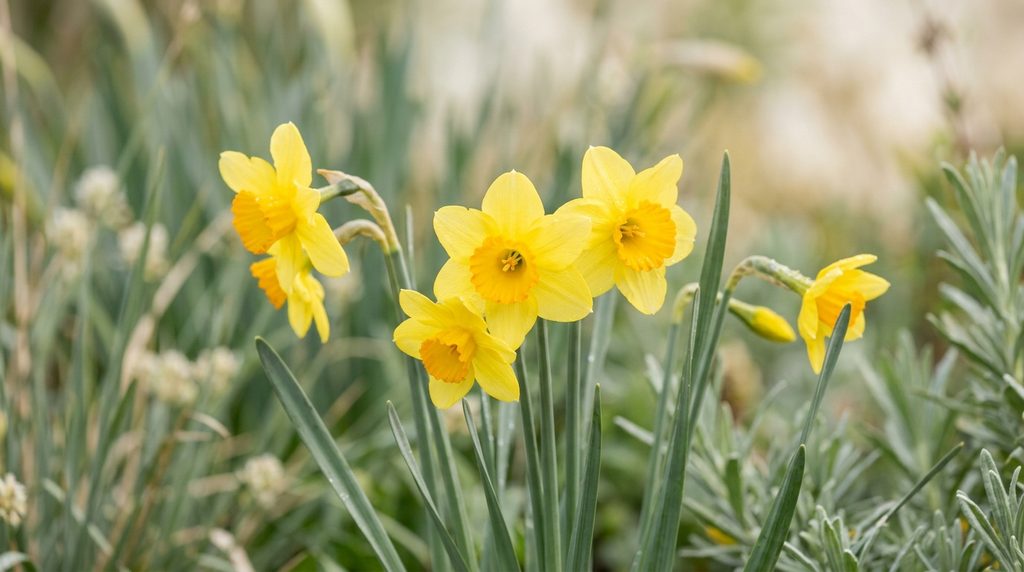
Jonquils announce spring with slender foliage and clusters of fragrant yellow flowers. The true jonquil, Narcissus jonquilla, is part of the narcissus group, but its narrow, rush-like leaves and multiple flowers distinguish it from many familiar daffodils.
Plant the bulbs in fall where they will receive good light and reliable drainage. They look more natural in groups than in isolated single rows, particularly beneath deciduous trees or along informal pathways.
The Arkansas Cooperative Extension’s jonquil profile notes that the species is especially fragrant and commonly bears several flowers on each stem. Allow its foliage to remain after flowering so the bulbs can store energy for the following spring.
3. Johnny Jump-Up
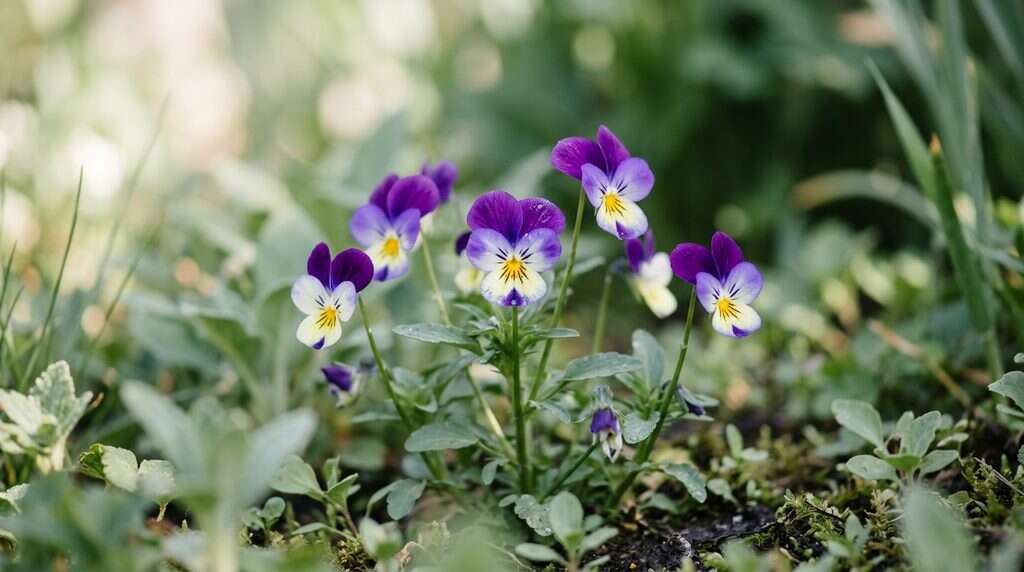
Johnny jump-up brings a completely different personality to the garden. Its tiny purple, yellow, and white faces appear close to the ground, where they brighten containers, pathway edges, fairy gardens, and gaps between taller plants.
Although usually treated as a cool-season annual, Viola tricolor can behave as a biennial or short-lived perennial. It often reseeds, giving the impression that the flowers have “jumped up” in a new part of the garden.
The Johnny jump-up plant profile recommends moist, well-drained soil and explains that the flowers attract several types of pollinators. Heat can slow flowering, so these violas often look their best during cooler parts of the growing season.
4. Japanese Camellia
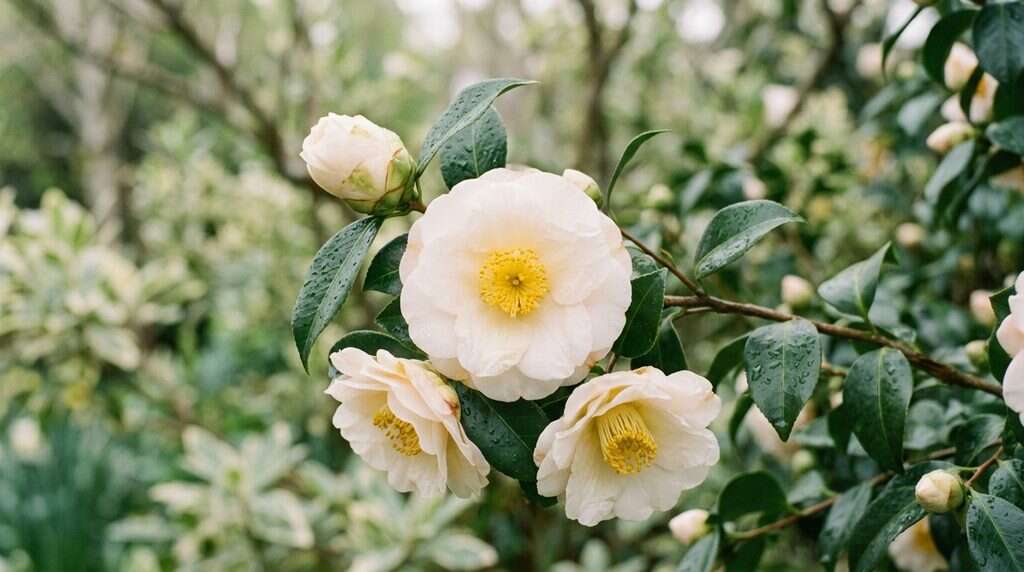
Japanese camellia provides flowers at a time when many gardens have little color. Its glossy evergreen leaves frame substantial white, pink, red, or patterned blooms that may appear from fall through early spring, depending on the cultivar.
This long-lived shrub prefers acidic, organically rich soil and partial shade. It also benefits from protection against drying winds and strong afternoon sun.
Pruning time matters because new flower buds form on older growth. The Japanese camellia care guide recommends pruning after flowering so you do not accidentally remove the next season’s display.
J Flowers for Shade and Moist Ground
A shaded garden does not have to rely entirely on foliage. Several J plants prefer woodland conditions or consistently moist soil, although each needs a slightly different combination of light and drainage.
5. Jacob’s Ladder
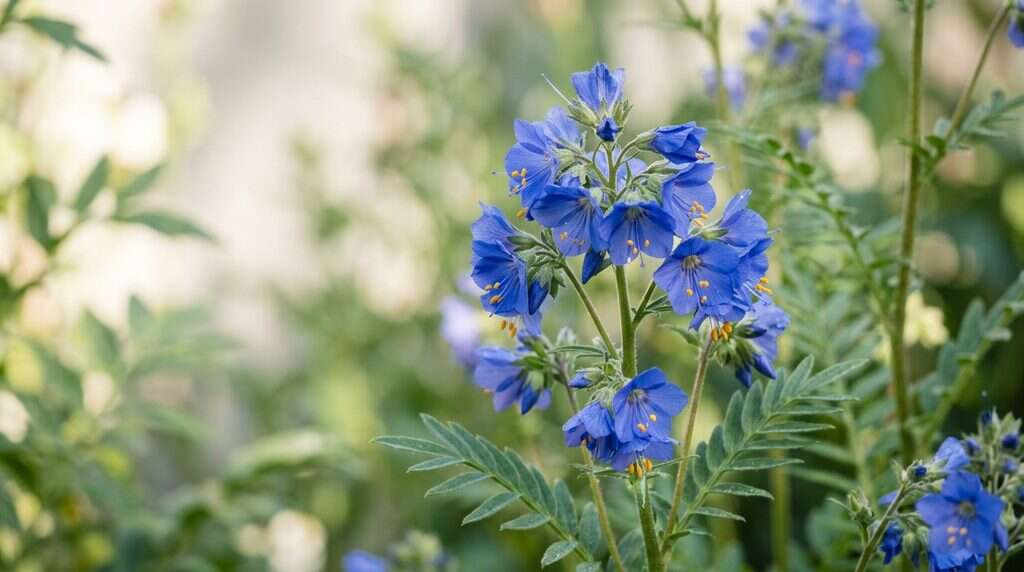
Jacob’s Ladder is worth growing even before its flowers appear. Rows of small leaflets resemble the steps of a ladder, creating soft, fern-like foliage beneath clusters of blue, violet, or white blooms.
It feels most at home along woodland paths, beneath open-canopied trees, or at the front of a partially shaded border. Give it humus-rich soil that retains moisture without remaining waterlogged.
Strong afternoon heat can scorch the leaves and shorten flowering. Morning sun followed by afternoon shade usually provides a better balance.
6. Japanese Primrose
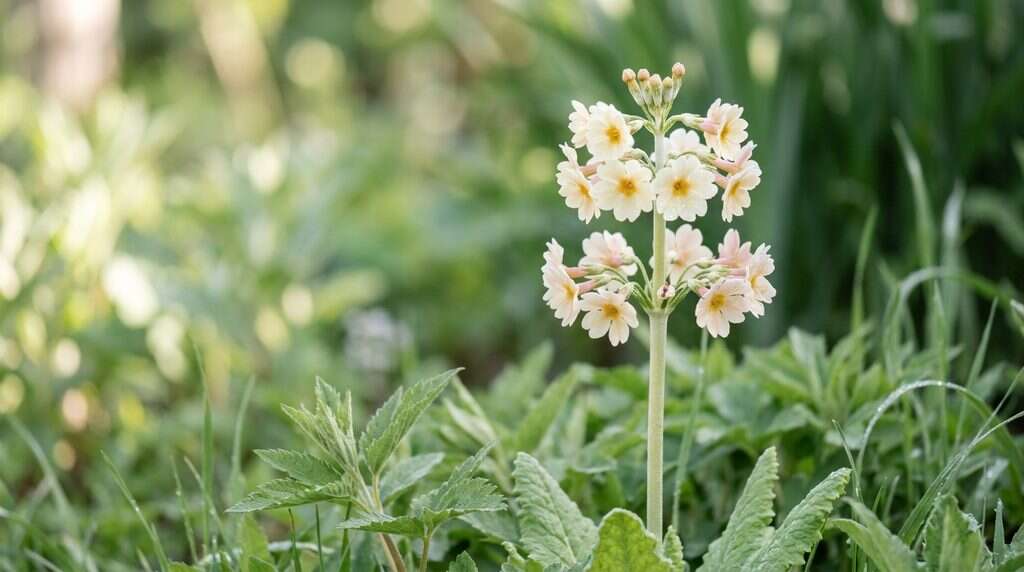
If you have a damp corner where ordinary border flowers struggle, Japanese primrose may be a better fit. Its pink, red, purple, or white flowers form tiered rings around upright stems, creating a candelabra-like display.
Primula japonica needs consistent moisture, particularly during active growth. It works well around ponds, streams, rain gardens, and shaded beds enriched with leaf mold or compost.
This is not a good candidate for dry soil that is watered only occasionally. Mulching around the plant can help protect its shallow roots and reduce moisture loss.
7. Japanese Iris
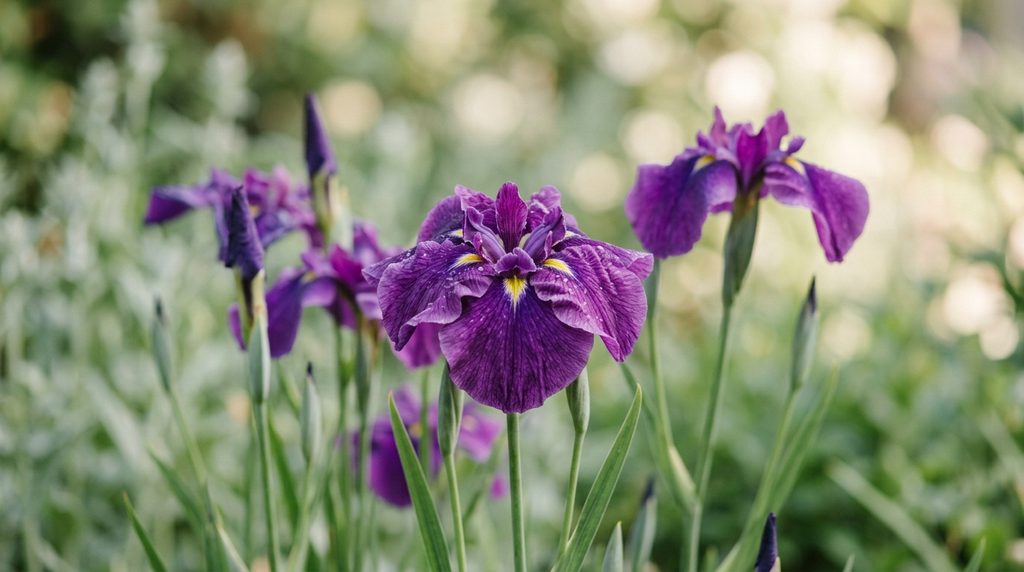
Japanese iris creates a much bolder display than the previous two plants. Its broad, flattened flowers may be purple, blue, pink, white, or intricately patterned, often reaching several inches across.
The plant appreciates abundant moisture during spring and summer, making it useful beside ponds and in damp borders. However, permanent standing water during winter can damage its rhizomes.
The Japanese iris growing recommendations call for rich, acidic soil and a sunny or partially shaded position. Divide established clumps when flowering begins to decline or the center becomes overcrowded.
8. Jack-in-the-Pulpit
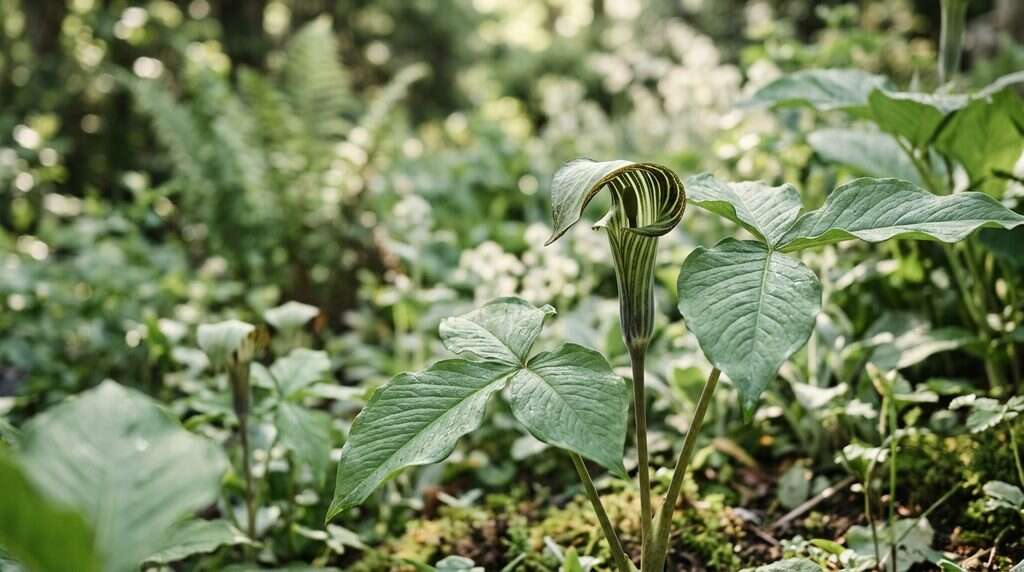
Jack-in-the-pulpit looks more like a woodland curiosity than a conventional flower. A hooded spathe surrounds an upright spadix, creating the appearance of a small figure standing inside a covered pulpit.
This native woodland perennial prefers fertile, organic soil that stays consistently moist. It can disappear into dormancy during summer before mature plants reveal clusters of bright red berries.
Despite its unusual beauty, it is not suitable for tasting or casual handling by children. The Jack-in-the-pulpit plant profile explains that the plant contains calcium oxalate crystals and is poisonous when ingested.
9. Jewelweed
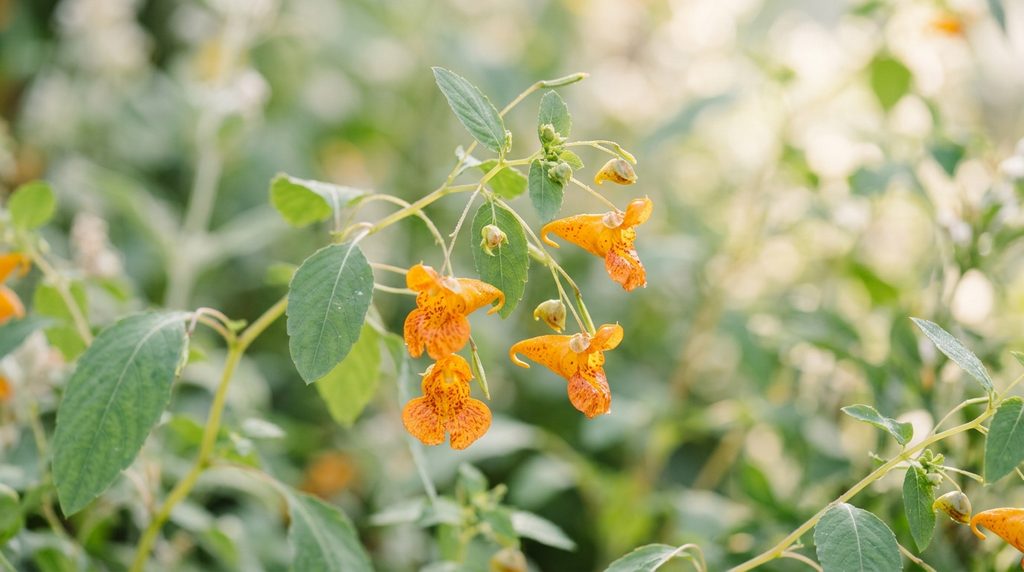
Orange jewelweed brings movement and wildlife activity to damp woodland margins. Hummingbirds and pollinating insects visit its hanging, trumpet-like flowers, while ripe seed capsules burst open when touched.
Unlike the long-lived perennials above, jewelweed completes its life cycle in one season. It returns by producing large numbers of seeds, sometimes forming loose colonies in suitable ground.
Choose its location carefully because it may spread beyond a small formal bed. It is more appropriate for a naturalized garden, rain garden, stream bank, or wildlife-friendly corner.
Tall, Sunny and Pollinator-Friendly Choices
The next plants need more room than a container viola or woodland primrose. They are best used where height, late color, drought tolerance, or value to pollinators matters more than compact growth.
10. Joe-Pye Weed
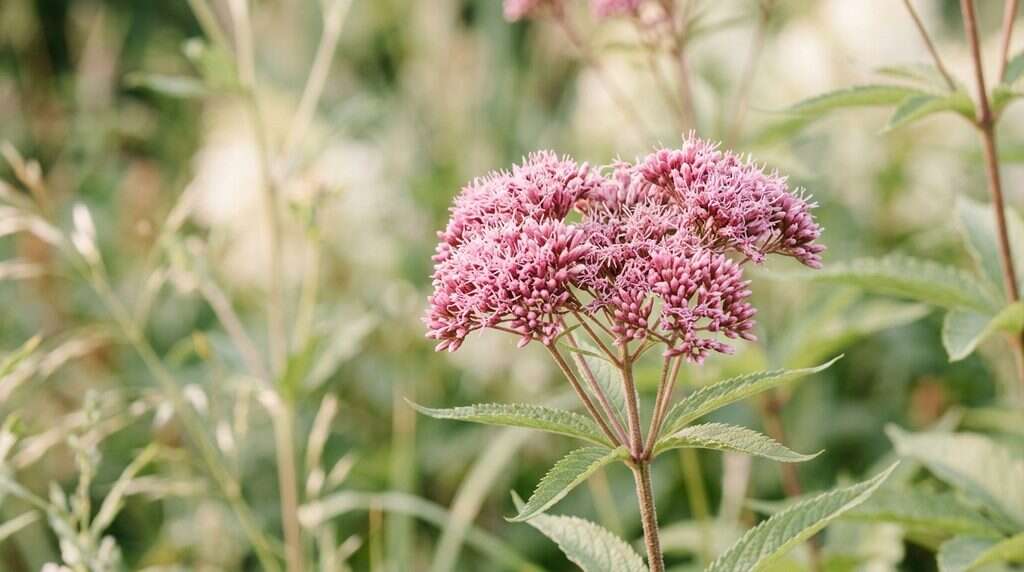
Joe-Pye weed turns the back of a damp border into a late-season pollinator station. Large domes of pinkish-purple flowers rise above whorled leaves, sometimes reaching eye level or higher.
Butterflies and bees are strongly attracted to the clustered blooms. Birds may also visit the seed heads later in the year, so leaving some stems standing can extend the plant’s wildlife value.
The Joe-Pye weed growing profile recommends moist soil and full sun to partial shade. Smaller cultivars are a sensible choice when the species would be too tall for the available space.
11. Japanese Anemone
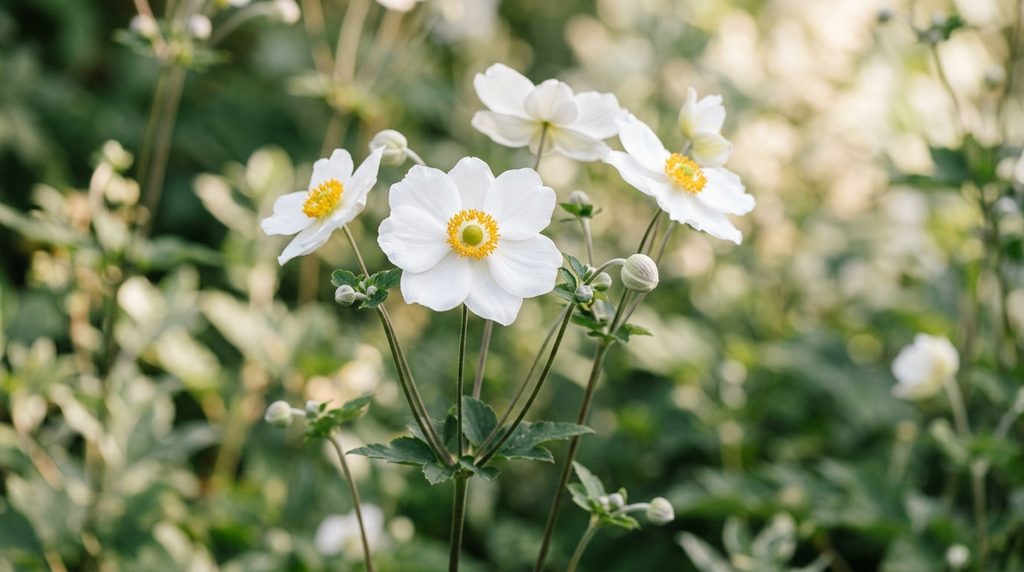
Japanese anemone waits until late summer or fall to produce its best display. Pink or white flowers appear on wiry stems that sway above dense green foliage, adding movement when many summer plants are fading.
It adapts to sun or partial shade but performs best in fertile soil with steady moisture. Once settled, underground growth may carry it beyond its original planting position.
Instead of squeezing it between delicate plants, give it a section where a spreading colony will look intentional. Dividing unwanted growth helps keep the patch within reasonable boundaries.
12. Jerusalem Sage
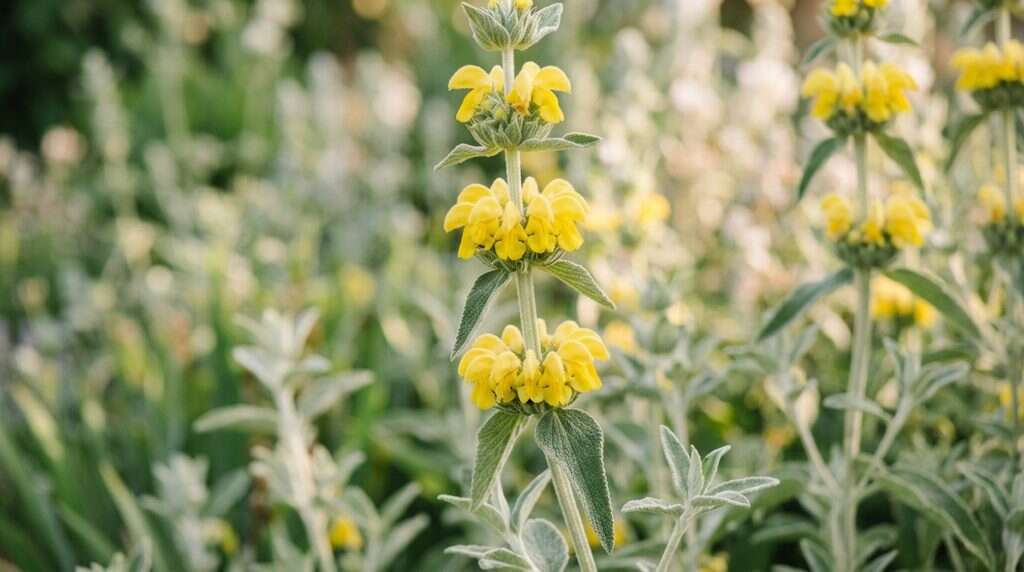
Jerusalem sage brings a dry, Mediterranean character to sunny borders. Its fuzzy silver-green leaves support stacked rings of yellow flowers along upright stems, providing color even when conditions become hot.
Unlike Japanese iris or Joe-Pye weed, this shrub dislikes persistently wet soil. Gravelly or sandy ground with excellent drainage is a much better match.
The foliage gives it value beyond the flowering period. Use it with ornamental grasses, lavender-colored flowers, or dark green shrubs to create stronger visual contrast.
13. Jupiter’s Beard
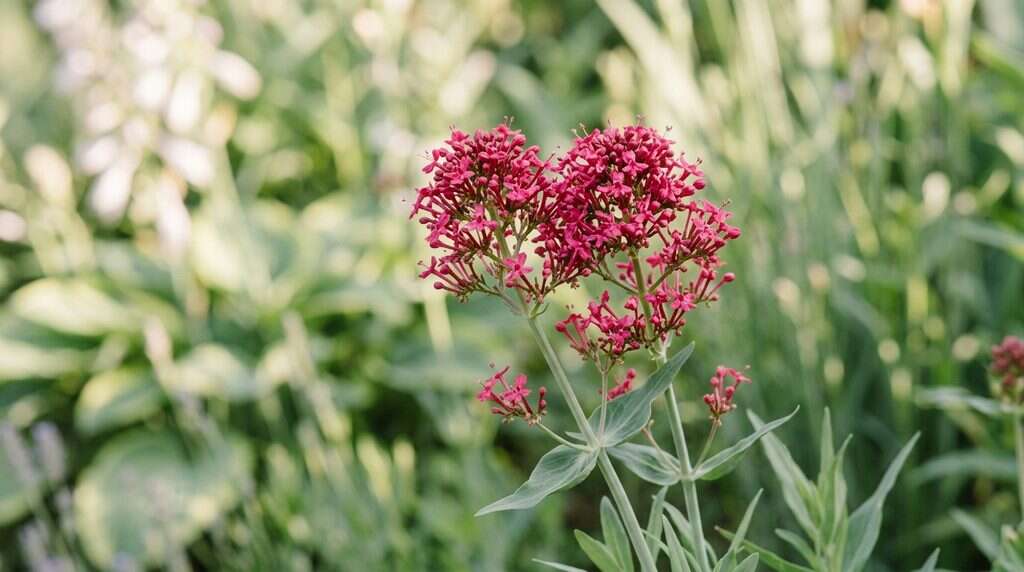
Jupiter’s beard fills sunny banks and walls with loose clusters of pink, red, or white flowers. It tolerates lean soil and dry conditions once established, making it useful where fussier perennials fail.
Cutting off faded flowers can encourage another display and reduce unwanted seedlings. This is important because the plant may escape cultivation in some regions.
Check local invasive-plant information before adding it near open land. Regional suitability matters more than its reputation as an easy garden flower.
14. Jerusalem Artichoke
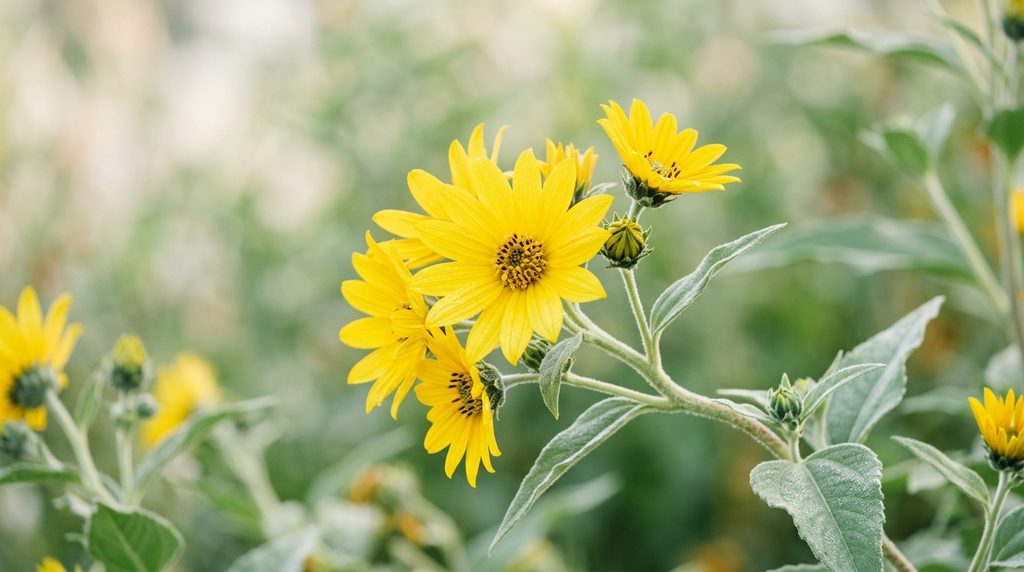
Jerusalem artichoke resembles a tall, branching sunflower with smaller yellow blooms. Its flowers appear above a dense screen of stems, making the plant useful for temporary privacy or the back of a large edible garden.
The edible part is the underground tuber, not the flower. Any tubers left behind can produce new plants, which means an established patch may be difficult to remove completely.
I recommend planting it in a dedicated area instead of a carefully controlled perennial border. A root barrier or regular harvesting can reduce, but may not eliminate, its tendency to spread.
Tropical, Indoor and Statement J Flowers
Not every J flower belongs in a traditional garden bed. Some make better houseplants or container specimens, while one needs enough space to become a flowering tree.
15. Jacaranda
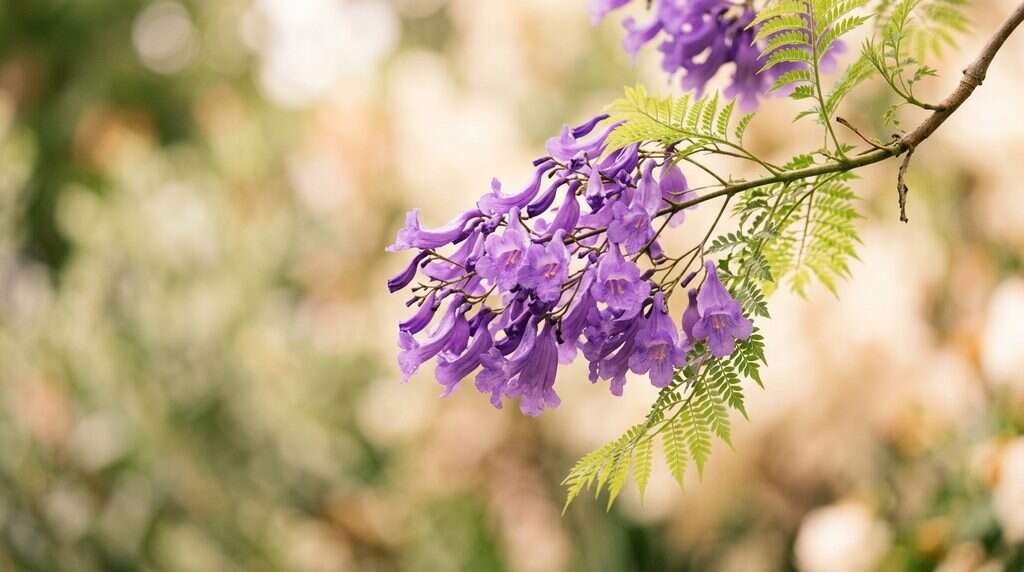
A mature jacaranda creates a canopy of lavender-blue flowers that can transform an entire street or large garden. This is not a perennial you tuck into an empty border. It is a warm-climate tree that needs full sun, open ground, and room for both its crown and roots.
Fallen blossoms, leaves, and seed pods can create regular cleanup beneath the canopy. Keep that in mind before positioning the tree over a pool, driveway, or narrow path.
Young jacarandas can be grown in containers temporarily, but they will not deliver the same flowering display as a mature outdoor tree. Cold winters also limit where they can remain outside permanently.
16. Jungle Flame
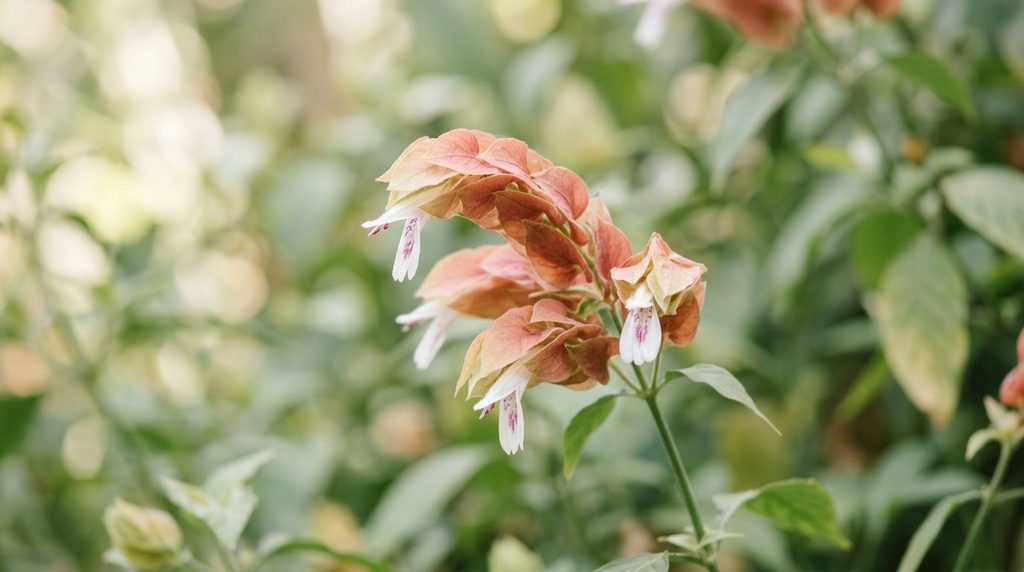
Jungle flame, or ixora, produces dense rounded clusters in red, pink, yellow, orange, or white. The glossy foliage and repeated flowering make it an attractive choice for warm gardens and bright patios.
This tropical shrub responds badly to cold conditions and alkaline soil. Acidic, freely draining soil and consistent warmth help prevent weak growth and yellow leaves.
Where winters are cold, a container provides more flexibility. Move the plant indoors before frost and place it near a bright window.

17. Justicia
The name Justicia covers a broad genus rather than one specific garden flower. Depending on the species, you may encounter pink plume-like flowers, shrimp-shaped bracts, or bright tubular blooms that attract hummingbirds.
Many ornamental species appreciate warmth, filtered light, and moderately moist soil. They can become attractive patio plants in summer and indoor specimens during colder months.
Read the botanical name on the nursery label instead of buying by the word Justicia alone. Species within the genus differ in size, color, flower form, and cold tolerance.
18. Jewel Orchid
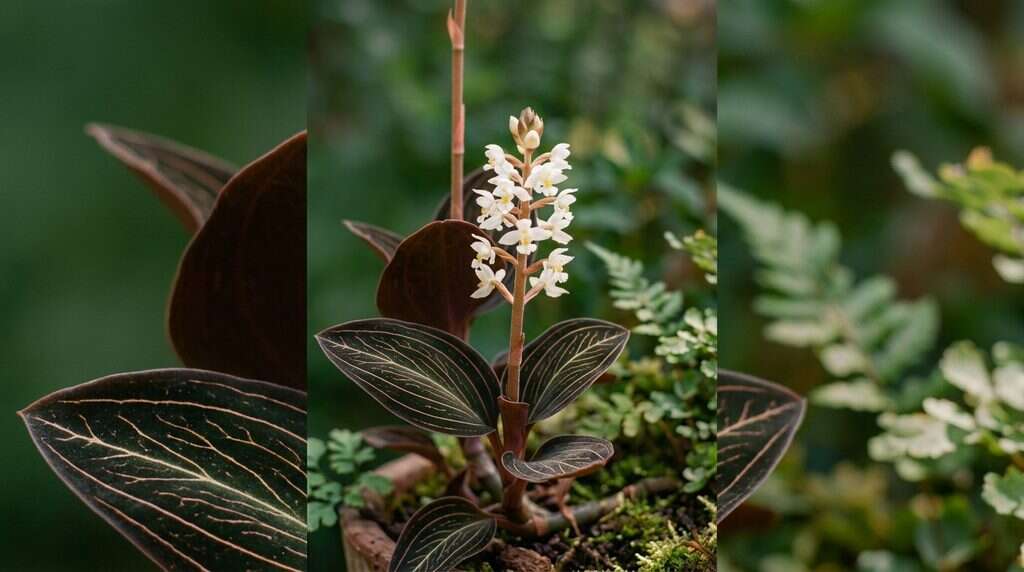
Jewel orchid reverses the usual reason people buy an orchid. Its dark, velvety leaves are marked with copper, pink, or gold veins, while its small white flowers play a supporting role.
Ludisia discolor prefers bright indirect light, warmth, and an airy growing medium that remains lightly moist. Strong direct sunlight can damage the richly colored foliage.
This is one of the most practical J choices for an indoor collection. It stays much smaller than jasmine, jacaranda, or jungle flame and does not require an outdoor garden.
How to Choose a J Flower That Will Actually Grow
Choosing by flower color alone is one of the quickest ways to end up with an unhealthy plant. The site should decide the plant, not the other way around.
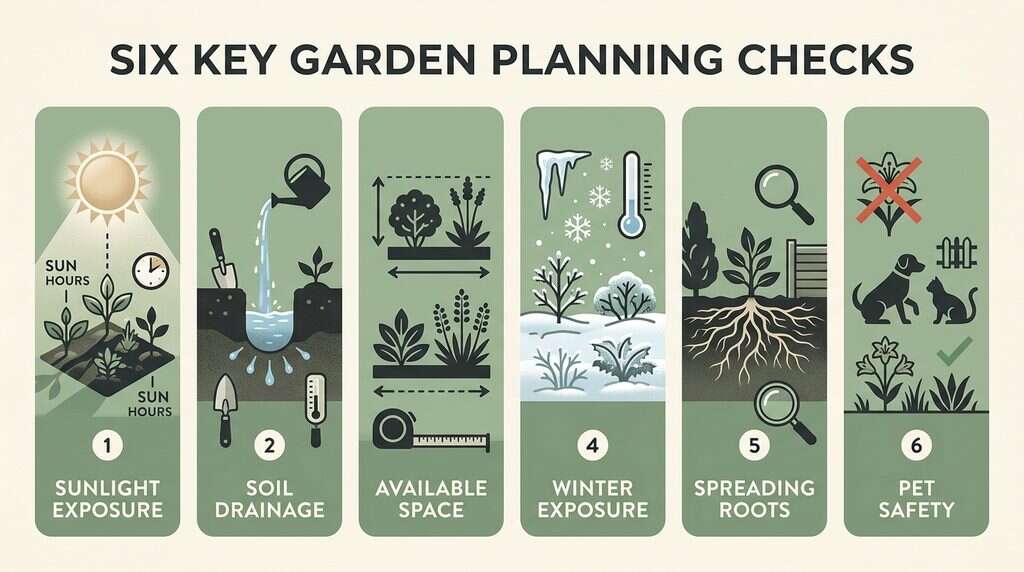
Use this order when narrowing your choices:
- Record how many hours of direct sunlight the area receives.
- Observe whether the soil dries quickly or remains moist after rain.
- Check the plant’s mature height and width.
- Compare its cold tolerance with your local winter conditions.
- Consider whether it spreads through seeds, roots, rhizomes, or tubers.
- Investigate toxicity if children or pets use the garden.
- Check regional invasive-plant recommendations before purchasing.
| Site question | Why it matters | Common mistake |
|---|---|---|
| How much direct sun reaches the area? | Too little light can reduce flowering | Treating partial shade as complete darkness |
| Does water drain within a reasonable time? | Wet roots can damage dry-soil plants | Assuming every flower prefers rich, damp soil |
| How large is the available space? | Vines, shrubs, and trees need long-term room | Buying based on nursery-pot size |
| Is the location exposed to frost or wind? | Tender plants may need winter protection | Relying on appearance rather than hardiness |
| Can the plant spread beyond the bed? | Some species reseed or spread underground | Planting vigorous spreaders beside delicate flowers |
| Will pets or children reach it? | Attractive plants may still be toxic | Assuming natural means harmless |
One detail I would not overlook is drainage. A damp location suitable for Japanese iris can quickly damage Jerusalem sage, while dry ground that suits Jerusalem sage may leave Joe-Pye weed scorched and weak.
If you enjoy building an alphabetical collection, continue with Home Upright’s guide to flowers that start with I. You can also compare more fragrant, tropical, and pollinator-friendly options in the guide to flowers that start with G.
Important Safety and Spreading Warnings
Similar names do not always indicate related plants. True jasmine belongs to Jasminum, while Carolina jessamine belongs to Gelsemium and has very different safety considerations.
The Carolina jessamine safety profile identifies the plant as highly poisonous. Jack-in-the-pulpit also requires caution, and narcissus bulbs should not be eaten.
Spreading behavior deserves equal attention. Japanese anemone can expand underground, jewelweed reseeds, Jerusalem artichoke returns from tubers, and Jupiter’s beard may escape cultivation in some regions.
Check an unfamiliar species in the USDA PLANTS database and consult local invasive-plant guidance before planting it near natural land. A plant’s behavior can change substantially between climates.
Common Mistakes When Growing J Flowers
Planting Before Checking the Mature Size
Nursery pots hide the eventual scale of a plant. A jasmine vine, camellia shrub, and jacaranda tree require completely different amounts of space and long-term maintenance.
Treating Every Plant as a Traditional Flower
The letter J includes annuals, perennials, bulbs, vines, shrubs, trees, and houseplants. Confirm the growth habit before deciding where the plant should go.
Using the Same Watering Routine Everywhere
Japanese primrose and Japanese iris need dependable moisture during growth. Jerusalem sage and Jupiter’s beard perform better when excess water drains away quickly.
Ignoring the Botanical Name
Common names can overlap or create misleading associations. The jasmine and jessamine example shows why checking the scientific name is important for identification and safety.
Fertilizing Before Identifying the Problem
Yellow leaves or poor flowering do not always indicate a nutrient deficiency. Shade, root damage, incorrect soil pH, poor drainage, and overwatering can produce similar symptoms.
If testing shows that feeding is necessary, Home Upright’s guide to fertilizing plants without overfeeding them explains how to base the dose on the plant and soil rather than guesswork.
Frequently Asked Questions
What are the most popular flowers that start with J?
Jasmine, jonquil, Japanese iris, Japanese anemone, Johnny jump-up, and Joe-Pye weed are among the most widely recognized choices. They cover several plant types, including vines, bulbs, violas, shrubs, and tall perennials.
Which J flower is easiest for beginners?
Johnny jump-up is a manageable option for containers and cool-season beds. Jonquils are another reliable choice when planted in well-drained ground and allowed to retain their leaves after flowering.
What yellow flower begins with J?
Jonquil is probably the best-known yellow example. Jerusalem sage and Jerusalem artichoke also produce yellow flowers, although they differ greatly in size and growing behavior.
Are there purple flowers beginning with J?
Yes. Japanese iris, Jacob’s ladder, Joe-Pye weed, jacaranda, and some Johnny jump-ups produce purple, violet, lavender, or blue-purple flowers. The exact shade depends on the species or cultivar.
Which flowers beginning with J grow in shade?
Jacob’s ladder and Jack-in-the-pulpit are useful woodland choices. Japanese primrose prefers partial shade and moist soil, while jewel orchid is better suited to bright indirect light indoors.
Can I grow any J flowers indoors?
Yes. Jewel orchid and several Justicia species can grow well indoors. Jasmine and jungle flame may also be maintained in containers when they receive sufficient light and appropriate winter protection.
Conclusion
The most useful way to explore flowers that start with J is by growing conditions rather than memorizing a long alphabetical list. A sunny wall may suit jasmine, a damp border may support Japanese iris, and a shaded woodland bed may be ideal for Jacob’s ladder or Jack-in-the-pulpit.
Start with one plant that naturally fits your available light, soil, climate, and space. A well-matched flower is far more likely to thrive than one chosen simply because you like its color or name.
From there, you can explore Home Upright’s other alphabetical flower guides and gradually build a garden collection that looks intentional, performs well, and remains manageable.