


Learning how to remove tea stains starts with one simple rule: act before the stain dries or goes through a heated dryer. Blot up the drink, rinse washable fabric with cool water, pretreat it with liquid laundry detergent, and wash it according to its care label.
Fresh tea stains often come out after one treatment. Dried stains, tea containing milk, and marks on upholstery may require a longer soak or a surface-specific method, but aggressive scrubbing is rarely the answer.
Quick Answer: How to Remove Tea Stains
For an ordinary tea stain on washable clothing, follow these steps:
- Blot away excess tea without rubbing it deeper into the fibers.
- Hold the back of the stain under cool running water.
- Apply liquid laundry detergent or a compatible stain remover.
- Let the product work for 5 to 10 minutes, or follow its label.
- Rinse and wash the item according to its care instructions.
- Inspect the fabric before drying it.
- Repeat the treatment if any brown discoloration remains.
The American Cleaning Institute’s coffee and tea guidance similarly recommends cool water, pretreatment, and laundering. Keep the garment out of the dryer until the stain disappears because heat can make the remaining discoloration harder to remove.

Why Tea Leaves Brown Stains
Tea contains naturally occurring plant compounds commonly called tannins. These compounds can leave yellow or brown discoloration when the liquid dries on fabric, upholstery, mugs, or metal surfaces.
Plain tea mainly leaves a tannin-based mark. Tea containing milk, cream, sweetener, or flavored syrup creates a more complicated stain because it may also contain fat, protein, or sticky sugar residue. In that situation, detergent becomes especially important because rinsing alone may not remove every part of the spill.
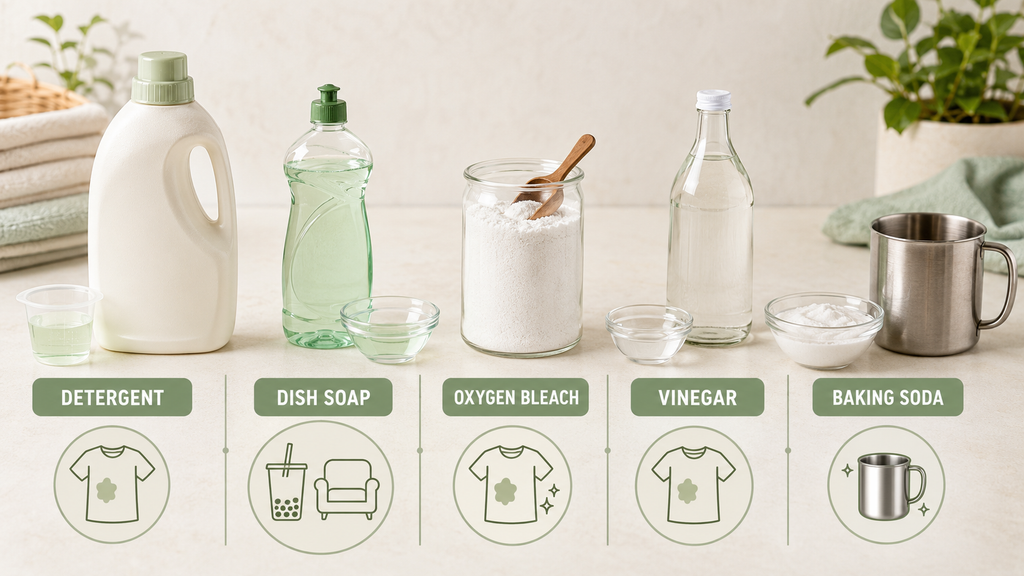
What You Need Before You Start
You will not need every product listed below for every stain. Choose the gentlest option that is appropriate for the stained material.
- Clean white cloths or plain paper towels
- Cool running water
- Liquid laundry detergent
- Mild clear dishwashing liquid
- Oxygen-based laundry bleach
- White vinegar
- Baking soda
- A soft-bristled brush
- A bowl or basin
- Protective gloves
Always inspect the fabric or furniture care label first. The FTC’s care-label guidance explains that garment labels provide cleaning instructions and warnings intended to prevent damage.
Test detergent, vinegar, peroxide, or any other treatment on an inconspicuous area before applying it to a visible section. This is particularly important with dark denim, printed sheets, delicate upholstery, wool, silk, and fabrics with unstable dyes.
How to Remove Tea Stains From Clothes
The following method is suitable for many washable cotton, polyester, and blended garments. If the care label says dry-clean only, take the item to a professional and identify the stain as tea.
Step 1: Blot the Fresh Spill
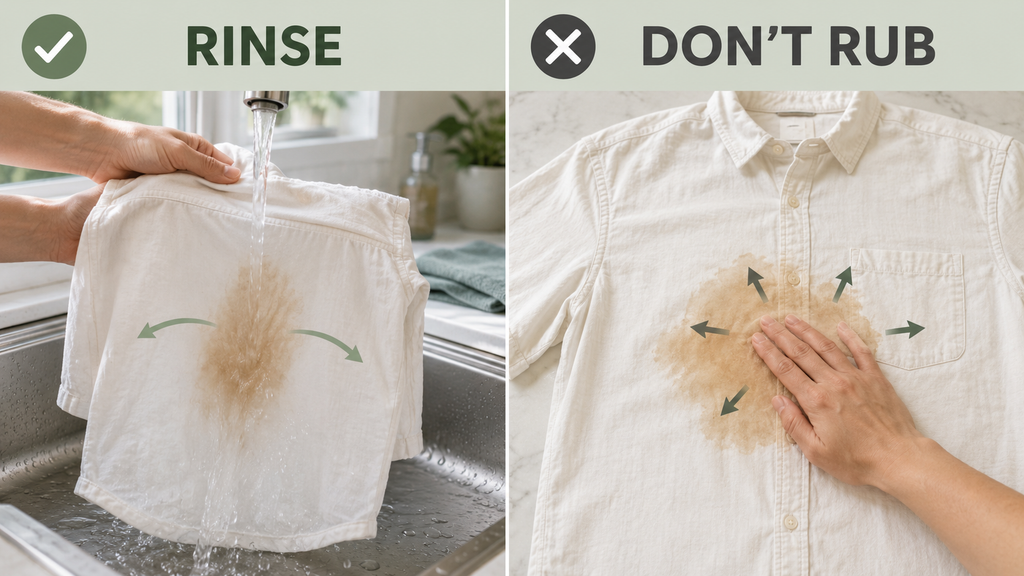
Use a clean white cloth to absorb as much liquid as possible. Press down and lift the cloth repeatedly instead of rubbing from side to side.
Rubbing can spread the stain and push tea deeper into the weave. Work from the outside edge toward the center to keep the affected area from growing.
Step 2: Flush From the Back
Turn the garment inside out and run cool water through the back of the stain. This helps push the tea out in the direction it entered rather than forcing it farther through the fibers.
Avoid starting with very hot water. Cool water is the safer first approach, especially when the tea contained milk or cream.
Step 3: Pretreat With Detergent
Work a small amount of liquid laundry detergent into the damp stain with your fingers. Let it sit for 5 to 10 minutes, unless the product label gives a different treatment time.
An enzyme-containing detergent can help when the tea included milk. However, use only products approved by the care label, especially on wool and silk.
Step 4: Wash and Inspect
Wash the garment at the warmest temperature permitted by its care label. Once the cycle finishes, inspect the stained area in good light.
Do not assume the stain is gone while the fabric is wet. Air-dry the item if you are uncertain, then repeat the treatment if a brown shadow remains.
The University of Georgia Cooperative Extension’s tea-stain instructions recommend prompt cool-water treatment, detergent pretreatment, and fabric-safe bleach when necessary. That sequence is a reliable starting point for most washable garments.
How to Remove Dried Tea Stain From Clothes Fast
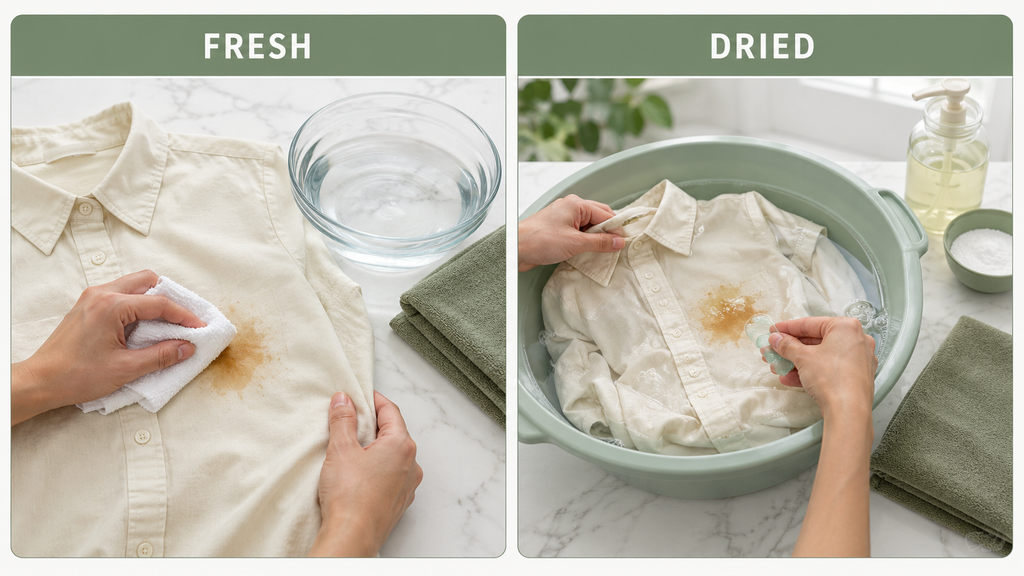
A dried stain needs to be rehydrated before detergent can work effectively. Start by soaking or thoroughly wetting the affected area with cool water for about 15 minutes.
Apply liquid laundry detergent and gently work it into the stain. Leave it for 10 to 15 minutes, rinse, and check the result before laundering.
If discoloration remains, soak the garment in a solution of oxygen-based bleach and water, following the product’s dilution instructions. Oxygen bleach is often suitable for more washable colors than chlorine bleach, but you must still check the care label and test for colorfastness.
For a stubborn dried mark:
- Soak the stained area in cool water.
- Pretreat it with liquid laundry detergent.
- Rinse and examine the fabric.
- Soak it in fabric-safe oxygen bleach if needed.
- Wash it according to the care label.
- Air-dry and repeat rather than using immediate heat.
One detail I would not overlook is the dryer check. Ten extra seconds spent examining the fabric can save you from having to treat a heat-set stain later.
How to Remove Tea Stains From White Clothes
White clothing gives you more stain-removal options, but “white” does not automatically mean chlorine-bleach safe. Spandex, wool, silk, decorative trim, and some finishes may be damaged or discolored by chlorine bleach.
Begin with cool water and liquid detergent. If the mark remains, soak the garment in oxygen bleach according to the product label and then launder it normally.
Chlorine bleach should be considered only when the garment’s care label permits it. Use the dilution and washing instructions printed on the bleach container rather than pouring concentrated bleach directly on the stain.
Never combine chlorine bleach with vinegar, ammonia, or another cleaner. Poison Control warns that mixing vinegar with chlorine bleach can release irritating chlorine gas, so use one cleaning method at a time and rinse thoroughly between treatments.

How to Remove Tea Stains From Jeans
Turn the jeans inside out and flush the back of the stain with cool water. Apply a small amount of liquid laundry detergent, let it work for several minutes, and then rinse.
Wash the jeans according to their care label, preferably with similar dark colors. Avoid chlorine bleach because it can create a visibly faded patch, and test oxygen bleach or vinegar on an inside seam before treating dark denim.
Do not scrub denim aggressively with a stiff brush. Even if the stain comes out, excessive friction can lighten the dye and leave a permanent worn-looking area.
How to Remove Tea Stains From a Bed Sheet
Remove the sheet from the bed so you can rinse the stain from its reverse side. Blot any remaining liquid, flush the mark with cool water, and pretreat it with liquid laundry detergent.
For a dried stain, soak the affected part in cool water before pretreating it. You may also soak a washable white or colorfast sheet in oxygen bleach when its care label permits.
Wash the sheet normally, but inspect it before putting it in the dryer. If you also need to clean heavier bedding, the Home Upright guide to cleaning a weighted blanket safely explains how fill materials and weight limits can change the washing method.
How to Remove Tea Stains From a Sofa
First, blot the spill with a clean white cloth. Do not press so hard that you force tea into the cushion filling, and do not pour water directly over the sofa.
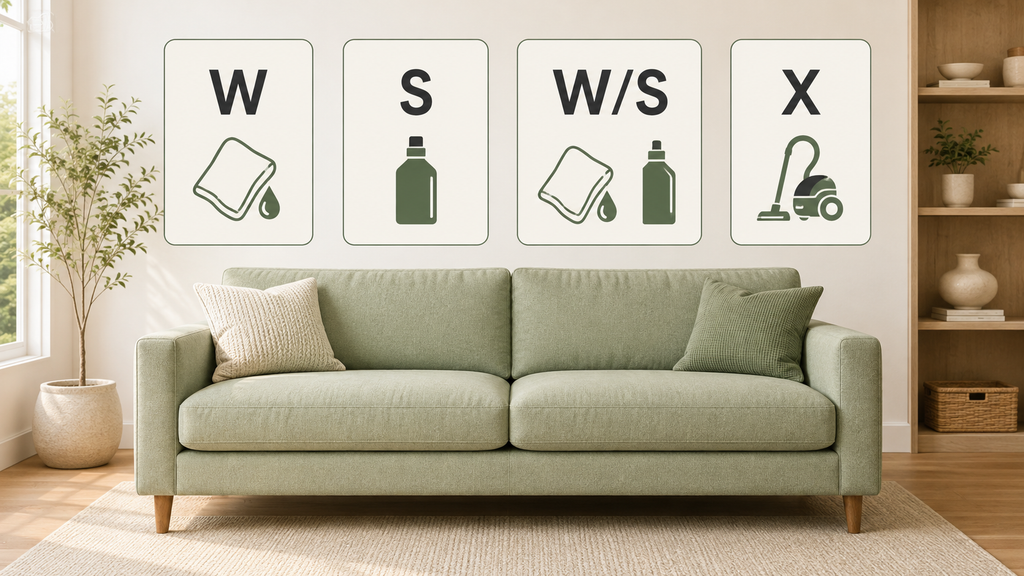
Find the upholstery care tag before applying a cleaner. Common codes include:
| Upholstery code | General meaning | Recommended response |
|---|---|---|
| W | Water-based cleaner may be used | Use a small amount of mild cleaning solution |
| S | Solvent-based cleaner is required | Use an approved solvent or professional service |
| W/S or S/W | Water- or solvent-based products may be allowed | Follow the manufacturer’s instructions |
| X | Vacuuming or professional care only | Do not apply a homemade liquid cleaner |
For water-safe upholstery, mix a few drops of clear dishwashing liquid into a cup of cool or lukewarm water. Dampen a white cloth with the solution, blot from the outside toward the center, and use a second cloth lightly dampened with plain water to remove residue.
Keep the cushion as dry as possible and allow it to air-dry completely. If the sofa is velvet, silk, vintage, heavily saturated, or marked S or X, I recommend contacting a professional upholstery cleaner.
Tea with milk or sugar may leave a sticky or oily residue in addition to the brown stain. A mild detergent step is therefore more useful than treating the tannin discoloration alone.
For another surface-specific approach to food stains, see Home Upright’s guide to removing chocolate stains from clothes and sofas. The methods are not interchangeable, but the guide explains why upholstery should be blotted and treated with minimal moisture.
How to Remove Tea Stains From Metal
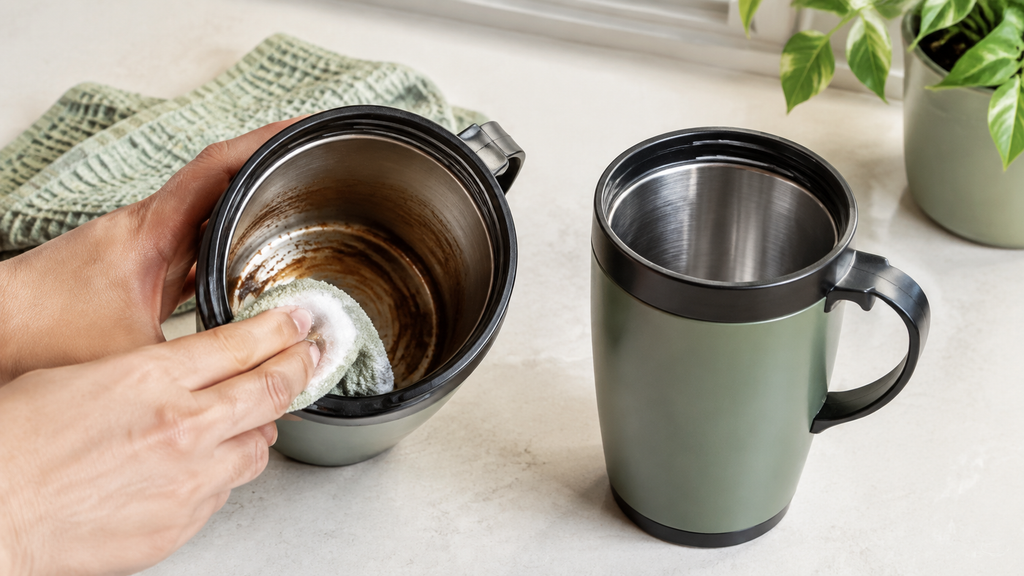
Start with warm water and mild dishwashing liquid. Wipe the metal with a soft cloth or non-scratch sponge, rinse it thoroughly, and dry it to check whether the brown film remains.
For stainless-steel mugs, sinks, or flasks, make a loose paste of baking soda and water. Apply it with a soft cloth, rub gently in the direction of the visible grain, and rinse well.
Avoid steel wool, harsh scouring powders, and tools that can scratch the finish. The world stainless cleaning and maintenance guidance recommends beginning with basic cleaning before moving to stronger methods and provides specific guidance for tea and coffee residue.
Baking soda may not be suitable for every coated, painted, plated, or specialty metal surface. Check the manufacturer’s care instructions and test an inconspicuous area first.
Tea Stain Removal From Clothes: Home Remedies Compared
Home remedies can help, but they are not automatically safer than a properly labeled laundry product. Always check the care label, perform a spot test, and avoid combining chemicals.
| Remedy | Where it may help | Important limitation |
|---|---|---|
| Liquid laundry detergent | Most washable clothes and sheets | Follow the garment and detergent labels |
| Clear dishwashing liquid | Milk tea, washable fabric, water-safe upholstery | Use only a small amount to avoid residue |
| Diluted white vinegar | Some washable, colorfast fabrics | May affect dyes or delicate fibers; never mix with chlorine bleach |
| Oxygen bleach | Dried stains on compatible washable fabric | Test colors and follow the soaking instructions |
| Baking soda paste | Stainless steel and some durable hard surfaces | Mildly abrasive; avoid delicate or coated finishes |
| Hydrogen peroxide | Some light, colorfast washable fabrics | Can lighten dye; spot-test before use |
| Chlorine bleach | Bleach-safe white washable items only | Can damage fibers and colors; never mix with other cleaners |
I would start with water and detergent before trying a home remedy. These options are easier to control, and they align with the basic treatment recommended by established textile-care resources.
Common Tea-Stain Removal Mistakes
Rubbing Instead of Blotting
Rubbing can spread a fresh spill and distort delicate fibers. Blot with a clean section of cloth each time so you continue lifting tea instead of transferring it back.
Using Heat Too Soon
A dryer or iron can make residual discoloration more difficult to remove. Inspect the area after washing and air-dry the item until you know the stain is gone.
Ignoring the Care Label
A treatment that works on cotton may damage wool, silk, rayon, spandex, or unstable dye. If the item is valuable or labeled dry-clean only, stop after gentle blotting and seek professional care.
Applying Too Much Upholstery Cleaner
Excess liquid can spread the stain, leave a ring, or soak into the cushion. Apply cleaner to the cloth rather than pouring it directly onto the sofa.
Mixing Household Cleaners
Combining products does not necessarily make them work better. It can damage the surface or create dangerous fumes, particularly when chlorine bleach is mixed with an acid or ammonia.
Treating Every Brown Mark as Tea
Rust, makeup, coffee, and old water marks may resemble a tea stain but require different treatment. An orange-brown mark caused by metal corrosion should be treated using an appropriate rust-stain removal method for clothing rather than chlorine bleach.
When a Tea Stain Will Not Come Out
Repeat the cool-water rinse, detergent treatment, and wash before switching to a stronger product. Old stains may require more than one cycle, but repeated gentle treatments are usually safer than aggressive scrubbing.
If the mark remains, consider these possibilities:
- The garment went through a heated dryer.
- The tea contained milk, cream, sugar, or coloring.
- An earlier cleaner left its own residue.
- The fabric dye changed rather than the tea remaining.
- The item is not safely washable.
- The sofa cushion absorbed tea below the surface.
Stop home treatment if the fabric begins to fade, pill, stretch, or transfer color to your cloth. A professional cleaner is the safer option for valuable clothing, silk, wool, vintage textiles, leather, and delicate upholstery.
Frequently Asked Questions
Does vinegar remove tea stains?
Diluted white vinegar can help loosen some tea stains on washable, colorfast fabric. Test it first, follow the care label, and never combine it with chlorine bleach.
Does baking soda remove tea stains?
Baking soda is most useful as a gentle cleaning paste for stainless steel, mugs, and some durable hard surfaces. It can be mildly abrasive, so I would not use it automatically on delicate fabric, polished metal, or coated finishes.
Are dried tea stains permanent?
Not necessarily. Rehydrate the stain with cool water, pretreat it with detergent, and use fabric-safe oxygen bleach if needed before laundering and air-drying.
Should I use hot or cold water for tea stains?
Begin with cool water, especially when the tea contains milk. After pretreatment, wash the item at the warmest temperature permitted by its care label.
Can I remove a tea stain without washing the whole garment?
You may be able to spot-treat a small mark by rinsing it from the back, applying detergent, and thoroughly removing the detergent with water. The result depends on the fabric, and partial cleaning can sometimes leave a water ring.
How do I remove tea stains from white clothes?
Rinse with cool water, pretreat with liquid detergent, and wash according to the care label. If discoloration remains, use oxygen bleach or another bleach specifically permitted by the label.
How do I remove tea stains from a sofa after they dry?
Check the upholstery code and rehydrate only the stained area with a small amount of compatible cleaning solution. Blot repeatedly, remove residue with minimal water, and allow the sofa to air-dry fully.
How do I remove tea stains from jeans without fading them?
Turn the jeans inside out, rinse the back of the stain with cool water, and pretreat it with detergent. Avoid chlorine bleach and test any additional cleaner on an inside seam first.
What if the tea contained milk and sugar?
Use detergent to address the fat, protein, and sticky residue as well as the brown tea mark. Begin with cool water, because starting with high heat can make a milk-containing stain more difficult to treat.
Conclusion
Once you understand how to remove tea stains, the most important decisions are straightforward: act quickly, use cool water first, choose a cleaner that suits the surface, and check the stain before applying heat. Clothes, sofas, sheets, jeans, and stainless steel each need a slightly different approach, so avoid using one strong remedy everywhere.
Start with the gentlest appropriate method and repeat it if necessary. For more practical cleaning help, explore Home Upright’s other stain-removal guides and save this article for the next unexpected tea spill.