


Flowers that start with I: 25 beautiful names with real growing advice
If you searched for flowers that start with i, you may have found the same few names again and again: iris, impatiens, ice plant, and Iceland poppy. Those are excellent places to start, but a useful garden list needs to do more than give you a spelling answer. You also need to know which plants suit shade, which cope with dry soil, which are truly perennial, and which names are only likely to appear on a specialist plant label.
I built this guide around the question I would ask before buying anything: “Will this flower actually be happy where I plan to put it?” That one question prevents the classic mistake of taking home a beautiful full-sun plant for a dark porch, or a moisture-loving native for a hot rock garden. It also makes an alphabet-themed garden feel intentional instead of random.
You will find familiar flowers, native wildflowers, bulbs, tropical choices, vines, and flowering shrubs here. Some names begin with I as common names, while others are botanical names that nurseries use on labels. I have made that distinction clear so you can shop with confidence, use the right search terms, and choose a plant that earns its place in your bed, border, pot, or bouquet.
A quick answer: the best-known I flowers
The most common flowers that start with I are iris, impatiens, ice plant, Iceland poppy, Indian pink, Indian blanket, ironweed, ipheion, ixia, and ixora. If you only need a fast answer for a school project, word game, or planting list, those ten names give you a strong mix of common and less familiar choices.
For a real garden, I would narrow the first choice by light and soil. Iris is the classic border flower for sun; impatiens is the easy shade-and-container answer; ice plant is for a hot, dry edge; and Indian pink brings a dramatic native look to a moisture-retentive woodland border. That is a far more useful way to think about the letter I than treating every plant name as interchangeable.
Here are the quick picks I would save first:
- Iris is the most recognizable choice and gives you architectural leaves as well as showy spring flowers. It works especially well when you want a planted border to still look structured after bloom.
- Impatiens is the reliable answer for seasonal color in shade. It is easy to find as bedding plants and is one of the simplest ways to brighten a porch, window box, or tree-shaded bed.
- Ice plant is a low, succulent groundcover for full sun and fast drainage. It is a smart choice when other flowers sulk in reflected heat from stone, paving, or a south-facing wall.
- Iceland poppy gives you a light, airy spring look in cool conditions. Its delicate petals make a nice contrast to heavier flowers such as iris and can be lovely in a cutting patch.
- Indian pink is a memorable native perennial for a partly shaded planting. The red tubes with yellow starry openings look almost tropical, even though the plant belongs in a woodland-style garden.
- Ironweed is the late-season choice when you need height, purple color, and pollinator activity. It is not a tiny front-of-border plant, so give it room and use it as a tall backdrop.
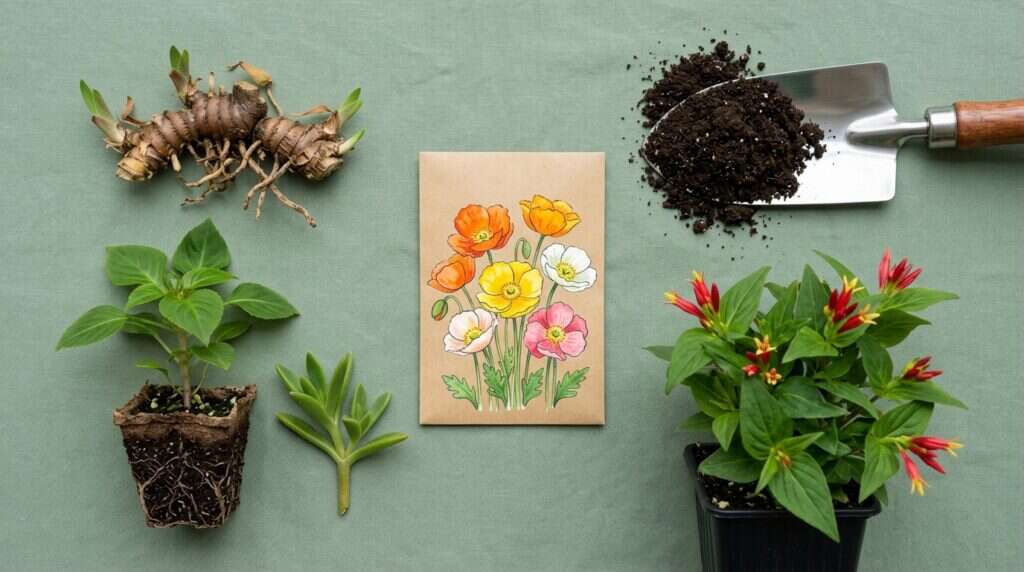
What counts as an I flower, and why the label matters
Flowers that start with the letter I are not a botanical category. They are simply plants whose common name, botanical name, or familiar garden label begins with I. That means a list can include a true garden flower such as iris, a flowering shrub such as itea, and a botanical genus such as ipheion.
This is where many flower lists become confusing. “Ice plant,” for example, can refer to more than one kind of succulent, and “Ismene” can appear on a label as Hymenocallis or Peruvian daffodil. A nursery tag with the scientific name is not being fussy. It is helping you get the exact plant you meant to buy.
I also separate bloom-first plants from landscape plants below. A bloom-first plant is chosen mainly for the flowers, such as impatiens or Iceland poppy. A landscape plant can flower beautifully but is often bought for its overall shape, foliage, fall color, or use as a hedge, such as Virginia sweetspire.
| If you need… | Start with… | Why it is a sensible match |
|---|---|---|
| A sunny border focal point | Iris | It gives height, strong leaf shape, and a classic spring display. |
| Fast color in shade | Impatiens | It is widely sold as a bedding plant and fills pots or beds quickly. |
| A dry, hot, low edge | Ice plant | Succulent foliage and low growth suit sharply drained, sunny spots. |
| A woodland native look | Indian pink | It gives a vivid flower display without asking for blazing afternoon sun. |
| A late-summer tall purple flower | Ironweed | It provides height and color when many early perennials are finished. |
| An early spring bulb effect | Ipheion | Its small star-shaped flowers fit rock gardens, edges, and naturalized drifts. |
| A flowering shrub for a moist site | Itea | It adds flower sprays and foliage interest, rather than one brief bloom moment. |
Choose by garden condition before you choose by name
The best I flower is the one that matches your place. A beautiful plant can still fail if its roots sit wet when it needs drainage, or if it receives harsh afternoon sun when it naturally grows in filtered light. Before you shop, spend one day noticing where the sun falls and whether the soil stays damp after rain.
Hardiness information matters too, especially for bulbs, tropical shrubs, and perennials that must survive winter outdoors. Use the official plant hardiness zone map as a starting point, but do not treat it as the whole answer. Winter minimum temperature matters, yet drainage, heat, humidity, wind, and summer rainfall can still decide whether a plant thrives.
My simple way to sort these flowers is this:
- Full sun and free-draining soil: Start with iris, ice plant, Iceland poppy in a cool climate, Ixia, Iberis, Indian blanket, Italian aster, or Italian bugloss. These are the choices I would look at for an open bed, rock garden, or warm border.
- Part shade and soil that stays evenly moist: Start with impatiens, Indian pink, Itea, and some kinds of Isotoma. These are better options for a bright woodland edge, a covered patio that receives morning sun, or a bed shaded after lunch.
- Warm patio or summer container: Look at ixora, Ismene, Iochroma, ivy geranium, and New Guinea impatiens. In cold-winter locations, these are often easier to enjoy in pots than to force into a permanent border.

25 flowers that start with i, with care details
These are real garden flowers or flowering plants, but they do not all behave the same way. Some are annuals, some return from roots or bulbs, some are shrubs, and some are better treated as protected container plants. The descriptions below explain the difference so you do not buy a plant for the wrong job.
1. Iris
Why it stands out
Iris is the best-known I flower and one of the strongest spring focal points for a garden. The group includes tall bearded iris, moisture-loving water iris, and compact bulb irises, so the exact type matters as much as the name. A bearded iris gives you showy flowers and sword-shaped leaves that still make a border look structured after flowering.
Practical growing notes
- Best position: Choose a sunny, well-drained bed for a bearded iris. Keep water-loving iris types for naturally damp soil or pond-side planting instead.
- Best use: Plant several of the same variety together rather than one lonely rhizome. The repeated foliage makes the display look planned, even once the blooms finish.

2. Impatiens
Why it stands out
Impatiens is the easy shade-color answer. It makes rounded mounds of flowers in pink, white, coral, red, orange, and lavender, then quickly fills an empty-looking pot or bed. Common impatiens is commonly grown as an annual in cold winters, even though it can be perennial in tropical conditions.
Practical growing notes
- Best position: Give it bright shade or gentle morning sun with evenly moist soil. Hot, dry afternoon exposure makes it work much harder than in a shaded doorway or on a covered patio.
- Best use: Use several plants in a single container or as a mass planting beneath trees. It looks fuller and more intentional than one small plant placed alone in a large bed.

3. Ice plant
Why it stands out
In this guide, “ice plant” refers to hardy ice plant, usually Delosperma cooperi. It creates a low mat of succulent leaves and vivid daisy-like flowers, often in magenta, purple, pink, orange, or yellow. The flowers can make a dry, stony edge look alive, even where many moisture-loving plants would struggle.
Practical growing notes
- Best position: Hardy ice plant wants full sun and sharply drained, sandy or gravelly soil. Heavy, wet ground is its biggest problem, not a lack of fertilizer.
- Best use: Let it spill over a rock wall, raised bed, or pot edge. Its low shape makes a good contrast to upright iris leaves or taller flowering stems.

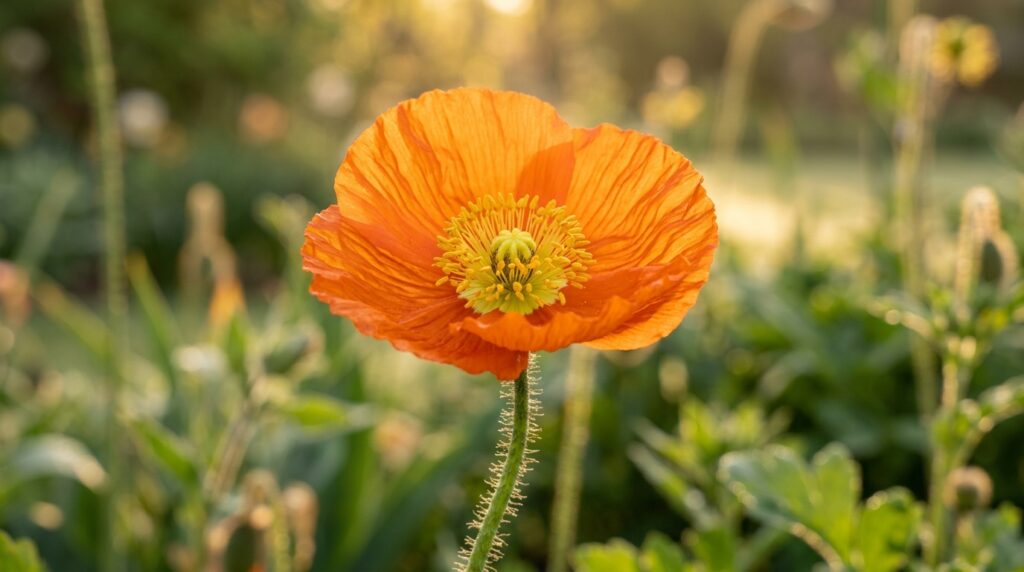
4. Iceland poppy
Why it stands out
Iceland poppy, Papaver nudicaule, has thin, softly crinkled flowers in cream, yellow, orange, pink, white, and pale red. The blooms look delicate but are made for cool conditions, which is why they are especially beautiful in a spring garden or cool-season container.
Practical growing notes
- Best position: Iceland poppy grows best in cool climates and is often grown as an annual in warmer places. Plant it for its strongest season instead of expecting it to enjoy peak summer heat.
- Best use: Grow several together in a cutting patch or a sunny spring border. Their light petals look best next to firmer shapes such as iris, evergreen foliage, or small shrubs.
5. Indian pink
Why it stands out
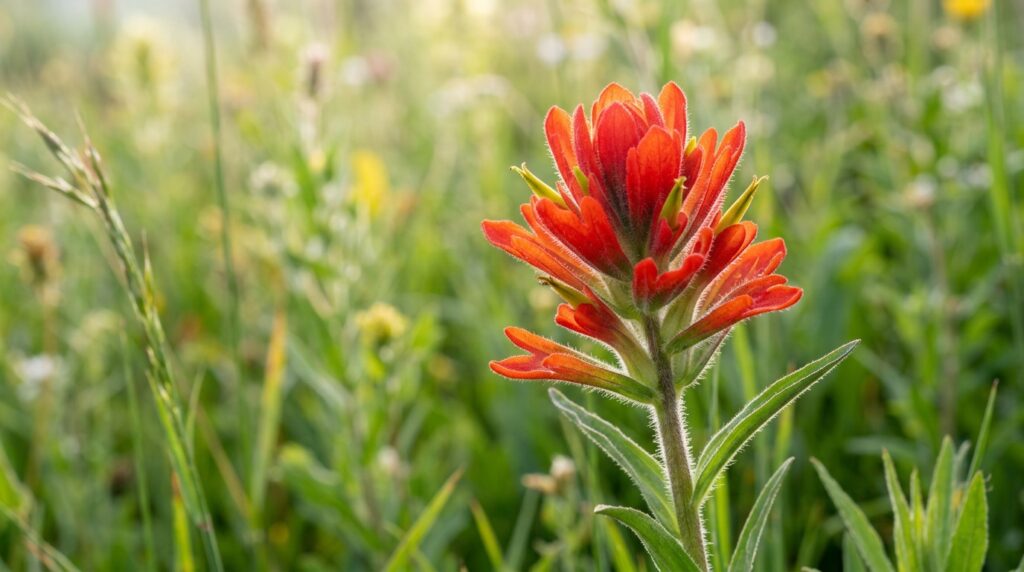
Indian pink, Spigelia marilandica, is one of the most memorable native flowers that start with I. It makes upright red tubes with bright yellow star-shaped openings, so every bloom has a bold, almost tropical look. The plant stays much more refined than its color suggests and does not need a huge border to make an impact.
Practical growing notes
- Best position: The Indian pink profile notes that it tolerates considerable shade. Give it rich, evenly moist soil in a bright woodland edge or a bed shaded after lunch.
- Best use: Buy nursery-propagated plants and let them establish before judging them. It is a better long-term woodland perennial than a quick seasonal filler.

6. Indian blanket
Why it stands out
Indian blanket, also called blanket flower, usually refers to Gaillardia pulchella or related garden types. Its daisy-like blooms blend red, orange, yellow, and maroon, often with darker centers and yellow-tipped petals. It brings a cheerful prairie or cottage-garden mood to an open bed.
Practical growing notes
- Best position: Blanket flower needs full sun and good drainage. Once established, it copes with dry conditions more easily than a plant that expects constantly rich, wet soil.
- Best use: Put it in an informal border, a pollinator planting, or a dry container with other sun lovers. Deadheading helps keep the plant neat and can encourage more bloom.

7. Indian paintbrush
Why it stands out
Indian paintbrush, Castilleja species, is known for vivid red, orange, yellow, or pink bracts around much smaller true flowers. The brush-like tops are striking in a natural meadow, but the plant is more specialized than most flower lists explain. Its unusual ecology is part of what makes it beautiful.
Practical growing notes
- Best position: Many Castilleja species are hemiparasitic and connect with nearby host plants. Choose a suitable native meadow or restoration planting rather than treating it like a standard bedding annual.
- Best use: Buy from a specialist native-source supplier and check the requirements for the local species. It is a wonderful choice for the right habitat, not an easy plant to force into an ordinary mixed border.
8. Ironweed
Why it stands out
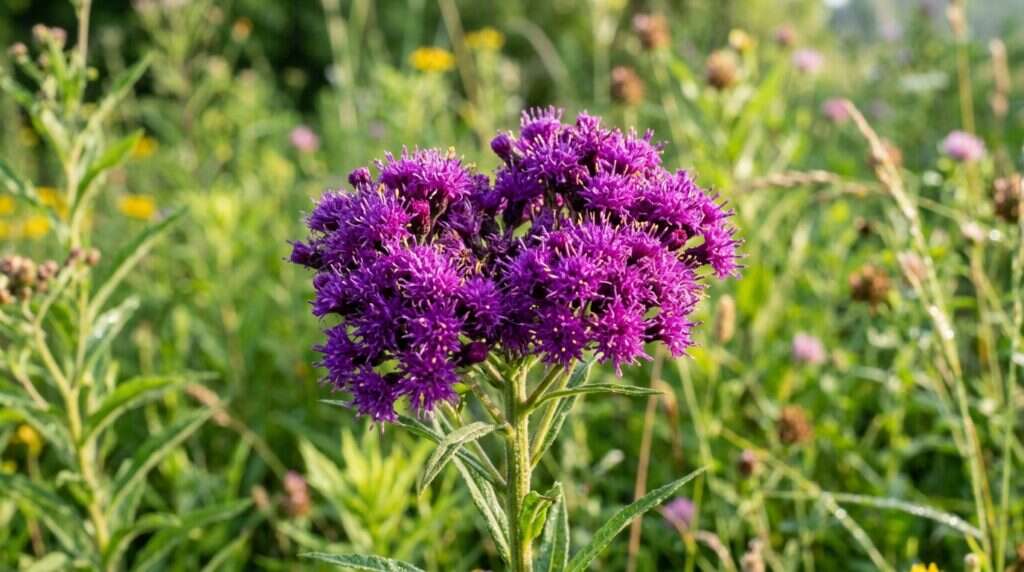
Ironweed is a tall native perennial with dense purple flower clusters that appear toward late summer and early fall. It adds height when early perennials have faded and makes a border feel lively at a time when many gardens begin to look tired. Its dark purple flowers create a strong visual bridge into autumn.
Practical growing notes
- Best position: New York ironweed prefers full sun and average to wet soil. Give it a place where its height will be welcome rather than a tiny dry pot.
- Best use: Plant it at the rear of a native border, beside a fence, or in a moist meadow-style area. It is a backdrop plant, not a neat low edge.
9. Ipheion
Why it stands out
Ipheion, often sold as spring starflower, is a small bulbous perennial with narrow leaves and stars in white, pale blue, or violet-blue. It is one of the nicest ways to make an alphabet garden bloom early, before larger summer flowers have filled the space. A group of bulbs looks much more convincing than one isolated plant.
Practical growing notes
- Best position: Spring starflower suits a rock garden, border edge, or the base of deciduous shrubs where spring light reaches the soil.
- Best use: Plant in loose drifts near a path so the small flowers can be seen up close. Search by the botanical name because “starflower” can mean different plants.

10. Ipomoea
Why it stands out
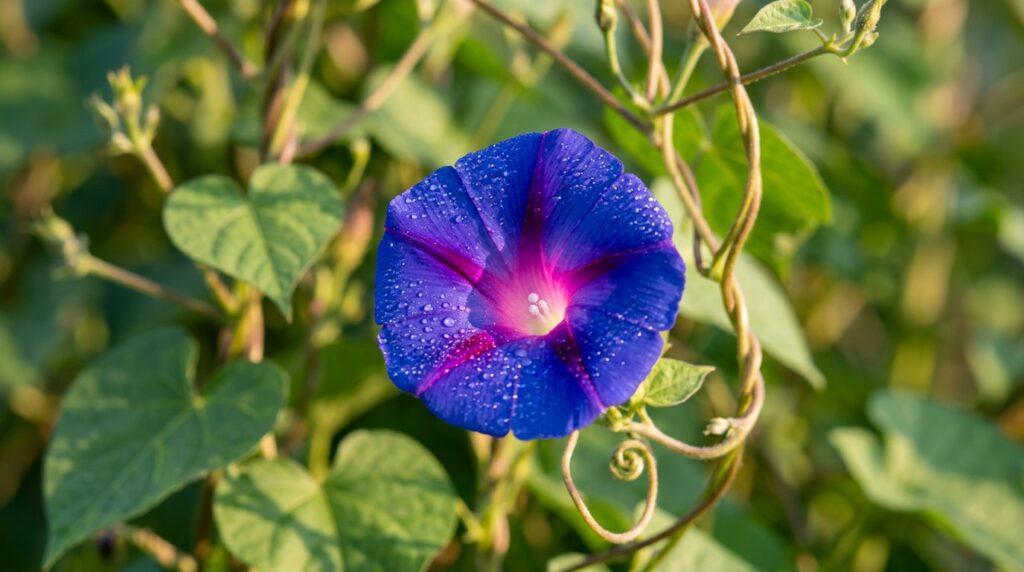
Ipomoea is the botanical name most gardeners recognize through morning glory. Its trumpet-shaped flowers open in blue, purple, pink, red, or white, while the climbing stems create height on a trellis or fence. It is the I flower to choose when your garden needs vertical movement rather than another low mound.
Practical growing notes
- Best position: Give the vine a support from the day you plant it, plus sun and room to climb. Check local guidance before growing a self-seeding type near natural areas.
- Best use: A large pot with its own obelisk or trellis makes it easier to enjoy the bloom while keeping the vine from covering smaller plants.
11. Ixia
Why it stands out
Ixia, also called African corn-lily or wand flower, grows from corms and creates slender stems dotted with bright, open flowers. Colors can include yellow, orange, pink, red, cream, and purple, often with a contrasting center. The stems have a crisp, graphic quality that is very different from a broad-petaled poppy.
Practical growing notes
- Best position: Ixia needs sun and excellent drainage. It is a specialist bulb choice rather than a plant for wet soil or permanent deep shade.
- Best use: Use it in a cutting garden or a sunny pot. It is especially good when you enjoy learning a plant’s seasonal cycle rather than expecting constant foliage.

12. Ixora
Why it stands out
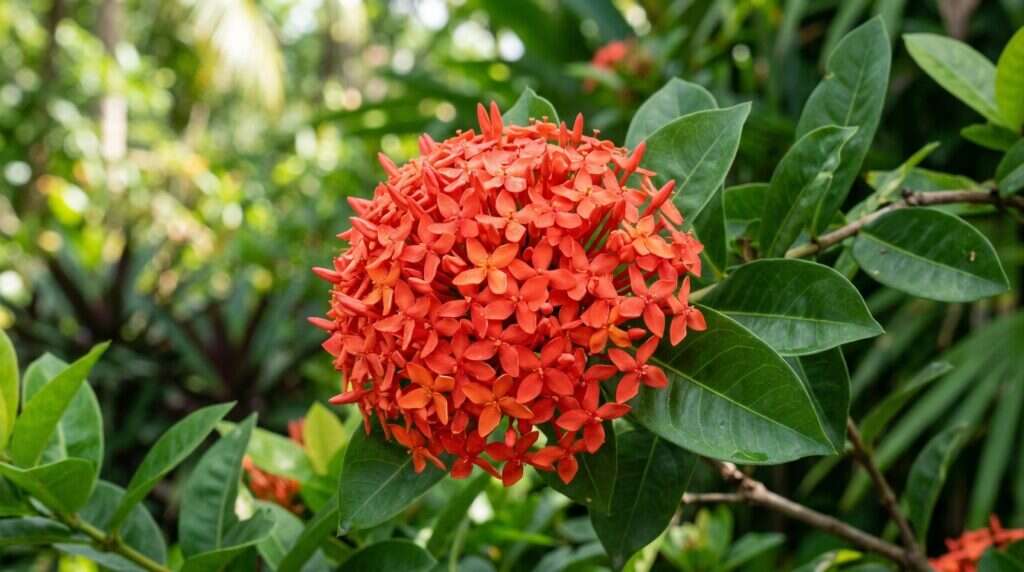
Ixora is a warm-climate flowering shrub with dense heads of tiny, star-shaped blooms. Its clusters can be red, orange, yellow, pink, or white, and the effect is bold enough to feel like a living bouquet. It gives the list a tropical option without the very large leaves of a canna.
Practical growing notes
- Best position: Treat ixora as a warm patio or frost-free landscape plant. It prefers warmth, bright light, and a well-drained potting mix to an exposed, cold-winter bed.
- Best use: Use one substantial pot as a focal point near a sunny seating area. It reads as more luxurious when you let the flower clusters be the main event.
13. Iberis
Why it stands out
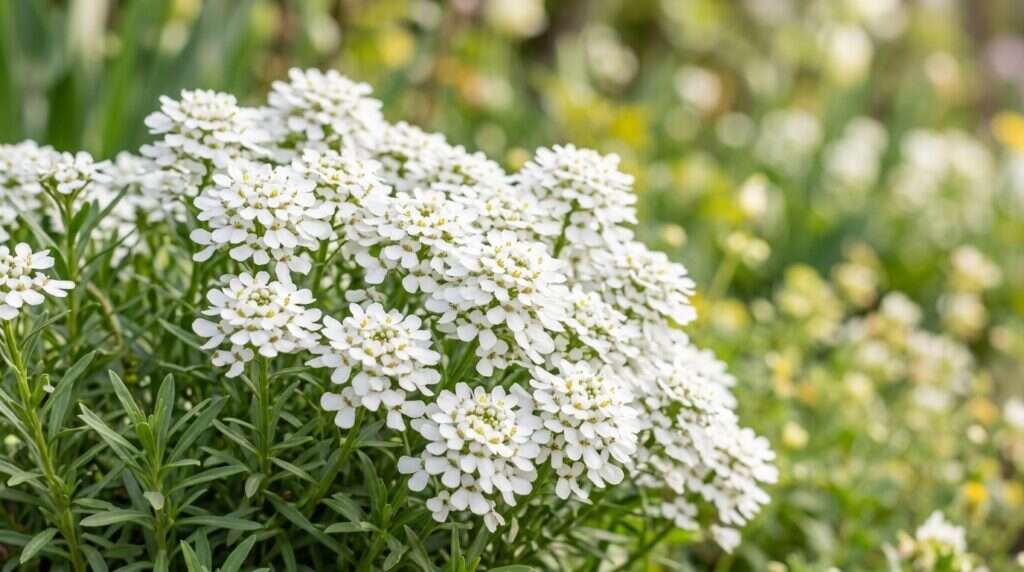
Iberis is the botanical name for candytuft, a low-flowering plant that forms clusters of small white blooms. Its calm color and rounded shape are useful in a list full of intense purple, red, and orange flowers. It is a simple way to make a sunny planting look softer and more finished.
Practical growing notes
- Best position: Choose a sunny spot with well-drained soil. Iberis is happiest near a path, wall, or border edge rather than in a soggy shaded bed.
- Best use: Let it flow slightly over stone or use it as a front-edge filler below taller iris and Italian aster. Search for candytuft if a nursery does not list the botanical name.
14. Incarvillea
Why it stands out
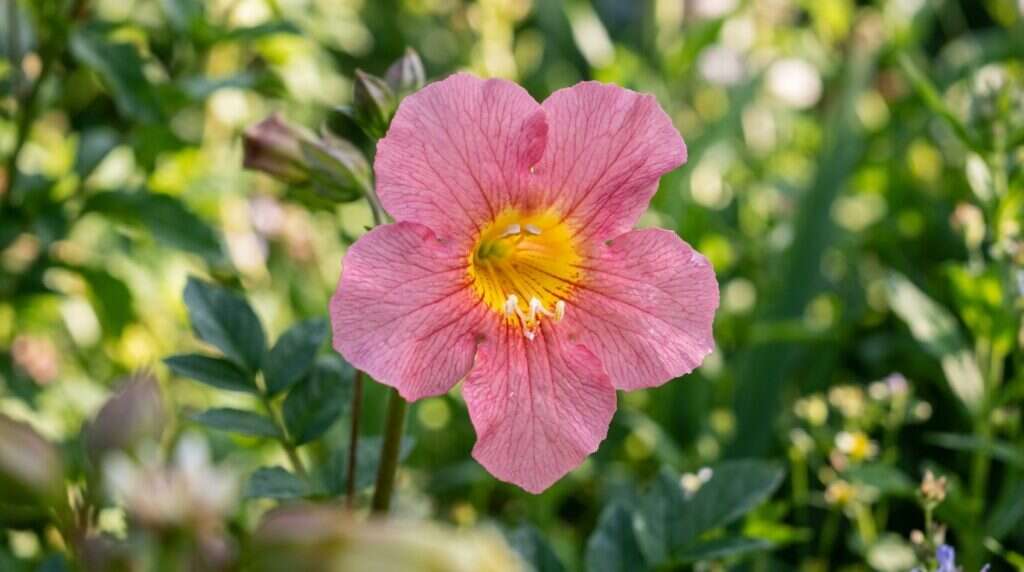
Incarvillea, often called hardy gloxinia, has large trumpet-shaped flowers above fern-like leaves. The blooms are usually pink, rose, or white with a contrasting throat, so they give a mixed border an unusual but still graceful focal point. It looks exotic without needing to be treated like a houseplant.
Practical growing notes
- Best position: Incarvillea needs fertile, moist but well-drained ground and does not tolerate winter wet. Full sun with some summer shade can work well in a warm garden.
- Best use: Place it in a rock garden, a mixed border, or a large container where the flower can be appreciated at close range. Keep an eye on slugs around fresh growth.
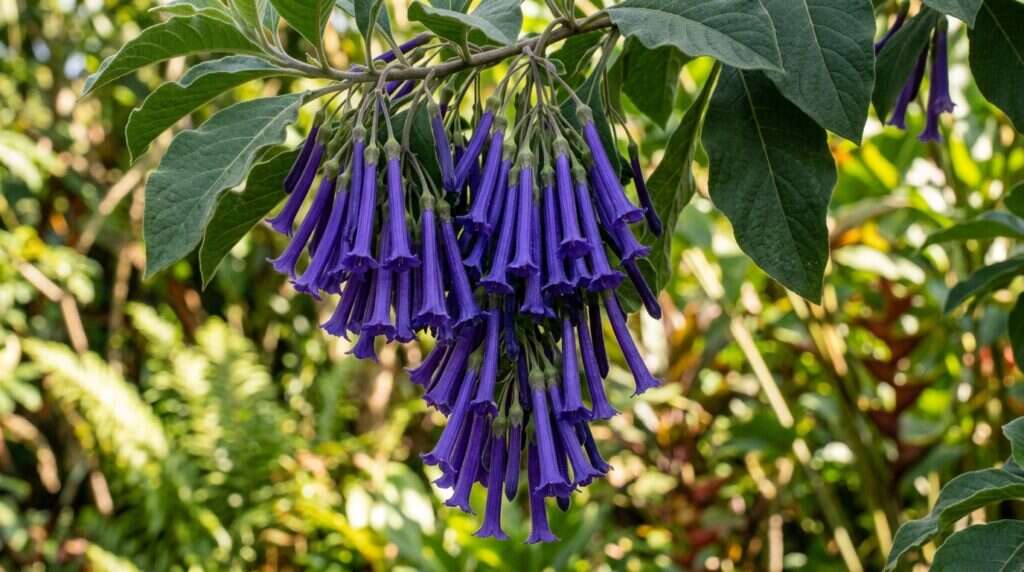
15. Iochroma
Why it stands out
Iochroma is a tender shrub with hanging tubular flowers in blue-violet, purple, red, or orange. The bloom shape makes it a natural conversation piece, especially in a sheltered patio display. It has more of a small-shrub presence than the soft mound of an annual.
Practical growing notes
- Best position: Keep it in a container unless your climate is reliably mild. This lets you control drainage and move it before cold weather damages the roots or stems.
- Best use: Place it where the hanging flowers are visible at eye level, such as beside a step, bench, or patio wall. Do not buy it for an unsheltered winter border.
16. Ismene
Why it stands out
Ismene, also called Peruvian daffodil or spider lily, has elegant white flowers with long narrow segments around a central cup. The blooms look airy and dramatic, like a daffodil stretched into a spider shape. It is one of the most unusual bulbs on this list.
Practical growing notes
- Best position: The Peruvian daffodil may appear on tags as Ismene or Hymenocallis. Use a warm, sunny container if winter cold is a problem, then protect or lift the bulb after the season.
- Best use: Use one or three bulbs in a large pot for a refined summer focal point. The flower shape is detailed enough that it does not need a busy planting around it.

17. Itea
Why it stands out
Itea, better known as Virginia sweetspire, is a flowering shrub rather than a classic cut flower. It makes drooping pale flower sprays, then carries useful foliage into the rest of the season. That longer display makes it a smart choice for a garden that needs both structure and flowers.
Practical growing notes
- Best position: Virginia sweetspire works well in a moist border, rain-garden edge, or naturalized planting. It is more flexible than many flowering shrubs, but it still looks best when it has adequate moisture and light.
- Best use: Let it form a low flowering mass under taller trees or at the back of a moist border. Prune after flowering so you do not remove next year’s bloom wood.

18. Italian aster
Why it stands out
Italian aster, Aster amellus, gives you late-season daisy flowers in violet, blue, purple, or soft pink. It brings a cottage-garden feeling without the massive height of ironweed. The flower is a useful bridge between warm summer colors and cooler autumn shades.
Practical growing notes
- Best position: Give Italian aster a sunny site with reasonably well-drained soil. A dark, permanently damp corner will not show its best flower display.
- Best use: Plant it mid-border with ornamental grasses or other late flowers. Check the tag for the mature height, because different asters are not interchangeable.

19. Indian shot
Why it stands out
Indian shot is a common name for Canna indica, a bold warm-season plant with big leaves and red, orange, yellow, or mixed flowers. The name comes from its hard, round seeds, but gardeners choose it for the tropical foliage and confident flower color. It gives an I-themed planting a different texture from delicate bulbs and daisies.
Practical growing notes
- Best position: Use a warm, sunny location with enough room for large leaves and upright stems. It can also make an excellent container feature when the pot is big enough.
- Best use: Put it at the back of a border or as a centerpiece in a large patio pot. In cold climates, treat it as seasonal or protect the rhizomes before winter.

20. Indian mallow
Why it stands out
Indian mallow usually refers to Abutilon indicum, a woody flowering plant with soft yellow, bell-shaped blooms. It is a gentler, more lantern-like flower than the bold cluster of ixora or the large flower of a canna. It is not normally the easy hardy perennial people imagine from its soft appearance.
Practical growing notes
- Best position: Think of Indian mallow as a warm-climate or protected-container choice. Check the exact species on the label because “mallow” is a broad common-name group.
- Best use: Place it in a sheltered, sunny spot where the flowers can be seen up close. The plant is better suited to a deliberate specimen role than a crowded annual bed.

21. Indigofera
Why it stands out
Indigofera is a genus of flowering shrubs and small woody plants in the pea family. Many kinds make loose sprays of small pink, purple, or rose pea-like blooms, which gives the garden a lighter, more airy texture. It is a good I name for someone who wants a flowering shrub rather than another compact perennial.
Practical growing notes
- Best position: Choose the exact species for your winter conditions and give it room to form its natural loose shape. Do not assume every plant called indigo is grown for dye or has the same hardiness.
- Best use: Use it as a soft back-of-border shrub or a flowering transition between formal flowers and a more relaxed planting. The botanical name is especially important when shopping.

22. Inula
Why it stands out
Inula is a daisy-family group often recognized by yellow flowers with narrow, shaggy-looking petals. The flower form adds a lively, sunny look to a mixed border and is a useful contrast to rounder, more formal daisies. It feels a little wild without looking neglected.
Practical growing notes
- Best position: Give Inula a sunny border with enough space to show its natural form. Read the label for the exact species, as height and moisture preferences vary across the genus.
- Best use: Pair the yellow flowers with blue or purple neighbors such as Italian aster or iris. The color contrast helps the shaggy flower shape stand out.

23. Isotoma
Why it stands out
Isotoma, sometimes sold under the related name Laurentia, has small star-shaped blooms in blue, violet, white, or pink. It gives a soft, spreading effect around the edge of a container or path. The plant is delicate-looking, but it can be an excellent visual filler when you choose the right moisture level.
Practical growing notes
- Best position: Give it a container or border edge with regular moisture. It is not a substitute for ice plant in a hot, dry gravel bed.
- Best use: Use it to soften taller plants in a pot or to create a low flowering line along a path. Check the tag because different species and selections are sold for different garden roles.

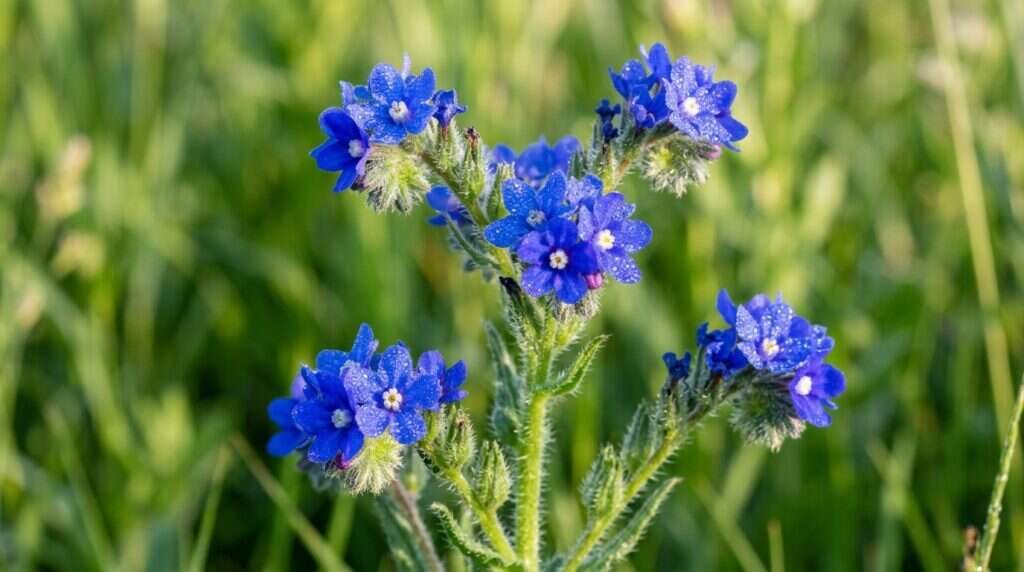
24. Italian bugloss
Why it stands out
Italian bugloss, Anchusa azurea, is prized for vivid blue flowers on relaxed, upright stems. It gives a sunny border a cottage-garden feel and pairs beautifully with yellow, white, peach, or soft pink flowers. The clear blue is the reason to grow it.
Practical growing notes
- Best position: Give Italian bugloss a sunny, open place with room around the stems. It does not look its best squeezed into a tiny polished container.
- Best use: Plant it in the middle or back of a mixed border. It can be the blue note that keeps a warm red-and-yellow flower scheme from feeling too heavy.
25. Iris reticulata
Why it stands out
Iris reticulata is a compact bulb iris that flowers very early, before most larger perennials are awake. Its blooms are often blue, violet, yellow, or patterned, and the whole plant stays much smaller than a bearded iris. It gives you the appeal of iris in a rock garden, path edge, or small patio pot.
Practical growing notes
- Best position: Plant several bulbs in sun or light shade where the flowers will be visible in early spring. The plant needs good drainage and should not sit in soggy winter soil.
- Best use: Treat it as an early accent rather than a full-season filler. Pair it with later-emerging perennials so the same area still looks planned once the bulb foliage has faded.

Plan I flowers for three seasons instead of one short show
An alphabet garden becomes much more satisfying when the flowers take turns rather than all blooming in the same month. The easiest way to plan is to use one early-bulb or cool-season flower, one main-season plant, and one late-season perennial or shrub. This gives you a longer display without forcing every plant into the same conditions.
For early spring, use Ipheion or Iris reticulata, then bring in Iceland poppies where the weather stays cool. Late spring to early summer belongs to bearded iris, Iberis, Indian pink, and Itea. Summer is when impatiens, ice plant, Incarvillea, Ixia, Ismene, and ixora can take over, while ironweed and Italian aster carry the color into late summer and fall.
Here are three practical combinations:
- Sunny, sharply drained border: Pair bearded iris with ice plant and Iberis. The taller iris gives you vertical form, while the other two soften the front edge and like the same basic promise of sun and drainage.
- Bright woodland edge: Pair Indian pink with Itea, then add a non-I foliage plant, such as a fern or hosta, for texture. This combination works because the plants are chosen for filtered light and steadier soil moisture, not just because their names match.
- Warm patio collection: Use a large Ismene or ixora pot as the main feature, with impatiens in a nearby shaded pot. Keep the pots separate if their water needs differ, because a pretty grouping does not have to share one container.

How to shop for I flowers without buying the wrong plant
The label is part of the plant purchase. Look for the botanical name, whether the plant is annual, perennial, bulb, corm, rhizome, vine, or shrub, and a mature height that fits the space. This is especially important for names such as ice plant, Indian pink, Ismene, and Itea, because the common name alone can be incomplete or used differently by different sellers.
If you are buying a perennial or shrub, examine the roots before you fall in love with the flowers. A healthy plant should have a root system that is not mushy, blackened, or wound tightly in a dense spiral. A small plant with healthy roots is usually a better purchase than an oversized plant that has been sitting in a tiny pot too long.
Here is the buying checklist I recommend:
- Match the tag to your site first. Full-sun, dry-soil plants such as ice plant should not be bought for a shade border simply because they look good in the nursery.
- Buy bulbs and corms from a source that names the exact plant. This is especially helpful for Ixia, Ipheion, and Ismene, where planting times and winter treatment can vary.
- Ask for a cultivated source when buying natives. Indian pink and Indian paintbrush should not be taken from wild populations, and a good native-plant nursery can tell you where the stock was propagated.
- Choose a mature size, not a pot size. Ironweed and Indian shot may look modest in a small nursery pot but can become the biggest visual feature in a narrow bed.

Pet safety and responsible planting
Do not assume that a beautiful flower is safe just because it grows outdoors. Iris is one important example: the iris safety record lists iris species as toxic to dogs, cats, and horses, with the highest concentration in the rhizomes. Keep pets from chewing bulbs, roots, leaves, and discarded plant material, and call a veterinarian or poison service promptly if ingestion is suspected.
Iceland poppy is also poisonous if ingested, and some I flowers are tender tropicals that will be damaged by cold long before they become a safety issue. Treat every unfamiliar plant as something to properly identify before bringing it into a child- or pet-accessible area. If pet safety is a deciding factor, check the exact species instead of relying on a general web list.
There is also an ecological side to responsible planting. A plant can be lovely in a container but unsuitable near natural areas if it spreads aggressively in your region. Ipomoea is the clearest example in this list: some morning-glory relatives are welcome garden vines, while others can self-seed beyond the space you intended. Check local extension or native-plant guidance before introducing a vigorous plant near woods, waterways, or open land.

Common mistakes that make I flowers disappoint
The biggest mistake is grouping by flower name rather than growing condition. It looks tempting to plant iris, impatiens, ice plant, and Indian pink in one neat bed, but those plants do not all want the same amount of sun or moisture. A more beautiful garden comes from matching conditions first, then using the alphabet theme as the finishing touch.
These errors are also easy to avoid:
- Planting ice plant in heavy soil: Its succulent roots need drainage, so it can rot or decline in a wet clay pocket. A raised bed, gravelly mix, or container often solves the problem more effectively than extra fertilizer.
- Treating all iris as identical: Bearded iris, water iris, and bulb iris have different sizes and moisture preferences. Start with the exact iris type on the tag before deciding on a planting position.
- Expecting Iceland poppy to love peak heat: It is a cool-climate plant and may be short-lived or seasonal in warmer conditions. Plant it for its best season rather than seeing summer decline as a personal gardening failure.
- Putting ironweed in a small front border: It may look harmless at purchase size but needs room and can dominate a small bed. Use it at the back, or choose a more compact plant for the front.
- Ignoring the botanical name on specialist bulbs: Ismene, Ixia, Ipheion, and Incarvillea are not interchangeable. The botanical name tells you what you actually have and helps you find reliable care instructions.
Expert tips: my practical recommendations for I flowers
If I were choosing only three flowers for a beginner garden, I would choose by site. For a sunny bed with decent drainage, I would start with iris and add a small patch of ice plant at the front. You get a spring focal point, a lower flowering edge, and a combination that is much easier than trying to grow ten different uncommon plants at once.
For shade, I would begin with impatiens for instant seasonal color and add Indian pink only if the bed has richer soil, consistent moisture, and room for a native perennial to settle in. For a damp or naturalistic back border, I would choose ironweed or Itea, depending on whether the space needs a tall flower or a flowering shrub.
The pros and tradeoffs are simple:
- Iris: It is widely available, long-lived, and visually strong. The trade-off is that you need to choose the correct iris type and provide it with suitable soil and sun exposure.
- Impatiens: It gives fast, forgiving color in shade and containers. The tradeoff is that it is usually seasonal in cold climates, so it does not replace a permanent shrub or perennial structure.
- Ice plant: It is bright, drought-tolerant, and great for sunny edges. The tradeoff is that bad drainage can ruin the plant more quickly than many beginner gardeners expect.
- Indian pink: It has a unique native look and fits bright shade beautifully. The trade-off is that it is less likely to be stocked at a basic big-box garden center, so you may need to visit a native plant nursery.
- Ironweed: It provides a large late-season display and offers pollinators a strong visual landing zone. The tradeoff is height, because it needs to be planned as a backdrop rather than used as a small filler.

Frequently asked questions
What are common flowers that start with i?
Common flowers that start with i include iris, impatiens, ice plant, Iceland poppy, Indian blanket, Indian pink, ironweed, and ixora. Iris and impatiens are the easiest names to find in ordinary garden centers, while Indian pink and ironweed are often found through native-plant sources. If you only need a short list, start with those names rather than hunting for rare botanical genera.
Which flowers that start with the letter i are easiest for beginners?
For a sunny bed, iris and ice plant are beginner-friendly when their soil needs are met. For shade, impatiens is usually the simplest choice because it is sold ready to plant and fills in quickly. The key is not choosing the objectively “easiest” flower, but choosing the one that already matches the sunlight and moisture in your garden.
Which spring flowers that start with i should I plant?
Iris, Iceland poppy, Ipheion, Iberis, and iris reticulata are strong spring options. Ipheion and iris reticulata are especially useful for an early display because they grow from bulbs and stay compact. Iceland poppy is best where spring stays cool enough for the plant to look its best.
What types of flowers that start with i work in shade?
Impatiens is the most dependable shade answer for seasonal color. Indian pink is an excellent partly shaded native choice, while Itea is a flowering shrub that can work in moist soil where a little more space is available. Avoid using ice plant as a shade solution, as it thrives and flowers best in full sun and well-drained soil.
Can I grow flowers that start with i in containers?
Yes. Impatiens, ice plant, Ixia, Ismene, ixora, Iochroma, and Ipomoea can all work in containers when their light and watering needs are met. The potting mix and drainage holes matter as much as the container style, especially for ice plant and bulbs. Put a trailing or climbing plant in its own pot when it could compete too strongly with a smaller flowering plant.
Final thoughts
The best flowers that start with i are not the longest list. They are the plants that fit your garden and give you something useful or beautiful in return: a spring flower, a shade solution, a pollinator magnet, a low groundcover, or a flowering shrub with a longer season of interest.
Start with one clear site, choose two or three compatible plants, and then build your alphabet garden from there. When you are ready to extend the idea, browse flowers that start with A for more alphabet-garden combinations, compare the mood of dark flower ideas for richer color schemes, or continue through flowers that start with H for another practical letter list.