


Key Takeaways: How To Plan A Low-Maintenance Outdoor Living Space That Works Year-Round
- Design outdoor spaces around everyday needs and activities.
- Assess sunlight, drainage, and site conditions before building.
- Choose durable materials and plants suited to the local climate.
- Plan practical zones, shade, lighting, and accessible storage.
- Prioritize drainage and simple layouts to reduce maintenance.
- Budget wisely and plan for regular seasonal care.
A successful outdoor living area should make daily life easier, not create another long weekend chore list. Thoughtful residential landscape design begins with how you actually use the yard, then matches features, materials, and plants to the site instead of relying on a one-size-fits-all look.
Low-maintenance does not mean maintenance-free. It means choosing a practical layout, durable surfaces, manageable plantings, and drainage solutions that reduce unnecessary work while keeping the space comfortable through changing seasons.
Define The Purpose Of The Space
Start with a short list of activities the space needs to support each week. You may want a place for family dinners, a quiet morning coffee, grilling, gardening, play, or occasional gatherings. Separate essential uses from features that are used only once or twice a year. A smaller patio with comfortable seating and clear circulation often serves a household better than a larger area crowded with underused additions.
Study The Yard Before Choosing Features
Watch the property at different times of day before finalizing a plan. Note sun and shade, slopes, low areas, prevailing wind, existing trees, utility locations, views, privacy concerns, and access from the house. Also observe the yard after rain. This early review helps prevent placing seating in a hot afternoon spot, installing plants in unsuitable light, or building a finished surface where water naturally collects.
Create Simple Outdoor Zones
Organize the yard into a few distinct areas rather than treating every corner as a separate project. Put a dining zone near the kitchen or main door when possible. Give a lounge zone shade and a small table. Keep cooking equipment close enough for convenience, but leave safe, comfortable circulation around it.
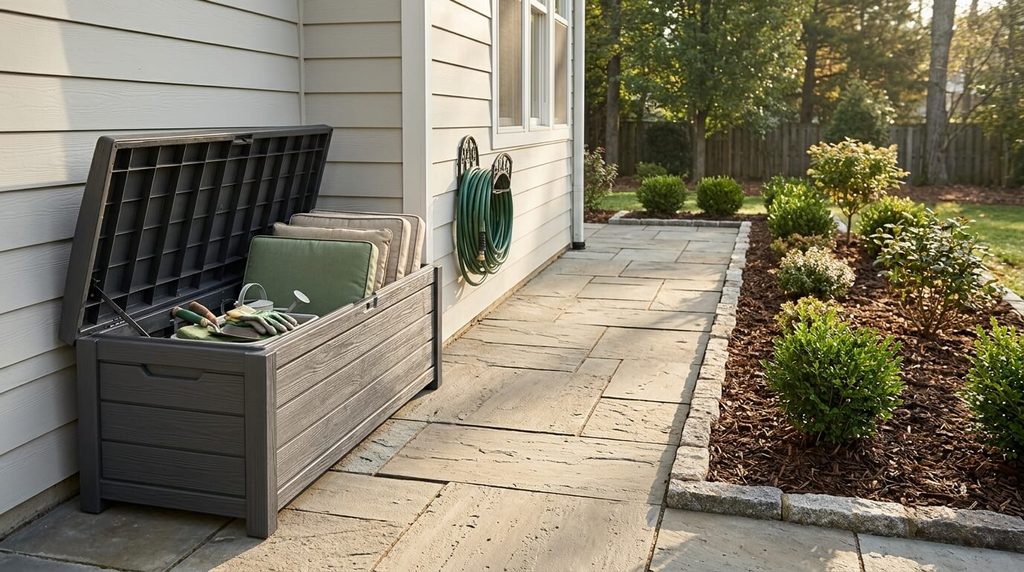
Reserve a service zone for bins, tools, hoses, and maintenance access. In a compact yard, one well-proportioned patio can support both dining and lounging. A planting bed along one edge can provide privacy and soften the space without reducing the main usable area.
Choose Materials That Fit The Climate
Every surface involves trade-offs. Natural stone, brick, concrete, porcelain, wood, and composite products differ in cost, appearance, traction, heat retention, and upkeep. Consider how a material handles local moisture, winter freezing, shade, intense sun, and foot traffic. Ask whether it needs periodic sealing, staining, joint repair, or replacement. Simple shapes and accessible edges also make sweeping, snow removal, and future repairs easier.
Plan For Drainage And Water Use
Plan drainage before installing patios, planting beds, walls, and structures. Track where roof runoff and surface water go, then direct water away from the home and walking areas. Depending on the site, grading, downspout extensions, swales, permeable paving, or planted collection areas may help.
The EPA notes that rain gardens and permeable pavements can help slow, detain, or filter stormwater when they are appropriate for local soil and site conditions. Group plants with similar watering needs, and keep drains, irrigation valves, and collection areas accessible for inspection. A landscape professional or local drainage specialist can help when water regularly moves toward the foundation or remains standing after storms.
Select Plants For Real Site Conditions
Choose plants based on the conditions they will experience, including sunlight, soil, moisture, winter exposure, and mature size. Native or well-adapted plants can be sensible choices when they fit the site, but they still need establishment care and occasional maintenance. Avoid packing beds too tightly.
Leave enough room for shrubs and perennials to reach their mature width without constant pruning or overcrowding. Use layers of trees, shrubs, perennials, and ground covers to create structure. Keep mulch away from trunks and stems, and select plants that are easy to reach for weeding, trimming, and seasonal cleanup.
Add Shade, Lighting, And Storage
Comfort features often determine whether people use an outdoor area regularly. Shade can come from existing trees, umbrellas, covered structures, or open pergolas. Place lighting at entries, steps, paths, dining areas, and elevation changes. Include protected storage for cushions, toys, grilling supplies, and garden tools so they don’t become visual clutter or require repeated trips indoors.
Build In Easy Maintenance
The layout itself can reduce routine work. Avoid narrow gaps where leaves collect, overly complex edges that are hard to trim, and planting beds you can’t reach without stepping on soil. Keep controls, valves, drains, and outdoor outlets visible or easy to access.
Simple Seasonal Checklist
Spring
Inspect surfaces, drains, irrigation components, railings, and planting beds.
Summer
Monitor watering needs, clean spills promptly, and check plants for heat stress.
Fall
Remove leaves from paths, drains, furniture, and paved joints.
Winter
Check lighting, gates, steps, and locations where ice may form.
For help organizing seasonal debris removal and keeping outdoor surfaces tidy, follow this guide on how to efficiently clean up a yard as part of your ongoing care routine.
Set A Budget And Consider Phasing
Budget for the work beneath the finished surface, not only the visible features. Demolition, grading, drainage, access, permits, utilities, and site preparation can all affect the total cost. When needed, phase the project without losing the overall plan. Completing drainage and the main patio first creates a functional foundation, while you can add shade, lighting, planting, and storage later.
Avoid Common Planning Mistakes
• Choosing materials only for color or current style.
• Ignoring water movement until construction is complete.
• Planting without checking mature height and width.
• Adding too many features to a limited space.
• Leaving out storage, utility access, and maintenance paths.
• Using the same irrigation schedule for plants with different needs.
• Expecting a low-maintenance design to require no seasonal care.
Final Takeaway
The best outdoor living space is not the one with the most features, but the one that fits your daily routines, property conditions, available time, and long-term goals. A well-designed backyard should balance comfort, functionality, visual appeal, and practical maintenance without becoming unnecessarily complicated or expensive to manage. By considering how the space will be used, choosing durable materials, planning for weather conditions, and incorporating suitable plants, lighting, and drainage, homeowners can create an outdoor environment that serves multiple purposes year-round.
Thoughtful decisions made early in the planning process can also help prevent costly adjustments and reduce ongoing upkeep. Whether the goal is a peaceful place to unwind, a comfortable area for family meals, or a welcoming setting for entertaining guests, careful planning creates an outdoor space that remains practical, inviting, adaptable, and easier to care for as needs and seasons change.
Common Questions
What Is The First Step In Planning An Outdoor Living Space?
Start by identifying the activities the space must support. Those priorities guide choices for size, layout, furniture, shade, storage, and surfaces.
What Makes An Outdoor Space Low-Maintenance?
Durable materials, suitable plants, simple circulation, effective drainage, accessible service areas, and a realistic seasonal care routine all reduce unnecessary upkeep.
Should Drainage Be Planned Before Landscaping?
Yes. Review water movement before installing finished surfaces, steps, planting beds, or structures.