


Key Takeaways: A Chester County, PA Homeowner’s Roof Damage Checklist
- Wait until the storm threat has ended before checking the property.
- Inspect the roof from the ground whenever possible.
- Look for damaged shingles, flashing, gutters, vents, and signs of water intrusion inside.
- Never walk on a wet, steep, or visibly damaged roof.
- Photograph damage and save receipts before cleanup or permanent repairs begin.
- Use safe temporary measures to limit water damage.
- Review your insurance details early and carefully compare written repair estimates.
From fast-moving summer thunderstorms to wind-driven rain, Chester County homeowners can face roof problems that are easy to overlook at first. This practical checklist explains how to assess the situation safely, protect the home from further moisture damage, and make informed repair decisions after severe weather.
If rain is entering the home, shingles have blown loose, or a branch has struck the roof, emergency roof repair experts can help homeowners arrange a safe professional assessment without climbing onto a wet or compromised roof.
Why Roof Checks Matter After Severe Weather
High winds can lift shingles and loosen flashing, while hail, falling branches, and windblown debris can damage roofing materials, vents, skylights, and gutters. Heavy rain can then seep through even a small opening around a damaged roof component.
Some issues are not visible from the street. A roof may look generally intact while a pipe boot, chimney flashing detail, vent seal, or section of underlayment has been affected. Once water enters, it can travel along the roof decking, rafters, or framing before becoming visible as a ceiling stain elsewhere in the house.
Step One: Make Sure the Area Is Safe
Do not begin an inspection until the storm has passed and local alerts indicate it is safe to go outside. The National Weather Service advises residents to continue monitoring conditions after a storm because additional severe weather may still be approaching.
- Stay clear of downed power lines, standing water, broken glass, and unstable trees.
- Do not enter a visibly damaged building or an area with sagging ceilings.
- Leave the home and call emergency services if you notice a gas odor, sparking wires, or signs that the structure is shifting.
- Wear sturdy shoes, gloves, long pants, and eye protection for a ground-level check.
Before walking around the property, follow guidance for assessing damage after the severe weather threat has ended, especially when fallen limbs or utility hazards are nearby.
Step Two: Inspect the Property From the Ground
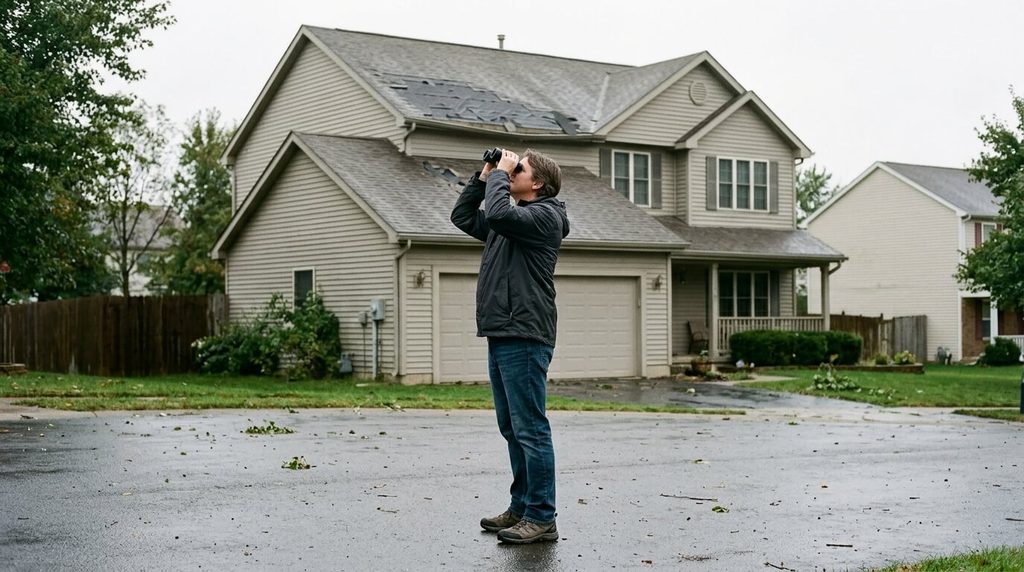
A ground-level inspection is usually the safest place to start. Use binoculars or a phone camera with zoom to look at roof slopes, edges, and penetrations without putting yourself at risk.
What to Look For Outside
- Missing, lifted, curled, cracked, or visibly torn shingles.
- Exposed underlayment, loose metal, punctures, or displaced ridge materials.
- Damaged chimney caps, roof vents, skylights, and plumbing pipe boots.
- Detached gutters, downspouts, fascia boards, or soffit panels.
- Branches or debris resting on the roof.
- Fresh shingle granules collected near gutters or downspout exits.
Do not climb a ladder to get a closer look at a questionable area. Storm damage can make roof surfaces and gutters unstable, and wet roofing materials can be especially slippery.
Step Three: Check for Indoor Warning Signs
After checking from outside, inspect the attic and upper-level rooms if it is safe to do so. Interior evidence may reveal a problem that is hard to see from the yard.
- Look for brown, yellow, or gray marks on ceilings or walls.
- Look for fresh drips, damp insulation, or darkened roof decking in the attic.
- Look for bubbling paint, peeling finishes, warped trim, or soft drywall.
- Musty odors in upper rooms, closets, or attic spaces.
- Water near light fixtures, outlets, or electrical equipment.
Keep away from wet electrical fixtures. If water is near wiring or a light fixture, use caution and seek qualified help rather than touching the equipment or attempting a repair.
Step Four: Limit Further Water Damage
1. Place buckets beneath active drips and, where appropriate, protect the flooring with towels or plastic sheeting.
2. Move furniture, electronics, rugs, and valuables away from the affected area.
3. Turn off power to the affected area only if the electrical panel can be reached safely.
4. Use fans or a dehumidifier only when electricity and standing water are not a concern.
5. Arrange for professional temporary protection if rain is entering through the roof.
A tarp can reduce additional water entry, but installing one often requires working at height on a damaged surface. Homeowners should not risk a fall to perform an emergency roof repair.
Step Five: Document the Damage
Take photos and notes before debris is removed or permanent repairs begin. Photograph each affected side of the home, close-ups of visible roof and gutter damage, indoor stains, wet materials, and damaged belongings. Record the storm date, save receipts for emergency expenses, and keep copies of estimates, inspection reports, emails, and claim-related documents.
For a broader example of how to organize photos, receipts, and repair records, see this Seattle-based property damage recovery checklist alongside your local guidance.
Step Six: Review Insurance Details
Contact the insurance company promptly to ask about coverage, deductibles, deadlines, temporary repairs, and documentation requirements. Coverage depends on the policy and the cause of the damage, so don’t assume the insurer will cover every repair. The Insurance Information Institute recommends making reasonable temporary repairs, keeping receipts, documenting losses, and obtaining detailed written bids before starting extensive permanent work.
When reviewing the steps for settling an insurance claim after a disaster, remember to preserve photographs, damaged materials, and contractor paperwork to make it easier to explain what happened.
Step Seven: Know When to Call for Professional Help
Arrange a professional inspection promptly when there is active water entry, missing roofing materials, a sagging roofline, a tree impact, wet attic insulation, or uncertainty about the leak source. Professional help is also appropriate whenever the roof is high, steep, wet, or unsafe to inspect.
How to Compare Roof Repair Estimates
- Request a written scope that identifies the damaged areas and proposed work.
- Confirm whether materials, labor, disposal, permits, and temporary protection are included.
- Ask what requires immediate repair and what can be monitored.
- Verify licensing, insurance, references, and local business information.
- Compare warranties and materials, not just the lowest price.
- Watch for pressure tactics, vague contracts, and unusually large upfront payments.
Common Mistakes to Avoid After a Storm
- Climbing onto the roof without training and proper safety equipment.
- Assuming there is no damage because shingles are still in place.
- Waiting for a small ceiling stain to become a larger leak.
- Throwing away damaged materials before taking photographs.
- Signing a contract without reviewing its full scope and payment terms.
- Hiring the first person who shows up after a storm.
Preventive Steps for the Rest
Schedule a routine roof check before the next severe-weather season, keep gutters and downspouts clear, trim weak limbs near the house, and address loose flashing before it allows water inside. Maintaining attic airflow, securing outdoor items that could become airborne, and keeping a folder of insurance information, repair records, and roof photos can also make future storm response less stressful.
Conclusion
Storm damage doesn’t always show up as a dramatic hole in the roof. A careful ground-level inspection, early documentation, safe moisture control, and timely professional guidance can help Chester County homeowners address small problems before they become larger repairs.