


How to Efficiently Clean Up Any Yard: Essential Planning and Tools for Rapid Yard Debris Removal
We all dream of a pristine outdoor space, a personal oasis where we can relax and entertain. But often, especially after the challenges of winter or the busy growth of summer, our yards can become a daunting mess. Fallen leaves, overgrown shrubs, and scattered debris can quickly turn a potential paradise into an overwhelming project.
A clean, well-maintained yard offers more than just curb appeal. It protects your property from pests, encourages healthy plant growth, and creates a safer, more enjoyable environment for everyone. Think of it as an extension of your home – a place that deserves just as much care and attention.
In this comprehensive guide, we’ll show you how to tackle any yard cleanup efficiently, transforming it from chaos into a masterpiece. We’ll cover essential spring and fall tasks, the right tools for the job, and smart ways to manage yard waste. We’ll also cover how to maintain healthy lawns, revitalize hard surfaces, and adopt eco-friendly practices. Whether you’re a seasoned gardener or new to yard work, we’ll equip you with the knowledge and actionable steps to achieve a beautiful outdoor space. For those seeking professional help with their outdoor transformations, comprehensive services specializing in Lawnscapes cleaning up yards can provide expert assistance.
Before we even pick up a rake, a strategic approach to yard cleanup can save us significant time and effort. The goal is to clear debris quickly and safely, and this starts with smart planning and the right equipment. We’ll focus on efficient workflows, the right tools, and safety.
Zoning the Property and Setting Up Staging Areas
An overwhelming yard often feels that way because we try to tackle it all at once. Instead, we recommend dividing your property into manageable zones – perhaps the front yard, backyard, a specific garden bed, or a fence line. Focus on completing one zone before moving to the next. This segmented approach helps maintain momentum and prevents feeling swamped.
Before starting any heavy lifting, perform a thorough walkthrough of each zone. This initial inspection helps identify potential hazards like sharp debris (glass, nails), areas of standing water, or signs of pests (wasps, rodents). It also allows us to categorize the debris:
- Biodegradable yard waste: Leaves, grass clippings, small branches, garden trimmings.
- Bulky outdoor junk: Old furniture, broken planters, construction debris, large branches.
- Recyclables: Metal, plastic, certain wood items.
- Donations: Usable items you no longer need.
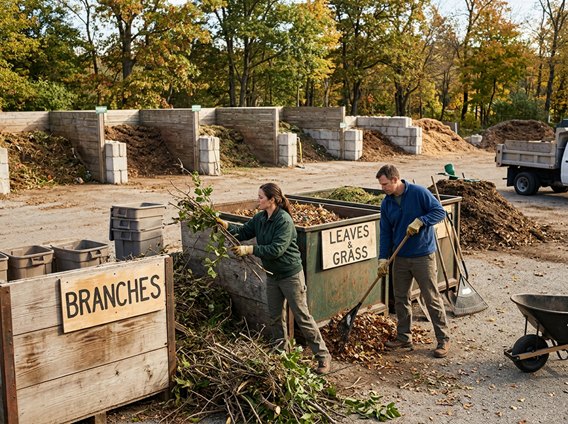
Establishing designated “staging areas” is crucial. These are central locations, perhaps near your driveway or a gate, where you can sort and temporarily store different types of waste. For instance, one pile for compostable materials, another for large branches destined for chipping, and a third for general trash or bulky items awaiting pickup. This pre-sorting prevents duplicate effort and streamlines disposal later. It also helps avoid the common mistake of “micro-dumping,” where small items accumulate in hidden corners over time.
Gathering Safety Gear and High-Efficiency Clearing Tools
Safety should always be our top priority during yard cleanup. Essential personal protective equipment includes:
- Cut-resistant gloves: To protect hands from thorns, sharp edges, and splinters.
- Eye protection: Safety glasses or goggles are vital when working with power tools, clearing brush, or handling dusty materials.
- Sturdy footwear: Closed-toe shoes with good traction protect feet from falling objects and sharp ground debris.
- Dust mask: Especially important when dealing with dry leaves, old mulch, or soil, as dormant mold spores can become airborne and pose a respiratory hazard even without visible mold.
For tools, efficiency is key. For clearing debris, landscape rakes are excellent for leaves and lighter materials, while a sturdy garden rake can handle heavier debris. Leaf blowers, whether electric or gas-powered, can quickly consolidate large areas of leaves, though battery-powered models might offer 15 to 30 minutes of full-throttle runtime on a 5 amp-hour pack, so you may need strategic charging or multiple batteries for larger yards. For wet or stubborn gutter debris, a wet-vac can be surprisingly effective.
For larger items like rocks or heavy branches, a pry bar can provide leverage, especially when paired with a block of wood to protect turf. Wheelbarrows or garden carts are indispensable for hauling, but for truly massive loads of leaves or branches, a heavy-duty drag tarp can reduce dozens of trips to just a few, saving your back and time. For hidden hazards, a magnetic sweeper can quickly pick up nails, screws, and other small metallic debris from the lawn, preventing punctures to tires or feet. Keep all cutting tools, like pruning shears and loppers, sharp to ensure clean cuts that heal quickly on plants.
Comprehensive Seasonal Frameworks: Spring and Fall Yard Cleanups
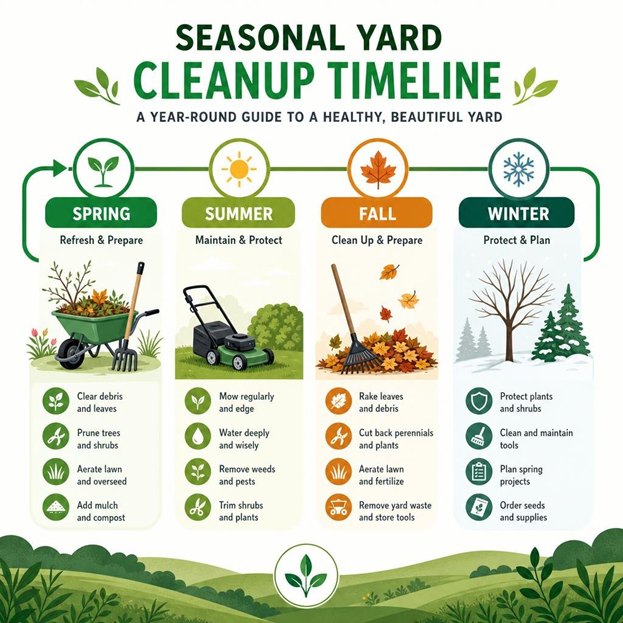
Effective yard maintenance is a year-round commitment, but spring and fall cleanups are pivotal for setting the stage for healthy growth and preparing for dormancy. These seasonal efforts follow the natural cycles of cool-season grasses and local wildlife.
Spring Revival and the 50-Degree Pollinator Rule
As the snow melts and temperatures rise, the urge to get outside and clear away winter’s remnants is strong. However, rushing into spring cleanup too early can inadvertently harm beneficial insects and pollinators that overwinter in leaf litter and hollow plant stems. We advocate for a “50-degree pollinator rule”: delay significant spring cleanup until daily temperatures consistently remain above 50°F for several days. In many regions, particularly New England, this often means waiting until late April or early May.
This delay allows overwintering insects, such as native bees and butterflies, to safely emerge from their protective cover in dead leaves and plant stalks. When we do begin, we focus on clearing away dead organic litter that can smother new growth and trap excess moisture, which can lead to fungal issues. Rake gently, especially in areas where beneficial insects may still be present.
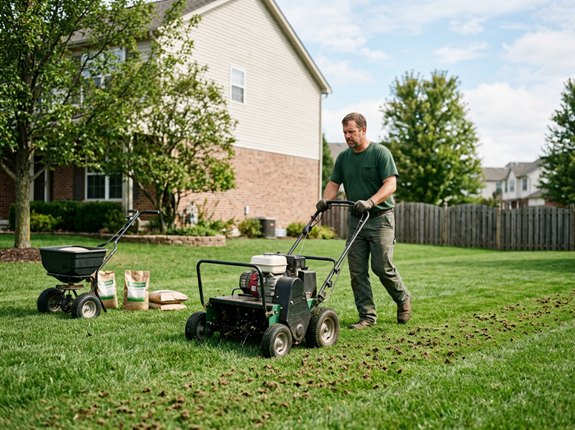
Spring is also the ideal time to address soil compaction through aeration. Lawn aeration breaks up compacted soil, creating channels that allow oxygen, water, and nutrients to reach grass roots more effectively. This is particularly beneficial for cool-season grasses like Kentucky bluegrass, perennial ryegrass, and fescue, which are beginning their active growth period.
Consider participating in “No Mow May” if your local climate and community allow. This practice involves refraining from mowing your lawn all month of May, providing critical early-season forage for emerging pollinators and promoting biodiversity. When you do mow, remember to leave grass clippings on the lawn as a natural fertilizer, returning valuable nutrients to the soil.
Fall Leaf Management and Turf Winterization
Autumn cleanup is arguably the most critical for the long-term health of your lawn and garden, especially for cool-season grasses. The primary task is managing fallen leaves. While a light scattering of shredded leaves can be beneficial, heavy leaf mats are detrimental. They block essential sunlight, trap moisture against the turf, suffocate grass crowns, and create ideal conditions for fungal diseases like gray snow mold under winter snow.
The easiest time to clear leaves is right after they fall, while they are dry and light. They become heavy, moldy, and slippery once wet. We recommend tackling leaf removal in chunks rather than waiting for one massive cleanup at the end of the season.
| Method | Small Yard (Under 1/4 Acre) | Medium Yard (1/4–1/2 Acre) | Large Yard (Over 1/2 Acre) |
| Raking | Excellent | Good (can be tiring) | Time-consuming, laborious |
| Leaf Blower | Good | Excellent | Good (requires powerful unit) |
| Mulching Mower | Excellent | Excellent | Good (multiple passes needed) |
| Leaf Vacuum | Good | Good | Fair (slows down for large volume) |
| Drag Tarp | Good (for collected piles) | Excellent | Excellent |
Mulching mowers are highly efficient for light to moderate leaf coverage. They shred leaves into dime-sized fragments that can be left on the lawn, breaking down to return nutrients to the soil. For heavier accumulations, mowing with a bag attachment is effective. For large piles, rake leaves into rows and haul them with a large drag tarp to cut effort.
Fall is also the prime time for cool-season grass care. Overseeding existing turf in early autumn, when temperatures are moderate and moisture is often abundant, allows new grass to establish strong root networks before winter. “This is also the best time to apply a slow-release fertilizer, which provides sustained nutrition for root development over the colder months. Before applying fertilizer, learn how to dose fertilizer for plants correctly so you don’t overapply nutrients.”
Finally, clear gutters, downspouts, and outdoor drains of leaves and debris. Clogged gutters can lead to ice dams in winter and water damage to your home’s foundation. Lowering your mower carriage height for the final cuts of the season encourages grass to direct energy toward deeper root development rather than upward blade growth, helping it withstand winter stress.
The Complete Guide to Lawnscapes Cleaning Up Yards Across All Seasons
Achieving a truly pristine and healthy outdoor space often requires a holistic approach that goes beyond basic debris removal. This section delves into more specialized tasks, focusing on turf repair, soil health, and long-term maintenance strategies that can transform your lawn into a vibrant green carpet. Whether you’re a DIY enthusiast or seeking professional assistance, understanding these steps is crucial for optimal results. For those who prefer expert care, comprehensive services specializing in Lawnscapes cleaning up yards can provide tailored solutions for all your seasonal needs, ensuring your property remains immaculate year-round.
Restoring Damaged Turf: Lawnscapes Cleaning Up Yards for Spring Growth
Bare patches in the lawn are common, often resulting from heavy foot traffic, pet urine, fungal diseases, or winter damage. Addressing these spots promptly in spring is vital for maintaining a uniform, healthy lawn.
First, clear the bare area of any dead grass, debris, or weeds. Loosen the top inch or two of soil with a rake to create a good seedbed. Fill the patch with high-grade topsoil, ensuring it’s level with the surrounding lawn. Next, scatter grass seed moderately over the prepared area. The key is good seed-to-soil contact; lightly rake the seeds so about 5-10% remain visible. This ensures they are embedded enough to germinate but not buried too deeply.
After seeding, top the area with a thin layer of compost or a soil conditioner. This helps retain moisture, provides nutrients, and protects the seeds from birds. The most critical step is watering. Keep newly seeded patches consistently moist with daily watering, but avoid over-saturating them. The goal is to prevent the top layer of soil from drying out. Lawns generally need about an inch of water per week, especially during dry spells, to maintain that lush, green look. Regular, deep watering encourages deeper root growth, making the lawn more resilient.
Thatch, a layer of dead grass and organic matter that accumulates between the soil surface and the green grass blades, can also hinder lawn health. If the thatch layer is thicker than half an inch, it can prevent water and nutrients from reaching the roots. Dethatching in spring (or fall for cool-season grasses) can be done with a power rake or a manual dethatching rake to remove this excess layer, allowing the lawn to breathe and absorb moisture more efficiently.
Sustainable Soil and Bed Care with Lawnscapes Cleaning Up Yards
Beyond the turf, the health of your garden beds and overall soil structure plays a significant role in your yard’s vitality. Sustainable practices here benefit not only your plants but also the local ecosystem.
One of the best ways to improve soil health is by enriching it with organic matter. Top-dressing garden beds with compost in spring provides a slow release of nutrients, improves soil structure, and enhances water retention. This also feeds the beneficial microorganisms in the soil, creating a thriving underground ecosystem.
For weed control, consider eco-friendly options. You can apply pre-emergent weed control in early spring to prevent weed seeds from germinating, but for existing weeds, manual pulling is often the best and most eco-conscious method. Pulling weeds after rain, when the soil is moist, makes it easier to remove the entire root system. For stubborn areas, organic, non-toxic weed treatments are available.
When planting in spring, select disease- and pest-resistant plant varieties. This reduces the need for chemical interventions later on. Integrating native plantings also supports local biodiversity and pollinators, as these plants are naturally adapted to the regional climate and soil conditions.
Finally, managing moisture is key. Applying a 2-3 inch layer of mulch to garden beds helps suppress weeds, retains soil moisture, and moderates soil temperature. This reduces the need for frequent watering, especially during dry summer months. For irrigation, consider drip systems or rain barrels to conserve water. Scheduling irrigation for early morning (between 4 a.m. and 10 a.m.) minimizes evaporation and lets water soak deeply into the soil.
Eco-Friendly Yard Waste Management and Material Repurposing
A big part of yard cleanup involves managing the waste it generates. Instead of viewing yard debris as mere trash, we can adopt eco-friendly practices to repurpose and recycle these natural materials, enrich our soil, and reduce landfill waste.
Turning Leaves into High-Carbon Compost and Leaf Mold
Leaves are not waste; they are a valuable resource. They are a high-carbon material, roughly 60 parts carbon to 1 part nitrogen, making them an excellent “brown” component for composting. When combined with “green” nitrogen-rich materials like grass clippings (around 20:1 C: N) and kitchen scraps (around 15:1 C: N), leaves help create a balanced compost pile that breaks down efficiently.
To compost leaves, you can build a simple bin from chicken wire (a 3×3-foot bin or larger works well). Layer leaves with grass clippings or other green waste, keep the pile moist, and turn it every few weeks with a pitchfork to aerate it. This process creates nutrient-rich compost you can use to amend garden soil.
Another excellent use for leaves is making leaf mold. This is a simpler process than composting, requiring only leaves, moisture, and airflow. Simply pile leaves in a designated area or a wire bin, keep them moist, and let them decompose over a year or two. The resulting dark, crumbly leaf mold is a fantastic soil amendment. It holds several times its weight in water, helping sandy soil retain moisture and keeping clay soil loose and aerated. Use it as a top-dressing for garden beds or mix it into soil.
A crucial caveat: avoid composting or mulching with black walnut leaves. They contain juglone, a chemical compound that can inhibit the growth of many garden plants, particularly tomatoes, peppers, and other sensitive species. Always put diseased plants or moldy debris directly in the trash, not the compost, to prevent the spread of pathogens.
Repurposing Rocks and Pruned Limbs On-Site
Beyond leaves, you can repurpose other natural materials found during cleanup. Large rocks, often unearthed during landscaping projects, can be integrated into your yard’s design. Use them to create natural landscape borders, define garden pathways, or build drainage solutions and erosion-control features. If you have an abundance, consider offering them to neighbors who might need them for their own projects. You can even use them to build small rock piles in out-of-the-way areas to provide shelter for native pollinating bees and other beneficial insects.
Pruned limbs and branches also have value. Smaller branches can be chipped using a wood chipper (rented or owned) to create wood chips, which make excellent mulch for garden beds, pathways, or around trees. Wood chips suppress weeds and help retain soil moisture. You can cut larger, healthy branches into uniform lengths and stack them neatly to create firewood, or use them to build brush piles in less-trafficked areas of the yard. These brush piles provide essential micro-habitats for wildlife, including birds, small mammals, and beneficial invertebrates.
Avoid open burning of yard waste. Many jurisdictions restrict or prohibit burning due to air pollution concerns and wildfire risks. Instead, explore municipal yard waste collection programs, which often accept bundled branches and bagged leaves. Always check local guidelines for specific requirements regarding packaging (e.g., paper bags vs. plastic, bundle size limits) and acceptable materials. Separating yard waste from contaminants like soil, stones, metal, or food waste is crucial for successful municipal collection.
Revitalizing Hardscapes, Garden Beds, and Outdoor Structures
A truly clean yard extends beyond just the green spaces. Hard surfaces like patios, decks, and walkways, along with garden beds and outdoor structures, also require attention to complete the transformation from mess to masterpiece.
Pressure Washing Walkways and Inspecting Outdoor Structures
Hard surfaces accumulate dirt, grime, mold, and mildew over time, especially after winter. Pressure washing effectively restores their appearance. For concrete patios and stone walkways, a pressure washer can quickly blast away years of buildup. For wooden decks, use a lower pressure setting and keep the nozzle continuously moving to prevent gouging or surface damage. For stubborn mildew stains on pavers, soak them in a solution of two tablespoons of detergent, two cups of bleach, and two quarts of warm water for 15 minutes, then rinse.
After cleaning, inspect these surfaces for necessary repairs. Check for loose deck boards, cracked or uneven patio pavers, and signs of rot or insect damage on wooden structures. After cleaning, apply protective sealers to patios and stains or sealants to decks and fences to extend their lifespan and maintain their appearance.
Beyond hardscapes, inspect other outdoor structures. Check fences for loose posts or broken slats, sheds for peeling paint or damaged roofing, and pergolas for structural integrity. Also, check outdoor lighting fixtures and sprinkler heads to ensure they work and are free of debris. Eliminating standing water in any outdoor containers or low spots is also crucial to prevent mosquito breeding.
Pruning Overgrown Branches and Mulching Perennial Beds
Pruning is essential for the health and appearance of trees, shrubs, and overgrown plants. The timing of pruning depends on the plant type:
- Dormant pruning: For most deciduous trees and shrubs, pruning in late winter or early spring (while dormant) is ideal. This allows you to clearly see the plant’s structure and encourages vigorous new growth in spring.
- Spring-blooming shrubs: Avoid pruning spring-blooming shrubs (e.g., lilacs, forsythia) in early spring if they flower on “old wood” (last year’s growth), as this will remove the current season’s blooms. Prune these immediately after they finish flowering.
- Summer-blooming shrubs: Prune summer-blooming shrubs (e.g., hydrangeas, roses) in late winter or early spring before new growth begins, as they flower on “new wood.”
When pruning, always use sharp, clean tools and make cuts at a 45-degree angle just above a bud or branch collar. Remove dead, damaged, or crossing branches first. Before trimming, visually inspect shrubs and small trees for bird nests to avoid disturbing them.
For garden beds, once you pull weeds and amend the soil, apply a fresh layer of mulch. A 2-3 inch layer of mulch helps retain soil moisture, suppresses weed growth, and provides a neat, finished appearance. Options include wood chips, shredded bark, or leaf mold. Edging garden beds also creates clean visual lines, separating the beds from the lawn or pathways. For perennials, deadhead spent blooms and trim back old stems as needed, leaving enough stem length on some perennials to provide habitat for beneficial insects.
Frequently Asked Questions About Cleaning Up a Yard
We understand that yard cleanup can raise many questions. Here are some common questions, along with our expert advice to help you create your outdoor masterpiece.
When is the ideal time to start spring yard cleanup?
The ideal time to begin spring yard cleanup is generally when daily temperatures consistently remain above 50°F for several consecutive days. This threshold matters because it lets overwintering pollinators and beneficial insects, which often shelter in leaf litter and hollow plant stems, emerge safely. Rushing cleanup before this can disturb or harm these essential creatures. In regions like New England, this often means waiting until late April or early May. This timing also ensures the soil has thawed enough and isn’t too wet, preventing compaction from foot traffic.
How do you repair bare patches in the lawn during cleanup?
Repairing bare patches involves a few key steps for optimal results. First, clear the area of any dead grass, weeds, or debris, and lightly loosen the topsoil with a rake. Next, fill the patch with high-grade topsoil and level it with the surrounding lawn. Scatter grass seed moderately over the topsoil, then lightly rake the area so that approximately 5-10% of the seeds remain visible, ensuring good seed-to-soil contact. Finish by applying a thin layer of compost or soil conditioner over the seeded area. The most critical step is consistent watering: keep the patched area moist daily without over-saturating it, until the new grass establishes.
What is the fastest method to clear large amounts of fallen leaves?
For large amounts of fallen leaves, combining several methods can be most efficient. Start by clearing leaves when they are dry, as wet leaves are significantly heavier and harder to manage. A mulching mower can quickly shred light to moderate leaf layers into fine pieces you can leave on the lawn to decompose. For heavier accumulations, use a leaf blower to consolidate leaves into large piles or rows. Then, instead of bagging small amounts, rake these large piles onto a heavy-duty drag tarp. An 8×10 foot tarp can haul massive volumes, significantly reducing trips compared to a wheelbarrow. For very fine debris or leaves in hard-to-reach areas, a leaf vacuum can also be effective.
Conclusion
Transforming your yard from a chaotic mess into a beautiful, functional masterpiece is a rewarding endeavor that goes beyond aesthetics. By embracing a strategic, seasonal approach to cleanup, we not only enhance our property’s curb appeal and longevity but also foster healthier ecosystems. From understanding the optimal timing for spring and fall tasks to utilizing the right tools and adopting eco-friendly waste management practices, every step contributes to a more vibrant outdoor space.
Implementing recurring maintenance routines, whether weekly tasks or annual deep cleans, prevents overwhelm and ensures your yard remains a source of pride and enjoyment. Remember to protect beneficial wildlife, enrich your soil, and repurpose natural materials. These practices not only simplify your work but also contribute to environmental stewardship. With the insights and actionable steps provided in this guide, you are well-equipped to maintain a stunning, healthy yard that will serve as your personal oasis for years to come.