


Key Takeaways: How to Get a Home Ready for Severe Weather
- Small roof and exterior defects can worsen during heavy rain, hail, or high winds.
- A seasonal visual inspection can reveal loose shingles, damaged flashing, clogged gutters, and poor drainage.
- Preparing windows, doors, trees, outdoor belongings, and emergency supplies is as important as checking the roof.
- Roof work can be hazardous, especially during or after a storm, so leave complex repairs to qualified professionals.
- After a storm, prioritize personal safety, document visible damage, and avoid unsafe temporary repairs.
Severe weather can quickly expose weak points around a home. Heavy rain, hail, strong wind, and flying debris can affect roofing, gutters, windows, siding, and landscaping. Taking time to identify small concerns before a forecast turns dangerous can make cleanup and recovery less stressful. Start with the areas that keep water and wind outside.
A loose shingle, clogged downspout, or damaged vent boot may be easier to address early than after a storm creates an active leak. When damage requires prompt attention, arranging fast roof repair can help limit further exposure of the home’s interior.
Why Severe Weather Preparation Matters
Wind can lift vulnerable roofing materials, hail can damage exterior surfaces, and wind-driven rain can enter through gaps around flashing, trim, or openings. Water doesn’t always appear directly below where it entered, so a ceiling stain may be some distance from the actual roof defect. The National Weather Service advises homeowners to trim branches, secure loose gutters, and put away outdoor items before high-wind conditions arrive.
Start With a Basic Home Inspection
A ground-level walk-around is a sensible first step, but it is not a substitute for a close professional inspection. Look at roof edges, visible shingles, chimney and vent areas, gutters, siding, window frames, door seals, and nearby trees. Use binoculars if needed rather than climbing onto a steep, wet, or visibly damaged roof.
Roof Checklist Before a Storm
Pay particular attention to transitions in the roof system. Flashing around chimneys, skylights, vents, and wall intersections helps direct water away from openings. Also inspect roof edges and penetrations; they warrant a careful look, as wind can loosen materials in these areas.
• Missing, cracked, curled, or lifted shingles.
• Loose metal flashing or exposed fasteners.
• Damaged vent covers, pipe boots, soffits, or fascia.
• Granules collecting heavily in gutters.
• Dark ceiling marks, damp attic insulation, or visible daylight in the attic.
• Sagging along the roofline or soft-looking roof sections.
Clean Gutters and Improve Drainage
Gutters and downspouts move runoff away from the roofline, exterior walls, and foundation. When debris blocks that path, water can overflow near the house, and saturated debris can add unnecessary weight to gutter sections.
1 Remove leaves, twigs, and other visible debris.
2 Confirm each downspout is clear and securely connected.
3 Check for loose brackets, separated seams, or sections pulling away from the fascia.
4 Make sure discharge points direct water away from the foundation.
5 Watch for standing water and erosion after rainfall.
Persistent pooling may indicate that grading, extensions, drainage components, or another part of the property needs further evaluation.
Check Windows, Doors, and Siding
Storm preparation extends beyond the roof. Check for cracked glass, loose screens or shutters, worn weatherstripping, gaps in exterior caulk, loose siding panels, and damaged trim. Also inspect soffits and exterior vents, since wind and moisture can affect these components. Emergency patches may reduce short-term exposure, but permanent repairs should match the home’s existing materials and construction.
For help coordinating these improvements, explore our New Jersey guide to planning an exterior home refresh and prioritizing roof, drainage, window, and siding repairs.
Prepare Trees, Outdoor Items, and the Yard
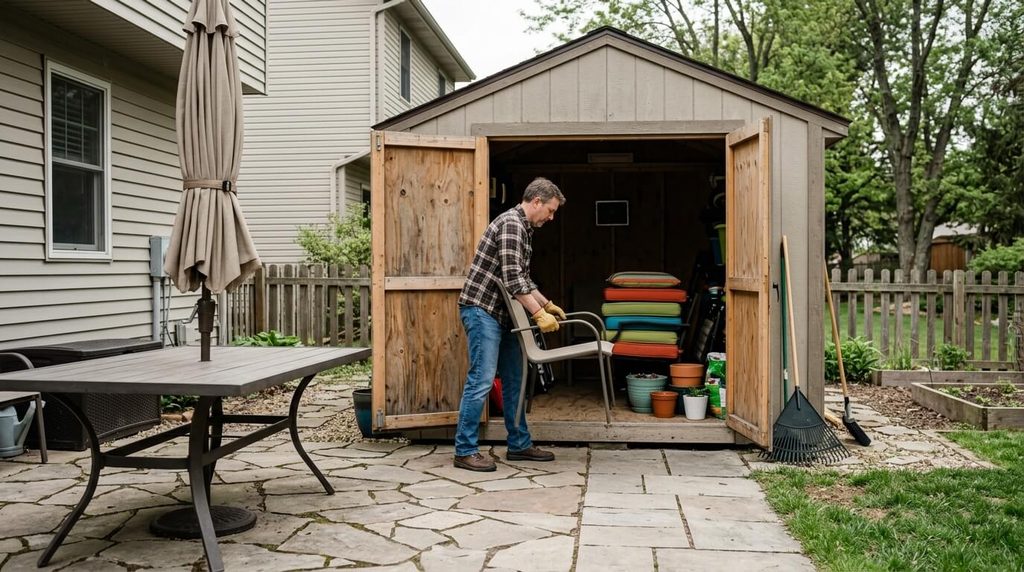
Strong winds can turn patio furniture, tools, toys, planters, and decorations into projectiles. Bring movable items indoors, secure larger equipment, and inspect fencing and gates for loose sections. Remove dead or weak branches near the structure when it’s safe to do so. Keep surface drainage paths clear and store ladders so they cannot shift or strike the home.
Repair or Replace? How to Decide
A limited defect may call for a focused repair, while widespread wear or repeated leaks may justify a broader conversation. Consider the size and location of the damage, whether the roof deck is wet or deteriorated, whether the same area has been repaired before, and whether ventilation or insulation may be affected. Compare written evaluations that clearly identify the proposed materials, work scope, cleanup responsibilities, and any locally applicable permit requirements.
What to Do Before, During, and After a Storm
Several Days Before
• Review the forecast and complete routine exterior maintenance.
• Charge phones, backup batteries, and flashlights.
• Check first-aid supplies, medications, food, and water.
• Photograph the home’s exterior and important belongings for personal records.
When a Warning Is Issued
Do not attempt roof repairs or outdoor cleanup. Stay inside, follow local emergency instructions, and keep away from windows and exterior doors when conditions are dangerous. Severe thunderstorms can bring damaging hail, strong winds, lightning, and heavy rain, so it is important to understand how to stay safe before, during, and after one.
After the Storm
Wait until conditions are safe before going outside. Watch for downed power lines, unstable trees, broken glass, and standing water. When possible, photograph visible damage before removing materials; inspect upper ceilings and the attic for signs of water entry; and use temporary protection only if it can be done safely.
Common Preparation Mistakes
• Waiting until wind or rain has already started.
• Climbing onto a roof without appropriate training and safety equipment.
• Checking shingles while overlooking flashing, vents, gutters, and drainage.
• Treating a temporary patch as a permanent solution.
• Forgetting trees, fences, sheds, and outdoor belongings.
• Failing to document the property before severe weather occurs.
Final Thoughts
Preparing for severe weather is easier and more effective when it is part of regular home maintenance rather than a task left until a storm approaches. A sound roof, clean gutters, clear drainage systems, secure outdoor furniture, and properly maintained windows and doors can help reduce the risk of avoidable damage. Homeowners should also check for loose branches, inspect areas where water tends to collect, and keep essential supplies such as flashlights, batteries, first-aid items, and drinking water readily available.
Creating a basic family safety plan and knowing where to seek shelter can provide additional peace of mind. By addressing potential concerns early and reviewing preparations throughout the year, homeowners can respond more confidently when severe weather threatens. Taking these precautions before dark clouds arrive is generally safer, less stressful, and more manageable than dealing with preventable problems after damage has already occurred.
Frequently Asked Questions
How often should a homeowner inspect the roof?
A practical routine is a visual check twice a year and after major storms. Homes under large trees, with older roofs, or with prior leaks may need closer attention.
Can you inspect a roof from the ground?
Yes. Ground-level checks can reveal missing shingles, sagging gutters, fallen debris, and obvious damage. They cannot reveal every issue or replace a close assessment by a qualified professional.
What should happen if a roof starts leaking?
Place a container beneath the leak, move belongings away, and avoid electrical hazards. Do not go onto the roof during rain, lightning, or high winds.