


Growing tomatoes successfully is not only about choosing a sunny location and watering regularly. The nutrients your tomato plants receive throughout the season directly impact plant growth, flowering, fruit size, and the final harvest.
The best fertilizer for tomatoes depends on your plant’s current stage. A young tomato plant needs nutrients for strong roots and healthy leaves, while flowering and fruit-producing plants need more phosphorus and potassium to support better tomato production.
Quick Answer: Best Fertilizer for Tomatoes
The best fertilizer for most tomato plants is a tomato-specific fertilizer with a lower nitrogen ratio and higher phosphorus and potassium, such as 3-4-6, 4-6-8, or 5-10-10 formulas. The right choice depends on whether your tomatoes are growing leaves, producing flowers, or developing fruit.
Best Tomato Fertilizers at a Glance
Choosing a tomato fertilizer becomes easier when you know what your plants need at each stage. A fertilizer that works well during early growth may not be the best option when your plant starts producing tomatoes.
| Fertilizer | Best For | Type | NPK Ratio | When To Use |
|---|---|---|---|---|
| Espoma Tomato-Tone | Organic tomato gardens | Slow-release granular | 3-4-6 | Flowering and fruit production |
| Dr. Earth Tomato Fertilizer | Improving soil health | Organic granular | 4-6-3 | Full growing season |
| Miracle-Gro Tomato Plant Food | Fast nutrient availability | Water-soluble | 18-18-21 | Active growth periods |
| Fish Emulsion | Young tomato plants | Liquid organic | Varies | Early plant development |
| Compost + Tomato Fertilizer | Garden beds | Organic combination | Depends on mix | Before planting |
A good tomato fertilizer should not only provide nutrients. It should match the plant’s growth stage. Many gardeners get disappointing results because they use a high-nitrogen fertilizer throughout the season. This creates large green plants but fewer tomatoes.
Why Tomato Plants Need the Right Fertilizer Balance
Tomatoes are heavy-feeding plants. They grow quickly, produce large leaves, develop flowers, and create fruit within a single growing season. Because of this, they require consistent nutrition.
However, more fertilizer does not always mean more tomatoes. The goal is to provide the right nutrients at the right time. A tomato plant needs different support during different stages:
- Early growth requires strong roots and healthy foliage.
- Flowering requires nutrients that encourage blooms.
- Fruit development requires nutrients that improve tomato size and quality.
The biggest mistake gardeners make is focusing only on plant growth. A tomato plant with excessive leaves may look healthy but may produce fewer fruits.
Understanding Tomato Fertilizer Needs
Tomatoes mainly depend on three major nutrients:
| Nutrient | Role in Tomato Plants | Effect of Too Much |
|---|---|---|
| Nitrogen (N) | Supports leaves and stems | Excess foliage with fewer fruits |
| Phosphorus (P) | Helps roots and flower development | Nutrient imbalance |
| Potassium (K) | Supports fruit size, flavor, and plant strength | Can affect nutrient availability if overused |
Nitrogen for Tomato Growth
Nitrogen is important when tomato plants are young. It helps create strong stems and healthy green leaves. During the early growth stage, nitrogen helps your plant build the structure needed for future fruit production. However, too much nitrogen after flowering begins can create problems.
You may notice:
- Large leafy plants
- Very dark green leaves
- Slow flowering
- Fewer tomatoes
Once your tomato plant starts producing flowers, the focus should gradually shift away from leaf growth and toward fruit production.
Phosphorus for Flowers and Roots
Phosphorus plays an important role when tomatoes are developing roots and flowers. It supports:
- Strong root systems
- Better flower formation
- Successful fruit setting
This is why many tomato fertilizers have a higher middle number compared with general garden fertilizers. For example a fertilizer labeled 5-10-10 contains:
- 5% nitrogen
- 10% phosphorus
- 10% potassium
This type of balance is often used during flowering and fruit production stages.
Potassium for Bigger and Better Tomatoes
Potassium becomes especially important when tomatoes begin forming fruit. It supports:
- Fruit development
- Tomato size
- Better flavor
- Stronger plant health
Many experienced gardeners increase potassium during the fruiting stage because this is when the plant is putting energy into producing tomatoes instead of only growing leaves.
Best NPK Ratio for Tomatoes
There is no single fertilizer ratio that works perfectly from planting until harvest. Your tomato plant changes its nutrient requirements as it grows.
| Growth Stage | Tomato Fertilizer Focus | Suitable NPK Examples |
|---|---|---|
| Seedling stage | Balanced nutrition | 5-5-5 |
| Transplanting | Root support | Higher phosphorus formulas |
| Leaf development | Moderate growth | 10-10-10 |
| Flowering stage | Flower production | 5-10-10 |
| Fruit development | Fruit quality | 4-6-8 |
The right fertilizer depends on your soil condition, tomato variety, and growing environment. Before changing fertilizer amounts, it is useful to understand how fertilizer calculations work. You can read my complete guide on how to dose fertilizer for plants to understand application rates and nutrient calculations.
Best Fertilizer for Tomatoes Before Planting
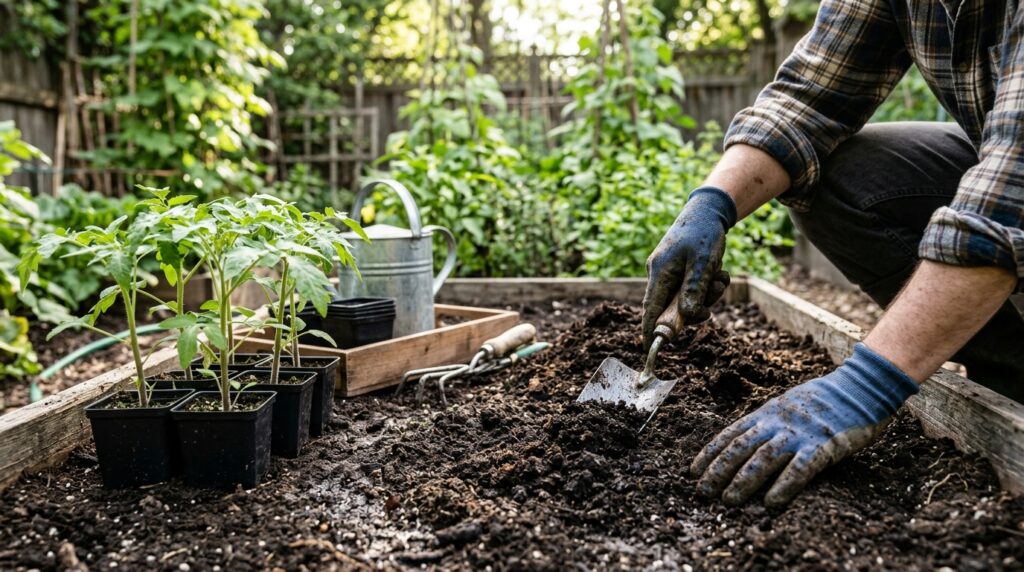
Preparing your soil before planting gives tomato plants a stronger foundation. Before transplanting tomatoes, focus on improving the growing environment rather than adding excessive fertilizer. Good soil additions include:
- Compost
- Well-aged manure
- Worm castings
- Tomato-specific slow-release fertilizer
Compost is especially useful because it improves soil structure and helps the soil hold moisture and nutrients. Tomatoes perform best in slightly acidic soil. A soil pH between around 6.0 and 6.8 allows plants to absorb nutrients efficiently. Testing your soil before planting can help you avoid adding nutrients your garden may already have. The University of Minnesota Extension also recommends proper soil preparation and nutrient management for healthy tomato growth.
Best Fertilizer for Tomatoes After Transplanting
The transplanting stage is stressful for tomato plants. The roots need time to adjust and begin spreading into the surrounding soil. At this stage, avoid pushing too much leaf growth. A good fertilizer approach focuses on:
- Root development
- Gentle nutrient support
- Reduced transplant stress
A starter fertilizer with more phosphorus can help young tomato plants establish stronger roots. Apply fertilizer carefully around the plant rather than directly against the stem. Direct contact with concentrated fertilizer can damage young roots.
Best Fertilizer During Tomato Flowering Stage
The flowering stage is one of the most important periods for tomato feeding. This is when your plant decides how much fruit it can produce. During flowering, your tomato plant benefits from:
- Moderate nitrogen
- Increased phosphorus
- Good potassium levels
Avoid switching to a fertilizer that is extremely high in nitrogen. Your goal is not to create more leaves. Your goal is to help the plant convert flowers into tomatoes. Signs your tomato plant is entering the flowering stage include:
- First flower clusters appearing
- Strong branches
- Healthy green leaves
- Increased plant height
Best Fertilizer During Tomato Fruit Development
Once small tomatoes begin appearing, the plant needs consistent nutrition. During fruit development, potassium becomes especially important because it supports:
- Tomato size
- Fruit quality
- Plant strength
- Better harvest results
Instead of applying large amounts of fertilizer occasionally, provide steady feeding according to your fertilizer instructions.
Overfeeding can create nutrient problems and may reduce fruit production.
Best Fertilizer for Tomatoes in Pots
Growing tomatoes in containers is slightly different from growing them in garden soil. Container tomatoes have limited space, so their roots cannot search a large area for nutrients. Because of this, nutrients can run out faster, especially after frequent watering. For potted tomatoes, choose a fertilizer that provides steady nutrition without creating excessive leaf growth. The best options for container tomatoes are:
- Slow-release tomato fertilizers
- Liquid tomato fertilizers
- Organic fertilizers combined with compost
Liquid fertilizers are popular for container gardening because they reach the roots quickly. However, they usually need to be applied more often than granular fertilizers.
When growing tomatoes in pots, also pay attention to the container size. A small pot dries out quickly and can create stress that affects flowering and fruit production. For better container tomato growth:
- Use a pot large enough for the root system
- Ensure proper drainage holes
- Feed consistently during active growth
- Avoid letting soil completely dry out between watering
Best Fertilizer for Tomatoes in Raised Beds
Raised bed tomatoes usually have better growing conditions because the roots have more room and the soil can be improved over time. Before planting, mix organic matter into the soil. Compost helps improve moisture retention and creates a healthier environment for tomato roots. For raised beds, many gardeners use a combination of:
- Compost for soil improvement
- Slow-release tomato fertilizer for steady feeding
- Additional potassium during fruit production
Raised beds often require less frequent feeding compared with containers because nutrients are not lost as quickly. However, heavy-producing tomato varieties may still need additional fertilizer during flowering and fruit development.
Best Organic Fertilizers for Tomato Plants
Organic fertilizers are popular among gardeners who want to improve soil health while feeding their tomato plants. Unlike synthetic fertilizers that release nutrients quickly, many organic fertilizers work gradually by improving the soil ecosystem.
Compost
Compost is one of the best additions for tomato gardens. It helps:
- Improve soil structure
- Increase moisture retention
- Add beneficial microorganisms
- Provide slow nutrient release
Compost works best when added before planting and used as part of a complete feeding plan.
Worm Castings
Worm castings are a gentle fertilizer option that provides nutrients without the risk of burning tomato roots. They are useful for:
- Young tomato plants
- Container tomatoes
- Improving soil quality
Many gardeners mix worm castings into potting soil or add a small amount around established plants.
Fish Emulsion
Fish emulsion is a liquid organic fertilizer that provides nutrients quickly. It is commonly used during early tomato growth because it supports:
- Leaf development
- Root growth
- Overall plant health
However, fish emulsion alone may not provide everything a fruit-producing tomato plant needs later in the season.
Bone Meal
Bone meal is often used because it contains phosphorus. It can support:
- Root development
- Flower production
It is usually added during planting rather than used as a frequent fertilizer.
Seaweed Extract
Seaweed-based fertilizers contain natural compounds that may help plants handle stress. Gardeners often use them during:
- Transplanting
- Hot weather
- Periods of plant stress
Best Commercial Tomato Fertilizers Reviewed
A good commercial fertilizer should match your gardening goals. Some gardeners want organic soil improvement, while others want faster results. Below are some commonly used tomato fertilizers.
1. Espoma Tomato-Tone
Best for: Organic tomato growers
NPK ratio: 3-4-6
Espoma Tomato-Tone is designed specifically for tomatoes and vegetables. It provides a lower nitrogen ratio with more phosphorus and potassium, making it suitable for flowering and fruit production.
2. Dr. Earth Tomato, Vegetable & Herb Fertilizer
Best for: Improving soil naturally
NPK ratio: 4-6-3
Dr. Earth is designed for gardeners who want to combine feeding with soil improvement. It contains organic ingredients that slowly release nutrients and support beneficial soil activity.
3. Miracle-Gro Tomato Plant Food
Best for: Fast nutrient availability
NPK ratio: 18-18-21
This water-soluble fertilizer delivers nutrients quickly and is often used by gardeners seeking fast plant support.
Tomato Fertilizer Feeding Schedule
A feeding schedule helps prevent both underfeeding and overfeeding. The exact timing depends on your fertilizer type, but a general tomato feeding plan looks like this:
| Tomato Stage | Fertilizer Focus | Application Goal |
|---|---|---|
| Before planting | Compost and soil preparation | Build a healthy foundation |
| 1–3 weeks after transplanting | Root support | Help plants establish |
| Vegetative growth | Balanced nutrition | Develop strong plants |
| Flowering | Higher phosphorus and potassium | Support flowers |
| Fruit production | Higher potassium | Improve fruit quality |
Remember that every fertilizer has different instructions. Always follow the label recommendations because concentrated products can vary significantly.
Signs Your Tomato Plants Need Fertilizer
Sometimes your tomato plants show visible signs that their nutrient needs are not being met. Understanding these signs can help you correct problems before your harvest suffers.
Yellow Lower Leaves
Yellowing older leaves may indicate nitrogen deficiency. Possible causes include:
- Low nitrogen availability
- Root problems
- Nutrient imbalance
However, yellow leaves can also result from watering problems, so do not immediately add fertilizer without checking other conditions.
Purple Leaves
Purple or reddish coloring on tomato leaves can sometimes indicate phosphorus-related problems. This may happen when:
- Soil phosphorus is unavailable
- Soil temperatures are low
- Roots are stressed
Lots of Leaves but Few Tomatoes
This is one of the most common tomato fertilizer problems. The cause is often too much nitrogen. The plant focuses on:
- Leaf production
- Stem growth
Instead of:
- Flowers
- Fruit development
Switching to a tomato fertilizer with more potassium can help support fruit production.
Small Tomatoes or Slow Fruit Growth
Small fruit may happen because of:
- Lack of potassium
- Inconsistent watering
- Poor pollination
- Nutrient imbalance
Tomatoes need consistent care during fruit development.

Common Tomato Fertilizer Mistakes
Even experienced gardeners can make mistakes when feeding tomatoes. Avoid these common problems:
Using Too Much Nitrogen
More nitrogen does not always mean more tomatoes. Excess nitrogen often creates large plants with poor fruit production.
Fertilizing Dry Soil
Applying fertilizer when soil is completely dry can stress roots. Water the soil first, especially when using concentrated fertilizers.
Feeding Too Frequently
Applying fertilizer more often than recommended can create nutrient buildup. Follow the product instructions instead of assuming more fertilizer will produce better results.
Ignoring Watering
Fertilizer cannot work properly if tomato plants experience inconsistent watering. Irregular moisture can affect:
- Nutrient absorption
- Fruit development
- Blossom end rot problems
Using General Lawn Fertilizer
Lawn fertilizers are usually designed for grass growth and may contain nitrogen levels that are unsuitable for tomatoes. Tomatoes need a fertilizer designed for vegetable production.
Does Calcium Fertilizer Prevent Blossom End Rot?
Many gardeners add calcium fertilizer when they see blossom end rot on tomatoes. However, blossom end rot is not always caused by a lack of calcium in the soil. The problem is often related to the plant’s ability to absorb calcium properly. Common causes include:
- Irregular watering
- Root stress
- Rapid plant growth
- Soil moisture changes
The University of Minnesota Extension explains that blossom end rot can also be linked to uneven watering, root stress, and problems with calcium uptake. Maintaining consistent watering and healthy roots is usually more important than simply adding calcium.
Frequently Asked Questions About Tomato Fertilizer
What is the best fertilizer for tomatoes?
The best fertilizer depends on your tomato plant’s stage. For most tomato plants, a fertilizer with lower nitrogen and higher phosphorus and potassium, such as 3-4-6 or 5-10-10, works well during flowering and fruit production.
How often should I fertilize tomato plants?
Most tomato plants benefit from feeding every few weeks during active growth, but the exact schedule depends on whether you use liquid, granular, or slow-release fertilizer. Always follow the fertilizer label instructions.
Is 10-10-10 fertilizer good for tomatoes?
A balanced fertilizer like 10-10-10 can be useful during early plant growth, but it may not be ideal throughout the entire season because flowering and fruiting tomatoes usually need more potassium.
What fertilizer makes tomatoes produce more fruit?
Fertilizers with higher potassium levels can support fruit development. However, fruit production also depends on sunlight, watering, pollination, tomato variety, and overall plant health.
Can too much fertilizer damage tomato plants?
Yes. Too much fertilizer can cause leaf burn, excessive leaf growth, nutrient imbalance, and reduced fruit production.
What is the best organic fertilizer for tomatoes?
Compost, worm castings, fish emulsion, and tomato-specific organic fertilizers are popular choices because they provide nutrients while improving soil health.
Final Thoughts
The best fertilizer for tomatoes is not always the strongest formula. It is the fertilizer that matches your plant’s needs at the right time. Young tomato plants need support for roots and leaves. Flowering plants need nutrients that encourage blooms. Fruiting plants need more potassium to support larger and healthier tomatoes.
A successful tomato harvest comes from combining the right fertilizer with good soil, proper watering, enough sunlight, and consistent care. Instead of feeding your plants randomly, pay attention to their growth stage and choose a fertilizer plan that supports the results you want. When you understand what your tomato plants need, growing bigger and healthier tomatoes becomes much easier.