


How to Remove Rust Stains From Clothes Without Ruining the Fabric
If you are trying to learn how to remove rust stains from clothes, the first thing I recommend is forgetting the usual stain-removal routine. Rust is not a food, grease, or protein stain. Throwing extra detergent at it may do very little, while using the wrong bleach can actually make the discoloration worse.
The good news is that you usually do not need to give up on the shirt, jeans, towel, or bedsheet. Light rust marks often respond to mild acidic treatments, while stubborn stains may need a rust remover specifically labeled for washable fabric. The real trick is knowing what caused the orange stain, what fabric you are treating, and when to stop experimenting.
Quick Answer: How to Remove Rust Stains From Clothes
To remove rust stains from clothes, apply lemon juice directly to the stain, sprinkle a little salt over it, let it sit for a few minutes, then rinse thoroughly and wash according to the care label. Avoid chlorine bleach because it can make rust stains worse. For stubborn or old rust stains, use a fabric-safe rust remover.
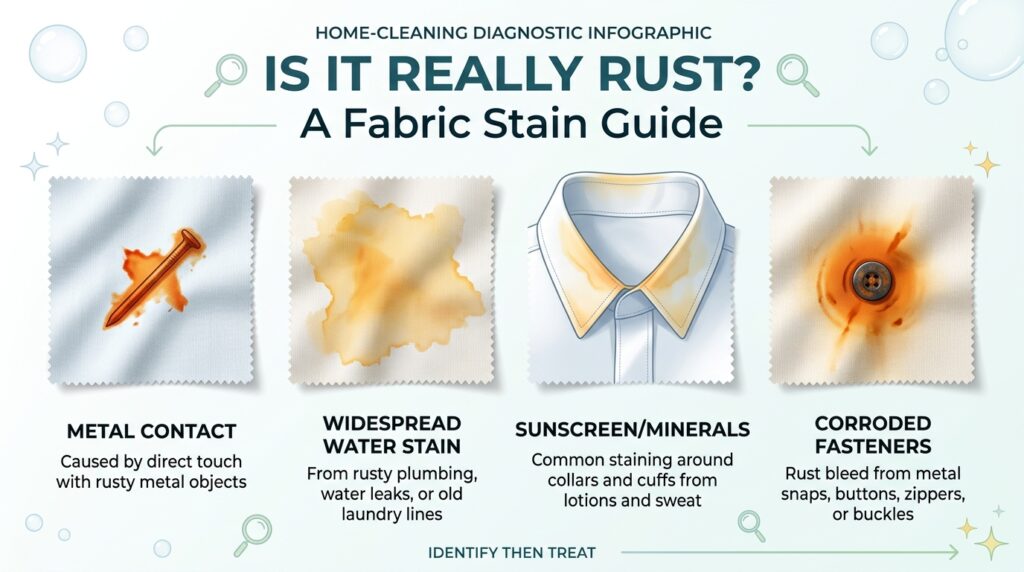
First, Make Sure It Really Is Rust
This is the step I think many stain-removal guides rush past.
When I see an orange-brown mark, I would not immediately pour vinegar or lemon over it. First, I would ask where did this stain come from? That answer can save you from treating the wrong problem.
| What you notice | Likely cause | What I would check first |
|---|---|---|
| One orange mark where clothing touched metal | Surface rust transfer | Metal chair, tool, zipper, rack, pipe or clothesline |
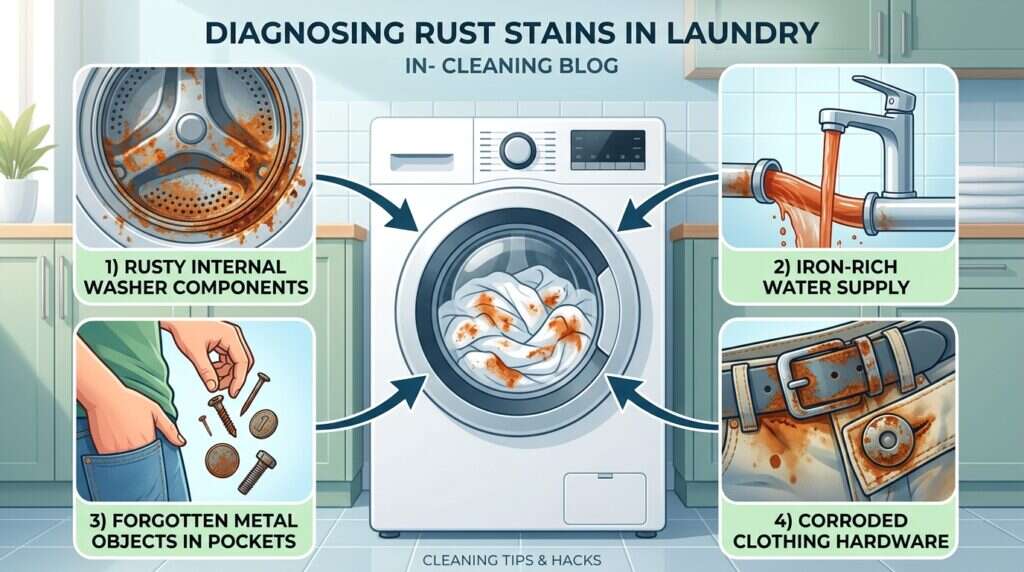
| Orange or brown marks appearing after washing | Iron in water or washer corrosion | Water supply and washer drum/components |
| Several white garments slowly becoming yellow/orange | Iron or manganese in water | Household water quality |
| Orange marks around sunscreen areas | Sunscreen interacting with minerals | Sunscreen ingredients and hard/mineral-rich water |
| Reddish-brown mark around a metal button or zipper | Corroding hardware | Garment hardware |
| Random brown stain with no metal contact | Possibly not rust | Identify the stain before treating it |
Iron in water can create orange or brown staining in laundry, while manganese tends to produce darker staining. If the marks suddenly appear on several garments after washing, it may be a sign that the problem is your water rather than the clothes themselves. Guidance on iron and manganese in household water explains this effect.
There is another less obvious possibility. Some sunscreen stains can turn orange and resemble rust when certain sunscreen ingredients interact with minerals in water. That means a strange orange collar or sleeve mark after a sunny day is not always rusty metal transfer. This explanation of rust-like sunscreen staining is particularly useful for understanding the difference.
The Best Rust-Stain Method Depends on the Fabric
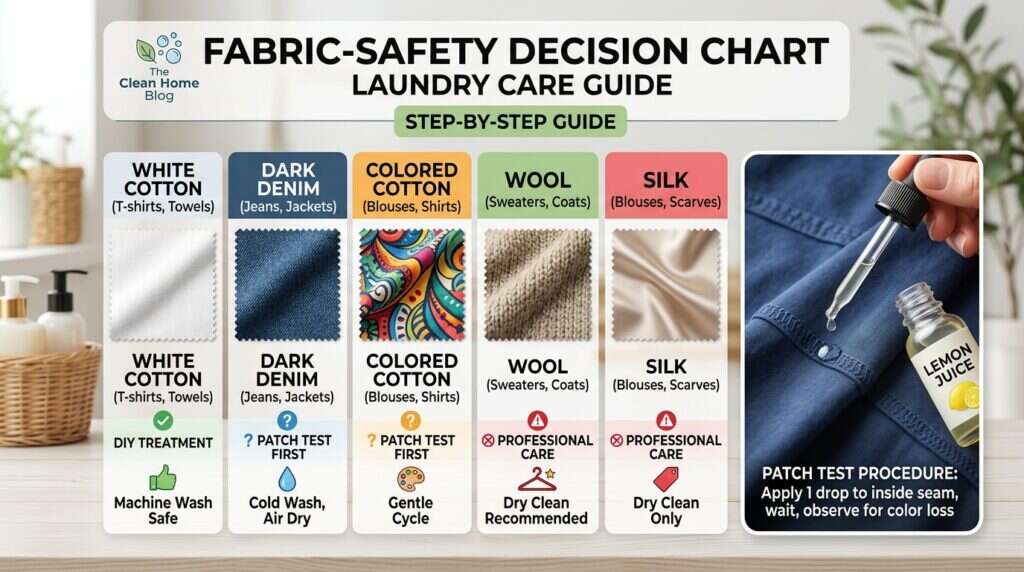
There is no single mixture I would pour onto every garment. A white cotton T-shirt, dark jeans, wool sweater, and dry-clean-only dress do not deserve the same treatment.
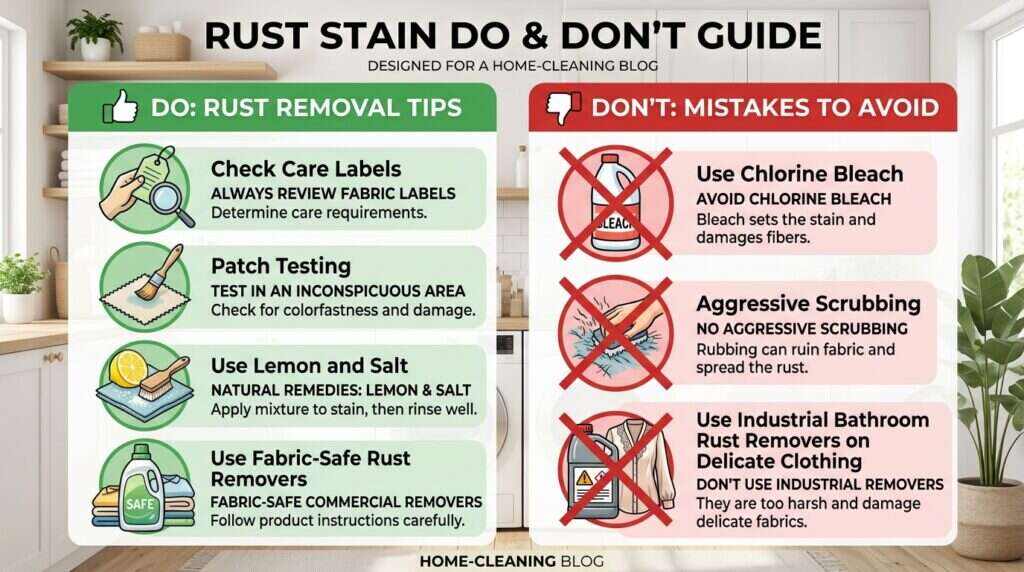
Before doing anything, read the garment’s care instructions. Care labels tell you whether an item should be washed or dry-cleaned and can specify safe washing, drying, and bleaching conditions.
Use this table as your starting point:
| Fabric or situation | First choice | Use extra caution with | My recommendation |
|---|---|---|---|
| White washable cotton | Lemon juice + salt | Prolonged treatment | Good DIY starting method |
| Colorfast cotton | Lemon juice after patch test | Fading | Test hidden seam first |
| Denim | Mild acidic treatment | Dark dye loss | Patch test |
| Polyester | Fabric-safe rust treatment | Heat and harsh acids | Follow care label |
| Silk | Professional cleaning | Acids, rubbing, strong products | Do not experiment |
| Wool | Professional or wool-safe care | Strong acids and agitation | Handle gently |
| Dry-clean-only clothing | Professional cleaning | Water-based DIY methods | Stop and take it in |
| Repeated rust after washing | Fix the source | Repeated stain treatment | Inspect water/washer |
How to Remove Fresh Rust Stains From Washable Clothes
A small fresh stain on a washable garment is where I would begin with the gentlest proven method rather than reaching immediately for a strong chemical product.
You will need:
- Fresh lemon juice
- Table salt
- A clean white towel
- Water for rinsing
- Your normal laundry detergent
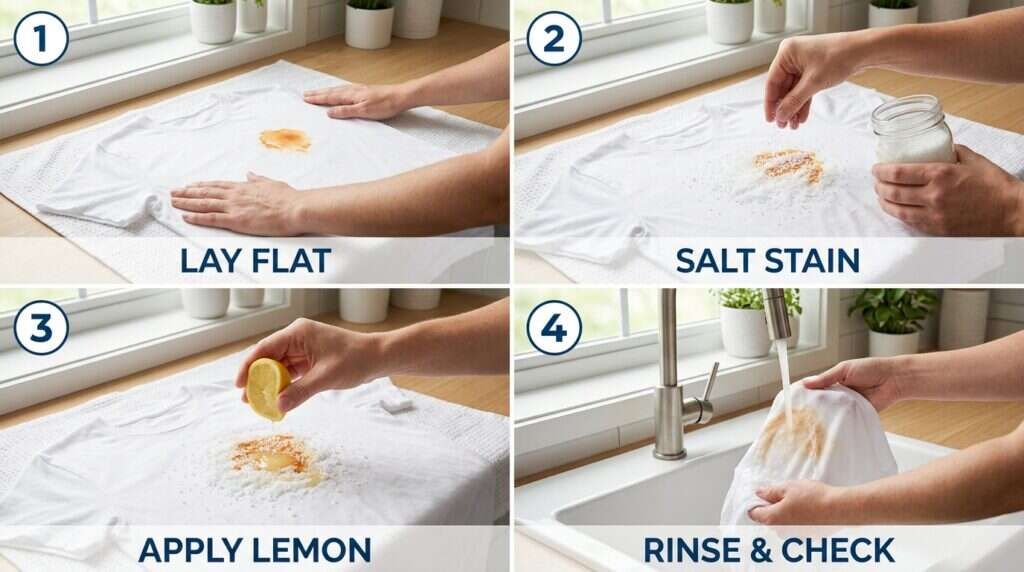
Place the stained area over a clean white towel so any transferred discoloration has somewhere to go. Sprinkle a small amount of salt over the stain and dampen it with lemon juice.
Allow the acid time to interact with the rust rather than immediately scrubbing the fabric. Textile stain-removal guidance describes a lemon juice and salt treatment followed by drying in sunlight and thorough rinsing, with repetition if necessary. The original textile guidance is available here.
I would be more cautious with strongly colored clothing because lemon juice and sunlight can affect some dyes. Test a hidden seam first. If you see color coming off onto your test cloth, stop.
After treatment, rinse the area thoroughly. Then wash the garment according to its care label and inspect it before drying.
How to Remove Old Rust Stains From Clothes
Old stains are where I would change strategy. Repeating a mild home remedy five or six times is not always kinder to fabric than using the correct product once.
Try the mild method first if the care label allows it. If the stain fades but does not disappear, repeat the process once rather than endlessly adding more acid, scrubbing, and sunlight.
For persistent rust, use a rust remover specifically labeled for fabric or laundry. Professional cleaning guidance recommends this approach for rust-type brown or yellow discoloration. Fabric stain-removal recommendations also stress that chlorine bleach is not the answer.
When using any commercial treatment:
- Confirm that the label specifically permits use on clothing or fabric.
- Test it on a hidden area first.
- Follow the specified contact time.
- Wear gloves if the product directions require them.
- Rinse thoroughly.
- Never mix it with another cleaning chemical.
- Wash afterward according to the garment’s care label.
This is also where I would avoid the internet habit of combining five household ingredients into one bowl. More ingredients do not automatically make a stain remover more effective, and mixing cleaners can create unnecessary risks.

Why You Should Not Put Chlorine Bleach on Rust
This deserves its own section because it is one of the easiest ways to worsen the situation.
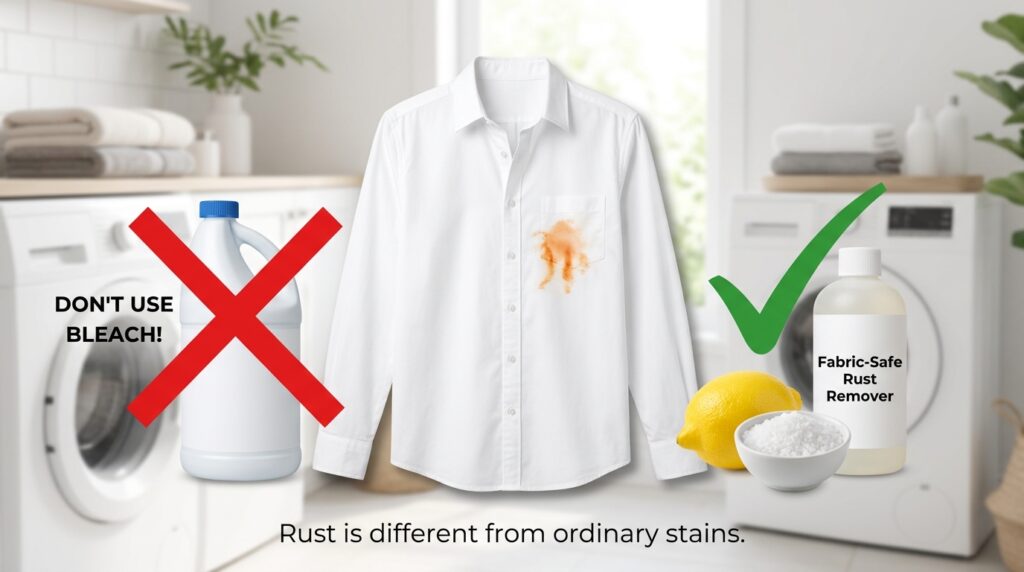
Chlorine bleach is useful for certain laundry problems, but rust is different. University textile guidance explicitly warns that chlorine bleach can set rust stains, while professional laundry guidance says sodium hypochlorite bleach may intensify the discoloration.
So if you have a white shirt with an orange rust spot, “white fabric = bleach” is the wrong shortcut.
I recommend remembering this simple rule:
White clothing does not automatically mean chlorine bleach is safe for the stain. Identify the stain first.
This lesson also applies to other stains. Different stains respond to distinct chemistries, which is why my guide to removing grass stains from clothes uses a different pretreatment approach rather than treating every stain the same way.
Can Vinegar Remove Rust Stains From Clothes?
White vinegar is acidic, so it may help with some light rust marks. However, I would still prioritize the established lemon-and-salt method over vinegar in accordance with published textile guidance.
If lemon is unavailable and the garment is washable and colorfast, test a small amount of white vinegar on a hidden area first. Apply it to the stain for a short period, rinse thoroughly, and inspect the fabric before laundering.
Do not assume that “natural” means harmless. Acids can affect dyes and some delicate fibers. If you are dealing with silk, wool, vintage fabric, decorative finishes, or an expensive garment, I would stop before experimenting.
Does Baking Soda Remove Rust From Clothes?
Baking soda appears in almost every home-cleaning discussion, but I would not make it my first recommendation for a true rust stain.
Rust responds differently from greasy, protein, or food stains. Published textile guidance focuses on acidic rust-removal treatments, while professional laundry guidance recommends a fabric-specific rust remover when needed.
That does not mean baking soda is useless in every laundry situation. It simply means I would choose a method based on the stain rather than using the same ingredient for every household problem.
For example, a sticky food spill needs a completely different approach. My guide to removing honey stains from clothes and fabric focuses on removing sugar-based residue rather than treating the stain like mineral rust.
How to Remove Rust Stains From White Clothes
White cotton can be easier to monitor because you can see whether the orange discoloration is actually fading. It can also tempt you into using bleach, which is exactly what I would avoid.
Start with the lemon-and-salt approach if the care label permits washing. Rinse thoroughly, wash, and inspect the garment.
If the rust remains, move to a fabric-safe rust remover rather than chlorine bleach. Do not use a bathroom, toilet, concrete, or metal rust cleaner simply because the word “rust” appears on the bottle.
The product must specifically be approved for use on the type of fabric you are treating.
How to Remove Rust Stains From Colored Clothes
With colored clothes, my priority changes slightly. Removing the rust is important, but preserving the dye matters just as much.
Always test your treatment on:
- An inside hem
- A hidden seam
- The inside of a waistband
- Another area that will not be visible during normal wear
Wait and check for fading or color transfer before touching the main stain.
If the garment loses color during your patch test, stop. A slightly visible rust spot is better than creating a large faded patch around it.
How to Remove Rust Stains From Jeans
Denim may feel tough, but dark indigo dye can still fade.
For washable jeans, test your chosen treatment on the inside seam first. If the dye remains stable, treat the rust mark locally rather than soaking the entire pair of jeans.
After rinsing, wash the jeans according to the care label and inspect the treated area before machine drying.
If the mark sits beside a metal rivet, button, or zipper, look closely at the hardware. You may remove the stain only to have it return if the metal itself is corroding.
What If Rust Stains Appear After Washing?
This is the section I would pay attention to if you keep finding mysterious orange spots on clean laundry.
If several pieces develop yellow, orange, or brown discoloration after washing, repeatedly treating the clothes does not solve the underlying problem. Iron and manganese in the water supply can discolor laundry. Water-quality guidance on iron and manganese specifically notes orange or brown laundry staining from iron.
Professional laundry guidance similarly lists iron and manganese in the water supply as a cause of yellow or brown rust-type stains.
Check:
- Your washing machine drum. Look for chipped areas, exposed metal, rusting components, or foreign metal objects.
- The water. Look for orange staining around sinks, toilet tanks, tubs, or faucets.
- Hot versus cold supply. If staining occurs mainly during hot washes, the hot-water system warrants attention.
- Whether multiple garments are affected. One mark suggests contact. A whole load suggests a system problem.
- Metal objects in pockets. Screws, clips, pins, coins, and other items can introduce corrosion or marks.
If you suspect your water, dealing with the source is more effective than repeatedly removing stains from each garment.
A Rust-Looking Stain Can Actually Come From Sunscreen
This is one of the more useful things to know before treating an orange stain.
Certain sunscreen stains can develop an orange or rust-like discoloration when sunscreen ingredients interact with minerals, such as iron, in water. This is particularly relevant when the stain appears around areas where sunscreen commonly contacts clothing. Detailed guidance on orange sunscreen stains explains that these marks can behave similarly to rust.
So if an orange mark suddenly appears around a neckline, sleeve, swimsuit, or beach clothing, ask whether sunscreen was used before deciding it came from rust.
That small diagnostic step is more useful than blindly trying one stain remover after another.
My Rust-Stain Decision Table
If you want the shortest possible decision process, this is what I would use.
| Situation | What I would do |
|---|---|
| Small fresh rust spot on white washable cotton | Lemon + salt, rinse, wash |
| Fresh rust on colored cotton | Patch test first, then mild treatment |
| Old stain that survives mild treatment | Fabric-safe rust remover |
| Rust on silk or wool | Professional advice/cleaning |
| Dry-clean-only garment | Do not home-wash |
| Rust beside metal zipper/button | Treat stain and inspect hardware |
| Orange stains appearing after laundry | Inspect washer and water |
| Several garments affected at once | Investigate water/washer before treating individually |
| Orange marks after sunscreen use | Consider mineral/sunscreen reaction |
| You already used chlorine bleach | Stop adding chemicals, rinse appropriately, reassess |
Expert Tips That Can Save the Garment
The biggest improvement you can make is to treat the stain you actually have, not the stain you assume you have. Rust is mineral-based, so the standard routine you use for chocolate, egg, oil, or grass may not be appropriate.
A few habits make treatment safer:
- Test first. Especially on dark or brightly dyed clothing.
- Read the care label. Do not let an online cleaning recipe override the manufacturer’s safe-care instructions.
- Escalate gradually. Start mild and move to a purpose-made product if needed.
- Do not mix cleaners. Rinse one treatment away before considering another.
- Inspect the cause. Removing a recurring stain without fixing rusty water or hardware wastes time.
- Treat locally. There is usually no reason to expose the entire garment to an acidic treatment for one small spot.
- Know when to stop. Valuable and delicate clothing is not the place for repeated experimentation.
Official apparel rules require manufacturers to provide consumers with care instructions for cleaning garments, which is why I put the care label ahead of any universal stain recipe. You can read the care-labeling requirements here.
Pros and Cons of Common Rust-Stain Methods
| Method | Pros | Cons | Best for |
|---|---|---|---|
| Lemon + salt | Simple, inexpensive, supported by textile guidance | May affect some colors | Washable white or colorfast fabrics |
| White vinegar | Easy to find, acidic | Not ideal for every fiber or dye | Light stains after patch testing |
| Fabric-safe rust remover | Stronger option for difficult stains | Requires careful label use | Old or stubborn rust |
| Ordinary detergent alone | Easy | Often insufficient for mineral rust | Washing after pretreatment |
| Chlorine bleach | None for rust removal | Can intensify/set rust discoloration | Avoid for rust stains |
| Professional cleaning | Safest option for valuable/delicate items | Costs more | Silk, wool, vintage, dry-clean-only items |
Frequently Asked Questions
What is the best way to remove rust stains from clothes?
For washable, suitable fabrics, lemon juice and salt are a well-established starting treatment. Rinse thoroughly afterward and wash according to the care label. For stubborn rust, use a product specifically labeled as a fabric-safe rust remover.
Can rust stains become permanent?
They can become very difficult to remove, especially after unsuitable treatment. Chlorine bleach is particularly problematic because textile guidance warns it can set rust staining.
Will vinegar remove rust stains from clothes?
White vinegar may help with light rust because it is acidic, but test colored fabric first and do not assume it is appropriate for delicate fibers. Lemon juice and salt have clearer support in textile stain-removal guidance for washable fabrics.
Can I use bleach on rust stains on a white shirt?
Do not use chlorine bleach simply because the shirt is white. Published textile and laundry guidance specifically warns against using sodium hypochlorite (chlorine bleach) to remove rust stains.
Why are rust stains appearing on my clothes after washing?
If the marks appear after laundry rather than after direct contact with metal, investigate the washing machine and water supply. Iron in water can create orange or brown staining on laundry.
How do I remove old rust stains from clothes?
Start with a fabric-appropriate mild treatment if the garment allows it. If the rust remains, I would use a commercial rust remover labeled safe for fabric rather than repeatedly applying stronger homemade solutions.
Can I remove rust stains from colored clothes?
Often yes, but colorfastness becomes an important concern. Test any treatment on an inconspicuous part of the garment before treating the visible stain.
Can sunscreen cause orange stains that look like rust?
Yes. Some sunscreen stains can leave orange, rust-like marks when sunscreen ingredients interact with minerals in water.
Should I use a bathroom rust remover on clothing?
No, unless the product label specifically says it is suitable for the garment and fabric. A product designed for metal, toilets, tubs, or concrete should not automatically be treated as a laundry product.
Final Thoughts
Knowing how to remove rust stains from clothes is less about finding the strongest cleaner and more about making the correct diagnosis. For a small, washable rust spot, a mild acidic treatment with lemon and salt may be enough. For an older stain, a fabric-safe rust remover may be the better next step.
Most importantly, do not automatically reach for chlorine bleach, and do not keep treating clothes if rust keeps returning after every wash. Check your washer, clothing hardware, and water source. Once you address the cause and the stain, you are much less likely to find another orange surprise in your next load of laundry.
If this guide helped you save a garment, explore our other HomeUpright stain guides to match the cleaning method to the stain rather than using one treatment for everything.