


Black Bed Bugs: What Tiny Black Bugs in Your Bed Could Be
Finding what looks like black bed bugs on your sheets can make you want to strip the bed and spray everything immediately. First, save the insect. Its shape, size, and movement will tell you more than its apparent color.
Adult bed bugs are normally brown to reddish-brown. A dark insect photographed in poor light can look black, while an actual black beetle may have nothing to do with bed bugs. Black marks on a mattress can also be droppings or ordinary debris rather than insects.
The safest approach is to separate three questions: Is it a bug or a spot? Does the specimen match a bed bug? Is there other evidence nearby? This guide walks you through that process without treating every dark speck as an infestation.What to know before treating your bedroom
- Color alone cannot confirm or rule out bed bugs.
- A jumping or flying insect does not match bed bug movement.
- Black fecal marks are different from moving insects.
- Bites alone cannot identify the pest responsible.
- Save a specimen and document where you found it before cleaning.
Can Bed Bugs Be Black, or Do They Just Look Dark?
“Black bed bugs” is a description people use when they find a dark insect. It is not a separate identification category that tells you which pest is present.
According to the EPA’s bed bug appearance guide, adults are about 3/16 to 1/4 inch long, or 5–7 millimeters. Unfed adults have a flat, oval, brown body. Recently fed adults become fuller, more elongated, and reddish-brown. Nymphs are smaller and usually translucent or whitish-yellow before feeding.
That variation matters. The same kind of insect can look different depending on its life stage and whether it has recently eaten. Lighting adds another problem: a brown object against white bedding may look almost black in a dim room or underexposed phone photo.
Move the saved specimen into bright, neutral light. Take a close photograph from above and another from the side. Avoid colored filters and heavy image enhancement, which can hide useful details.
Do not reject a possible bed bug simply because the first photograph looks black. Equally, do not identify a glossy black beetle as a bed bug just because you found it on a pillow. Use several features together.
A Quick Way to Narrow Down What You Found
Start with the easiest observable differences:
- It is a flat mark without a body: investigate a stain or possible fecal spot.
- It jumps: consider fleas or springtails; bed bugs do not jump.
- It flies or has hard wing covers: investigate a beetle or another insect.
- It is hairy and wormlike: consider an insect larva, including carpet beetle larvae.
- It crawls and has a broad, flat, oval body: a bed bug remains possible; save it for identification.
These observations narrow the possibilities. They do not identify every household pest, and more than one pest can be present in a home.

What to Check on a Suspicious Bug
Record the following details before requesting identification.
Size and body outline
Place a ruler beside the container or specimen and photograph both in the same plane. “Tiny” means different things to different people; a measurement is more useful.
Look for a broad, oval outline and visible abdominal segments when the image is clear enough. A rounded, raised back with a hard wing-cover seam suggests a beetle instead. A fuzzy, elongated larva does not match an adult bed bug.
Movement
Bed bugs crawl. They do not jump or fly. A clear jump is therefore a useful reason to investigate fleas or springtails, while flight points toward another insect. The CDC’s bed bug overview also describes bed bugs as wingless.
However, an insect that stays still has not passed an identification test. It could be dead, injured, trapped, or simply motionless. Observe movement without releasing the specimen back into the room.
Compare with genuine reference photographs
Use the photographs in the University of Minnesota bed bug identification guide to compare fed and unfed specimens. Check the outline and body details, not just whether the colors match.
A magnified reference picture can make an insect look much larger than it is. Always compare the measurement of your specimen too. Generated illustrations and decorative bedroom photos are not reliable identification evidence.
Details visible in your photograph
Try to capture the legs, antennae, body outline, and back surface. A blurred silhouette rarely provides enough information to distinguish similar pests.
If your phone will not focus, pull back slightly and crop the clear photograph afterward. A sharp image from farther away is usually more useful than an extreme close-up that contains no readable detail.
Tiny Black Bugs in Bed: Common Look-Alikes
Where you found the insect is a clue, but it is not a diagnosis. A beetle can wander onto bedding. Fleas can be associated with pets. Small moisture-loving pests may come from a nearby damp area.Features that help separate common possibilities
| Possible identification | Useful distinguishing clue | What to inspect next |
|---|---|---|
| Bed bug | Adults about 5–7 mm (3/16–1/4 inch); broad oval body; crawls; brown or reddish-brown | Mattress seams and bed-frame cracks for more evidence |
| Adult carpet beetle | Rounded or elongated beetle body; may be dark or patterned; adults can fly | Natural-fiber furnishings and concealed lint accumulations |
| Flea | About 1/16–1/8 inch; brownish-black; flattened from side to side; jumps | Pets, pet bedding, rugs, and animal resting areas |
| Springtail | Often about 1–2 mm; jumps; commonly associated with moisture | Damp areas, leaks, and nearby plant pots |
| Debris or a fecal spot | No legs or recognizable body; may be loose material or an absorbed stain | The surrounding seam for insects, eggs, or shed skins |
Carpet beetles: dark adults and hairy larvae
Black carpet beetle adults are dark brown or dull black and elongated-oval. Other carpet beetle adults have mottled coloring. Their larvae look very different: they are hairy rather than smooth, flat bed bug look-alikes.
The University of Maryland’s carpet beetle guide explains that larvae damage animal-based materials, while adults may appear near windows and lights. Check woolens, feathers, fur, accumulated pet hair, and undisturbed areas beneath furniture.
One adult on a sheet is not enough to determine the scale of a problem. Search for larvae and the material they are using before choosing a treatment.
If you need to remove debris from a genuine hide rug during that inspection, follow HomeUpright’s guide to cleaning a cowhide rug safely. Routine rug care supports cleaning, but it should not be mistaken for a complete pest treatment.
Fleas: dark insects that jump
Fleas are brownish-black and flattened from side to side. Their jumping ability helps distinguish them from bed bugs. A narrow side profile is also more useful than apparent color.
Do not rule out fleas because you have no pets. The University of Maryland’s flea guidance notes that fleas can occur in pet-free buildings, including situations involving wildlife or previous animal occupancy.
If pets are present, inspect their resting areas and ask a veterinarian about appropriate flea control. Treating a mattress while ignoring an animal host and its surroundings can leave the underlying problem unresolved.
Springtails: tiny jumping specks associated with dampness
Springtails are often around 1–2 millimeters long and can jump. A very small specimen may look like a dark moving speck, although colors vary.
They do not bite. The University of Maryland’s springtail guidance connects indoor activity with moisture and recommends addressing leaks or excessive humidity.
If identification confirms springtails, check a nearby window, plant pot, damp wall, or adjoining bathroom. Spraying the bed does not fix a leak. Finding springtails also does not explain an unrelated itchy rash, so keep those questions separate.
Other beetles and close relatives
Not every small beetle is a carpet beetle. The University of Maryland’s household insect identification key also lists cigarette and drugstore beetles among small indoor beetles. If specimens occur near stored foods or spices, mention that when requesting identification.
Bat bugs are a different kind of look-alike: they resemble bed bugs closely enough that distinguishing them may require examining fine hairs. If bats have been present in an attic or eaves, tell the pest professional. Inspection may need to include those areas rather than only the mattress.
Black Spots on Your Mattress: Bugs, Eggs, or Droppings?
Some searches for “small black bed bugs” start with a spot that never moved. Examine it closely before assuming it is an insect.
Bed bug fecal spots can look like small dark ink marks. They may soak into fabric rather than sit on top as loose crumbs. Bed bug eggs are tiny and pale, not uniformly black. Shed skins can look like pale, empty insect outlines.
Cornell’s bed bug identification resource describes a rusty color transfer when suspected fecal material is wiped with a wet tissue. That is a clue for further inspection, not a definitive home test: other substances can transfer color too.
Photograph a suspicious cluster before wiping or vacuuming it away. Note whether it is concentrated along a seam or crack and whether you can find an actual specimen nearby.
Avoid deciding that every black mark is fresh evidence. An old stain cannot tell you by itself whether insects are currently present. The practical question is whether you can establish what made it and find supporting signs.
How to Inspect Your Bed Without Losing Evidence
The EPA’s bed bug inspection guidance prioritizes physical evidence over bite marks and identifies mattress seams, tags, piping, and bed-frame cracks as important hiding places.
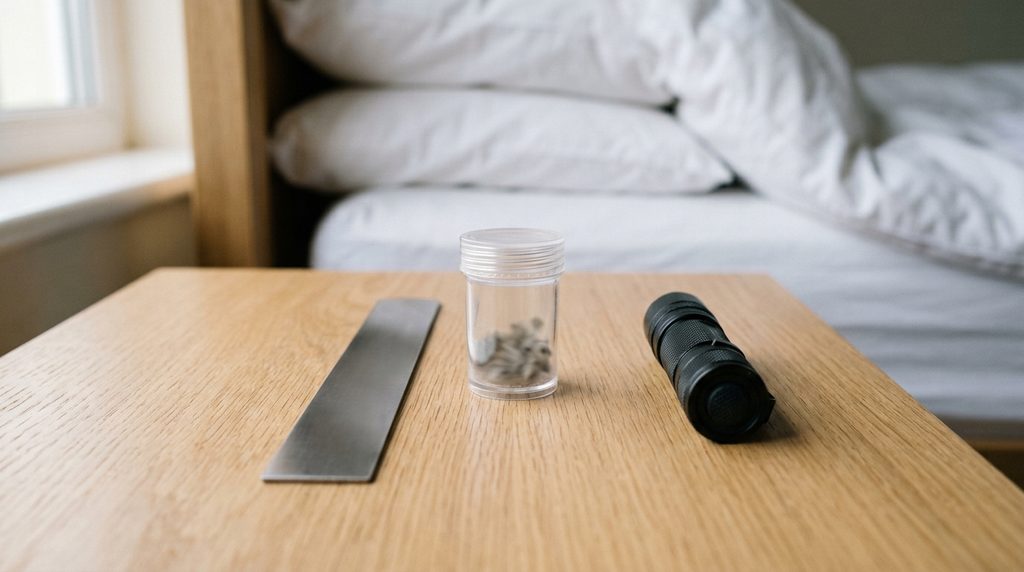
Gather a flashlight, a secure specimen container, your phone, and a ruler. Then work through the bed in order.
- Save the specimen. Place it in a small, secure container. Avoid crushing it if possible. Write down the date and exact location.
- Photograph the finding in place. Capture both a close view and a wider view showing the seam, sheet, or furniture joint.
- Inspect the mattress systematically. Work around its edges rather than repeatedly checking the same corner. Examine piping, seams, and labels.
- Check the structure beneath it. Inspect accessible box-spring edges, bed-frame joints, and the headboard. Get help lifting heavy furniture.
- Record supporting evidence. Note insects, pale eggs, shed skins, and concentrated dark marks. Do not assume all findings have the same cause.
- Request identification. Send clear images or the specimen to a local extension service or qualified pest professional. Ask what submission method they prefer.
Do not dismantle electrical outlets during a household inspection. If you suspect activity inside electrical fixtures, leave that work to an appropriate professional.
A simple record makes repeat inspections more useful. For example: “One dark oval insect, right mattress seam, photographed and saved; no other signs found during this inspection.” That statement is more informative than “black bugs everywhere” when only one specimen was observed.
What to Do After Finding a Suspicious Bug
Your next step depends on identification. Avoid buying sprays while the pest is still unknown. Keep potentially affected belongings in the room until you have a containment plan; moving them elsewhere can spread bed bugs if they are present.
Choose the next step based on what you found
The bug is unidentified
Save it in a secure container, photograph it beside a ruler, and request identification before selecting a treatment.
Bed bugs are confirmed
Contain affected belongings and arrange a treatment plan. In shared housing, notify management so inspections can be coordinated.
Another pest is identified
Address its source: susceptible materials for carpet beetles, animal hosts for fleas, or excess moisture for springtails.
No further signs appear
Keep your inspection record and seek identification of the saved specimen. One clear inspection does not prove that bed bugs are absent.
If the specimen is still unidentified
Keep it contained, retain your photographs, and arrange identification. If you find another specimen, record its location rather than treating the second sighting as automatic proof of bed bugs.
Ask whether the specimen is a bed bug and which visible features support the identification.
If bed bugs are confirmed
Contain potentially affected laundry before carrying it through the home. For dryer-safe bedding and clothing, the EPA’s integrated pest management guidance recommends high-temperature drying for 30 minutes. Follow care labels and obtain specific advice for items that cannot tolerate heat. Washing alone is generally insufficient.
Vacuuming, suitable encasements, monitoring, and appropriately selected treatments may be parts of a coordinated plan. No single laundry load establishes that the room is clear.
In an apartment or other shared building, notify management promptly so inspection and treatment can be coordinated. Keep a record of findings and follow-up instructions.
If another pest is confirmed
Match the response to that pest’s source. Carpet beetles call for inspection of susceptible materials and accumulated debris. Fleas require attention to animal hosts and resting areas. Springtails point toward moisture management.
If you find no further evidence
One inspection without additional signs does not establish that the room is clear. Keep the saved specimen and seek identification instead of repeatedly checking random places.
If bed bugs remain a concern, suitable bed bug interceptors can help monitor a bed with compatible legs. Follow the device instructions and the EPA’s bed preparation guidance: place interceptors beneath the legs, keep bedding off the floor, and move the bed at least 6 inches from the wall. Other contact points can give bugs a route around the traps.
Inspect the devices daily initially and record findings. Empty traps are useful observations, but do not prove absence on their own. A professional can recommend monitoring for beds that cannot use leg interceptors.
Mistakes That Make the Problem Harder to Solve
Throwing away the mattress immediately
Discarding furniture before identification can be expensive and may spread pests during removal. The EPA’s bed bug prevention and control tips recommend considering treatment options because many belongings can be saved.
If disposal becomes necessary, ask your pest professional and local waste service how to contain and mark the item safely. Do not leave potentially infested furniture where someone might take it home.
Using itchiness as your identification method
A line of itchy bumps cannot tell you which insect was present. Different bites and skin conditions can resemble one another, and some people do not visibly react to bed bug bites.
Keep the skin question separate from the pest question. Seek medical advice for concerning symptoms rather than trying to diagnose an insect from a rash. Bed bugs are not known to spread disease to people, but scratching can contribute to secondary skin infection.
Spraying household chemicals or improvising heat treatment
An everyday cleaner is not automatically a safe or effective bed bug treatment. The EPA’s DIY bed bug control guidance warns against rubbing alcohol, kerosene, and gasoline because of health and fire hazards. It also explains why foggers do not reach many hiding places.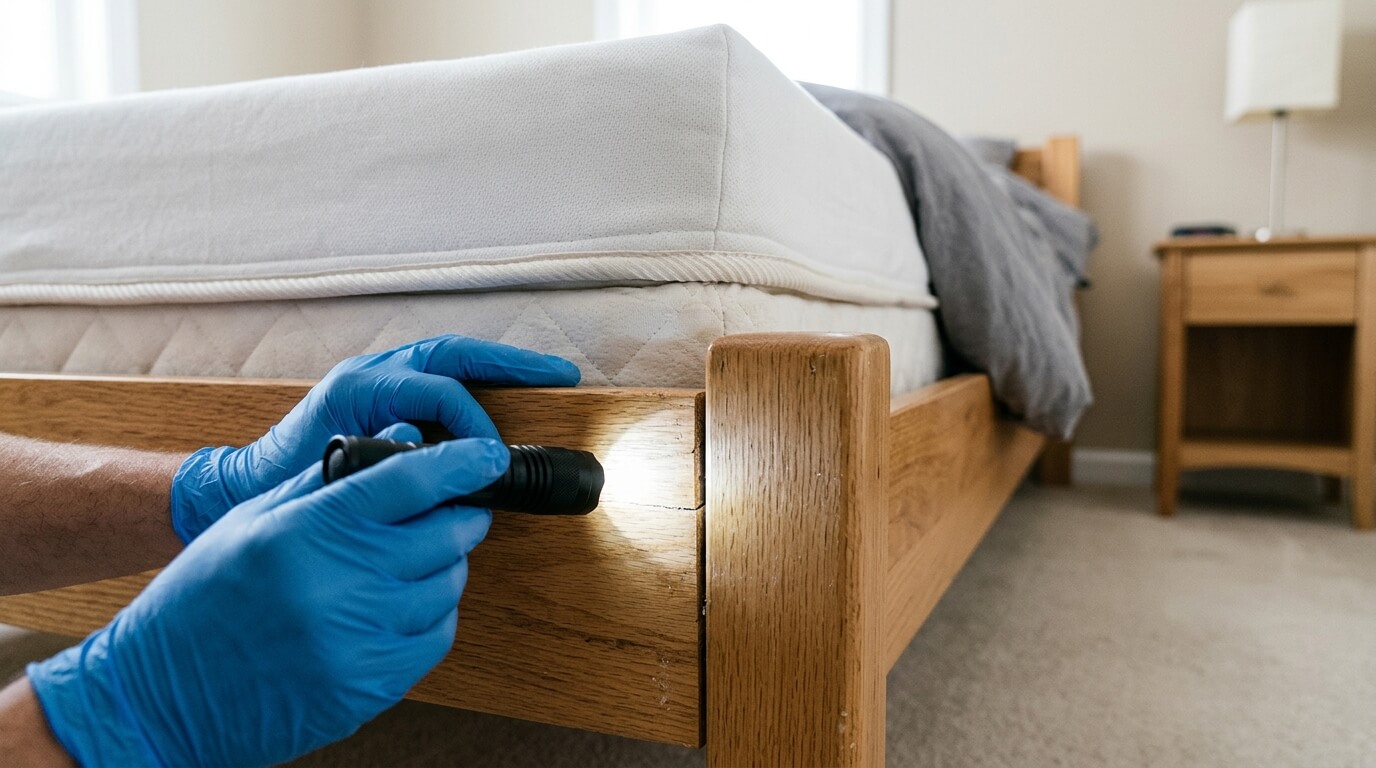
When to Call a Pest Professional
Arrange professional identification when the photograph is unclear, the specimen does not fit the comparisons, or dark insects keep appearing. Confirmed bed bugs warrant a treatment discussion, especially when multiple rooms or shared housing are involved.
Before agreeing to service, ask what pest has been identified, which evidence supports it, what preparation is required, and how success will be monitored. Ask whether follow-up visits are included and request the product labels or safety instructions relevant to your home.
Tell the provider about children, pets, sensitive belongings, and any difficulty preparing the room.
Do not judge success only by whether you itch the next morning. Keep inspection and monitoring records, and use the provider’s follow-up criteria to assess progress.
Conclusion
Black bed bugs are often a question of appearance or mistaken identity. Bed bugs normally look brown or reddish-brown; dark beetles, fleas, moisture-associated pests, and fecal spots require different interpretations.
Start with the evidence you can preserve: a specimen, a clear photograph, and its location. Inspect the surrounding seams and joints, then obtain identification before selecting treatment. If you have found a suspicious bug today, saving it is the most useful first action.Are bed bugs black or brown?
Adults are normally brown to reddish-brown. A dark specimen can appear nearly black under poor lighting. Use a well-lit view, body features, and professional identification rather than color alone.
Are baby bed bugs tiny and black?
Unfed young bed bugs are usually translucent or whitish-yellow. Their appearance changes after feeding, so a dark speck cannot be identified as a young bed bug without examining it.
What are tiny black bugs in bed that jump?
Fleas and springtails are possibilities. Bed bugs do not jump. Save a specimen: fleas and springtails have different sources and require different responses.
Does a tiny black beetle mean bed bugs?
No. An actual beetle is a different insect. Adult carpet beetles are one possibility, but the specimen must be identified before you can determine whether there is an infestation.
Are black dots on sheets bed bug eggs?
Bed bug eggs are pale and tiny, not uniformly black. Dark dots could be fecal marks or unrelated debris. Photograph them and inspect nearby seams for supporting evidence.
Can bed bugs be present without bites?
Yes. Some people have no visible reaction. Conversely, itchy marks alone do not establish bed bugs. Identification should rely on insects and other physical evidence.
Does finding one bug mean my mattress is infested?
One unidentified insect does not establish a mattress infestation. If it is confirmed as a bed bug, arrange a broader inspection: a single finding does not reveal how many bugs are present or where they are hiding.
Should I spray the mattress after finding one black bug?
First save and identify the insect. If treatment is needed, follow a pest-specific plan and use products only on surfaces permitted by their labels.