



You wake up, walk into the kitchen, flip on the light — and there they are. A tiny, determined army of ants zigzagging across your counter like they own the place.
It’s one of the most common household frustrations. According to the National Pest Management Association (NPMA), ants are the #1 nuisance pest in homes across the country. And the kitchen? That’s prime territory for them.
The good news: you don’t need to be a pest control professional to take back your kitchen. This guide walks you through everything — why ants show up, how to identify what type you’re dealing with, and the most effective methods about how to get rid of ants in kitchen for good.
Why Are There Ants in Your Kitchen?
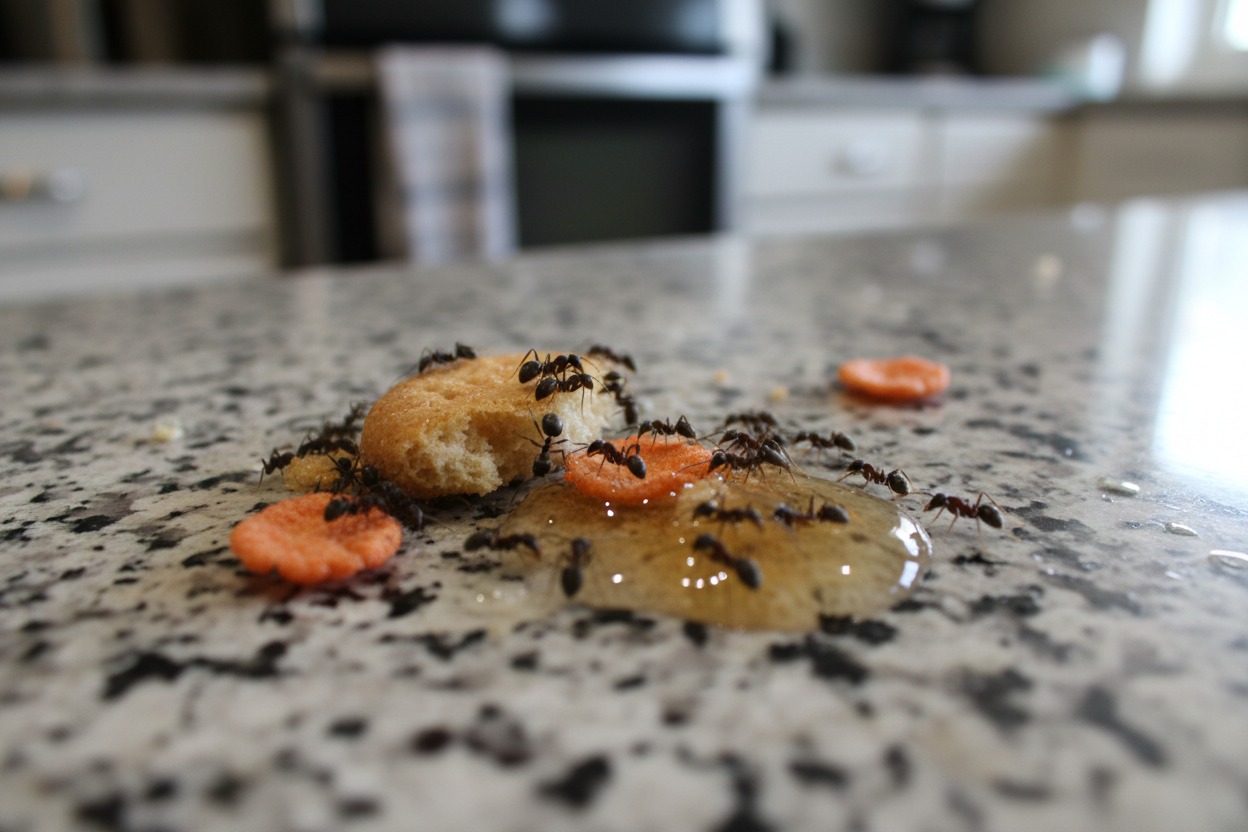
Before you can eliminate ants, you need to understand why they’re there. Ants don’t wander into your home randomly — they follow pheromone trails left by scout ants looking for food and water.
Your kitchen is essentially a five-star resort for ants. Here’s what attracts them:
- Food residue — crumbs, grease splatters, open containers
- Moisture — leaky faucets, damp sponges, standing water near the sink
- Sweet spills — sugar, syrup, juice, or even traces of soda
- Pet food — left out in bowls on the floor
- Gaps and cracks — entry points near windows, pipes, and baseboards
Understanding the root cause is step one. Without eliminating the attraction, any treatment you apply is only a temporary fix.
Identify the Type of Ant First
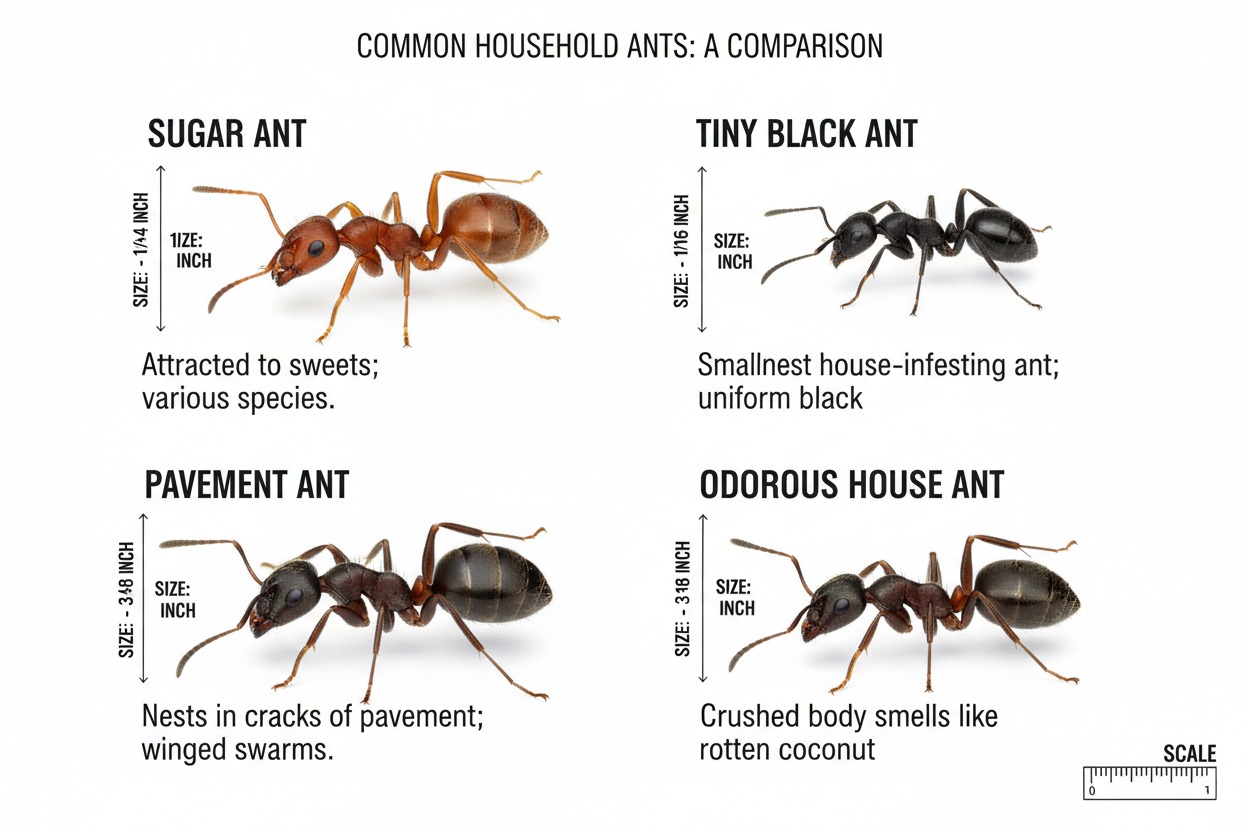
Not all ants are the same. Knowing your enemy helps you choose the right treatment.
| Ant Type | Appearance | Attracted To | Common Entry Points |
|---|---|---|---|
| Sugar Ants | Small, orange-brown | Sweet foods, syrup | Cracks in walls, windows |
| Tiny Black Ants | Very small, jet black | Grease, sweets | Foundation cracks |
| Odorous House Ants | Small, dark brown | Sugary foods | Door frames, pipes |
| Pavement Ants | Medium, dark brown | Almost anything | Foundations, cracks |
| Carpenter Ants | Large, black | Moisture + wood | Damaged wood, walls |
If you’re dealing with tiny ants in the kitchen or small black ants in the kitchen, they’re most likely odorous house ants or pavement ants — both very common and very treatable at home.
How to Get Rid of Ants in the Kitchen: Step-by-Step
Step 1 — Deep Clean Your Kitchen First
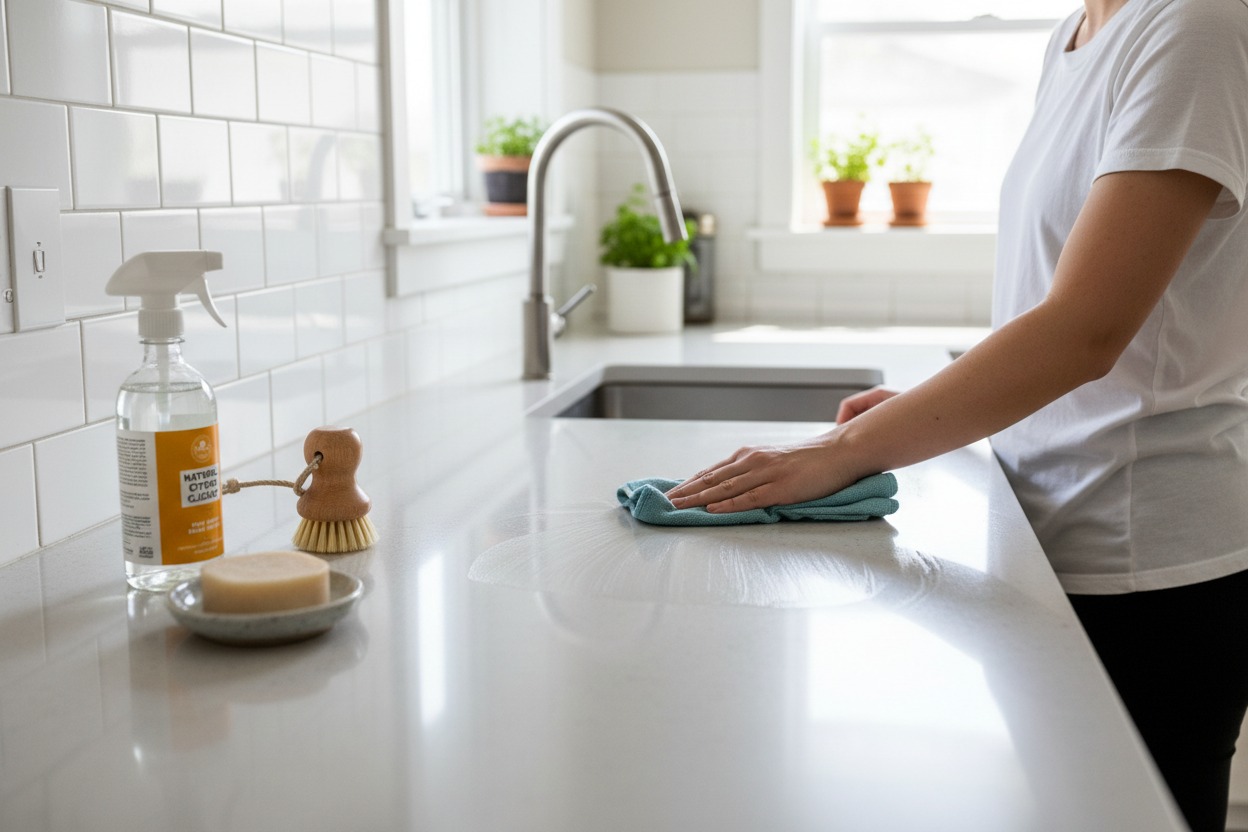
This might sound obvious, but a thorough clean is your most powerful first move.
- Wipe down every countertop with a vinegar-water solution (equal parts)
- Clean under appliances — toasters, coffee makers, microwaves
- Empty and wipe out your trash can, then use a lid
- Mop the floor with a few drops of peppermint essential oil added
- Store all food — especially sugar, honey, and cereal — in airtight containers
Cornell University’s pest management guidelines emphasize that sanitation is the cornerstone of any ant control strategy. No bait or spray will work long-term if food sources remain accessible.
Step 2 — Seal Entry Points
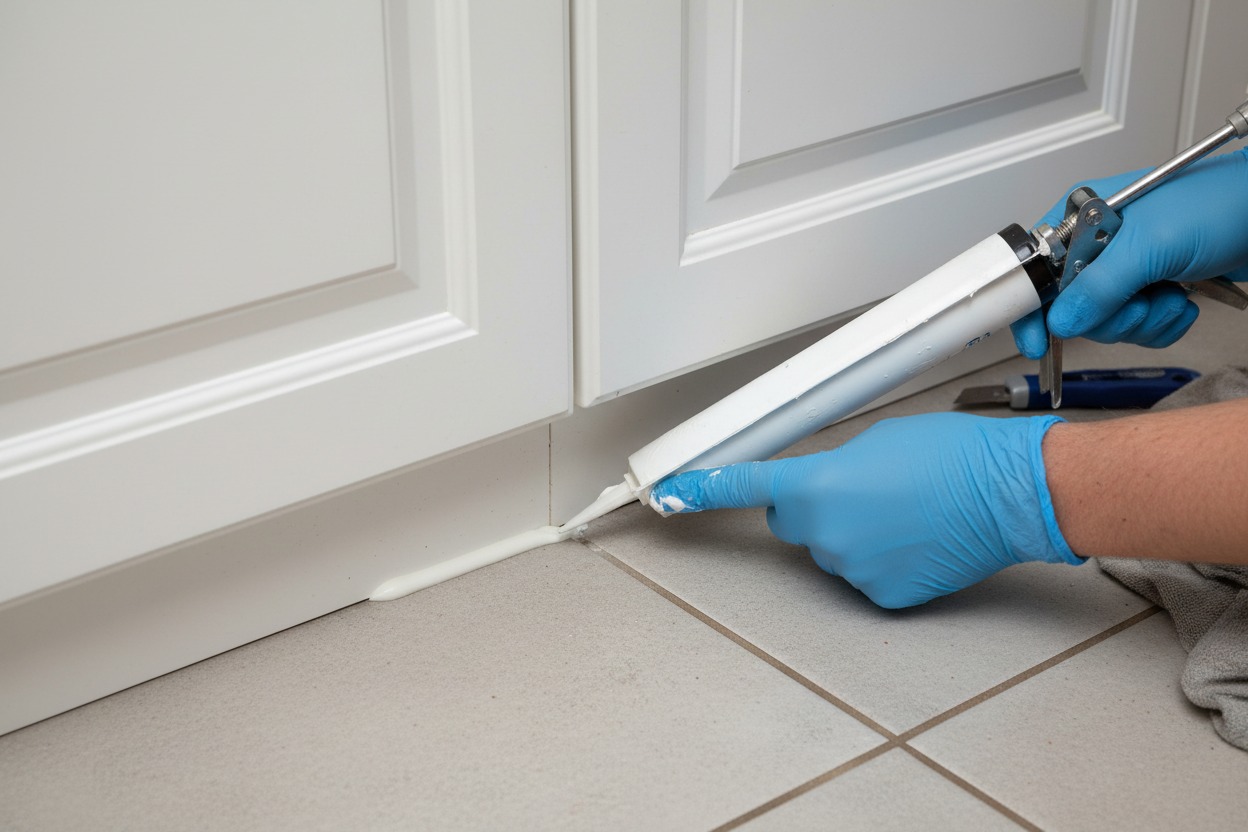
Ants can squeeze through a gap as thin as 1mm. Walk your kitchen perimeter and look for:
- Gaps around pipes under the sink
- Cracks near window frames or baseboards
- Spaces around door frames
- Holes where cables or wires enter the wall
Use silicone caulk (available at any hardware store) to seal these. This simple step cuts off their highway into your home.
Step 3 — Use Natural Repellents
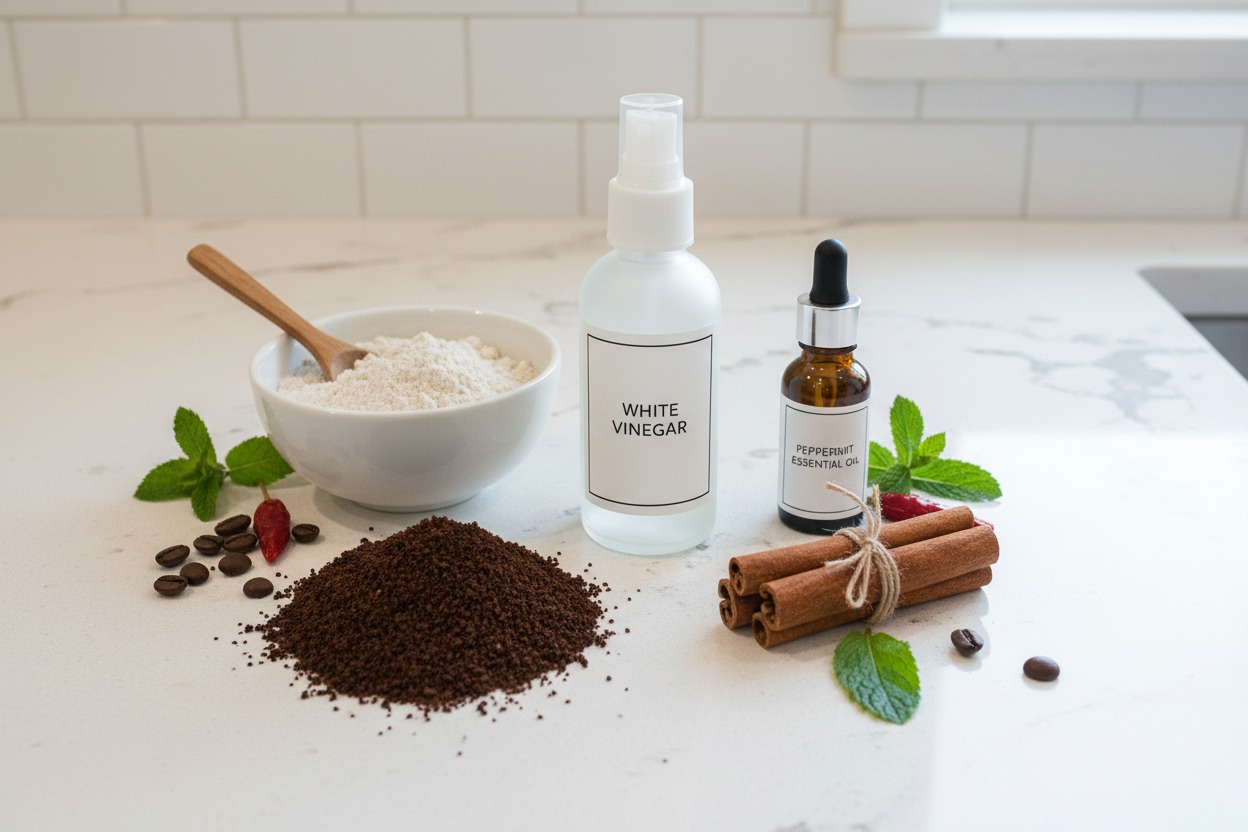
If you prefer to keep chemicals out of your cooking space (which is totally reasonable), these natural methods are genuinely effective:
White Vinegar Spray
Mix equal parts white vinegar and water in a spray bottle. Spray along ant trails, entry points, and countertops. The acetic acid disrupts their scent trails. Reapply daily.
Peppermint Essential Oil
Ants hate the strong menthol smell. Add 10–15 drops to a spray bottle with water and apply around entry points and under the sink. Research published in the journal Pest Management Science has noted essential oils like peppermint as effective natural insect deterrents.
Diatomaceous Earth (Food Grade)
Sprinkle food-grade diatomaceous earth along baseboards and under appliances. It’s a fine powder made from fossilized algae that damages the exoskeleton of ants — completely safe for humans and pets. This is one of the best solutions for getting rid of tiny black ants in the kitchen.
Cinnamon
Ground cinnamon or cinnamon essential oil placed at entry points acts as a natural barrier. Ants won’t cross it.
Coffee Grounds
Place used coffee grounds near entry points. The strong scent confuses their pheromone trails.
Step 4 — Set Ant Baits (The Most Effective Long-Term Solution)
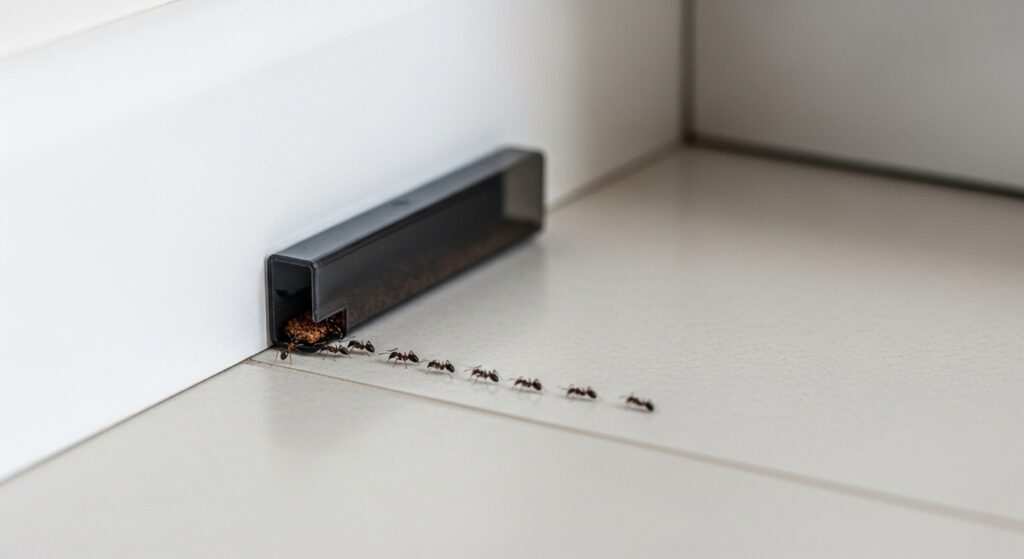
Here’s the thing about spraying ants directly: it only kills the ones you see. The colony — with its queen — stays intact and keeps sending more workers.
Ant bait is different. Worker ants carry the bait back to the colony, where it’s shared and eventually kills the queen. This eliminates the source.
Top-rated ant baits:
- Terro T300 Liquid Ant Bait — uses Borax, extremely effective against sugar ants and odorous house ants
- Advion Ant Gel — professional-grade, works on a broad spectrum of ant species
- Combat Max Ant Bait Stations — convenient pre-filled stations, great for small black ants in the kitchen
Pro Tip: Place bait near ant trails but don’t disturb the trail. You want them to find the bait naturally. Resist the urge to spray — it will deter them from taking the bait.
Step 5 — Apply Targeted Insecticide (If Needed)
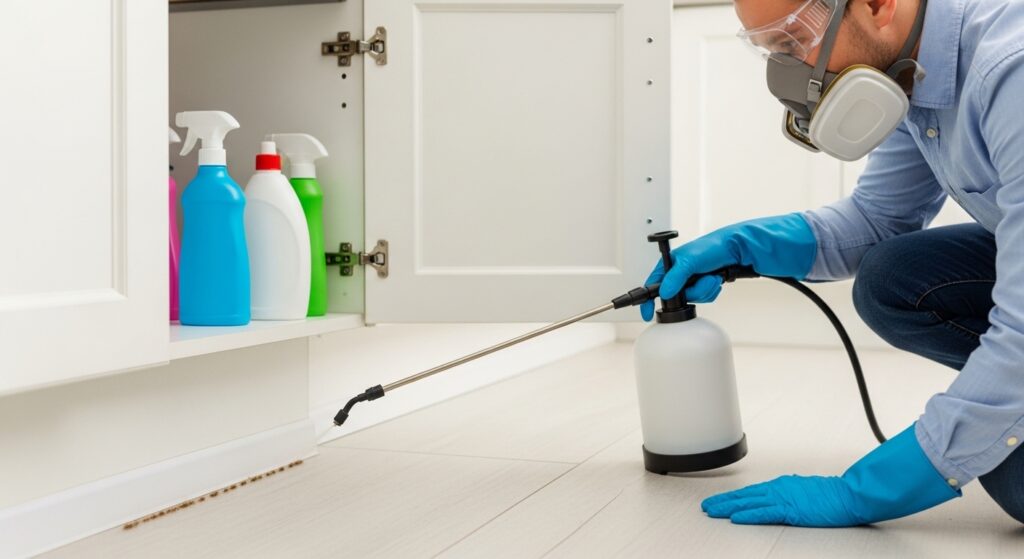
When natural methods and baits aren’t enough — particularly for large infestations — a targeted insecticide spray can help.
Look for products containing bifenthrin, deltamethrin, or cypermethrin — these are the active ingredients recommended by the EPA for indoor ant control.
Apply along baseboards, under cabinets, and around entry points — not on food prep surfaces.
Important safety note: Always follow label instructions and keep children and pets away from treated areas until dry.
Step 6 — Address Moisture Issues
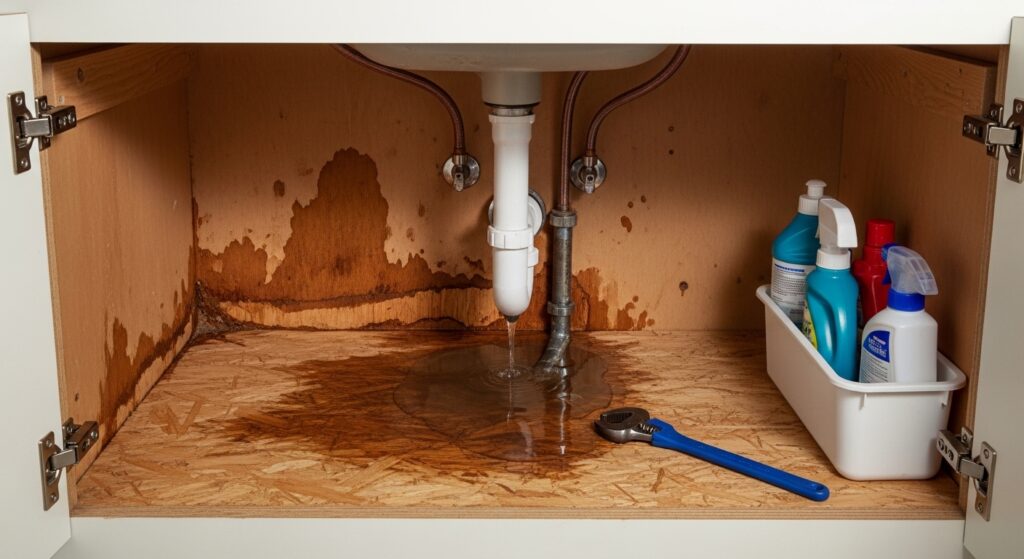
Many homeowners forget this step. Moisture is just as attractive to ants as food.
Check for:
- Leaky faucets or dripping pipes
- Water pooling near the dishwasher
- Damp dish sponges left near the sink
- Condensation on pipes
Fix leaks promptly. Let the sink area dry between uses. Keep sponges dry or in a ventilated holder.
How to Get Rid of Sugar Ants in Kitchen
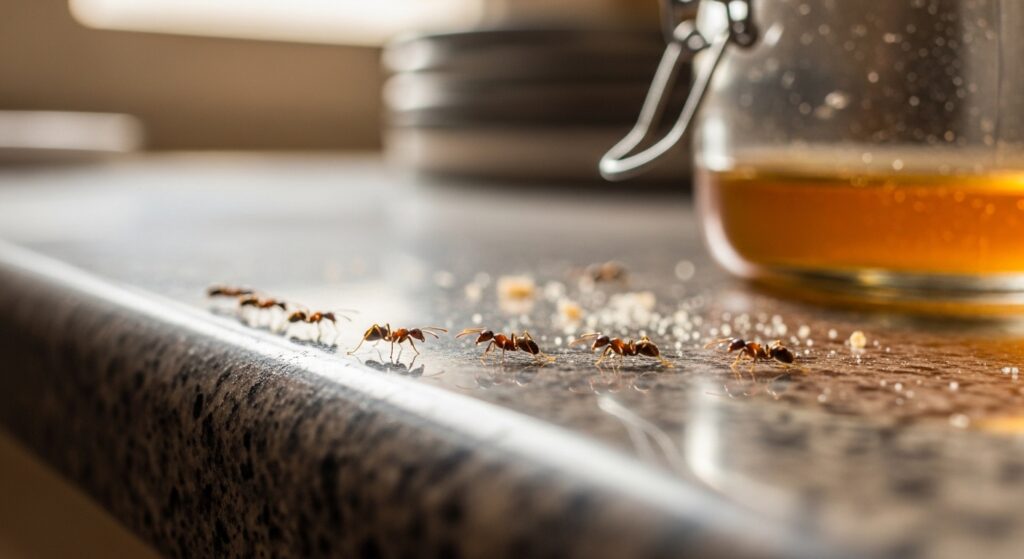
Sugar ants are a broad term for small ants that go crazy for sweet foods — most often, these are odorous house ants or pavement ants.
To get rid of sugar ants in the kitchen specifically:
- Remove all sweet food sources immediately — seal sugar in airtight containers
- Use Terro liquid bait, which uses Borax and sweet liquid to attract them
- Wipe down surfaces with white vinegar daily to disrupt trails
- Place bay leaves in your pantry and near fruit bowls — sugar ants despise the smell
How to Get Rid of Little Black Ants in Kitchen
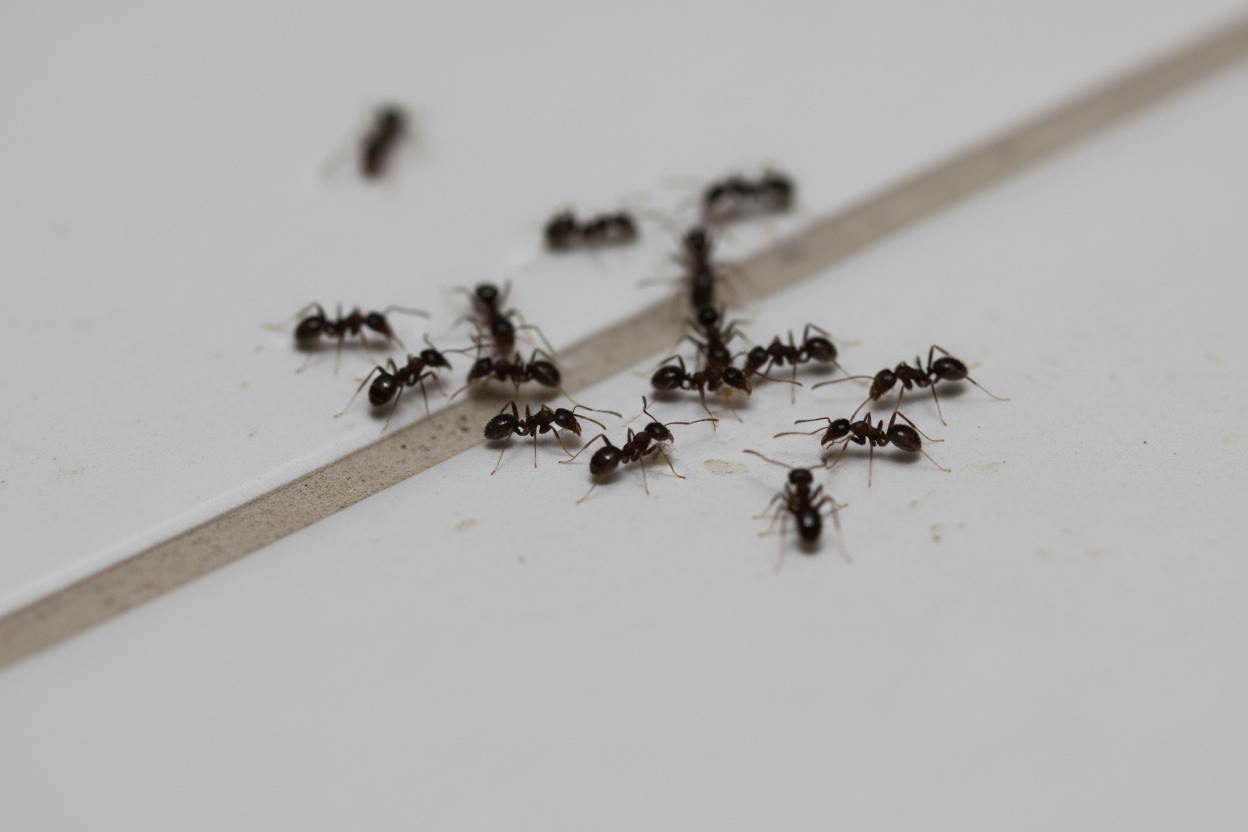
Small black ants in the kitchen are typically little black ants (Monomorium minimum) or odorous house ants. They’re often even tinier than sugar ants.
For these, the most effective approach is:
- Gel bait like Advion Ant Gel — it appeals to their preference for proteins and grease
- Diatomaceous earth along their entry trails
- Seal every crack you can find along the foundation and baseboards
They often nest in wall voids or under the flooring, so colony-killing baits are essential.
Expert Tips: What Pest Control Pros Actually Do
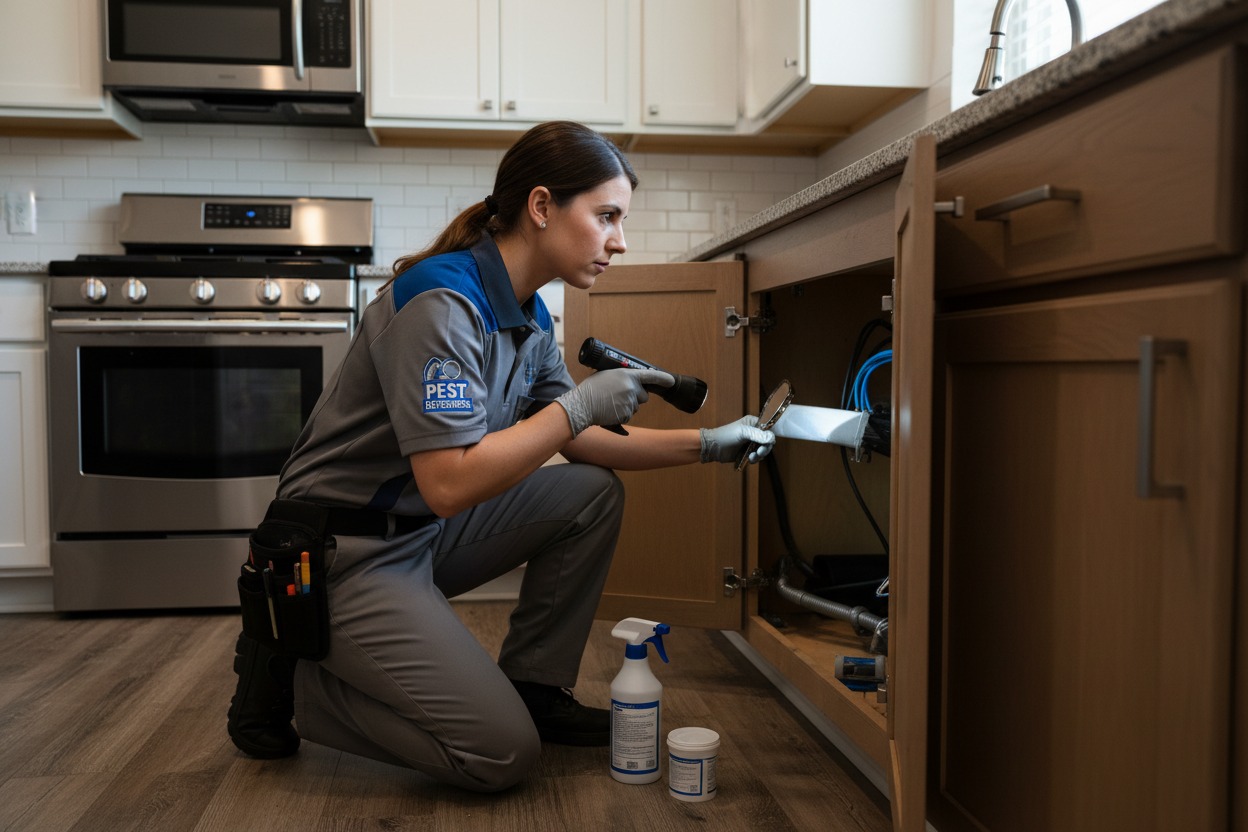
We spoke to several certified pest management professionals to get their real-world advice:
“Follow the trail, not the ant.”
Pros always trace ant trails back to the entry point before treating. Treating only where you see ants is reactive. Treating the trail source is proactive.
“Bait before you spray.”
Every professional will tell you: apply bait first. Spraying repels ants from the bait, which defeats the purpose.
“Rotate your products.”
Ants can develop aversion to bait they’ve been exposed to long-term. Rotate between sweet-based (Borax) and protein-based baits every 2–3 weeks for persistent infestations.
“Check the exterior too.”
Most infestations originate outside. Spray a barrier treatment along the exterior foundation and trim back any trees or shrubs touching the house.
The University of California Integrated Pest Management Program offers excellent free guidance on ant management that professionals frequently reference.
Prevention: How to Keep Ants Out of Your Kitchen for Good
Getting rid of ants is one thing — keeping them out is another. Here are habits that prevent re-infestation:
- Store food properly. Use glass or hard plastic airtight containers for pantry items.
- Empty trash daily. Never leave overnight trash in the kitchen.
- Clean up immediately. Don’t let dishes soak overnight or crumbs sit.
- Wipe pet food bowls after each feeding and don’t leave food out.
- Run a perimeter treatment outside your home once per season with an outdoor insecticide.
- Trim vegetation away from your house exterior — branches and shrubs act as ant bridges.
When to Call a Professional
Most ant infestations can be handled DIY. But call a licensed pest control professional if:
- The infestation is large and persistent after 2+ weeks of treatment
- You suspect carpenter ants (they can cause structural damage)
- Ants are appearing from inside walls or in multiple rooms
- You’re finding ants in electrical outlets or appliances
You can find a certified pest professional through the NPMA’s PestWorld locator.
FAQs: How to Get Rid of Ants in Kitchen
Q1: What kills ants in the kitchen instantly?
A: A direct spray of diluted dish soap and water kills ants on contact by clogging their breathing pores. White vinegar spray is also immediate. However, these only kill visible ants — for colony elimination, you need ant bait.
Q2: Why do I suddenly have tiny ants in my kitchen?
A: Sudden ant activity usually means a scout found a food or moisture source and laid a pheromone trail. Check for recent spills, open food containers, or a dripping faucet. Seasonal changes (particularly spring and summer) also trigger ants to forage more aggressively.
Q3: How long does it take to get rid of ants in the kitchen?
A: With proper baiting and sanitation, most infestations resolve within 1–2 weeks. The bait takes time to reach the queen and kill the colony. Don’t lose patience — it’s working even if you still see some ants in the first week.
Q4: Is it safe to use ant killer in the kitchen?
A: Yes, if used correctly. Always avoid applying chemical sprays on food prep surfaces, inside cabinets where food is stored, or near open food. Ant bait stations are the safest kitchen option — they’re enclosed and targeted.
Q5: Do sugar ants go away on their own?
A: Rarely. Once ants find a reliable food source in your kitchen, they establish a trail and return reliably. Without removing the food source and treating the colony, they will keep coming back — often in larger numbers.
Conclusion: Take Your Kitchen Back
Ants in the kitchen are frustrating — but they’re beatable. The key is combining approaches: clean thoroughly, seal entry points, use bait to kill the colony, and stay consistent with prevention habits.
The homeowners who struggle longest with ants are usually the ones who spray and hope. The ones who succeed treat the source, not just the symptoms.
Start with a deep clean and some Terro bait today. Give it 1–2 weeks. You’ll be surprised how quickly the problem disappears when you go after the colony.
Got a persistent ant problem that won’t quit? Consider consulting a licensed pest management professional for a targeted inspection. Sometimes the source is hidden in a wall void or exterior nest that needs professional treatment.
Have a tip that worked for you? Share it with others who are dealing with the same problem — your experience could save someone a lot of frustration.
Visit our blog for more interesting and engaging home improvement blogs.