


Does Turmeric Stain Clothes? How to Remove Fresh and Dried Stains
A little curry splashes onto your shirt, and rinsing leaves a yellow patch behind. Does turmeric stain clothes permanently, or can you still save the garment? The answer depends on the fabric, the spill, and what happens before the next wash.
Turmeric stains can be stubborn, but they are not automatically permanent. Removing the excess promptly and choosing a suitable laundry treatment gives you a sensible starting point. Before trying stronger products, check the care label and keep the garment away from the dryer while discoloration remains.Before you treat the stain
- Lift loose turmeric or food before rubbing or wetting the area.
- Check the care label and test unfamiliar treatments on a hidden area.
- Treat oily curry residue as well as the yellow discoloration.
- Use stronger stain removers only when both product and garment instructions allow them.
- A reddish color after baking soda does not prove the stain is disappearing.
- Inspect the garment before using a dryer or iron.
Why Does Turmeric Stain Clothes So Easily?
Turmeric contains curcumin, the pigment responsible for much of its strong yellow color. Curcumin doesn’t mix well with water, which helps explain why a plain rinse can leave discoloration. The visible food may disappear, but the fabric can still look yellow.
The other ingredients in a spill matter, too. Curry, marinades, turmeric milk, and homemade face masks can contain oil, dairy, or other residues. A useful treatment needs to address those ingredients as well as the pigment.
This also explains why turmeric and mustard can leave similar marks. Many prepared mustards contain turmeric for color, so their yellow stains can cause the same problem. If mustard caused the spill, follow our guide to how to remove mustard stains from clothes for advice specific to that food.
What Should You Do First?
Start by identifying the garment and the type of spill. Dry powder needs a different first step from a spoonful of oily curry. The cleaning method must also suit the fabric, lining, decorations, and care instructions.
If you spilled dry turmeric powder
Gently shake off loose powder over a suitable surface or lift it carefully without rubbing. Keep the powder away from clean clothing and nearby upholstery as you work. Avoid immediately wiping it with a wet cloth, which can spread the spice into a larger patch.
If you spilled curry or turmeric paste
Use a spoon or another blunt edge to lift excess food. Blot remaining moisture with a clean white cloth, working carefully so you do not spread the spill. Avoid vigorous rubbing, particularly on loosely woven or delicate material.
If the garment is dry-clean-only
Gently remove loose material and leave further treatment to a professional cleaner. Tell the cleaner that the stain contains turmeric and mention whether the spill also contained oil or dairy. Describe any products already applied, because that information can affect the next treatment.
How to Remove Fresh Turmeric Stains From Washable Clothes
Use this method as a starting point for everyday washable garments. Check the clothing label before you begin, even if you have washed the item many times. When the garment and cleaning product give different restrictions, choose a method that satisfies both.
1. Test the cleaner on a hidden area
Choose a suitable liquid laundry detergent or laundry stain remover. Follow the directions to test it on an inside seam or another hidden area. Stop if you see dye transfer, fading, or a change in the material.
A garment can contain several materials with different cleaning needs. Printed designs, elastic fibers, embroidery, and decorative trim may be less tolerant than the main fabric. Check those details before soaking the whole item.
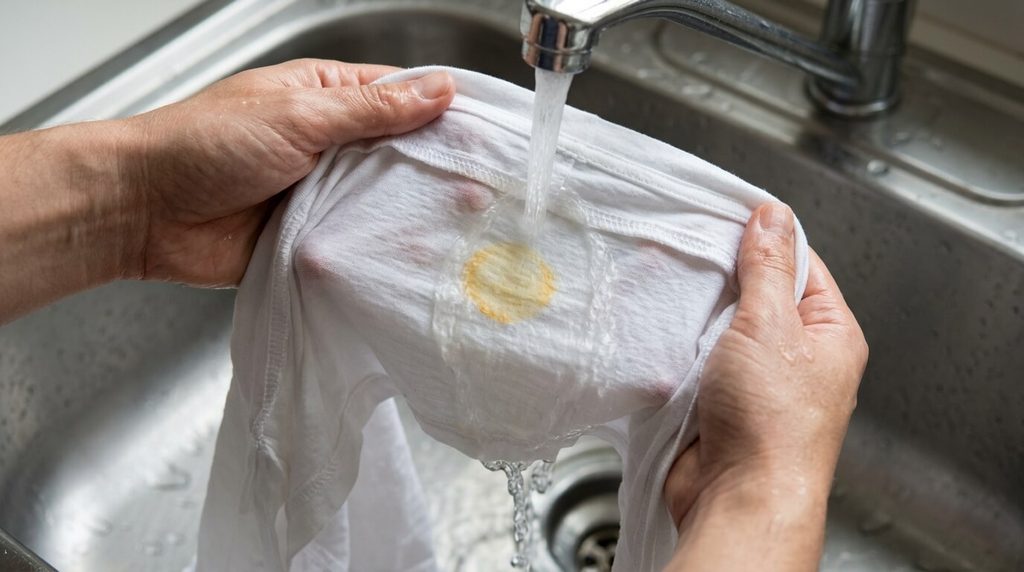
2. Rinse through the back of the stain
Turn the stained area inside out and hold it under cool running water. Direct the flow through the back of the mark so loosened residue moves away from the fabric. Keep the runoff from passing over clean sections of the garment.
Cool water is a practical first rinse for a fresh mixed food spill. You do not need to scrub while the water runs. Choose the main wash temperature based on the garment and its care instructions.
3. Apply a suitable laundry pretreatment
Use a liquid detergent approved for pretreating or a fabric-compatible stain remover. Apply it as directed and gently work it into the affected area if the instructions permit. Allow the recommended contact time, and do not let the product dry on the fabric unless the label allows it.
For curry, look for a greasy outline around the yellow mark. When appropriate, choose a laundry treatment intended for oily food stains. Do not add cooking oil to the garment as a homemade solvent, because that creates another residue to remove.
4. Wash at an approved temperature
Wash with the correct detergent dose and a temperature allowed by the care label. Persil’s turmeric stain instructions recommend pre-treating before washing at the warmest temperature the garment can handle. This means a blanket claim that all warm water instantly makes turmeric permanent is misleading.
Don’t choose the hottest cycle just because the stain looks severe. A temperature suitable for a cotton towel may be unsuitable for a stretch blouse. When needed, select a different treatment that works within the garment’s restrictions.
5. Inspect before drying
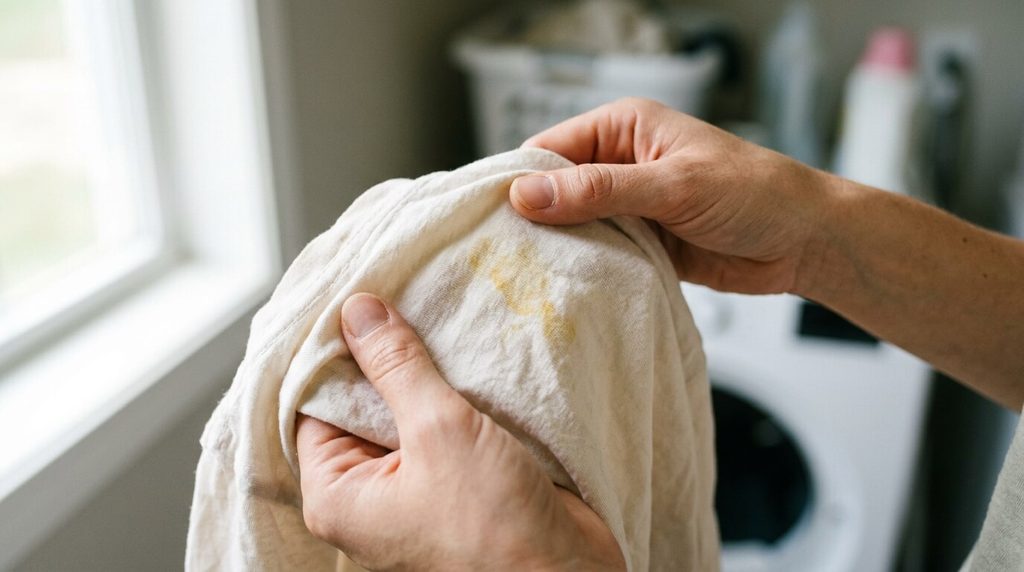
After washing, check the area in good light. Wet fabric can hide a faint yellow patch, so air-drying may help you judge the result. Keep the garment out of the tumble dryer and away from the iron while the stain remains.
If the mark improves, repeat a compatible treatment as directed in the product instructions. If the fabric starts fading or changing texture, stop. A damaged pale patch is not a successful stain-removal result.
How to Remove Turmeric Stains From Clothes After Drying
A dried stain is worth treating, but first consider how it dried. A mark that dried naturally before washing is different from one that went through a heated dryer. Neither situation guarantees permanent staining, although heat exposure can make removal harder.
When the spill dried before washing
Carefully lift away any dried food without scraping aggressively. Pretreat the affected area with a product suitable for the garment and allow its stated contact time. Wash according to the care label, then inspect before applying heat.
Dried residue may take longer to loosen than a fresh spill. Give the treatment the time its manufacturer recommends rather than compensating with hard scrubbing. Repeat only if the product allows it and the material remains in good condition.
When the garment has already gone through the dryer
Choose a compatible product intended for old or set-in stains. An oxygen-based laundry stain remover may work for some washable fabrics, provided both labels allow it. Follow the exact dilution, temperature, and soaking instructions rather than making a stronger solution.
For example, OxiClean’s directions for set-in stains describe a soaking treatment and exclude wool, silk, leather, specified blends, and dry-clean-only clothing. Those are instructions for that product, not a universal recipe for every oxygen cleaner. They also do not guarantee complete removal of every turmeric stain.
If careful treatment doesn’t improve the stain, consider professional cleaning. Tell the cleaner that you’ve already washed or heat-dried the garment. Avoid repeatedly increasing the concentration or soaking time beyond what the product label allows.
How to Remove Turmeric Stains From White Clothes at Home
White clothing makes yellow discoloration obvious, but it doesn’t automatically allow stronger chemicals. A white wool sweater and a white cotton dish towel have different cleaning limits. Start with the fabric and care instructions rather than the color alone.
Begin with detergent
Remove residue, rinse where appropriate, and pretreat with a suitable laundry detergent. Wash according to the label before deciding whether you need a bleaching treatment. Check for a greasy ring and a yellow patch.
Consider a compatible oxygen-based treatment
Use an oxygen-based laundry product only when it suits the garment. Follow its stated dilution and contact time, and dissolve powder fully when instructed. Do not make a concentrated paste unless the manufacturer provides directions for that use.
Use chlorine bleach only when permitted
Check both the garment’s bleach symbol and the bleach product instructions. White clothing may contain stretch fibers, finishes, or decorations that make chlorine bleach unsuitable. Never pour undiluted chlorine bleach directly onto a turmeric mark.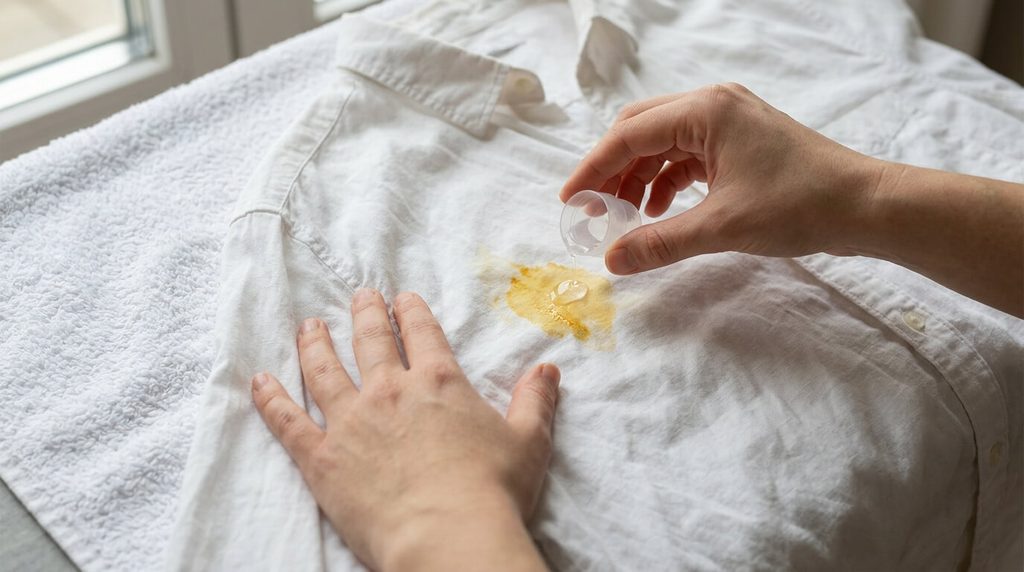
How Should You Treat Colored Clothes and Delicate Fabrics?
For colored clothes, the priority is removing the stain without fading the dye. Test unfamiliar treatments and watch for color transfer during cleaning. The phrase “color-safe” does not make a product suitable for every fabric or finish.
Silk, wool, and embellished garments need particular care. A standard laundry stain remover or oxygen soak may be prohibited even when the garment allows some washing. Follow the specific care instructions and ask a professional cleaner when the permitted treatment is unclear.Match the treatment to the garment
| Fabric or garment | Starting approach | Main precaution |
|---|---|---|
| Washable white cotton | Remove residue, rinse, pretreat, and wash. | Check bleach compatibility before stronger treatment. |
| Colored cotton or linen | Use a tested laundry treatment suitable for the fabric. | Stop if dye transfers or a lighter patch appears. |
| Polyester or stretch blends | Treat food and oily residue with a compatible product. | Observe restrictions for heat, bleach, and elastic fibers. |
| Washable silk or wool | Use only permitted gentle cleaning methods. | Many standard laundry stain removers are unsuitable. |
| Dry-clean-only clothing | Lift loose residue and consult a cleaner. | Avoid home soaking and experimental spot treatments. |
Can You Remove Turmeric Stains From Clothes With Baking Soda?
Baking soda appears in many home cleaning suggestions, but it is not a dependable standalone turmeric stain remover. It can also change the pigment’s appearance during treatment. That change can make it difficult to judge what is happening.
Why turmeric turns red after baking soda
Curcumin responds to the acidity or alkalinity of its surroundings. The American Chemical Society’s turmeric explanation shows how alkaline baking soda can turn turmeric red. A reddish-orange stain does not prove that the pigment is being removed.
If you have already used baking soda, rinse it away where the garment’s care label permits. Reassess the area after rinsing rather than adding another ingredient to force a color change. If needed, continue with a fabric-compatible laundry treatment.
Whether a baking soda paste is worth trying
A gritty paste can add unnecessary friction to fabric. It also lacks the garment-specific directions a suitable laundry product provides. Start with detergent rather than making baking soda an automatic extra step.
Do Vinegar, Lemon Juice, or Sunlight Remove Turmeric?
Household remedies often sound appealing because the ingredients are already nearby. However, kitchen ingredients do not come with reliable treatment directions for every garment. Consider their limits before applying them to clothing you value.
Vinegar and lemon juice
Neither vinegar nor lemon juice reliably replaces a suitable laundry treatment. Acid can affect turmeric’s color, but a color shift alone doesn’t prove the cloth is clean. Avoid combining either ingredient with detergent, stain remover, or bleach unless the product instructions explicitly allow it.
Sunlight
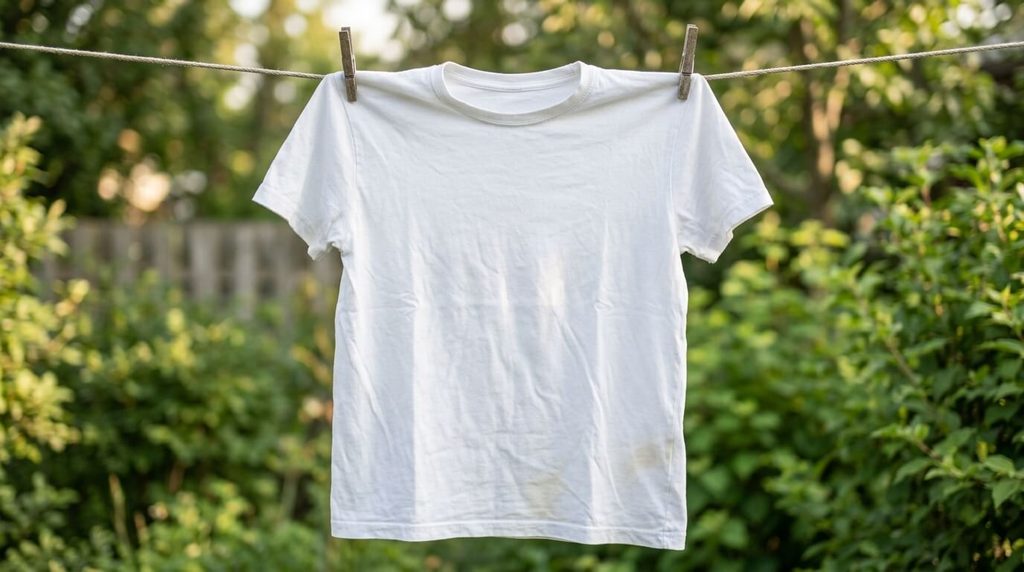
Sunlight may help fade residual turmeric discoloration, and some laundry guidance recommends drying in the sun after washing. Results vary by garment and exposure, so no number of hours reliably removes the mark. Prolonged sunlight can also fade the clothing’s own dye.
If outdoor drying is appropriate, rinse away cleaning products first. Follow restrictions such as drying in the shade, and check the garment periodically. Do not leave delicate or valuable colored clothing in strong sunlight, as it can bleach.
Does Turmeric Stain Clothes in the Washing Machine?
Turmeric can enter a wash through stained clothing, spilled powder, or a supplement left in a pocket. A normal cycle may not fully remove a concentrated yellow stain. Pretreatment is more useful than relying on the washer to handle the whole spill.
Remove excess material and check pockets before loading. Wash heavily affected clothing separately from unaffected items, particularly light-colored garments. Use the recommended detergent dose rather than adding extra in the hope of better results.
If several garments come out with yellow marks, keep them out of the dryer while you assess them. Check the drum, seal, and dispenser for visible residue. Clean the washer according to its manual before washing another load, using only the recommended products.
How Long Does Turmeric Stain Clothes?
There is no universal deadline after which turmeric becomes permanent. There is also no fixed number of days or washes after which the mark will disappear. The fabric, amount spilled, other ingredients, and previous treatment all affect the result.
Prompt action is still useful because it removes material before the spill sits longer. A small fresh mark may respond to one treatment, while an older or larger stain may need more attention. Judge progress by the remaining discoloration and the garment’s condition rather than a promised removal time.
Common Mistakes to Avoid
Rubbing before removing excess turmeric
Rubbing can spread powder or food over a larger area. Lift the loose material first, then begin an appropriate wet treatment. Handle gently throughout, especially on textured or delicate fabrics.
Applying several remedies without rinsing
Adding more ingredients makes the treatment harder to control. It can also create incompatible chemical combinations. Rinse as directed and reassess before choosing another method.
Using dish soap inside the washing machine
Dishwashing liquid is not a substitute for laundry detergent in a washer. It can create excessive suds and is not intended for that use. Choose a laundry product suited to the stain and the machine.
Drying before checking
A faint mark can be easy to miss on wet clothing. Inspect the garment in good light and air-dry when needed to assess it. Avoid tumble drying or ironing until you are satisfied with the result.
Continuing after damage appears
Stop if the fabric fades, roughens, stretches, or transfers dye. More scrubbing or stronger chemicals may worsen the damage. For a valuable garment, seek professional advice before trying another treatment.
Conclusion
Does turmeric stain clothes? Yes, but a yellow mark does not automatically mean the garment is ruined. Start by removing excess material, checking the care label, and using a suitable laundry pretreatment.
Keep cleaning methods within the fabric’s limits, and inspect the result before applying heat. For dried stains, use a compatible, labeled treatment instead of a stronger homemade mixture. If you have a fresh spill now, begin with the care label and gently lift away the loose turmeric or food.Is a turmeric stain permanent on clothes?
A turmeric stain is not always permanent. Some marks improve with prompt pretreatment and washing, while others leave lasting discoloration. Fabric type, heat exposure, and previous treatments affect the outcome, so complete removal cannot be guaranteed.
How do you remove turmeric stains from clothes after drying?
Choose a fabric-compatible laundry treatment intended for dried or set-in stains. Follow its directions, wash according to the care label, and inspect before using heat again. A suitable oxygen-based soak may help some washable garments, but it is not appropriate for every fabric.
How do you remove turmeric stains from white clothes at home?
Remove excess residue, rinse from the back where appropriate, and pretreat with suitable laundry detergent. Wash as labeled and consider a compatible oxygen-based treatment if discoloration remains. Do not assume white clothing is safe for chlorine bleach.
Why did my turmeric stain turn red after baking soda?
Turmeric contains curcumin, which changes color under alkaline conditions. Baking soda can shift the yellow pigment toward red or orange. This change alone does not show that the stain is disappearing, so rinse and reassess before continuing.
Does turmeric come out in a normal wash?
A normal wash may improve some turmeric stains, but it may leave yellow discoloration behind. Remove excess material and pretreat the area before washing. Check the results before putting the garment in the dryer.
Should you use hot or cold water on turmeric stains?
Cool water is a practical first rinse for a fresh food spill. For the main wash, follow the garment’s care label and the treatment instructions. Avoid choosing either temperature as a universal rule for every fabric.
Does dry turmeric powder stain clothes?
Yes, dry turmeric powder can leave yellow discoloration on fabric. Rubbing or wetting loose powder can spread it over a larger area. Gently remove as much powder as possible before starting a suitable wet treatment.