


When to Plant Zoysia Plugs for Healthy Growth and Better Coverage
The best time to plant zoysia plugs is usually late spring to early summer, after frost danger has passed and the grass is actively growing. This gives the plugs warm conditions for rooting and a long stretch of growing weather before dormancy. Your local climate determines the exact planting dates.
When deciding when to plant zoysia plugs, look beyond the month printed on the calendar. A warm weekend does not necessarily mean the soil has warmed enough for steady growth. Check nearby zoysia, the forecast, and whether you can keep the plugs watered after planting.
What to know before planting
- Late spring to early summer is the most dependable general planting window.
- Active growth and local conditions matter more than one nationwide planting date.
- New plugs need consistent moisture even though established zoysia can tolerate dry periods.
- Closer spacing usually produces faster coverage but requires more plugs.
- Rooting, spreading, and complete lawn coverage are different stages.
- A whole lawn may need several growing seasons to fill in, depending on spacing, climate, cultivar, and care.
Why Late Spring to Early Summer Is Best
Zoysia is a warm-season grass. It grows strongest in warm weather and slows as conditions cool. Planting near the beginning of that active period gives new roots and runners more time to develop.
Warm-season lawn establishment guidance recommends transplanting plugs in late spring or early summer. Those conditions help the grass establish while leaving a useful growing season ahead. Planting much earlier may add waiting time without adding much growth.
The same reasoning explains why planting late can be disappointing. A plug may stay alive but spread very little before the season ends. Survival alone does not mean it has developed the root system or coverage you wanted.
Plant Now or Wait? Check These Five Things
Before ordering plugs, walk the planting area and check the conditions. This is more useful than choosing a date because a neighbor planted that week last year. Weather and soil conditions can shift from season to season.
Your yard is ready when these conditions line up
- The usual spring frost risk has passed, and no damaging cold spell is forecast.
- Established zoysia nearby is producing fresh growth rather than remaining mostly dormant.
- The soil is workable and drains without persistent puddling.
- You can water the plugs and surrounding soil consistently after planting.
- A substantial period of warm growing weather remains before dormancy.
If several conditions are missing, use the time for preparation. Test the soil, fix irrigation coverage, and address weeds or drainage problems. Having the site ready makes it easier to plant promptly when the right window arrives.
What Month Should You Plant Zoysia Plugs?
The right month depends on when warm-season growth begins in your area. Coastal areas, inland locations, and higher elevations can differ even within one state. Local extension guidance should take priority over a broad regional chart.
The examples below show how the recommended window changes. They are local recommendations, not planting dates for every lawn in the surrounding region. Always compare them with current conditions.
How local planting windows differ
| Location | Published planting guidance | Practical takeaway |
|---|---|---|
| Caldwell County, North Carolina | Late April through June for plugs or sprigs. | Begin early in the active season, adjusting for local weather. |
| Maryland | Mid-May into June. | Early spring may still be too cool for useful zoysia growth. |
| Indiana | Mid-May to the beginning of July for establishment. | Planting later may leave too little time before winter. |
The Maryland zoysia planting recommendations illustrate why “plant in spring” needs more detail. The preferred period begins after much of early spring has passed. Waiting until growth is active can be more productive than planting plugs in cold ground first.
Near the cooler edge of zoysia’s range, suitability matters as much as timing. The Indiana establishment guidance discusses regional adaptation as well as planting dates. Choose a locally suitable cultivar before committing to a lawn conversion.
Should You Check Soil Temperature?
Soil temperature can help you judge whether the site is warming consistently. Use a soil thermometer or a nearby monitoring service, and follow the measurement depth used by your local guidance. One reading from a sunny afternoon can give a misleading picture.
Treat the measurement as one clue alongside active growth and the forecast. A shaded, wet corner may warm more slowly than an exposed part of the yard. Forcing the entire project onto one temperature reading offers little benefit when other conditions remain unsuitable.
Can You Plant Zoysia Plugs in Summer?
Yes, as long as the grass is actively growing and you can manage moisture. Warm weather supports growth, but small plugs have limited roots and can dry quickly. They need closer attention than an established lawn.
Choose a planting period when you can check the site each day. Avoid installing a large area right before you leave for a trip. If watering restrictions prevent suitable establishment care, postpone the work or plant a smaller section.
July is not equally suitable everywhere. Warmer locations may have a long season remaining, while cooler locations may be nearing their recommended cutoff. Local guidance helps you balance summer heat against the time available before dormancy.
Is Fall Too Late to Plant Zoysia Plugs?
Fall is often later than the preferred window, when temperatures soon turn cool. The plugs may remain alive without rooting or spreading as much as an earlier planting. That can leave more open soil and less established turf heading into winter.
Do not count backward from the first frost and assume every preceding week offers strong growth. Zoysia can slow before a frost occurs. A warm September afternoon doesn’t offer the same opportunity as planting near the beginning of summer.
Some mild climates allow a broader installation season. However, the ability to install plugs does not make every season equally effective. Ask for local advice before treating fall or winter planting as the best choice.
How Long Does It Take for Zoysia Plugs to Spread?
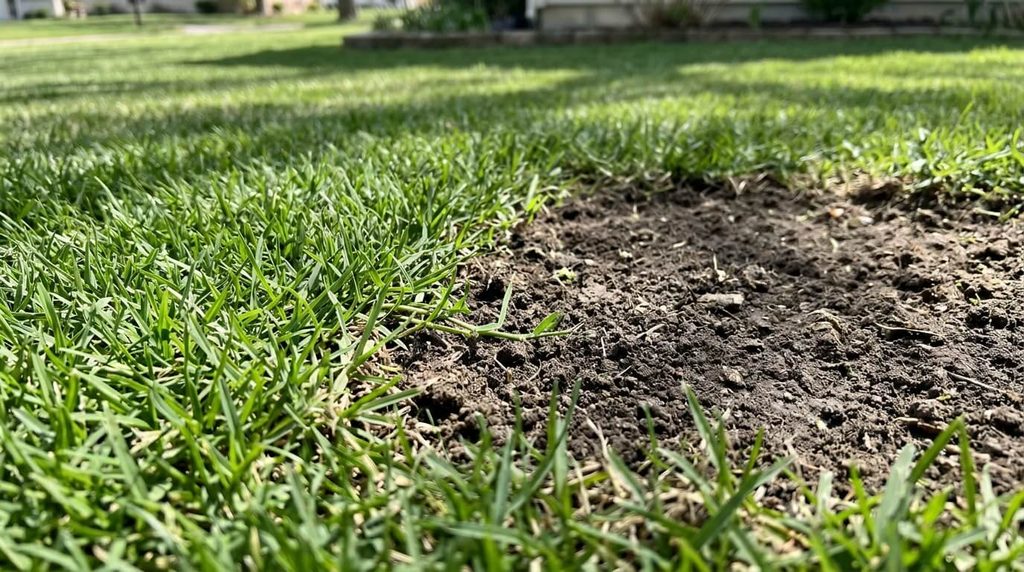
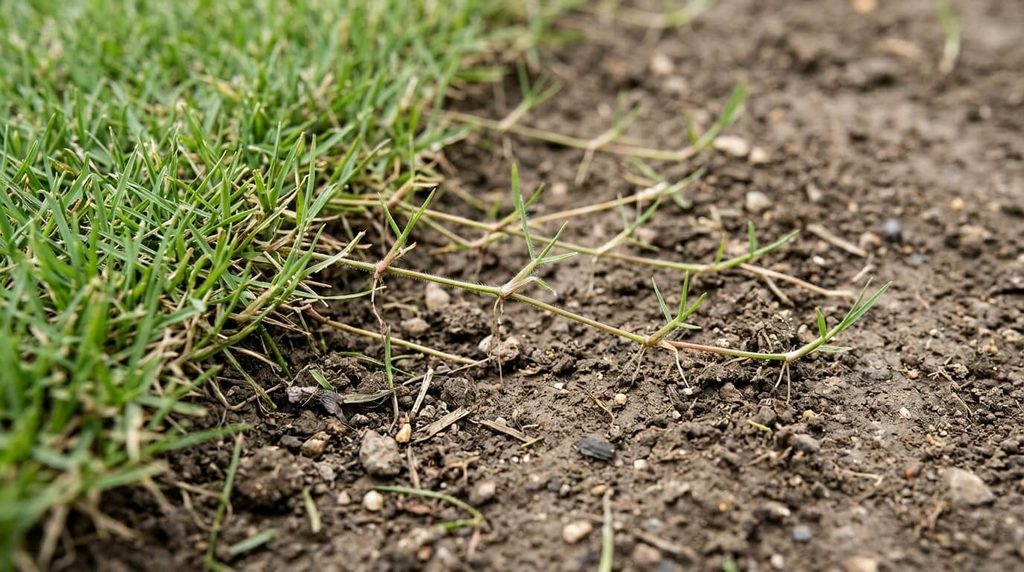
Zoysia spreads through aboveground runners called stolons and underground stems called rhizomes. A plug first needs to establish roots in the surrounding soil. Visible spreading and complete gap closure come later.
This is why different descriptions of “establishment time” can appear to conflict. One may refer to a plug becoming anchored, while another refers to a lawn reaching full coverage. Ask which stage is being described before relying on a timeline.
Rooting Is the First Stage
During early establishment, look for healthy new growth and signs that the plug is anchoring. Avoid repeatedly pulling plugs up to inspect their roots. Rooting speed varies with weather, plant condition, soil contact, and watering.
A rooted plug can draw moisture from the surrounding ground. It is not yet a finished lawn. Continue watching the bare spaces and new runners as growth develops.
Full Coverage Usually Takes Much Longer
The zoysiagrass maintenance calendar gives a typical plug-establishment range of two to four years in its regional guidance. That is useful for setting expectations about full establishment. It is not a universal waiting period for every repair or planting layout.
Small repairs surrounded by healthy zoysia may fill sooner because growth enters from the edges as well as from the plugs. Closely spaced plugs also have less ground to cover. Widely spaced plugs in competing turf can take much longer.
Avoid planning around a guaranteed number of inches per month. Cultivars, seasons, and sites don’t grow at a fixed rate. Compare progress during active growing periods rather than expecting the same change throughout the year.
How Far Apart Should You Plant Zoysia Plugs?
Many extension guides describe planting plugs 6 to 12 inches apart on centers. Some recommend closer spacing because zoysia spreads slowly. Follow the recommendation for your cultivar, plug size, and region.
Measuring “on centers” means measuring from the center of one plug to the center of the next. It does not mean leaving that distance between their edges. Getting this right affects both your order quantity and the amount of open ground.
Closer spacing requires more plugs but reduces the distance runners must travel. Wider spacing lowers the initial plant count while extending the period of weed control and care. Compare the whole project rather than only the tray price.
How Many Plugs Will You Need?
For a square grid, divide the planting area by the spacing in feet multiplied by itself. At 12-inch spacing, you’ll need roughly one plug per square foot. At 6-inch spacing, it is roughly four plugs per square foot.
A 100-square-foot area therefore needs about 100 plugs at 12-inch centers or 400 plugs at 6-inch centers. These are layout estimates and do not account for edges, obstacles, or replacements. Measure your actual site and confirm the supplier’s layout instructions before ordering.
Prepare the Lawn Before the Plugs Arrive
Good timing helps, but it cannot correct every site problem. Decide whether you are repairing a small patch or replacing a larger lawn. A full renovation usually needs more preparation than filling gaps in healthy existing zoysia.
Clear the Area and Identify Competition
Remove sticks, stones, toys, and other debris before working the soil. These tips for cleaning up a yard efficiently can help organize that first stage. Mark sprinkler heads and shallow irrigation components so planting tools do not damage them.
Identify the grass and weeds already growing there. Inserting zoysia plugs into dense, competing turf won’t guarantee a quick takeover. For a larger conversion, plan vegetation control before ordering planting material.
Test the Soil and Check Drainage
A soil test helps identify whether you need lime or specific nutrients. Take samples early enough to act on the results. Avoid applying amendments simply because they worked in another yard.
Check for standing water, compacted ground, and areas where grass repeatedly fails. New plugs will face the same underlying problems unless you address them. Correct drainage and soil issues before treating the site as ready.
Choose Healthy, Suitable Plugs
Buy rooted plugs of a cultivar suited to your climate and available sunlight. When repairing an existing lawn, match the cultivar where possible to reduce visible differences. Avoid using grass from areas with unresolved pest or disease problems.
Have the ground ready before delivery. Follow the supplier’s handling instructions and keep the plugs from drying out. Planting is easier when the layout, tools, and watering setup are ready.
How to Plant Zoysia Plugs Correctly
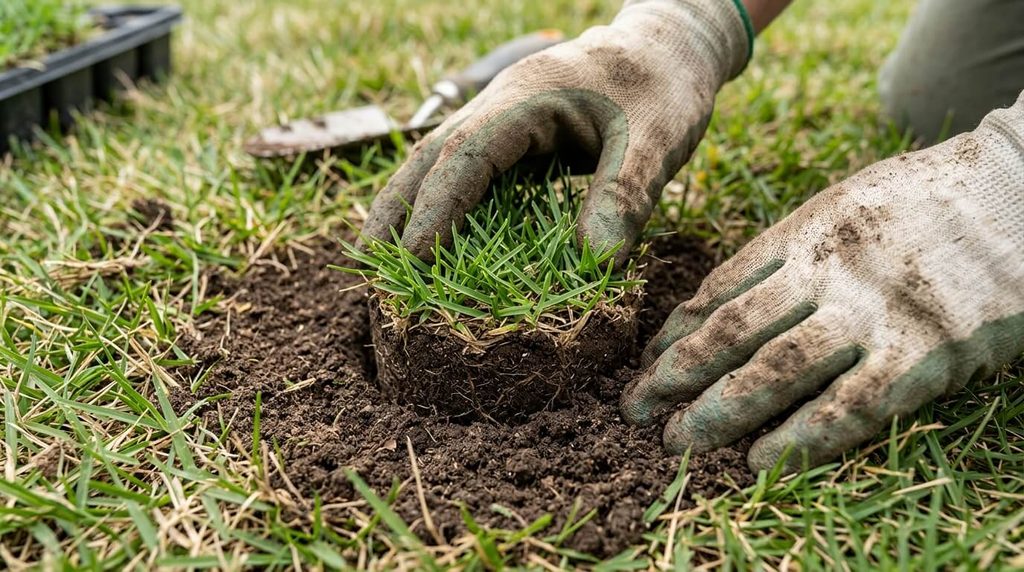
Plant when the ground is workable, and you can water afterward. The plug-establishment instructions emphasize planting at the right depth and ensuring good contact with the surrounding soil. For a small prepared area, follow these steps:
- Mark the spacing. Measure from center to center so the layout stays consistent.
- Remove a soil core. Make a hole that fits the plug without crushing its roots.
- Check the height. Set the top of the plug’s soil level with the surrounding ground.
- Firm gently. Close air gaps around the roots without burying the grass.
- Water promptly. Moisten the plug and nearby soil without creating runoff.
- Protect the planting. Keep unnecessary foot traffic and pets away while roots establish.
A plug sitting above the surface dries out faster and can get caught by a mower blade. A deeply buried plug leaves a depression and covers growth that should remain exposed. Take time to correct the height during installation.
Watering and Care After Planting
Your first job is to keep the plugs alive while roots grow into the surrounding ground. Once they are anchored, the routine should gradually change. Check the grass rather than following the same schedule indefinitely.
Keep Both the Plug and Nearby Soil Moist
Inspect moisture daily during early establishment. The original plug can dry even when soil nearby appears damp. Check both areas, especially during hot or windy weather.
Adjust watering for rainfall, soil texture, and sprinkler coverage. Apply water gently enough to avoid runoff. Do not leave the site constantly saturated.
As roots improve, gradually water less often and wet a deeper soil layers. Follow this transition as the plant progresses. Established zoysia’s drought tolerance does not remove the need to water new plugs.
Fertilize According to Soil and Local Guidance
Use soil-test results and regional recommendations to plan feeding. Fertilizer needs vary with climate, cultivar, and establishment stage. More nitrogen does not automatically produce better long-term results.
Follow the product label and any local fertilizer restrictions. Avoid placing concentrated fertilizer in direct contact with roots unless the labeled method specifically allows it. Do not try to force late-season growth as the grass approaches dormancy.
Mow When the Grass Is Rooted and Growing
Start mowing when plugs are firmly anchored, actively growing, and tall enough to need cutting. The soil should be firm enough that the mower does not leave ruts. Loose plugs should not be exposed to a mower that may lift or dislodge them.
Use the mowing height recommended for your cultivar and conditions. Keep blades sharp and avoid removing more than one-third of the leaf height at once. Do not scalp the lawn to make it spread faster.
Remove Weeds Before They Become Established
Bare ground between plugs gives weeds room to grow. Remove small weeds carefully before they crowd the new grass. Avoid disturbing young roots and runners while working.
Check herbicide instructions before treating the area. A product labeled for established zoysia may have restrictions for newly planted turf. Previous applications can also affect the timing of a new planting.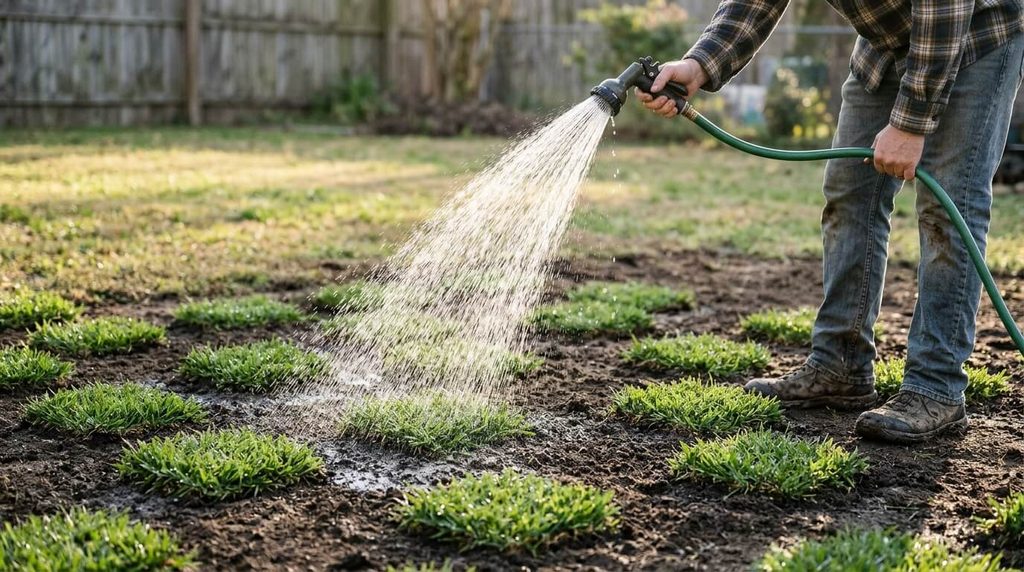
Why Zoysia Plugs May Not Be Spreading
Begin by checking the season. Cool conditions can slow healthy Zoysia, so limited fall growth does not automatically mean failure. Compare progress during warm, active growth before concluding.
If growth remains poor during suitable weather, inspect the site. Uneven sprinkler coverage, shade, raised plugs, or compacted soil may explain why one section performs differently. Look for a cause before adding fertilizer or pesticides.What to check when progress is slow
| What you notice | What to check first |
|---|---|
| Plugs dry while nearby soil looks damp | Whether water reaches the original root ball and whether the plug sits too high. |
| Growth is weaker near buildings or trees | Available sunlight, tree-root competition, and irrigation coverage. |
| Soil remains wet around struggling plugs | Drainage, compaction, and excessive irrigation. |
| Healthy plugs remain separated by large gaps | Spacing, cultivar growth rate, and the amount of active growing time. |
| Weeds are overtaking the open soil | Competition and a weed-control plan suitable for newly planted zoysia. |
Persistent decline may need local advice. Take clear photographs and note watering, fertilizer, herbicide use, and planting dates. That information is more useful than treating every slow patch the same way.
When Sod May Be a Better Choice
Plugs suit projects where you can accept gradual coverage and manage weeds between the plants. They can work for small repairs or when reducing initial planting-material cost matters. The tradeoff is time and continued care during the open-soil period.
Compare sod if you need immediate surface cover or the site is vulnerable to erosion. Sod still needs time to root and careful watering after installation. It does not turn an unsuitable site into a suitable one.
Choose the method around the real deadline. A whole yard planted with plugs should not be promised as a finished lawn for an event a few weeks away. Match the budget, site, and expected use before buying.
Conclusion
The best time to plant zoysia plugs is near the start of strong warm-season growth, usually late spring to early summer. Check local conditions, prepare the soil, and make sure watering is practical before ordering. Start with a manageable area and spacing that fits your timeline, then give the grass time to root and spread.
Frequently asked questions
When is the best time to plant zoysia grass plugs?
Late spring to early summer is the best general window. Wait until frost danger has passed and local zoysia is actively growing. Use regional recommendations to narrow the dates.
Can I plant zoysia plugs in July?
It depends on your location and access to water. July may offer useful growing time in warmer areas but can be late near the cooler edge of zoysia’s range. Check local establishment guidance before ordering.
Is September too late to plant zoysia plugs?
It is often later than the preferred window where fall temperatures soon slow growth. A warm day does not guarantee enough time for establishment. In mild climates, ask for local guidance rather than assuming the same cutoff applies everywhere.
How long does it take for zoysia plugs to spread?
Rooting and visible spreading happen before complete lawn coverage. Full establishment may take several growing seasons, with some regional guidance giving two to four years. Small repairs and closely spaced plantings can progress sooner.
Should zoysia plugs be planted 6 or 12 inches apart?
Both spacings appear in extension guidance, depending on the situation. Closer spacing requires more plugs but leaves less ground for runners to cover. Follow the recommendation for your cultivar, plug size, and region.
Will zoysia plugs replace an existing lawn?
They may spread into surrounding turf, but a quick or complete takeover is not guaranteed. Competition, shade, climate, and care affect the result. A planned renovation provides more control than planting plugs into unsuitable turf and waiting.
Can I take plugs from my own zoysia lawn?
Yes, healthy established turf can provide plugs for repairs. Move them during active growth and avoid spreading unresolved pest or disease problems. Fill the donor holes with suitable soil and care for both areas afterward.
Should I water new plugs like established zoysia?
Not at first. New plugs have limited roots and need frequent moisture checks. Gradually reduce watering frequency as the roots extend into the surrounding soil.