


Key Takeaways: How to Compare Raleigh Neighborhoods Before You Buy
- The right Raleigh-area neighborhood should fit daily life, not simply the purchase price.
- Compare the complete monthly cost, including taxes, insurance, HOA dues, maintenance, and transportation.
- Test commutes and visit neighborhoods at multiple times of day.
- Review the home type, nearby services, and possible development before making an offer.
- Use the same scorecard for every area so emotions do not outweigh practical needs.
Choosing a home in Raleigh, North Carolina, is also a choice about how you want each ordinary day to work. A lower price, a larger yard, a shorter commute, a nearby greenway, a quieter street, or easier access to restaurants can all matter, but not in the same way for every buyer. The strongest comparison starts with your routines, not a list of popular neighborhood names.
For buyers who want local perspective alongside their own research, Raleigh NC real estate experts DeRonja Real Estate offer home search tools, buyer resources, and neighborhood information through Corcoran DeRonja Real Estate. The Raleigh-based team works across Raleigh, Durham, Chapel Hill, Cary, Apex, Clayton, and other Central North Carolina communities, with experience across single-family homes, townhomes, condos, new construction, and land. That breadth helps when comparing property options that may meet the same budget in very different ways.
1. Start With Your Daily Life
A neighborhood can look ideal during a quick weekend showing and still create friction during the workweek. Before opening listing sites, write down where household members work, study, shop, exercise, receive medical care, and spend time with friends or family. Consider how often you expect to travel toward downtown Raleigh, Research Triangle Park, Durham, Chapel Hill, or another regular destination.
Then identify the trade-offs you can accept. Some buyers would rather have a compact home near dining, parks, and errands. Others may prefer more interior space, a garage, or a private yard, even if that means driving more often. Neither approach is universally better. The goal is to recognize which conditions will still feel worthwhile after the excitement of moving has passed.
The same approach applies in other housing markets. These tips on how to choose a neighborhood that fits your daily life can help you compare location, commuting, privacy, and convenience before making a final decision.
2. Compare the Full Cost, Not Just the Listing Price
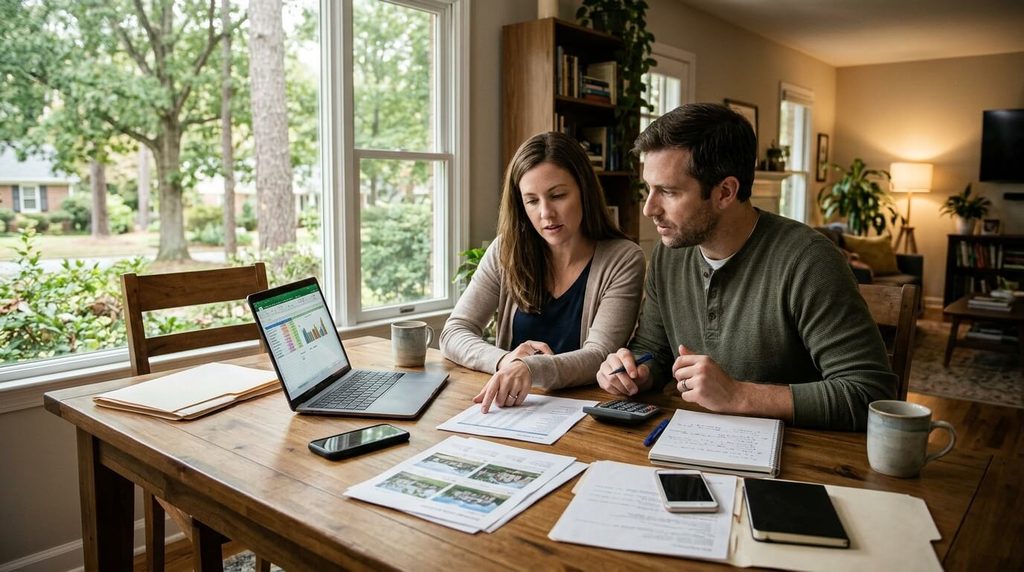
A home payment is only one part of the budget. Build a realistic monthly estimate for each property or neighborhood that includes mortgage principal and interest, property taxes, homeowners insurance, HOA or condo dues when applicable, utilities, expected maintenance, and any planned improvements.
Include transportation in the comparison
A less expensive home farther from regular destinations may entail additional fuel, toll, parking, vehicle maintenance, and time costs. For example, compare a home that saves money upfront but adds daily driving against a smaller home that reduces travel. The correct answer depends on your budget and schedule, but the comparison should be made before, rather than after, an offer is accepted.
3. Study Commute and Access in Real Conditions
Maps help estimate distance, but they can’t show how a route feels on a normal weekday. Drive from the prospective neighborhood to work, school, childcare, or other frequent destinations around the times you would actually travel. If possible, repeat the route in the opposite direction.
• Note travel time, turning movements, and alternate routes.
• Check access to major roads, transit options, grocery stores, and urgent services.
• Observe school drop-off activity, traffic noise, and pedestrian conditions.
• Consider whether the location would remain workable after a change in job, school, or household.
4. Look Beyond One Home Type
Raleigh-area buyers may find very different choices across Raleigh, Cary, Apex, Wake Forest, Knightdale, Wendell, Clayton, Durham, and Chapel Hill. Instead of ruling out an area based on one open house, compare several property types. An older home may offer established landscaping and a mature street pattern. New construction may offer a newer layout and a builder’s warranty. Townhomes and condos can reduce exterior responsibilities, while detached homes and properties with more land may offer greater privacy and more upkeep.
Ask what you are truly paying for. A larger home may solve a space problem. A smaller, well-located home may make daily errands easier. A condo near shops may suit a low-maintenance lifestyle, while a home farther out may better serve a household that values a workshop, pets, gardening, or outdoor room.
5. Check Schools, Parks, and Everyday Services
Tour the area as a resident would. Walk nearby streets, visit parks and greenways, stop at grocery stores, and look for practical services such as pharmacies, childcare, medical offices, and libraries. Visit during both daytime and evening hours to notice lighting, noise, parking, drainage, and activity levels.
Families considering public schools should verify an address rather than relying on a listing description. Wake County households can use the district’s base school assignment lookup by address to review current assignment details. School assignments and transportation information should always be confirmed directly before a purchase decision.
6. Review Growth and Development Nearby
Vacant land, a quiet commercial corner, or an older building near a prospective home may change over time. Development can add homes, shops, roads, services, and activity. It can also bring construction traffic, different sightlines, or a busier street. Buyers do not need to predict every future change, but they should investigate what is visible and what is publicly proposed.
Within Raleigh, the city’s current development activity records can help buyers review active planning and development cases by location. For properties outside Raleigh city limits, check the relevant town or county planning department, and ask the seller’s agent about known nearby proposals.
7. Use a Simple Neighborhood Scorecard

After each visit, give each neighborhood a score from 1 to 5 across the same categories. Keep notes specific enough to revisit later.
Budget
Total monthly ownership cost, repair needs, and flexibility for future expenses.
Commute
Typical travel time, route choices, and convenience for essential trips.
Home fit
Layout, storage, lot, condition, and room for changing needs.
Amenities
Parks, shopping, dining, schools, services, and recreation.
Neighborhood feel
Noise, walkability, street activity, upkeep, and privacy.
Future outlook
Nearby development, infrastructure, and the property’s long-term appeal.
If you are buying with a partner, complete the scorecard separately before comparing notes. This often reveals where priorities align and where a compromise is needed.
8. Questions to Ask Before Making an Offer
• What will make life easier here on a normal Tuesday?
• What is the most likely daily inconvenience?
• What will the full monthly cost be after insurance, fees, upkeep, and transportation?
• Are there signs of drainage issues, traffic congestion, road noise, or deferred maintenance?
• What is planned or proposed nearby, and how might it affect the property?
• Would this home still fit if work, school, caregiving, or household needs changed?
Final Checklist
1 Choose three to five neighborhoods for a fair comparison.
2 Visit each one at different times and on different days.
3 Calculate the full cost of ownership for representative homes.
4 Test regular driving routes during realistic traffic periods.
5 Confirm school, service, and planning information directly.
6 Score each location using the same priorities.
7 Revisit the strongest option before submitting an offer.
The best Raleigh-area neighborhood is not necessarily the one with the most features. It is the one that supports your budget, routines, home needs, and future plans with the fewest compromises that matter to you.