


Boss Hammer Beast Hammer BH28STPFM: Is the 28 oz Beast Right for You?
The Boss Hammer Beast Hammer BH28STPFM is worth considering if you already like a heavy framing hammer and want a milled face with a poly-fiberglass handle. It is listed with a 28 oz steel head, but the assembled tool weighs 41 oz, or 2 lb 9 oz. Use that total weight when comparing what you will carry and swing.
The Beast makes the strongest case for rough carpentry where you have room to work and surface marks are acceptable. A lighter hammer may suit mixed repairs, frequent overhead work, or users who find the extra mass difficult to control. Below, you can compare the configurations, see what each feature adds, and check the details that matter before ordering.
What matters before buying
- Compare complete-tool weight, not just the head-weight label.
- Check that the selected item is BH28STPFM with the intended face and handle.
- Choose a milled face only where patterned surface dents are acceptable.
- A fiberglass handle does not guarantee injury prevention or electrical protection.
- The rip claw is not permission to apply unlimited prying force.
- Verify availability, return terms, warranty eligibility, and accessory fit before paying.
BH28STPFM specifications: head weight and total weight
The published Beast product description identifies a heavy steel framing configuration with a fiberglass handle. It also distinguishes the head weight from the weight of the assembled tool. That distinction is more useful than treating every number in a product title as the same measurement.
The table below summarizes the published configuration, not independently measured results. Some listings group several weights or face styles together, so confirm the selected variation. Do not assume a generic family description applies to every item in that listing.
Published Beast configuration
| Specification | Published detail |
|---|---|
| Model | BH28STPFM |
| Head weight | 28 oz |
| Complete-tool weight | 41 oz, or 2 lb 9 oz |
| Head material | 4340 steel |
| Face | Milled; hex-face design listed |
| Claw | Rip claw |
| Handle | Poly-fiberglass; vinyl ester resin fiberglass core listed |
| Grip | Textured, marketed as no-slip |
| Finish | Black Cerakote listed |
| Layout feature | Boss Signature Squaring System |
| Origin | Listed as made in the USA |
Beast versus 18 oz and 22 oz Boss hammers
The clearest comparison starts with both head weight and complete-tool weight. The table includes an 18 oz hickory model and a 22 oz poly-fiberglass model, so the handle choice is visible too. These figures describe specific configurations, not every hammer sold under the same head-weight label.
Compare the complete configurations
| Configuration | Head weight | Listed total weight | Handle |
|---|---|---|---|
| BH18STHI16M | 18 oz | Approximately 26.2 oz | Hickory |
| 22 oz poly-fiberglass model | 22 oz | 35 oz | Poly-fiberglass |
| BH28STPFM Beast | 28 oz | 41 oz | Poly-fiberglass |
The listed complete-weight difference between the Beast and the 22 oz poly-fiberglass model is 6 oz. That gives you a useful starting point, although balance and grip can change how the tools feel. It does not establish how many strikes either hammer will need for a particular nail.
Our boss steel hammer 22 oz. Milled face guide covers the next option down in head weight. Check the selected handle because hickory and poly-fiberglass versions are different configurations. Compare the assembled tool rather than assuming every 22 oz listing represents the same purchase.
If you prefer a wooden handle, the boss hammer bh18sthi16m 18 oz steel hybrid hammer is a more relevant alternative. It changes the handle material and the head weight. When possible, try the grip with your usual gloves, and check that the tool fits your hand.
When the Beast is a sensible choice
Consider it when rough framing is a regular part of your work and a heavy steel hammer already suits your technique. Open access matters because you need room to place the face squarely on the nail. Its layout features may also be useful if you often switch between marking lumber and nailing.
For example, making a few layout marks and driving nails in accessible rough framing is different from fitting finished trim inside a tight corner. The first task may suit this configuration, while the second calls for a different balance of access, control, and surface protection. Match the hammer to the job you repeat most often.
When to choose a lighter tool
Compare lighter options first if most of your work involves small repairs, awkward reach, or extended overhead nailing. The Beast’s extra mass isn’t an advantage if it makes you overgrip, change your posture, or miss the nail head. A tool you can place consistently is the better choice for that task.
Do not judge suitability from one hard swing. Watch for changes in control as the work continues, and stop if you feel discomfort or start compensating with awkward movements. Secure the lumber and use the specified fastener before deciding that a larger hammer is the solution.
The milled face helps explain its rough-work role
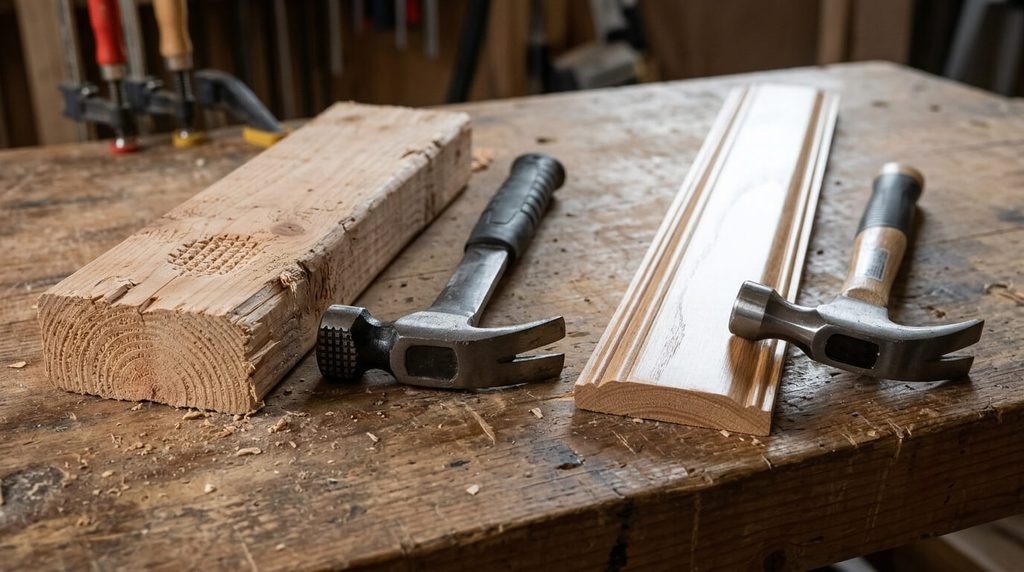
A milled striking surface has a texture intended to engage the nail head during proper driving. It still needs a square, controlled strike. A textured face does not make missed blows harmless or eliminate glancing contact.
The practical drawback appears when the face contacts the wood around the nail. It can leave a patterned impression that remains visible after painting or staining. On exposed boards, that damage may matter more than the extra head weight or other features.
Keep a suitable smooth-face hammer on hand when appearance matters. Even a smooth face can dent a surface, so careful technique still matters. A finish-work tool is a choice about control and surface protection, not simply a different face pattern.
What the hex face and squaring system add
The product description lists a hex face intended to improve contact near edges. This is a feature to examine when comparing access around framing members. It still leaves you responsible for checking that the face, handle, and hand have enough room for the strike.
The squaring system adds a way to make suitable layout marks with the tool already in your hand. Its usefulness depends on how often that saves you a tool change in your own work. A separate square may remain easier for repeated bench cuts or wider material.
Check your first marks before cutting
Start with straight-edged scrap and follow the maker’s method for this hammer. Seat the reference surfaces correctly, draw a trial line, and compare it with a reliable square. Repeat the check when learning angle markings rather than guessing which point serves as the pivot.
If the marks disagree, resolve the difference before cutting useful stock. Debris, a damaged edge, or movement while marking can affect the line. Keep the separate square available until you can repeat the result confidently.
How to judge the poly-fiberglass handle
The listed handle construction uses a vinyl ester resin fiberglass core with a textured grip. Those details help identify the product, but they do not prove how comfortable it will be in your hand. Grip size, gloves, surface condition, and how you work still matter.
Treat shock-absorption and no-slip wording as product claims rather than guarantees. The handle cannot be assumed to prevent wrist or elbow pain, and oil or damage can undermine your hold. Don’t treat it as an electrically insulated tool unless it is specifically rated for that purpose.
Inspect the connection after an overstrike
An overstrike happens when the handle hits the work instead of the striking face. Before continuing, check for cracks, exposed fibers, damaged grip material, or movement at the head connection. Set the hammer aside if its condition is uncertain.
Remove dirt, dry the tool, and store it away from moisture after use. Do not cover a damaged area and assume the structure underneath is sound. Ask the manufacturer about handle service rather than attempting an improvised repair.
A rip claw does not replace every demolition tool
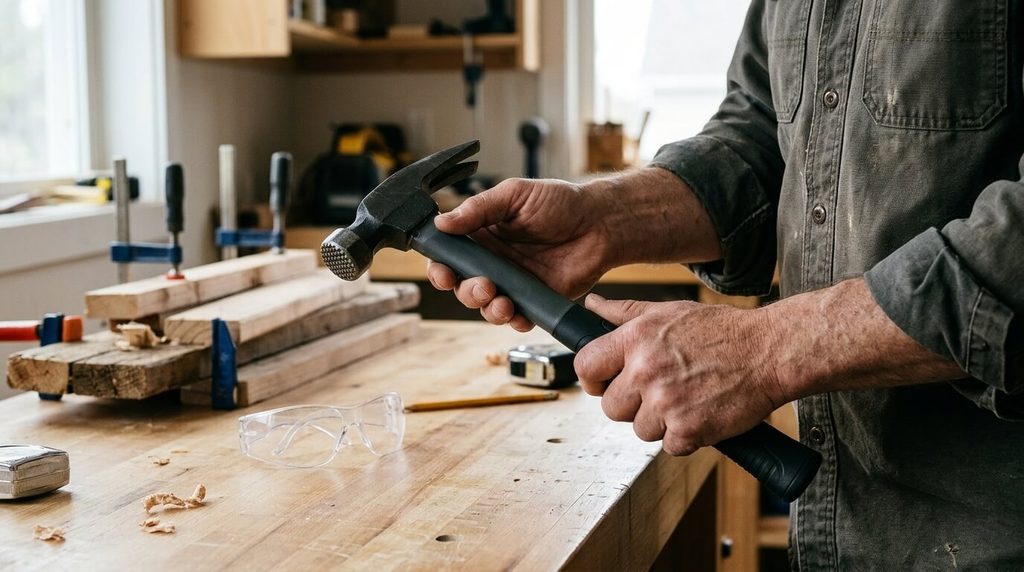
A claw can help with suitable nail removal, but a difficult pull may need a different tool. Change to a properly sized nail puller or pry bar when the required leverage exceeds comfortable control. Do not add a pipe to the handle to force the job.
The Beast name should not be read as permission to strike concrete, masonry, or other hardened materials. Hammer type and intended use still govern what you can strike. Choose equipment for the material and task, not just head weight.
The practical rules in this hammer safety guide explain the importance of tool condition and intended use. They also advise against grinding or welding a damaged hammerhead. Replace or seek appropriate support for a damaged tool instead of reshaping it yourself.
Which cap size fits the Beast?
The manufacturer’s Soft Blow Cap compatibility chart lists the 28 oz Steel Beast under Size 3. Check the exact accessory and current chart because several sizes can appear on the same product page. A photograph with a cap installed does not mean the cap comes with the hammer.
The Soft Blow Cap is not intended for driving framing nails. Follow its stated uses and test contact on scrap before working on a visible surface. Remember that covering the face does not remove the hammer’s weight or eliminate the risk of a dent.
Before you order: model, stock, and support
- Match the exact configuration. Confirm BH28STPFM in the selected item details. Check the milled face, handle type, and package contents. Ask the seller to resolve any mismatch between the title and photographs.
- Confirm delivery and return terms. Ask when the exact item can ship if the listing says it is available to order. Check whether an opened or used tool can be returned. Compare delivered cost, including any separately purchased cap.
- Verify measurements that affect the job. Confirm tool length if access or storage space is limited. Ask about any layout capacity important to your work. Do not transfer dimensions from another Boss model.
- Keep proof of purchase. Inspect the head, handle connection, grip, and face when the hammer arrives. Photograph damage or missing parts and contact the seller before use. Retain the invoice for support or a warranty claim.
Understand the fiberglass-handle warranty limits
The manufacturer’s warranty terms describe one year of limited coverage for workmanship and manufacturing defects. Listed poly-fiberglass examples include a loose handle caused by faulty epoxy and grip rubber peeling because of a manufacturing defect. The policy excludes normal wear and misuse.
It also distinguishes those defects from a core snapped through excessive prying or damage from repeated overswings. A heavy-duty description does not make every broken handle a covered claim. Check current eligibility for your specific purchase, and contact the company for instructions if a problem appears.
Is the BH28STPFM worth buying?
Shortlist the Beast if you already favor a heavy framing hammer, want a poly-fiberglass grip, and regularly do rough work with room for a clear swing. Choose the 22 oz option if you want to carry less weight while keeping the same general handle category. Consider the 18 oz hickory model if a lighter configuration and a wooden grip matter more.
For small household jobs or visible trim, start with a tool better matched to those tasks. The Beast earns consideration through its fit with your work, not through the name or head weight alone. Buy it only when the complete configuration offers something you will use.
This is a specification-based guide, not a hands-on driving or endurance test. No measured result here establishes faster nailing, lower vibration, or a particular service life. The recommendation is based on documented features and the task’s practical requirements.
Conclusion
The Boss Hammer Beast Hammer BH28STPFM is a candidate for buyers who want a heavy steel framing hammer with a milled face and a poly-fiberglass handle. Its suitability depends on control, access, and whether your work can tolerate surface marks. Confirm the exact configuration, compare the lighter alternatives, and check support terms before buying.
Frequently asked questions
Why do listings mention both 28 oz and 41 oz?
The published description uses 28 oz for the head and 41 oz for the assembled hammer. Those are different measurements. Use complete-tool weight when comparing what you will carry and swing.
How does the Beast compare with the 22 oz poly-fiberglass model?
The listed assembled weights are 41 oz for the Beast and 35 oz for the 22 oz poly-fiberglass model. That is a 6 oz difference between those specific configurations. Compare grip and balance too, because weight alone does not describe how either tool will handle.
Does the fiberglass handle prevent joint pain?
No handle should be treated as a guarantee against pain or injury. Tool weight, posture, repetition, and grip all affect comfort. Stop and reassess the work if using the hammer causes discomfort.
Which Soft Blow Cap size fits the Beast?
The manufacturer’s compatibility chart lists the 28 oz Steel Beast under Size 3. Check the current chart for the exact cap you are ordering. The Soft Blow Cap is not intended for driving framing nails.
Can I use the Beast to break concrete?
Do not assume a heavy framing hammer is suitable for breaking concrete. Use equipment designed for that material and task. The Beast name does not override intended-use instructions or warranty exclusions.