


Estwing 20 oz Bricklayer Hammer E3-20BLC: Uses, Features, and Is It Worth Buying?
The Estwing 20 oz Bricklayer Hammer E3-20BLC is not an ordinary household hammer. One end has a striking face, while the other has a narrow chisel-style edge. Together, these ends help a bricklayer score, split, shape, and position masonry.
That design can also be useful at home. You might reach for this hammer when replacing a damaged brick, cleaning old mortar from a sound brick, or making a small adjustment during a patio or garden-wall repair. However, it is a specialized hand tool. It does not replace a claw hammer, masonry chisel, rotary hammer, or demolition tool in every situation.
This guide explains what the E3-20BLC does, where it fits in a homeowner’s toolbox, how to use it more safely, and when a different tool is the better choice. It is an editorial assessment based on the tool’s published design and accepted masonry practices, not a claim of hands-on product testing.
Is the E3-20BLC useful around the home?
Yes—if your project involves brick, block, or old mortar. The Estwing E3-20BLC combines a 20 oz striking head with a chisel-style edge, making it useful for controlled masonry shaping and small repairs. It is less suitable for ordinary nails, delicate tile, major demolition, or jobs that require a separate chisel and greater control.
Key takeaways
- The E3-20BLC is a bricklayer hammer for masonry work, not a general claw hammer.
- Its square striking face delivers the blow; its chisel edge scores and trims masonry.
- The one-piece steel construction removes the traditional joint between a separate head and handle.
- A 20 oz head offers useful force but may feel tiring during long sessions or awkward for a first-time user.
- It can suit small brick repairs, mortar removal, and light masonry shaping around a home.
- Wear safety glasses and control flying chips; masonry fragments can injure you or damage nearby surfaces.
- Choose a separate masonry chisel, angle grinder, or powered demolition tool when accuracy, a clean cut, or greater force is required.
What Is the Estwing E3-20BLC?
The E3-20BLC is a 20 oz bricklayer hammer. This type of hammer is also called a brick hammer or masonry hammer. Its two ends do different jobs:
- The square face is used to strike and position masonry.
- The chisel, or cutting edge, scores and trims brick or similar material.
Published retailer information describes the E3-20BLC as forged from a single piece of steel, with a fully polished head and face and a bonded, molded shock-reduction grip. The product description also mentions a nylon end cap. Those features relate to construction and grip; they don’t make the tool vibration-free or suitable for every masonry job.
The “20 oz” description refers to the nominal head weight, not necessarily the complete shipping weight of the tool and packaging. If total carried weight or exact overall length matters, check the current manufacturer’s label or seller specifications before purchasing. Listings can contain incomplete or inconsistent measurements.
| Feature | Published detail | Practical meaning |
|---|---|---|
| Tool type | Bricklayer hammer | Designed around masonry shaping and striking, rather than pulling nails. |
| Model | E3-20BLC | Use the full model number when comparing listings so you do not accidentally buy a different head weight or handle style. |
| Head weight | 20 oz (about 567 g) | Provides more impact than a light brick hammer, but can increase fatigue. |
| Construction | One-piece forged steel | There is no separate wooden handle-to-head connection to loosen in the usual way. |
| Working ends | Square striking face and chisel-style edge | One end strikes; the other scores, chips, and trims masonry. |
| Grip | Bonded and molded shock-reduction grip | Intended to improve grip comfort and reduce impact vibration, not eliminate it. |
How Does a Bricklayer Hammer Work?
A bricklayer hammer works by concentrating force in two different ways. The broad face spreads the blow across a larger area. The narrow edge concentrates force along a line, which helps create a controlled break after the brick has been scored.
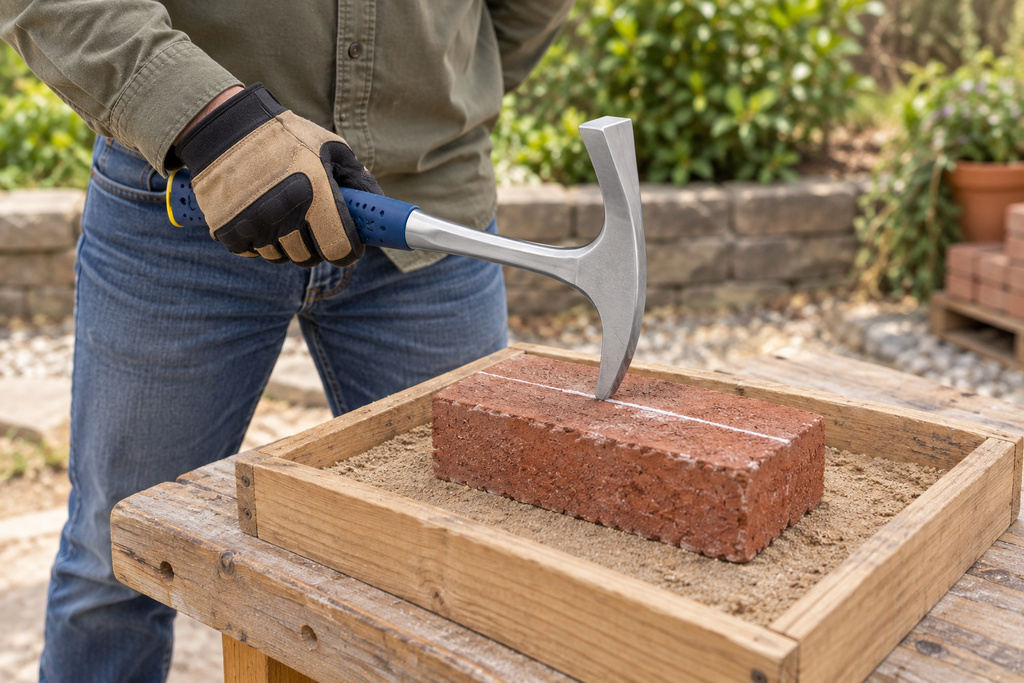
For a rough brick cut, a user normally marks the required line and scores a shallow groove around the accessible faces of the brick. Several controlled taps are usually better than one wild swing. After a clear score line is formed, a firmer blow can encourage the brick to break along that weakened line.
This method can produce a usable split for work in which the cut edge will be hidden in mortar. It is not the best method for every visible finish. A masonry saw, or angle grinder with the correct masonry blade, can create a straighter, cleaner edge, although powered cutting introduces dust, noise, blade, and kickback hazards that require their own controls.
A brick hammer can also knock small amounts of old mortar from a loose brick. Hold the brick on a stable surface and work gradually. Mortar may adhere strongly, and a hard strike can crack a brick that you hoped to reuse.
What Can You Use the E3-20BLC for at Home?
The E3-20BLC makes the most sense for a homeowner who expects to do occasional masonry work. It is not limited to professional bricklaying, but the material and task must suit the tool.
Replacing a damaged brick
For small repairs, the chisel edge can remove thin remnants of mortar from a replacement area or shape a brick for a non-structural fit. A separate plugging or masonry chisel often gives better control near surrounding bricks because it separates your striking hand from the cutting edge.
If the damage is part of a spreading crack, a leaning wall, a loose lintel, or a structural movement problem, replacing one brick will not fix the cause. Ask a qualified masonry or structural professional to inspect it.
Cleaning mortar from reusable bricks
A brick hammer can chip cured mortar from a loose brick. Set the brick on sand, soil, or another supportive surface rather than balancing it in your hand. Work from the mortar toward the edge in small amounts. Some bricks are too soft, brittle, weathered, or valuable to clean aggressively.
Making a small garden-wall repair
For a low, non-structural garden wall, the hammer may help shape a replacement brick and tap masonry into position. It can also remove small high spots after you remove most old mortar. Don’t use it as a substitute for understanding bonding, drainage, foundation movement, or local requirements.
Adjusting patio or walkway materials
The tool may help with rough adjustments to suitable clay brick or some concrete pavers. Results depend heavily on material density and shape. Thick or highly compressed pavers can break unpredictably. Decorative or expensive pavers are often better cut with the correct saw.
Minor fireplace masonry work
The hammer may help with basic preparation around a masonry fireplace, but heat-exposed repairs require compatible firebrick and refractory mortar. Do not treat an ordinary brick-and-mortar repair as suitable inside a firebox. Cracks, loose masonry, or draft problems may also require professional evaluation before you use the fireplace.
Removing small amounts of masonry material
The chisel edge can chip a minor projection or damaged edge. It is a poor choice for taking down a large section of wall. Large demolition work is slow with a brick hammer and may release material unexpectedly.
You can find more practical homeowner guidance in HomeUpright’s Tools & Hardware section.
| Home project | Fit | Important limitation |
|---|---|---|
| Roughly splitting common brick | Good fit | Practice first; the edge may not be clean enough to remain visible. |
| Removing mortar from a loose brick | Useful with care | A separate masonry chisel can provide greater control. |
| Tapping a brick into a mortar bed | Possible | Use controlled taps; a rubber mallet may reduce surface damage in some installations. |
| Making a clean decorative cut | Usually not ideal | Use an appropriate masonry saw or grinder if the finish must be precise. |
| Cutting ceramic wall or floor tile | Poor fit | Use a tile cutter, tile nippers, or a wet saw suited to the tile. |
| Driving and pulling nails | Poor fit | Use a claw hammer; the E3-20BLC does not provide a nail-pulling claw. |
| Large wall demolition | Poor fit | Use a correctly selected demolition tool and first check for utilities and structural hazards. |
How to Use the Estwing 20 oz Bricklayer Hammer E3-20BLC
The following process describes a simple rough cut in a loose brick. It is not a substitute for trade training, and you should not use it on a brick that is still part of a load-bearing or otherwise important assembly.
Basic method for scoring and splitting a loose brick
- Inspect the tool and brick. Do not use a hammer with a damaged grip, mushroomed striking surface, cracked steel, or another visible defect. Reject badly cracked or unstable material.
- Prepare a controlled work area. Keep children, pets, vehicles, windows, and bystanders away from the likely path of chips. Work on stable ground with good light.
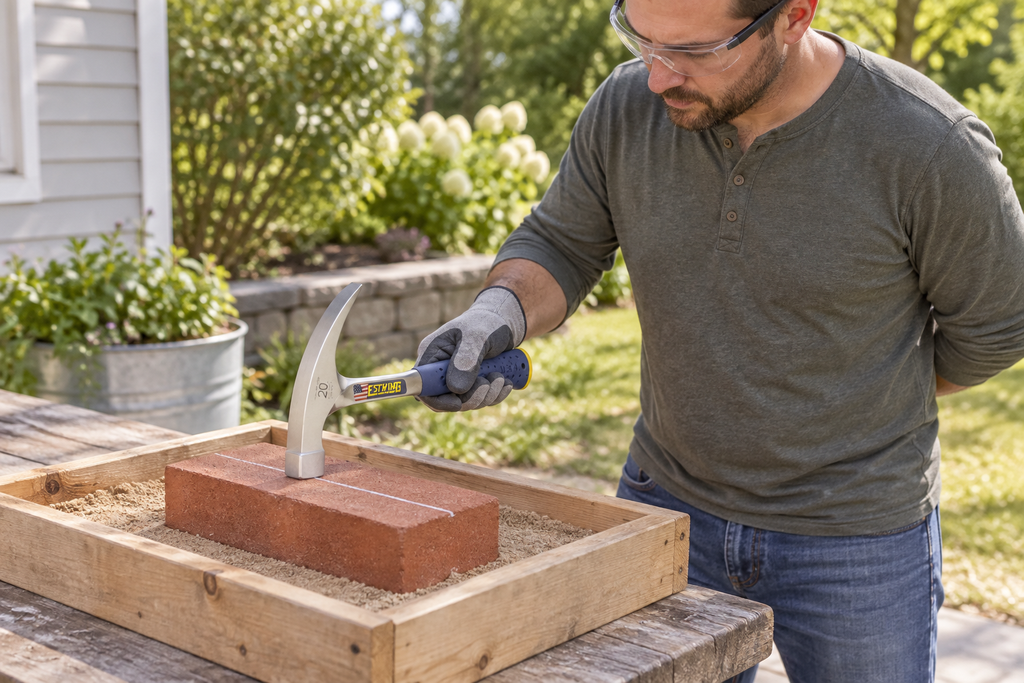
- Put on protective equipment. Wear impact-rated eye protection, suitable work gloves, sturdy footwear, and hearing protection when repeated impacts create harmful noise.
- Measure and mark the brick. Use a square and a visible pencil or chalk line. Check the measurement before making the first mark.
- Support the material. Place the loose brick on firm sand or another stable surface that supports it without causing it to rock.
- Score the line gradually. Use the chisel edge to make light, controlled taps along the marked line. Continue around the accessible faces rather than trying to break the brick immediately.
- Make the split. Once a clear groove has formed, apply a controlled, firmer strike. Keep your free hand away from the impact area and cutting edge.
- Inspect the result. Do not keep a piece with an unwanted crack where strength matters. Smooth only minor roughness, and use another cutting method if the finish is unacceptable.
Do not strike one hardened hammer face with another hammer. Do not use the side of the hammer head as the striking surface. Do not hold a small brick fragment in your palm while chipping it. These shortcuts reduce control and put your hand close to the impact.
Safety Precautions Homeowners Should Not Skip
Masonry chips can travel quickly and unpredictably. The U.S. Occupational Safety and Health Administration says employers must provide eye or face protection when workers face hazards from flying particles. A homeowner is not operating under an employer’s jobsite program, but the hazard is the same: striking brick, mortar, or concrete can produce flying fragments. Use safety glasses or goggles marked for impact protection, and follow the protective equipment manufacturer’s instructions.
Control silica dust
Cutting, grinding, or aggressively disturbing concrete, brick, mortar, and similar materials can release respirable crystalline silica. Hand scoring may create less airborne dust than dry power cutting, but “less” does not mean “none.” Avoid dry sweeping. Use an appropriate dust-control method for the task, work outdoors when practical, and consult the tool and material guidance. A disposable nuisance-dust mask is not a complete dust-control plan.
Protect nearby surfaces
Cover or move fragile items. A small chip can scratch a window, vehicle, finished floor, or countertop. Do not perform uncontrolled masonry striking beside glass. Set up the work so fragments travel toward a clear area, not people or property.
Use a controlled swing
More force is not automatically better. Grip the handle securely without locking your wrist. Stand with balanced footing. Watch the exact impact point and use a short, deliberate motion. If repeated strikes are not producing a reasonable result, stop and reconsider the tool instead of swinging harder.
Inspect and store the hammer
Wipe off dust and moisture after use. Keep the steel dry, and store the tool where the chisel edge cannot cut a hand reaching into a drawer or bag. Follow Estwing’s current care and safety directions for the specific product. Do not grind, weld, reshape, or heat-treat the head unless the manufacturer expressly permits it.
Advantages and Disadvantages for a Homeowner
The E3-20BLC can be a durable, straightforward tool, but specialization is both its strength and its limitation.
Advantages
- Combines a striking face and cutting edge.
- One-piece steel construction has no traditional wooden handle joint.
- 20 oz head supplies useful force for masonry work.
- Shock-reduction grip is designed for comfort and impact-vibration reduction.
- Useful for several small brick and mortar jobs.
Disadvantages
- Heavier than some alternatives and may tire the wrist or arm.
- Does not pull nails like a claw hammer.
- Cannot match a masonry saw for a clean, repeatable cut.
- Offers less control than a separate chisel for some detail work.
- Unnecessary for someone with no planned masonry projects.
Is a 20 oz Brick Hammer Too Heavy?
Twenty ounces isn’t automatically too heavy, but it isn’t the best choice for every user. A heavier head can deliver more momentum, which may reduce the number of blows needed. That benefit disappears if the user loses accuracy, grips too tightly, or becomes tired.
Choose based on control, not the idea that heavier always means better. If possible, hold the hammer before buying. Keep your wrist neutral, make a few slow practice motions in a safe, store-approved way, and notice whether you can stop the head accurately. Someone with limited grip strength, wrist pain, or only delicate work may prefer a lighter brick hammer or a separate hammer-and-chisel combination.
Take breaks during longer work. Stop if you experience pain, numbness, tingling, or loss of control. A shock-reducing grip may reduce some transmitted vibration, but it cannot compensate for poor technique, excessive repetition, or a tool that is too heavy for the user.
E3-20BLC vs. Other Common Tools
E3-20BLC vs. a claw hammer
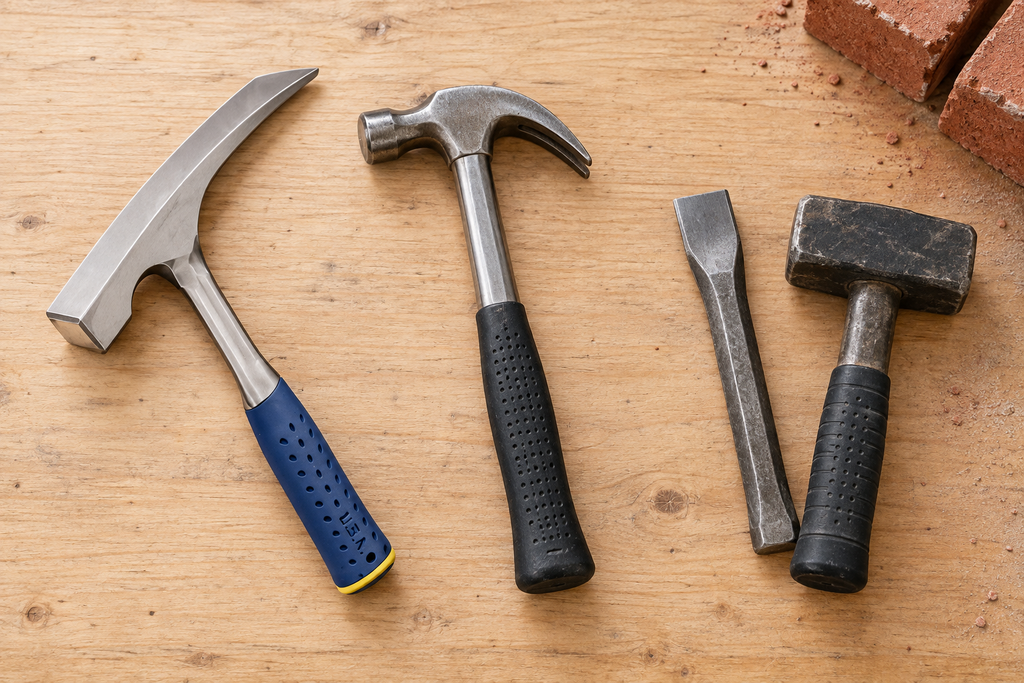
A claw hammer is intended mainly for driving and pulling nails. Its claw is not shaped like a brick-cutting edge. Although a claw hammer can strike some objects, using it as a substitute for a masonry hammer may damage the tool or give poor control. Choose the E3-20BLC for brick shaping; choose a claw hammer for common carpentry and household nail work.
E3-20BLC vs. a masonry chisel and club hammer
A separate masonry chisel gives you more choice in chisel width and lets you position the cutting edge before striking. This can improve control when removing mortar or working in a confined joint. The brick hammer is faster to pick up and use because the cutting edge is built in, but your hand moves with the edge on every swing.
E3-20BLC vs. a rubber mallet
A rubber mallet delivers a softer blow and is often better for seating materials without marking them. It cannot score or split brick. The tools serve different purposes, and a careful patio or masonry project may use both.
E3-20BLC vs. an angle grinder or masonry saw
A powered cutter is more appropriate when you need straight, repeatable, finished cuts. It is also more complex. The operator must manage blade selection, guards, electrical or battery safety, kickback, noise, and silica dust. The brick hammer is simpler and portable, but its hand-split edge is rougher and less predictable.
E3-20BLC vs. a rotary hammer or demolition hammer
Powered hammering tools remove much more material and suit larger demolition or drilling tasks when correctly selected. They can quickly cause unintended damage and are excessive for shaping one loose brick. Before powered demolition, identify utilities and determine whether the assembly is structural.
Who Should Buy the E3-20BLC?
The E3-20BLC is a sensible candidate if you:
- Regularly maintain brick paths, edging, low garden walls, or similar masonry.
- Want one hand tool that can both strike and make rough masonry adjustments.
- Prefer one-piece steel construction over a traditional wood-handled brick hammer.
- Can comfortably control a 20 oz hammer head.
- Understand that hand-split edges will not always look machine-cut.
It may not be worth buying if you only need to complete one tiny repair and can borrow or rent the correct tool. It is also a weak choice if your main tasks involve nails, ceramic tile, large demolition, precise decorative cuts, or structural masonry.
For a single project, compare the purchase cost with tool rental and professional help. Don’t base your decision only on the hammer’s price. Include safety equipment, any masonry chisel, mortar tools, dust control, and the risk of damaging expensive material.
What to Check Before Buying
Model numbers matter. Product photos can make several similar Estwing hammers look nearly identical. Check that the listing actually says E3-20BLC and 20 oz rather than relying on the image alone.
Also check:
- Whether the seller is established and clearly identifies the product.
- Whether the condition is new, used, or old stock.
- The stated head weight and any published overall dimensions.
- The shape and condition of the striking face and chisel edge.
- Whether the grip is intact and securely bonded.
- The return policy and manufacturer’s current warranty terms.
- The final delivered cost, not an isolated advertised price.
Prices and stock change, so a fixed price in an evergreen guide would quickly become misleading. Compare current offers when you are ready to buy. Be cautious of pages that combine unrelated products, strange descriptions, or copied-looking reviews under the hammer’s name.
Common Mistakes to Avoid
Treating it like a general-purpose hammer
The E3-20BLC can strike, but it is not the right tool for every striking job. It lacks a claw for nail removal, and its chisel edge needs careful storage and handling.
Trying to make the entire cut with one blow
One hard swing can send the fracture away from the marked line. A gradual score creates a controlled weak point and gives you time to correct your position.
Holding masonry in one hand
This places fingers close to the cutting edge, impact, and flying fragments. Support the work on a stable surface instead.
Assuming every brick breaks the same way
Brick composition, firing, age, cracks, holes, weathering, and moisture condition affect how it fractures. Test on spare material from the same batch before cutting the piece you need.
Using it on tile
Ceramic, porcelain, glass, and stone tile can crack unpredictably and produce sharp fragments. Use a cutting tool selected for the exact tile material.
Ignoring the reason a wall cracked
A hammer can replace damaged material, but it can’t fix settlement, water intrusion, failed support, corrosion, or structural movement. Diagnose the cause before making a cosmetic patch.
Is the Estwing E3-20BLC Worth Buying?
The Estwing 20 oz Bricklayer Hammer E3-20BLC is worth considering when you have recurring small masonry jobs and want a robust two-ended hand tool. Its useful qualities are easy to understand: a 20 oz head, a square striking face, a chisel-style edge, one-piece steel construction, and a molded shock-reduction grip.
For a home-improvement reader, the main question is not whether the hammer is “good” in isolation. It is whether the tool matches the work. It matches rough brick shaping, careful mortar removal, and minor masonry adjustments. It is poorly matched to everyday carpentry, clean machine-like cuts, delicate tile, major demolition, and repairs with an unknown structural cause.
If you can control its weight, accept the limits of hand cutting, and follow eye, dust, and work-area precautions, it can earn a useful place in a masonry toolkit. If you only need one precise cut, renting a suitable cutter or hiring an experienced mason may give a better result.
Frequently asked questions
What is an Estwing E3-20BLC used for?
It is used for bricklaying and masonry tasks such as scoring and roughly splitting brick, making small shape adjustments, striking masonry, and carefully removing mortar from loose material.
Can I use the E3-20BLC as a normal household hammer?
It can deliver a strike, but it is not a good replacement for a claw hammer. It does not have a nail-pulling claw, and its cutting edge is designed for masonry rather than carpentry.
Can a brick hammer cut a brick cleanly?
It can score and split a brick, but the broken edge is normally rougher and less predictable than a cut made with an appropriate masonry saw or grinder. Use powered cutting when a visible, accurate edge is required.
Is a 20 oz bricklayer hammer good for beginners?
It can be, provided the user can control the weight and practices on spare brick first. A lighter model may be easier for someone with limited grip strength or little hammering experience.
Can I remove old mortar with the E3-20BLC?
Yes, for small and accessible areas, especially on a loose brick. A separate masonry or plugging chisel may provide more accuracy in a joint or near masonry that must remain undamaged.
Can I use a brick hammer on concrete pavers?
It may make rough adjustments to some pavers, but dense or decorative pavers can crack unpredictably. Use spare material for a test, and choose a suitable saw when the cut needs to be straight and clean.
Do I need safety glasses when using a brick hammer?
Yes. Striking brick, concrete, or mortar can throw sharp fragments. Use impact-rated eye protection and keep other people away from the work zone.
Is the E3-20BLC better than a hammer and masonry chisel?
Neither setup is always better. The E3-20BLC is convenient for quick scoring and rough shaping. A separate chisel offers different widths and may provide better control for detailed mortar removal.