



How to Prevent Calcium Buildup on Faucets (Introduction)
You notice it slowly at first. A faint white ring around the base of your faucet. A little crust near the spout. Then one morning, you look down at your sink and realize — your faucet looks like it belongs in an abandoned building.
Such white chalky and crusty deposits? In fact, they are calcium, and if you have hard water running in your system, then without proper maintenance, it can become nearly unavoidable.
The good news is that preventing and removing calcium buildup on faucets is completely manageable. You don’t need to call a plumber or buy expensive equipment. In most of the cases, you just need the right information and a few items you probably already have in your home.
In this article, we will explain everything — from why calcium accumulates to the best daily habits, great deep-cleaning methods, and long-term solutions that actually work.
What Is Calcium Buildup and Why Does It Happen?
Before you can fix a problem, it helps to understand it.
Hard water is water that contains high concentrations of dissolved minerals — primarily calcium and magnesium. As this water flows through your pipes and out of your faucets, it leaves those minerals behind when the water evaporates. Over time, the deposits harden into what we commonly call limescale, calcium buildup, or hard water stains.
According to the U.S. Geological Survey (USGS), approximately 85% of households in the country deal with hard water to some degree. So if you’re seeing white crusty deposits on your faucets, you’re far from alone.
The buildup tends to accumulate fastest in areas where:
- Water sits on the faucet surface and evaporates repeatedly
- There’s consistent water flow, like around the spout opening
- Water temperature is higher (hot water accelerates mineral deposit)
Left unchecked, calcium buildup doesn’t just look bad — it can actually damage your faucet’s finish, clog aerators, reduce water pressure, and shorten the life of your fixtures.
How to Prevent Calcium Buildup on Faucets: Daily Habits That Work
Prevention is always easier than removal. Here are the most effective daily habits that stop calcium in its tracks.
1. Dry Your Faucets After Every Use
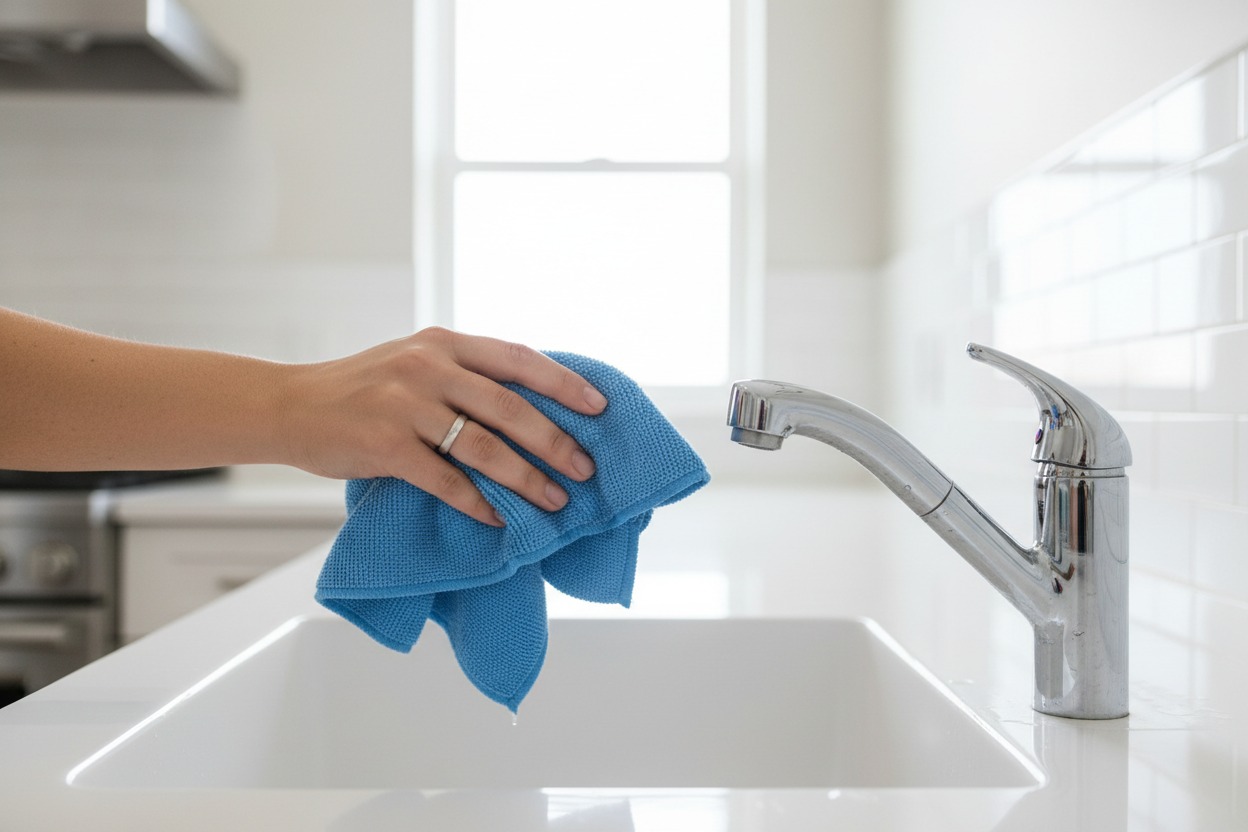
This is definitely the most important habit to prevent it effectively. It turns out that calcium is only able to form when water evaporates and the minerals are left behind. So basically, if you simply remove the water before it evaporates, that is there will be no deposit that forms.
Keep a small microfiber cloth near your sink. After washing your hands or doing dishes, take five seconds to wipe the faucet dry. It sounds tedious at first, but it quickly becomes automatic — like turning off the lights when you leave a room.
2. Apply a Water-Repellent Coating
Products like car wax or specialty faucet protectants create a thin hydrophobic barrier on the metal surface. Water beads up and rolls off instead of sitting and evaporating.
Apply a small amount of car wax to your faucet with a soft cloth, let it haze, then buff it off. Repeat every few months. This trick is popular among plumbers and house cleaners who want to minimize maintenance between deep cleans.
3. Use a Soft Water Setting on Your Dishwasher or Under-Sink Filter
If you have a water softener or filtration system, make sure it’s properly calibrated. Even a basic under-sink carbon filter won’t remove calcium — you need an ion exchange softener or a dedicated hard water filter for that.
Running your cold water faucet for 30 seconds before use can also help flush slightly stagnant, mineral-rich water from sitting in pipes.
How to Remove Calcium Deposits from Faucets: The Complete Cleaning Guide

Even with good habits, some buildup is inevitable — especially in hard water areas. Here’s how to tackle everything from light film to heavy encrusted deposits.
Method 1: White Vinegar Soak (Best for Moderate Buildup)
White distilled vinegar is acidic enough to dissolve calcium carbonate effectively. It’s cheap, non-toxic, and works remarkably well.
What you need:
- White distilled vinegar
- Plastic wrap or a small plastic bag
- Rubber band or tape
- Old toothbrush
- Soft cloth
How to do it:
- Soak a cloth or paper towels in white vinegar.
- Wrap the soaked cloth around the affected area of the faucet.
- For the spout or hard-to-wrap spots, fill a small plastic bag with vinegar, place it over the faucet head, and secure it with a rubber band.
- Let it sit for 30 minutes to 2 hours depending on buildup severity.
- Remove the cloth/bag and scrub gently with an old toothbrush.
- Rinse with clean water and dry thoroughly.
For heavy calcium buildup on faucet surfaces, leave the vinegar treatment on for up to 4 hours or overnight.
Expert Tip: Do NOT use vinegar on brass, gold-plated, or nickel faucet finishes. The acid can strip the coating. Check your faucet’s care instructions — most chrome and stainless steel faucets handle vinegar well. For delicate finishes, use a manufacturer-approved cleaner instead.
Method 2: Baking Soda Paste (Best for Surface Stains and Gentle Scrubbing)
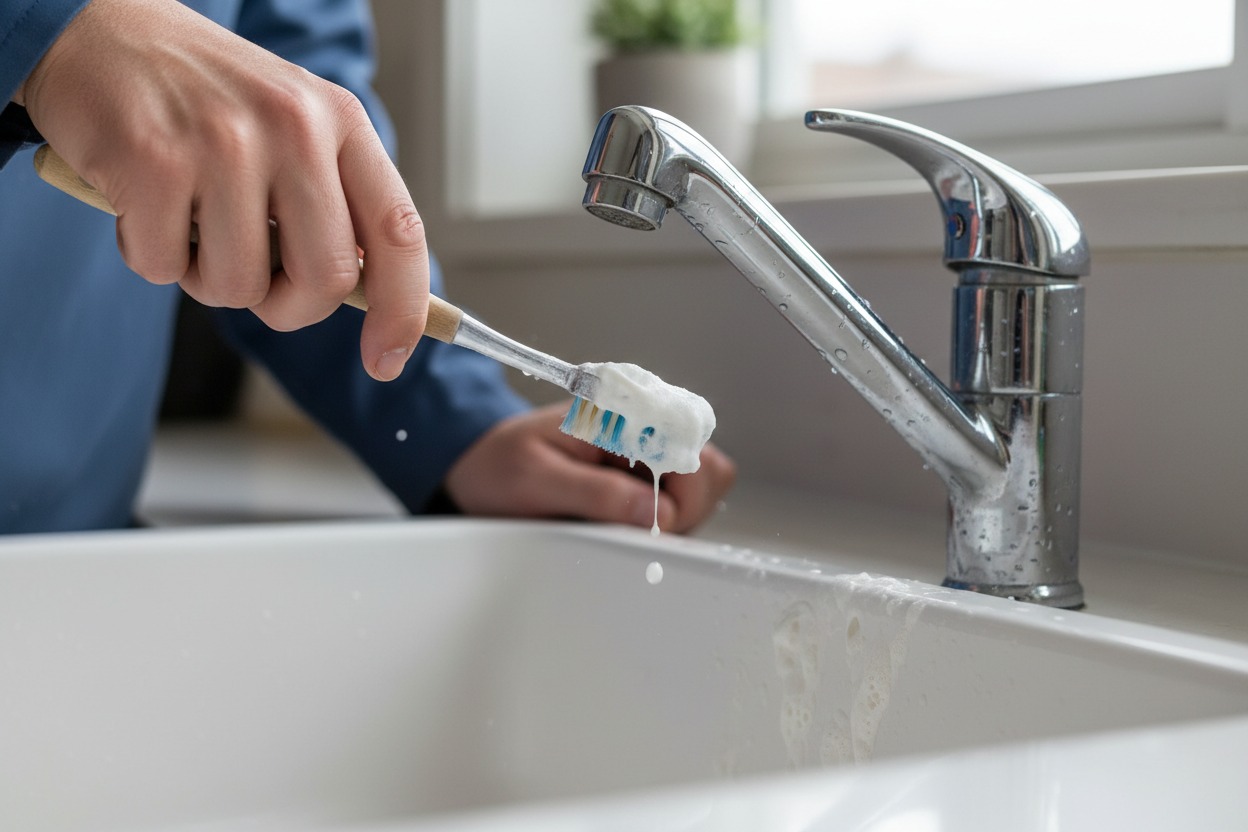
Baking soda is mildly abrasive and alkaline. On its own it won’t dissolve calcium, but combined with vinegar or lemon juice, it creates a fizzing reaction that helps loosen deposits from the surface.
How to use it:
- Mix baking soda with just enough water to form a thick paste.
- Apply directly to stained areas with a toothbrush or cloth.
- Spray or drizzle white vinegar over the paste — watch it fizz.
- Let it sit for 10–15 minutes, then scrub gently.
- Rinse clean and dry.
This method works well for calcium buildup around the faucet base and handles where you can’t wrap a cloth.
Method 3: Lemon Juice (Best for Light Buildup and Delicate Finishes)
Fresh lemon juice contains citric acid, which is effective at dissolving mild calcium deposits without being as harsh as white vinegar. It’s a good first option if you notice early buildup before it hardens significantly.
Cut a lemon in half and rub it directly on the faucet surface, concentrating on the crusty areas. Let it sit for 10 minutes, then scrub and rinse.
For a stronger treatment, mix citric acid powder (available online or at home brewing stores) with warm water for a more concentrated soak.
Method 4: Commercial Descalers (Best for Severe Buildup)
Sometimes natural methods aren’t enough — especially if calcium has been accumulating for months or years. Commercial descaling products are specifically formulated to break down limescale quickly.
Some reliable options include:
- CLR (Calcium, Lime & Rust Remover) — one of the most effective products for hard mineral deposits
- Lime-A-Way — strong formula, good for encrusted faucet aerators
- Bar Keepers Friend — a powder cleanser that handles calcium without damaging chrome
Always follow the product instructions carefully. Most commercial descalers should not be left on surfaces for extended periods, and they typically require rinsing multiple times after use.
How to Clean a Faucet Aerator (The Hidden Buildup Spot)
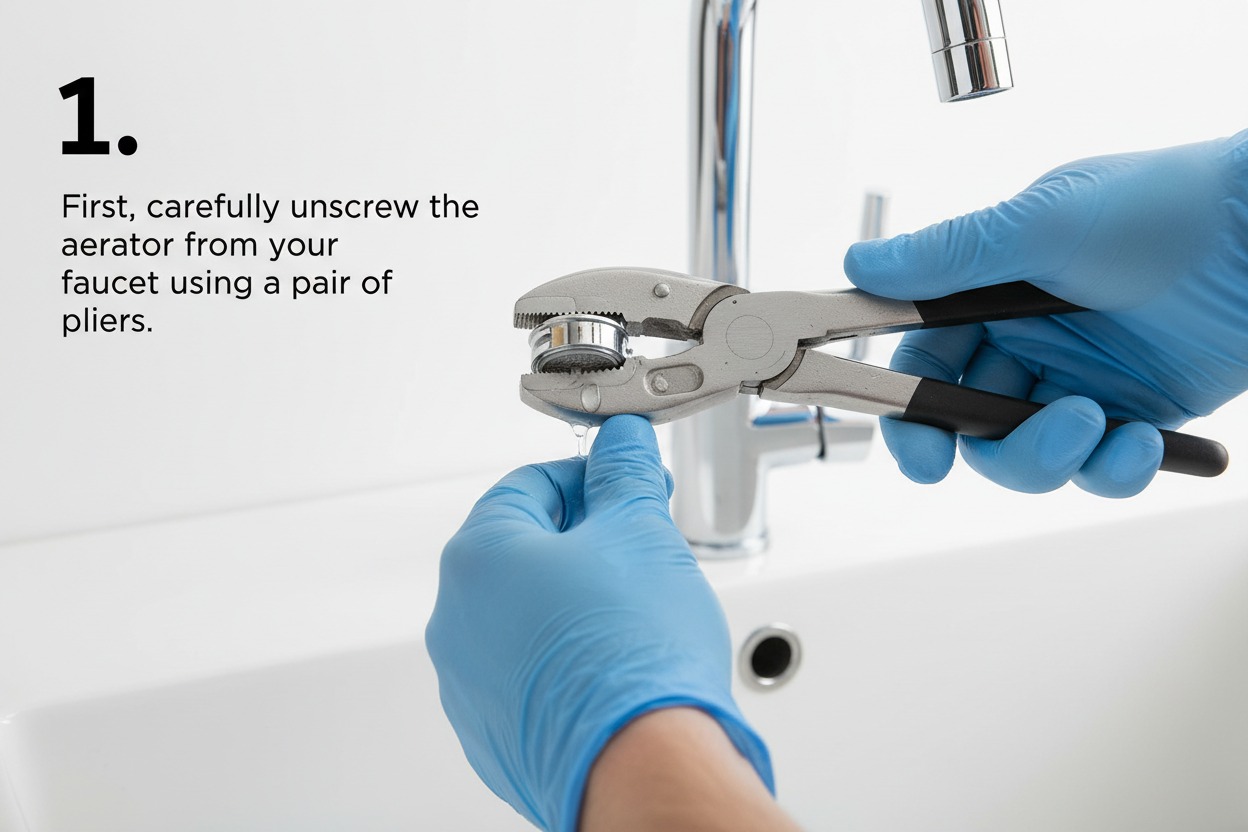
The aerator is the small mesh screen at the tip of your faucet spout. It’s one of the most common places for calcium to accumulate — and it directly affects your water pressure and flow.
Here’s how to clean it:
- Unscrew the aerator by hand or with pliers (use a cloth to protect the finish from scratches).
- Disassemble it — it typically has a few small parts including a rubber washer, mesh screen, and housing.
- Soak all parts in white vinegar for 30 minutes to 2 hours.
- Use a toothpick or small brush to gently clear any remaining debris from the mesh.
- Rinse thoroughly under water, reassemble, and screw back on.
If the aerator is severely clogged or physically corroded, replacement aerators are inexpensive (typically $5–15) and available at any hardware store. Most faucet brands also sell them directly.
Cleaning your aerator every 3–6 months keeps water pressure consistent and prevents calcium from hardening beyond removal.
How to Remove Hard Water Buildup on Faucets: Comparing Methods
Here’s a quick reference comparison to help you choose the right approach:
| Method | Best For | Effort Level | Cost | Safe for Delicate Finishes? |
|---|---|---|---|---|
| White Vinegar Soak | Moderate to heavy buildup | Low | Very low | Not for brass/gold |
| Baking Soda Paste | Surface stains | Low | Very low | Generally yes |
| Lemon / Citric Acid | Light buildup | Low | Low | Generally yes |
| Commercial Descaler (CLR) | Severe, encrusted buildup | Low | Moderate | Check label |
| Water Softener System | Long-term prevention | High (setup) | High | Yes |
Long-Term Solutions: How to Stop Calcium Buildup at the Source
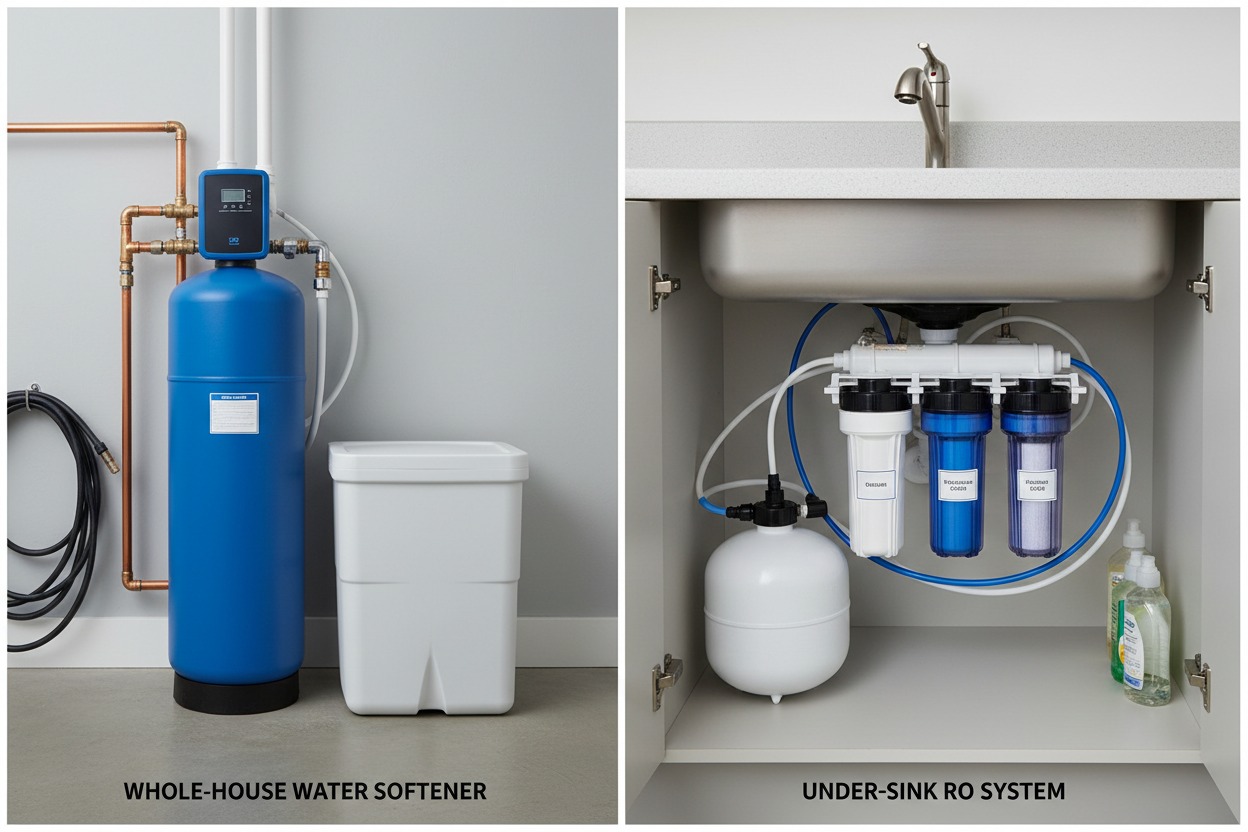
If you’re constantly fighting hard water deposits, cleaning alone isn’t the long-term answer. Addressing the water quality itself will save you far more time and frustration.
Install a Water Softener
A whole-house water softener uses ion exchange technology to replace calcium and magnesium ions with sodium ions — effectively removing the minerals that cause buildup before they ever reach your faucets.
This is the most thorough solution. Installation usually runs $800 to $2,500, depending on the size of your home and how hard your water is, but it will safeguard all of your fixtures, appliances, and pipes — even your water heater, which gets damaged by calcium more often.
Install a Reverse Osmosis System
A reverse osmosis (RO) system installed under the kitchen sink filters out dissolved minerals at the point of use. It won’t protect fixtures in other rooms, but it’s a good option for renters or those who want to start smaller.
RO systems typically range from $150 to $500 for the unit, plus installation.
Use a Magnetic Water Conditioner
Magnetic water conditioners are devices that attach to your main water line and claim to alter the structure of mineral crystals so they don’t stick to surfaces as readily. Research on their effectiveness is mixed — some studies show moderate reduction in scale, while others show minimal impact.
They’re worth considering as a low-cost, low-maintenance option — but shouldn’t be relied on as a primary solution in areas with very hard water.
Protect Specific Faucet Finishes From Calcium Damage
Not all faucets are created equal when it comes to fighting hard water. Different finishes need different approaches.
Chrome and Stainless Steel
The most common and most forgiving. Handles vinegar and most commercial cleaners well. A monthly vinegar treatment and regular drying will keep chrome looking sharp for years.
Brushed Nickel
Avoid abrasive scrubbers. Use diluted vinegar or a mild citric acid solution. Always test a small, hidden area first before applying any cleaner to the full surface.
Oil-Rubbed Bronze and Matte Black
These specialty finishes are sealed coatings that can be damaged by acidic cleaners. Use only mild soap and water for regular cleaning. For buildup, check the manufacturer’s recommendations — many brands like Moen and Delta provide specific care guides for their finishes.
Brass and Gold-Plated
Extremely sensitive. Never use vinegar, citrus, or harsh descalers. Stick to warm, soapy water or specialized brass cleaners. These finishes require the most consistent drying habit to prevent buildup from forming in the first place.
Expert Tips: What Professional Plumbers Do

We spoke with professional cleaning and plumbing guidelines from industry sources to pull together tips that go beyond basic advice:
- Test your water hardness. Knowing your hardness level (measured in grains per gallon or parts per million) helps you choose the right prevention strategy. Home test kits are available at hardware stores and through NSF International-certified labs.
- Don’t use hot water for quick rinses. Hot water carries dissolved minerals more readily and deposits them faster on cool surfaces. If you rinse the faucet after cleaning with hot water, you’re actually speeding up future buildup.
- Check your water heater. Calcium deposits heavily in water heaters set above 120°F. The U.S. Department of Energy recommends keeping your heater set to 120°F — this helps prevent mineral buildup throughout your entire plumbing system.
- Flush showerheads and faucets monthly. Remove the aerator and let water run freely for 30 seconds once a month to flush loose mineral particles before they harden.
- Replace faucet washers before they fail. Worn washers cause drips. Dripping water means constant evaporation, which means accelerated buildup around the drip zone. Fixing drips early is good prevention.
Preventing Calcium Buildup in Specific Areas
Kitchen Faucet
Kitchen faucets take the most abuse — food particles, grease, and constant water contact. Wipe down after each use and clean the aerator monthly. If you cook with hard water frequently, apply a faucet wax every 6–8 weeks.
Also Read: How to Get Rid of Ants in the Kitchen Fast
Bathroom Sink Faucet
Bathroom faucets tend to have more decorative finishes — brushed nickel, oil-rubbed bronze — so be careful with acids. A daily wipe-down and a gentle monthly citric acid rinse works well for most bathroom fixtures.
Shower and Bathtub Faucets
These are constantly exposed to steam and heat, which accelerates calcium formation. A squeegee after every shower makes a big difference. Monthly descaling treatments on the showerhead keep the water flow strong.
How to Remove Hard Water from Faucet Handles and Bases
The base of a faucet — where it meets the sink — is often the worst spot for calcium accumulation. Water collects there and evaporates, again and again.
To remove buildup from these spots:
- Soak paper towels in undiluted white vinegar.
- Press them tightly around the base of the faucet.
- Leave in place for 1–3 hours.
- Remove and scrub gently with an old toothbrush.
- Wipe clean, rinse, and dry completely.
For heavily textured surfaces or tight crevices, a dental pick or wooden toothpick can help dislodge hardened calcium without scratching the finish.
Pros and Cons of DIY vs. Store-Bought Descalers
| DIY (Vinegar/Lemon) | Commercial Descalers | |
|---|---|---|
| Cost | Very low (~$1–3) | Moderate (~$8–20) |
| Effectiveness | Good for mild/moderate buildup | Excellent for severe buildup |
| Safety | Generally safe and non-toxic | Check labels — some are harsh |
| Finish Safety | Avoid on brass/gold | Varies — always read the label |
| Availability | Already in your kitchen | Hardware/grocery stores |
| Environmental Impact | Low | Variable — some harsh chemicals |
For most homeowners, DIY methods are effective for regular maintenance. Commercial descalers are worth keeping on hand for annual deep-cleaning or when buildup has been neglected for months.
Frequently Asked Questions
Q1: How often should I clean calcium buildup from my faucets?
For most homes with moderately hard water, a light cleaning every 2–4 weeks keeps buildup from hardening. If you notice visible white deposits forming faster, increase frequency or consider a water softening solution. Aerators should be soaked in vinegar every 3–6 months regardless.
Q2: Will vinegar damage my faucet finish?
White distilled vinegar is safe for most chrome and stainless steel faucets. However, it can damage brass, gold-plated, nickel, and certain specialty finishes. Always check your faucet manufacturer’s care guide before using acidic cleaners. When uncertain, test on a hidden area first or use a mild soap solution instead. Another article that pairs naturally with this one is How to Clean Frigidaire Ice Maker. It takes the discussion a little further and gives you another practical perspective.
Q3: What is the fastest way to remove heavy calcium buildup on a faucet?
For severe, hardened deposits, a commercial descaler like CLR will work faster than vinegar. Follow package directions: let it penetrate for the recommended time, scrub with a stiff-bristle brush, and rinse thoroughly. Always wear gloves with commercial products.
Q4: Does hard water damage faucets permanently?
Long-term, yes — if left untreated, calcium buildup can corrode metal finishes, permanently stain porous surfaces, and clog aerators to the point of requiring replacement. The good news is that most buildup is removable if caught early. Only extremely long-neglected deposits become truly permanent.
Q5: Is there a product I can spray on faucets to automatically prevent calcium buildup?
Yes — Rain-X makes a bathroom surface protector that creates a hydrophobic barrier on faucets and shower fixtures. Some plumbers also recommend automotive paste wax as a budget-friendly alternative. Reapply every 1–3 months for best results.
Conclusion: Stop Fighting and Start Preventing
Calcium buildup on faucets is definitely one of those things that gets worse and worse if you completely ignore it. A white film that you can barely see at first can turn into such a thick and hard crust that your fixture ends up being damaged, water does not flow as well, and – honestly – even if everything else is spotless, that bathroom or kitchen just looks neglected.
So what you really need to understand is: don’t procrastinate until the time comes when you have to scrub. Create easy-to-follow habits: after using your faucets, wipe them dry; clean aerators 4 times a year; and every couple of months, put on a layer of protective wax. If you are always having to deal with hard water, a whole-house softener will pay for itself in the long run since you will be spending less time cleaning, less money on cleaning products, and your appliances will last longer.
However, if the buildup is quite heavy, then proceed with a vinegar soak first thing. After just a couple of hours, you will see how much it has softened.
f you have a faucet finish that is trickier to clean, or you are getting the worst effects of hard water, leave your question below in the comments – or go to your faucet manufacturer’s site to find out about specific products and the best ways of treating your fixture.
Additional Resources
- USGS Water Hardness and Quality Information
- WQA: Water Softener Consumer Guide
- NSF International: Water Filter Certifications
- EPA: Drinking Water Treatment Systems
- Delta Faucet: How to Clean and Care for Your Faucet
- Moen: Faucet Care and Cleaning Guide
Disclaimer: This article is for informational purposes only. Always consult your faucet manufacturer’s care guidelines before applying any cleaning product to your specific fixture finish.
If your Breville espresso machine is not performing well, our guide on How to Clean Breville Espresso Machine: The Complete Step-by-Step Guide is a natural next read.