



How to Choose the Right Size Garden Shed for Backyard
Imagine this: you finally do it, you buy a garden shed. After a whole weekend spent putting it together, you take a step back and the reality sinks in — it’s either a tiny shed in which your lawnmower will just about fit, or an enormous one that practically gobbles up your entire yard, and your neighbor keeps looking at you disapprovingly every time you go outside.
Choosing a shed that’s too big or too small is definitely one of the biggest mistakes that homeowners make with their outdoor projects, not to mention very frustrating. And yet, it’s 100% possible to avoid these mistakes.
If you are planning on storing garden tools, creating a potting area, workshop for your favorite hobby, or even just finally decluttering the garage — sorting out the size before you purchase will make a huge difference. A properly sized shed will comfortably fit your area, fulfill your real needs, and most of all, it will enhance the value of your home instead of making it just another cluttered space.
This article will teach you How to Choose the Right Size Garden Shed for Backyard — step by step, no estimation needed. There is another side of this topic worth exploring in How to Build a Backyard Archery Range Safely. It adds related information that can make the advice in this article easier to apply.
Why Shed Size Matters More Than You Think
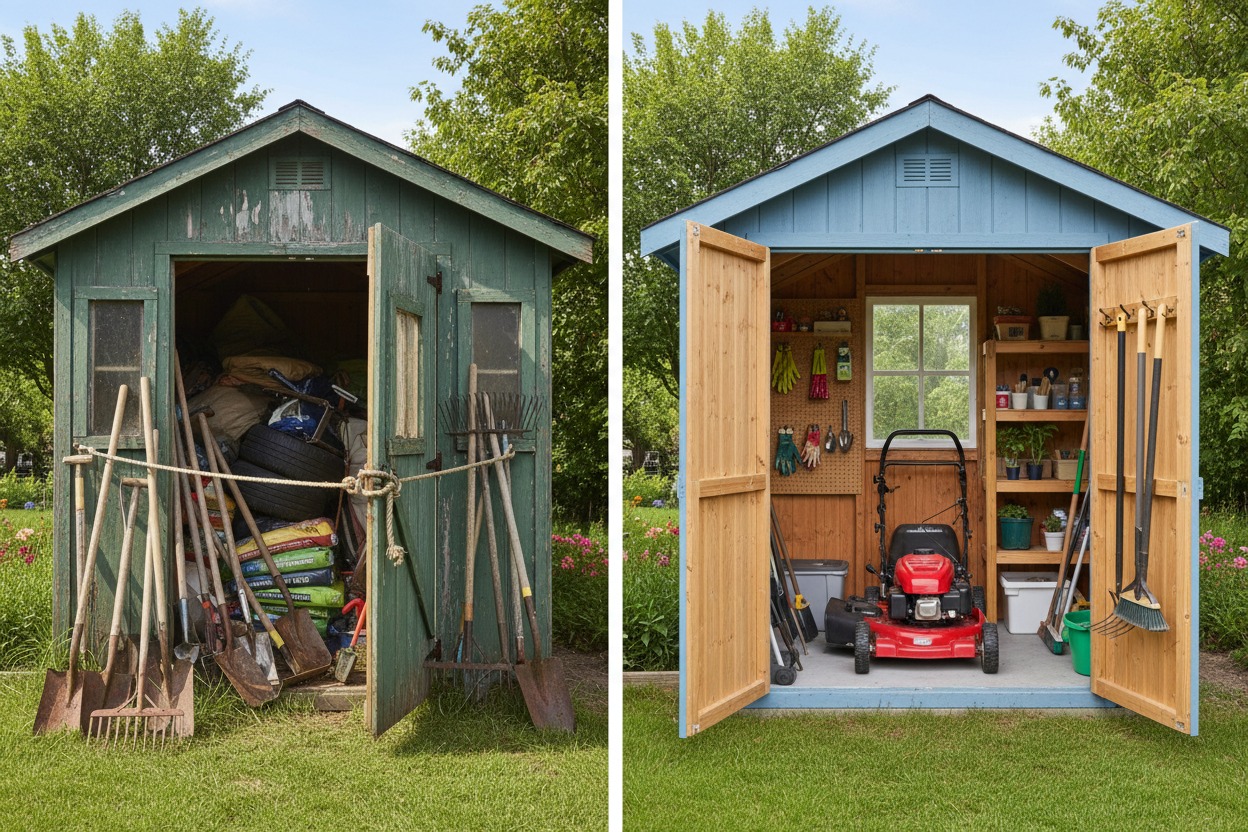
Many people believe that any shed is better than none. However, size determines so much more than just the amount of storage space inside.
With an undersized shed you are forced to decide what is kept inside and what is left outside – consequently, costly equipment such as lawn mowers, snow blowers, and power tools are left out to the elements. On the contrary, a too-big shed can be against the local zoning rules, may require permits, cause drainage or shading issues for your lawn, and also look too imposing in a small backyard.
According to Consumer Reports, one of the most consistent complaints from shed buyers is that they wish they had gone one size larger. It’s a recurring pattern — people underestimate what they own and overestimate how organized they’ll be.
A perfectly sized shed is one that accommodates all your essentials with some extra space for future use, fits nicely in your yard without being the center of attention, and complies with your local rules.
Let’s figure out exactly what that looks like for your situation.
Step 1: Measure Your Available Backyard Space
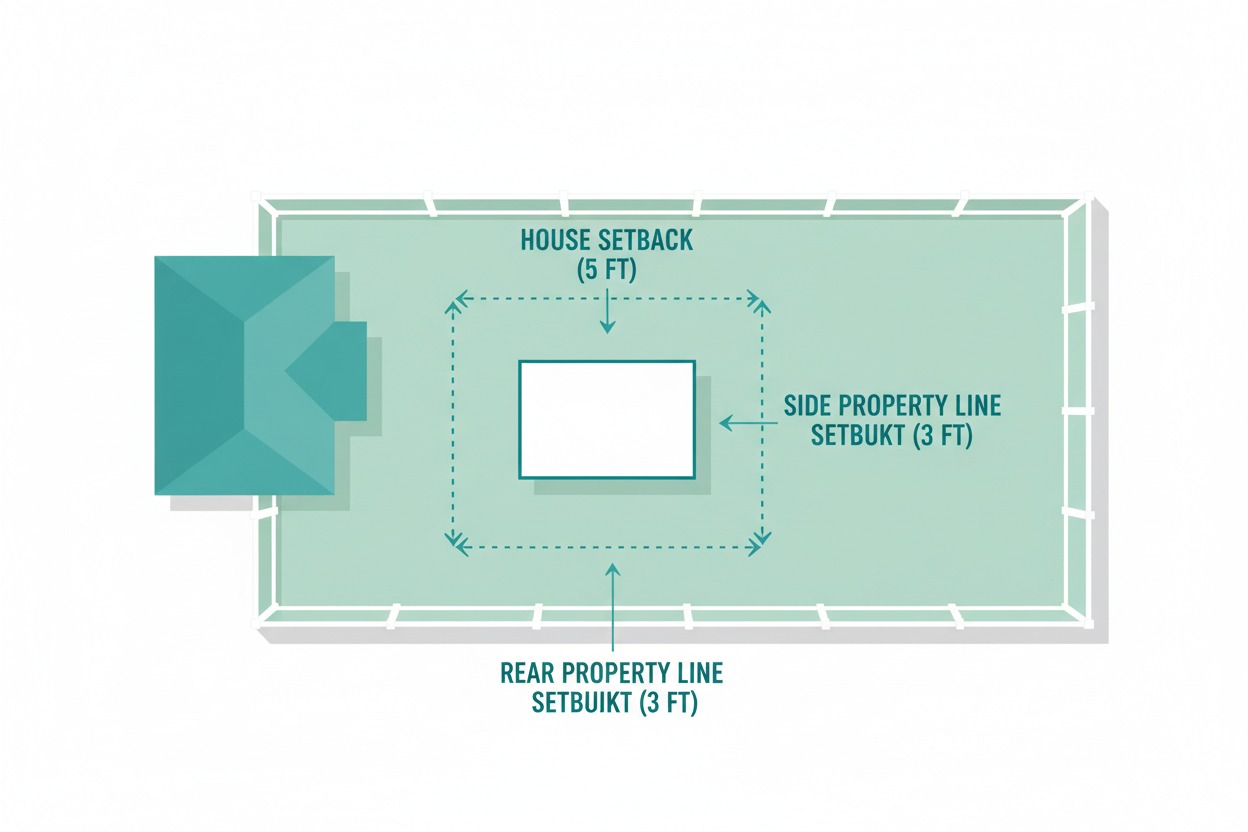
Before anything else, you need to know what space you’re actually working with — not what you think you have.
Measure the Usable Area
Take a measuring tape and walk around your backyard. Find an area where you can place a shed that would be practical and in line with your backyard plan — for example, away from trees, not blocking windows, doors, or buried utilities, and having enough space to move around it.
Majority of shed installation manuals advise maintaining a clearance of at least 18–24 inches on all sides for providing ventilation, allowing access for maintenance, and enabling drainage. Include that in your footprint estimation.
A yard measuring 40 feet wide and 60 feet long does not necessarily imply that you have an area of 2,400 square feet for a shed. After taking into consideration the setbacks, garden beds, patios, and clearance areas, your usable space might be significantly smaller.
Check Local Zoning and Setback Rules
This step stops a lot of projects before they start — or worse, after they start.
Most municipalities require sheds to be placed a minimum distance from property lines, fences, and the main structure of your home. These are called setback requirements, and they vary significantly by location. Some areas allow a shed as close as 2 feet from a fence; others require 10 feet or more.
Besides positioning, size limitations sometimes serve as the reason for permit requirements. A lot of areas give permission to sheds of 120 square feet or smaller (approximately 10×12) without a building permit, however, a shed of this size or bigger might need you to make an application, pay a fee, and have an inspection. Contact your local building department or consult your city or county’s official planning web page before making any purchase.
You can also use tools like Symbium — a free online zoning lookup tool — to get a quick read on what your property’s rules allow.
Account for Slope and Drainage
A flat, level surface isn’t just convenient — it’s essential. Sheds placed on sloped or poorly draining ground face structural issues, door alignment problems, and accelerated floor rot.
If your ideal location has a slight slope, that’s workable. Gravel pads, concrete footings, or adjustable deck blocks can level most moderate slopes. The This Old House guide on shed foundations covers your options well. But a steep slope may rule out a location entirely, or significantly increase your installation costs.
Step 2: Take Inventory of What You’re Storing
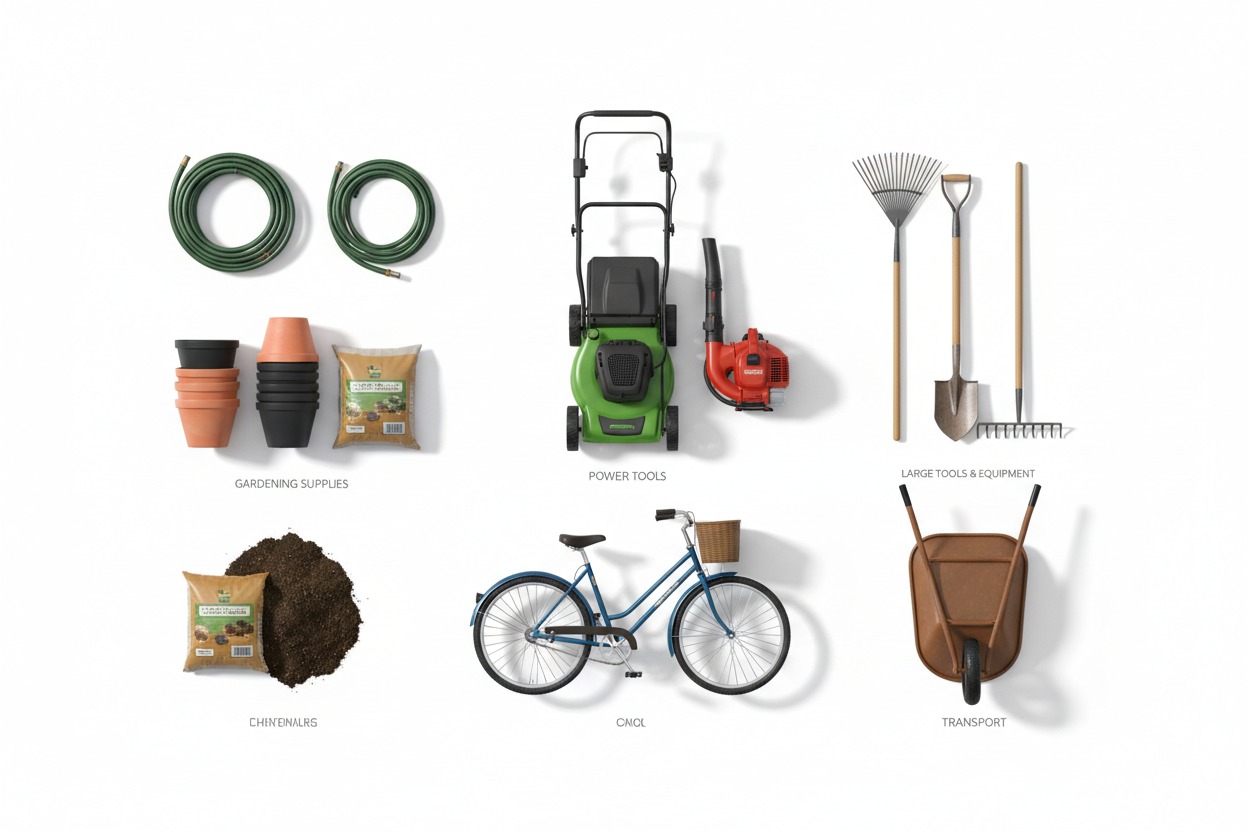
This is the step most people skip — and it’s why they end up buying the wrong size.
Don’t estimate. Actually list out everything you want to store in your shed. Then categorize it by size.
Large Equipment (Floor Space Required)
- Riding lawn mower or zero-turn mower
- Walk-behind mower
- Snowblower
- Wheelbarrow
- Garden tractor attachments
- ATV or small utility vehicle
Medium Items (Wall-Mounted or Shelf Storage)
- String trimmers and edgers
- Leaf blowers
- Garden hoses and reels
- Pressure washer
- Folding ladder (6–8 ft)
Small Items (Bins, Shelves, Pegboards)
- Hand tools (trowels, pruners, gloves)
- Fertilizers, pesticides, and soil amendments
- Seed packets and plant markers
- Flower pots and trays
- Extension cords and irrigation supplies
After that, try to figure out the floor space of each big item. A typical walk-behind lawnmower is about 2×3 feet. A riding mower could be 4×6 feet or even bigger. A snowblower usually measures 2×3 feet. A bike takes approximately 2×6 feet of floor space.
Sum up those footprints. That’s your baseline usable floor area — and you’ve still haven’t accounted for shelves, a workbench, or room to move around. Always add at least 20–30% on top of your inventory total to allow for movement inside the shed and potential storage expansion.
Step 3: Understand Standard Shed Sizes and What They Hold
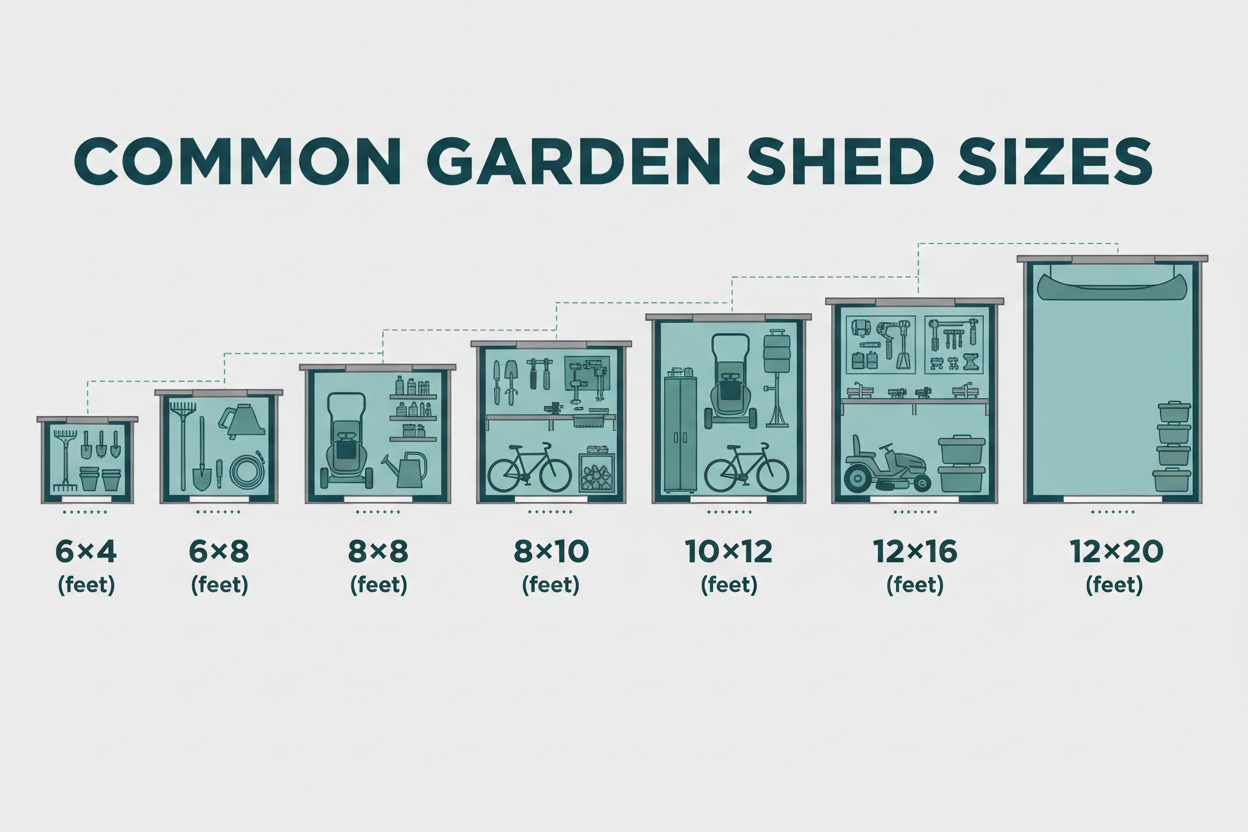
Here’s a practical breakdown of the most common shed sizes and what they realistically hold.
Small Sheds: 6×4 to 6×8 (24–48 sq ft)
These compact sheds are ideal for:
- Basic garden hand tools
- Bags of mulch or soil
- Flower pots and small garden accessories
- Hoses and irrigation equipment
What they won’t comfortably hold: a full-size mower, bikes, or any large equipment. If your primary goal is clearing out a garage full of yard gear, a 6×8 will feel cramped almost immediately.
Best for: Small urban yards, apartment patios, or supplemental storage when you already have a larger garage.
Medium Sheds: 8×8 to 8×12 (64–96 sq ft)
The most popular size range for suburban homeowners. An 8×10 or 8×12 can hold:
- A walk-behind mower
- A snowblower (seasonal swap)
- Long-handled tools on wall racks
- A small workbench
- Shelving for supplies
This range hits the sweet spot for most standard yards — enough capacity to be genuinely useful, small enough to fit without dominating the space, and often just under the permit threshold.
Large Sheds: 10×12 to 12×16 (120–192 sq ft)
Step up to this range if you:
- Own a riding mower or zero-turn
- Want a proper workshop space
- Need to store bikes, kayaks, or sports equipment alongside lawn gear
- Plan to use the shed as a potting room, hobby studio, or home office
A 10×12 is the smallest you’d want for a riding mower plus general storage. A 12×16 gives you room to add a workbench, shelving, and still move comfortably.
Extra-Large Sheds: 12×20 to 16×24 (240–384 sq ft)
At this size, you’re moving into workshop, garage substitute, or barn territory. These require permits in virtually all jurisdictions and may need a concrete slab foundation. They’re excellent if you run a small landscaping operation from home, do serious woodworking, or need to store a boat, trailer, or multiple large vehicles.
Shed Size Comparison Table
| Shed Size | Square Feet | Best For | Permit Likely? |
|---|---|---|---|
| 6×4 | 24 sq ft | Hand tools, small garden supplies | No |
| 6×8 | 48 sq ft | Small gardens, flower pots, hoses | No |
| 8×10 | 80 sq ft | Walk-behind mower, tools, shelving | No |
| 8×12 | 96 sq ft | Mower + snowblower, small workbench | No |
| 10×12 | 120 sq ft | Riding mower, tools, small workshop | Check locally |
| 12×16 | 192 sq ft | Full workshop, riding mower + storage | Usually yes |
| 12×20 | 240 sq ft | Boat, trailer, large workshop | Yes |
| 16×24 | 384 sq ft | Garage substitute, barn | Yes |
Note: Permit thresholds vary by location. Always verify with your local building department.
Step 4: Think About How You’ll Use the Shed
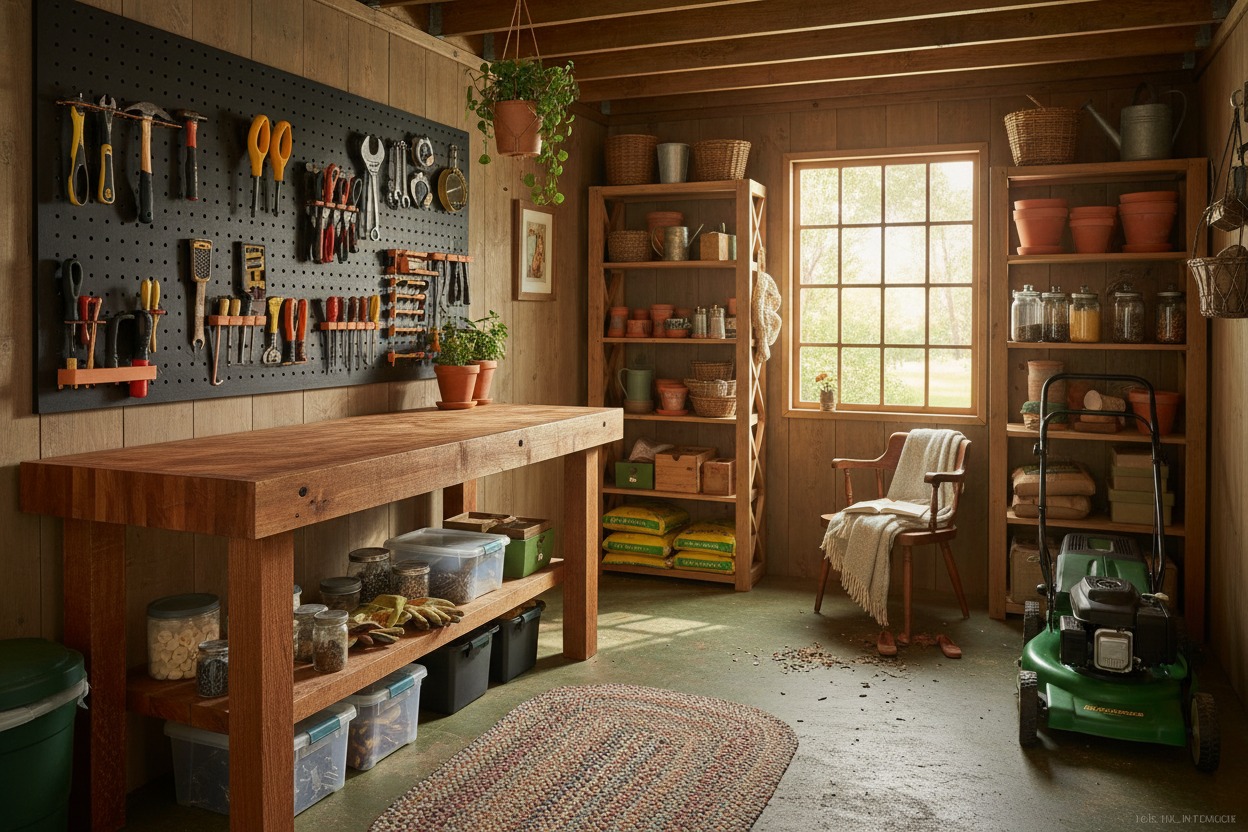
Storage is just one use case. The way you actually plan to spend time inside the shed changes the sizing equation significantly.
Pure Storage
You may want to think about having the most floor and wall storage possible if all you are doing is storing your equipment and walking in to get things. There is no need for large open areas – what you require are well thought-out shelves, racks fixed to walls, and hooks on the ceiling for vertical storage.
A well-organized 8×10 can hold a surprising amount if you plan wall storage from the start. Products like Rubbermaid FastTrack wall systems or pegboard panels maximize vertical space effectively.
Workshop or Hobby Space
If you really want a workbench that you can work at — not just a place to put your tools — then consider at least 24 inches deep and 6 feet wide as the minimum. Besides, a comfortable floor space to stand, good lighting, and probably an electrical outlet might be needed.
For your workshop to work properly a 10×12 would be the minimum requirement for practicality. However, 12×16 is clearly far more spacious and comfortable.
Potting Shed or Garden Studio
Potting sheds are a lot more convenient when there’s a work surface at countertop height, a window to let in natural light, and the availability of water either through a tap that is easily accessible or a garden hose. Besides, a potting bench is seldom larger than 2×4 feet, which means that you must reserve that space in your shed. 8×10 will be enough for a simple potting arrangement, and 10×12 will give you sufficient space to grow plants, keep pots, and perform work without getting cramped. If this is something you are working on, How to Dose Fertilizer for Plants is a useful next read. It explores a connected issue and may help you decide what to try next.
Home Office or She Shed
This is a growing trend — using a backyard shed as a separate workspace or retreat. At this point, you’re no longer just sizing for storage. You need room for a desk, chair, shelving, lighting, electrical wiring, possibly HVAC, and enough insulation to make the space usable year-round.
For a livable backyard studio, Bob Vila’s backyard office guide recommends a minimum of 8×10, with 10×12 to 12×16 being far more practical for full-time use.
Step 5: Factor in Shed Style and Foundation
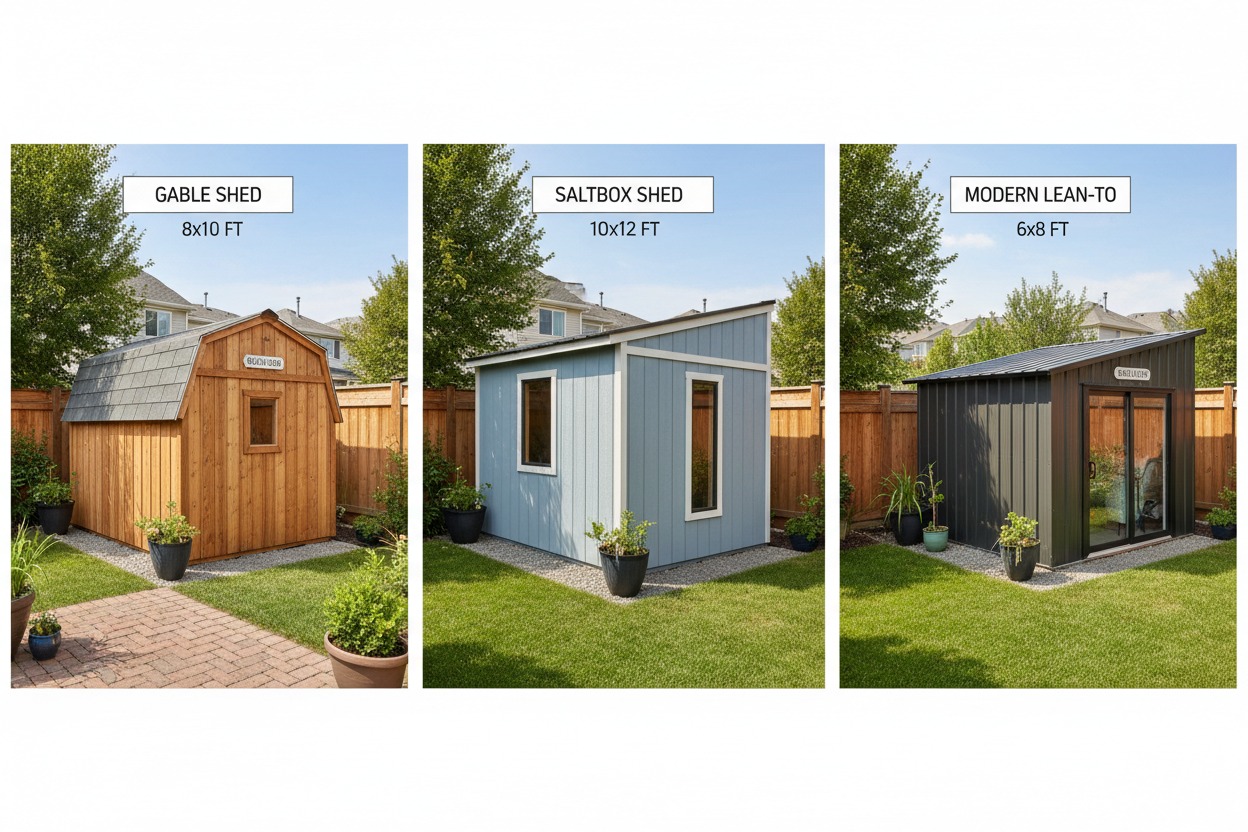
The shed’s structural style affects both the interior usable space and how it sits in your yard visually.
Gable Roof Sheds
The classic A-frame style. The peaked roof gives you excellent headroom in the center and the option for loft storage above. The same 8×10 footprint offers notably more total storage volume with a gable roof than with a flat or lean-to roof. Great for most purposes.
Lean-To Sheds
Designed to sit against a wall or fence. Excellent for small spaces or yards where you want minimal visual footprint. They’re narrower (often 4–8 feet deep) and work best as tool storage or bike storage. Not ideal if you need to move around inside.
Barn-Style (Dutch Barn) Sheds
The gambrel roofline creates a wider, more open interior with significantly more overhead space for loft storage. If you want maximum usable volume from a given footprint, barn-style sheds are very efficient. A 10×12 barn-style shed effectively has more usable cubic volume than a 10×12 gable shed.
Foundation Options and Their Size Implications
Your foundation choice also affects what size shed is practical:
- Gravel or crushed stone pad — works for most sizes up to 12×16; allows drainage, relatively low cost
- Pressure-treated wood skids — common for smaller sheds; easy to relocate
- Concrete deck blocks — versatile for small to medium sheds, adjustable for level
- Poured concrete slab — required or recommended for large sheds over 150 sq ft; permanent
The American Society of Concrete Contractors recommends a minimum 4-inch concrete slab for permanent backyard structures. For smaller sheds on gravel pads, ground contact pressure-treated lumber rated for direct burial is the standard for skid-style bases.
Expert Tips: What Professionals Recommend about How to Choose the Right Size Garden Shed for Backyard
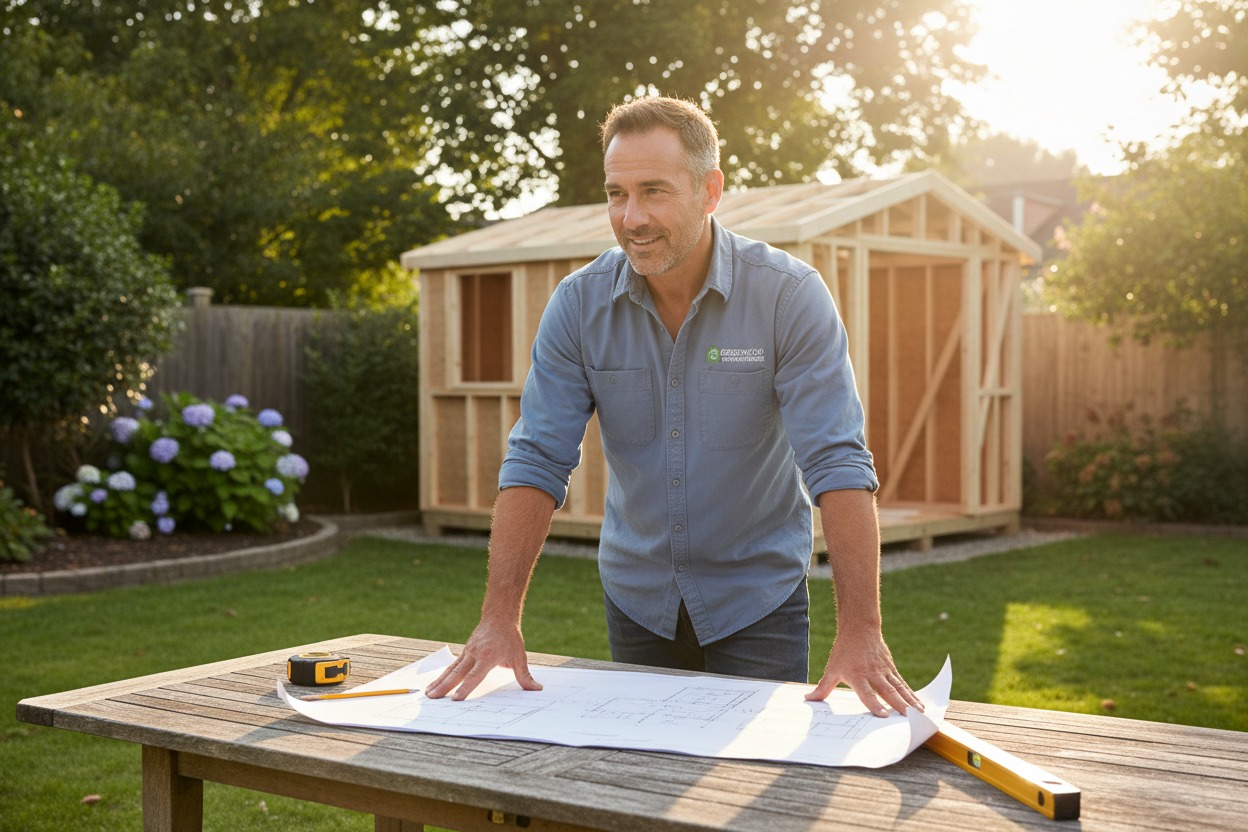
We pulled together advice from shed installers, landscape designers, and home improvement professionals:
Always choose a size bigger. If you think 8×10, think about 8×12 or 10×12 instead. Over time, you’ll get more tools and supplies. A slightly bigger shed usually costs just a little more and is worth it.
Think in cubic feet, not just square feet. A shed with 9-foot walls and a peaked roof holds much more storage than one with 7-foot walls. Many makers offer tall-wall or high-barn versions — it’s worth checking.
Don’t forget the doors. Double doors are significantly more practical for moving lawnmowers and large equipment in and out. A single 3-foot door looks fine but becomes a frustrating obstacle when you’re maneuvering a 24-inch walk-behind mower on a hot Saturday. Stanley Security notes that door width is one of the most overlooked practical considerations in shed planning.
Plan your electrical from day one. If there’s any chance you’ll want a light, an outlet, or a fan in your shed, plan for electrical conduit during installation — even if you don’t wire it immediately. Retrofitting electrical through a finished shed wall is unnecessarily expensive. Check local codes, as electrical work typically requires a licensed electrician per the National Electrical Code.
Assess your access path. The shed’s door must be reachable with your largest piece of equipment. Measure gate openings, pathway widths, and any turns between your garage and the shed location before you decide on placement.
Also Read: Average Size of a Backyard Pool: Complete Guide (With Real Numbers)
Common Mistakes to Avoid When Sizing a Garden Shed
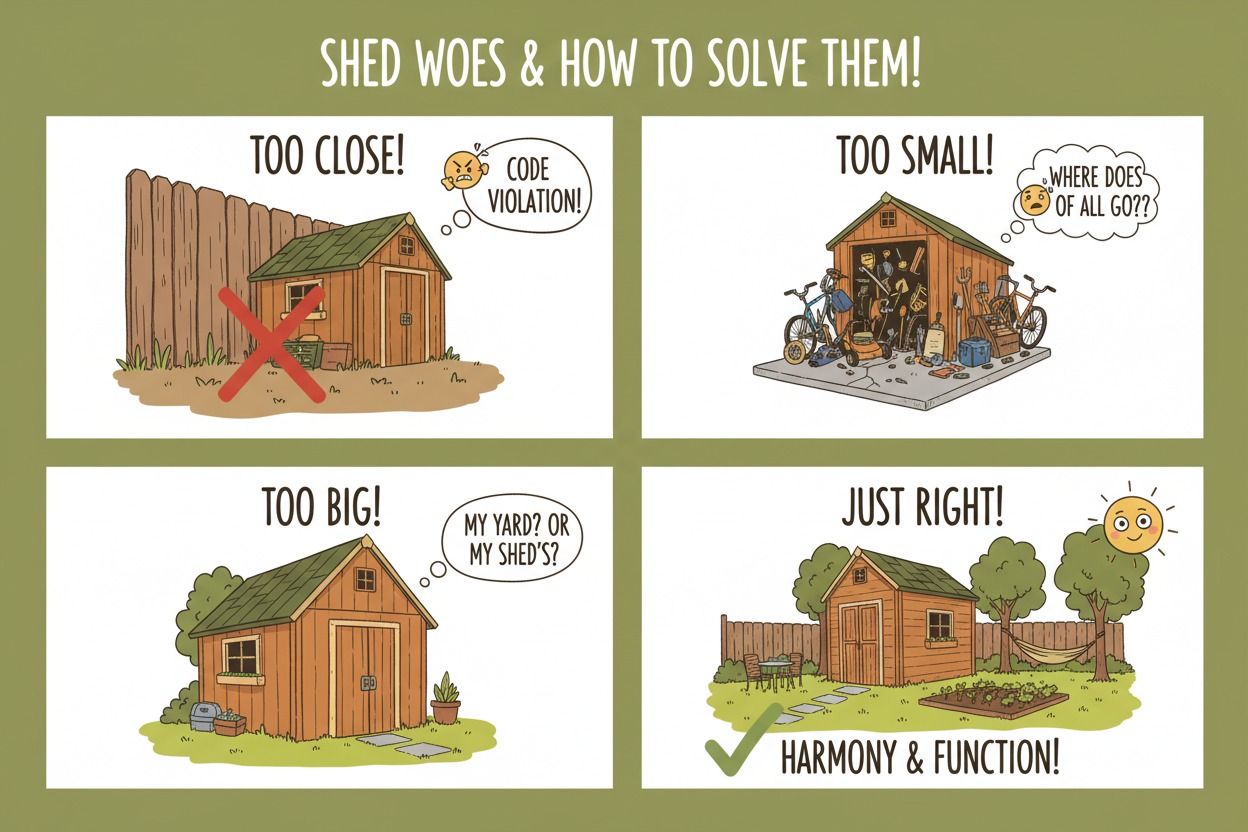
Knowing what not to do is just as valuable as knowing what to do.
- Buying based on price alone. The cheapest shed in the right size is almost always a better investment than a larger shed built with inferior materials. Thin walls, flimsy floors, and poor roofing lead to rot, leaks, and structural failure within a few years.
- Ignoring the permit process. Installing a shed that exceeds your local size limits without a permit can result in fines, forced removal, and complications when you sell your home. It’s not worth it — permits for sheds under 200 sq ft are usually straightforward and affordable.
- Buying a kit without checking assembly requirements. Some larger sheds require two or more people and specific tools to assemble. Others arrive as delivered units (turnkey). Make sure the delivery or assembly method is realistic for your yard access and timeline.
- Forgetting about ventilation. Sheds get hot in summer — extreme heat damages chemicals, seeds, rubber seals on equipment, and can be a fire hazard if gasoline-powered equipment is stored inside. The Occupational Safety and Health Administration (OSHA) recommends specific ventilation for spaces where flammable liquids are stored. At minimum, plan for a roof vent and one or two operable windows.
- Not checking HOA rules. If your neighborhood has a homeowners association, they may have design guidelines covering shed size, color, materials, and even door direction. Always review your HOA’s CC&Rs before purchasing.
Pros and Cons: Buying Small vs. Large
| Smaller Shed (Under 100 sq ft) | Larger Shed (120 sq ft+) | |
|---|---|---|
| Cost | Lower upfront cost | Higher upfront cost |
| Permit | Usually not required | Often required |
| Space Impact | Minimal yard footprint | Takes up more yard |
| Storage Capacity | Limited — may need to prioritize | Ample room + room to grow |
| Resale Value | Modest improvement | Can add meaningful home value |
| Installation | Easier, often DIY | May need professional help |
| Future Flexibility | Often outgrown quickly | Better long-term investment |
What Size Shed Do You Actually Need? A Quick Decision Guide
Not sure where you land? Use this simple framework:
You need a small shed (6×6 to 6×8) if:
- You have a small urban or townhome yard
- You’re storing only hand tools and garden accessories
- Budget and space are both limited
You need a medium shed (8×8 to 8×12) if:
- You own a walk-behind mower and basic outdoor power equipment
- You want some shelving and a small work surface
- You want to stay under the typical permit threshold
You need a large shed (10×12 to 12×16) if:
- You own a riding mower or multiple large pieces of equipment
- You want a functional workshop or hobby space
- You want to store bikes, kayaks, or seasonal items alongside lawn gear
You need an extra-large shed (12×20+) if:
- You need a garage substitute or serious workshop
- You’re storing a boat, trailer, or large vehicles
- You run a home-based landscaping or contracting business
Frequently Asked Questions
Q1: What is the most popular garden shed size for a suburban backyard?
The 8×10 and 10×12 are steadily the top-selling sizes for suburban homes. The 8×10 (80 sq ft) accommodates most standard mowing and gardening tools and equipment while staying under the usual 120 sq ft permit limit. The 10×12 provides additional space and can be converted into a small workshop without the need for significant structural changes.
Q2: Do I need a permit for a garden shed?
It really depends on your local laws. In most places, you can install a shed without a permit if your shed is not larger than 120 square feet (usually 10×12). Larger structures generally need a permit, whereas some towns require a permit for any kind of permanent structure, no matter the size. It is best to consult your local building department or city planning office prior to buying or setting up a shed.
Q3: How much clearance should a garden shed have from fences and property lines?
Usually local codes mandate a minimum distance of 5 to 10 feet away from property lines, however certain places even permit 2 feet of distance. Besides, your shed ought to have a minimum clearance of 18 to 24 inches on all sides for ventilatioin, access for maintenance, and drainage.
So, check your local zoning regulations as such things differ miltiple times from one municipality to another.
Q4: Can a garden shed increase my home’s resale value?
Yes — a well-built, properly sized, and permitted garden shed can add value to your property. According to Remodeling Magazine’s Cost vs. Value Report, outdoor storage structures tend to appeal strongly to buyers. However, an oversized, poorly placed, or unpermitted shed can actually complicate a sale, so quality and compliance matter as much as size.
Q5: What’s the best foundation for a garden shed?
If your shed is under 100 square feet, a compacted gravel pad (4–6 inches deep) with pressure-treated skids is a common and cost-effective solution. But if the shed is between 100–200 square feet, concrete deck blocks or a continuous perimeter of concrete blocks provides better stability. For large sheds or those intended as workshops or offices, a poured concrete slab is the most durable option. The right choice depends on your shed size, soil conditions, local frost depth, and intended use. so, keep all these things in your mind.
Conclusion: Get the Size Right the First Time
If you wonder what size backyard garden shed will be perfect for you, the answer isn’t hard to find – however, you need to take some deliberate steps before clicking “add to cart” or entering the home improvement store.
Find out the size of the area you can use. Write down what you want to keep inside. Get to know your local permit regulations. Don’t just think about what you will need this year, but also the possibility of needing in two or three years.
After that, you figure out a shed size that is aligned with your reality – one that won’t be too big for your yard, one that is good for your lifestyle, and one that won’t make you regret not going bigger (or smaller) six months later. For a slightly different perspective, read Fire Flower: 18 Best Flowers That Look Like Flames. It deals with a related issue and adds useful context to what you have just read.
Going too small is the number one source of regret. The number two source of regret is not checking with local codes before. Now you are informed about how to avoid these two.
Ready to start planning? Grab a tape measure, walk your yard, and use the sizing guide above to narrow your options. If you’re still unsure, leave a comment below with your yard dimensions and storage list — we’re happy to help you think it through.
Additional Resources
- USGS Hardness Water Resource Page — General environmental and land use reference
- HUD: Land Use Regulations — Local zoning and setback rule reference
- This Old House: How to Build a Shed Foundation — Foundation planning guide
- Bob Vila: Backyard Office Ideas — She shed and studio shed planning
- National Fire Protection Association – NEC Code 70 — Electrical code reference for shed wiring
- OSHA Flammable Liquids Storage — Ventilation and safety for sheds storing fuel equipment
- Symbium Zoning Lookup Tool — Free online zoning and setback lookup by address
- Remodeling Magazine Cost vs. Value — Outdoor structure ROI data
Disclaimer: Zoning laws, permit requirements, and HOA rules vary by location. Always verify local regulations with your municipal building department before purchasing or installing a garden shed.