


If you are searching for How to remove oil stains from driveway with baking soda, the basic method is straightforward: absorb any wet oil, cover the mark with baking soda, scrub it with a little warm water, collect the residue, and repeat if necessary. Baking soda works best on fresh, shallow stains in unsealed concrete. It may lighten an old stain, but deeply absorbed oil usually needs dish soap, a concrete degreaser, or a poultice-style treatment.
Timing and driveway material matter as much as the cleaning product. This guide explains what to do for fresh and old stains, how long to leave baking soda in place, and when to move to a stronger method without damaging your driveway.
Quick Answer: How to Remove Oil Stains From Driveway With Baking Soda
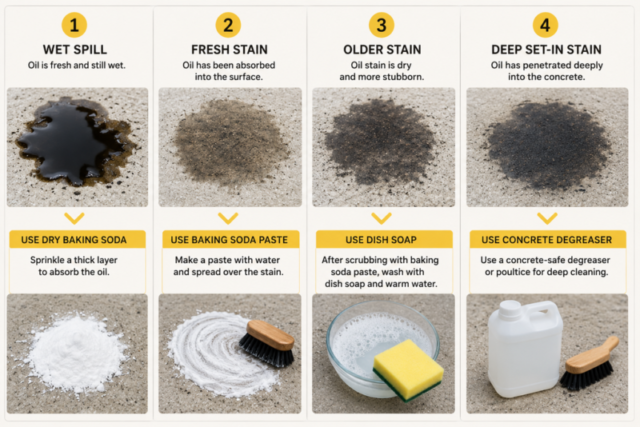
For a fresh oil spill, blot or absorb as much liquid as possible without spreading it. Cover the entire area with a thick layer of baking soda, leave it for at least 30 minutes, and sweep it into a container before scrubbing the remaining mark with a baking soda and warm-water paste.
For an older stain, apply a thick paste, let it dry for several hours, scrub with a stiff nylon brush, and remove the dried residue. Repeat once if the stain is fading, but switch to a concrete-safe degreaser if there is little or no improvement.
Does Baking Soda Really Remove Oil From a Driveway?
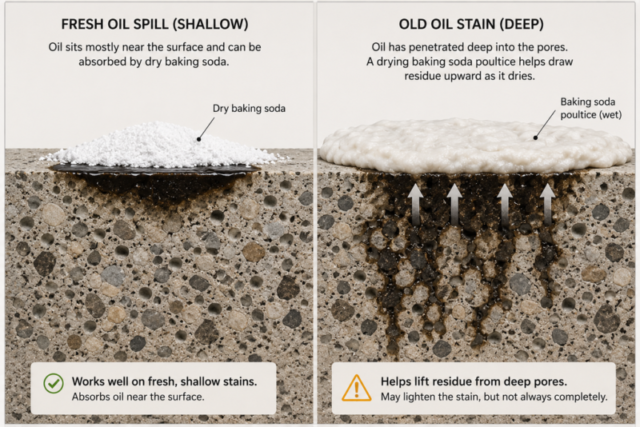
Baking soda can help, but its effectiveness depends on how far along the stain is. Dry baking soda absorbs some oil that remains near the surface, while its fine particles provide mild abrasion when you scrub the concrete.
Baking soda is sodium bicarbonate, a mildly alkaline substance. A freshly prepared solution has a pH of about 8.3, according to the National Library of Medicine’s sodium bicarbonate data. This mild alkalinity may assist with greasy residue, but baking soda is not a powerful degreaser and cannot reliably pull every deeply embedded stain from porous concrete.
A grease-cutting dish detergent serves a different purpose. Its surfactants help suspend loosened oil in water, which is why baking soda followed by a small amount of dish soap often works better than baking soda alone.
| Stain condition | Expected baking soda performance | Best approach |
|---|---|---|
| Fresh and still wet | Good for absorbing surface oil | Apply dry baking soda immediately |
| Fresh but no longer wet | Fair to good | Use a baking soda paste and scrub |
| Several days old | Variable | Paste, scrub, then add dish soap |
| Deep or months old | Limited | Use a concrete degreaser or poultice |
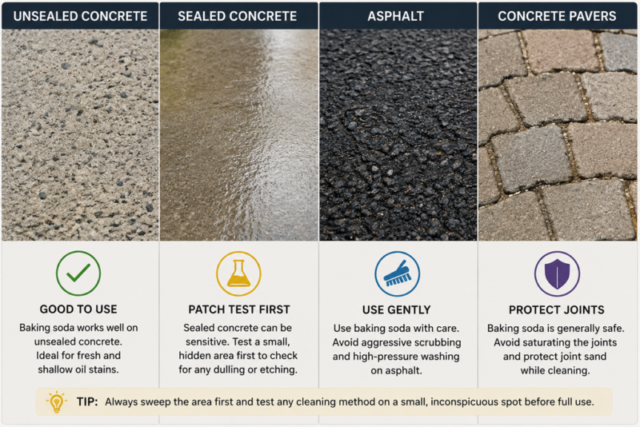
| Sealed or decorative surface | Risk of changing the finish | Test first or follow the sealer manufacturer’s advice |
| Asphalt driveway | Use cautiously | Avoid solvents and aggressive brushing |
Check Your Driveway Surface Before Cleaning
Do not assume every gray driveway is untreated concrete. Concrete, asphalt, concrete pavers, natural stone, and coated surfaces react differently to scrubbing, alkaline cleaners, solvents, and pressure washing.
Unsealed Concrete
Unsealed concrete is porous, so it absorbs oil quickly. It is also the surface where the baking soda method is most useful, especially if you treat the spill promptly.
Rough, broom-finished concrete can usually tolerate a stiff nylon brush. Do not use a metal wire brush because fragments can remain behind, rust, and create new stains.
Sealed or Decorative Concrete
Baking soda can dull certain coatings or leave a noticeably cleaner patch around the stain. A concrete-floor specialist recommends limiting baking soda to non-decorative surfaces because pH changes and abrasion can affect some finishes, as explained in this concrete oil-stain treatment guide.
Test your paste in a hidden area, and let the test spot dry completely before treating the visible stain. If you know which sealer or coating was applied, follow its maintenance instructions instead of experimenting with multiple household chemicals.
Asphalt
Asphalt contains a petroleum-based binder, so gasoline, paint thinner, and other strong solvents can soften or damage it. Use dry absorbent first, followed by a small amount of mild dish soap and gentle brushing.
Do not use a concentrated pressure-washer stream on weak, cracked, or crumbling asphalt. If the dark mark remains but the surface is otherwise clean, allowing it to fade naturally may be safer than repeatedly attacking the pavement.
Pavers and Natural Stone
Oil can penetrate the pores and joints of concrete or brick pavers. Use limited water, protect the jointing sand, and test the cleaner first.
For natural stone, particularly limestone, marble, or a sealed decorative product, check the installer’s or manufacturer’s cleaning instructions. A stone-safe poultice may be more appropriate than a general driveway recipe.
What You Will Need
Most small stains can be treated with inexpensive supplies you may already have. Gather everything first so you can contain the oil before it spreads or reaches the street.
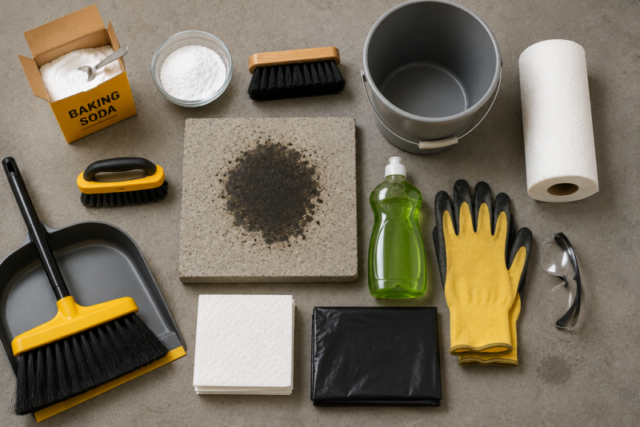
- Baking soda
- Paper towels, absorbent pads, or old disposable rags
- A broom and dustpan
- A stiff nylon scrub brush
- Warm water
- Grease-cutting liquid dish soap
- A bucket
- Rubber or nitrile gloves
- Eye protection
- Plastic sheeting or absorbent socks for controlling runoff
- A sealable bag or container for oily residue
Do not use gasoline, kerosene, brake cleaner, paint thinner, or another flammable solvent as a driveway stain remover. These products can introduce additional hazards, damage asphalt or coatings, and create contaminated runoff.
How to Remove Oil Stains From Driveway With Baking Soda
Choose a dry day with no immediate rain in the forecast. Keep children and pets away from the work area, and stop the cleaning water from flowing toward the street, garden, or storm drain.
Step 1: Stop the Leak and Contain the Spill
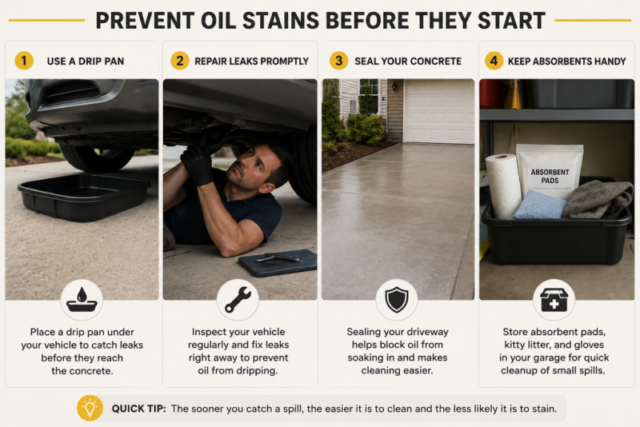
Move the vehicle only if it is safe to do so, then place a drip pan or absorbent material beneath the leak. Arrange to have the mechanical problem repaired, or a clean driveway will quickly become stained again.
If oil is spreading, surround it with absorbent pads, cat litter, sand, or baking soda. Work from the outside edge toward the middle to avoid enlarging the stain.
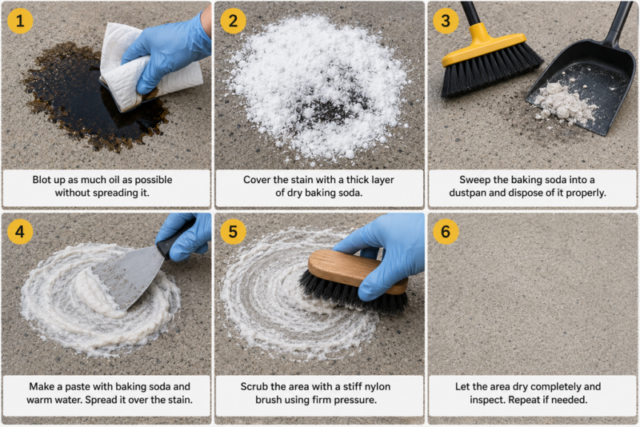
Step 2: Blot Up Standing Oil
Place absorbent towels or pads on the oil and press gently. Lift rather than wipe because wiping pushes the oil across a larger area and deeper into the concrete texture.
Continue with clean material until you are no longer collecting much liquid. Place the oily towels or pads in a suitable closed container while you check local disposal requirements.
Step 3: Apply a Thick Layer of Dry Baking Soda
Cover the entire stain, extending the baking soda slightly beyond its visible edge. The powder should hide the dark surface beneath it rather than forming a light dusting.
Leave it for about 30 minutes on a small fresh spill. For a heavier wet spill, let the absorbent sit longer, and replace it if it becomes saturated.
Current driveway-cleaning guidance from American Family Insurance also recommends a thick layer of baking soda, a 30-minute absorption period, scrubbing, and repeating as needed.
Step 4: Sweep Up the Oily Powder
Sweep the powder slowly so it doesn’t become airborne or scatter onto clean concrete. Collect it in a dustpan and transfer it to a sealable bag or container.
Do not wash oil-saturated baking soda into a gutter. Used motor oil is persistent and can contain contaminants, and the Environmental Protection Agency’s used-oil guidance recommends checking with local waste officials or automotive facilities for proper recycling and disposal options.
Step 5: Make a Baking Soda Paste
Add warm water to fresh baking soda a little at a time until it forms a thick, spreadable paste. It should remain on the stain rather than immediately running toward the driveway edge.
Spread the paste over the mark and let it sit for 15 to 30 minutes. Do not allow oily wash water to reach nearby plants, soil, or drainage channels.
Step 6: Scrub the Stain
Use a stiff nylon brush and scrub from the outside toward the center. Work in several directions so the bristles reach the low points in textured concrete.
You should not need to gouge the surface with extreme pressure. Moderate, repeated passes are safer than metal bristles or a highly concentrated pressure-washer nozzle.
Step 7: Remove the Residue With Minimal Water
Use towels, absorbent pads, or a wet vacuum rated for the material to collect the dirty slurry where practical. If local rules permit rinsing, use the minimum water needed and keep it contained on your property.
Stormwater can carry oil and other pollutants from pavement into waterways without treatment. The EPA explains this pathway in its guidance on polluted runoff from driveways and other hard surfaces.
Step 8: Let the Driveway Dry Before Judging It
Wet concrete always looks darker, so do not decide whether the stain remains while the area is still damp. Let it dry fully, preferably until the following day.
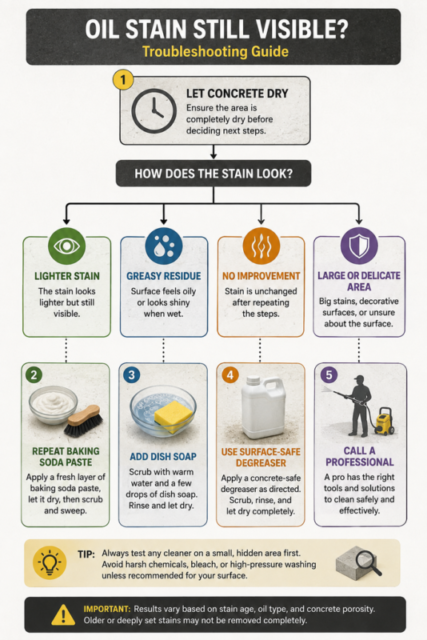
If the mark is clearly lighter, repeat the paste treatment once. If there is almost no change, move to the troubleshooting methods below rather than scrubbing the concrete indefinitely.
How to Treat an Old or Set-In Oil Stain
Old stains are harder because oil can travel into the pores of unsealed concrete. Surface scrubbing may improve appearance without removing the contamination beneath.
Start by slightly dampening the stain. Make a thick baking soda paste, spread it about one-quarter inch deep over the affected area, and leave it until completely dry. Depending on the weather and paste thickness, drying may take several hours or overnight.
Once dry, sweep up the paste and inspect it for discoloration. Dark or oily material in the powder suggests the treatment has drawn out some residue, so a second application may be worthwhile.
If the concrete remains dark, apply a small amount of grease-cutting dish soap. Scrub with warm water, let it work for 15 to 30 minutes, and collect the slurry rather than flooding the driveway. A similar progression from absorbent to baking soda paste is described in this driveway oil-removal guide.
Baking Soda Alone vs. Baking Soda and Dish Soap
Dry baking soda is primarily useful as an absorbent. A damp paste adds gentle scrubbing action, while dish soap helps release greasy residue from the surface and suspend it in the cleaning water.
I recommend starting with baking soda alone for a wet spill because adding water too early can spread the oil. Once you have collected the free oil, a small amount of grease-cutting dish soap can help treat the remaining film.
| Method | Best use | Main advantage | Limitation |
|---|---|---|---|
| Dry baking soda | Fresh, wet oil | Absorbs surface liquid | Weak on dried stains |
| Baking soda and water paste | Light dried residue | Mild abrasion and longer contact | May require repeated applications |
| Baking soda and dish soap | Greasy surface residue | Adds surfactant cleaning | Creates more slurry to contain |
| Concrete degreaser | Old or stubborn stains | Designed for petroleum residue | Must match the surface and be used as labeled |
| Commercial poultice | Deep stains in porous concrete | Longer drawing action | Slower and more expensive |
| Professional cleaning | Large or recurring stains | Appropriate equipment and containment | Higher cost |
Should You Mix Baking Soda and Vinegar?
I would not use vinegar and baking soda together for an oil stain. The dramatic fizz comes from an acid-base reaction, but the ingredients largely neutralize one another instead of producing a stronger grease cleaner.
Vinegar can also affect cement-based materials and certain sealers. For oily residue, preserving baking soda’s mild alkalinity and adding a surfactant such as dish soap is generally more logical than neutralizing the baking soda with an acid.
When Baking Soda Is Not Enough
A faint shadow does not always mean the surface is still oily. Concrete can remain discolored after the removable residue is gone, especially if the stain is old or has been exposed to sunlight for a long time.
Escalate gradually instead of combining several strong chemicals:
- Repeat the baking soda paste once if the first treatment produced visible improvement.
- Add a small amount of grease-cutting dish detergent and scrub with warm water.
- Try a commercial cleaner labeled for oil stains and your exact driveway material.
- Consider a poultice-style concrete oil remover for a deep stain.
- Contact a professional for a large spill, a delicate finish, widespread contamination, or a stain near a storm drain.
Read the cleaner label before use and never assume two products are safe to mix. Protect nearby plants, patch-test the product, and follow all surface, ventilation, personal-protection, and disposal directions.
Common Mistakes to Avoid
Hosing Down a Fresh Spill
Water does not absorb oil. It can spread a fresh spill over clean pavement and carry contamination toward soil or a storm drain.
Apply a dry absorbent first and collect it. Add only a small amount of water after you remove the free oil.
Scrubbing Before Absorbing the Oil
Immediate scrubbing can push wet oil farther into textured concrete. It can also enlarge the stain by moving oil beyond its original boundary.
Blot and absorb first. Save the brush for the thin residue that remains afterward.
Using Too Little Baking Soda
A light dusting quickly becomes saturated and leaves most of the oil behind. Use enough to create a complete, visibly dry covering over the spill.
If the powder darkens or clumps rapidly, collect it and add a fresh layer. This is more effective than scrubbing saturated powder across the surface.
Using a Wire Brush
Wire bristles may scratch coatings or leave small steel particles in the concrete. Those particles can later rust and produce orange-brown spots.
Choose stiff nylon bristles instead. A larger deck brush can make the work easier on a broad stain.
Pressure Washing Too Soon
A pressure washer is better suited to final, controlled rinsing than to breaking up a wet oil spill. High pressure can spread contaminated water, erode joints, damage weak concrete, or create a noticeably cleaner patch.
Absorb and degrease the stain first. If you pressure wash afterward, follow the equipment manufacturer’s instructions, use a broad fan pattern, and control dirty runoff.
Cleaning Only the Visible Center
Oil stains often extend slightly beyond their darkest edge. Treating only the center can leave a ring once the concrete dries.
Extend the absorbent or paste just past the visible boundary. Scrub toward the center to keep the contaminated area from expanding.
How to Prevent Future Driveway Oil Stains
Fix the source of the leak as soon as possible. A growing stain may indicate leaking engine oil, transmission fluid, power-steering fluid, or another automotive product that needs mechanical attention.
Until you repair the vehicle, place a purpose-made drip pan or absorbent garage mat beneath the leak. Cardboard may help temporarily, but saturated cardboard can transfer oil back to the driveway.
For garages where leaks and automotive work are common, a suitable coating can make future cleanup easier. Home Upright’s guide to high-quality garage floor coatings explains the differences among epoxy, polyaspartic, polyurea, and basic sealers.
Keeping the driveway clean also contributes to the overall appearance of the property. If you are improving more than the stained area, these home exterior upgrades for better curb appeal can help you plan the surrounding space.
Frequently Asked Questions
How long should baking soda sit on an oil stain?
Leave dry baking soda on a small fresh spill for at least 30 minutes. A heavy spill may need longer or a second layer, while a thick paste on an old stain can stay until it dries completely.
Will baking soda remove an old oil stain from concrete?
It may lighten an old or shallow stain, but it cannot guarantee complete removal of oil that has penetrated deeply into porous concrete. Try a drying baking soda poultice first, then move to dish soap or a concrete-safe degreaser if it doesn’t improve much.
Can I leave baking soda on concrete overnight?
Yes, you can leave a baking soda paste overnight on ordinary unsealed concrete if the area is protected from rain and foot traffic. Test first on sealed, colored, polished, or decorative concrete because the treatment may alter the finish or produce a lighter patch.
Does baking soda damage a concrete driveway?
Occasional, localized use is unlikely to harm sound, unsealed concrete if you remove the residue properly. Repeated abrasive scrubbing or use on decorative coatings can change the appearance, so do a hidden patch test.
Can I use baking soda and dish soap together?
Yes, but use them after you have absorbed and collected any standing oil. Baking soda provides mild abrasion, while dish soap helps suspend greasy residue, but you must contain and dispose of the resulting slurry properly.
Is baking soda safe for an asphalt driveway?
You can use it cautiously as a dry absorbent or with a little mild detergent. Avoid aggressive brushing, strong solvents, and high-pressure washing because asphalt can soften, erode, or lose surface material.
Should I use hot or cold water on a driveway oil stain?
Warm water can help dish soap work on greasy residue, but water should not be your first step on a fresh spill. Absorb the liquid oil before adding water, and avoid creating uncontrolled runoff.
Can a pressure washer completely remove an oil stain?
A pressure washer may improve the final appearance after you absorb and treat the oil, but water pressure alone may not remove oil held deep inside the concrete. It can also spread oily water or damage weak surfaces when used too close or at excessive pressure.
Why did the oil stain return after the concrete dried?
Oil may remain below the surface and migrate upward as the concrete dries. Another possibility is an unrepaired vehicle leak, so inspect the parking position and treat the source before repeating the cleaning process.
Conclusion
If you wanted to know How to remove oil stains from driveway with baking soda, the most important detail is to match the method to the age of the stain and the type of driveway. Dry baking soda works best for absorbing fresh oil, while a thick paste, gentle scrubbing, and a little dish soap can help remove remaining surface residue.
Act quickly, use minimal water, and keep oily waste away from storm drains. Once the area is clean and fully dry, repair the vehicle leak and place a drip pan beneath it so you do not have to repeat the entire job next week.