


Key Signs Your Water Heater Needs Immediate Attention
The key signs your water heater needs immediate attention include inconsistent temperatures, reduced hot-water pressure, unusual noises, visible corrosion, leaks, and repeated system shutdowns. Recognizing these warning signs early can help you avoid unexpected cold showers, water damage, rising energy costs, and more expensive repairs.
Both traditional tank heaters and tankless systems can develop performance and safety problems. This guide explains which symptoms require prompt attention, when a repair may be enough, when replacement makes more sense, and how regular maintenance can protect your water heater.
Inconsistent Water Temperature and Pressure Issues
One of the most frustrating and common signs that your water heater is in distress is a lack of consistent hot water. If your showers suddenly turn cold, or the water temperature fluctuates wildly, it’s a clear red flag. For traditional tank heaters, this could indicate a failing heating element, a malfunctioning thermostat, or significant sediment buildup at the bottom of the tank, which insulates the water from the heating source.
Running out of hot water after several showers does not always indicate a fault because storage heaters need time to refill and reheat. Our guide explains how long it takes for hot water to come back and how recovery time differs between gas, electric, heat-pump, and tankless systems.
Tankless water heaters, while designed for on-demand hot water, can also experience temperature inconsistencies. This is often due to issues affecting their ability to properly sense flow or heat water efficiently. A clogged flow sensor, for instance, might prevent the unit from activating at its optimal flow threshold, leading to lukewarm water or sudden temperature spikes as the unit struggles to regulate. Mineral deposits within the heat exchanger can also hinder efficient heat transfer, causing the unit to work harder and deliver less consistent temperatures.
Visual Warning Signs and Active Leaks
While internal issues often manifest as performance problems, external signs are usually more urgent and visible. Any sign of water around your heater, regardless of the type, demands immediate attention.
For tank-based heaters, a fractured tank is a severe issue, often requiring full replacement. However, leaks can also originate from the temperature and pressure (T&P) relief valve, drain valve, or corroded connections. Even small drips can indicate significant internal pressure issues or material degradation.
With tankless models, moisture pooling beneath the unit could point to a leak in the plumbing connections, a failing component, or, in condensing models, an issue with the condensate trap. The condensate trap is designed to collect and drain acidic water produced during the combustion process. If it’s clogged or damaged, condensate can back up and leak, potentially causing corrosion and damage to other components. Any visible corrosion on pipes or the unit itself, especially around connections, also suggests a problem that needs prompt assessment.
Determining Whether to Repair or Replace Your Unit
When faced with a malfunctioning water heater, a crucial decision arises: repair the existing unit or invest in a new one? This choice hinges on several factors, including the system’s age, its capacity to meet your household’s demands, the frequency of past repairs, and the extent of any internal corrosion. Making an informed decision can save you money and ensure reliable hot water for years to come.
Evaluating System Lifespan and Damage Severity
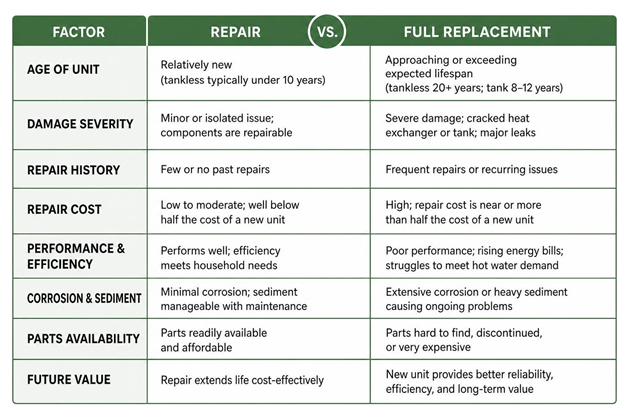
The age of your water heater is a primary consideration. Traditional tank water heaters typically last between 8 to 12 years. Tankless units, however, boast a significantly longer lifespan, often reaching 20 years or more with proper maintenance. If your tankless unit is approaching or has exceeded this 20-year mark, even minor issues might signal that it’s nearing the end of its operational life.
Severe rust, particularly if it’s internal or on critical components, is often a death knell for any water heater. For tankless units, a cracked heat exchanger is a major concern, as this component is central to its operation and extremely costly to replace, making a full unit replacement a more economical choice. Beyond catastrophic failures, general component wear and tear can accumulate over time, leading to a cascade of problems. A professional assessment can determine if the damage is isolated and repairable, or if it points to widespread deterioration that justifies replacement.
Key Indicators for Water Heater Repair and Installation Options
Beyond age and severe damage, other indicators can guide your decision. Persistent sediment accumulation in a tank heater, even after flushing, can reduce efficiency and lead to recurring issues. For tankless units, a faulty burner or a malfunctioning flow sensor can often be repaired by replacing the specific component, especially if the unit is relatively new.
However, if you find yourself needing frequent repairs, or if the cost of a single repair approaches half the price of a new unit, replacement becomes a more sensible option. Modern tankless water heaters offer enhanced energy efficiency and advanced features that older models lack, making a new installation a wise long-term investment. For comprehensive guidance on maintaining your unit or exploring your options for a new system, you can learn more about professional water heater repair and installation. This resource provides valuable insights into prolonging your system’s life and making informed decisions.
Essential Maintenance Protocols for Water Heating Systems
Regular maintenance is not just a recommendation; it’s a necessity for ensuring the longevity and efficiency of your water heater, especially tankless models. Neglecting these essential tasks can lead to decreased performance, higher energy bills, and premature system failure. Proactive care involves a few key steps that can be performed periodically.
Tankless Water Heater Maintenance Protocols
The most critical maintenance task for tankless water heaters is annual descaling, also known as flushing. This process removes mineral deposits, primarily calcium and magnesium, that accumulate within the heat exchanger. These minerals, prevalent in hard water, can reduce heat transfer efficiency, restrict water flow, and ultimately damage the unit.
The descaling process typically involves circulating an acidic solution, such as food-grade citric acid or white vinegar, through the unit’s heat exchanger. This solution dissolves the scale buildup. The process usually takes about 45 minutes to an hour. Following the descaling, the system is flushed with clean water to remove any remaining solution and loosened deposits.
Additionally, the condensate trap in condensing tankless models requires regular cleaning. This trap can become clogged with sediment or biological growth, preventing proper drainage of the acidic condensate and potentially causing the unit to shut down or leak. Cleaning the trap involves disassembling it, clearing any obstructions, and reassembling it securely.

Preventative Maintenance to Avoid Emergency Repairs
Beyond descaling, several other preventative measures contribute to a healthy water heater system. Annually testing the temperature and pressure (T&P) relief valve is crucial for safety. This valve is designed to release water if pressure or temperature within the unit becomes too high, preventing dangerous conditions. A simple manual test involves lifting the lever to ensure water flows out, then letting it snap back into place.
Cleaning the inlet water filter and air intake filter is also vital. The inlet water filter screens out sediment and debris from the incoming water supply, preventing them from entering the heat exchanger. It can be easily removed, rinsed, and reinstalled. For gas-fired units, the air intake filter prevents dust and debris from entering the combustion chamber, ensuring proper airflow for efficient burning. This filter can typically be cleaned by scrubbing it with soapy water, rinsing thoroughly, and allowing it to dry completely before reinstallation.
Installing a water softener is another highly effective preventative measure, particularly in areas with hard water. By removing mineral ions before they enter the water heater, a softener significantly reduces the rate of mineral accumulation and scale buildup, extending the life of the unit and reducing the frequency of descaling required.
Professional Water Heater Repair and Installation Services
While some maintenance tasks can be handled by homeowners, many aspects of water heater repair and installation, particularly for complex tankless systems, require the expertise of a licensed professional. Engaging a qualified technician ensures that work is performed safely, correctly, and in compliance with local plumbing codes and manufacturer specifications.
Maintaining System Performance After Water Heater Repair and Installation
After any repair or new installation, maintaining optimal system performance is paramount. Regular servicing by a licensed plumber or HVAC technician can identify potential issues before they escalate. This includes inspecting the venting system for gas units to ensure proper exhaust of combustion byproducts, checking gas and water connections for leaks, and verifying the correct flow rate and temperature settings.
Professional technicians are equipped with specialized tools to diagnose subtle problems, such as minor combustion inefficiencies or electrical resistance issues, that might not be apparent to the average homeowner. Their expertise ensures that all components are functioning harmoniously, leading to improved system reliability and long-term efficiency. Adhering to a professional maintenance schedule is often a requirement to keep manufacturer warranties valid, protecting your investment for years to come.
Protecting System Lifespan and Efficiency
Proactive professional care is the best strategy for protecting the lifespan and efficiency of your water heater, especially against the challenges posed by hard water. While a water softener can mitigate mineral accumulation, periodic professional descaling remains essential in hard water regions. Technicians use commercial-grade descaling solutions and pumps to thoroughly clean the heat exchanger, restoring it to near-original efficiency.
Beyond descaling, professional tuning can optimize your water heater’s performance. This involves calibrating the burner, adjusting gas pressure, and ensuring all safety mechanisms are operational. These adjustments ensure the system operates at its optimal output, providing consistent hot water while minimizing energy consumption. A professional technician can also offer advice on further steps to enhance your system’s longevity and efficiency, such as installing additional filtration or recommending upgrades.
Frequently Asked Questions About Water Heater Maintenance and Repair
Homeowners often have specific questions regarding the upkeep of their water heating systems. Understanding the answers to these common queries can empower you to make informed decisions about your unit’s care.
How often should a tankless water heater undergo maintenance?
The frequency of tankless water heater maintenance, particularly descaling, largely depends on your water hardness. In areas with moderately hard water (61–120 mg/L calcium carbonate) or very hard water (over 120 mg/L), annual service is highly recommended. Some manufacturers, like Navien and Rheem, specifically recommend annual flushing to remove mineral deposits and protect warranty coverage. In extremely hard water areas, a 6-month interval might be necessary. Conversely, in soft water areas, descaling might only be required every 4-5 years. Regular inspection of the inlet filter and air filter should be done more frequently, perhaps every few months, especially in dusty environments.
What are the main causes of scale buildup in water heaters?
Scale buildup is primarily caused by calcium and magnesium deposits present in hard water. When water is heated, these minerals precipitate out of the solution and adhere to hot surfaces, such as the inside of the heat exchanger in a tankless unit or the heating elements and tank bottom in a traditional heater. The hotter the water and the harder the water, the faster these mineral accumulations occur. These deposits form a layer of “scale” that acts as an insulator, reducing the efficiency of heat transfer, restricting water flow, and eventually leading to blockages and component damage. This is why regular descaling is so crucial for maintaining efficiency and preventing premature wear.
How can a home water softener reduce water heater maintenance needs?
A home water softener significantly reduces water heater maintenance needs by removing calcium and magnesium ions from the water before it enters your plumbing system and appliances. By effectively eliminating the primary cause of scale buildup, a water softener prevents mineral accumulation within the water heater’s heat exchanger or tank. This means less frequent descaling is required, extending the lifespan of the unit, maintaining its energy efficiency, and protecting internal components from corrosion and blockages. Installing a water softener can lead to fewer repairs, lower energy bills, and more consistent hot water delivery, making it a valuable investment, especially in hard water regions.
Conclusion
Maintaining your water heater, particularly a tankless model, is an investment in your home’s comfort and efficiency. Recognizing the signs of trouble, from inconsistent temperatures to visible leaks, allows for timely intervention. While some basic tasks can be DIY, understanding when to call a professional for water heater repair and installation is crucial for safety and optimal performance. Regular inspections, annual descaling, and proactive care not only extend the lifespan of your unit but also ensure reliable hot water whenever you need it. By adhering to these maintenance requirements, you protect your investment and enjoy the long-term benefits of an efficiently operating water heating system.