


Weather-Ready Plumbing: A Home Checklist for Chicago, Illinois
Key Takeaways
- Chicago cold snaps can freeze water in vulnerable pipes and create conditions that lead to leaks or bursts.
- Heavy rain can strain gutters, basement drains, sump pumps, and sewer connections.
- Routine leak checks can uncover water waste and moisture damage before they become larger repairs.
- Every household should know the location of its main water shutoff valve before an emergency occurs.
- A seasonal checklist is especially useful for Chicago bungalows, two-flats, condos, and homes with basements or crawl spaces.
Find your seasonal plumbing checklist
Swipe, use the scrollbar, or tab through the links to jump to a section.
Chicago homeowners know that a calm forecast can change quickly. Lakefront wind, hard freezes, spring thaw, summer downpours, and aging plumbing components can all put pressure on a home’s water systems. Preparing before the weather turns is often easier than reacting to a soaked basement, a frozen kitchen line, or a sewer backup. A seasonal plan does not require a complete plumbing overhaul. It starts with knowing what to inspect, what warning signs matter, and when to contact a plumbing company in Chicago for a problem that is unsafe or beyond a homeowner’s reach.
Why Chicago Weather Can Strain a Home’s Plumbing
Water expands when it freezes. That expansion can place damaging pressure on pipes, especially those near exterior walls, in unheated basements, garages, attics, crawl spaces, or beneath sinks. In older Chicago homes, pipes and fittings may also show years of wear, making high temperature changes more concerning. Rain brings a different set of challenges. Leaves at a yard drain, a blocked gutter outlet, or a sump pump that does not activate can allow water to collect around a foundation or inside a basement. Meanwhile, heavy rain can exacerbate sewer system stress, which is particularly troubling for homes with lower-level bathrooms, laundry areas, or floor drains.
Summer deserves attention, too. Outdoor spigots, hoses, irrigation equipment, washing machine connections, and slow drains may be used more often when households host guests or spend time outside. A small issue can stay unnoticed until it becomes a leak, clog, or backup.
Before Freezing Temperatures Arrive in Chicago
Complete these tasks before a Chicago freeze settles in:
- Disconnect garden hoses from outdoor faucets, then drain and store the hoses.
- If your home has an indoor shutoff for an exterior faucet, close it and drain the outdoor line according to the fixture setup.
- Insulate accessible pipes in cold spaces, including garages, crawl spaces, and unheated basement areas.
- Open sink cabinet doors during severe cold so household heat can reach pipes near exterior walls.
- Seal obvious drafts around pipe penetrations, foundation openings, doors, and windows.
- Keep the home heated at a consistent setting when traveling during winter weather.
The National Weather Service advises homeowners to protect exposed pipes, open cabinets to let warm air reach the plumbing, and avoid using an open flame to thaw a frozen line. These safe ways to warm frozen pipes are useful to review before a bitterly cold spell arrives.
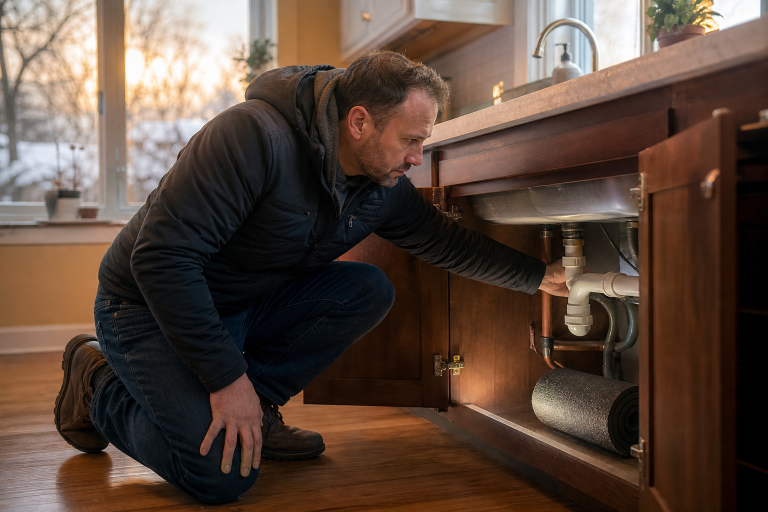
How To Spot and Respond to a Frozen Pipe
A faucet that produces only a trickle, frost on an exposed pipe, unusual bulging, or a sudden loss of water pressure can indicate freezing. After temperatures rise, watch for damp drywall, wet flooring, stains on ceilings, or dripping around a previously cold area.
Safe First Steps
- Open the affected faucet slightly so melting water has a place to flow.
- Shut off the home’s main water supply if a pipe appears split or is actively leaking.
- Warm an accessible pipe gradually with a hair dryer, heating pad, or warm towels.
- Never use a torch, grill, lighter, or other open flame.
- Seek professional help if the pipe is inaccessible, will not thaw, or begins leaking.
Storm Preparation for Chicago Basements, Drains, and Sewer Lines
Before a stretch of heavy rain, walk around the property and remove leaves or debris from exterior drains and downspout outlets. Inside, make sure storage bins, rugs, or accumulated debris do not cover the basement floor drains. Keep important documents, electronics, and furniture off the basement floors whenever possible. If your home has a sump pump, test it before storm season by following the manufacturer’s instructions. Confirm that its discharge path is clear, and check any battery backup system as well. Households with repeated sewer backups should ask a qualified professional whether a backwater valve or other protective measure is appropriate for the home’s plumbing layout.
Leak Checks That Take Less Than 30 Minutes
- Listen for a toilet that continues running after it has been flushed.
- Look beneath sinks for damp supply lines, corroded shutoff valves, or cabinet staining.
- Inspect around the water heater, dishwasher, refrigerator water line, and washing machine hoses.
- Check ceilings below bathrooms and laundry rooms for discoloration or soft spots.
- Read the water meter before and after a period when no water is used.
- Compare recent water bills for an unexplained increase.
Undetected household leaks can waste substantial water and damage building materials over time. The EPA notes that leak detection and flow monitoring devices can alert homeowners to unusual water use or moisture, giving them a chance to investigate sooner.
Summer Plumbing Checks for Chicago Homes
When warm weather arrives, inspect outdoor faucets and hose connections for drips. Check yards for unusually wet or green patches that may point to an irrigation leak. Clean slow sinks and tubs before heavier household use, but avoid sending grease, wipes, coffee grounds, or large food scraps down drains. Examine washing machine hoses for cracking, bulging, or loose connections, especially if the appliance sits in a finished basement.
What To Do During a Plumbing Emergency
- Shut off the nearest fixture valve or the main water supply.
- Do not step into standing water near electrical outlets, appliances, or cords.
- Move belongings away from the affected area if it is safe to do so.
- Take photos of visible damage for household and insurance records.
- Avoid contact with water that may contain sewage.
- Call for help when a leak, backup, or equipment failure cannot be safely contained.
When To Stop and Call for Help
Professional assistance is appropriate when a pipe has burst, several drains back up at once, water reaches electrical equipment, a sump pump fails during rain, or sewage odor and wastewater are present. If you smell gas, leave the property, avoid switches or flames, and contact the gas utility from a safe location.
Seasonal Plumbing Checklist for Chicago Homeowners
- Winter: Insulate exposed pipes, disconnect hoses, and locate the main shutoff valve.
- Spring: Look for freeze damage, test the sump pump, and clear exterior drainage points.
- Summer: Inspect hose bibs, irrigation lines, appliance hoses, and slow drains.
- Fall: Clean gutters and drains, store hoses, and prepare cold-prone plumbing areas.
Final Planning Step: Build a Home Plumbing File
Keep a simple record of shutoff valve locations, appliance manuals, plumbing repair dates, water heater age, warranty information, and emergency contacts. Include notes about recurring leaks, replaced parts, or previous plumbing concerns so you have useful information when a problem occurs. Review and update the record each fall and spring, especially before major seasonal weather changes, and make sure everyone in the household knows where the main shutoff valve is located. Keeping these details organized can also make it easier to explain a problem to a plumber and provide relevant repair history when service is needed. For Chicago homeowners, this small habit can make the difference between a controlled response and a stressful scramble when winter weather, freezing temperatures, heavy rain, or a summer storm puts the plumbing system to the test.