


Small Bed Bugs: What They Look Like and What to Do
You spot something tiny crawling across a sheet, then lose it before you can get a good look. Was it a baby bed bug, a beetle, or something harmless that wandered indoors? Small bed bugs can be hard to identify, but size is only part of the answer.
Young bed bugs usually look paler than the brown adults shown in familiar pest-control photos. Their appearance also changes after feeding, so the same insect can look surprisingly different. Before spraying the bed or throwing away bedding, check its shape and movement, and look for supporting evidence in the surrounding area.What matters most when identifying a tiny bug
- Newly hatched bed bugs are usually pale before feeding, rather than uniformly black.
- A fed nymph can have a red, brown, or very dark abdomen.
- Bed bug eggs are pearly white; black mattress specks are not eggs.
- Look for six legs, two antennae, an oval body, and crawling movement.
- Save the insect and inspect nearby seams before choosing a treatment.
How Small Are Bed Bugs?
Bed bugs range from tiny young nymphs to adults roughly the size of an apple seed. A newly hatched nymph is about 1.5 millimeters long, while older nymphs grow through several stages before becoming adults. Adult bed bugs are typically 5–7 millimeters long, though measurements vary by individual and feeding condition.
For comparison, 1.5 millimeters is approximately 1/16 inch. That is small enough to miss in mattress stitching, but it is not necessarily invisible. The size descriptions in Colorado State University’s bed bug identification guide provide a useful starting point when examining a saved insect.Approximate bed bug sizes and appearance
| Stage | Approximate length | What you may notice |
|---|---|---|
| Egg | About 1 mm, or 1/25 inch | Pearly white, elongated, and attached to a surface |
| Newly hatched nymph | About 1.5 mm, or roughly 1/16 inch | Pale or translucent body; difficult to see against light fabric |
| Older nymph | Approximately 2–5 mm, depending on stage | Larger body; color and fullness change after feeding |
| Adult | Commonly around 5–7 mm, near 1/4 inch | Brown, broad, and flattened before feeding; fuller afterward |
Use these measurements as a guide, rather than strict identification limits. Seed comparisons can help you picture the scale, but poppy, sesame, and apple seeds vary in size. A ruler beside the specimen is a better reference than guessing from an enlarged photograph.
How Small Can Bed Bugs Be?
The smallest crawling bed bugs are newly hatched nymphs. Eggs are smaller, but they stay attached where they were laid and don’t move around the bedding. If a speck is crawling, it is not a bed bug egg.
Very small size does not automatically mean you are dealing with a young bed bug. Other household pests can be similarly tiny, and some are much smaller. Look for recognizable anatomy before drawing a conclusion from the measurement.
Can You See Baby Bed Bugs Without Magnification?
You can see baby bed bugs with the naked eye, but it may take a careful look. Pale, unfed nymphs blend into white sheets, cream upholstery, and light wood. They’re easier to see when the background contrasts with their bodies.
Use a flashlight and a magnifying glass if you have them. A phone camera can help record the insect, but a blurry close-up may hide important details. Keep the specimen whenever possible so identification does not depend entirely on a photograph.
What Do Small Bed Bugs Look Like?
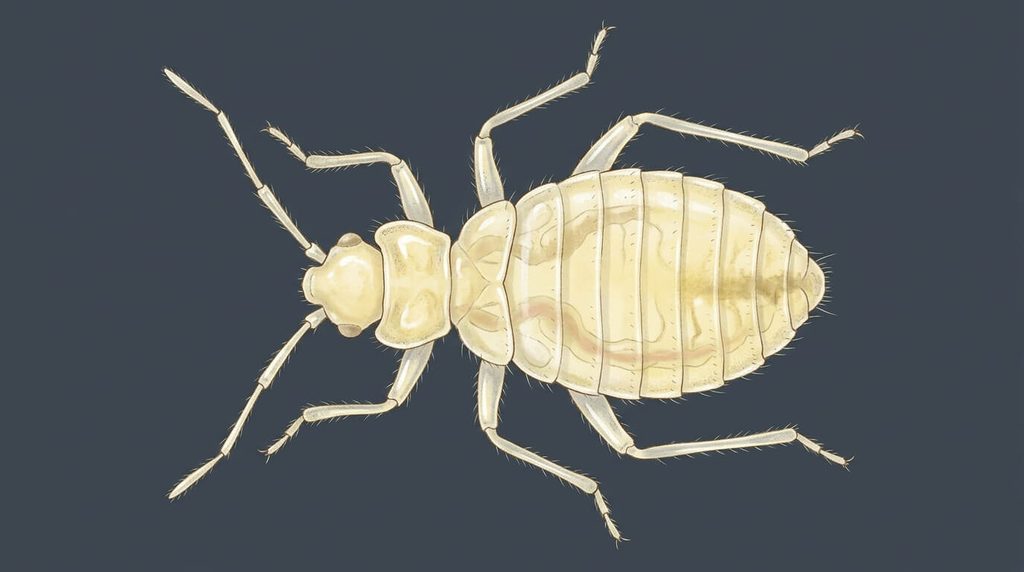
A young bed bug resembles a smaller adult. It has six legs, two antennae, and an oval body that looks relatively flat before feeding. It shouldn’t look like a hairy worm, a smooth, round grain, or a shiny beetle with a hard shell.
The bed bug appearance and life cycle guide explains why unfed nymphs can be so difficult to see. They are often translucent or whitish-yellow, rather than the deep brown people expect. Their appearance becomes more distinctive when you can examine the whole body.
Unfed Nymphs Are Pale and Flat
A young unfed nymph may look almost clear, with a faint yellow or tan tint. Its abdomen is relatively flat, and its legs can be hard to distinguish against pale fabric. Movement may be the first thing you notice.
Don’t assume every pale insect is a baby bed bug. The outline of the head, body, antennae, and legs still matters. If a specimen lacks enough visible detail, examine it more closely rather than guessing.
Fed Nymphs Have a More Noticeable Abdomen
After feeding, a nymph’s abdomen becomes fuller and more elongated. Blood can show through the pale body, producing a red appearance. As digestion progresses, the abdomen can become darker.
The feeding differences shown in the University of Illinois bed bug identification guide help explain why a young bed bug may appear red or nearly black in part of its body. That does not make every dark insect a bed bug. Compare the complete shape rather than relying on color alone.
Are Small Black Bed Bugs Really Bed Bugs?
Small black bugs in bed need closer checking because several insects can fit that description. A dark abdomen may belong to a fed bed bug, while a shiny rounded insect could be a beetle. Low light and phone-camera shadows can also make brown insects look black.
Separate the question into two parts: is it an insect, and does its anatomy match a bed bug? A moving specimen with visible legs gives you more information than a black mark on fabric. Our guide to black bed bugs and other tiny black bugs in bed explores these color differences and common alternatives.
Black Specks May Be Droppings or Debris
Bed bug droppings can leave dark, ink-like marks near hiding places. They are waste, not living insects or eggs. Lint, crumbs, and unrelated stains can also look like suspicious dots at first glance.
Use good lighting to check for a complete body and legs. If you only see a stain, inspect the surrounding seam for other evidence. A single unexplained mark does not establish an infestation.
Bed Bug Eggs Are White, Not Black
Bed bug eggs are tiny, elongated, and pearly white. They are attached to a surface rather than crawling around it. Older eggs may show an eye spot, but that does not turn them into loose black grains.
The photographs in the University of Tennessee’s bed bug biology guide help you compare eggs with other material. Look closely before labeling white debris as eggs, because fibers and ordinary dust can also collect in seams. Identification works best when several consistent clues appear together.
Small Bugs in Bed That Can Look Similar
Beds are not exclusive to bed bugs. An insect can arrive on clothing, wander from carpeting, or enter from nearby furniture. Its location should guide your inspection, but it should not replace identification.Clues that help separate common bedroom insects
| Possible insect | Useful distinguishing clue | Next place to check |
|---|---|---|
| Bed bug nymph | Flat oval body before feeding; pale when young and unfed; crawls | Mattress seams, box spring, headboard, and frame joints |
| Adult carpet beetle | Rounded body with a hard-looking black or patterned exterior | Windowsills, nearby textiles, and places where larvae may be present |
| Carpet beetle larva | Hairy, elongated body rather than a smooth oval | Carpet edges, stored fabrics, and accumulated hair or lint |
| Flea | Often dark, narrow when viewed from above, and capable of jumping | Pets, pet bedding, and carpeting |
| Young cockroach | Long antennae; may resemble a bed bug in a poor photograph | Nearby cracks and sheltered areas; save a specimen for identification |
The descriptions in the household insect identification guide help distinguish beetles and hairy larvae from bed bugs. Use the table to narrow the possibilities rather than to make a final diagnosis. Some closely related pests, such as bat bugs, need expert examination.
If a bug jumps or flies, consider other insects. Bed bugs move by crawling, including when they are young. A crawling insect isn’t automatically a bed bug, because many household pests move the same way.
How to Inspect Your Bed Without Spreading Suspect Items
Start with a contained, methodical inspection. Carrying loose bedding through several rooms or moving furniture right away can complicate things if bed bugs are present. Photograph what you find before cleaning it away.
1. Capture the Insect
Place the insect in a secure container or sealed clear bag. Keep it closed while taking photographs and arranging identification. Record the date and the exact location where you found it.
Take a sharp overhead photo with a ruler beside the specimen in its container. Include a side view if you can capture one clearly. A local extension service or an experienced pest professional may be able to identify it from the specimen or photographs.
2. Examine Mattress Seams and Corners
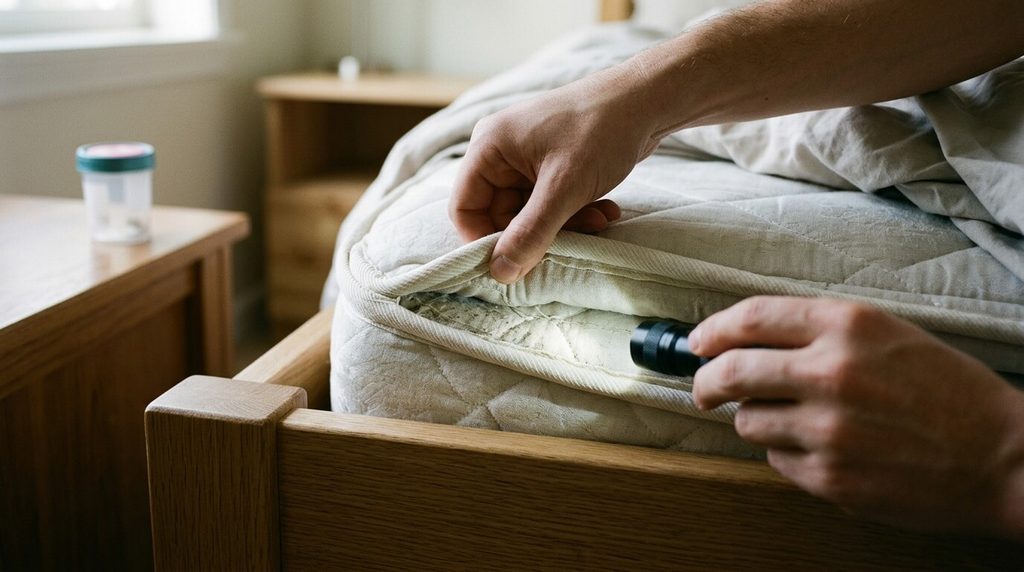
Gently lift the piping and shine a flashlight along the seam. Check folds, labels, corners, and the area near the head of the bed. Look beyond the flat sleeping surface, where hidden insects may be easier to miss.
Search for live bugs, white eggs, pale shed skins, and dark marks. The bed bug inspection guide also notes rusty or reddish stains on bedding. Those marks can have other causes, so use them as inspection clues rather than proof on their own.
3. Check the Box Spring, Frame, and Headboard
Inspect accessible joints, screw holes, fabric folds, and headboard edges. Look at nearby bedside furniture if you find evidence around the bed. A clean mattress surface does not rule out bugs hiding elsewhere.
Do not open electrical outlets or dismantle electrical fixtures as part of this check. Record any suspicious activity around them and tell the inspector. Inaccessible areas need an appropriate professional assessment.
4. Keep a Simple Findings Record
Write down what you actually saw, including the number of insects and the location of marks. “One pale insect beside the mattress label” is more useful than “the whole bed is infested” when identification is uncertain. Keep the photographs with those notes.
If another specimen appears, record it in the same way. Repeated findings can help an inspector decide where to focus. Avoid estimating how long the problem has existed from one insect’s size.
What If You Find One Tiny Bug but No Other Signs?
One unidentified insect does not confirm bed bugs. Preserve it, inspect the surrounding area, and arrange identification if the details are unclear. Do not begin treating the bedroom simply because the insect was on a pillow.
If it is confirmed as a bed bug, a wider inspection is warranted even when you cannot find more. Small populations can be difficult to locate. The lack of obvious marks does not prove that the finding was isolated.
If the specimen is lost, keep the clearest photographs and monitor for further evidence. Avoid repeatedly stripping the room without a plan. A professional inspection can be useful when the uncertainty persists or new findings appear.A photograph may not settle the identification
A blurry image can hide the legs, antennae, and body outline needed to identify a tiny insect. Save the specimen whenever possible and include a measured scale in your photographs. If the details remain unclear, request identification rather than treating a guess as confirmation.
Do Small Bed Bugs Bite?
Young bed bugs feed on blood as they develop. Their small size doesn’t mean they cannot bite. However, bite size cannot tell you whether the insect was a young nymph or an adult.
Skin reactions also cannot reliably distinguish bed bugs from other causes. Fleas, mosquitoes, irritation, and some skin conditions can produce similar-looking marks. Some people have little or no visible reaction to bed bug feeding.
The bed bug signs and symptoms overview explains why other evidence matters alongside skin changes. Bed bugs are not known to spread disease to people, although itching and sleep disruption can be significant. Seek medical advice for concerning reactions or signs of infection, and urgent help for breathing difficulty.
What to Do After Bed Bugs Are Confirmed
Confirmation changes the next step from identification to assessing and controlling the problem. Keep your specimen, photographs, and findings record. Contact a pest professional experienced with bed bugs, and notify your landlord or property manager if you rent.
In shared buildings, coordination matters because nearby areas may also need inspection. Ask who will inspect surrounding units and how preparation instructions will be communicated. Follow the agreed plan instead of treating one room independently without telling the people managing the work.
Contain Bedding and Clothing
Seal suspect items in bags before carrying them to the laundry area. Keep untreated belongings separate from items that have been treated. Place clean items into fresh bags or clean containers afterward.
For fabrics that tolerate it, heat-drying bedding and clothing can use a dryer on high heat for 30 minutes. Washing alone generally does not kill bed bugs. Follow fabric-care instructions, avoid overloading, and seek another suitable method for heat-sensitive items.
Understand What Vacuuming Can and Cannot Do
Vacuuming can remove exposed insects and debris from accessible seams and cracks. It cannot guarantee that hidden bugs and eggs have been removed. Use it as one part of the control plan rather than evidence that the room is clear.
Contain and dispose of collected material promptly, following the vacuum manufacturer’s instructions. Avoid carrying an open bag of debris through the home. Continue the inspection and monitoring steps your provider recommends.
Use Encasements and Monitoring Appropriately
Bed bug encasements can help manage a mattress or box spring as part of a broader treatment plan. Interceptors under suitable furniture legs can assist monitoring. Neither method treats every hiding place in the room.
Ask how the devices should be installed and maintained. A torn encasement or poorly positioned interceptor may not work as intended. Keep checking the bed frame and nearby furniture as directed.
Plan Follow-Up Before Treatment Begins
Hidden bugs or surviving eggs can produce later activity. Ask the provider when they will reinspect and what findings should trigger contact. A complete plan should explain how progress will be judged.
Keep recording new insects and other evidence after the first treatment. One quiet night doesn’t prove success. Follow-up monitoring helps distinguish a lasting result from a temporary reduction.
Common Mistakes to Avoid
Throwing out a mattress immediately can create an expensive problem without solving the infestation. Bugs may remain in the frame or nearby furniture, and moving the mattress can spread them. The recommendations on preventing and controlling bed bugs explain why many belongings should be assessed for treatment before disposal.
Another mistake is assuming that a clean home cannot have bed bugs. They can travel on belongings and hide in tiny spaces. Cleaning supports inspection and treatment, but cleanliness alone does not determine whether they are present.
Repeatedly spraying visible insects can also leave hidden bugs untreated. A spray that kills on direct contact does not necessarily reach eggs or insects inside cracks. Use a coordinated plan with suitable products and follow up with checks.Avoid dangerous homemade treatments
Do not treat bed bugs with rubbing alcohol, gasoline, or kerosene. Do not try to heat a room using space heaters or a fireplace. Use pesticides only on the locations and surfaces permitted by their labels, and never apply them to your skin or mix products.
The precautions in the guidance on safe bed bug treatment address these avoidable hazards. More spraying does not automatically mean better control. Identification, targeted treatment, and monitoring give you a clearer way to judge whether the problem is being resolved.
Conclusion
Small bed bugs are identified by their size, body shape, feeding appearance, and the evidence around their hiding places. Young unfed nymphs are usually pale, while fed nymphs can have a red or dark abdomen. Black specks, bite marks, and tiny crawling insects all need closer checking before treatment decisions are made.
Start by saving the insect and photographing it beside a measured scale. Then inspect the mattress seams, frame, and nearby furniture without unnecessarily moving suspect items. If bed bugs are confirmed, arrange a coordinated control plan and follow-up checks before replacing belongings or applying pesticides.Frequently asked questions
How small are baby bed bugs?
Newly hatched nymphs are about 1.5 millimeters long, roughly 1/16 inch. Older nymphs grow through five juvenile stages before becoming adults. Their appearance also changes after feeding, so length alone cannot confirm identification.
Are baby bed bugs black?
Young unfed nymphs are usually pale or translucent. Their abdomen can become red or much darker after feeding. A uniformly black insect still needs to be compared with other household pests.
Can small bed bugs look like little worms?
Bed bug nymphs have legs and an oval insect body. They do not have a wormlike larval stage. A hairy or elongated wormlike pest should be checked against other insects, including carpet beetle larvae.
Do small bed bugs jump?
No, bed bugs crawl and do not jump. A jumping insect may be a flea or another pest. Save it for identification rather than choosing a treatment based on movement alone.
Are black specks on sheets bed bug eggs?
Bed bug eggs are pearly white, not black. Black specks could be droppings, debris, or unrelated marks. Inspect nearby seams for recognizable insects and other consistent evidence.
Does one small bed bug mean an infestation?
One confirmed bed bug warrants further inspection. It doesn’t show how many others are present or whether the finding was isolated. A broader assessment is needed before you can judge the extent of the problem.
Can washing sheets remove bed bugs?
Washing alone generally does not kill bed bugs. Suitable bedding needs an appropriate heat-drying step or another effective treatment. Treating laundry also does not remove bugs hiding in the frame or surrounding furniture.
Should I replace my mattress after finding bed bugs?
Get an assessment before replacing it. Many mattresses can be treated or managed within a control plan. Replacement alone will not solve bugs remaining elsewhere in the room.