


How to Get Rid of Mosquitoes Inside the House Naturally
To get rid of mosquitoes inside the house naturally, start by closing their entry routes, swatting the adults you find, and removing standing water. If a mosquito is keeping you awake tonight, start in the bedroom rather than spraying strong scents around the house. A fan can help nearby, and a properly installed net can protect the sleeping area while you deal with the source.
The trick is to separate tonight’s nuisance from the reason it keeps happening. Swatting one mosquito may end the buzzing, but a torn screen or water-filled plant saucer can leave you repeating the job. Start with the room you need to use, then work outward to the doors, windows, and nearby water sources.
What makes the biggest difference
- Remove mosquitoes already inside while also blocking new arrivals.
- Check vases, plant saucers, buckets, and hidden containers for standing water.
- A fan helps where its airflow reaches; it does not clear the whole house.
- Potted herbs, lemon-and-clove bowls, and ultrasonic devices are not reliable substitutes for screens.
- Burning something indoors adds avoidable hazards and does not fix entry points.
- Seek local mosquito-control advice when activity persists or a disease advisory is in effect.
How to get rid of mosquitoes in a room without repellent tonight
You can begin without buying a repellent or making a homemade spray. Focus on a smaller, closed room rather than chasing insects through the entire house. Follow these steps before settling down for the night.
- Stop more mosquitoes from coming in. Close windows without intact screens and keep exterior doors shut. Check that a sliding screen door closes fully. Use air conditioning if available rather than leaving an unscreened opening for ventilation.
- Look for the mosquitoes already inside. Check curtains, walls, and accessible sheltered corners with a flashlight. The indoor mosquito-control guidance identifies places such as under furniture, closets, and laundry rooms as resting spots. Swat the insects you find instead of relying on a scent to drive them somewhere else.
- Add airflow where you sit or sleep. Position a guarded fan so you feel a comfortable breeze across the area you occupy. Keep the fan stable and cords clear of walking routes. Treat the airflow as extra help, not a guarantee against bites.
- Protect the bed if entry cannot be controlled tonight. Use an intact mosquito net installed according to its directions. Check that no mosquito is trapped inside before closing it. Keep your body away from the netting because mosquitoes may bite through it when skin rests against the mesh.
- Check nearby water before bed. Empty a forgotten vase, plant saucer, or bucket that can safely be drained. Scrub the container rather than simply adding fresh water. Make a note of anything inaccessible so you can arrange help the next day.
Do not assume turning off the bedroom light will solve the problem. Mosquitoes use cues such as body odors, heat, and carbon dioxide to find people. A dark room can still contain a biting mosquito.
First, make sure the insects are mosquitoes
Tiny flies near a houseplant are not automatically mosquitoes. Fungus gnats commonly develop in damp potting mix, and they do not bite people. If the insects mainly hover around soil, identify them before buying mosquito-control products or treating the room.
The indoor-plant pest identification guide can help you distinguish fungus gnats from other plant pests. A clear close-up photograph is also useful when asking an extension office or pest professional for identification. Skin marks alone are not enough to confirm which insect caused them.
Natural methods compared: removal, protection, and prevention
Not every useful method kills mosquitoes, and that distinction matters when choosing what to try. A screen prevents entry, a swatter removes an adult, and a net protects the person inside it. Use those different jobs together instead of expecting one item to do everything.
What each method can realistically do
| Method | Main benefit | Limitation |
|---|---|---|
| Intact screens and closed doors | Reduce new mosquitoes entering | Do not remove adults already indoors |
| Swatting visible adults | Removes the mosquitoes you find | Can miss hidden insects |
| Fan airflow | Helps discourage landing nearby | Protection is localized and incomplete |
| Properly installed bed net | Creates a physical barrier during sleep | Gaps, tears, and skin against mesh weaken protection |
| Emptying and scrubbing containers | Removes potential aquatic breeding sites | Does not kill flying adults elsewhere |
| Potted herbs or scent bowls | May add fragrance or decoration | Do not provide dependable room protection |
Find and repair the routes mosquitoes use
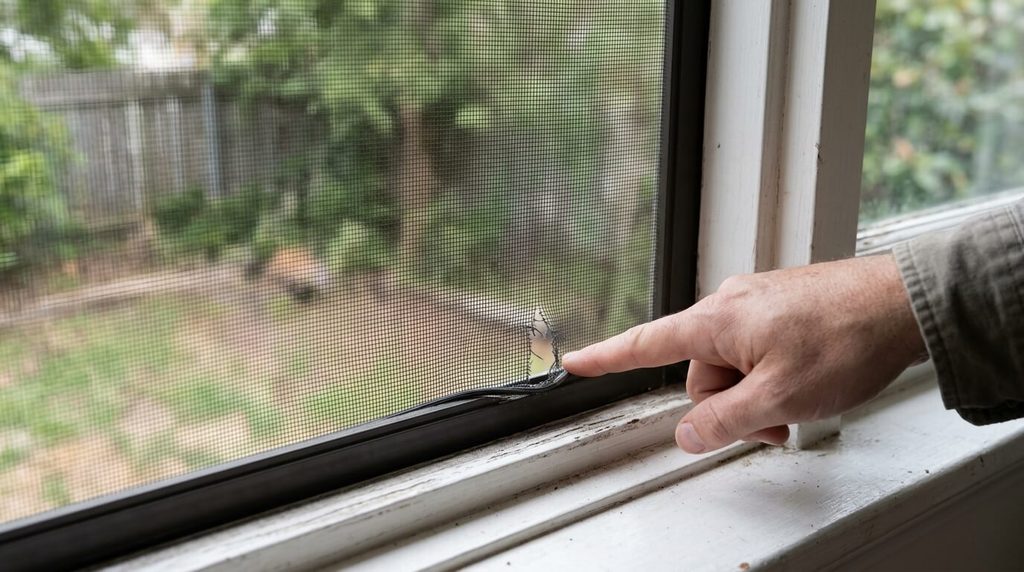
Inspect screens in daylight so tears and loose edges are easier to spot. Check the frame as well as the mesh, especially where a window air conditioner or removable panel meets the opening. A screen covering most of the window still leaves an entry route if one edge has pulled away.
Look at the doors you use most often, including the door between an attached garage and the house. Replace damaged weatherstripping or a worn door sweep where appropriate, and stop propping exterior doors open. The structural-barrier recommendations support repairing screens and closing gaps around doors and windows.
Do not seal required ventilation openings, appliance vents, or drainage holes to keep insects out. Those openings may serve important building functions. Ask a qualified repair professional about a suitable screened solution when the opening is part of a ventilation or drainage system.
Remove standing water inside and just outside the house
Mosquitoes need water during their immature stages, so inspect places that hold it rather than treating every damp surface as a breeding site. The Aedes mosquito life-cycle explanation shows why a small container can matter. It also explains why scrubbing is useful: eggs can stick to container walls above the waterline.
Check these overlooked places during your next inspection:
- Vases, rooting jars, and decorative bowls.
- Plant saucers and water trapped inside decorative outer pots.
- Buckets, mop pails, and rarely used utility containers.
- Accessible appliance collection trays, following the appliance instructions.
- Balcony planters, watering cans, toys, and folded covers that collect rain.
- Blocked gutters or drainage problems near the home.
For removable containers, empty and scrub them at least weekly, or remove them from use altogether. Inspect again after rain or watering refills them. Empty plant saucers after watering, and wash and refill pet bowls daily rather than leaving old water undisturbed.
If you grow succulents, our guide to planting succulents in well-draining containers explains pot selection and drainage. Check the decorative outer pot too, since it can hide water beneath the nursery container. Adjust watering to the plant’s needs rather than keeping every plant constantly wet.

What if the water cannot be removed?
Some water features or other unavoidable collection sites need a different approach. A labeled product containing Bti, a naturally occurring bacterium, may be suitable for mosquito larvae in a permitted water source. It is a biological pesticide, not a treatment for flying mosquitoes in your bedroom.
Read the Bti mosquito-control guidance and the actual product label before use. The label must permit the site, application rate, and use you have in mind. Do not assume a product belongs in drinking water, pet bowls, or every indoor container because its ingredient occurs naturally.
Set up the bedroom so the protection reaches you
Place the fan where its breeze reaches the exposed parts of the occupied area instead of aiming it at an empty doorway. The university mosquito-management guidance supports moving air as a helpful measure because mosquitoes are weak fliers. Using that principle indoors can help discourage mosquitoes from landing nearby, but it does not create a bite-proof zone.
If you use a bed net, choose one large enough to enclose the sleeping area without resting against your skin. Tuck it under the mattress as instructed, check for holes, and keep it clear of fans, heaters, and flames. Before getting in, make sure you have not enclosed a mosquito with you.
Follow the bed-net installation precautions, especially around children. Loose or sagging netting can create hazards, so do not improvise a hanging arrangement over a baby’s sleep space. If you want a pesticide-free barrier, check the packaging because some nets are insecticide-treated.
Home remedies that should not be your main plan
An ingredient can show repellent activity in a laboratory without making a kitchen recipe effective in a bedroom. Concentration, formulation, application, and duration all affect performance. A strong smell is not proof that a mosquito cannot reach you.
Lemon and cloves, garlic, vinegar, and scent bowls
Do not depend on these bowls or homemade sprays to prevent bites. Reliable whole-room protection has not been established for the usual household recipes. If you enjoy the fragrance, keep that separate from your mosquito-control plan and continue using physical barriers.
Vinegar traps intended for fruit flies are also a poor reason to postpone mosquito identification and source removal. Different insects respond to different attractants. A trap catching small flies does not establish that the biting mosquitoes are under control.
Essential oil diffusers and homemade sprays
The repellent regulation guidance distinguishes evaluated registered products from certain exempt products whose effectiveness has not been assessed by the agency. Do not treat an essential oil bottle as equivalent to a tested repellent formulation. Avoid spraying homemade mixtures on skin, bedding, or pets.
Oil of lemon eucalyptus in a registered repellent is also different from unformulated lemon eucalyptus essential oil. The repellent guidance on essential oils explains that pure essential oil has not undergone the same validated safety and effectiveness testing. Follow the specific product label, including restrictions for children, rather than assuming all plant-derived ingredients are interchangeable.
Mosquito-repelling plants and electronic gadgets
A basil, lavender, or citronella plant on a windowsill does not create a dependable mosquito barrier. Ultrasonic plug-ins and phone apps are not reliable replacements for prevention either. Keep plants if you like them, but spend your mosquito-control effort on the screen and water-filled saucer first.
Ordinary light-based bug zappers are also poor choices for reducing mosquito problems. They can catch many insects other than mosquitoes. A device that makes noise or collects insects is not necessarily reducing the mosquitoes biting you.
What should you burn to get rid of mosquitoes naturally?
For an indoor room, do not burn coffee grounds, herbs, incense, or camphor as your mosquito-control method. Smoke and an open flame introduce hazards without addressing how mosquitoes enter or reproduce. Never close a room to concentrate smoke before sleeping in it.
The camphor safety warning specifically advises against using camphor for household pest control. It also identifies poisoning and fire risks, with particular concern for young children. Scattering camphor tablets in corners is not a safe substitute for repairing screens.
The indoor-versus-outdoor repellent instructions explain that spatial repellents are for outdoor use unless their labels specifically permit indoor use. Check the directions even when packaging says natural or plant-based. Choosing a product by scent alone tells you little about appropriate use.
Why mosquitoes keep returning even when the house is clean
A clean home can still have a torn screen, a frequently opened door, or a hidden water source. Cleaning floors doesn’t stop adults from coming in from outside. Use the location and timing of sightings to decide what to inspect next.
- Mostly near one window: Recheck the mesh, frame edges, and nearby openings.
- After carrying groceries through the garage: Review how long connecting doors stay open.
- Around houseplants: Inspect for trapped water and confirm the insects aren’t fungus gnats.
- After rain: Look for refilled containers and nearby drainage problems.
- Every day despite closed openings: Ask for help identifying a concealed source or entry route.
For example, finding one mosquito beside the patio door after letting the dog out suggests an entry check should come first. Finding mosquitoes repeatedly in a closed room calls for a wider search, including adjacent rooms and overlooked water containers. These patterns guide inspection; they do not prove where the insects developed.
Do not pour bleach, oils, or insecticide into drains as a guess. Some insects around drains are drain flies rather than mosquitoes, and a plumbing defect may need repair instead of treatment. Have inaccessible standing water, damaged plumbing, or suspected sewage problems assessed by the appropriate professional.
Can you get rid of indoor mosquitoes permanently?
No one-time home remedy can guarantee permanent removal. Outdoor populations, rainfall, damaged screens, and everyday door use can bring the problem back. Long-term control means maintaining barriers and repeatedly removing breeding opportunities.
Use a short weekly inspection instead of waiting until the bedroom starts buzzing again. Check the same places each time so a hidden container does not keep getting missed. Repeat the outdoor water check after rain or irrigation refills containers.
Keep the next mosquitoes from taking over
- Inspect screen mesh, frame edges, and frequently used doors.
- Empty and scrub removable water-holding containers.
- Check beneath nursery pots and inside decorative outer pots.
- Turn over unused buckets, toys, and watering containers outdoors.
- Arrange repairs for inaccessible leaks or drainage problems.
- Record recurring sightings and report shared building problems.
Contact your local mosquito-control district, health department, or a licensed pest professional if numbers stay high despite those changes. In an apartment, report shared drainage or building-entry problems to management. A source outside your unit may require coordinated action rather than another indoor remedy.
How quickly should you expect a difference?
Swatting an adult removes that mosquito immediately, while fixing a screen helps prevent later arrivals. Emptying a breeding container will not remove adults that have already emerged elsewhere. Do not judge every method by whether the room becomes quiet within a few minutes.
There is no dependable deadline for clearing every home because the number of adults and the source of new arrivals vary. Look for fewer sightings and fewer entry opportunities as you make repairs. If mosquitoes continue appearing daily, revisit the source rather than waiting for a scent bowl or fan to eliminate them.
When natural methods are not enough
Do not rely on a fan or scented remedy alone during a local mosquito-borne disease advisory. Use recommended bite protection while arranging source control. Children, pregnant people, and anyone unsure which product to use should follow label directions and seek appropriate clinical advice when needed.
If you choose a repellent, use the registered repellent search tool to compare labeled options. Plant-derived registered formulations are available, but they remain repellents with use instructions. If you want no repellent at all, prioritize a reliably screened room, covering clothing, and a properly installed physical barrier.
How to relieve mosquito bites
Wash the affected skin with soap and water, then use a wrapped cold pack for about 10 minutes to ease itching and swelling. Avoid scratching, which can damage the skin and lead to infection. The mosquito-bite care instructions also describe labeled anti-itch options if simple care is not enough.
Seek medical advice for worsening redness, warmth, pain, red streaks, or symptoms such as fever after mosquito exposure. Tell the clinician about recent travel when relevant. Trouble breathing or swelling of the mouth or throat requires emergency help.
Conclusion
Learning how to get rid of mosquitoes inside the house naturally starts with blocking entry and removing the insects and water sources already indoors. Use airflow and an appropriate net for added protection, then maintain screens and repeat water checks. If mosquitoes keep returning, investigate the source instead of switching from one scented remedy to another.
Frequently asked questions
What is the fastest way to remove a mosquito without repellent?
Close unscreened openings and locate the mosquito with a flashlight. Swat it when it lands, checking curtains and sheltered corners if it disappears. A fan can help discourage landing nearby while you look, but it will not reliably kill the mosquito.
Will a fan keep mosquitoes away all night?
Airflow can help reduce landing where the breeze reaches. It does not protect every part of the room or guarantee that you will avoid bites. Combine it with intact screens and a suitable net when needed.
Does vinegar get rid of mosquitoes indoors?
Do not rely on a bowl or spray of household vinegar for dependable mosquito control. A vinegar trap that catches fruit flies does not prove it controls mosquitoes. Identify the insects and focus on entry points and standing water.
Can mosquitoes breed inside a house?
Yes, suitable indoor standing water can support mosquito development. Check vases, saucers, buckets, and water hidden inside decorative pots. Empty and scrub removable containers rather than only topping up the water.
Why do I hear mosquitoes at night but cannot find them?
A mosquito can move out of sight and settle in a sheltered location. Inspect nearby curtains, the undersides of accessible furniture, and darker corners with a flashlight. Recheck screens and use a suitable sleeping barrier instead of trying to find every insect.
Does keeping the room cold kill mosquitoes?
Air conditioning is useful because it lets you keep unscreened windows closed. Normal comfort settings should not be treated as a dependable way to kill mosquitoes already indoors. Remove visible adults and address entry and water sources as well.
Are mosquitoes only active at night?
No, biting times vary by species. Some mosquitoes bite during daylight as well as at night. Maintain screens and source-control habits throughout the day rather than closing openings only at sunset.