


How to Baby Proof a Fireplace Without Creating New Hazards
If you are working out how to baby-proof a fireplace, begin by keeping your child away from the whole hearth area. A baby can fall against a brick corner even when the fireplace is cold, while a toddler can touch hot glass after the flame has disappeared. Those hazards need different protections, and a soft edge bumper cannot do the job of a properly installed barrier.
The practical approach is to use a suitable child barrier, keep the fireplace’s required screen in place, and remove tempting or dangerous items from reach. Any padding or covering must also be compatible with the fireplace’s heat and clearance requirements. If you cannot create a suitable setup around an operating fireplace, keep it off and prevent access to the room.
What to know before you buy anything
- A child barrier, a fireplace screen, and hearth padding serve different purposes.
- Enclose the raised hearth and the fireplace opening when choosing a barrier layout.
- Gas glass and surrounding metal can remain hot after shutdown.
- Ordinary foam, fabric, or wooden covers are not automatically suitable near an operating fireplace.
- Follow the fireplace and barrier instructions rather than a universal installation distance.
- If the setup cannot keep your child out of reach, prevent room access and leave the fireplace off.
Start with the type of fireplace you have
Find the model label and owner’s manual before choosing fireplace guards or attaching anything nearby. The manual explains operating requirements, clearances, and which screens or accessories belong on the appliance. If the model or installation is uncertain, have a qualified fireplace professional assess it.
What changes with each fireplace type?
| Fireplace type | Main concerns | Protection to plan |
|---|---|---|
| Gas fireplace or insert | Hot glass, hot trim, controls, and automatic operation | Manufacturer-approved glass barrier, child access barrier, and secured controls |
| Wood-burning fireplace or stove | Flames, sparks, embers, hot surfaces, tools, and stored fuel | Required spark protection, a suitable child barrier, and safe fuel/tool storage |
| Electric fireplace | Heater outlet, hot surfaces, electrical cord, and possibly tip-over | Model-specific heat precautions, unobstructed airflow, and secure installation |
| Unused or decorative fireplace | Hard edges, loose screens, soot, sharp objects, and accidental activation | Access control, removal of accessible hazards, and confirmation it cannot heat unexpectedly |
How to baby proof a fireplace in six practical steps
- Identify the appliance and read its instructions. Check whether it burns gas or wood, uses an electric heater, or is genuinely out of service. Find the operating and clearance requirements for that model. Do not assume a switch in the off position means the fireplace cannot activate automatically.
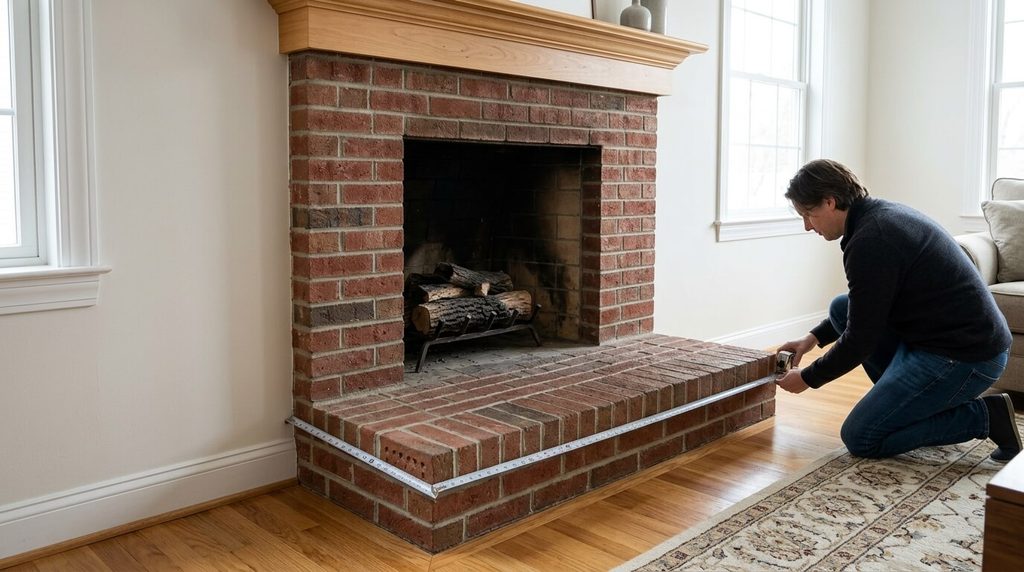
- Map the whole hazard area. Include the front, both sides, raised hearth corners, accessible controls, and any hot projecting surfaces. Measure the proposed barrier route and mounting locations. Check that the layout leaves adults a clear route to exits.
- Choose a suitable child barrier. Look for a product intended for children and permitted for the proposed fireplace use. Confirm the width, approved extensions, mounting method, and developmental limits. A pet gate or decorative screen is not an interchangeable substitute.
- Install and check it as directed. Use all required fittings and fastening methods for the wall material. Make sure the latch engages and the panels cannot simply be pushed aside. Keep your child out of the area while installation and any operating checks are performed.
- Address the remaining hazards. Store tools, matches, remotes, fuel, and loose accessories out of reach. Consider compatible edge protection only where heat and clearance rules allow it. Do not cover vents, required screens, or the firebox with improvised materials.
- Make the setup part of your routine. Check the gate, latch, and surrounding area before use. Keep protection in place through the fireplace’s cooling period. If you leave the room while it is burning or still hot, take your child with you.
Match the protection to your actual problem
The right purchase depends on what your child can reach, not simply whether a product is sold as a fireplace protector. A floor-level firebox, a deep raised hearth, and a freestanding stove create different boundaries. Decide where the child must stop before comparing products.
- You use the fireplace regularly: Plan a suitable access barrier with the required operating clearances, and retain the appliance’s own safety screen.
- The fireplace is cold, but the hearth has sharp corners: Keep the projecting hearth out of reach, or assess compatible impact protection without creating loose pieces.
- There is no suitable wall beside the hearth: Consider blocking access at a room entrance rather than improvising gate fixings.
- The fireplace can switch on automatically: Resolve unintended activation using the manufacturer’s approved method before relying on a cold-fireplace arrangement.
For example, a gate placed directly across a firebox can still leave both front hearth corners exposed. Moving the boundary around the whole projection may address those corners, provided the layout and clearances are permitted. Measure the complete route before ordering extra panels.
Choose a child barrier that fits the room
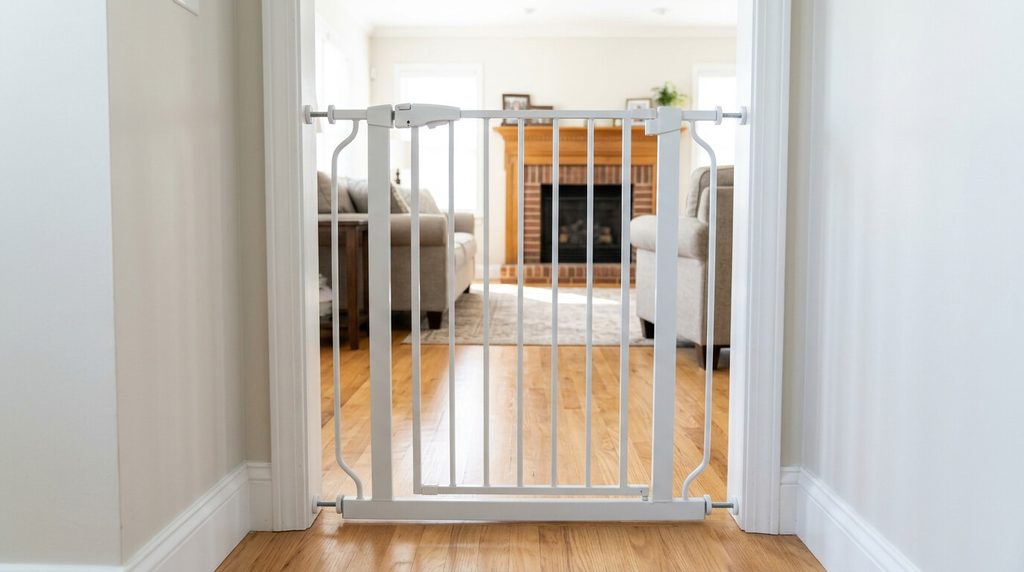
A multi-panel, hardware-mounted hearth gate can create space between a child and the fireplace. The layout should keep the child from reaching around either end or stepping onto the hearth. Follow the product’s approved arrangement rather than improvising panel angles or extensions.
The childproofing safety-device guidance advises using gates that meet current child-safety standards and can’t be easily dislodged. It also warns that pet gates should not replace child gates. A barrier needs to suit both the child and the opening.
Before ordering, check these details:
- Approved use around the fireplace or as a room divider away from heat.
- Total panel length needed for the front and side returns.
- Suitable mounting points and fasteners for the actual wall material.
- A latch adults can use without leaving the gate open.
- Age, height, and climbing-related limits in the instructions.
- Clear access for adults without blocking an emergency exit.
How far from the fireplace should a baby gate be?
Maintain a child-free zone of at least 3 feet around the fireplace as a general fire-safety practice. The actual barrier position must also meet the fireplace and gate instructions, which may require more space or a specific layout. Three feet is not a guarantee that any gate, padding, or nearby object is safe in every installation.
The manufacturer’s hearth-gate guidance illustrates why model instructions matter: it specifies placement requirements and says heat output can require greater separation. Follow the instructions for the product you actually choose. If a barrier becomes hot, or the child could reach a hot surface through or around it, keep the child away and have the arrangement reassessed.
Understand the difference between a screen and a baby gate
A spark screen helps contain sparks and embers from a wood fire. A fitted gas-fireplace safety screen reduces direct contact with hot glass. Neither description, by itself, establishes that the product will stop a toddler from reaching the hearth or pulling it over.
A separate child barrier creates distance from the fireplace and its surroundings. An unsecured decorative screen can move or tip when pulled, so do not rely on it as the child-access barrier. Keep the screen required by the fireplace manufacturer in place even when you add a hearth gate.
For gas models, use a screen made or approved for the specific appliance. The gas-fireplace glass-safety guidance explains that an incompatible aftermarket screen can affect safe operation. Do not remove or alter a fitted safety screen to make another guard fit.
A safety screen can also become hot during use. The children’s fireplace-safety guidance specifically warns about this risk. Keep the child away from the screen instead of treating its outer surface as a safe handhold.
Hot glass remains a hazard after the flame goes out
Gas-fireplace glass and surrounding metal can remain hot well after shutdown. Cooling time varies, so a timer or the absence of flames cannot establish that a surface is safe. Follow the model’s instructions and keep children away while it cools.
Do not let a child test the glass, and do not use your hand as a thermometer. Thermostat-controlled units may also switch on again when you are not expecting it. Keep remotes inaccessible and use only manufacturer-approved ways to prevent unintended operation.
How to baby proof a brick fireplace hearth
For a raised brick or stone hearth, start by keeping the entire edge inside the child barrier when the layout allows. Covering the fire opening while leaving projecting corners accessible does not address falls against the hearth. Look at the front lip and both ends from the height of a crawling or walking child.
Corner and edge bumpers can help reduce impact injuries, but they need a secure fit. Rough brick, loose mortar, dust, and irregular stone can make adhesive products unreliable. Follow the bumper maker’s surface-preparation directions and check that the child cannot pull pieces loose.
Can you put foam around a fireplace?
Ordinary foam is not automatically suitable near an operating fireplace. A product described as flame-resistant or as a fireplace protector still needs to be compatible with the appliance’s clearances, temperatures, and intended placement. Padding only addresses impact; it does not prevent access to hot glass or flames.
If you cannot confirm that a pad, adhesive, or cover is permitted in that location, do not leave it there during operation. Use a suitable barrier or keep the fireplace out of service while that protection is needed. Do not assume a gate makes combustible padding behind it safe.
Babyproofing an unused fireplace
An unused fireplace can still have hard corners, unstable screens, soot, loose objects, and accessible controls. Remove small or sharp items and keep children out of the firebox. A barrier may still be the simplest way to address several hazards at once.
Confirm what “unused” means in your home. A gas unit connected to a thermostat or remote is different from an appliance professionally taken out of service. If you want it disabled, ask a qualified professional about the correct procedure rather than modifying gas, wiring, or venting yourself.
Do not seal a flue, vent, grille, or opening just to stop a child getting inside. That can create problems if the appliance remains connected or is later used. Any permanent fireplace covering or alteration needs to be appropriate for the actual installation.
What if you rent or cannot drill into the walls?
Do not replace required wall fixings with adhesive hooks, furniture, or a pressure-fit arrangement the product does not permit. Ask the landlord about an approved installation or have a qualified childproofing installer assess the space. If suitable mounting is unavailable, plan a different access boundary.
A child gate at a suitable room entrance can keep the fireplace area out of bounds without installing a barrier beside the hearth. The gate still needs to fit that opening and follow its own instructions. In an open-plan room with no reliable boundary, leaving the fireplace off may be the workable choice.
Electric fireplaces need their own checks
An electric fireplace does not have wood embers or a gas flame, but that does not make every surface safe to touch. Heater outlets, grilles, and surrounding areas may get hot depending on the model. Read the instructions for both heating and flame-effect-only operation.
Keep air intake and heater outlet openings clear. Do not drape a blanket over the unit, tape a cover over a grille, or place padding where it can obstruct airflow. Secure the appliance as instructed and keep cords and controls out of a child’s reach.
Secure tools, controls, and the surrounding room
Move pokers, tongs, ash containers, fire starters, matches, and lighters out of reach. Do not assume a heavy tool stand cannot be pulled over. Keep fuel and decorative objects from becoming climbing aids or items a child can drag toward the heat.
Place sofas, toys, cushions, books, and other combustible items away from the fireplace. Keep the child side of the gate clear of stools or furniture that could help a toddler climb. Recheck the layout after cleaning, moving furniture, or having visitors.
The family fireplace-safety guidance emphasizes supervision, keeping tools out of reach, and professional chimney checks. A gate does not make it appropriate to leave a child alone beside a burning or hot fireplace. Tell every caregiver how the gate and fireplace controls work.
Check smoke and carbon monoxide alarms
Have working smoke alarms on every level, inside bedrooms, and outside sleeping areas. Install carbon monoxide alarms according to their instructions and applicable local requirements, including near sleeping areas. Test alarms monthly and replace batteries or the alarm unit when the manufacturer directs.
For broader household planning, our guide to recognizing emergency heating-system warning signs covers situations that need prompt action. Do not treat a gas smell or a CO alarm as a routine repair appointment. Leave the home and contact emergency help from outside.
The carbon monoxide safety instructions explain what to do when a CO alarm sounds. Get everyone outside to fresh air and call 911 or the fire department. Do not re-enter until emergency responders say it is safe.
Check the setup before each use
A properly fitted gate can become unreliable if a latch stops engaging or furniture moves beside it. Make a quick check part of lighting or switching on the fireplace. Ask other caregivers to follow the same routine so the protection does not depend on one person remembering
Check the barrier and the space around it
- Close the gate and confirm the latch engages as instructed.
- Look for loose fittings, shifted panels, or damage.
- Remove climbing aids and objects within the child’s reach.
- Check that required screens, vents, and clearances remain unobstructed.
- Keep controls, matches, tools, and fuel inaccessible.
- Keep protection in place after shutdown while surfaces cool.
If a latch or fitting is damaged, keep your child out of the area until it is repaired according to the instructions. Do not compensate with string, an improvised lock, or a heavy object against the gate. Reassess the arrangement immediately if your child starts climbing it or can open it.
Common mistakes that leave gaps in protection
- Padding the hearth while leaving hot glass within reach.
- Enclosing the opening but leaving raised hearth corners outside the barrier.
- Treating a loose decorative screen as a child gate.
- Using another product’s clearance measurement as a universal rule.
- Leaving remotes, tools, or climbing furniture beside the barrier.
- Assuming the fireplace is cold because the flames are no longer visible.
- Continuing to rely on a gate after the child can climb over or dislodge it.
There is no age at which every fireplace suddenly becomes safe to access. Follow the gate’s age and developmental limits, and reassess the setup as your child gains mobility. If the child can defeat the barrier, change the access arrangement rather than stacking gates or relying on reminders.
Conclusion
Learning how to baby proof a fireplace means addressing heat, access, hard edges, and everyday habits together. Start with the fireplace instructions, choose a suitable barrier, and keep required screens and clearances intact. When the room cannot support that arrangement, prevent access and leave the fireplace off until you have a workable plan.
Frequently asked questions
Can I baby proof a fireplace without a gate?
A suitable barrier at the room entrance may provide a different access boundary. Padding, a decorative screen, or teaching a baby not to touch does not replace reliable separation from heat. If you cannot prevent access, keep the fireplace off and address the cold hearth’s hazards.
Is a fireplace screen enough for a baby?
Not necessarily, because screen designs serve different purposes. A required gas safety screen or wood-fire spark screen should stay in place, but it may not keep a child away from the entire hearth. Add an appropriate child-access barrier and remember that screens can also become hot.
Can I use a blanket or cushion as a fireplace cover?
Do not cover an operating fireplace or its vents with those materials. Even on a cold unit, a loose cushion can move, be pulled off, or leave hard corners exposed. Confirm compatibility and prevent accidental operation before considering any covering for an unused fireplace.
How long does gas-fireplace glass stay hot?
It can remain hot long after the flame goes out, and the cooling period depends on the model and use. Do not treat a fixed waiting time as proof that it is safe. Follow the appliance’s instructions and keep the access barrier in place during cooldown.
How do I protect a baby from sharp brick hearth corners?
Keep the raised hearth inside a suitable child barrier where practical. Compatible, securely attached corner or edge protection can provide additional impact protection in permitted locations. Check for loose pieces and never assume ordinary foam is suitable near operating heat.
When can I remove fireplace babyproofing?
There is no universal age for removing every protection. Follow the gate’s limits and change the arrangement if your child can climb over, open, or dislodge it. Continue managing hot surfaces and fireplace access even after a particular baby gate is no longer appropriate.