


- Seasonal roof checks can catch small issues before they cause interior leaks.
- Gutters, downspouts, flashing, moss, and attic moisture all deserve regular attention.
- You can start many useful inspections safely from the ground with binoculars or a phone camera.
- Roof walking, steep-slope work, chemical treatments, and structural repairs are usually best left to qualified professionals.
- Your maintenance needs depend on roof material, age, slope, tree cover, and exposure to wind-driven rain.
Pacific Northwest roofs contend with recurring rain, shade, wind, fallen needles, and prolonged slow drying. A seasonal routine helps homeowners spot changes early, whether it’s a clogged gutter, a lifted shingle, worn flashing, or a new stain inside the home. When a problem needs closer evaluation, a qualified roof repair company can identify the source of a leak or drainage issue without putting homeowners at unnecessary risk. The goal is not to inspect every inch of the roof yourself. It is about recognizing warning signs and acting before minor damage spreads.
Why Pacific Northwest Roofs Need Year-Round Care
A roof can appear sound from the street while water-management issues develop out of sight. Debris may block a valley or gutter, branches can scrape the roof during windstorms, and flashing around vents or chimneys can loosen over time. Moisture that reaches the attic may show up as damp insulation, musty odors, darkened wood, or ceiling discoloration.
Moss deserves attention because it can hold moisture and debris against roofing materials. On wood roofs, prolonged wetness can contribute to decay. On other roof types, moss and debris may interfere with drainage or lift vulnerable edges. Trimming nearby trees to let more sunlight reach the roof can reduce the shade moss prefers.
Spring: Check for Winter Damage
Spring is a practical time for a post-winter review. Start indoors, then inspect from the ground. Look for new ceiling stains, bubbling paint, damp attic insulation, or unexpected daylight. Outside, scan for missing or lifted shingles, damaged ridge caps, loose flashing, sagging gutters, and branches resting against the roof.
- Scan roof surfaces from the ground and photograph changed areas.
- Look for fresh interior stains, peeling paint, or musty odors in the attic.
- Clear leaves, needles, and sediment from accessible gutters.
- Confirm downspouts carry water away from the foundation.
- Check for branches that rub on the roof or block sunlight.
Summer: Use the Dry Window for Planned Work
Drier weather is often best for planned maintenance, such as gutter repairs, flashing replacement, moss control, roof cleaning, branch trimming, or ventilation assessments. It also gives a contractor a clearer opportunity to trace old leak paths after materials have dried. Dry conditions do not make roof work automatically safe. Avoid climbing onto steep, fragile, moss-covered, or high roofs.
A ground-level review can provide enough information to decide whether an inspection is needed, while avoiding falls and accidental damage to roofing materials. Homeowners who also have rooftop solar can follow these tips on how to clean solar panels on the roof safely.
Fall: Prepare Before Heavy Rain Returns
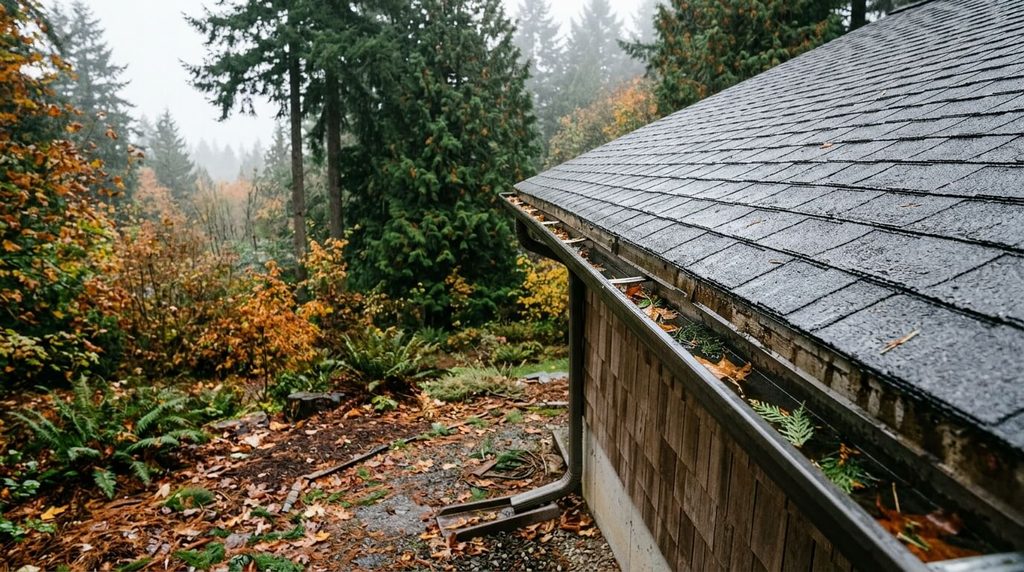
Fall maintenance is largely about water flow. Leaves, needles, and small branches can collect in gutters, valleys, and around roof penetrations. Clearing accessible debris and testing drainage before sustained rain returns can reduce the chance of overflow near siding, walkways, and foundations.
Five High-Value Fall Tasks
- Clean gutters and test downspouts with water.
- Remove loose debris from safe access points.
- Trim branches that touch or heavily shade the roof.
- Inspect visible flashing around vents, chimneys, skylights, and where walls meet.
- Check the attic for damp insulation, darkened wood, daylight, or musty odors.
Downspouts should send water to an appropriate location rather than creating pooling beside the foundation. In some areas, managing roof runoff can also reduce strain on sewer systems. Keeping rainwater on your property out of the sewer system can help limit overflows into local waterways where suitable drainage options are available.
Winter: Watch for Active Problems
During heavy rain or wind, focus on observation rather than roof access. Check ceilings, attic areas, exterior drainage paths, and gutters you can safely view from the ground. Document visible storm damage with photos and note whether a stain grows after rain.
Warning Signs That Need Prompt Attention
- A ceiling stain that enlarges after rainfall.
- Water near a light fixture or electrical outlet.
- Daylight visible through the roof deck.
- A sagging roofline or soft, bowed ceiling material.
- Several missing shingles after a wind event.
- Persistent water pooling near the foundation.
Roof Materials Need Different Care
Every roof should be inspected according to its material and design. Asphalt shingles may show curling, cracking, exposed matting, or heavy granule loss. Metal roofs warrant attention to fasteners, seams, coatings, flashing, and corrosion. Cedar shakes should be checked for splits, decay, trapped debris, and moisture-darkened areas. Composite roofing can develop cracked pieces or loose edges, while low-slope roofs need especially close attention to drains, seams, ponding water, and membrane damage. A material-specific inspection helps distinguish routine aging from conditions that may need repair.
DIY Tasks and Professional Tasks
Homeowners can often monitor safely from the ground, photograph concerns, clear debris from reachable areas, and watch for interior changes. Roof walking, leak tracing, flashing repairs, structural work, and work near electrical systems require trained professionals and the right equipment.
Monitor
Look for light debris, early moss, or minor staining from a safe location.
Schedule an Inspection
Repeated leaks, damaged flashing, missing shingles, or visible attic moisture.
Act Quickly
Active water entry, sagging materials, exposed decking, or serious storm damage.
Keep Better Roof Records
Take dated photos in spring and fall, plus after major storms. Keep notes on the roof’s age, material, past repairs, warranty information, and recurring trouble spots. These records make gradual changes easier to spot and can make conversations with inspectors, insurers, or repair professionals more efficient.
Spring Roof Care
Look for winter damage, inspect ceilings and attic spaces, and clear gutters.
Summer Roof Care
Schedule repairs, manage moss, trim branches, and address ventilation or drainage concerns.
Fall Roof Care
Clean gutters, test downspouts, remove debris, and inspect visible flashing.
Winter Roof Care
Monitor for leaks, wind damage, ceiling stains, and drainage failures.
Make Roof Care a Routine
Seasonal roof care works best as a routine, not a response to an emergency. A short, safe inspection can reveal blocked drainage, moss growth, damaged flashing, or early signs of a leak. Notice changes early, avoid risky roof access, and bring in qualified help when the issue requires more than a ground-level check.
Conclusion
Pacific Northwest roofs face constant exposure to rain, moisture, wind, shade, and falling debris, making seasonal maintenance an important part of protecting the home. Regular spring and fall checks can help homeowners spot blocked gutters, damaged shingles, worn flashing, moss growth, and signs of attic or interior moisture before they become bigger problems.
Simple ground-level observations and dated photos can help track changes, while qualified professionals should handle more difficult repairs and roof access. Homeowners should also consider the roof’s material, age, slope, and surrounding trees when planning maintenance. By making roof care a year-round routine and responding to warning signs early, homeowners can manage drainage better, reduce avoidable damage, and keep their roofing system in better condition over time.
Common Questions About Seasonal Roof Care
How often should a roof be checked?
A ground-level review in spring and fall is a sensible baseline, with additional checks after major wind or rain events. Older, heavily shaded, wooded, steep, or previously damaged roofs may warrant closer monitoring.
Does moss always mean a roof needs to be replaced?
No. Moss alone does not determine whether replacement is necessary. Roof age, material condition, drainage, flashing, granule loss, and the condition of the underlying structure all matter.
Can a homeowner pressure-wash a roof?
Improper use of high-pressure cleaning can damage shingles, wood surfaces, protective coatings, and granules. Confirm the recommended cleaning method for the roof material before attempting any treatment.
What is the first step after a roof leak?
Contain interior water safely, move valuables, document visible damage, and arrange an inspection. Avoid making major repairs before the source and extent of the problem are understood.