


Can You Plant Sod in the Fall? When to Lay It and When to Wait
Yes, you can plant sod in the fall, and it is often a good time to install cool-season grasses such as tall fescue and Kentucky bluegrass. The soil may still hold summer warmth while cooler air reduces the stress of transplanting. Warm-season grasses, including Bermuda, zoysia, and St. Augustine, need a different approach as their growth slows before winter.
The important question is whether your grass has suitable conditions to establish roots. An October installation in a mild coastal area differs greatly from one where the ground will soon freeze. Your grass type, soil conditions, weather forecast, and access to water matter more than the month alone.What to check before ordering sod
- Identify whether your sod is a cool-season or warm-season grass.
- Choose a planting window that allows rooting before prolonged cold.
- A light frost is different from frozen soil and does not automatically end the planting season.
- Prepare the ground before delivery and install fresh sod promptly.
- Keep the sod and underlying soil moist without leaving them saturated.
- Limit foot traffic until the sod has anchored to the soil.
Why Fall Works Well for Some Sod
Fall can offer a useful balance of warm soil and cooler air. For cool-season grasses, those conditions support growth without the same heat stress a summer installation may face. Rain may also help, although you still need a watering plan rather than relying on seasonal averages.
The recommended seasons for installing sod differ between cool-season and warm-season grasses. Fall commonly suits cool-season turf, while warm-season grasses generally establish more readily during warmer growing conditions. Choosing the right grass for your climate remains just as important as choosing the planting date.
Sod also provides immediate ground coverage, which can help reduce exposed soil and mud. That finished appearance can be misleading during the first few weeks. The grass still needs to connect its existing roots to the soil beneath it before the lawn can handle normal use.
Cool-Season vs. Warm-Season Sod in Fall
Start by asking the supplier exactly which grass species and varieties you are buying. A product sold as a “premium lawn blend” may not tell you enough to judge its fall performance. Confirm that it suits your sunlight, climate, and expected lawn use before discussing delivery dates.How grass type changes the planting decision
| Grass type | Fall suitability | Main consideration |
|---|---|---|
| Tall fescue | Often a good choice for early-fall installation where locally adapted. | Allow time for rooting and maintain moisture. |
| Kentucky bluegrass | Often well suited to fall installation in cool-season lawn regions. | Do not mistake immediate green coverage for established roots. |
| Fine fescue or ryegrass mixtures | Can suit fall installation when the mixture is appropriate for the site. | Confirm the actual mixture and local recommendations. |
| Bermuda or zoysia | Early fall may work where substantial warm growing weather remains. | Cooling conditions can slow rooting before dormancy. |
| St. Augustine or centipede | Requires local advice, particularly where winter cold is a concern. | Consider cold exposure and the risks of weak establishment. |
Cool-Season Sod
Tall fescue and Kentucky bluegrass are common examples of cool-season lawn grasses. Fall is often a favorable installation period where these species are adapted. Installing while growing conditions remain suitable gives the sod a chance to develop roots before winter slows progress.
Early fall usually offers more room for error than late fall. You have more time to correct uneven watering or repair a loose edge. Waiting until prolonged cold is near reduces that margin, even when installation is still technically possible.
Warm-Season Sod
Bermuda, zoysia, St. Augustine, and centipede respond differently as temperatures cool. Their strongest establishment period generally falls during active warm-weather growth. A fall installation may survive without developing the root system you would expect from a better-timed project.
Warm-season sodding guidance for Oklahoma recommends allowing at least one month before the first fall frost for adequate rooting. Treat that as a local recommendation, not a nationwide guarantee. Your species, location, and weather may call for an earlier installation.
If you are comparing zoysia sod with a slower lawn conversion, consider when to plant zoysia plugs before choosing a method. Plugs need time to spread across bare ground, while sod provides coverage immediately. Neither method avoids the need for suitable growing conditions and consistent care.
How Late Can You Lay Sod in the Fall?
No single nationwide cutoff date exists for laying sod. The practical limit depends on whether the soil remains workable, the grass can still root, and irrigation is available. A lawn entering winter with little root attachment needs more careful management than one established earlier.
For an ordinary homeowner installation, aim to leave several weeks of suitable growing conditions rather than planting against the last possible date. A forecast showing repeated freezes and little opportunity to water should make you reconsider. Ask the local grower what rooting conditions they expect for the specific sod being delivered.
Can You Lay Sod in October or November?
October may offer good conditions in one location and a narrow planting window in another. November can still be workable in mild climates, but late installation in colder regions may leave little opportunity for rooting. Elevation and local exposure can change the answer even within the same state.
A sheltered yard with workable soil differs from a windy site that experiences repeated freezes. Check conditions in the actual planting area rather than relying only on a regional calendar. If the supplier recommends late installation, ask how watering and winter care should change.
Does the First Frost Mean It Is Too Late?
A light frost on the grass blades is not the same as frozen soil. It does not automatically make every sod installation impossible. However, it signals that you should look more closely at the remaining growing conditions, especially for warm-season turf.
Late-planted cool-season sod may survive even when it has little time to root before winter. The guidance on late-fall sod planting emphasizes maintaining moisture during dry winter conditions. Survival in that situation depends on follow-up care, not simply getting the rolls onto the ground.Check These Conditions Before Planting
Walk the site before paying for delivery. Look for standing water, heavily compacted ground, and areas that receive much less sunlight than the rest of the yard. New sod will not solve those problems simply by covering them.
Next, test your watering setup across the whole area. Sprinklers often miss corners, edges beside pavement, or strips behind obstacles. Those dry spots can become the first places where fresh sod struggles.
Finally, make sure you have enough time and help to install the order promptly. Soil preparation should be finished before the delivery arrives. A pallet of sod waiting while you remove the old lawn creates an avoidable problem.
How to Lay Sod in the Fall
The basic installation process does not change just because the weather is cooler. You still need fresh sod, prepared soil, close-fitting seams, and immediate watering. Fall conditions mainly affect how quickly the grass roots and how often you need to irrigate.
- Remove the old surface and address weeds. Clear existing vegetation and debris so the new roots can reach the soil. If you use a herbicide during preparation, follow its label and any required waiting period before planting. Do not lay sod over an intact old lawn and expect reliable soil contact.
- Prepare and grade the soil. Use a soil test to guide amendments instead of adding lime or fertilizer by habit. Correct drainage problems and create a firm, even surface without packing it hard. Avoid working saturated soil, which can leave ruts and clods.
- Have the site ready before delivery. Arrange installation for the same day the sod arrives whenever possible. Keep the planting surface lightly moist, not dusty or muddy. Confirm that hoses and sprinklers can reach every part of the new lawn.
- Fit the pieces closely together. Begin along a straight edge and stagger the joints like brickwork. Butt the edges together without overlapping them or stretching the pieces to fit. Cut around curves and obstacles instead of leaving large gaps.
- Establish contact and begin watering. Follow the grower’s recommendation to lightly roll or tamp the sod against the soil. Water completed sections promptly instead of leaving the first strips dry until the whole yard is finished. Check beneath an edge to confirm that moisture has reached the soil below.
Watering New Sod in Fall
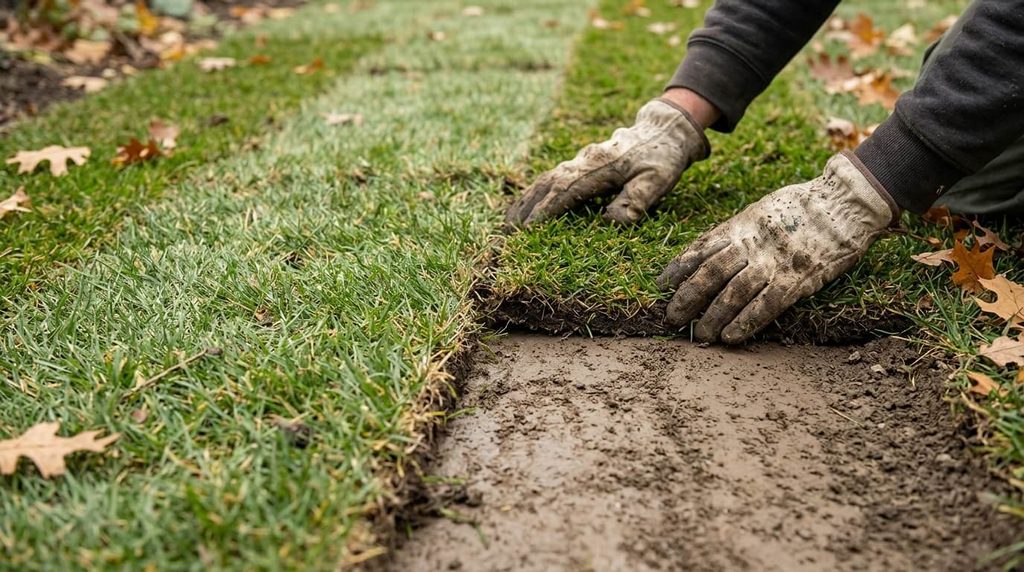
New sod needs moisture in both the sod layer and the soil immediately below it. Wet grass blades alone do not tell you whether the roots have enough water. Carefully lift an edge during the early installation period to check what is happening underneath.
Watering recommendations for newly sodded lawns call for frequent initial watering followed by deeper, less frequent irrigation as roots develop. In fall, adjust that pattern to rainfall, temperature, soil, and the actual condition of the sod. Do not keep applying water automatically when the ground is already wet.
Windy weather can dry sod even when the air feels cool. Conversely, cool weather and heavy soil can keep the planting area wet longer than expected. Aim for consistently moist conditions without puddles, runoff, or a persistently soggy surface.
Does Rain Replace Watering?
Rain can replace an irrigation session if it supplies enough moisture to the sod and underlying soil. A brief shower may dampen the leaves without reaching the root zone. Check beneath the sod rather than assuming that any rainfall is enough.
Pay extra attention to edges and exposed corners after a breezy day. These areas can dry faster than the middle of the lawn. Adjust your watering coverage instead of soaking the whole yard to compensate for one missed strip.
Will New Sod Need Winter Water?
Late-installed sod may need supplemental water during dry winter periods. The guidance on seasonal sod installation notes that dormant grass can still dry out, especially when rooting is incomplete. Brown warm-season grass should not be treated as a surface that no longer needs care.
Water only when conditions allow it to soak into the soil. Do not irrigate frozen ground or create standing water that can freeze. Plan how you will provide water if the regular irrigation system is shut down for winter.
How Long Does Fall Sod Take to Root?
Under favorable growing conditions, sod often develops noticeable attachment within about two to three weeks. Cool weather, dormancy, and poor soil contact can extend that period. That estimate describes early rooting, not a guarantee the lawn is ready for heavy use.
The recommended way to check new sod roots is to tug gently and feel for resistance. Check a few representative spots rather than pulling up large sections. Even if the grass looks green, a piece that lifts easily still needs protection.
Keep children, pets, and regular foot traffic off the lawn while it establishes. Repeated turns or runs can shift pieces and disturb young roots. Wait for firm attachment before treating the area like an established lawn.
Mowing, Fertilizer, and Fall Cleanup
Mow when the grass needs cutting and the sod is sufficiently anchored to withstand the mower. Use the appropriate height for the grass species and avoid cutting when the surface is soft or waterlogged. A fixed number of days after installation is less useful than checking growth and root attachment.
Fertilizer should follow soil-test results, local recommendations, and the grower’s installation instructions. Cool-season and warm-season lawns do not share the same fall feeding schedule. Avoid forcing a late warm-season installation into growth with extra nitrogen.
Remove fallen leaves gently before they form a wet mat over the grass. Use a light touch so you do not drag loose sod or disturb seams. Routine cleanup should protect the new lawn rather than become another source of traffic.
Common Fall Sod Problems
Brown edges can indicate drying or poor contact with the soil below. Check irrigation coverage and inspect whether the edges are seated firmly. Don’t assume the answer is more water everywhere, especially when other parts of the lawn are already wet.
A piece that remains loose may be rooting slowly because of cold weather, poor contact, or unsuitable moisture. Compare the affected area with neighboring pieces and check the soil underneath. If the sod is deteriorating or has an unusual odor, contact the supplier rather than waiting for spring.
Uniform browning in warm-season sod may reflect dormancy, but color alone cannot confirm that the grass is healthy. Dead and dormant sod can look similar from above. Ask the grower to assess suspicious areas, especially when the lawn entered winter without much rooting.
When Waiting Is the Better Choice
Delay installation when the soil is frozen, saturated, or likely to be damaged by preparation work. Waiting also makes sense when you cannot provide water during establishment. A rushed installation on an unsuitable site can cost more than preparing properly for the next planting window.
Warm-season sod deserves extra caution when cold weather is close, and the project is optional. Dormant installation can succeed, but it carries different risks from installing actively growing grass. If immediate erosion control is needed, ask a local professional about temporary protection while you plan the permanent lawn.
Conclusion
You can plant sod in the fall, but the best decision depends on the grass and the conditions in your yard. Early fall often gives cool-season sod a useful opportunity to root, while warm-season sod needs a more cautious local assessment. Frozen ground, poor drainage, and unavailable irrigation are good reasons to wait.
Prepare the soil before delivery, install promptly, and check moisture below the sod rather than judging by appearance alone. Protect the lawn until the roots have anchored. Those steps matter more than choosing a date simply because it falls in autumn.Frequently asked questions
Is fall better than spring for laying sod?
Fall is often favorable for cool-season sod where enough growing weather remains. Warm-season grasses generally establish more readily during active warm-weather growth. The better season therefore depends on the species, local climate, and your ability to water.
Will a frost kill newly laid sod?
A light frost does not automatically kill newly laid sod. Risk depends on the grass, cold severity, root development, and moisture conditions. Avoid walking on frosted or frozen grass, and do not confuse frost on the blades with frozen soil.
Can you lay sod over existing grass in the fall?
Laying sod directly over an intact lawn is not a reliable installation method. The old vegetation can interfere with close contact between the new roots and soil. Remove the existing surface and prepare the ground before the sod arrives.
Is sod or grass seed better for a late-fall lawn?
Sod provides immediate coverage, while seed needs time and suitable temperatures to germinate and develop. That doesn’t make late-fall sod risk-free, because it still needs moisture and time to establish roots. Choose based on local conditions, erosion concerns, budget, and the remaining growing window.
Should you fertilize sod immediately after laying it?
Follow soil-test results and the supplier’s instructions rather than assuming every installation needs the same fertilizer. Grass species, season, and local nutrient restrictions affect the choice. Avoid adding extra fertilizer to compensate for poor watering, weak soil contact, or cold-related slow growth.