


Dark Flowers (An Introduction)
Dark flowers have a way of making you stop and look twice. A bloom that appears almost black in the evening may reveal deep purple, burgundy, red, brown, or blue tones when you see it in bright daylight.
That is what makes dark flowers so interesting. They are not simply “black flowers.” They include a surprisingly wide range of shades, flower shapes, and growing habits. Some are easy to grow in a home garden, while others are better suited to containers, specialty collections, or bouquets.
I also think dark blooms are often misunderstood. Many flower lists simply repeat the same few varieties without explaining how these colors actually look in real gardens, how lighting changes them, or which plants are practical for beginners.
So, in this guide, you will find more than a list of names. You will learn how to choose the right dark bloom for your garden, bouquet, or home, how to combine different shades, what dark flowers can symbolize, and why some “black” flowers are not actually black at all.
Quick answer: The darkest natural flowers are usually very deep shades of purple, red, burgundy, maroon, brown, or blue. Some can look almost black, especially in low light. True black pigmentation in flowers is extremely rare, which is why many flowers marketed as black are actually near-black shades.
Why Are Dark Flowers So Fascinating?
Color is one of the first things you notice when you see a flower. Bright yellow sunflowers and cheerful pink roses immediately attract attention, but darker blooms create a different feeling.
They add depth and contrast. They can make a garden look sophisticated, mysterious, romantic, dramatic, or even slightly gothic without requiring an entire landscape to follow one theme.
The important thing is to understand that dark colored flowers are not all the same. A flower that looks black from across the garden may actually be deep purple when you examine the petals closely.
This is not just a matter of photography. The Royal Horticultural Society, for example, describes the popular ‘Queen of Night’ tulip as having dark purple to maroon flowers, even though it is commonly perceived as an almost-black tulip. You can see the RHS plant profile for Queen of Night for its official description and growing information.
This is why I recommend looking at the actual cultivar name before buying seeds or plants. The word “black” in a plant’s common name often describes its appearance rather than a scientifically pure black color.
30 Dark Flowers to Grow, Admire, or Use in Bouquets
If you are searching for dark flowers names, the list below gives you a useful starting point. I have included flowers with different colors, shapes, growing habits, and levels of drama.
Not every flower will be suitable for every climate. Before buying, check the plant’s recommended growing conditions and local hardiness information.
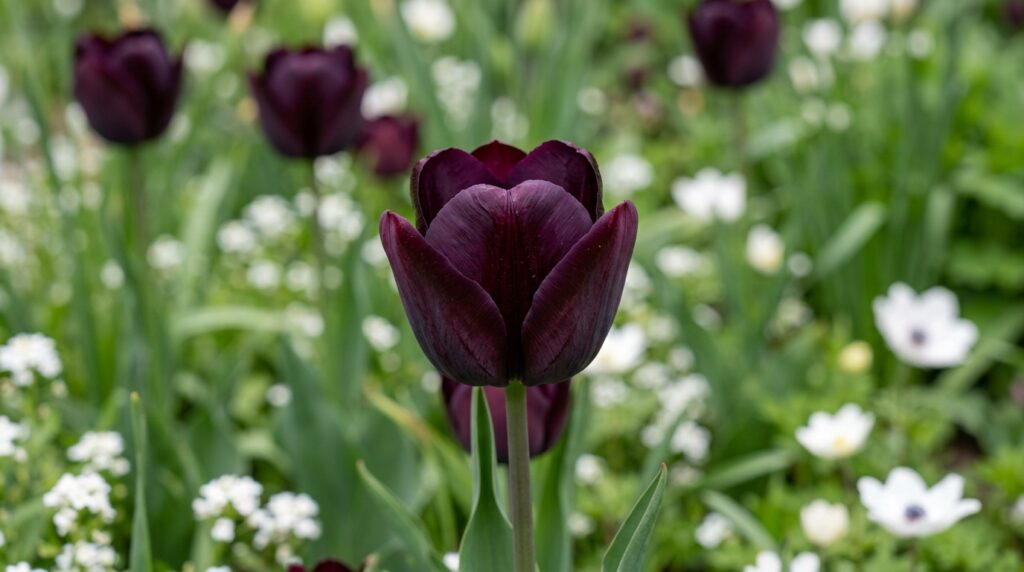
1. Queen of Night Tulip
The Queen of Night tulip is one of the most famous flowers associated with a near-black appearance. Its petals are usually described as an extremely deep maroon or purple. Under certain lighting, they can look almost black.
This tulip works particularly well when planted beside white, cream, or pale pink spring flowers. The contrast makes the dark petals appear even deeper.
It is an excellent choice if you want dark moody flowers without creating a garden that feels visually heavy. The RHS lists this cultivar as producing glossy, dark purple to maroon flowers and notes that it grows to around 60 cm.
2. Black Baccara Rose
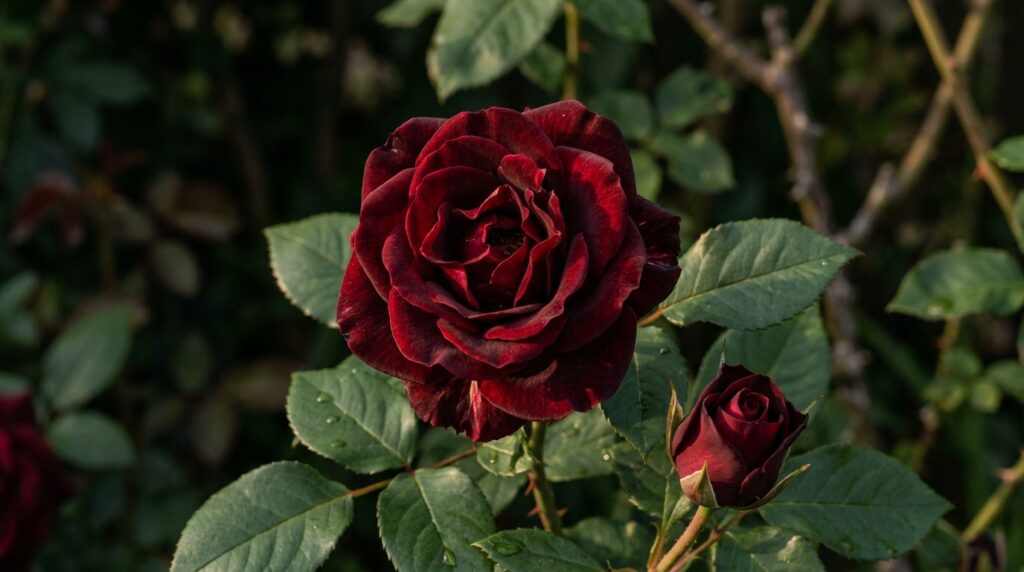
Black Baccara is a popular choice for people looking for dark red flowers names and near-black rose varieties.
Despite its name, it is better described as a very dark burgundy or wine-red rose. The petals have a velvety appearance that becomes especially dramatic when the flower is fully open.
This variety is often associated with romance, mystery, and elegance. It is particularly attractive in formal bouquets and dark floral arrangements.

3. Black Magic Rose
Black Magic is another rose that can appear almost black from a distance. The flower has deep red petals with a rich, dramatic appearance. As with many dark roses, the exact visual effect depends on the stage of the bloom and the lighting around it.
If you want dark red flowers that still look recognizably like classic roses, this is one variety worth exploring.
4. Black Dahlia Varieties
Dahlias are one of my favorite categories for anyone who wants variety. You can find blooms with deep burgundy, red, purple, and chocolate tones. Some dark cultivars include:
- Black Narcissus
- Arabian Night
- Karma Choc
- Black Jack
- Verrone’s Obsidian
The exact color can vary considerably between cultivars. Some look more burgundy, while others have stronger purple or brown undertones. Dahlias are especially useful for dark flowers bouquet designs because their large blooms provide volume and texture.

5. Black Calla Lily
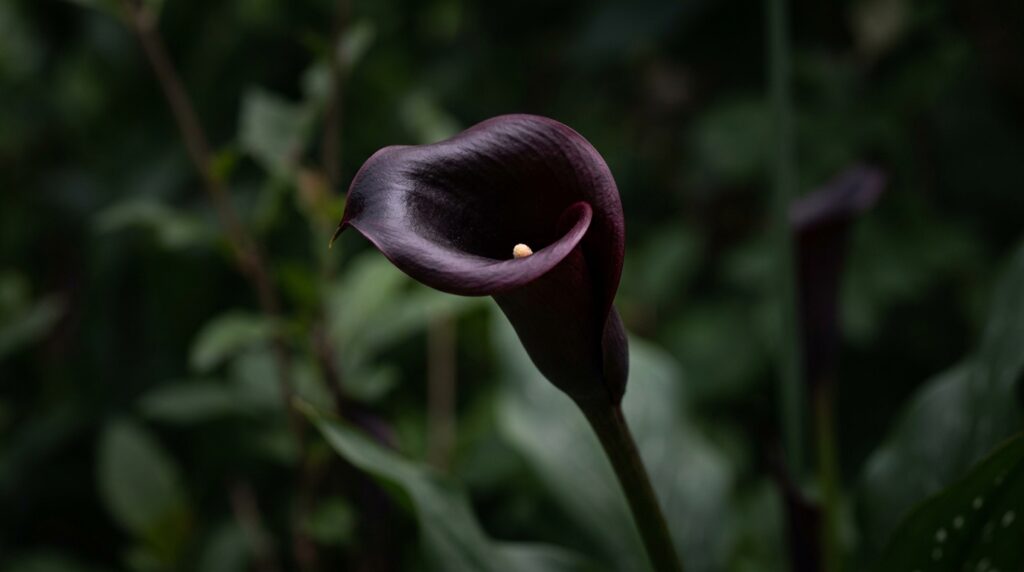
Dark calla lilies are known for their sleek, sculptural shape. Their deep burgundy or purple-black spathes create a modern appearance that works beautifully in minimalist arrangements.
They are especially popular with people who prefer elegant floral designs rather than traditional, crowded bouquets. A single dark calla lily can make a strong visual statement. You do not always need dozens of flowers to create drama.
6. Black Pansy
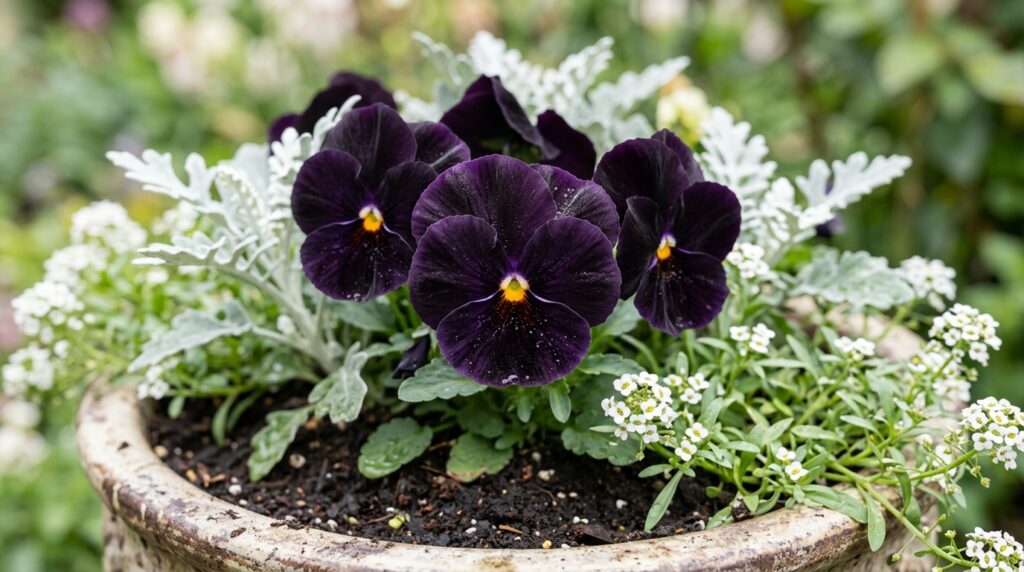
Pansies are among the more approachable options for gardeners who want dark color flowers. Some varieties have petals so deeply purple that they appear almost black. They are useful for containers, borders, and smaller garden spaces.
One advantage is that pansies can also provide strong contrast when planted alongside brighter flowers. Try pairing near-black pansies with:
- Silver foliage
- White flowers
- Bright yellow blooms
- Pale pink flowers
- Light green ornamental plants
7. Black Petunia
Black or near-black petunias are popular for containers and hanging baskets. Their velvety-looking flowers can create a dramatic effect without requiring a large garden.
If you are new to gardening, petunias may be a more practical starting point than some unusual exotic plants. However, always check the care requirements of the specific variety you purchase.
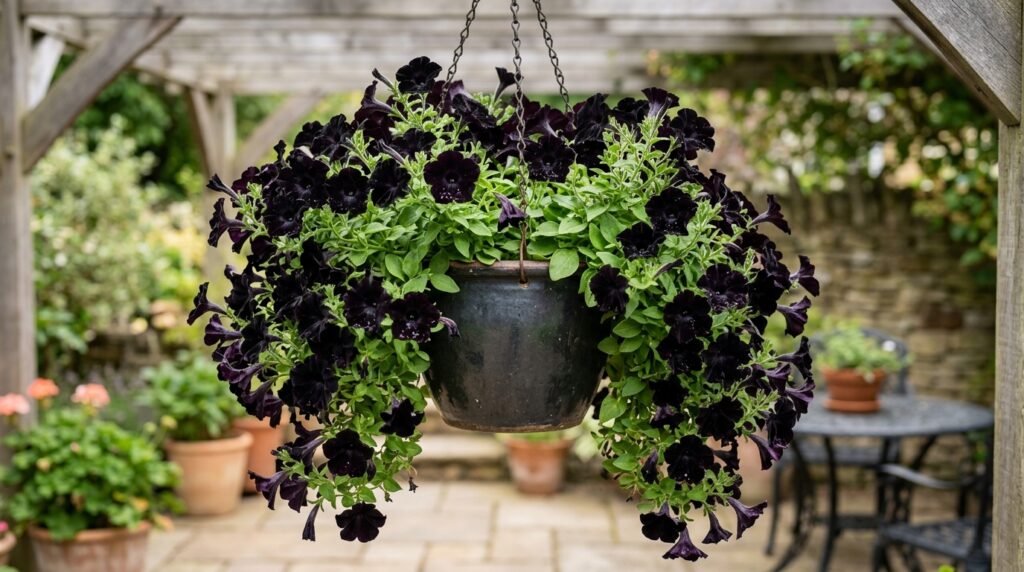
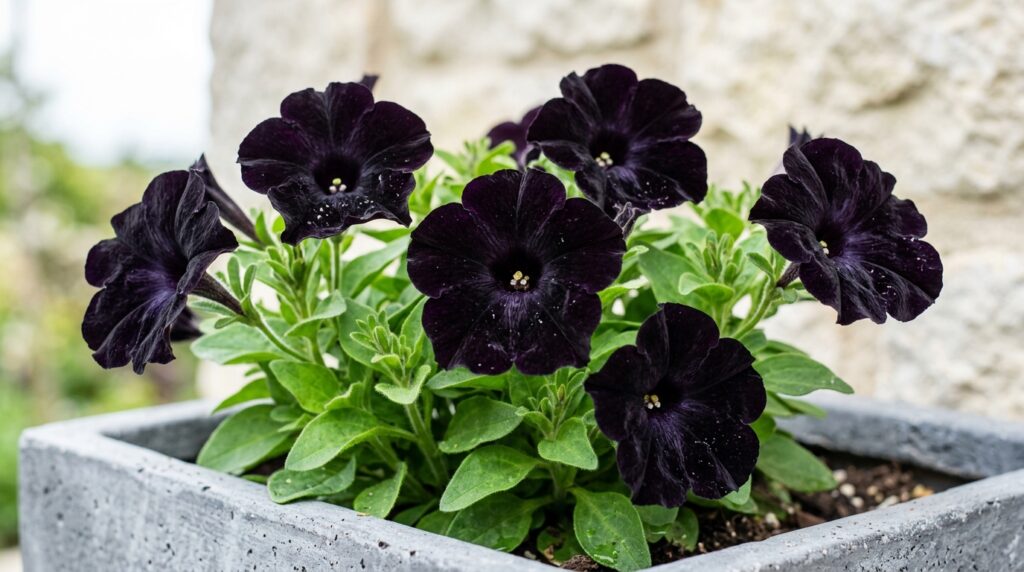
8. Black Velvet Petunia
This is another example of a flower that demonstrates how powerful a very dark color can be. The petals have an intense, velvety appearance. In a container, the flowers look particularly attractive against pale walls or lighter foliage.
For me, this type of plant works best when you allow the flowers to be the focal point instead of surrounding them with too many other dark plants.
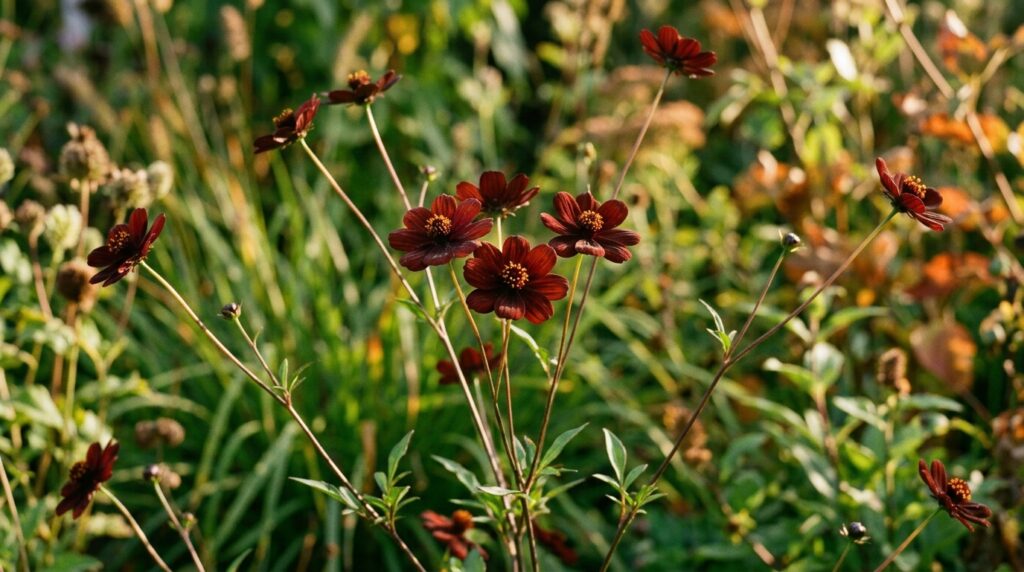
9. Chocolate Cosmos
Chocolate cosmos is famous for its dark reddish-brown flowers and chocolate-like fragrance. This is one of the best examples of dark brown flowers because the color is naturally different from the usual purple and burgundy shades associated with near-black blooms.
Its warm brown tone works well in autumn-inspired gardens and bouquets. It can also soften a dark floral arrangement. Instead of using only black-looking flowers, adding chocolate tones creates more variation.
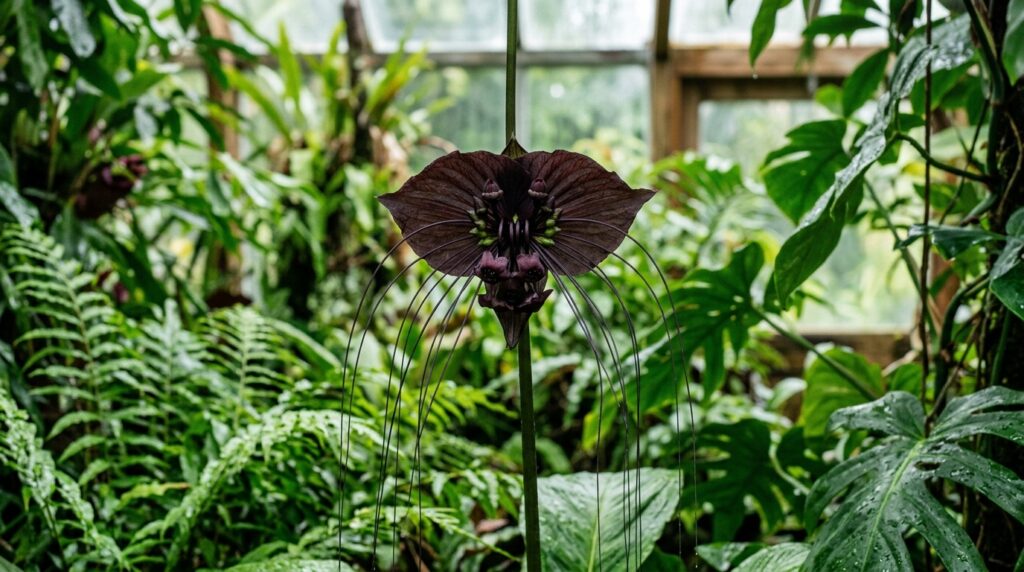
10. Bat Flower
The bat flower is one of the most unusual plants on this list. Its dramatic flowers have dark purple to almost-black tones and long, whisker-like structures that make the plant look completely different from a traditional rose or tulip.
This is not the first plant I would recommend to a beginner. It has specific growing requirements and is better suited to gardeners who enjoy unusual tropical plants. Still, if your goal is to discover dark flowers names that are genuinely unusual, the bat flower deserves attention.
11. Black Hellebore Varieties
Hellebores are valued for their early-season flowers and ability to bring interest to areas where many other plants are still dormant. Some varieties have deep purple, plum, or near-black blooms.
Their downward-facing flowers also create a different visual effect. Instead of looking directly at the center of the bloom, you often see the flower from an angle.
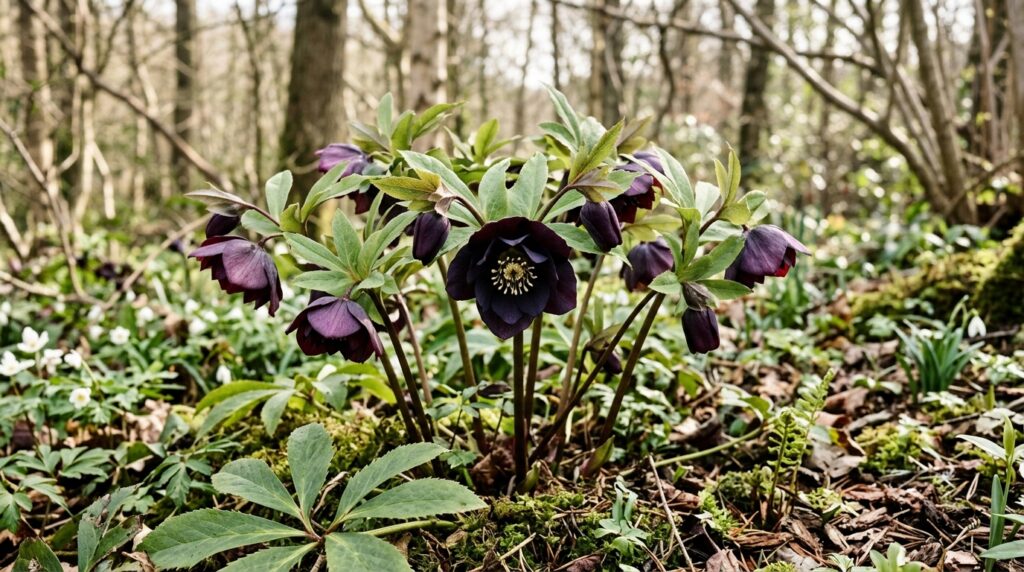
12. Black Iris
Some iris cultivars have very deep purple flowers that appear almost black. The narrow petals and distinctive structure make iris particularly attractive in formal gardens. Dark iris can also work well beside silver or blue-green foliage, which helps reveal the subtle undertones in the petals.

13. Black Snapdragon
Snapdragons are available in a wide range of colors, including very dark cultivars. Their tall flower spikes make them useful for adding height to borders and floral arrangements.
If you are creating a dark flowers bouquet, a tall dark snapdragon can act as a vertical element among rounded roses and dahlias.
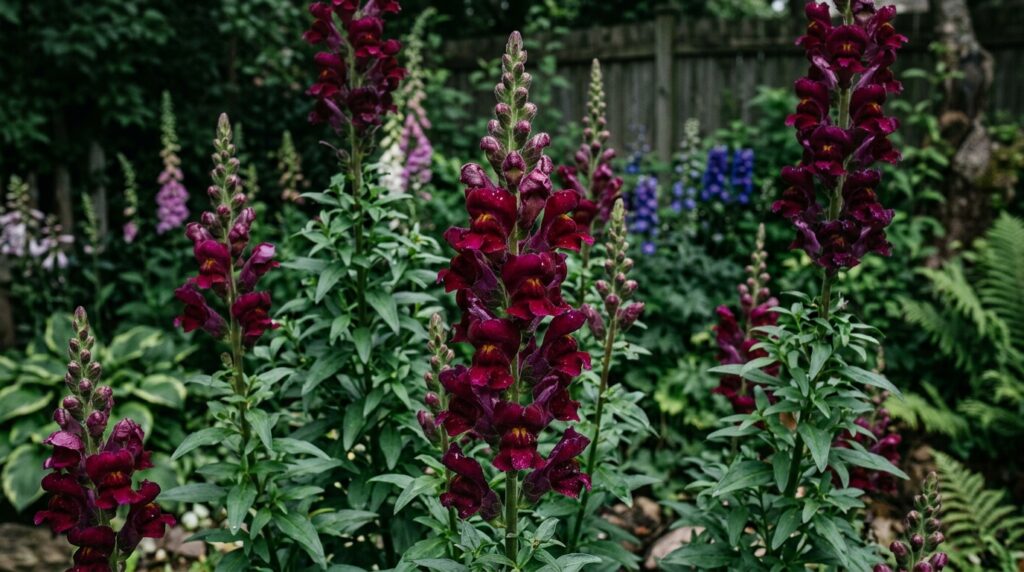
14. Black Hollyhock
Dark hollyhocks are useful when you want height. Their tall stems can create a dramatic background in a cottage-style or romantic garden. The flowers may appear dark maroon, burgundy, or nearly black depending on the cultivar and lighting.
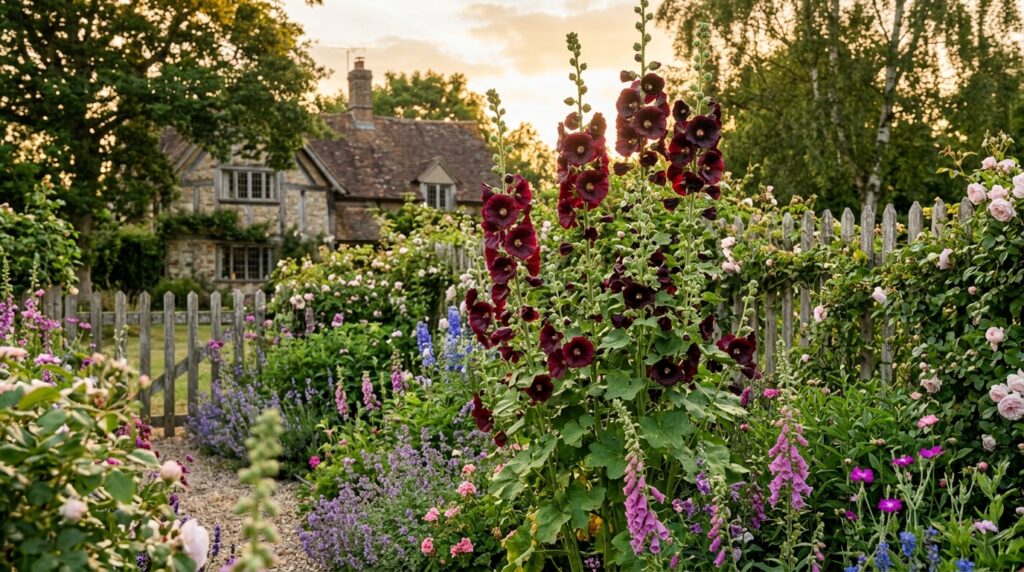
15. Black Scabiosa
Scabiosa has a delicate appearance that contrasts beautifully with larger dark flowers. A deep-colored scabiosa can add movement and texture to a bouquet without making the arrangement look too heavy. This is especially useful when you want a dark floral style that still feels light and natural.

16. Dark Columbine
Dark columbines have an unusual, almost architectural shape. Their hanging flowers and distinctive spurs make them interesting in woodland-inspired gardens. Some varieties have deep purple or burgundy tones that fit naturally into a moody garden palette.
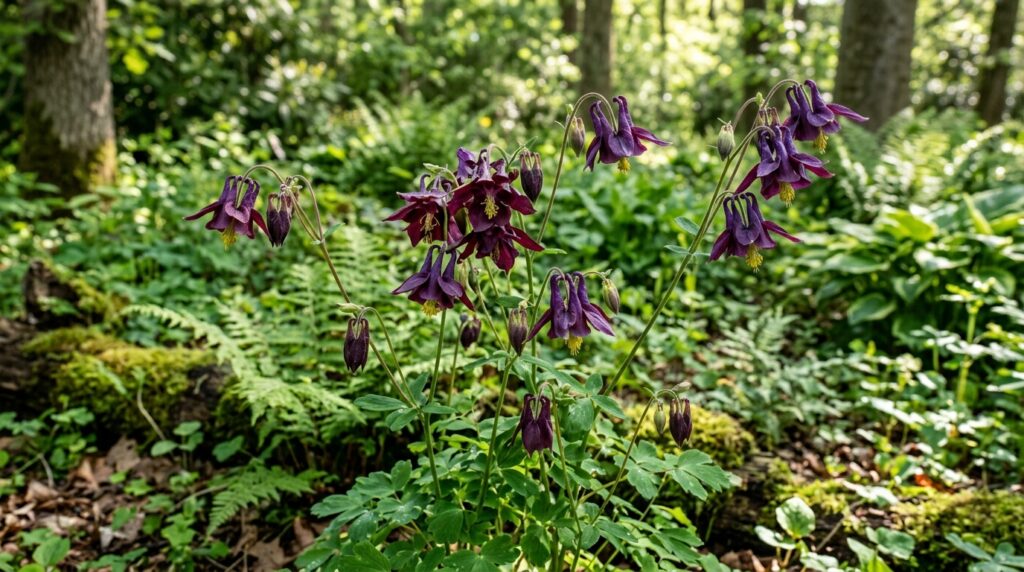
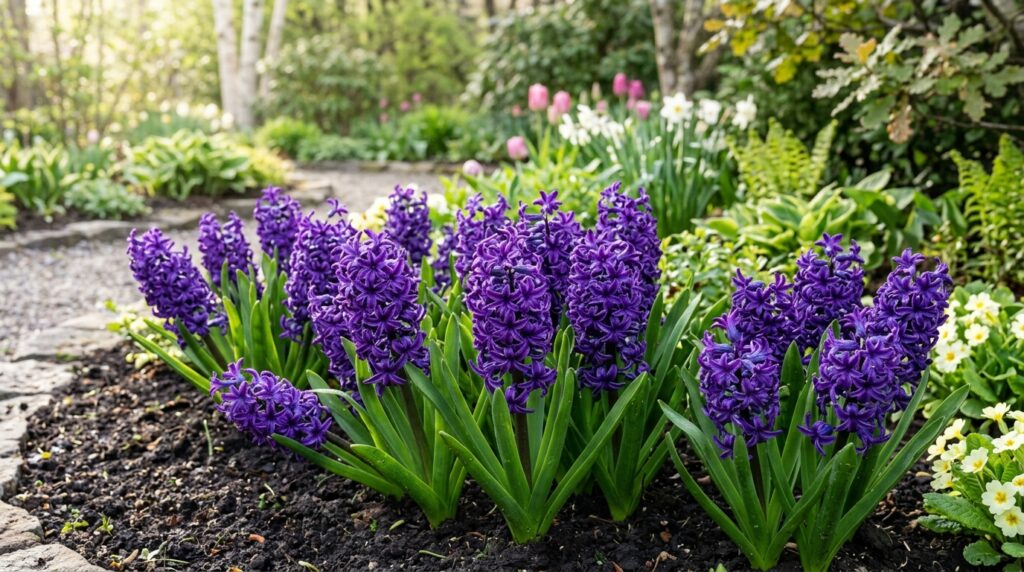
17. Dark Hyacinth
Hyacinths are famous for their fragrance, but their rich colors also make them useful for dark-themed planting schemes. Deep purple varieties can look particularly dramatic when planted in groups. Their fragrance adds another sensory element that many lists of dark flowers overlook.
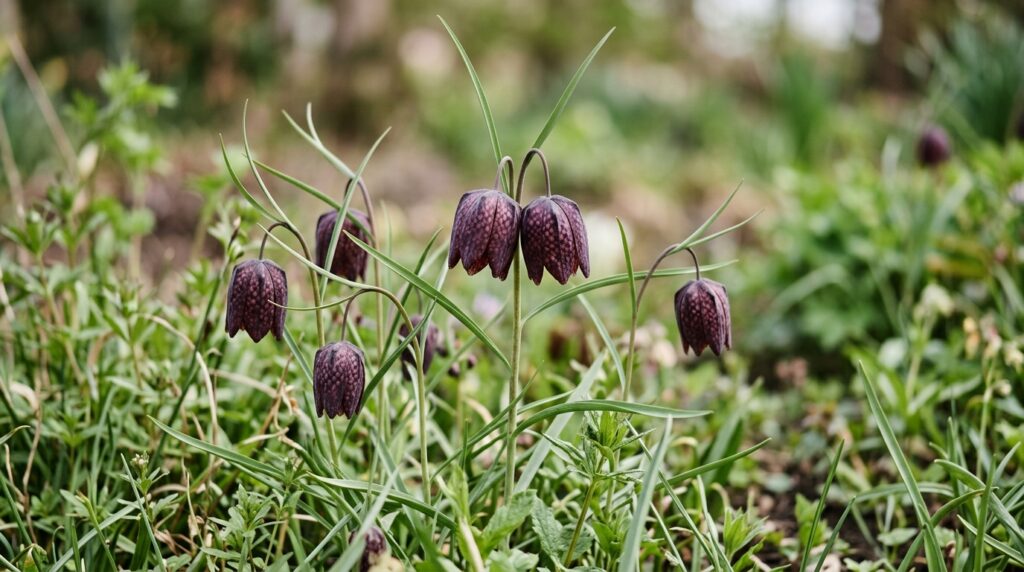
18. Dark Fritillaria
Some fritillaria species have deep purple or brownish flowers. Their unusual bell-like shapes make them useful when you want something less predictable than a rose or tulip. They can also bring an architectural quality to spring planting.
19. Dark Anemone
Some anemones feature dark centers that contrast with petals in purple, burgundy, blue, or red. This is a good reminder that a flower does not have to be completely dark to contribute to a moody floral design. Sometimes the combination of a dark center and lighter petals creates a stronger visual effect.

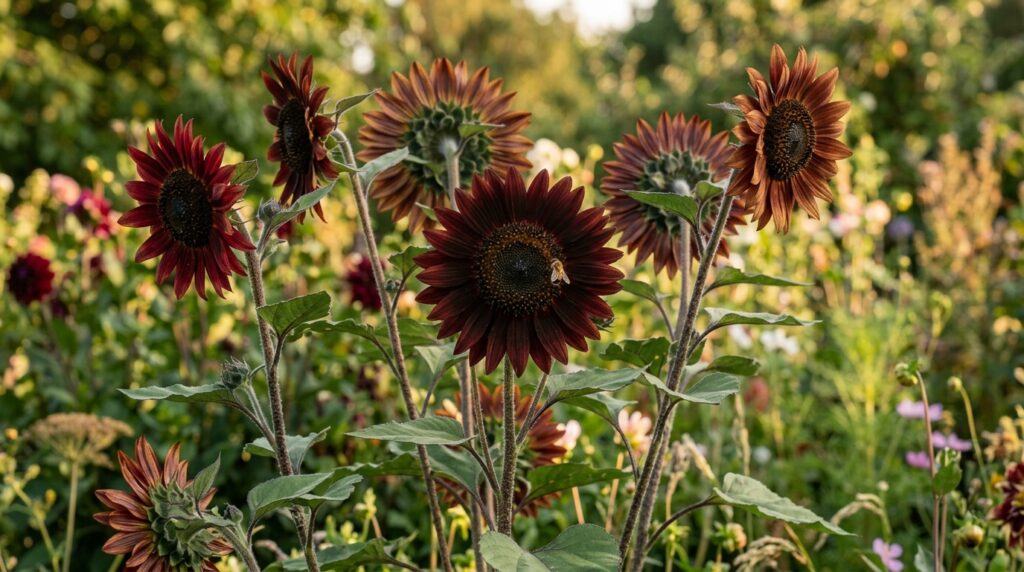
20. Dark Sunflower Varieties
Not all sunflowers are bright yellow. Some cultivars have deep red, burgundy, bronze, or chocolate-colored petals. These can create a much warmer and more dramatic appearance. They are especially useful for late-season arrangements because they combine the familiar sunflower shape with a darker palette.
If you want to explore flowers that support pollinators, remember that color is only one factor. Plant species, flower structure, nectar, pollen, and accessibility all matter. University extension resources such as the University of Minnesota’s pollinator flower guidance provide useful information on selecting flowers for pollinators.
A Quick Guide to Dark Flower Colors
The phrase dark flowers covers a much wider range of colors than many people realize. Here is how I would break them down when planning a garden or bouquet.
| Flower color | Common appearance | Best use |
|---|---|---|
| Dark purple | Plum, violet-black, purple-black | Moody gardens |
| Dark red | Wine, crimson, deep scarlet | Romantic bouquets |
| Burgundy | Rich red-purple | Elegant arrangements |
| Dark blue | Navy, indigo, blue-violet | Cool color schemes |
| Dark brown | Chocolate, bronze, mahogany | Autumn designs |
| Dark pink | Deep raspberry, magenta | Softer dark palettes |
| Dark orange | Burnt orange, rust | Fall gardens |
| Dark green | Forest, emerald, black-green | Foliage contrast |
| Near-black | Purple-black, red-black | Dramatic focal points |
Dark Purple Flowers: The Easiest Way to Create a Moody Garden
When most people search for dark purple flowers, they are often looking for blooms that appear black from a distance but reveal purple tones up close.
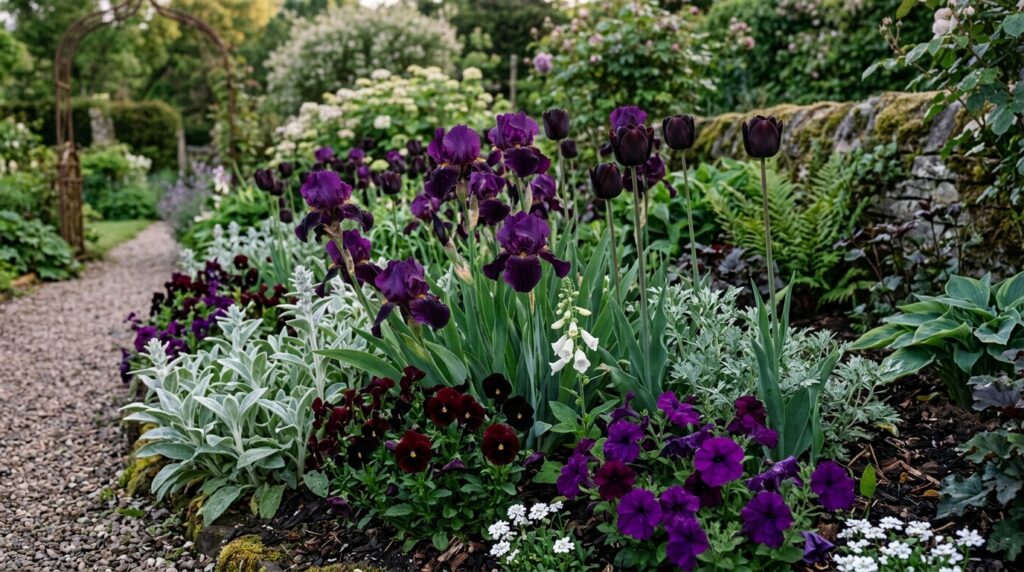
This is one of the easiest dark color palettes to work with because purple naturally blends with many garden colors. Consider using:
- Deep purple iris
- Dark pansies
- Queen of Night tulips
- Purple-black petunias
- Dark clematis
- Deep purple alliums
- Dark hellebores
The secret is not to plant everything in the same shade. A garden made entirely of dark purple can lose definition, especially in the evening. I prefer mixing deep purple with pale foliage, white flowers, silver leaves, or soft green plants. The result feels dark and sophisticated without becoming visually flat.
Dark Red Flowers for Romance and Drama
If purple feels mysterious, dark red flowers often feel warmer.
Deep red and burgundy flowers are especially effective in romantic arrangements because they still feel familiar. A dark red rose, for example, has a very different emotional effect from a bright yellow flower. Popular options include:
- Black Baccara rose
- Black Magic rose
- Dark red dahlias
- Burgundy carnations
- Dark red tulips
- Deep red chrysanthemums
- Dark red lilies
Dark red is also easier to combine with other warm colors. You can pair it with:
- Burnt orange
- Rust
- Chocolate brown
- Burgundy
- Cream
- Deep green
This combination is particularly attractive in autumn.
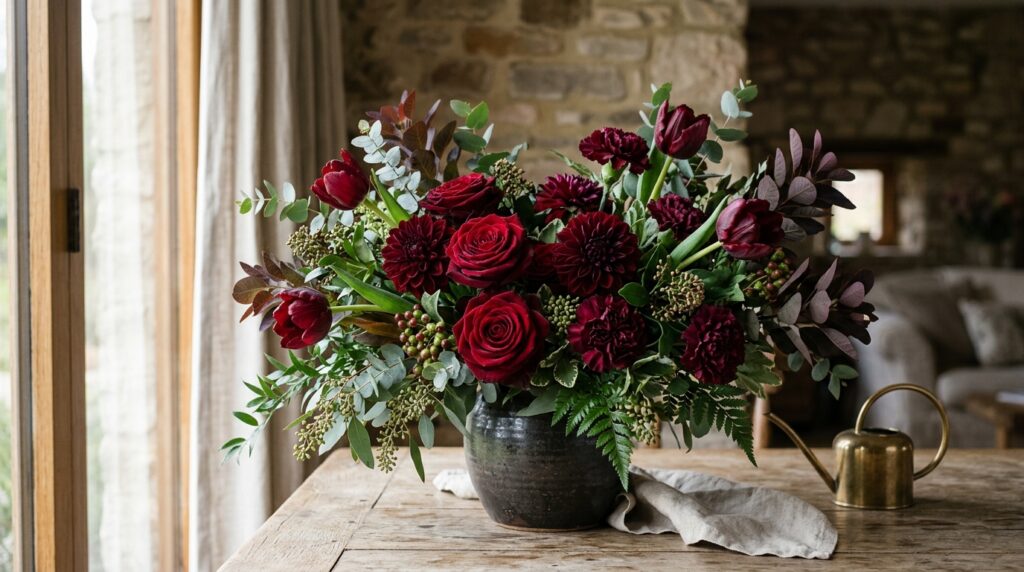
Dark Burgundy Flowers
Dark burgundy flowers deserve their own category because burgundy sits between deep red and purple.
This makes it extremely versatile. Burgundy blooms can look:
- Romantic with blush pink
- Elegant with cream
- Dramatic with black
- Warm with orange
- Sophisticated with dark green
- Modern with white
If you are planning a wedding or formal event, burgundy can be easier to use than true near-black flowers. It still creates drama, but it tends to photograph beautifully under different lighting conditions.
Dark Blue Flowers: What You Need to Know
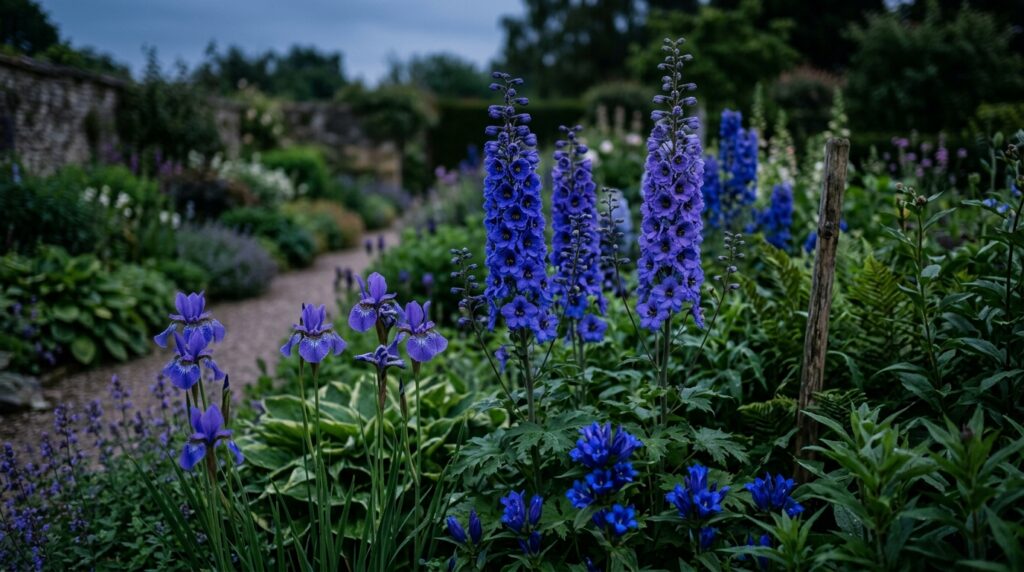
People often search for dark blue flowers names because deep blue is one of the most difficult colors to find in the natural flower world. Some flowers are described as dark blue, but they may actually lean toward violet or blue-purple. Examples to explore include:
- Delphinium
- Blue iris
- Gentian
- Certain salvias
- Blue hydrangea varieties
- Morning glory
- Bachelor buttons
The exact shade can vary with the plant, cultivar, growing conditions, and even the way the flower is photographed.
Midnight Blue and Dark Blue Flowers
The phrase midnight blue dark blue flowers is often used to describe flowers with extremely deep blue or blue-purple tones. If you want this look, I recommend searching by the specific cultivar rather than relying only on a color name.
A seller may call a flower “midnight blue,” while another may describe a very similar shade as indigo, navy, or deep violet. This is why photographs alone can sometimes be misleading.
Blue Dark Flowers in a Garden
Dark blue flowers look particularly beautiful with:
- White flowers
- Silver foliage
- Pale pink flowers
- Soft lavender
- Light yellow accents
The contrast allows the blue to remain visible. If you surround dark blue flowers with many other dark purple plants, the colors may visually blend.
Dark Pink Flowers for a Softer Moody Look
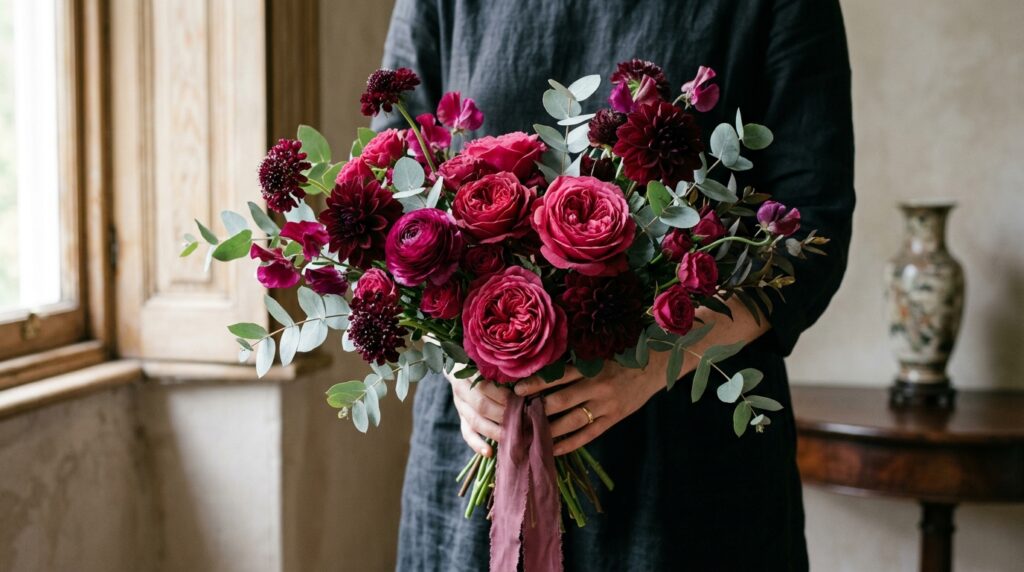
Not everyone wants a gothic garden. Sometimes you want the drama of a dark color without making the arrangement feel heavy. This is where dark pink flowers work beautifully. Think of:
- Deep magenta
- Raspberry pink
- Fuchsia
- Wine pink
- Deep rose
Dark pink can be paired with burgundy and purple while still maintaining a romantic appearance. For a softer bouquet, I would combine deep pink flowers with cream roses, eucalyptus, and pale blush blooms. This gives you the moodiness of dark flowers without making the entire arrangement feel too serious.
Dark Orange Flowers for Warm Contrast
Dark orange flowers are often overlooked. Instead of bright orange, look for shades described as:
- Burnt orange
- Rust
- Terracotta
- Copper
- Bronze
- Deep amber
These colors are perfect for fall-inspired gardens. They also work surprisingly well with burgundy and dark red flowers.
A combination of dark red dahlias, burnt orange flowers, chocolate cosmos, and deep green foliage can create a rich seasonal arrangement. The key is to use different textures. If every flower has the same round shape, the arrangement can look repetitive.

Dark Green Flowers: Flowers or Foliage?
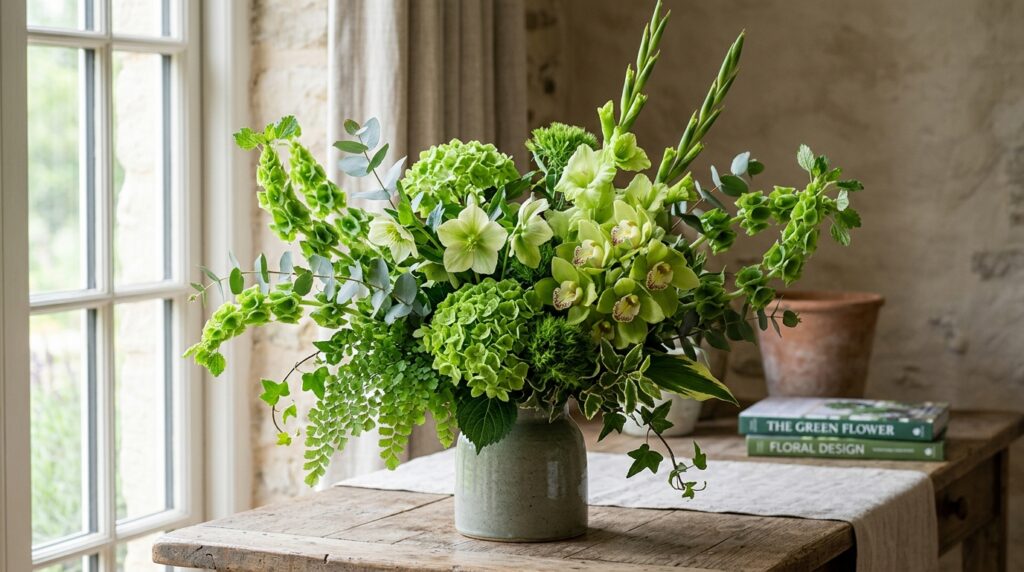
When people search for dark green flowers, they may actually be looking for one of two things.
- The first is a flower with green petals or green floral structures.
- The second is a plant with dark green foliage that can be combined with darker flowers.
Dark green foliage is incredibly useful because it acts as the background for your blooms. Try combining dark flowers with:
- Glossy evergreen leaves
- Deep green ferns
- Black-green foliage
- Dark ornamental grasses
- Silver-green plants
This is one of my favorite ways to make dark blooms stand out. A near-black flower surrounded by equally dark foliage can disappear. The same flower against lighter green foliage may suddenly become the focal point.
Flowers With Dark Meanings: What Do They Really Symbolize?
Searches for flowers with dark meanings can be tricky because flower symbolism is not universal. Meanings can change depending on culture, historical period, religion, literature, and personal interpretation.
So I would avoid saying that a dark flower has only one fixed meaning. Instead, dark blooms are commonly associated with ideas such as:
- Mystery
- Elegance
- Transformation
- Rebirth
- Farewell
- Remembrance
- Individuality
- Power
- Sophistication
- The unknown
The meaning also depends on the flower itself. A dark red rose may communicate a very different feeling from a dark purple tulip. The recipient, occasion, and surrounding flowers also influence the message.
Are Dark Flowers Always a Symbol of Death?
No. This is one of the biggest misconceptions about dark flowers.
Dark colors can be associated with mourning in some contexts, but they can also represent elegance, strength, mystery, creativity, or transformation. For example, a dark flower arrangement at a wedding may be chosen because the couple likes modern or dramatic design. The meaning comes from context.
How to Create a Dark Flowers Bouquet That Looks Beautiful
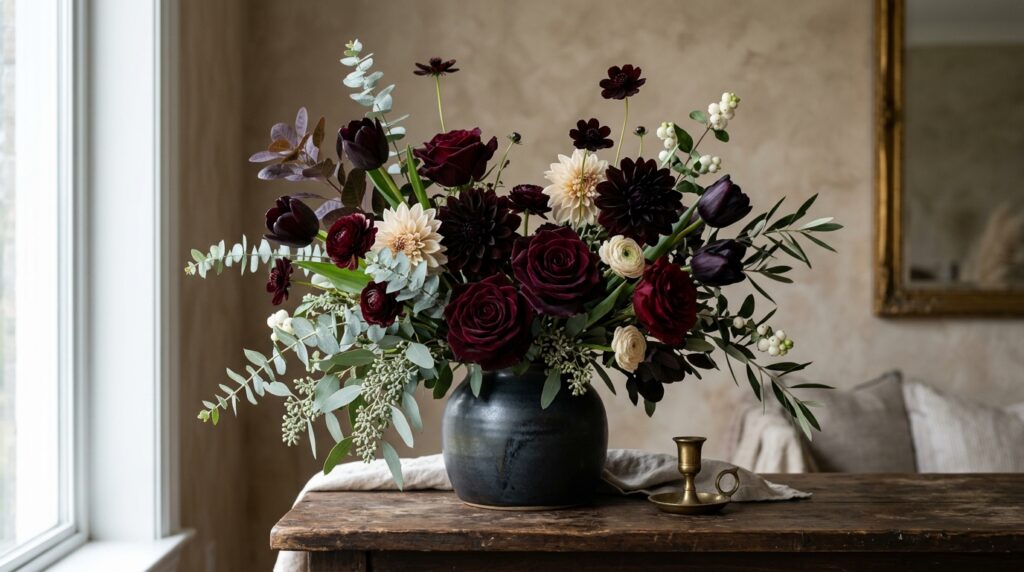
A dark flowers bouquet can look stunning, but there is one mistake I would avoid. Do not make every flower equally dark. When everything is nearly black, you lose contrast. The arrangement can become difficult to read visually.
Instead, use a simple formula.
Use the 60-30-10 Color Rule
Try thinking of your bouquet as three visual layers:
- 60%: Main dark color such as burgundy or deep purple
- 30%: Supporting color such as dark red, chocolate, or deep blue
- 10%: Light accent such as cream, white, blush, or pale green
You do not have to follow these percentages exactly. Think of them as a starting point.
Choose Different Flower Shapes
Combine:
- Large dahlias
- Rounded roses
- Tall snapdragons
- Small scabiosa
- Delicate filler flowers
Different shapes create movement.
Add Light Foliage
Silver-green foliage can be extremely effective in a dark arrangement. It creates a visual break between flowers and helps individual blooms remain visible.
Use Texture
A bouquet becomes more interesting when you combine:
- Velvety petals
- Glossy leaves
- Fine grasses
- Soft filler flowers
- Textured seed heads
The result feels much more natural than a bouquet made entirely from identical flowers.
How to Grow Dark Flowers Successfully
The biggest mistake beginners make is choosing a flower based only on color. Color is important, but the plant still needs the right growing conditions. Before buying, check:
- Sunlight requirements
- Soil type
- Watering needs
- Temperature tolerance
- Blooming season
- Mature plant size
- Whether it grows well in containers
- Whether it is annual or perennial
A beautiful dark flower that struggles in your garden will not give you the result you want. For broader gardening inspiration, you can also explore the home and outdoor improvement ideas on Home Upright when planning how your flower beds and outdoor spaces fit into the rest of your home.
Pay Attention to Light
Light changes how dark flowers look. A deep purple bloom may look almost black in the shade. In direct sunlight, you may suddenly notice red or violet undertones. This is why I recommend visiting a garden center or viewing several photographs of the same cultivar before deciding.
Think About Background Color
Dark flowers usually look best when they have something lighter behind them. Good backgrounds include:
- Light green foliage
- Silver leaves
- Pale walls
- White fences
- Cream-colored containers
- Light gravel
If your entire garden is dark, your flowers may lose some of their visual impact.
Do Not Ignore Soil and Water
A dark-colored flower does not have special watering requirements simply because it is dark. Its care depends on the plant species. For example, a tulip, dahlia, rose, and tropical bat flower have very different needs.
Always research the individual plant rather than assuming all dark blooms can be cared for in the same way.
Expert Tips for Choosing Dark Flowers
After looking at many dark flower varieties, I think the best approach is to choose based on your actual goal.
If You Want the Easiest Option
Consider dark pansies, petunias, or suitable tulip varieties. These can be easier starting points than unusual tropical plants.
If You Want a Statement Flower
Choose:
- Dark dahlias
- Dark calla lilies
- Black Baccara roses
- Bat flowers
These flowers naturally attract attention.
If You Want a Romantic Bouquet
Start with:
- Burgundy roses
- Dark red dahlias
- Deep pink flowers
- Cream accents
This creates a dark look without becoming overly gothic.
If You Want a Gothic Garden
Combine:
- Near-black tulips
- Dark purple iris
- Black pansies
- Dark dahlias
- Deep burgundy roses
Then add silver foliage and pale flowers for contrast.
If You Want an Autumn Garden
Focus on:
- Chocolate cosmos
- Burgundy dahlias
- Dark red sunflowers
- Burnt orange flowers
- Bronze foliage
The result will feel warm rather than simply dark.
Pros and Cons of Growing Dark Flowers
Dark blooms can be beautiful, but they are not automatically the best choice for every garden.
- Create strong visual contrast
- Add sophistication and drama
- Work well in modern gardens
- Excellent for themed bouquets
- Offer unusual color combinations
- Pair beautifully with light flowers
- Can disappear in low light
- Some varieties are harder to find
- Color may look different in sunlight
- Some "black" flowers are only near-black
- Some exotic types need specialized care
- Dark gardens can look visually heavy
The biggest advantage is versatility.
You can use one dark flower as a focal point, or build an entire garden around deep colors. The biggest disadvantage is that dark flowers need thoughtful placement. A flower that looks dramatic in a catalog may not have the same impact when planted in a dark corner of your yard.
Glow in the Dark Flowers: Are They Real?
The search for glow in the dark flowers is fascinating, but it needs a clear explanation. Naturally glowing flowers are not something you should expect to find at a typical garden center.
Some organisms in nature are bioluminescent, but that does not mean ordinary flowering plants naturally glow like neon decorations after sunset. You may also see products, artwork, artificial flowers, or digitally edited photographs described as “glow in the dark.” Those are different from naturally bioluminescent flowering plants.
Flowers That Glow in the Dark
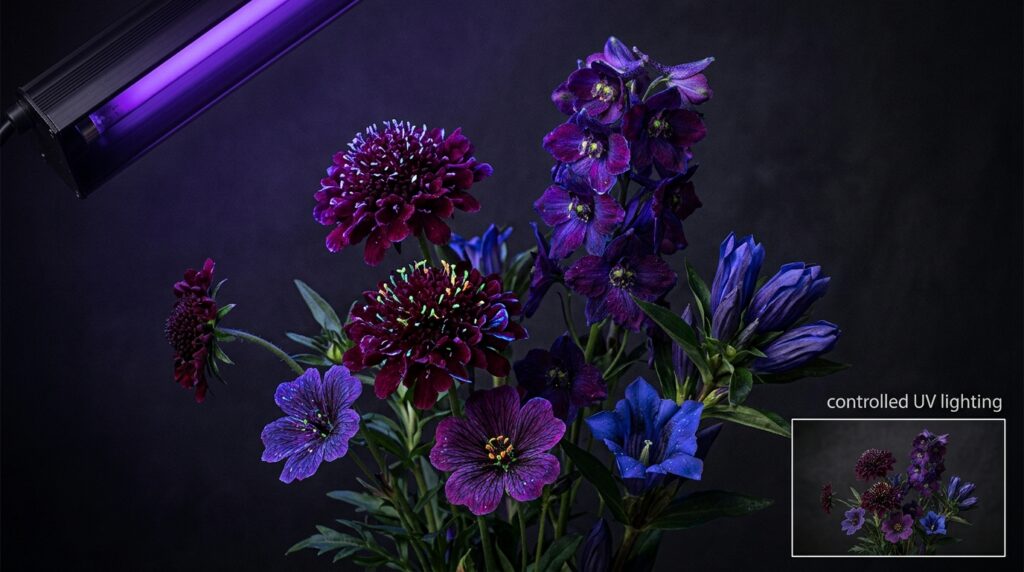
When someone searches for flowers that glow in the dark, they may actually mean flowers that look luminous under special lighting. For example, some flowers can appear striking under ultraviolet or blacklight conditions because certain compounds in plant tissues can fluoresce.
That is not the same as producing their own light. The distinction matters. If you want a glowing floral display, you can create the effect using:
- UV lighting
- Blacklight
- LED lighting
- Fiber optics
- Artificial illuminated flowers
These methods can create a dramatic nighttime display without claiming that ordinary flowers naturally glow.
LEGO Dark Flowers: A Different Kind of Dark Floral Design
The search term lego dark flowers can refer to something completely different from living plants.
The official LEGO Botanicals collection currently lists the Dark Flower Arrangement set, number 11513, as a 562-piece adult building set. According to the official product page, it includes brick-built tulips, roses, an anemone, a petunia, a dahlia, a blue mistflower, a pimpernel, and green leaves in a dark color palette. The set has a modular design that lets you rearrange the display.
If you want a dark floral display without watering, pruning, or seasonal changes, this type of artificial botanical decoration offers a completely different option.
It can work well for:
- Desk decoration
- Shelf displays
- Home offices
- Housewarming gifts
- Creative projects
- Long-lasting floral decor
You can explore the official LEGO Dark Flower Arrangement for the current product details and specifications.

How to Choose the Right Dark Flowers for Your Home
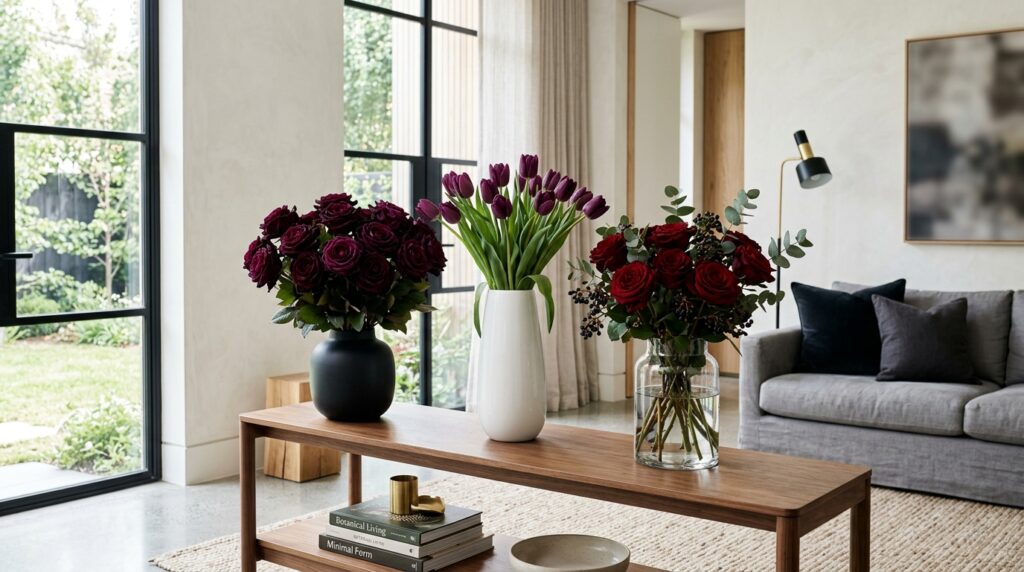
You do not need a garden to enjoy dark flowers. A few carefully chosen blooms can completely change the mood of a room. For a modern home, I would recommend combining dark flowers with simple containers. Try:
- Black ceramic vase with burgundy flowers
- White vase with dark purple tulips
- Clear glass with dark red roses
- Stone container with chocolate cosmos
- Metallic vase with deep burgundy dahlias
The container should support the flowers rather than compete with them. If the flowers are already dramatic, keep the vase simple.
Dark Flowers vs. Dyed Black Flowers
There is an important difference between naturally dark flowers and artificially colored flowers. Naturally dark varieties have their own pigmentation. Their colors may include deep purple, red, burgundy, brown, or blue. Dyed flowers are different.
Florists can use floral dyes to create colors that do not naturally occur in the same way. This can produce a more uniform black appearance, but it also means the color is artificial.
If you are buying flowers for an event, ask the florist whether the color is natural or dyed. This is especially important if you want a natural garden-inspired look.

How Lighting Changes Dark Flowers
One of the most overlooked aspects of dark flowers is lighting. The same flower can appear completely different at different times of day. In bright sunlight, a near-black flower may reveal:
- Purple undertones
- Red highlights
- Burgundy edges
- Brown tones
- Blue-violet shades
In shade, those same petals may appear almost completely black. This is why photographs can sometimes make a flower look darker than it actually is.
If you are choosing flowers for a wedding or photography session, I recommend viewing the actual variety in natural daylight whenever possible. The lighting at the event can make a significant difference.

Best Dark Flowers for Different Styles
Not everyone wants the same type of dark garden. Here is a simple way to choose.
| Style | Best flower direction |
|---|---|
| Gothic | Near-black tulips, dark dahlias, black calla lilies |
| Romantic | Burgundy roses, dark red dahlias |
| Modern | Dark calla lilies, black petunias |
| Cottage garden | Dark hollyhocks, pansies, iris |
| Autumn | Chocolate cosmos, burgundy dahlias, dark orange flowers |
| Minimalist | One dark flower type with light foliage |
| Wild garden | Dark scabiosa, grasses, deep purple blooms |
| Luxury | Burgundy roses, dark dahlias, cream accents |

How to Make Dark Flowers Stand Out
If you want your flowers to look truly dramatic, contrast is your best friend. You can create contrast through color, texture, height, or light.
Use Light-Colored Companions
White flowers are one of the easiest choices. The contrast between white and near-black blooms immediately draws attention.
Add Silver Foliage
Silver leaves are especially useful with dark purple and burgundy flowers. They make the arrangement feel softer while keeping the overall mood sophisticated.
Use Green as a Natural Frame
Dark green foliage can frame the flower, but avoid using foliage that is so dark that it disappears into the petals. Medium or lighter green leaves often work better.
Create Height
Tall flowers can make a dark garden feel more dynamic. Try combining upright flowers with low-growing pansies or ground-level plants.
Common Mistakes People Make With Dark Flowers
Even experienced gardeners can make mistakes when designing a dark-themed garden.
Mistake 1: Choosing Only One Dark Shade
A garden made entirely from one purple-black color can look flat. Mix purple, burgundy, red, brown, and green.
Mistake 2: Ignoring Backgrounds
Dark flowers need contrast. A black-looking flower against a dark wall may be difficult to see.
Mistake 3: Buying Based Only on the Name
A flower called “Black” may actually be burgundy or deep purple. Always check photographs and cultivar information.
Mistake 4: Forgetting the Season
A garden should not look beautiful for only one week. Choose plants with different blooming periods if you want a longer display.
Mistake 5: Using Too Many Focal Flowers
If every flower is dramatic, none of them feels special. Choose one or two stars and let the supporting plants create balance.
Are Dark Flowers Good for Pollinators?
A flower’s color alone does not determine whether it is valuable to pollinators. What matters can include the plant species, flower structure, nectar and pollen availability, and whether the bloom is accessible to particular insects.
Some dark-flowered plants can support pollinators just as other flowering plants do. If supporting wildlife is important to you, choose plants suited to your local conditions and consider using a diverse mix of flowering species.
You can also explore guidance from organizations such as the Xerces Society’s pollinator conservation resources for broader information about creating pollinator-friendly spaces.
University extension research also shows that different annual flowers can vary significantly in their attractiveness to pollinators, so I would not judge a plant’s wildlife value by petal color alone. The important lesson is simple: do not choose a plant only because its flowers are dark. Look at the whole plant and its ecological value.
My Favorite Way to Design a Dark Flower Garden
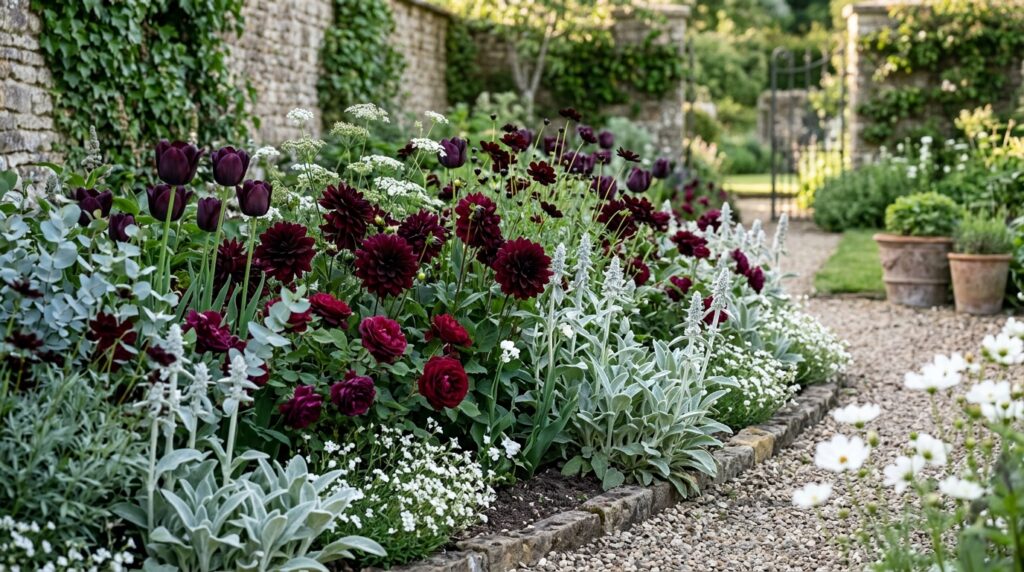
If I were starting a dark-themed flower bed from scratch, I would not plant only black-looking flowers. I would build the garden in layers.
- First, I would choose one main dark color, probably burgundy or deep purple.
- Then I would add one secondary dark color, such as deep red or chocolate brown.
- Finally, I would introduce lighter foliage and a few pale flowers.
My basic combination would be:
- Deep purple tulips
- Burgundy dahlias
- Dark red roses
- Chocolate cosmos
- Silver-green foliage
- White accent flowers
This approach creates a dramatic garden while keeping the individual flowers visible. I would also place the darkest flowers where they can receive enough light. That way, their subtle undertones are easier to appreciate.
Frequently Asked Questions About Dark Flowers
Are true black flowers real?
Most flowers sold or described as black are actually very dark shades of purple, burgundy, red, brown, or maroon. These flowers can look black under certain lighting conditions, but their petals often reveal another color when viewed closely.
What are the best dark flowers for beginners?
Dark pansies, petunias, and suitable tulip varieties can be good starting points, depending on your growing conditions. The best choice depends on your climate, available sunlight, soil, and whether you want flowers in containers or in the ground.
What are the darkest natural-looking flowers?
Some of the most dramatic options include Queen of Night tulips, dark calla lilies, Black Baccara roses, dark dahlias, deep purple pansies, dark petunias, and certain hellebores. Their exact appearance varies by cultivar and lighting.
What do dark flowers symbolize?
Dark flowers can symbolize mystery, elegance, transformation, remembrance, individuality, or romance. Their meaning is not universal and depends heavily on cultural context, the specific flower, and the occasion.
Do flowers that glow in the dark really exist?
Ordinary garden flowers do not generally glow in the dark like luminous objects. Some flowers and plant tissues can show fluorescence under special ultraviolet lighting, but this is different from naturally producing visible light. Artificial lighting can also create a glowing floral effect.
Final Thoughts: Choosing Dark Flowers That Feel Right
Dark flowers are much more than black-looking blooms. They include rich purples, deep reds, burgundies, chocolate browns, dark blues, and other shades that create depth and personality.
My advice is to choose based on the feeling you want rather than the word “black” on a plant label. A combination of dark flowers with lighter foliage and contrasting blooms will usually create a more beautiful result than a garden filled with only near-black flowers.
Whether you want a moody garden, an elegant dark flowers bouquet, unusual blooms, or a dramatic home display, there is plenty to explore. Start with one or two varieties you genuinely love, then build your color palette around them.
The best dark flower is not necessarily the darkest one. It is the one that looks beautiful in your space, grows well in your conditions, and gives you the mood you want.