


Can You Plant Onions Next to Potatoes?
If you are wondering can you plant onions next to potatoes, the practical answer is yes. These vegetables can grow in the same garden bed because they come from different plant families and do not have a well-established incompatibility that requires separating them.
However, I would plant them in neighboring rows instead of placing onions directly between potato plants. Potatoes need room for hilling and digging, while onions have shallow roots and bulbs that are easily disturbed. Good spacing matters more than traditional claims that one crop magically improves or protects the other.
Quick Answer
You can plant onions next to potatoes if both crops receive full sun, well-drained soil, consistent early-season moisture and enough room to develop. Leave a working strip between the rows so you can mound soil around the potatoes without burying the onions and harvest the potatoes without damaging onion bulbs.
Do not depend on onions to control Colorado potato beetles or prevent potato diseases. Companion planting may help gardeners use space efficiently, but ordinary crop care, monitoring, rotation and appropriate pest management remain more reliable.
Why Onions and Potatoes Can Share a Garden Bed
Potatoes belong to the nightshade family, Solanaceae, while onions belong to the allium family, Amaryllidaceae. Because they are botanically different, they don’t automatically share the same pests and diseases as potatoes, tomatoes, peppers, and eggplants can.
Both crops also prefer a sunny position and well-drained soil. They can therefore occupy the same general growing area without forcing you to create two completely different soil environments.
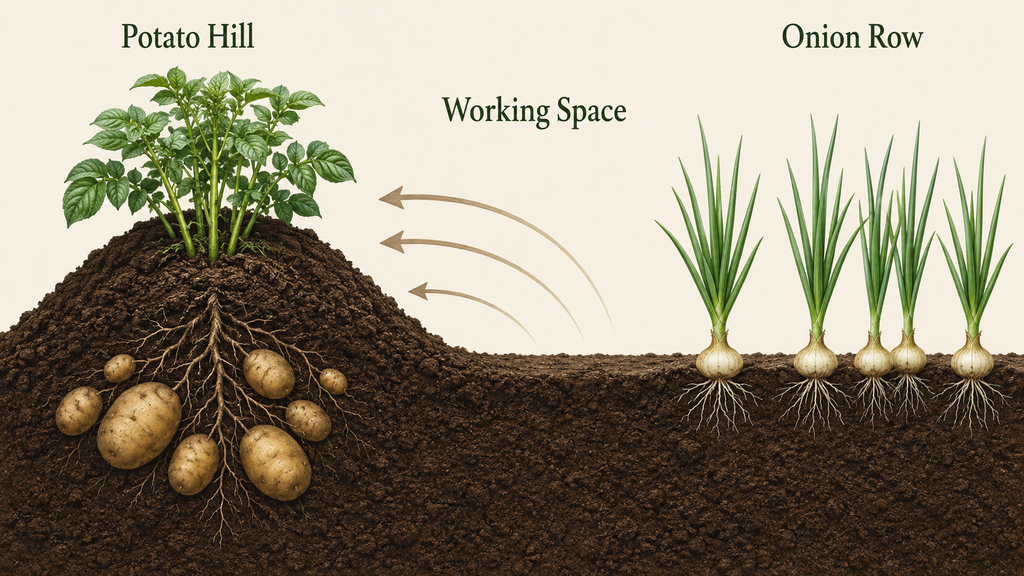
Their growth habits are not identical, though. Potatoes form tubers underground and are repeatedly covered with additional soil as the stems grow. Onions develop shallow roots and form bulbs close to the soil surface, so their growing area should remain relatively level and undisturbed.
That difference is the main reason I recommend side-by-side rows rather than close interplanting. The question is less about whether the plants chemically “like” each other and more about whether you can care for and harvest both without causing physical damage.
Companion Planting Claims Versus What We Know
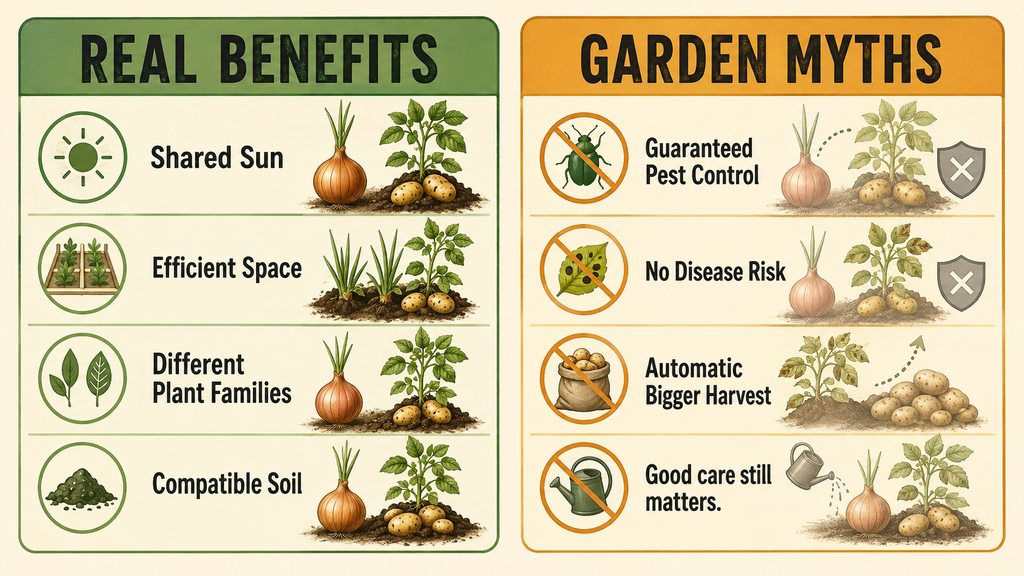
Many companion-planting charts describe onions as natural pest repellents and list them as beneficial neighbors for potatoes. You may read that the onion scent confuses potato beetles, aphids, rodents or other unwanted visitors.
Those claims should be treated cautiously. Reliable evidence for many traditional companion pairings is limited, and planting a few onions should not replace proven pest-management practices. The University of Minnesota Extension’s companion-planting guidance focuses on practical benefits such as using space efficiently, improving soil coverage and combining different root structures.
Onions may still be useful neighbors because they are upright and occupy less above-ground space than many vegetables. That makes it easier for sunlight to reach both crops, as long as the potato foliage doesn’t eventually shade the onion row.
The realistic benefits are therefore organizational rather than magical:
- Both crops tolerate similar cool-season planting conditions.
- Their leaves occupy different amounts of above-ground space.
- Onions can use the edge of a wide potato bed.
- The crops belong to different botanical families.
- Their contrasting shapes make weeding and row identification easier.
- They can help you use a small garden more efficiently.
One detail I would not overlook is that companion planting cannot compensate for poor soil, overcrowding or inconsistent watering. Healthy growth still depends on meeting each crop’s needs separately.
How Far Apart Should Onions and Potatoes Be?
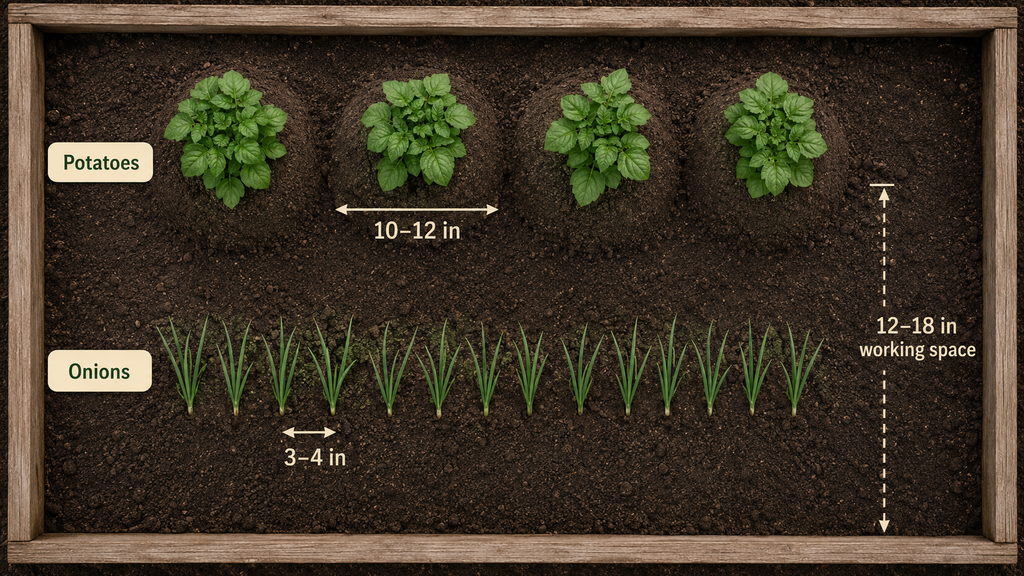
Potato seed pieces are commonly planted about 10 to 12 inches apart within a row. The University of Minnesota Extension’s potato-growing guidance also explains that you should hill the soil around developing plants during the growing season.
Onion spacing depends on the variety and whether you want full bulbs or green onions. For ordinary bulb onions, spacing plants about 3 to 4 inches apart gives the bulbs room to expand. The university’s onion-growing guidance recommends this general spacing for transplants.
For a mixed bed, I recommend leaving approximately 12 to 18 inches between the onion row and the area where the potato hill will expand. This is a practical working allowance, not a strict botanical requirement. If you use a hoe to hill potatoes or a garden fork to harvest them, a little extra room is valuable.
A simple raised-bed arrangement could look like this:
| Area of bed | Suggested use |
|---|---|
| Back or center row | Potatoes spaced 10 to 12 inches apart |
| Middle working strip | Space for hilling, weeding and harvesting |
| Front or outer row | Bulb onions spaced 3 to 4 inches apart |
| Bed edge | Optional green onions harvested young |
Avoid placing onion bulbs directly against seed potatoes. As potato plants grow, the increasing mound of soil could cover the onions too deeply, and later digging could slice through their roots or bulbs.
The Best Way to Plant Onions Next to Potatoes
1. Choose an open, sunny location
Select a bed that receives plenty of direct sunlight. Potato plants can grow into a broad leafy canopy, so place the onion row where it will not spend most of the day behind taller potato foliage.
A north-to-south row orientation can sometimes distribute light more evenly, although the best layout depends on nearby fences, trees and buildings. Watch how shadows move across your garden before deciding where to place each crop.
2. Prepare loose, well-drained soil
Potatoes develop best in soil that allows tubers to expand without becoming misshapen. Onions also perform poorly where water sits around their shallow roots and bulbs.
Work mature compost into the bed before planting if the soil needs organic matter. Avoid adding large amounts of undecomposed manure or guessing at fertilizer quantities, since excessive or poorly balanced fertility can create weak growth and disappointing harvests.
If you are unsure how much plant food to use, the guide to dosing fertilizer without overfeeding plants explains why soil conditions and crop needs should guide your decision. It is safer to test and measure than to assume that more fertilizer will produce larger bulbs and tubers.
3. Plant the potatoes first
Place certified, disease-free seed potatoes in their row at the depth and spacing recommended for your growing method. Do not use diseased, rotting or badly shriveled pieces.
If you cut large seed potatoes, let the cut surfaces heal before planting. Use clean tools to reduce the chance of introducing decay organisms.
4. Plant onions in a neighboring row
Place onion sets or transplants in a level row beside the potato area. Keep the future width of the potato hills in mind, rather than measuring only from the potatoes’ original planting line.
Do not bury onion bulbs deeply beneath a potato mound. Planting depth depends on whether you are using seeds, sets or transplants, so follow the recommendations for your chosen planting material.
5. Mark the rows
Clear labels prevent accidental damage before the plants become easy to identify. Marking is especially helpful if you plan to hill potatoes before all the onion leaves are clearly visible.
You can also mark the outer edge of the potato-hilling zone with a short stick at each end. This simple step helps you avoid gradually pushing soil into the onion row.

Managing Water Without Causing Problems
Onions have shallow roots and respond poorly to prolonged drought, while potatoes need consistent moisture as their tubers develop. This overlap makes the two crops reasonably manageable in the same bed during active growth.
Utah State University Extension’s vegetable-watering recommendations note that both crops benefit from regular moisture, although actual requirements vary with soil type, rainfall, temperature and plant stage. Sandy beds usually dry faster than soil containing more clay or organic matter.
Water deeply enough to moisten the active root zone, then check the soil before watering again. Do not keep the bed continually saturated, since waterlogged soil can contribute to root and tuber problems.
The crops begin to differ near maturity. Reduce or stop watering onions when the tops fall, and the bulbs begin curing. Reduce potato watering as the foliage yellows and dies, but the timing may not match your onions.
Drip irrigation or carefully directed watering makes this easier. You can stop watering a mature onion row while continuing to support potatoes that are still actively bulking.
Feeding Both Crops
Onions and potatoes both need adequate nutrition, but they do not benefit from careless overfeeding. Excess nitrogen can encourage abundant leafy growth while delaying onion maturity or failing to support the kind of underground development you want.
Begin with a soil test when possible. It tells you whether the bed actually needs additional nitrogen, phosphorus, potassium or a pH adjustment.
For gardeners using a general granular product, this guide to applying Down to Earth All Purpose Mix 4-6-2 shows why application rates should match the bed and the label. Do not place concentrated fertilizer directly against onion bulbs or potato seed pieces.
I recommend preparing the full bed evenly before planting, then side-dressing only when your soil test, crop condition or regional guidance indicates that more nutrition is needed. This approach is easier to control than repeatedly feeding both crops with a strong liquid fertilizer.
Hilling Potatoes Without Burying the Onions
Hilling protects developing potato tubers from sunlight. Exposed tubers can turn green, so bring additional soil or suitable organic material around the potato stems as the plants grow.
The University of Minnesota recommends beginning hilling when potato stems are roughly a foot tall and building the hill gradually. By the end of the process, the potatoes may have several inches of additional soil around their stems.
This work can create problems for nearby onions if the rows are too close. Loose soil can spill over the bulbs, snap onion leaves or bury their growing points.
To prevent damage:
- Pull soil toward the potatoes from the potato side of the row.
- Use a small hand tool near the onions instead of a wide hoe.
- Keep the center of the onion row level.
- Remove soil that accidentally covers the onion necks.
- Stop hilling before the mound reaches the bulbs.
- Use straw or another suitable hilling material when appropriate.
A wooden board temporarily placed along the onion row can act as a simple barrier while you move soil. Remove it afterward so it does not obstruct drainage or trap pests.
Pest and Disease Considerations
Onions and potatoes do not share every major pest, but putting them together does not make either crop immune to trouble. Inspect the bed regularly for damaged leaves, discoloration, wilting, insect eggs and signs of rot.
Colorado potato beetles can severely defoliate potato plants. The University of Minnesota Extension’s Colorado potato beetle management advice recommends monitoring and practical controls rather than relying on companion plants to repel them.
Remove volunteer potatoes and do not repeatedly grow potatoes in the same place. Crop rotation can help interrupt some pest and disease cycles, although small gardens may make long rotations difficult.
Keep potatoes away from visibly diseased nightshade crops. Tomatoes, peppers, and eggplants are closer botanical relatives of potatoes than onions are so that they can share some important diseases and pests.
Onions have their own concerns, including thrips, bulb rots and diseases that persist in plant material or soil. Remove badly affected plants, avoid working among wet foliage and clean soil-covered tools before moving between beds.
Harvesting Without Damaging Either Crop
Onions may be ready when their tops fall over and begin drying. You can harvest potatoes early as new potatoes or leave them until the foliage declines for a mature crop.
If your onion row sits beside the potato bed, harvest whichever crop matures first without disturbing the other. Pull onions carefully and avoid stepping on the potato hills.
When digging potatoes, insert your fork or spade from the outside edge of the potato row and angle it away from the onions. A generous working strip makes this much easier and reduces the chance of cutting into onion bulbs.
After harvesting, remove diseased foliage and damaged tubers rather than adding questionable material to an ordinary compost pile. You can handle healthy residues according to your usual garden-composting practices.

Common Mistakes to Avoid
Planting onions directly in potato hills
This arrangement may look space-efficient at first, but hilling can bury the onions and potato harvesting can damage them. A separate neighboring row gives you most of the space-saving benefit with fewer practical problems.
Believing onions eliminate potato pests
Onion scent is not a dependable substitute for inspection, hand removal, row covers or other recommended controls. Treat pest-deterrence claims as a possible minor effect, not a management plan.
Overcrowding the bed
Potato leaves can spread widely and shade nearby onions. Crowding also makes watering, weeding and checking plants more difficult.
Watering both crops identically until harvest
Their water needs may overlap during active growth but separate near maturity. Continue observing each crop rather than watering the entire bed automatically.
Applying too much nitrogen
Heavy nitrogen feeding may produce impressive leaves without an equally impressive underground harvest. Use soil-test results and crop-specific guidance instead of guessing.
Damaging onions while hilling or digging
The harm may not be obvious until harvest, when you discover cut bulbs or plants with disturbed roots. Leave a working strip and always move soil and tools away from the onion row.
Better Companions and Nearby Crops
If you have enough space, you do not have to limit the bed to potatoes and bulb onions. Low-growing flowers and herbs can add diversity around the outside without interfering with potato hilling.
Suitable choices depend on your growing conditions, but options may include:
- Sweet alyssum near the bed edge
- Calendula in a sunny corner
- Cilantro harvested before it crowds the bed
- Lettuce grown as an early crop
- Radishes harvested while the potatoes are young
- Green onions removed before the potato canopy expands
Avoid adding so many companions that the bed becomes difficult to manage. A simple layout with two main crops and one light border planting is usually easier than a densely mixed “companion garden.”
Frequently Asked Questions
Can you plant potatoes next to onions?
Yes, you can plant potatoes next to onions if you keep the crops in separate rows and leave enough room for potato hilling. The plants aren’t known to be directly incompatible, but close spacing can make care and harvesting difficult.
How far apart should onions and potatoes be?
Keep potatoes approximately 10 to 12 inches apart within their row and bulb onions about 3 to 4 inches apart within theirs. I recommend leaving a 12- to 18-inch working area between the onion row and the part of the bed that will become the potato hill.
Do onions keep potato bugs away?
There is not enough reliable evidence to depend on onions as a control for Colorado potato beetles. Monitor potato leaves regularly and use extension-recommended physical, cultural or approved treatment methods when necessary.
Can onions and potatoes grow in the same raised bed?
They can share a raised bed if it is wide enough to create separate planting and working zones. In a narrow bed, the potato plants may shade the onions, and hilling may leave too little room for the bulbs.
Do onions and potatoes need the same amount of water?
Their needs overlap because both benefit from consistent moisture during active growth. However, onions should dry down as their tops fall and bulbs cure, while potatoes may still need moisture if their tubers are actively developing.
Can I plant onions between potato plants?
You can, but I generally do not recommend it. The onions may be buried during hilling, shaded by potato foliage or damaged when you dig up the tubers.
What should not be planted next to potatoes?
Avoid crowding potatoes with other nightshade crops such as tomatoes, peppers and eggplants because they can share important diseases and pests. Also avoid any large, aggressive crop that shades the potato foliage or prevents you from hilling and harvesting safely.
Conclusion
So, can you plant onions next to potatoes? Yes, and the pairing can work well when you treat it as a practical garden layout rather than a guaranteed pest-control technique.
Plant the crops in neighboring rows, keep the onion bulbs outside the future potato hills and leave space for watering, weeding and harvesting. Before planting, sketch your bed measurements and mark the area each mature crop will need. A few minutes of planning can prevent most of the problems associated with growing these two vegetables together.