


How to Remove Deodorant Stains From Black Shirts
A white deodorant streak can make an otherwise clean black shirt look dirty within seconds. Fortunately, learning how to remove deodorant stains from black shirts is usually straightforward once you know whether you are dealing with a fresh surface mark or older underarm buildup.
For a fresh white mark, rub the dry shirt gently with a clean sock, microfiber cloth, nylon stocking, or another section of the garment. For hardened residue, pretreat the inside of the shirt with liquid laundry detergent or diluted white vinegar, rinse, then wash according to the care label.
The key is to start with the gentlest suitable method. Strong chemicals, aggressive brushing, and dryer heat can turn a small stain into fading, stretching, or permanent discoloration.
First, Identify the Type of Deodorant Stain
Not every white area under a black shirt’s arm is the same problem. Choosing the wrong treatment can waste time or make the fabric look worse.
| What you see | Likely cause | Best first treatment |
|---|---|---|
| Loose white streak on the outside | Fresh deodorant transferred while dressing | Dry sock, microfiber cloth, or nylon |
| Chalky residue inside the underarm | Repeated deodorant application | Liquid detergent pretreatment |
| Stiff, waxy underarm patch | Product, body oil, and sweat buildup | Detergent followed by a diluted vinegar treatment |
| Lighter patch that remains after cleaning | Possible dye alteration | Stop home treatment and consult a cleaner |
| Yellow-brown discoloration | Sweat, body oil, and antiperspirant residue | Enzyme detergent and repeated pretreatment |
Deodorant often leaves a visible surface deposit, while antiperspirant can create more complicated buildup. The University of Georgia’s textile-care guidance notes that some antiperspirant ingredients, including aluminum chloride, are acidic and may cause changes in certain fabric dyes.
That distinction matters on black fabric. If the area is lighter even when clean and dry, you may be seeing lost or altered dye rather than removable residue.

How to Remove Deodorant Stains From Black Shirts Quickly
If the mark appeared while you were getting dressed, do not reach for water immediately. Fresh white streaks usually sit on the surface, so dry friction is often enough to lift them.
The dry-rubbing method
- Lay the shirt on a clean, flat surface.
- Stretch the marked area lightly without pulling it out of shape.
- Rub the mark using a clean, dry sock, microfiber cloth, nylon stocking, or another section of the shirt.
- Use short, gentle strokes rather than hard scrubbing.
- Brush away the loosened powder and inspect the fabric in good light.
This is the best answer when you need to remove deodorant marks from black shirts before leaving home. A dry textured material loosens the transferred residue without creating a wet patch, although delicate knits should be handled especially gently.
A used, completely dry dryer sheet may also work in an emergency. However, it can leave fragrance or conditioning residue, so a clean sock or microfiber cloth is the simpler first choice.

How to Get Deodorant Stains Out of Black Shirts With Detergent
Use liquid laundry detergent when the underarm area feels waxy, greasy, chalky, or stiff. Detergent suspends body oils and product residue so it can be carried away during rinsing.
First, read the care label and test the detergent on an inside seam. Clothing care labels provide washing or professional-cleaning instructions, so those directions should take priority over any general stain-removal method, as explained in the FTC’s Care Labeling Rule.
Step-by-step detergent method
- Turn the black shirt inside out to treat the source of the buildup.
- Rinse the underarm area with cool or lukewarm water.
- Apply a small amount of liquid laundry detergent directly to the residue.
- Gently work it in with your fingers or a soft-bristled toothbrush.
- Leave it for 10 to 15 minutes, unless the product label says otherwise.
- Wash the shirt using the cycle and temperature permitted by its care label.
- Inspect the underarm area while the shirt is still damp.
- Repeat the treatment if necessary, then air-dry.
Do not put the shirt in a heated dryer until the mark is gone. Standard stain-removal guidance recommends treating, washing, checking, and air-drying because remaining residue can become harder to remove after heated drying. The American Cleaning Institute’s stain guide also emphasizes checking fabric-care directions when choosing a treatment.
If your regular detergent does not remove the oily or yellowed portion, try a color-safe enzyme detergent. Enzymes can help break down organic components from sweat and body oils, but you should still follow the detergent instructions and garment label.

Natural Method: Diluted White Vinegar
If detergent alone leaves mineral-like or chalky buildup, diluted white vinegar is a reasonable second treatment for many washable cotton and polyester shirts. Its mild acidity can help loosen older deodorant and antiperspirant residue.
Mix one part distilled white vinegar with one part cool water. Before treating the visible area, apply a drop to an inside seam, wait several minutes, rinse it, and check for color transfer or fading.
How to use diluted vinegar safely
- Turn the shirt inside out.
- Place a clean white towel behind the stained area.
- Apply the diluted vinegar to the underarm residue.
- Allow it to sit for 10 to 15 minutes.
- Gently massage the fabric or use a soft brush.
- Rinse thoroughly with cool water.
- Wash the shirt separately or with similar dark colors.
- Air-dry and examine the result.
This method answers the common search for how to remove deodorant stains from black shirts quickly and naturally, but “natural” does not mean risk-free. Vinegar may affect unstable dyes, finishes, acetate fibers, decorative details, or delicate garments, so spot-testing remains necessary.
Never combine vinegar with chlorine bleach. Mixing an acid with chlorine bleach can release hazardous chlorine gas, and Poison Control specifically warns against mixing vinegar and bleach. More broadly, the CDC advises against mixing bleach with other cleaners.

Should You Use Baking Soda on a Black Shirt?
A paste made from baking soda and water can provide mild abrasive action on sturdy, washable cotton. However, it may leave pale powder behind, and repeated or vigorous rubbing can make dark fabric look dull.
If you want to try it, mix a small amount of baking soda with enough water to form a soft paste. Spot-test it, apply it for approximately 15 minutes, massage very gently, rinse thoroughly, and wash the shirt according to its label.
I would not use baking soda first on rayon, silk, wool, embellished garments, stretchy athletic fabric, or anything with an unstable black dye. Liquid detergent usually rinses out more easily and requires less friction.
Avoid pouring vinegar over baking soda simply to create foam. The visible fizz looks active, but the acid and alkaline ingredients begin neutralizing each other, so using them as separate treatments gives you more control.
Fabric-Specific Treatment Guide
A method that works on a basic cotton T-shirt may not work on a silk blouse or performance top. One detail I would not overlook is that the fiber, dye, finish, and garment construction all affect how safely you can treat a stain.
| Fabric | Recommended approach | What to avoid |
|---|---|---|
| Cotton | Dry rubbing, liquid detergent, or spot-tested diluted vinegar | Hard brushing and uncontrolled heat |
| Polyester | Liquid detergent and gentle hand agitation | Oily fabric softener and high dryer heat |
| Athletic blends | Mild detergent, cool water, gentle washing | Heavy residue-producing products |
| Rayon or viscose | Follow the label and use minimal agitation | Soaking unless specifically permitted |
| Wool or silk | Dry surface removal or professional cleaning | Vinegar, baking soda, enzymes, and scrubbing without label approval |
| Embellished shirts | Treat around decorations carefully | Brushes and prolonged soaking |
| Dry-clean-only garments | Dry rubbing for a loose surface mark, then consult a cleaner | Wet home treatments |
If a garment needs specialist care, review this guide to dry cleaning clothes safely at home before deciding whether any home treatment is appropriate. For a valuable or structured shirt, it’s safer to show the stain to a professional cleaner than to experiment.

What Not to Use on Black Shirts
Chlorine bleach is not a suitable solution for a black shirt unless the garment’s manufacturer explicitly says otherwise, which is uncommon. It can strip dark dye and leave orange, brown, or pale patches that ordinary washing cannot reverse.
Hydrogen peroxide is also a poor default choice for black fabric because it may lighten some dyes. Methods designed to brighten white shirts should not automatically be transferred to dark clothing.
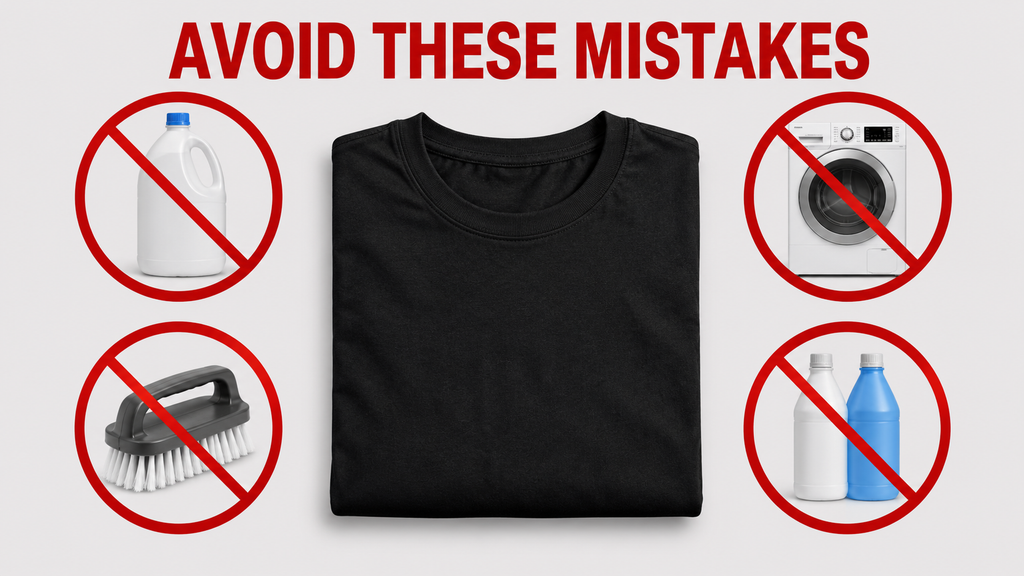
Avoid these common mistakes:
- Wetting a fresh powdery mark before trying a dry method
- Scrubbing vigorously with a hard brush
- Applying undiluted cleaning vinegar
- Mixing different stain removers
- Using chlorine bleach on dark material
- Drying the shirt before checking the result
- Repeating treatments when the problem is actually missing dye
- Ignoring a dry-clean-only or hand-wash-only label
For more guidance on choosing treatments without damaging fabric, the same care-label and pretreatment principles appear in this guide to removing rust stains from clothes safely. Different stains require different chemistry, so a treatment that removes one substance may set or spread another.
How to Prevent Deodorant Marks and Underarm Buildup
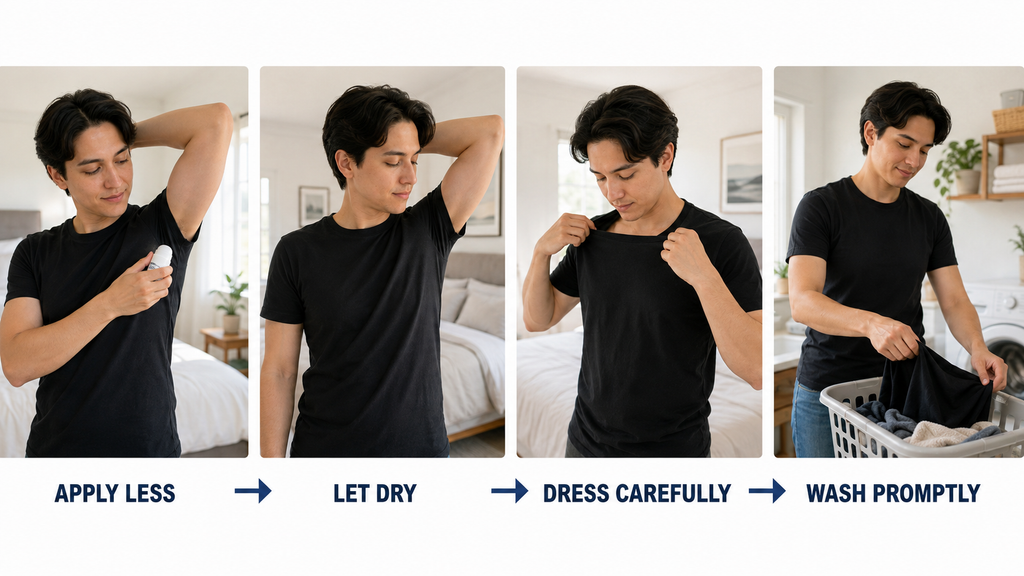
Prevention is easier than repeatedly stripping residue from fabric. You can reduce most problems by changing how much product you apply, when you dress, and how quickly you wash the shirt.
Apply a thin, even layer of deodorant and allow it to dry before putting on your shirt. Using more product doesn’t necessarily improve protection, but it gives more material a chance to transfer onto clothing.
You can also:
- Put the shirt on before applying deodorant when the neckline allows it.
- Fold or roll up the bottom of the shirt before pulling it over your head.
- Wash sweaty shirts promptly instead of letting residue remain in the fibers.
- Turn black shirts inside out before washing.
- Measure detergent instead of pouring in too much.
- Avoid overloading the washer, since shirts need room to rinse properly.
- Check the underarms before transferring clothes to the dryer.
- Consider a clear or lower-residue formula if white transfers happen frequently.
Keeping detergent and stain-treatment supplies easy to reach makes prompt treatment more likely. These laundry-room organization ideas can help you create a simple station for treating stains before they reach the washer.
Troubleshooting Stubborn Deodorant Buildup
If one treatment doesn’t remove the stain, don’t immediately increase the concentration or scrub harder. Rinse out the previous product completely, let the fabric rest, and repeat the gentlest suitable treatment.
For thick buildup, start with liquid detergent, rinse thoroughly, and use diluted vinegar only if chalky residue remains. Several mild treatments are generally easier to control than one aggressive treatment.
Stop home treatment if:
- Black dye transfers heavily during the spot test.
- The cleaned area becomes noticeably lighter.
- The fibers begin to pill, stretch, or weaken.
- The stain has a waxy layer that will not soften.
- The garment contains silk, wool, acetate, leather, or delicate trim.
- The label requires professional cleaning.
If the underarm remains pale after you remove all residue, cleaning may not restore it. Dye alteration, abrasion, or fiber damage requires garment repair or professional color restoration, not another stain remover.
Frequently Asked Questions
How do you get deodorant off a black shirt without washing it?
Gently rub a fresh white mark with a clean, dry sock, microfiber cloth, nylon stocking, or another part of the shirt. This works best for recent product transfer sitting on the fabric’s surface, not hardened underarm buildup.
How do you get deodorant stains out of black shirts after washing?
Turn the shirt inside out and pretreat the underarm with liquid laundry detergent for 10 to 15 minutes. Wash it according to the care label, inspect it while damp, and air-dry rather than using dryer heat until the residue is gone.
Can white vinegar fade black clothes?
Vinegar doesn’t affect every black fabric the same way, but unstable dye or a delicate finish may change. Dilute the vinegar, spot-test an inside seam, and discontinue treatment if color transfers or the test area becomes lighter.
How can I remove deodorant stains from black shirts quickly and naturally?
For fresh marks, use a dry sock or nylon stocking because no cleaning solution is usually necessary. For washable shirts with older buildup, spot-test a one-to-one mixture of distilled white vinegar and cool water, apply it briefly, rinse, and wash.
How do I clean deodorant stains from black shirts that feel stiff?
Stiffness usually indicates accumulated product, sweat, and body oil inside the fibers. Pretreat with liquid detergent, gently massage, wash as directed, and repeat before drying if the area remains stiff.
Can baking soda remove deodorant marks from black shirts?
Baking soda may help loosen residue on durable, colorfast cotton, but it can leave powder behind or dull the surface when rubbed aggressively. Use a small spot-tested paste only after trying dry removal or liquid detergent.
Why does my black shirt still look stained after treatment?
The mark may be trapped residue, detergent that was not fully rinsed, abrasion, or permanent dye alteration. Let the fabric dry completely before judging it, since damp black material can look uneven, and stop treating it if the area is clean but visibly lighter.
Conclusion
The safest way to master how to remove deodorant stains from black shirts is to match the treatment to the stain. Use dry friction for a fresh white streak, liquid detergent for oily or stiff buildup, and carefully diluted vinegar for compatible washable fabrics with lingering chalky residue.
Always test treatments, follow the garment’s care label, rinse products completely, and keep the shirt away from dryer heat until the stain is gone. Explore Home Upright’s other clothing-care guides to build a reliable stain-removal routine that protects both your dark shirts and the rest of your wardrobe.