


The Complete Guide to Maintaining Metallic Surfaces in High-Humidity Areas
Metal usually doesn’t need much attention. A door handle gets wiped. A kitchen fitting gets cleaned. Bathroom hardware gets a quick rinse now and then. The problem is humidity.
A bathroom can stay damp for hours after a shower. Kitchens collect steam and grease. Garages and utility rooms can have poor airflow. Metal sitting in those conditions every day will eventually start showing it.
Maybe it’s a small rust spot around a screw. Maybe the surface has gone dull. Sometimes there’s just a strange patch that wasn’t there a few months ago. That doesn’t necessarily mean the whole fitting needs replacing. Often, it needs better care.
Why Humid Air Is Hard on Metal
Metal and moisture don’t get along for a simple reason. Corrosion happens when metal reacts with oxygen and moisture. Salt, dust, dirt, and other surface materials can make the process worse.
Steel and iron are the familiar examples because they develop obvious orange-brown rust. Other metals behave differently. Copper and brass can darken over time and develop a patina. Some copper alloys can develop green deposits. Plated metal has another problem: once the outer layer is scratched or worn, moisture can get to the material underneath. Humidity keeps all of this going.
The Canadian Conservation Institute identifies high relative humidity as a key factor in metal corrosion, especially once levels rise above roughly 65%. Keeping indoor humidity moderate is a useful part of looking after metal, especially in rooms that are regularly damp.
Then there are the little pockets of moisture. Water underneath a handle. Around a screw. Between two joined pieces. These areas can stay wet much longer than the exposed surface.
Start with a Cloth
For normal household dirt, a microfiber cloth is usually enough. Use warm water and, if needed, a small amount of mild dish soap. The main thing isn’t to leave the metal wet afterwards. Wipe it down, then dry it with another clean cloth. This is particularly easy to forget in the bathroom and kitchen sink. A fitting gets cleaned and looks great, but it’s still sitting in a humid room covered in small drops of water.
Kitchen hardware has a slightly different problem. Grease from cooking settles on handles and nearby metal surfaces. Dust sticks to it. Moisture then has something else to cling to. A regular wipe is much easier than removing a thick layer of grime later.
Look Underneath Things

The visible part of a fitting isn’t always where the problem starts. Check around screws. Look underneath handles. Check corners and joints. These areas can collect water without being particularly obvious.
Orange marks usually mean steel or iron is beginning to rust. Green deposits can occur on copper-based metals. Bubbling paint, rough patches and powdery material are also worth checking rather than simply wiping away. If the same mark keeps appearing, there’s probably a reason. A small leak. Condensation. A bad seal. Or water is just collecting there every day. Removing the corrosion without sorting that out will only mean doing the same job again later.
Old Metal Needs a Gentler Approach
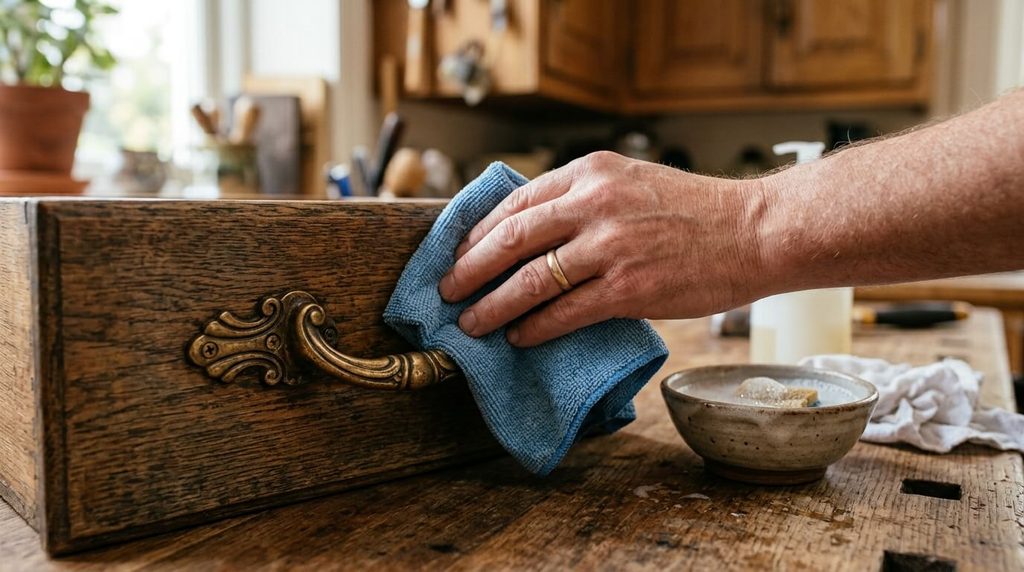
Vintage hardware is a good example of why “stronger cleaner” doesn’t always mean “better cleaner.” An old handle can look dirty when it’s actually just aged. Start with warm water, a little mild soap and a soft cloth. Try it on a hidden section first. Some older pieces have a patina that’s part of their appearance. Removing it all can leave the metal looking strangely new and uneven.
Plated finishes can be even less forgiving. The surface layer may be thin, and abrasive pads or repeated polishing can wear through it. You can’t fix that with another round of cleaning. For valuable antique or historic pieces, it makes sense to be particularly conservative. The Canadian Conservation Institute recommends considering the metal, finish and condition before choosing a cleaning method.
Rust Isn’t the Same on Every Metal
You can sometimes remove a little surface rust on untreated steel with fine-grit abrasive material. That doesn’t mean you should sand every metal fitting in the house. Chrome can scratch. Plating can wear away. Brass and copper can be marked. Painted finishes can be damaged.
The same applies to popular household remedies. Vinegar and baking soda are often suggested for cleaning metal. Sometimes they work. That doesn’t make them suitable for every surface. If you don’t know the material or finish, start with mild soap and a soft cloth. Test first. It’s a much cheaper mistake to discover that a cleaning method doesn’t work.
Protecting the Metal
Once the surface is clean and dry, some metals can benefit from a protective coating. The right option depends on the job. Wax, lacquer, paint, powder coating and corrosion inhibitors all have different uses.
A brass sheet, for example, may be used for a flat decorative or functional piece in a home project. Whether it needs polishing, waxing or another type of protection depends on the finish already on the brass and where the piece is being used.
When the Damage Is Too Far Gone
Sometimes cleaning won’t fix it. Deep pitting, badly damaged plating or metal that has become weak may mean replacement is the better option. For something decorative, that is mostly a question of appearance. For a bracket, railing connection, fixing or other part that has to hold something securely, it is more serious. Corrosion can affect strength, not just appearance. And before fitting the replacement, find out why the original failed. If water is still getting into the joint, the new part will eventually have the same problem.
Keep It Practical
There’s no need to turn metal maintenance into a major household project. Wipe it down. Dry it properly. Check the awkward corners every now and then. Deal with small rust spots before they get big. Keep humid rooms ventilated. And check what the metal actually is before using a strong cleaner or abrasive.
That last part matters more than it sounds. Brass, copper, steel, chrome and painted metal can look similar at a glance but need different treatment. Older metal can keep some character, too. A little patina isn’t automatically damage. The useful goal is simply to keep moisture under control and catch corrosion early. Five minutes of basic maintenance is a lot easier than replacing a fitting that has been quietly deteriorating for years.