

25 Flowers That Start With H: Names, Pictures, and Care
If you are searching for flowers that start with h, you probably want more than a spelling list. You want to know which plants will survive in your garden, which ones suit a pot, and which beautiful choice may become a costly mistake.
That is where most lists fall short. While comparing plant records and nursery labels for this guide, I kept finding the same problem: common names, old botanical names, and current scientific names were mixed together without any explanation.
This guide fixes that. You will find 25 real flowers, including familiar hydrangeas, fragrant hyacinths, shade-loving hostas, native honeysuckle, unusual honeywort, and the famously difficult Himalayan blue poppy.
If you have been following my alphabet garden series, you can also compare these plants with flowers that start with G or go back to flowers that start with A. My rule is simple: choose the growing place first, then choose the flower.
Quick Answer: What Flowers Start With H?
Popular flowers that start with the letter H include hydrangea, hibiscus, hyacinth, hellebore, hollyhock, hosta, heuchera, helenium, heliotrope, honeysuckle, heather, and hyssop. Less common choices include honeywort, harlequin flower, Himalayan blue poppy, hepatica, Haemanthus, honesty, and heath aster.
- For an easy first choice, start with hosta, heuchera, hardy hibiscus, or helenium. These plants are widely available and forgiving when their basic light and moisture needs are met.
- For fragrance, choose hyacinth, heliotrope, or Hoya. Hyacinth gives a powerful spring scent, heliotrope smells sweet in warm weather, and a mature Hoya can perfume an indoor room.
- For pollinators, look at native trumpet honeysuckle, helenium, hyssop, heuchera, or heath aster. A plant that is native to your region usually offers more ecological value than a random ornamental with a similar flower shape.
- For something unusual, try honeywort, harlequin flower, Haemanthus, or Himalayan blue poppy. The first two are realistic experiments for many gardeners, while the last two need more careful conditions.
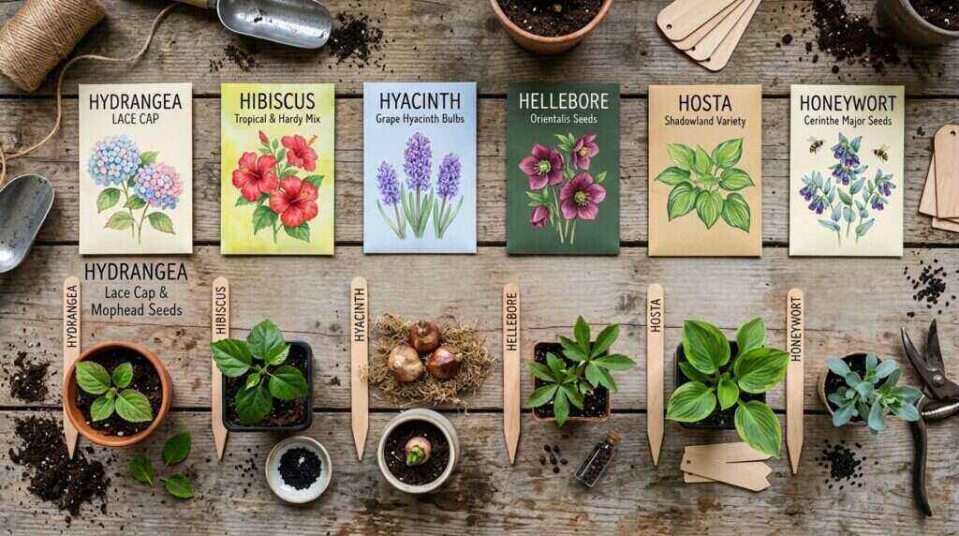

Flowers That Start With H at a Glance
Use the table as a shortlist, not a promise. The official plant hardiness zone map is based on average annual extreme minimum winter temperatures, but summer heat, humidity, soil drainage, and local exposure still matter.
| Flower | Botanical name | Plant type | Light | Typical hardiness | Best reason to grow it |
|---|---|---|---|---|---|
| Hydrangea | Hydrangea spp. | Deciduous shrub or vine | Part sun; varies | Zones 3–9, by species | Large flower clusters |
| Hardy hibiscus | Hibiscus moscheutos and hybrids | Herbaceous perennial | Full sun | Zones 4–9 | Huge summer flowers |
| Tropical hibiscus | Hibiscus rosa-sinensis | Tropical shrub | Full sun to bright light | Zones 9–11; overwinter indoors elsewhere | Long warm-season color |
| Hyacinth | Hyacinthus orientalis | Spring bulb | Sun to part shade | Zones 4–8 | Strong fragrance |
| Hellebore | Helleborus spp. | Evergreen or semi-evergreen perennial | Part to full shade | Zones 4–9 | Late-winter flowers |
| Hollyhock | Alcea rosea | Biennial or short-lived perennial | Full sun | Zones 5–9 | Tall cottage-garden spires |
| Hosta | Hosta spp. | Herbaceous perennial | Part to full shade | Zones 3–9 | Bold foliage and easy care |
| Heuchera | Heuchera spp. | Herbaceous perennial | Part sun to part shade | Zones 3–9, by cultivar | Colorful foliage and small flowers |
| Helenium | Helenium autumnale and hybrids | Herbaceous perennial | Full sun | Zones 3–8 | Late-season pollinator color |
| Heliotrope | Heliotropium arborescens | Tender perennial, often annual | Sun to part shade | Zones 10–11; annual elsewhere | Vanilla-like fragrance |
| Honeysuckle | Lonicera sempervirens | Native perennial vine | Sun to part shade | Zones 4–9 | Hummingbird-friendly flowers |
| Heather | Calluna vulgaris | Evergreen low shrub | Full sun | Zones 4–6 | Acid-soil ground cover |
| Hardy geranium | Geranium spp. | Herbaceous perennial | Sun to part shade | Zones 3–8, by species | Long-lived border filler |
| Harebell | Campanula rotundifolia | Herbaceous perennial | Sun to part shade | Zones 3–8 | Delicate blue bells |
| Hepatica | Hepatica or Anemone spp. | Woodland perennial | Part shade | Zones 4–8 | Very early spring bloom |
| Hyssop | Hyssopus officinalis | Short-lived perennial herb | Full sun | Zones 4–9 | Fragrance and pollinator value |
| Helianthemum | Helianthemum spp. | Low evergreen shrub | Full sun | Zones 5–7, by cultivar | Dry, sunny ground cover |
| Helichrysum | Xerochrysum bracteatum | Annual or tender perennial | Full sun | Usually grown as an annual | Excellent dried flowers |
| Honeywort | Cerinthe major | Annual or tender perennial | Sun to light shade | Usually grown as an annual | Blue-green foliage and purple bracts |
| Harlequin flower | Sparaxis spp. | Tender corm | Full sun | Frost-tender; often lifted for winter | Bright multicolor flowers |
| Himalayan blue poppy | Meconopsis spp. | Short-lived perennial | Cool part shade | Best in cool zones 5–7 | Rare true-blue effect |
| Hoya | Hoya spp. | Tropical flowering vine | Bright indirect light | Houseplant; outdoors in warm areas | Waxy star-shaped flowers |
| Haemanthus | Haemanthus spp. | Tender bulb | Bright light to part sun | Usually zones 9–11 or indoors | Sculptural brush-like bloom |
| Honesty | Lunaria annua | Biennial | Sun to part shade | Commonly zones 5–9 | Purple flowers and silver seed pods |
| Heath aster | Symphyotrichum ericoides | Native herbaceous perennial | Full sun | Commonly zones 3–9 | Small fall flowers for pollinators |
The Best-Known Flowers That Start With the Letter H
These are the names most people expect when they ask for flowers that start with H. They are also the plants most likely to be available as live plants, bulbs, or shrubs at a local nursery.
1. Hydrangea
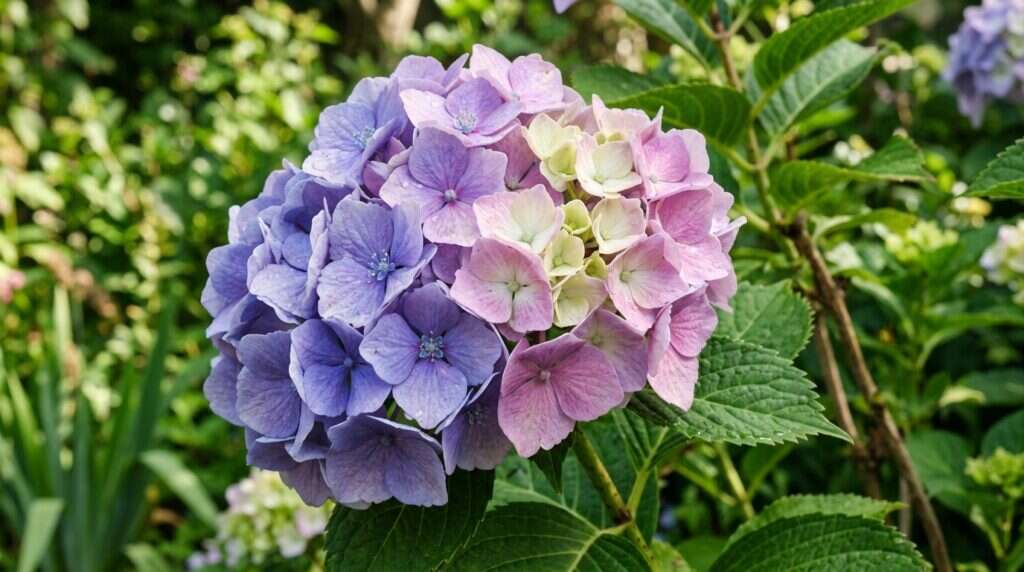
Hydrangeas can be compact shrubs, large shrubs, or climbing vines, depending on the species. Their rounded mophead, flat lacecap, or cone-shaped flower clusters can carry a border from early summer into fall, and many dry well for indoor arrangements.
Do not buy one only because the tag shows blue flowers. In bigleaf hydrangeas, flower color can respond to soil chemistry and aluminum availability, but white-flowered types and many other species do not follow the same rule; this hydrangea color explanation gives a useful starting point.
2. Hardy Hibiscus
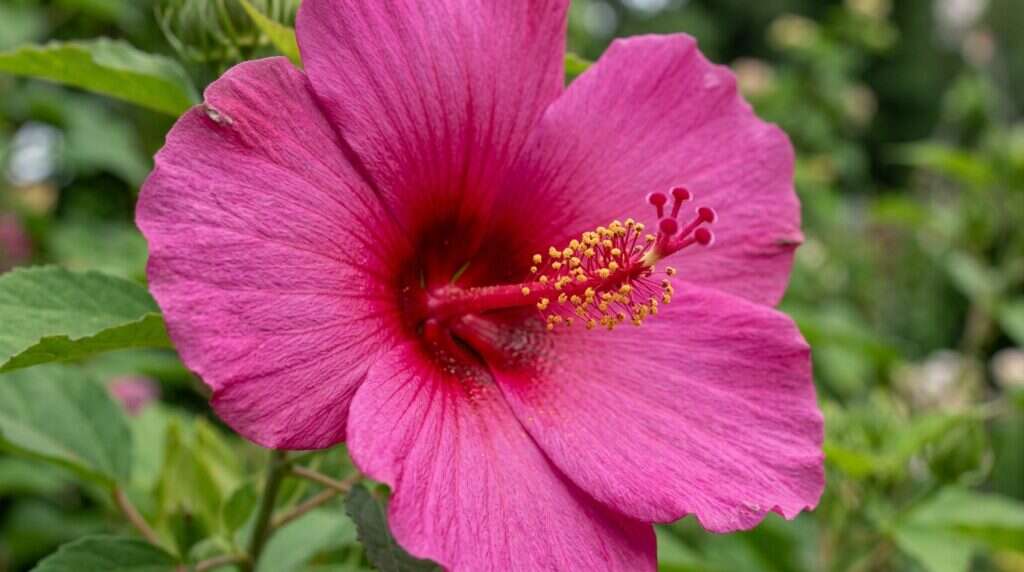
Hardy hibiscus dies back to the ground in winter, then returns late in spring with fast-growing stems and dinner-plate-sized flowers. Rose mallow, Hibiscus moscheutos, likes full sun and can handle more moisture than many classic border plants.
The late emergence worries new owners because an empty space can look like a dead plant. Mark its position and leave the crown undisturbed until warm soil triggers new growth.
3. Tropical Hibiscus
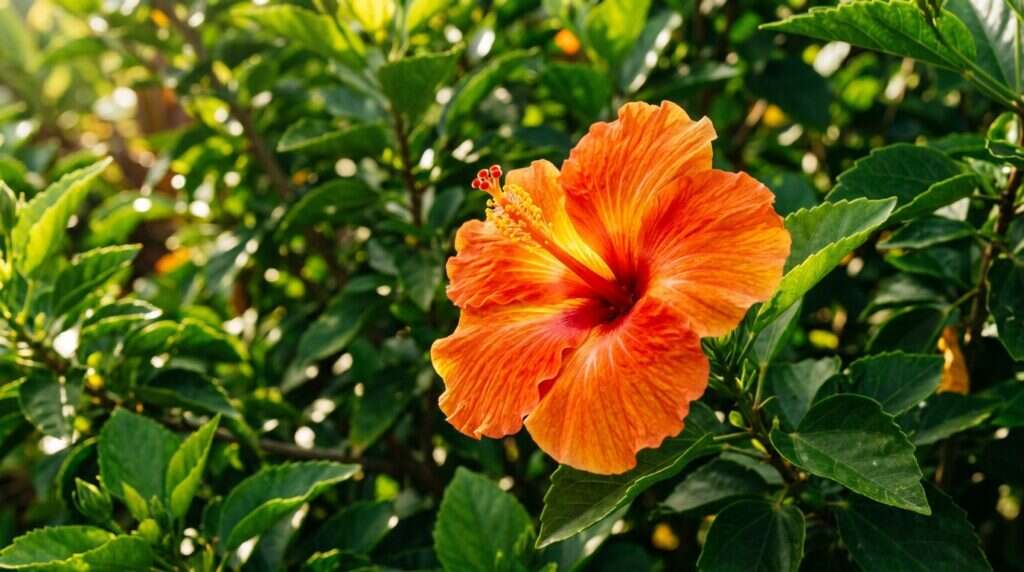
Tropical hibiscus is an evergreen shrub in frost-free conditions and a patio plant elsewhere. It gives you glossy leaves and repeated flowers in red, orange, yellow, pink, or mixed colors when it receives warmth, strong light, steady water, and regular feeding.
This is one of the best commercial choices if you want instant color for a deck, but it is not the same plant as hardy hibiscus. If winter temperatures fall below its tolerance, treat it as an annual or bring it indoors before cold nights.
4. Hyacinth
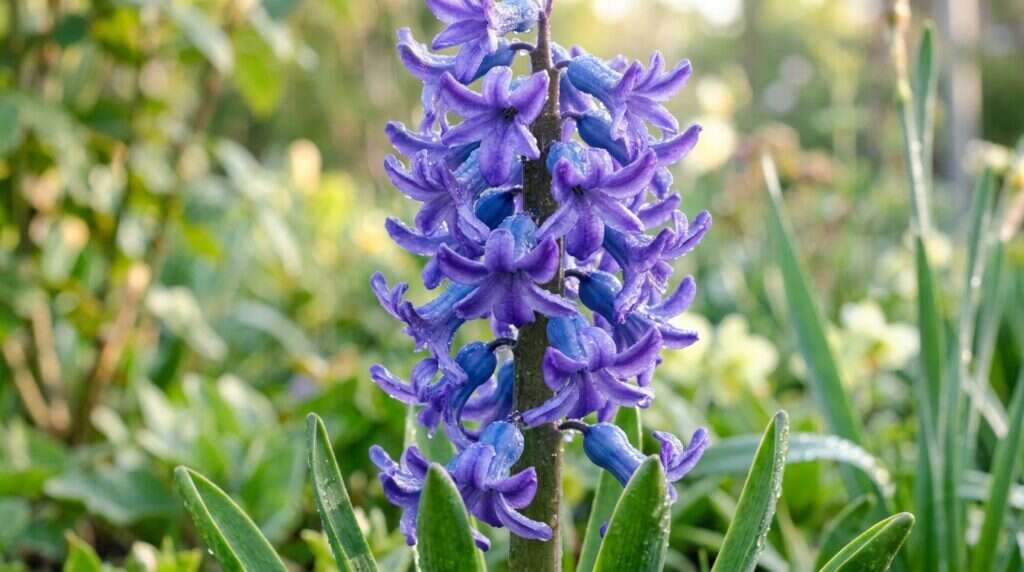
Hyacinth is a fall-planted bulb with a dense spike of waxy, highly fragrant spring flowers. Blue, purple, pink, white, yellow, and red cultivars are sold, and a small group near a path can provide more scent than a much larger bed of mild flowers.
The display often becomes looser and smaller in later years, so buy hyacinths for fragrance rather than permanent architectural form. The bulbs contain the highest concentration of irritating compounds, and the hyacinth plant profile recommends gloves for people who react to bulb sap.
5. Hellebore
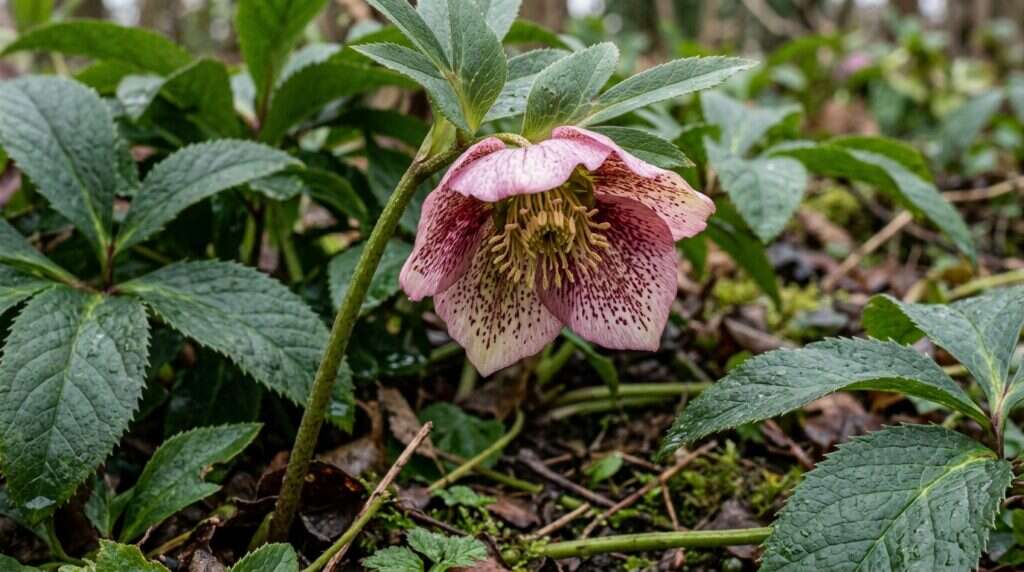
Hellebores bloom when much of the garden is still asleep. Their nodding white, green, pink, purple, spotted, or near-black flowers work well under deciduous trees, where winter light reaches the plants before the canopy fills in.
They prefer moist but well-drained soil and usually dislike being moved repeatedly. The leaves, roots, and other parts are poisonous if eaten, so review the hellebore safety details before planting near pets or small children.
6. Hollyhock
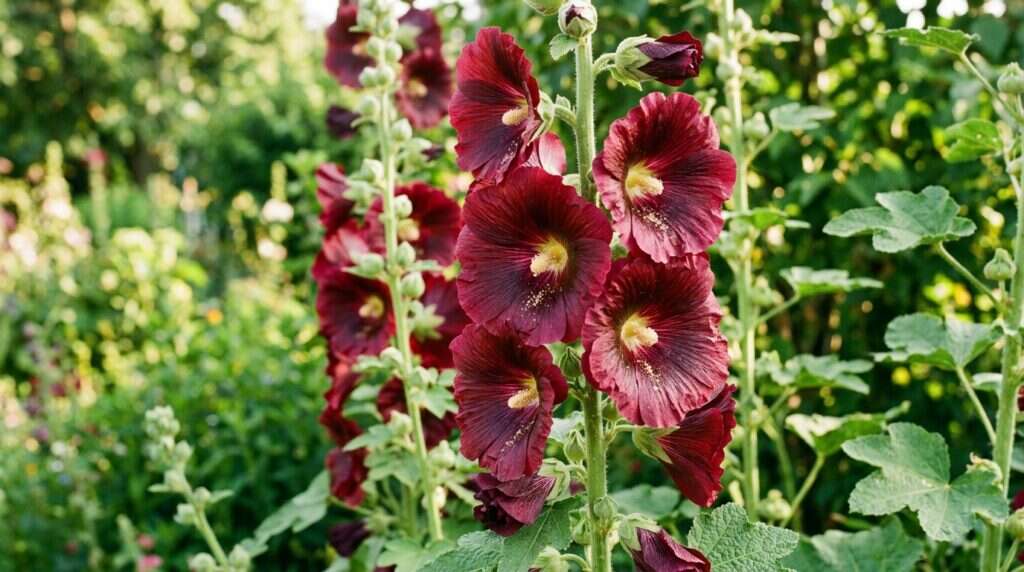
Hollyhocks create tall vertical lines against walls, sheds, and fences. Many behave as biennials, growing leaves in the first season and sending up five-to-eight-foot flower spikes in the next, although some cultivars flower earlier.
Give them full sun, airflow, and room behind shorter plants. Rust is the familiar drawback, so water at soil level, remove badly affected leaves, and avoid squeezing plants into a damp, crowded corner.
Shade-Loving Flowers That Start With an H
A shaded yard does not have to rely on foliage alone. These choices offer flowers, texture, or both, but “shade” still needs definition because two hours of morning sun is very different from a dark space under an evergreen.
7. Hosta
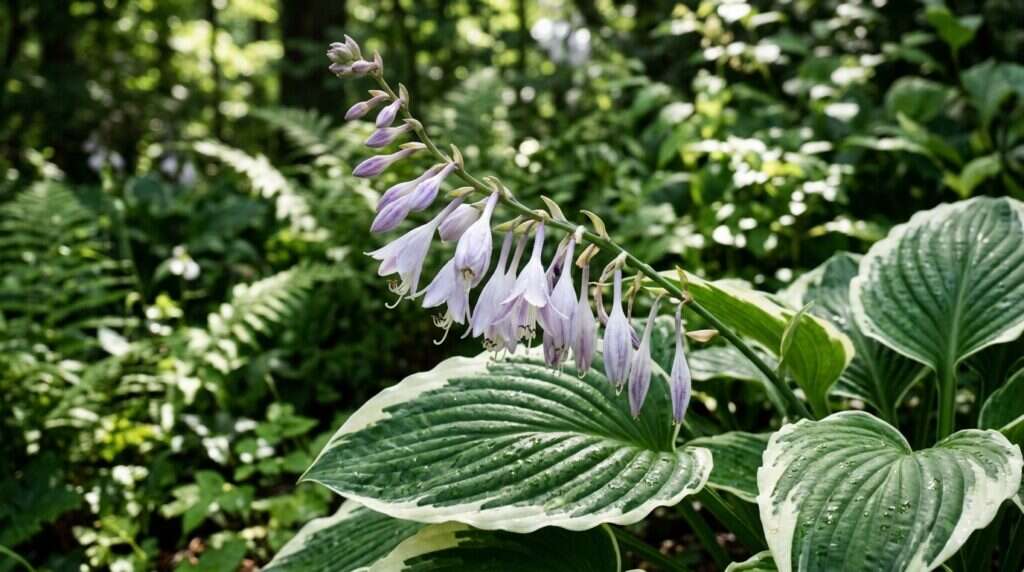
Hostas are grown mainly for leaves, but their white or lavender flower stalks still earn them a place on this list. Leaf color ranges from blue-green to gold and variegated cream, while plant sizes run from tiny edging types to broad clumps several feet wide.
They thrive in rich, well-drained soil with part or full shade, although brighter-leaved forms often need a little light to hold their color. Protect new shoots from slugs, snails, and deer.
8. Heuchera
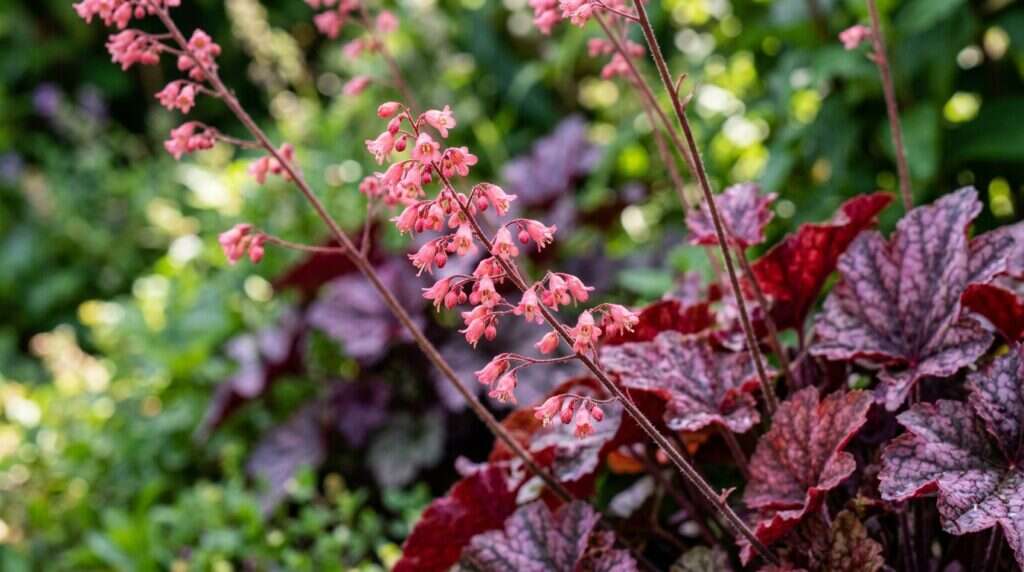
Heuchera, also called coral bells, combines colorful leaves with wiry stems of small bell-shaped flowers. It works especially well in containers and along the front of a border.
Dark-leaved cultivars often tolerate more sun than pale or yellow-leaved types, but cultivar guidance matters. Keep the crown at soil level, use free-draining soil, and lift or reset older plants if freezing and thawing push the crown upward.
9. Hardy Geranium
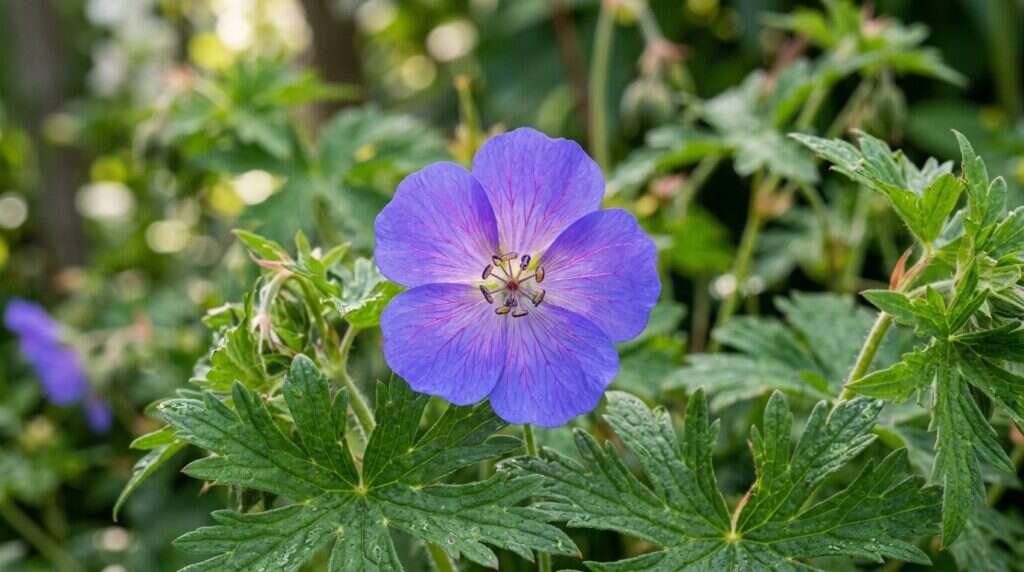
Hardy geranium is not the same as the tender bedding plant commonly called geranium. True Geranium species form spreading clumps with saucer-shaped flowers, and the native wild geranium is a useful woodland option with pink-to-lilac spring blooms.
This is one of my best-value recommendations because a healthy clump can cover bare soil without becoming a woody thicket. Shearing tired foliage after the first flush can improve its shape and may encourage fresh leaves and flowers.
10. Hepatica
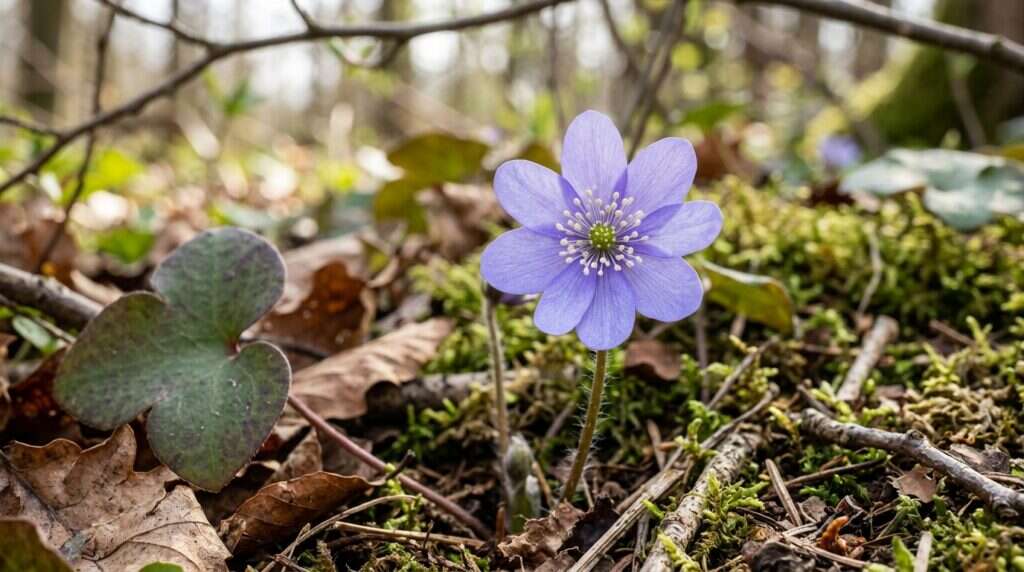
Hepatica is a small woodland perennial that flowers very early, sometimes before nearby trees have opened their leaves. White, pink, lavender, or blue blooms sit above three-lobed leaves, which inspired the old common name liverleaf.
It is a quiet collector plant rather than a quick bedding purchase. The hepatica growing profile describes it as hardy in zones 4a to 8, and it performs best in cool, humus-rich woodland soil that does not stay waterlogged.
11. Hoya
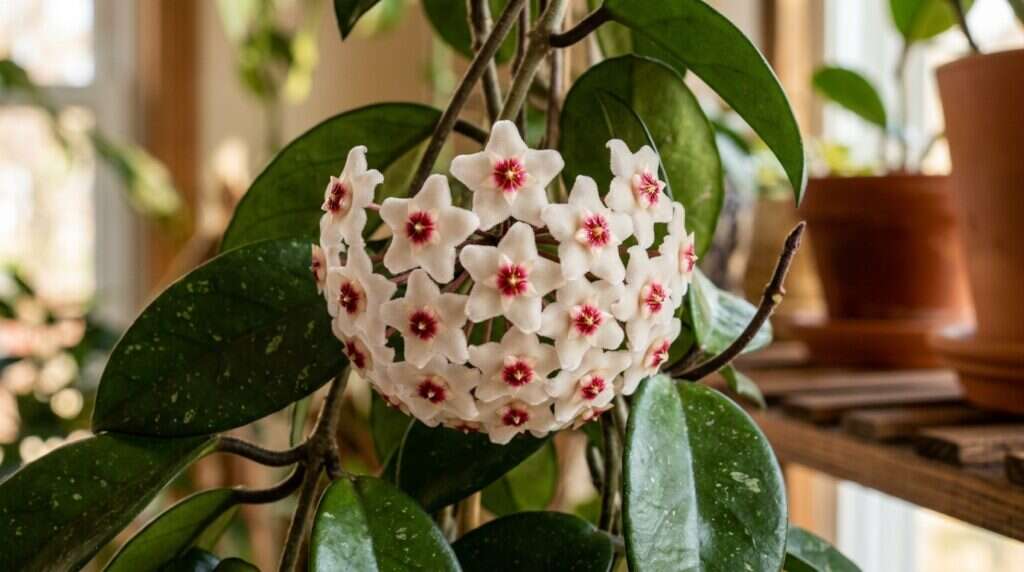
Hoya is usually grown indoors as a climbing or trailing houseplant. Mature plants can form rounded clusters of waxy, star-shaped flowers, and some produce a sweet fragrance that becomes stronger in the evening.
The most common mistake is keeping the roots constantly wet. Give it bright indirect light, an airy potting mix, and a container with drainage; this practical Hoya care guide advises allowing a significant portion of the mix to dry between waterings.
Sun-Loving H Flowers for Color and Pollinators
Full-sun plants usually need at least six hours of direct light, but water needs still vary. Helenium likes more moisture, while heather and helianthemum fail quickly in heavy, airless soil.
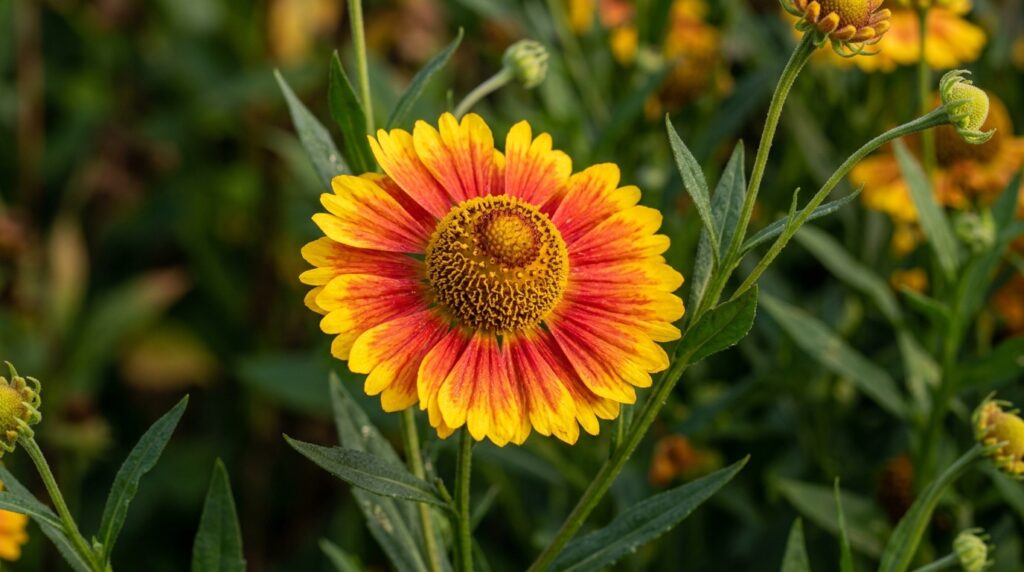
12. Helenium
Helenium brings yellow, orange, bronze, and red daisy-like flowers to late summer and fall. The native species and garden hybrids feed pollinators at a time when some early perennials have finished blooming.
Give the plant sun and consistent moisture, then cut the stems back in late spring for shorter, bushier growth. Despite its name, sneezeweed is not known to cause ordinary pollen allergies.
13. Heliotrope
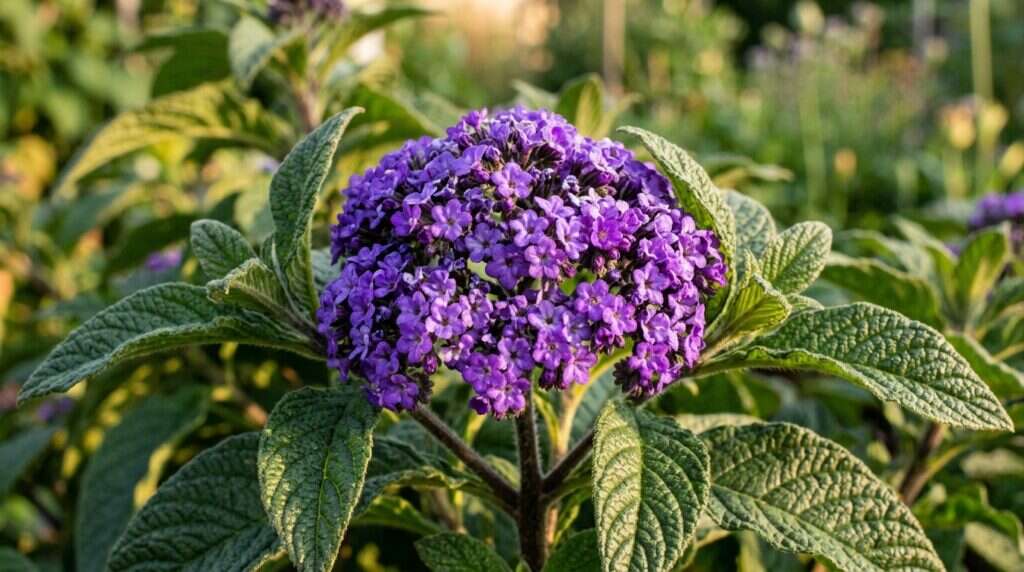
Heliotrope produces clusters of purple, blue, or white flowers with a sweet scent often compared with vanilla or cherry pie. It is usually sold as a warm-season annual, though it is a tender perennial in very mild climates.
Plant it where you can actually smell it, such as near a seat or doorway, and keep the soil evenly moist rather than soaked. Heliotrope contains pyrrolizidine alkaloids and should not be treated as an edible flower or placed where grazing animals can reach it.
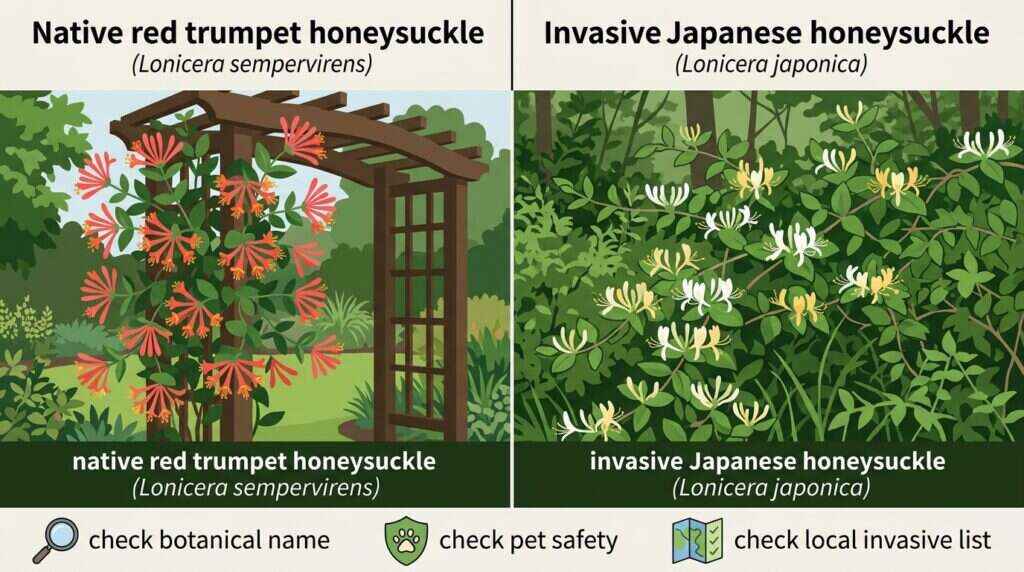
14. Native Trumpet Honeysuckle
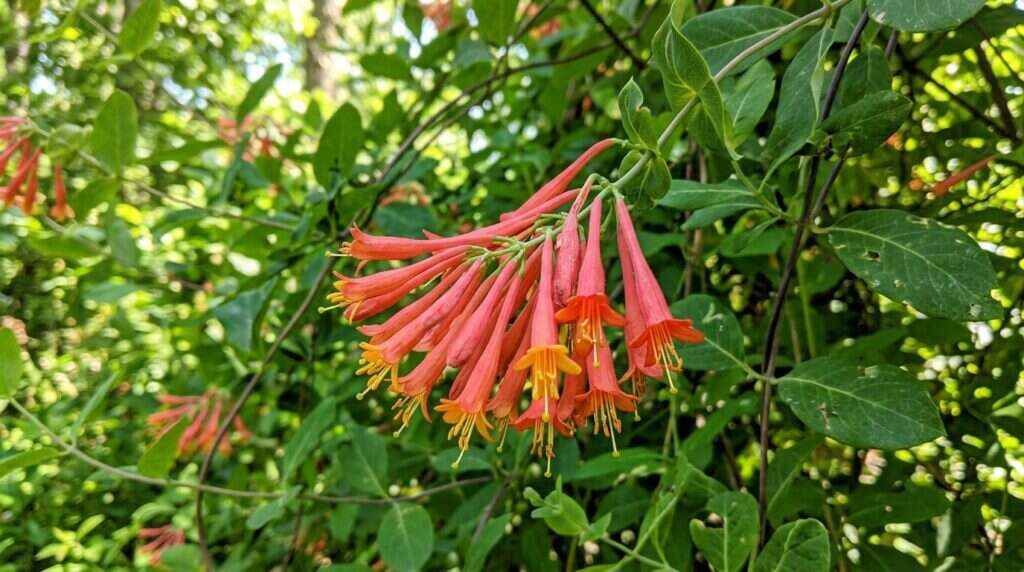
Native trumpet honeysuckle, Lonicera sempervirens, carries red-orange tubular flowers that attract hummingbirds, bees, butterflies, and moths. It climbs by twining, so provide a trellis with narrow supports instead of expecting it to cling to a flat wall.
Check the botanical name before buying any honeysuckle. The Forest Service classifies Japanese honeysuckle as invasive, while native trumpet honeysuckle offers strong wildlife value without the same aggressive reputation.
15. Heather
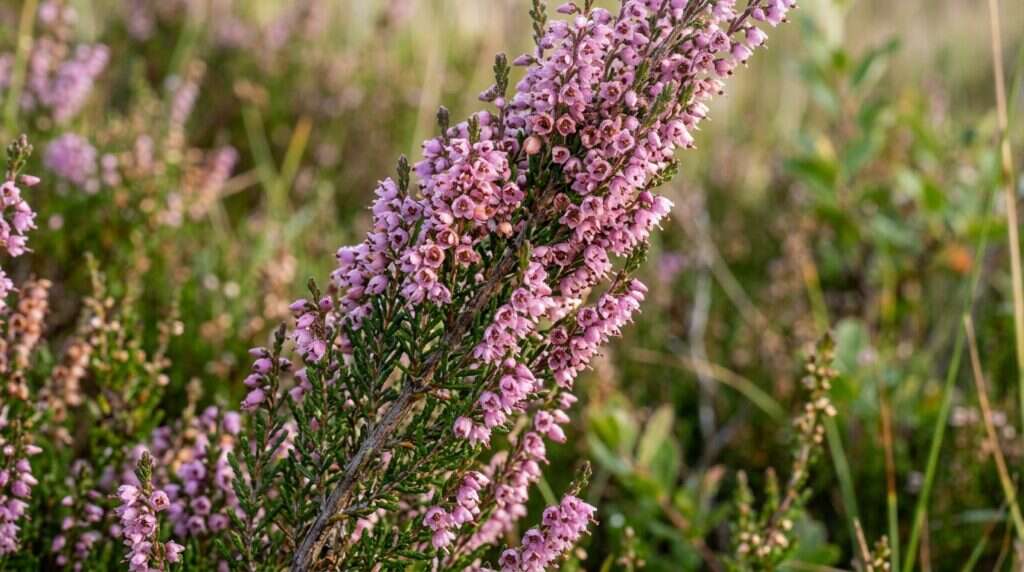
Heather forms a low evergreen mat with tiny summer-to-fall flowers in pink, purple, or red tones. It suits sunny sites with acidic, well-drained soil and can look excellent in a rock garden or mass planting.
It is not an easy answer for hot, humid, alkaline ground. Check soil pH and drainage before buying it.
16. Hyssop
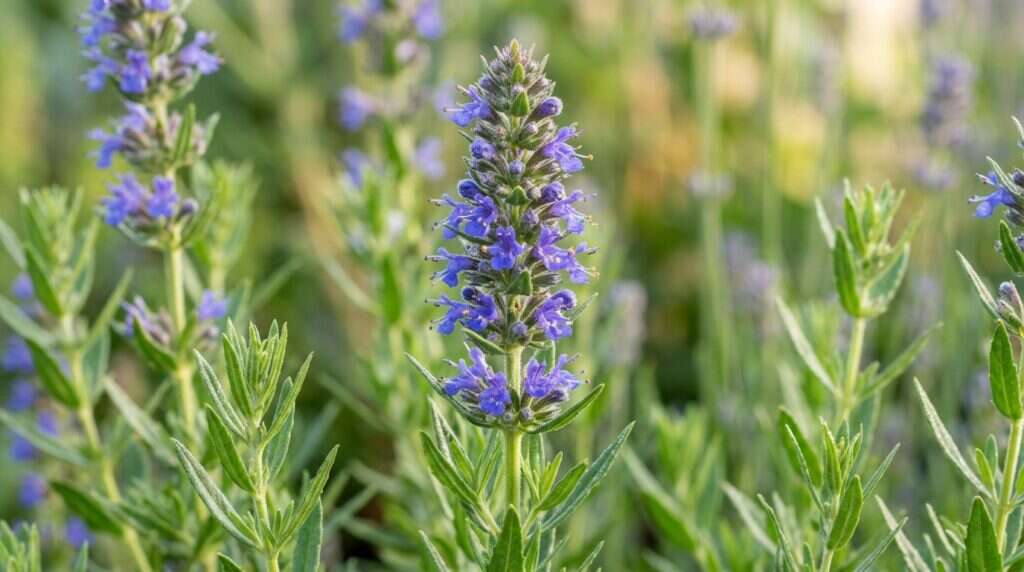
True hyssop, Hyssopus officinalis, is a short-lived perennial herb with narrow aromatic leaves and spikes of blue-purple flowers. Bees, butterflies, other beneficial insects, and hummingbirds visit the flowers, while established plants handle dry soil well.
Do not confuse true hyssop with anise hyssop, which belongs to the genus Agastache. Both are useful plants, but the distinction matters when you are buying seed for a specific culinary, ornamental, or native-garden purpose.
17. Heath Aster
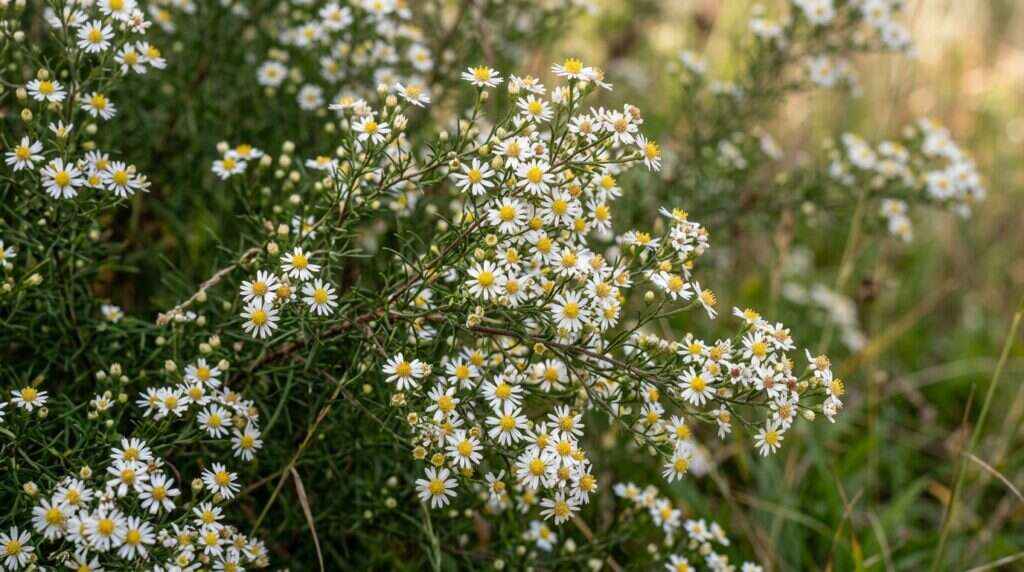
Heath aster is a branching native perennial covered with many small white flowers and yellow centers in fall. It can weave through a meadow-style border and support late-season pollinators without demanding the visual attention of a large-flowered cultivar.
Give it sun and do not overfeed it, or growth may become floppy. A late-spring trim can make the plant denser.
Unusual Names of Flowers That Start With H
This group includes H common names, as well as plants linked to botanical or older scientific names that begin with H. That distinction explains why strawflower appears here even though its accepted name now starts with X.
18. Harebell
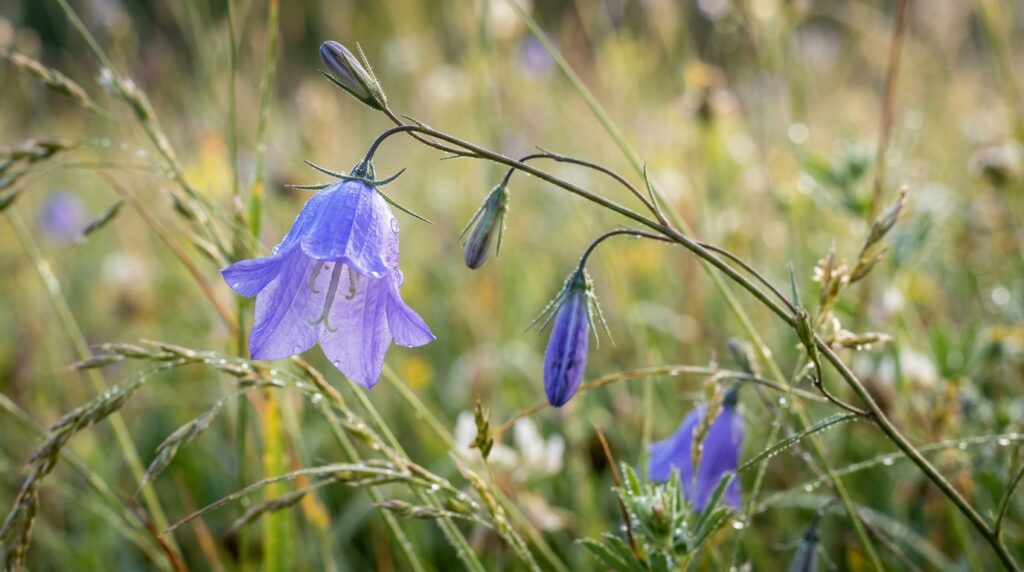
Harebell has slender stems and nodding blue-violet bells that look delicate but can cope with rocky, lean ground. It works in a naturalistic border, rock garden, or small meadow where surrounding plants keep the scene soft rather than formal.
The plant may take time to settle and can bend after rain, so it is not a neat edging substitute. Choose it for movement and native character, not for a stiff row of identical flowers.
19. Helianthemum
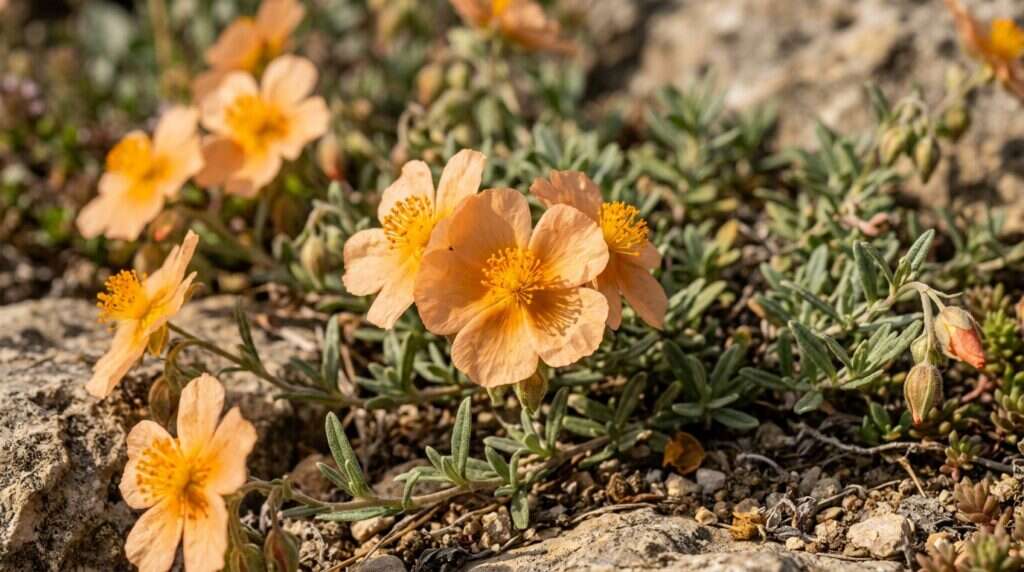
Helianthemum, commonly called rock rose or sun rose, is a low evergreen or semi-evergreen shrublet for sunny, sharply drained soil. Individual papery flowers may last only a day, but many buds can keep the display going for weeks.
Use it over a wall edge, along gravel, or at the front of a dry border. Wet winter soil is a greater threat than ordinary summer dryness.
20. Helichrysum
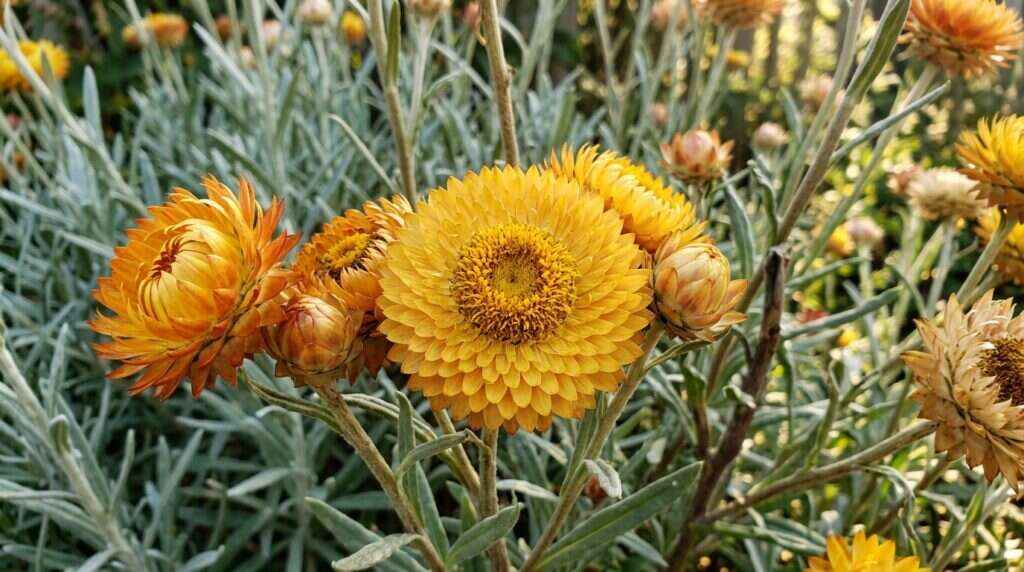
The popular strawflower, once known as Helichrysum bracteatum, is now usually listed as Xerochrysum bracteatum. The stiff, papery bracts keep their color when dried, which makes this annual one of the best H-related flowers for wreaths and everlasting arrangements.
Grow it in full sun and harvest stems when a few outer rows have opened, but the center is still tight. Bundle small groups and hang them upside down in a dry, dark, airy place to preserve color and shape.
21. Honeywort
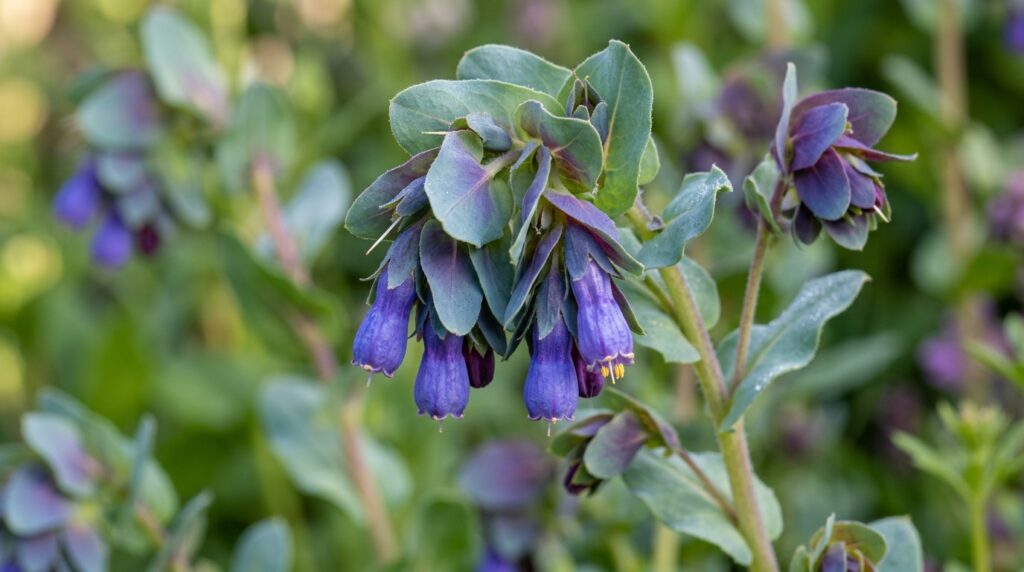
Honeywort has gray-blue leaves, arching stems, and purple tubular flowers surrounded by blue-purple bracts. It looks expensive and unusual, yet it is often grown from large, manageable seeds as a cool-season or summer annual.
Its color improves in bright light and cooler nights, while rich soil can make the stems tall and loose. The detailed honeywort growing notes explain why it may behave as an annual, biennial, or short-lived perennial in different climates.
22. Harlequin Flower
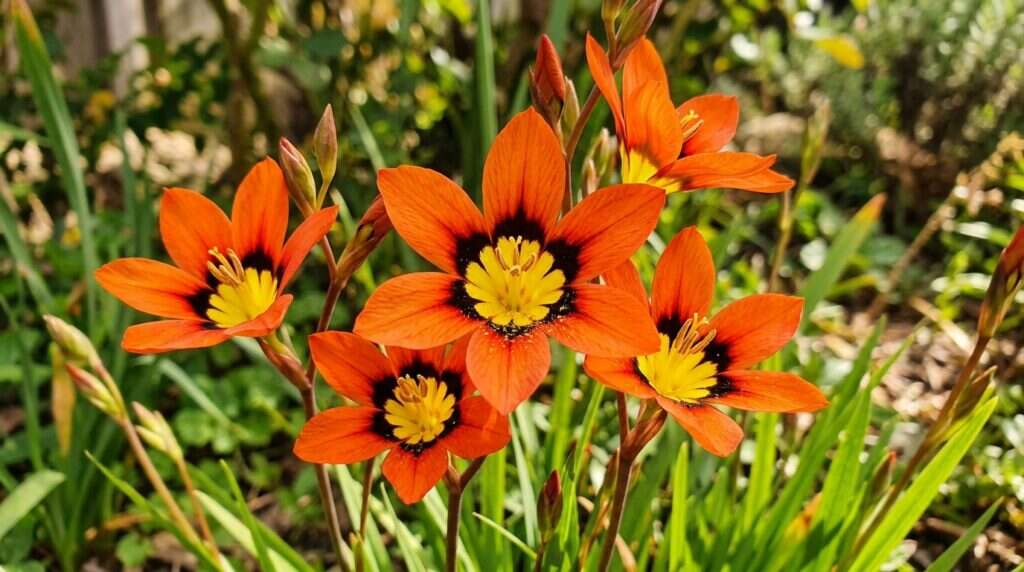
Harlequin flower grows from corms and produces vivid, often multicolored blooms with contrasting centers. It is a strong choice for a sunny container because you can control drainage and move the corms away from freezing weather.
The Sparaxis plant profile notes that these plants are frost-tender and can be injured below 25°F. In cold winter areas, lift and store the corms, or treat them as a seasonal purchase.
23. Himalayan Blue Poppy
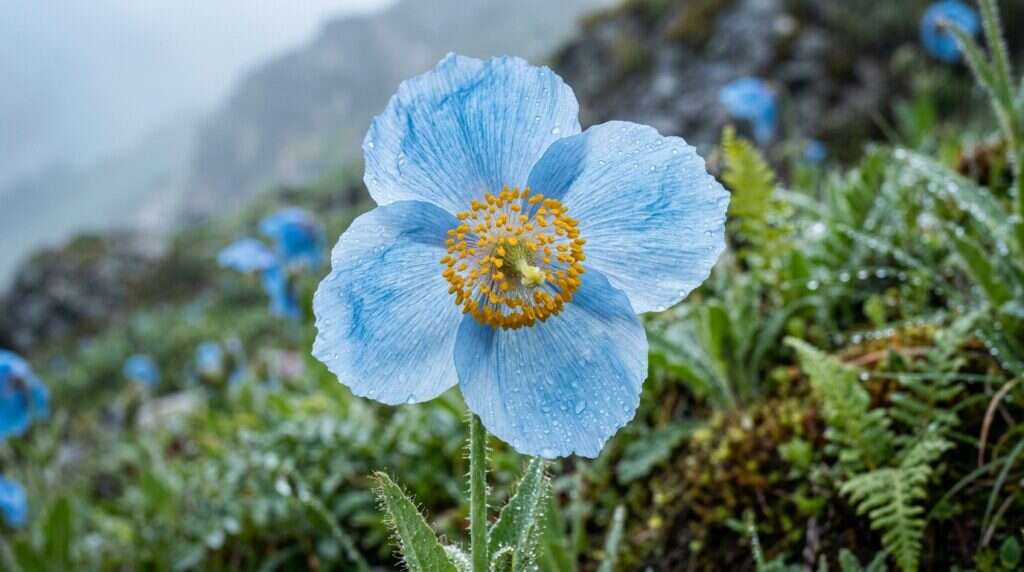
Himalayan blue poppy is the dream plant in this list, but it is not a fair beginner recommendation. It needs cool, humid, partly shaded conditions with rich, slightly acidic soil that drains well yet stays evenly moist.
If summers are hot, choose another blue flower instead of forcing this one to struggle. The blue poppy growing guidance warns that proper climate and siting are essential, which explains why a healthy nursery specimen can still fail after planting.
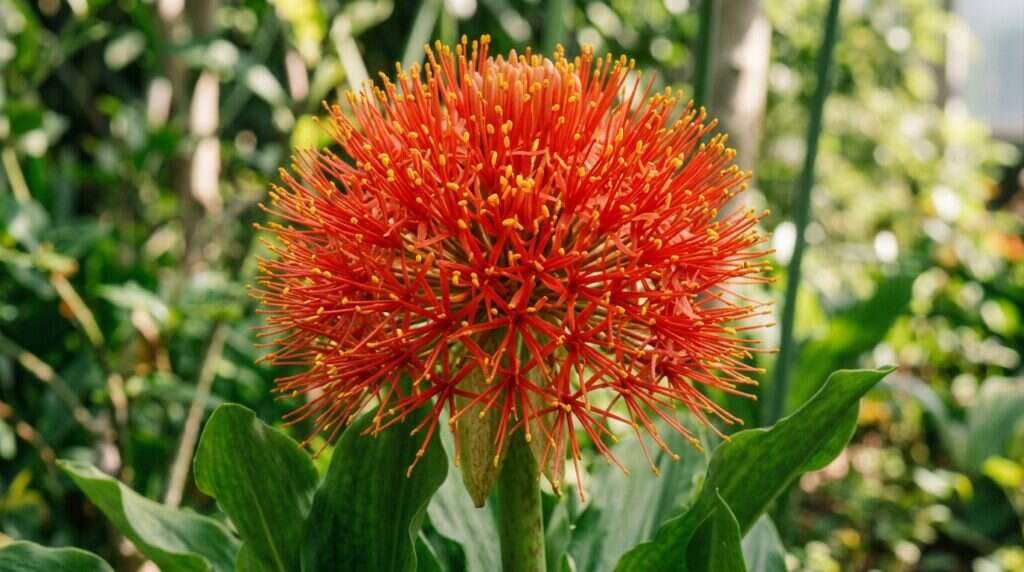
24. Haemanthus
Haemanthus is a southern African bulb genus known for brush-like flower heads and broad, sculptural leaves. Blood lily and paintbrush lily are common names, although plants sold under related names may sometimes belong to the separate genus Scadoxus.
This is a collector’s container bulb in most climates. Buy from a specialist who identifies the exact species, then follow its specific growth and rest cycles rather than watering it like a standard leafy houseplant year-round.
25. Honesty
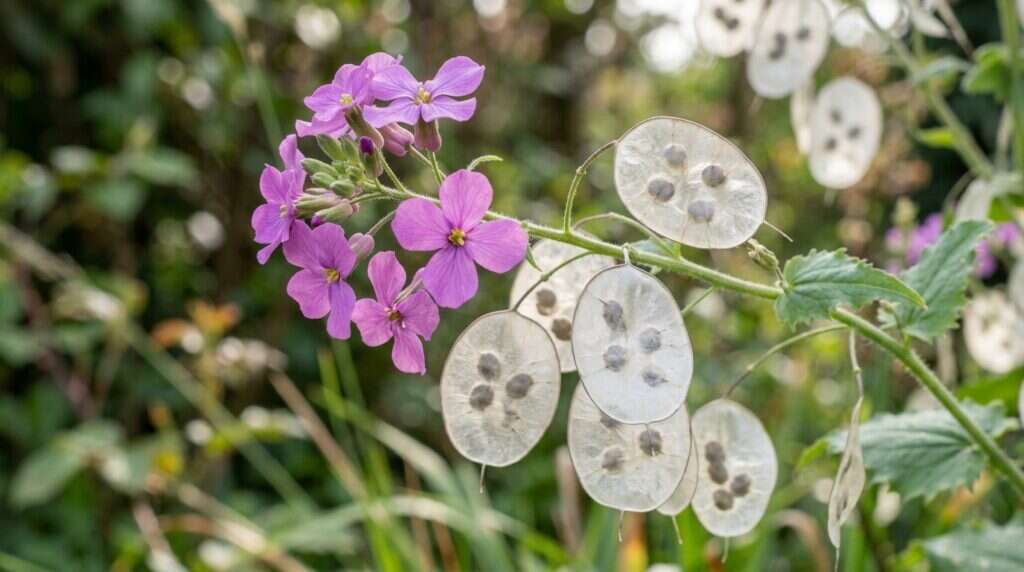
Honesty, Lunaria annua, gives purple or white spring flowers followed by flat, translucent silver seed pods. The pods are the real design feature and work well in dried arrangements, children’s gardens, and informal cottage borders.
It is usually biennial and can self-seed where conditions suit it. Remove extra pods before seed drops if you prefer a controlled planting.
How to Choose the Right H Flower for Your Space
Start with four questions: How much direct sun reaches the site? How fast does water drain? What is your winter low? How much maintenance do you actually want? A flower’s color should come after those four answers, not before them.
Choose by Light
For strong sun, start with hardy hibiscus, hollyhock, helenium, hyssop, heath aster, strawflower, or helianthemum. For part shade, consider hydrangeas, heucheras, hardy geraniums, hepaticas, or native trumpet honeysuckle.
Hosta and hellebore suit deeper shade, although they still perform better with some filtered or gentle light. Hoya needs bright indoor light but usually dislikes harsh midday sun through hot glass.
Choose by Water and Drainage
Hardy hibiscus and helenium tolerate or appreciate more moisture than heather, helianthemum, and hyssop. Almost none of these plants want roots sitting without air in compacted soil, so “likes moisture” should never be translated as “likes a swampy pot.”
Do a simple drainage check before planting expensive shrubs or bulbs. Water the prepared hole, observe how long it takes to fill, and amend or relocate the bed if water remains for an extended period.
Choose by Time and Effort
For quick seasonal color, buy tropical hibiscus, heliotrope, strawflower, honeywort, or harlequin flower. For long-term planting, invest in hydrangeas, hostas, heucheras, native honeysuckle, hardy geraniums, or hellebores.
Where to Buy H Flowers Without Wasting Money
The right form matters as much as the right name. Buy hyacinth, Harlequin flower, and Haemanthus as firm bulbs or corms; buy hydrangea and honeysuckle as healthy live plants; and buy fast annuals such as strawflower and honeywort as seed when you want better value.
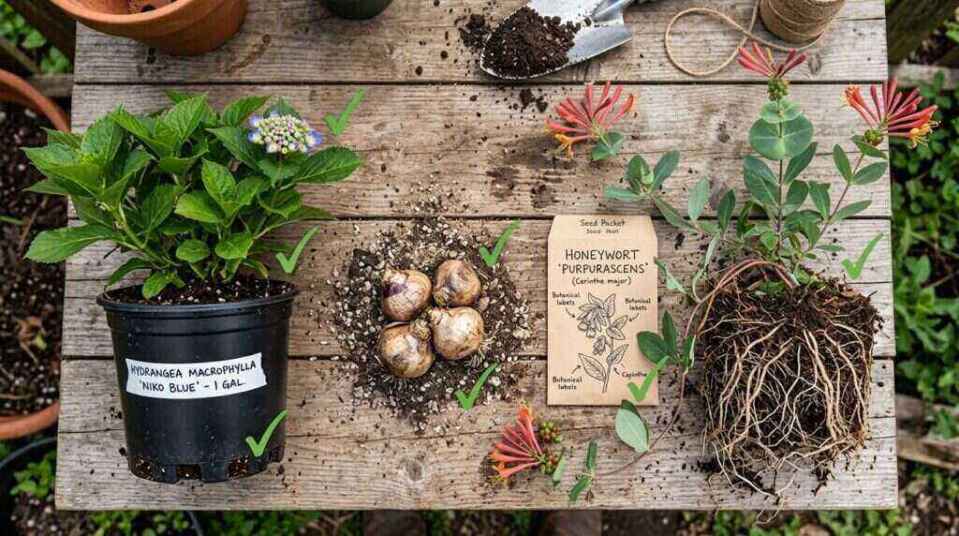
- Read the complete botanical name. “Hibiscus” does not tell you whether a plant is hardy or tropical, while “honeysuckle” does not tell you whether the vine is native or invasive.
- Check mature size, not display size. A small hydrangea can become a broad shrub, a native honeysuckle can reach a second-story trellis, and a tall hollyhock can shade shorter plants.
- Match the purchase to the season. Spring is useful for checking active perennial growth, fall is ideal for many hardy bulbs, and warm-season tropical plants should not be carried through cold outdoor conditions.
- Compare total cost, not just pot price. A smaller perennial may catch up in one season, while an expensive collector plant can cost more again if your site cannot support it.
For feeding, follow the label and the plant’s actual needs rather than adding a strong bloom booster on habit. My guide to how to dose fertilizer for plants explains why the correct amount matters more than the largest N-P-K number.
Expert Tips for Better Results
My first nursery rule is to leave with fewer, better-matched plants. A shortlist based on light, soil, and mature size beats a cart chosen from photographs.
- Use botanical names as your accuracy check. Common names move between regions, but the botanical name helps you confirm hardiness, toxicity, growth habit, and whether the plant is native.
- Plant for a sequence of bloom. Pair winter hellebores with spring hyacinths and hepatica, summer hydrangeas and hibiscus, then fall helenium and heath aster for a longer display.
- Group plants with similar water needs. Do not place moisture-loving hardy hibiscus beside dry-soil helianthemum and expect one watering routine to keep both happy.
- Feed lightly until a need is clear. Too much nitrogen can produce lush leaves, weak stems, and fewer flowers, especially in hollyhock, helenium, and heath aster.
- Keep labels after planting. A label helps you remember whether the hibiscus is hardy, which hydrangea flowers on old wood, and which heuchera cultivar tolerates more sun.
- Photograph the bed in every season. The record shows where spring bulbs disappear, where shade deepens, and where a late-emerging hardy hibiscus needs a marker.
Pros and Cons of Popular H Flowers
| Flower | Main advantage | Main drawback | Best buyer |
| Hydrangea | Large, long-lasting flower clusters | Species differ in sun, pruning, and color response | Gardener ready to check the exact variety |
| Hardy hibiscus | Huge flowers and reliable return | Emerges late and needs summer moisture | Sunny-border gardener with space |
| Hyacinth | Powerful fragrance in a small area | Flower spikes often weaken in later years | Bulb gardener seeking spring scent |
| Hellebore | Flowers in late winter and shade | Toxic if eaten and slow to establish | Shade gardener without grazing pets |
| Hosta | Easy foliage impact in shade | Slugs and deer can damage leaves | Beginner with a protected shade bed |
| Native honeysuckle | Strong hummingbird and pollinator value | Needs support and regular direction | Gardener with a trellis or fence |
| Heliotrope | Rich fragrance and compact seasonal color | Tender and toxic if eaten | Patio gardener who can monitor watering |
| Himalayan blue poppy | Rare blue flowers | Very climate-sensitive | Experienced cool-climate gardener |
There is no single best flower that starts with an h. The right choice is the one whose disadvantages you can manage without turning gardening into a weekly rescue job.
Pet Safety and Invasive-Plant Checks
Pretty flowers can still irritate skin or cause illness if eaten. Hydrangea is listed as toxic to dogs, cats, and horses, while hellebore, hyacinth, and heliotrope also need careful placement.
Do not rely on a short internet list when an animal has eaten a plant. Save the label, take a clear photograph, and contact a veterinarian or an animal poison control service with the exact botanical name and the estimated amount.
Invasiveness is also local. Japanese honeysuckle is a serious problem in many regions, while native trumpet honeysuckle is a valuable alternative; always check your state’s invasive species list before buying an unfamiliar vine, ground cover, or self-seeding flower.
Frequently Asked Questions
What are the most common flowers that start with h?
Hydrangea, hibiscus, hyacinth, hellebore, hollyhock, hosta, honeysuckle, and heather are the most familiar choices. They include shrubs, bulbs, vines, and perennials, so their care is not interchangeable.
Which flowers that start with the letter h are easiest for beginners?
Hosta is easy in shade, while hardy hibiscus and helenium are dependable in sunny sites with suitable moisture. Heuchera and hardy geranium are also beginner-friendly when drainage is good, and the light matches the cultivar.
Are there blue flowers that start with an h?
Blue choices include some hydrangeas, hyacinths, harebells, and Himalayan blue poppies. Hydrangea color depends on the type and soil chemistry, while Himalayan blue poppy needs a genuinely cool, moist climate to perform well.
What flowers that start with an H grow well in pots?
Tropical hibiscus, heliotrope, Hoya, dwarf hosta, heuchera, hyacinth, harlequin flower, and Haemanthus can all be grown in containers. Match the pot size to mature growth, use drainage holes, and remember that container roots experience more temperature stress than roots in the ground.
Which H flowers attract hummingbirds and bees?
Native trumpet honeysuckle is an excellent hummingbird choice, while helenium, hyssop, heuchera, honeywort, and heath aster support bees and other pollinators. Choose locally native species when possible and avoid pesticides on open flowers.
Final Thoughts
The best flowers that start with an h are not simply the prettiest ones on a nursery bench. They are the plants that match your light, soil, winter conditions, available space, safety needs, and realistic level of care.
For an easy starting group, I would choose hosta for shade, hardy hibiscus for a sunny statement, native trumpet honeysuckle for wildlife, and hyacinth for spring fragrance. Add a collector plant only after the dependable part of your garden is working well.
Choose two favorites from this list, check their botanical names and mature sizes, then sketch where they will grow before you buy. You can continue planning with the complete Flowers A to Z collection and build an alphabet garden that is attractive, useful, and suited to your real space.