


Key Takeaways: How To Fix Hot And Cold Rooms Without Rebuilding Your HVAC System In Lehi, Utah
- Uneven room temperatures can come from airflow restrictions, duct leaks, insulation gaps, solar gain, or a poorly located thermostat.
- Consider basic maintenance and air-sealing before adding new HVAC equipment.
- Ductless mini-splits can heat and cool additions, garages, basements, offices, and other difficult rooms.
- Correct system sizing and indoor-unit placement are essential for dependable comfort.
- Existing central equipment may still be the better choice when ducts are accessible, and the system has adequate capacity.
In Lehi, Utah, a room that feels comfortable in the morning can become too warm by late afternoon, while an upstairs bedroom, basement, room over the garage, or home office may never seem to match the thermostat. Before replacing an entire central system, start by identifying why that particular space is uncomfortable. In many cases, targeted airflow, insulation, or zoning improvements can solve the problem with far less disruption.
For rooms that cannot be served well by existing ducts, a professionally planned ductless mini split installation in Lehi Utah can provide independent heating and cooling without opening walls throughout the house. The right solution depends on the room’s insulation, sun exposure, layout, existing equipment, and how often you use the space.
Why One Room Can Feel So Different
A central thermostat measures conditions only near its location. It cannot fully represent a sunny south- or west-facing room, a closed bedroom at the end of a hallway, or a finished basement with cooler surrounding surfaces. Lehi’s bright summer sun can add substantial heat through windows, while winter weather exposes rooms with air leaks, weak insulation, or ducts running through unconditioned areas.
Some rooms also have unique heat loads. A bonus room over a garage may be affected by the unconditioned space below. A home office with computers and multiple occupants may heat up faster than nearby rooms. An addition may have been connected to the original system without enough airflow to serve its larger footprint.
Check Simple Problems Before Adding Equipment
Start with the central HVAC system and the room itself. A low-cost correction can sometimes restore comfort without adding a new unit.
- Replace a dirty HVAC filter with the type recommended for the system.
- Confirm that supply registers are fully open and not blocked by furniture, rugs, or drapes.
- Keep return grilles clear so air can circulate back to the equipment.
- Look for loose, crushed, disconnected, or poorly insulated ductwork in attics, crawl spaces, and basements.
- Seal noticeable gaps around windows, exterior doors, plumbing penetrations, and attic access points.
- Review insulation above hot upstairs rooms and around rooms next to garages.
Closing numerous vents to force air into another room is usually not a dependable fix. It can increase duct pressure, reduce airflow across HVAC components, and create new comfort problems elsewhere in the home. An HVAC professional can measure airflow and identify whether balancing adjustments are appropriate.
If the temperature problem continues after basic checks, reviewing HVAC maintenance and repair can help you spot common airflow, ductwork, and equipment problems before deciding whether you need additional heating or cooling.
When Extending Existing Ductwork Makes Sense
Adding or modifying ductwork may be practical when the central system has available heating and cooling capacity, the main trunk lines are accessible, and the problem room is close to the equipment. This approach can preserve a single, familiar thermostat and may make sense for a modestly sized addition or a room with a straightforward attic or basement route.
Check capacity before installing any new supply run. If an already undersized system is asked to condition another room, comfort throughout the house may suffer. A duct repair, return-air improvement, or zoning evaluation may be more useful than adding another register.
When a Ductless Mini-Split Is a Better Fit
Ductless systems use an outdoor unit connected to one or more indoor air handlers by refrigerant lines and wiring. They are especially useful where extending ducts would require major remodeling or where occupants need room-by-room control. Ductless heat pumps can provide both heating and cooling, making them a flexible option for spaces with year-round comfort issues.
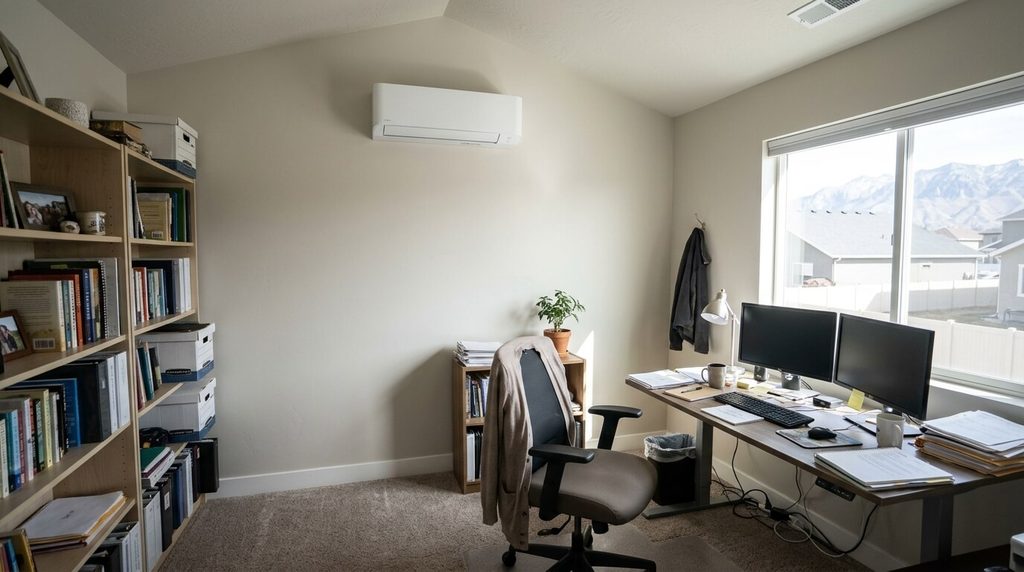
Common applications in Lehi homes include finished basements, converted garages, sunrooms, guest suites, detached studios, room additions, older homes with limited duct access, and upstairs bedrooms that consistently run warmer or cooler than the rest of the house.
Single-Zone and Multi-Zone Layouts
A single-zone system connects one indoor unit to one outdoor unit, which can work well for a home office, workshop, or bonus room. A multi-zone system connects several indoor units to one outdoor unit, which may suit a basement plus multiple bedrooms or a guest area. Multiple single-zone systems offer greater independence, while a multi-zone design can reduce exterior equipment. The best choice depends on the layout, desired controls, and service considerations.
Size and Place the Equipment Carefully
Bigger equipment is not automatically better. An oversized unit can reach the set temperature too quickly, while an undersized unit may run for long periods without reaching the target temperature. A contractor should evaluate more than square footage, including ceiling height, windows, insulation, air leakage, orientation, and local weather conditions.
Ask whether a room-by-room load calculation will be completed. The Department of Energy explains that heat pumps move heat rather than generate it through combustion, but their real-world performance still depends on proper selection and installation.
Indoor units need an open path to distribute air. Avoid locations blocked by tall cabinets, doors, beams, or shelves, and, when possible, avoid blowing directly onto beds or favorite seating areas. Wall-mounted units are common, but floor-mounted, ceiling cassette, and concealed options can fit different room designs.
Plan for Winter Performance and Reliable Installation
Many mini-splits provide heating and cooling, but cold-weather performance varies by model. For a Lehi installation, ask about rated heating capacity at low outdoor temperatures, defrost operation, outdoor-unit placement, snow and roof-runoff exposure, and whether backup heat fits the home.
Important installation details include pressure testing and evacuating refrigerant lines, insulating the line set, ensuring safe condensate drainage, mounting the outdoor unit securely, confirming compliance with electrical requirements, and completing permits or inspections as required. These behind-the-scenes steps affect reliability just as much as the indoor unit’s appearance.
Maintain Steady Comfort
Clean indoor filters as directed, keep the air path clear, remove leaves and debris from around the outdoor unit, and watch for water near an indoor air handler. New noises, odors, reduced airflow, or error messages deserve prompt attention. Routine professional service can help identify drainage, electrical, and performance issues before they become larger repairs.
Know When Another Solution Is Better
A mini-split isn’t the answer for every hot or cold room. If existing ducts are accessible, correctly sized, and in good condition, central-system repairs or a ducted heat pump may be the cleaner solution. Homes with several closed rooms may benefit from a ducted design that delivers balanced airflow. In other cases, insulation upgrades or air-sealing work can solve the underlying issue without new mechanical equipment.
Conclusion: Start With the Room, Not the Replacement
Uneven temperatures do not automatically mean a complete HVAC replacement is necessary. Assess the room’s airflow, insulation, windows, ductwork, and daily use first. For some Lehi homes, a simple repair is enough. For others, a properly sized ductless system can create quiet, independent comfort in the spaces the central system struggles to reach.