

Essential HVAC Maintenance and Repair for Homeowners
Your home’s heating, ventilation, and air conditioning (HVAC) system is crucial for comfort and healthy indoor air. We often overlook it until a problem arises. Yet, neglecting its care can lead to uncomfortable temperatures, higher energy bills, and unexpected breakdowns.
Regular HVAC maintenance and timely repairs are smart investments. Did you know preventative maintenance can cut energy waste by up to 30% and prevent costly breakdowns? It also extends your system’s life.
In this extensive guide, we will explore everything homeowners need to know. We will cover typical maintenance check-ups and how often they are needed. We will also help you spot signs that your system needs attention.
Understanding these essentials is key for any homeowner, whether for your residence or a residential and light-commercial HVAC system you manage. We will discuss when to repair versus replace and which DIY tasks you can do. We’ll also show you how to find a reliable contractor and what to expect from professional services.
Our goal is to equip you with the knowledge to keep your home comfortable and efficient, now and in the future.
Investing in consistent HVAC maintenance and addressing repairs promptly offers many advantages beyond keeping your home comfortable. These benefits directly impact your finances, safety, and the overall quality of your indoor environment.
One of the biggest perks is better energy efficiency. Over time, dirty coils or blocked airflow make your system work harder and use more power. In fact, airflow problems can lower efficiency by up to 15 percent. Keeping everything clean helps your HVAC system run smoothly, which lowers your monthly utility bills. Routine maintenance can cut energy waste by up to 30%, saving you money over time.
Regular care also helps your system last much longer. Just like a car, an HVAC system with tune-ups gets less wear and tear. Technicians lubricate parts, tighten connections, and fix small issues before they become major breakdowns. This means your system will not break down as often and will last longer. Most AC units and furnaces last 10 to 15 years, while boilers and heat pumps last 15 to 20. Good maintenance helps your equipment reach or beat these ages.
Regular maintenance also helps your home get better air flow and cleaner air. Good airflow keeps the temperature even in every room. Without it, some rooms might be too hot or too cold, wasting energy and making you uncomfortable. Technicians look for blocked ducts or improper blower settings that slow airflow.
Safety is also very important. Gas or oil heating systems need regular checks to catch dangers like carbon monoxide leaks. A professional can make sure your detectors work and that your equipment has no cracks that let bad fumes into your home. Preventative checkups catch these risks early to keep your family safe.
Routine maintenance also stops small problems from turning into big, expensive repairs. Tiny issues, like a loose wire or a wobbling fan, cause extra wear and tear and can lead to serious damage. If ignored, these small problems can even become fire hazards. Fixing them early can save you from costly, inconvenient breakdowns.
Essential Professional Maintenance Protocols and Scheduling
To get the most out of your HVAC system, it helps to know what a tune-up involves and when to schedule it. We recommend getting your system serviced twice a year, right before the hottest and coldest months begin.
Tune up your AC in the spring and check your heater in the fall. Try to schedule these around the time the seasons change. Getting your system ready early helps it handle extreme summer heat and winter cold.
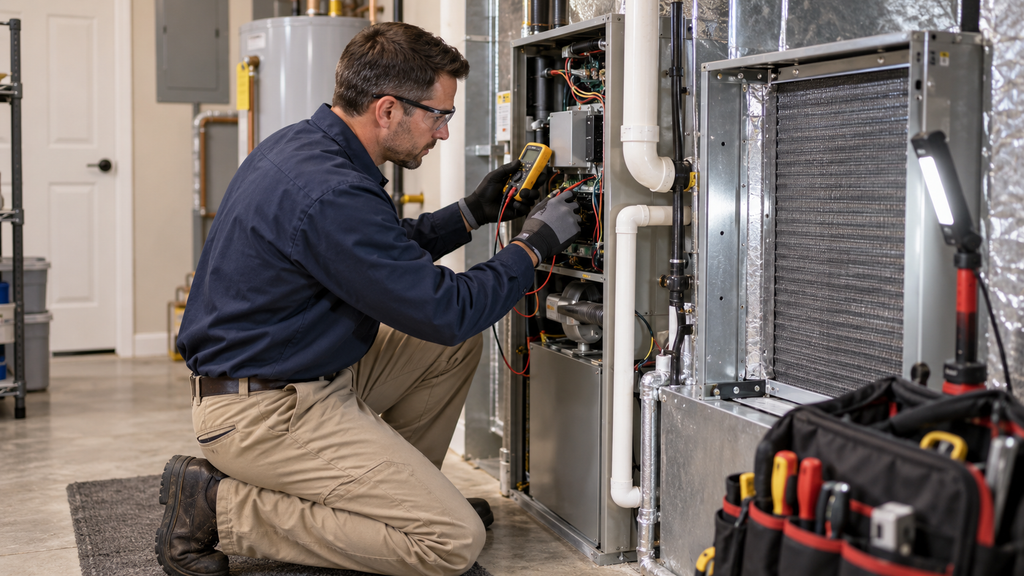
During a typical professional maintenance visit, technicians follow a comprehensive checklist designed to optimize performance and identify potential issues. For heating systems, this includes a thorough inspection of the heat exchanger for cracks or corrosion, which could pose a safety risk. They also check burner combustion to ensure efficient fuel use and proper flame operation.
For cooling systems, a key task is checking the refrigerant level. A system low on refrigerant will not cool your home well and can break down. Technicians will also clean the indoor and outdoor coils. Dirty coils make it hard for the system to move heat, so it uses more energy and works too hard.
An expert will check and adjust the blower motor to ensure good airflow. They will tighten all electrical connections to keep the system safe and running well, and check the voltage and current on motors. Thermostat calibration helps keep temperatures accurate and saves energy. Finally, they will check and clear drain lines to stop clogs that cause water damage and high humidity.
DIY Homeowner Care vs. Professional HVAC Maintenance and Repair
While professional maintenance is indispensable, homeowners can do several tasks to support their HVAC system’s health and efficiency. Understanding this distinction can save you money and prevent minor issues from escalating.
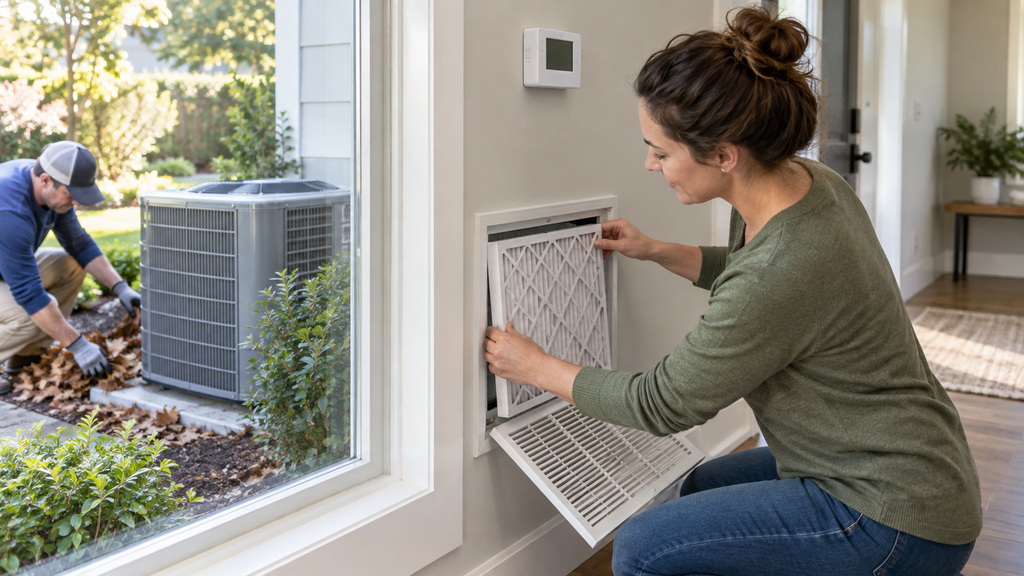
The most important DIY job is checking and changing your air filters. A dirty filter makes your system work harder, raising your energy bills and potentially damaging the equipment. Check and clean or replace your filter monthly, especially during peak use. This easy step helps your system last longer.
Other homeowner-friendly tasks include cleaning registers and vents to ensure unobstructed airflow into and out of your rooms. Periodically, you should also remove any debris removal from around your outdoor unit, ensuring at least two feet of clear space for proper outdoor clearance. This allows the condenser to dissipate heat effectively.
Some jobs need a trained expert with special tools. These include oiling moving parts to stop friction and save power, checking electrical wires, and testing safety controls. You should also let a pro check the heat exchanger and airflow. Doing these jobs yourself can cause injuries, break your system, or cancel your warranty.
Common Warning Signs and the HVAC Repair Process
Being attentive to your HVAC system’s behavior can help you catch problems early, potentially saving you from more extensive and costly repairs. Here are some common warning signs that indicate your system needs professional attention:
One frequent indicator is short-cycling, where your system turns on and off frequently without completing a full heating or cooling cycle. This often points to an underlying issue like an oversized unit, a clogged filter, or a refrigerant leak, and it significantly increases energy consumption and wear.
Another sign is uneven temperatures across rooms. If some areas of your home are noticeably warmer or colder than others, it could signal problems with airflow, ductwork, or a malfunctioning zone control system.
Pay close attention to strange noises emanating from your HVAC unit. While some operational sounds are normal, grinding, squealing, or rattling noises are red flags. A screeching belts sound often indicates a worn-out fan belt, while banging sounds could mean a loose component or a problem with the blower motor. Ignoring these sounds can lead to more severe mechanical failures.
Unexpected sudden spikes in your energy bills, without a corresponding increase in usage, can be a clear sign of decreased efficiency. Your system might be working harder than it should to maintain desired temperatures.
Humidity imbalances in your home, such as excessive stickiness in summer or overly dry air in winter, suggest that your HVAC system isn’t managing moisture levels effectively. This can be due to issues with your AC’s dehumidification function or a malfunctioning humidifier.
Finally, visible signs like frozen evaporator coils (ice on your indoor unit’s copper lines) or puddles of water around your outdoor unit can indicate serious problems. Frozen coils often point to low refrigerant levels or restricted airflow, while water could signal a clogged condensate drain or a refrigerant leak. If you notice any of these signs, call a qualified HVAC technician.
What to Expect During HVAC Maintenance and Repair Services
When you call a professional for HVAC maintenance or repair, knowing what to expect can help you feel more confident. A reputable contractor will follow a structured approach to ensure thorough service.
The service typically begins with a diagnostic assessment of your entire system. The technician will inspect the unit, listen to your concerns, and use specialized tools to identify the root cause of any issues. This might involve checking electrical connections, testing refrigerant levels, and visually inspecting components.
After the diagnosis, the technician will test the system and measure airflow to evaluate overall performance and efficiency. They’ll ensure air moves freely through your ducts and temperatures stay consistent.
A crucial step is providing transparent estimates. Before any work begins, the technician should clearly explain the problem, the recommended repairs, and the exact cost. This upfront pricing ensures you understand what you’re paying for and avoids any surprise charges.
If repairs are needed, the technician will proceed with component replacement or repair, using quality parts. For maintenance, they will perform tasks like cleaning coils, lubricating moving parts, and tightening electrical connections as outlined in the previous section.
After completing the service, the technician will perform post-repair cycling and system optimization. They will run your HVAC system through a full cycle to confirm that it’s operating correctly, safely, and efficiently. They may also offer advice on improving your system’s performance and energy efficiency moving forward. Expect them to test the system thoroughly for safe, efficient operation before they leave.
Repair vs. Replace: Evaluating Lifespan and Efficiency
Deciding whether to repair a failing HVAC system or replace it entirely is a common dilemma for homeowners. This decision often hinges on several factors, including the system’s age, repair costs, and current efficiency.
A primary consideration is system age. Most central AC systems and furnaces are designed to last between 10 to 15 years, while heat pumps and boilers typically have a slightly longer equipment lifespan of 15 to 20 years. If your central air conditioners or gas furnaces are approaching or have exceeded this average lifespan, replacement often becomes the more economically sound choice, even for minor repairs.
The “50 percent rule” is a useful guideline: if the repair costs 50 percent or more of a new unit, it’s generally better to replace the system. This is especially true for older units, as a significant repair on one component might only be a prelude to other parts failing soon after.
Another important factor is energy efficiency. Older systems use a lot more power than new ones. Today’s energy standards are much stricter than they used to be. Upgrading to a new, high-efficiency model will lower your utility bills and quickly pay for itself over time.
Finally, consider the long-term comfort and reliability. A new system offers peace of mind with a fresh warranty and the latest technology. When installing a new system, professionals perform a thermal load calculation to ensure the unit is perfectly sized for your home, preventing issues like short-cycling or inadequate heating/cooling that can plague improperly sized older units. While the upfront cost of replacement is higher, the cumulative benefits of efficiency, reliability, and extended lifespan often make it the smarter long-term investment.
Choosing Reliable Contractors and Managing Service Costs
Selecting the right HVAC contractor is paramount for ensuring quality service, whether for routine maintenance or complex repairs. A reliable professional can make all the difference in your system’s performance and longevity.
When searching for a contractor, prioritize those with proper credentials. Look for technicians who are NATE-certified (North American Technician Excellence), as this indicates they have met rigorous industry standards for knowledge and skill. Always verify that the company holds the required licenses and is insured in your state or locality.
A trustworthy contractor will always offer transparent pricing. They should provide a detailed, itemized estimate before any work begins, clearly explaining parts and labor costs. Be wary of contractors who offer unusually low bids without a thorough assessment or push for immediate, vague repairs without clear explanations.
To manage ongoing costs and prevent emergencies, consider enrolling in service agreements or maintenance plans. These typically include annual or biannual tune-ups, often at a discount, and may include benefits like priority service, waived diagnostic fees, and repair discounts. Many companies also offer seasonal discounts on tune-ups, especially during the spring and fall.
For larger investments like new system installations, explore energy rebates offered by utility companies, manufacturers, or government programs. These incentives can significantly reduce the upfront cost. Also ask about promotional financing options, including zero-percent APR for qualifying installations, which can make a new system more affordable. Understanding these options is crucial, whether you’re managing a single residential unit or a more complex residential and light-commercial HVAC system.
Finally, assess a contractor’s emergency response capabilities. A reliable company should offer 24/7 emergency services, especially during extreme weather, ensuring you’re not left without heating or cooling when you need it most.
Our guide to choosing an HVAC contractor explains how to compare qualifications, written estimates, maintenance plans, and warranties.
Frequently Asked Questions About HVAC Systems
We understand that homeowners often have specific questions about their HVAC systems. Here, we address some of the most common inquiries to provide clarity and guidance.
How often should you schedule professional HVAC maintenance?
We generally recommend biannual service for your HVAC system. This means scheduling one professional tune-up in the spring (for your cooling system) and another in the fall (for your heating system). This pre-season approach ensures your equipment is ready for the upcoming weather, maximizes efficiency, and helps prevent unexpected breakdowns. Seasonal transitions are a great reminder to book these appointments. Furthermore, following this schedule is often required to maintain your system’s warranty compliance and protect your investment.
How do you know if your HVAC system is running efficiently?
You can tell if your HVAC system is working well by watching for a few signs. First, your home should stay at a steady temperature. If you are constantly adjusting the thermostat, your system may be struggling. Second, check the run cycles. Your system shouldn’t turn on and off too quickly or run constantly. Third, look at your utility bills. A sudden spike in energy use means the system is losing efficiency. Finally, old systems with low SEER2 or AFUE ratings are naturally less efficient than new ones. Thermostats that control the temperature well also show your system is working right.
What financing and discount options exist for HVAC repairs and replacements?
Homeowners can make HVAC services more affordable in several ways. Many local utility companies and manufacturers offer special rebates and incentives for upgrading to efficient systems. For big jobs like full replacements, many HVAC companies offer low-interest financing, sometimes with 0% APR. Joining a maintenance plan with a local contractor often gives you repair discounts, free diagnostic checks, and yearly tune-ups. Finally, governments sometimes offer tax credits for energy-saving home upgrades, so it is a good idea to check current programs.
Conclusion
Your HVAC system is a significant investment in your home’s comfort, health, and value. Understanding its needs, from routine maintenance to timely repairs, is essential for any homeowner. By prioritizing regular professional check-ups, doing simple DIY tasks, and recognizing warning signs, you can ensure optimal system performance and avoid costly emergencies.
Think of HVAC maintenance as a preventative investment. It not only extends the long-term reliability and lifespan of your equipment but also contributes directly to lower energy savings and consistent home comfort. Being proactive about your HVAC care is not just about fixing problems; it’s about creating a more efficient, safer, and comfortable living environment for years to come.