


Boss Hammer BH18STHI16M 18 oz steel hybrid hammer: Is It Right for Your Work?
The Boss Hammer BH18STHI16M 18 oz steel hybrid hammer is a framing tool for buyers who want a wooden handle, a textured striking face, and measuring features in one tool. It makes the most sense for rough carpentry where you drive and pull nails, then stop to mark lumber. It is a less suitable first choice for delicate trim or exposed wood that must remain free of hammer marks.
Its main attraction is the combination of familiar hammer functions with built-in layout aids. Whether that combination earns its place in your tool belt depends on your work and how comfortable the hammer feels in your hand. This buying guide explains what is confirmed, what the features can help with, and what to check before ordering.The details that affect your decision
- The 18 oz figure describes the head; the complete hammer is listed at approximately 26.2 oz.
- BH18STHI16M identifies the hickory-handle, milled-face configuration.
- A textured face can leave patterned dents on exposed wood.
- The layout features need correct positioning and practice.
- The 16-inch reference dimension does not remove the need to check framing layout.
- Confirm the actual finish and selected variation before paying.
BH18STHI16M specifications: what you are actually buying
Start with the full model number because similar listings cover different handles and face types. A photograph of a Boss hammer doesn’t confirm that the selected item matches this configuration. Check the product title, variation selector, and cart before ordering.
The manufacturer’s 18 oz hickory hammer specifications describe the core construction and layout functions. The table below separates those published details from buying advice. Treat approximate weight as a listed specification rather than a measurement of every individual hammer.
Published product details
| Item | Published specification |
|---|---|
| Model | BH18STHI16M |
| Head | 18 oz steel; 4340 alloy listed by the manufacturer |
| Complete-tool weight | Approximately 26.2 oz |
| Striking face | Milled |
| Claw | Rip claw |
| Handle | American hickory with a linseed oil finish |
| Reference dimension | 16 inches out to out |
| Layout aids | Squaring surfaces, common-cut and degree markings |
| Claimed squaring reach | Up to a nominal 2×10 in one line |
| Nail starter | Magnetic; accommodates double-headed nails |
| Origin | Listed as made in the USA |
Does “hybrid” mean a steel-and-titanium head?
This model is listed as a steel-head hammer with a hickory handle. Do not read “hybrid” as proof that the head combines steel and titanium. Evaluate the hammer by its stated materials and combined hammer-and-layout functions.
The alloy designation also doesn’t mean this hammer will outperform every competing model. Striking performance and durability depend on more than an alloy name. Without comparable testing, claims a reduced vibration, faster driving, or longer life go beyond the evidence.
The milled face is the first practical trade-off
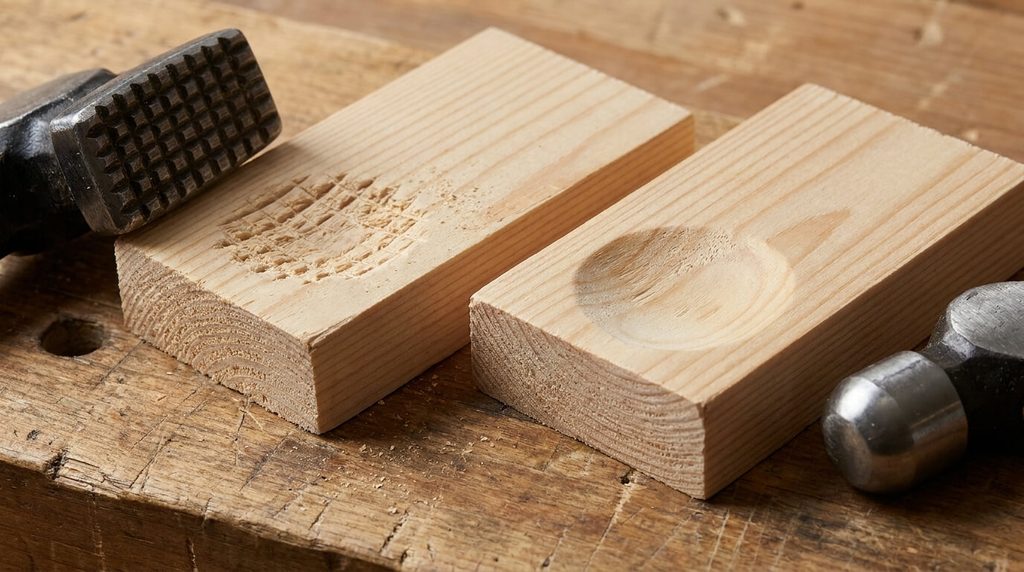
A milled face has a crosshatched texture that helps engage the nail head during suitable driving work. That can be useful on framing lumber, where the surrounding surface will often be covered. Accurate contact still matters, and the texture cannot prevent every glancing strike.
The same pattern can transfer into wood when the face hits the surface. That makes it a poor match for finished trim, cabinet parts, or exposed boards where dents would remain visible. A smooth-face hammer avoids the waffle-shaped impression, although it can still leave a dent.
Think about the final appearance of the material before choosing the face. Hidden framing and a clear-finished handrail have very different surface requirements. If your projects include both, keeping separate rough-work and finish-work hammers may be more practical than expecting one face to suit everything.
How useful is the built-in squaring system?
The design uses reference surfaces on the head and claws to help with layout. It’s most useful when you are already holding the hammer and need a solid mark before returning to nailing. If you rarely mark lumber, this feature may have little influence on your day.
The published ability to span a nominal 2×10 is a capacity claim, not a guarantee that every line drawn by a user will be accurate. Correct registration against the board remains essential. A rough edge, trapped debris, or movement while marking can affect the result.
Check the technique on scrap first
Begin with a clean piece of straight-edged scrap lumber. Position the hammer using the maker’s demonstrated method and draw a trial line. Check the result against a reliable square before cutting project material.
Repeat that check when learning the angle markings. Confirm the intended reference point rather than assuming any convenient edge is the correct pivot. If the result is inconsistent, use your separate square until you understand what is causing the difference.
Keep a separate square when it makes the job easier
A longer guide may be easier to hold on wide stock or use repeatedly at a cutting station. It may also be more convenient when you need both hands free from the hammer’s weight. Choose the layout tool that gives you a clear, repeatable mark for that task.
For example, a remodeler making an occasional mark while adjusting framing may appreciate the integrated feature. Someone marking a large batch of matching cuts at a bench may prefer a dedicated square-and-stop setup. These are workflow examples, not measured time-saving results.
What the 16-inch dimension can and cannot do
The 16-inch out-to-out dimension gives you a physical reference for suitable layout checks. It does not identify stud centers or establish the correct starting offset on its own. On-center spacing still requires you to place the framing members correctly relative to the layout marks.
When marking a wall plate, start from the correct reference end and follow the project plan. Mark which side of the line receives each member so the line is not mistaken for a center mark. Check the full layout with a tape measure before assembly.
Repeated measurements can carry an early positioning error into later marks. That is why a convenient reference should support your layout process rather than replace the final check. Openings, corners, and end conditions also need their own attention.
Will the 18 oz head feel light enough?
Head weight is only one part of how a hammer handles. The complete mass, handle shape, reach, and balance all affect your control. A tool that feels manageable for a few movements may still be unsuitable for repetitive work.
If possible, handle the hammer before buying and check the grip with your usual gloves. Confirm that the handle shape is comfortable and the tool fits your hand. Follow the shop’s rules and keep any movement clear of other people.
Compare the complete 18 oz and 22 oz configurations
The maker lists its 22 oz hickory version at approximately 32.5 oz overall, with an 18.5-inch handle. That is a different weight-and-length combination from the model covered here. Comparing head ounces alone misses part of the difference you would feel.
Our guide to the boss steel hammer 22 oz. milled face covers that next buying decision. Compare the specific handle and configuration rather than treating every 22 oz listing as identical. More mass is useful only when you can place the tool accurately and work comfortably.
Choose the right nearby model
Several similar item codes can appear in the same search results. The most useful comparisons involve a change you actually care about, such as a smooth face or a different handle. Confirm the complete code rather than assuming the shared “18 oz” description makes the products interchangeable.
Similar models to check before ordering
| Model | Configuration | Reason to compare |
|---|---|---|
| BH18STHI16M | 18 oz steel, hickory handle, milled face | The configuration covered in this guide |
| BH18STHI16S | 18 oz steel, hickory handle, smooth face | You prefer wood but want a different striking surface |
| BH18STPFM | 18 oz steel, poly-fiberglass handle, milled face | You want to compare handle feel and construction |
If your shortlist includes the boss hammer beast hammer bh28stpfm, read its separate guide before choosing. It is a different product and should be assessed using its own specifications. Do not transfer this hammer’s weight, handle details, or layout capacity to another item code.
Hickory handle care and replacement
Inspect the handle and head connection before work. Stop and assess the tool if you see cracks, splinters, looseness, or damage from missed strikes. A good-looking head does not make a damaged handle safe.
After use, remove dirt, dry the hammer, and store it in a dry place. Follow the maker’s instructions for maintaining the wood finish. Do not leave oil or other slippery residue on the striking face.
The handle-replacement guidance includes a demonstration for hickory models. Confirm the correct replacement and fitting method before attempting the repair. Get help if you cannot establish a secure head-to-handle connection
Use the nail starter from a stable position
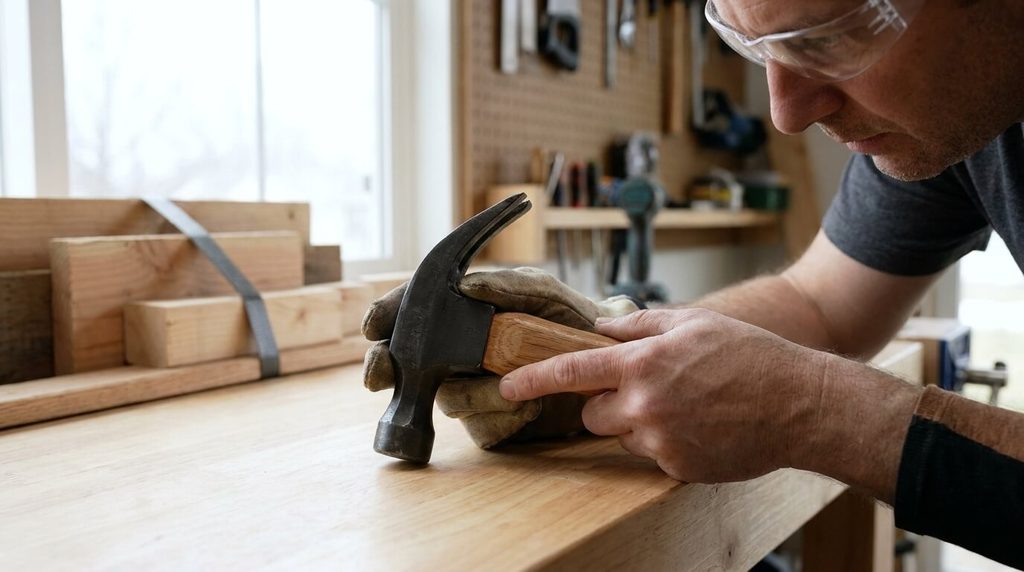
The magnetic starter holds a compatible nail for initial placement. Follow the intended loading method and check that the nail is seated before approaching the work. Once the nail is started, drive it normally with the striking face.
This feature does not make an awkward working position safe. Move yourself or the work rather than stretching beyond a stable stance. Keep the swing path clear, including the space behind and above you.
Use the fastener required for the project, especially where connectors or a specified fastening schedule are involved. A nail that fits the starter does not mean it is appropriate for the connection. Follow the relevant installation instructions instead of choosing a fastener solely for convenience.
Common mistakes to avoid
- Ordering from the photograph alone. Similar listings may show several face or handle options. Read the selected variation and full model number. Check the same details again in the cart.
- Treating the layout marks as self-checking. The reference surfaces still need to be positioned correctly. Practice on scrap and compare the result with a reliable square. Resolve any disagreement before cutting useful material.
- Using the milled face on visible wood. A missed strike can leave a patterned dent. Choose an appropriate finish-work tool when appearance matters. Even a smooth face requires care.
- Using excessive leverage to remove a stubborn nail. A hammer handle is not an unlimited pry bar. Switch to a suitable nail puller or pry bar when the job demands it. Do not extend the handle with a pipe.
- Choosing a heavier tool to fix poor control. Extra weight does not correct inaccurate striking. Secure the work and reassess your technique first. Use a hammer you can place consistently.
The precautions in this hammer safety guide explain why tool condition and correct use matter. For a masonry task, first check whether you need a different hammer category and a compatible struck tool. Our Bon Tool mashing hammer 11-177 guide explains one such alternative.
Check price, finish, and warranty before paying
Compare the delivered cost of the exact configuration, including shipping and any applicable charges. Check whether the seller has the selected variation ready to dispatch or must order it. A lower price matters less if the tool arrives after the project begins.
Finish descriptions differ across listings for this model. Ask the seller to confirm the coating on the actual item if that detail affects your choice. Don’t assume every dark-colored product photo shows the same finish.
The published warranty provides one year of limited coverage from purchase for workmanship and manufacturing defects. The exclusions include certain damage from excessive prying and loose heads caused by shrinkage. Read the current terms, keep proof of purchase, and inspect the tool when it arrives.
Is this hammer worth buying for your work?
Shortlist it if you regularly handle rough carpentry, prefer a wooden grip, and expect to use the layout features. Its value is less convincing if you won’t use those extra functions. Occasional household repairs may not justify buying around a specialized framing feature set.
Choose a smooth-face alternative when visible surface quality drives the decision. Compare other handle types if the wooden grip does not suit your hand. Assess a heavier model only after checking the complete configuration and your ability to control it.
This is a specification-based buying guide, not a hands-on endurance or driving test. There are no measured results here proving fewer swings, less fatigue, or faster layout. The recommendation rests on matching the tool’s documented features to the work you need it to do.
Conclusion
The boss hammer bh18sthi16m 18 oz steel hybrid hammer is most appealing when rough carpentry, a hickory handle, and quick layout work are all part of your routine. Its milled face and integrated guides offer useful options, but they also come with practical limits that matter when choosing a tool. Confirm the exact model, check the fit, and practice the layout method before using it on project materials.
Frequently asked questions
What is the difference between BH18STHI16M and BH18STHI16S?
The M version has a milled face, while the S version has a smooth face. Both are listed as 18 oz steel hammers with hickory handles. Choose the face for the work surface and confirm the full configuration before ordering.
Can the built-in squaring system replace my square?
It can handle suitable layout marks when positioned correctly. A dedicated square may still be easier for wide material, repeated bench work, or checking results. Learn the intended technique before relying on it for a cut.
Does this model have a fiberglass handle?
No, BH18STHI16M identifies the hickory-handle configuration. BH18STPFM is a related milled-face model with a poly-fiberglass handle. Match the code and selected variation rather than relying on a shared product image.
Can I replace the handle or nail-starter magnet?
The manufacturer provides hickory-handle replacement guidance and says replacement magnets are available by contacting the company. Confirm compatibility before buying parts. Handle replacement must leave the head securely fitted before the hammer returns to use.
Is it suitable for furniture and trim?
The milled face can leave a patterned impression on visible wood. A suitable smooth-face hammer is usually a better choice when surface appearance matters. It still needs careful use because a smooth face can also leave dents.