


Learning how to clean a viscose rug starts with accepting that it cannot be treated like an ordinary synthetic carpet. Viscose has an attractive, silk-like sheen, but its fibers become considerably weaker when wet and can develop yellowing, stiffness, pile distortion, or permanent watermarks after aggressive cleaning.
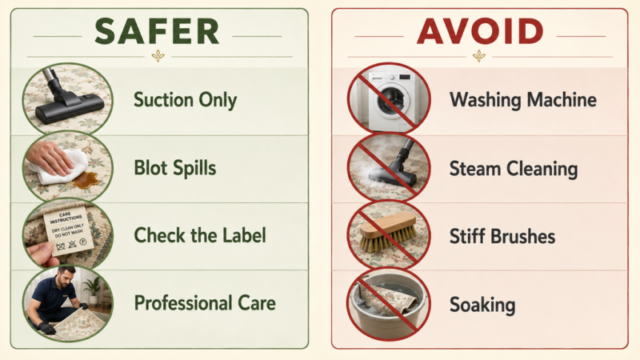
For routine care, use gentle suction without a rotating brush. If something spills, blot it immediately with a clean, dry white towel. Do not put the rug in a washing machine, saturate it with vinegar, scrub it, or use a home steam cleaner unless the rug manufacturer expressly approves that method.
Quick answer: How to Clean a Viscose Rug Without Damaging It
Vacuum a viscose rug using low suction and no beater bar. Blot fresh liquid immediately with dry white towels, follow the care label, and use only a minimal amount of an approved cleaner if spot cleaning is permitted. Leave yellow stains, large spills, pet accidents, and deep cleaning to a rug-cleaning specialist.
Why Viscose Rugs Are So Difficult to Clean
Viscose is a form of rayon made from regenerated cellulose. The Federal Trade Commission recognizes viscose as the predominant form of rayon, as explained in its textile fiber labeling guidance.
The material is often used to imitate the smooth feel and reflective appearance of silk. You may also see similar rugs marketed as art silk, bamboo silk, banana silk, or faux silk, although those names do not necessarily describe the rug’s complete fiber content.
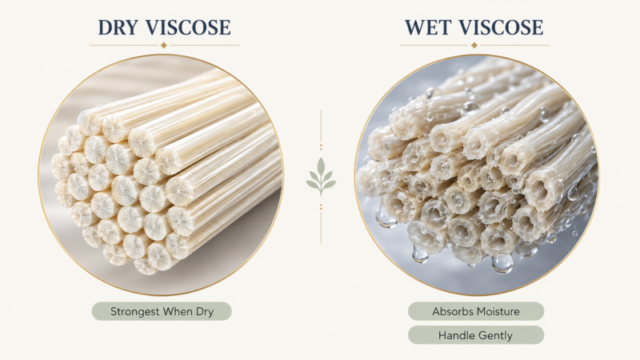
The difficulty begins when viscose absorbs moisture. The Canadian Conservation Institute notes that rayon is absorbent and substantially weaker when wet. Research into wet-cleaned viscose fabrics also found that some samples lost up to 50% of their tensile strength while wet. However, strength recovered after drying under controlled conditions, according to a University of Glasgow conservation study.
A rug is more complicated than a simple fabric sample because it may also contain adhesives, backing material, dyes, fringe, and fibers of different lengths. That combination creates several possible problems:
- Yellow or brown discoloration after contact with water
- A rough, stiff, or matted surface
- Flattened pile that reflects light differently
- Dye bleeding or color loss
- Shrinkage, rippling, or stretching
- Water rings around a spot-cleaned area
- Fiber shedding caused by abrasion
- Odor or mildew if the backing dries too slowly
Check the Rug Label Before Cleaning
The care label should take priority over any general cleaning guide. Check the underside for the fiber percentages and instructions such as “professional clean only,” “dry clean only,” “spot clean,” or “do not use water.”
Do not assume that every shiny rug is 100% viscose. Your rug might be a viscose-and-wool blend, have only a viscose pile, or contain another regenerated fiber such as lyocell. The backing and construction can matter just as much as the surface fiber.
Some manufacturers give especially strict instructions. For example, the care information for a Crate & Barrel viscose rug recommends suction-only vacuuming, immediate dry blotting, no water or household cleaners, and professional cleaning.
If the label is missing, treat the rug as non-washable until its construction has been identified. I recommend taking clear photographs of the front, back, fringe, and any remaining label before contacting a specialist.
What You Need for Safe Routine Cleaning
Routine maintenance should focus on removing dry soil without pulling or crushing the pile. You do not need a large collection of stain removers for this process.
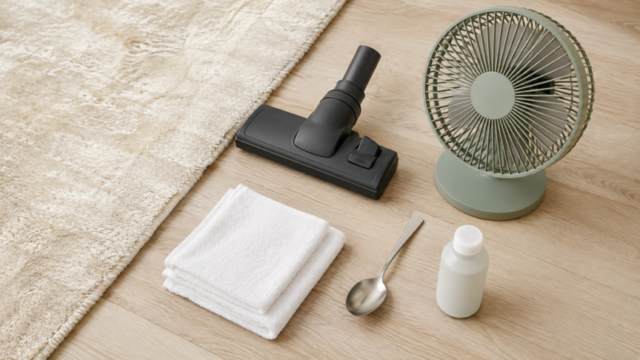
Gather the following:
- A vacuum with adjustable suction
- A smooth upholstery or floor nozzle
- Clean, absorbent white cotton towels
- A dull spoon for lifting solid residue
- A small fan for room-temperature airflow
- A manufacturer-approved cleaner, but only if the label permits spot cleaning
White towels make color transfer easier to see and prevent dye from a colored cloth moving onto a pale rug. Inspect the vacuum attachment for rough edges, hooks, and trapped debris before it touches the fibers.
How to Clean a Viscose Rug Step by Step
The safest home-cleaning process is mostly dry maintenance. Wet treatment should be limited to urgent spill control or label-approved spot cleaning, not whole-rug washing.
1. Inspect the Rug in Good Light
Look for stains, loose fibers, fading, worn areas, and changes in the direction of the pile. Move your hand lightly over the surface to see how the sheen changes when the fibers face different directions.
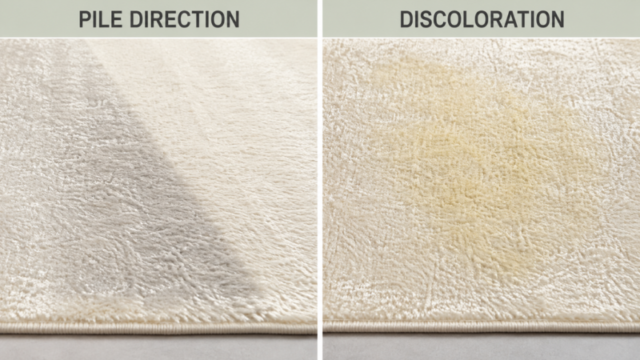
A dark-looking section is not always dirty. Viscose reflects light strongly, so flattened or reversed pile can create a shadow that resembles a stain.
2. Remove Loose Debris Without Beating the Rug
Pick up larger crumbs by hand or lift them with a dull spoon. Avoid beating, snapping, or shaking a large rug forcefully because the backing and fringe may not tolerate the stress.
If the rug is small and its label allows gentle shaking, support it from more than one point. Never drag it over a rough outdoor surface.
3. Vacuum With Suction Only
Turn off the rotating beater bar and select the lowest effective suction. Move the nozzle slowly in the direction of the pile without repeatedly running over the same section.
Keep the nozzle away from fringe and loose edges. If your vacuum does not let you turn off the brush roll, use a smooth hose attachment instead.
The Carpet and Rug Institute’s cleaning guidance supports regular vacuuming and prompt spill treatment, but its general carpet advice should still be adjusted to match the stricter limitations on your viscose rug’s label.
4. Deal With Fresh Spills Immediately
Place a clean white towel over the spill and press gently. Replace the towel as it becomes damp, working from the outside of the spill toward the center to prevent spreading.
Do not rub, twist, scrub, or brush the wet fibers. The Carpet and Rug Institute specifically advises using a dry white absorbent cloth and avoiding scrubbing, since friction can cause fraying and texture changes.
5. Use Cleaner Only When the Label Permits It
If the label allows spot cleaning, test the approved product on a hidden corner first. Wait until the test area is completely dry before deciding whether the color, texture, or sheen has changed.
Apply the smallest possible amount to a white cloth rather than pouring or spraying it onto the rug. Blot gently, limit the treatment to the affected area, and stop immediately if color transfers onto the cloth.
6. Remove Moisture and Dry the Rug Flat
Press fresh dry towels over the treated area until they stop picking up significant moisture. Leave the rug flat in a well-ventilated room and use a fan to move room-temperature air across the area.
Do not hang a damp viscose rug because its own weight may stretch the weakened fibers or foundation. Avoid hair dryers, heaters, radiators, and strong direct sunlight, which can cause uneven drying or color changes.
7. Reassess Only After Complete Drying
A damp viscose pile often looks darker or flatter than the surrounding area. Wait until the front and backing are completely dry before deciding whether further treatment is necessary.
If the fibers remain stiff or the sheen has changed, do not repeatedly wet and brush them. Photograph the damage and consult a rug specialist before another cleaning attempt.

What to Do With Different Types of Spills
Your first response matters more than choosing an elaborate home remedy. In every case, remove solids and absorb liquid before considering any cleaning product.
| Problem | Safest first action | Main risk | When to call a professional |
|---|---|---|---|
| Plain water | Blot immediately with dry white towels | Water ring or yellowing | A mark remains after drying |
| Coffee, tea, or wine | Blot from the outside inward | Dye penetration and spreading | More than a small surface spill |
| Grease or oil | Lift residue and blot without adding water | Darkening and embedded oil | The mark remains visible |
| Mud | Allow solids to dry, then vacuum gently | Spreading wet soil | Mud has reached the backing |
| Pet urine or vomit | Remove solids and absorb liquid immediately | Odor, dye change, contamination | Almost always after initial blotting |
| Unknown chemical | Blot without mixing in another product | Chemical reaction or color loss | Immediately |
If coffee also reached ordinary synthetic carpeting beneath or beside the rug, use a fiber-appropriate method such as this guide to removing coffee stains from carpet. Do not transfer the same solution onto viscose unless its care instructions allow it.

How to Remove Yellow Stains From a Viscose Rug
Yellow or brown areas can appear after over-wetting, slow drying, cleaning-product residue, dye movement, or changes within the cellulose-based pile. Even clean water may discolor some viscose rugs, which is why manufacturer instructions often prohibit home wet cleaning.
Start by deciding whether you are seeing discoloration or simply altered pile direction. View the rug from both ends in natural light. If the patch changes from light to dark as you move, the fibers may be lying differently rather than carrying a colored stain.
If the yellow color remains visible from every direction, stop adding household products. A specialist may use controlled rinsing, extraction, fiber-safe chemistry, pile grooming, and rapid drying, but the correct treatment depends on the rug’s dyes and construction.
Do not try to neutralize yellowing with bleach, hydrogen peroxide, baking soda, or an improvised alkaline cleaner. These products may lighten the dye, leave residue, or create a larger halo around the original mark.
Can You Use Vinegar on a Viscose Rug?
Some cleaning guides recommend a weak acidic solution for viscose, while some manufacturers prohibit all water and household cleaners. That disagreement is exactly why vinegar should not be presented as a universal remedy.
Even diluted vinegar still introduces moisture, and a homemade ratio cannot account for the rug’s dye, backing, finish, previous treatments, or fiber blend. It can also leave a visible ring if only one small area becomes wet.
I would use vinegar only when the manufacturer specifically permits it and provides instructions for that rug. Test the mixture in a concealed area, use it on a cloth rather than pouring it onto the pile, and allow the test to dry completely before proceeding.
Never mix vinegar with chlorine bleach. More importantly, do not keep applying stronger vinegar solutions because the first treatment failed.
Can You Steam Clean a Viscose Rug?
A consumer steam cleaner or rented carpet extractor is not a safe default for viscose. It combines moisture, heat, detergent, extraction force, and repeated passes, all of which can affect a weak, absorbent pile.
“Steam cleaning” is also a loose term. Many machines marketed under that name actually use hot-water extraction rather than dry steam, but either approach can introduce more moisture and heat than the rug tolerates.
If professional cleaning is required, choose a company that identifies and tests the rug before selecting a method. The IICRC Rug Cleaning Technician certification covers rug identification, appropriate cleaning methods, practical techniques, and cleaning limitations, making it a useful credential to ask about.
Can You Put a Viscose Rug in a Washing Machine?
Do not put a viscose rug in a washing machine unless its attached care label explicitly says that the complete rug is machine washable. The drum exposes it to prolonged saturation, detergent, tumbling, friction, rinsing, and a high-speed spin.
Those forces can distort the backing, crush the pile, loosen adhesives, cause dye movement, and leave permanent creases. Even delicate textile guidance from the Canadian Conservation Institute advises against using home washers and dryers on delicate textiles because the appliances are too rough.
A small size does not automatically make a rug machine washable. Fiber content, backing, dye stability, and construction determine whether it can tolerate laundering.
Is Dry-Cleaning Powder Safe for a Viscose Rug?
A consumer dry-cleaning powder is not automatically safe just because it uses less liquid. Fine particles can remain in dense pile, and removing them may require brushing or powerful vacuuming that damages delicate fibers.
Only use a powder if the rug manufacturer lists that product or method as acceptable. Test it in a hidden area, apply the smallest recommended amount, avoid forceful brushing, and remove it with low suction.
Professional “dry cleaning” may describe a controlled low-moisture or solvent-based process rather than the powder sold for household carpets. Ask the cleaner to explain the proposed method and whether it has been tested on viscose rugs.
Common Mistakes That Can Ruin a Viscose Rug
Most damage comes from treating viscose as though it were ordinary wall-to-wall carpet. Avoiding a few common mistakes will do more for the rug than frequent intensive cleaning.
- Scrubbing a wet stain with a brush or sponge
- Using a vacuum with an active beater bar
- Pouring cleaner directly onto the rug
- Saturating one small area and creating a water ring
- Using baking soda paste, bleach, or peroxide for yellowing
- Applying vinegar without checking the care label
- Using a washing machine or rented carpet extractor
- Hanging the rug while it is wet
- Drying it with direct heat
- Walking on the pile before it is completely dry
- Trying several incompatible products on the same stain
Gentle care is also material-specific. If you own other delicate rugs, this separate guide explains how to clean a cowhide rug without ruining it, but its leather-care method should not be applied directly to viscose.
How to Keep a Viscose Rug Clean Longer
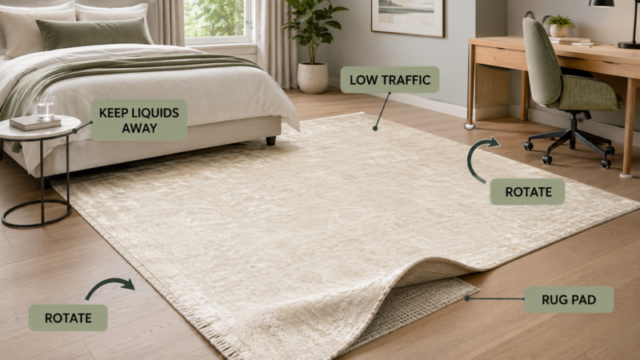
Place the rug in a bedroom, home office, or another low-traffic area rather than an entryway, dining area, or room used frequently by children and pets. A suitable rug pad reduces movement and helps protect the rug from abrasive contact with the floor.
Vacuum gently before grit works deeply into the pile. Rotate the rug periodically if the manufacturer allows it so that foot traffic and light exposure do not affect one area more than another.
Use furniture protectors beneath heavy legs and keep drinks, plant pots, and pet bowls away from the rug. One detail I would not overlook is moisture beneath the rug, especially on recently cleaned floors or near exterior doors.
When to Hire a Professional Rug Cleaner
Professional treatment is the safer choice when the rug is valuable, heavily soiled, visibly yellowed, or labeled for professional cleaning only. You should also escalate large spills, old stains, pet accidents, odors, dye bleeding, rippling, and damage caused by a previous cleaning attempt.
Look for a cleaner who handles removable area rugs rather than only wall-to-wall carpet. Ask these questions before authorizing the work:
- Do you regularly clean viscose, rayon, or art-silk rugs?
- Will you inspect the fiber, dyes, foundation, and backing first?
- Do you perform a colorfastness or moisture test?
- Will the rug be cleaned at your facility or inside my home?
- How will you control moisture and drying time?
- Can you explain the risks of yellowing, pile change, or texture loss?
- What happens if a previous cleaner or home remedy has altered the rug?
- Will you document the condition and provide a written quote?
A reputable cleaner should acknowledge that perfect restoration is not guaranteed. Existing wear, cellulose discoloration, dye loss, and chemical damage may be permanent even when the rug becomes cleaner.
Frequently Asked Questions
How to clean a viscose rug in a washing machine?
You generally should not clean a viscose rug in a washing machine. Only use a machine if the attached care label specifically identifies the complete rug, including its backing, as machine washable.
How to clean a viscose rug with vinegar?
Check the manufacturer’s instructions before using vinegar because some viscose rugs must not be exposed to water or household cleaners. If vinegar is expressly permitted, test the recommended dilution in a hidden spot and wait for it to dry completely before treating a visible area.
How do you remove yellow stains from a viscose rug?
First, view the mark from different directions to rule out a change in pile reflection. If it remains yellow from every angle, avoid bleach, peroxide, baking soda, and repeated wetting, and ask a viscose-rug specialist to assess it.
Can you steam clean a viscose rug?
A home steam cleaner or rented extractor is not recommended unless the manufacturer explicitly approves it. Heat, moisture, detergent, agitation, and slow drying can leave the fibers discolored, stiff, flattened, or distorted.
What dry-cleaning powder can you use on a viscose rug?
Use only a powder specifically approved by the rug manufacturer for that exact fiber and construction. Generic carpet powder may remain trapped in the pile and require damaging brushing or strong suction to remove.
Can you vacuum a viscose rug?
Yes, but use low suction and switch off the rotating brush or beater bar. Move a smooth attachment in the direction of the pile and keep it away from fringe and loose edges.
Why did my viscose rug turn yellow after cleaning?
Possible causes include excess moisture, slow or uneven drying, cleaning-product residue, dye movement, or changes in the cellulose-based pile. Stop experimenting with additional chemicals because each new treatment can make professional correction more difficult.
Conclusion: Use the Least Aggressive Method
The safest answer to how to clean a viscose rug is to rely on gentle dry maintenance, immediate blotting, minimal moisture, and the manufacturer’s instructions. Washing machines, steam cleaners, hard scrubbing, and untested home remedies create far more risk than they do on ordinary carpet.
Start with suction-only vacuuming and act quickly when spills occur. If your rug has yellowing, an old stain, a pet accident, or a “professional clean only” label, contact an experienced rug cleaner and describe everything already applied to it. For more practical surface-specific cleaning guidance, explore Home Upright’s cleaning guides before choosing a treatment for another rug, carpet, or household material.