


How to Increase Water Pressure in House: 7 Fixes That Actually Work
You turn the shower on, and it just… trickles. You’re standing there, shampoo halfway rinsed, waiting for water that never quite shows up with any force. Or maybe it’s the kitchen faucet — filling a pot for pasta feels like it takes a full commercial break.
Low water pressure is one of those problems that seems small until you’re living with it every day. The good news? In most homes, it’s fixable, often without calling a plumber at all.
I’ve pulled together everything that actually moves the needle here: how to test your pressure, what’s really causing the drop, and the fixes that range from a five-minute cleaning job to a proper whole-house booster pump. I also dug into what the top-ranking guides on this topic leave out, like how hot-water pressure problems are usually a completely different issue from cold-water ones, and why your fix depends heavily on whether you’re on city water or a private well.
By the end, you’ll know exactly how to increase water pressure in house conditions, whatever your setup looks like.
What Counts as “Low” Water Pressure? (Test It First)
Before you fix anything, you need a number. “It feels weak” isn’t a diagnosis. It’s a starting point.
Residential water pressure is measured in pounds per square inch, or psi. According to Lowe’s guidance, a healthy home typically runs between 40 and 80 psi, with 60 psi generally considered the sweet spot for comfortable use without stressing your pipes.
Here’s how the ranges typically break down:
| PSI Reading | What It Means |
|---|---|
| Below 40 psi | Low pressure — showers and faucets will feel weak |
| 40–60 psi | Acceptable to good range for most homes |
| 60–80 psi | Strong, comfortable pressure |
| Above 80 psi | Too high — risks damaging pipes, valves, and appliances |
That upper limit isn’t just a rule of thumb. The International Residential Code requires a pressure-reducing valve in any home where the static supply pressure exceeds 80 psi, because sustained pressure above that threshold accelerates wear on pipe joints, supply hoses, and water heaters.
How to Test Your Water Pressure at Home
You don’t need a plumber for this part. Here’s what to do:
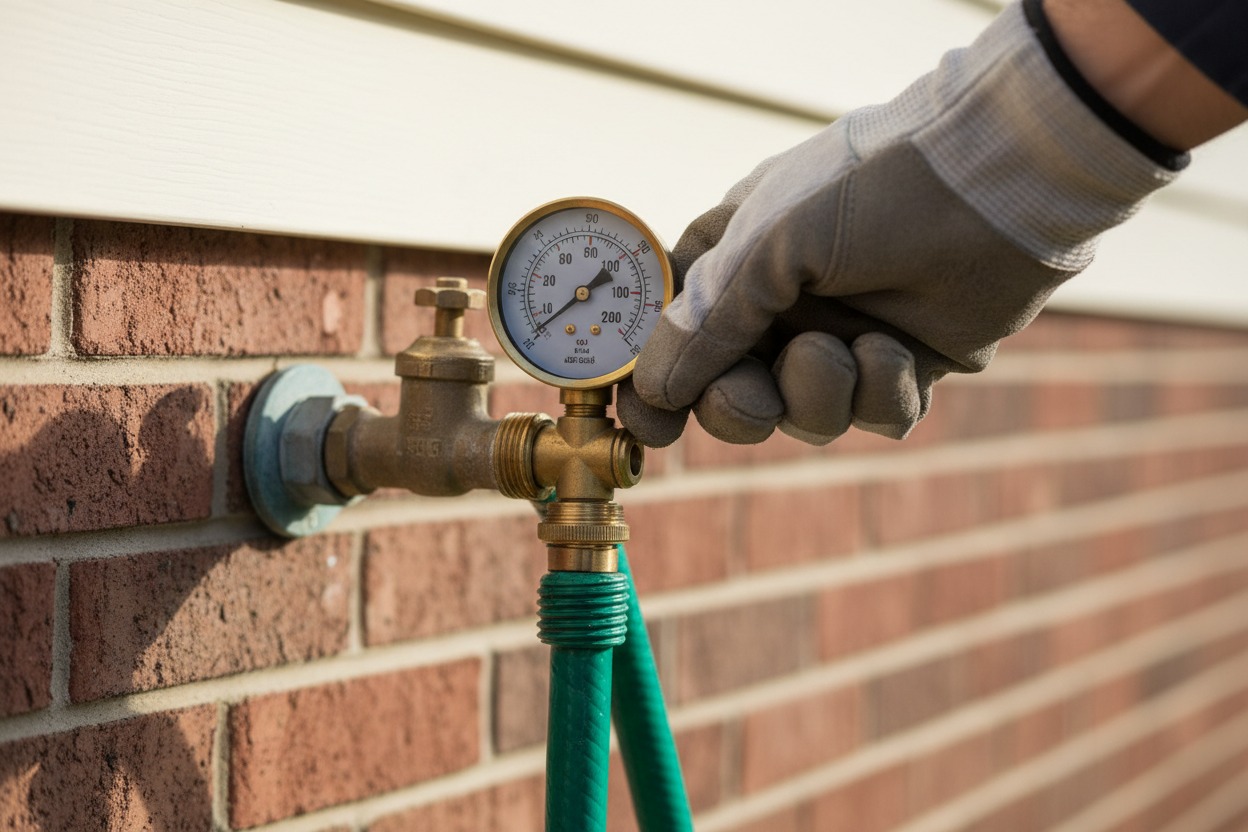
- Buy a simple hose-bib pressure gauge (usually under $15 at any hardware store).
- Screw it onto an outdoor spigot or a washing machine hookup.
- Turn off every faucet, appliance, and sprinkler inside and outside the house.
- Open the spigot fully and read the dial.
Test at a couple of different times of day if you can. Municipal pressure often dips during peak-use hours in the early morning and evening, when everyone on your block is showering or running dishwashers at once.
Why Is My Water Pressure Low? Common Causes
Once you know your number, it helps to understand what’s actually behind it. Low water pressure isn’t one problem. It’s usually one of these:
- Clogged aerators and showerheads. Mineral deposits from hard water build up inside the tiny mesh screens, restricting flow even when the supply pressure is fine.
- A partially closed shut-off valve. If you’ve had recent plumbing work, or just haven’t checked in years, your main shut-off or the valve at the water meter might not be fully open.
- A faulty pressure regulator (PRV). Most homes on municipal water have one near the main shut-off. According to the El Dorado Irrigation District, these regulators typically last 10 to 15 years before they need adjustment or replacement.
- Hidden pipe leaks. Water escaping through a crack diverts the supply away from your fixtures and often appears as damp patches or unexplained puddles before you notice a change in pressure.
- Corroded or undersized galvanized pipes. Older homes with galvanized steel plumbing accumulate rust and scale inside the pipe walls over decades, narrowing the usable diameter.
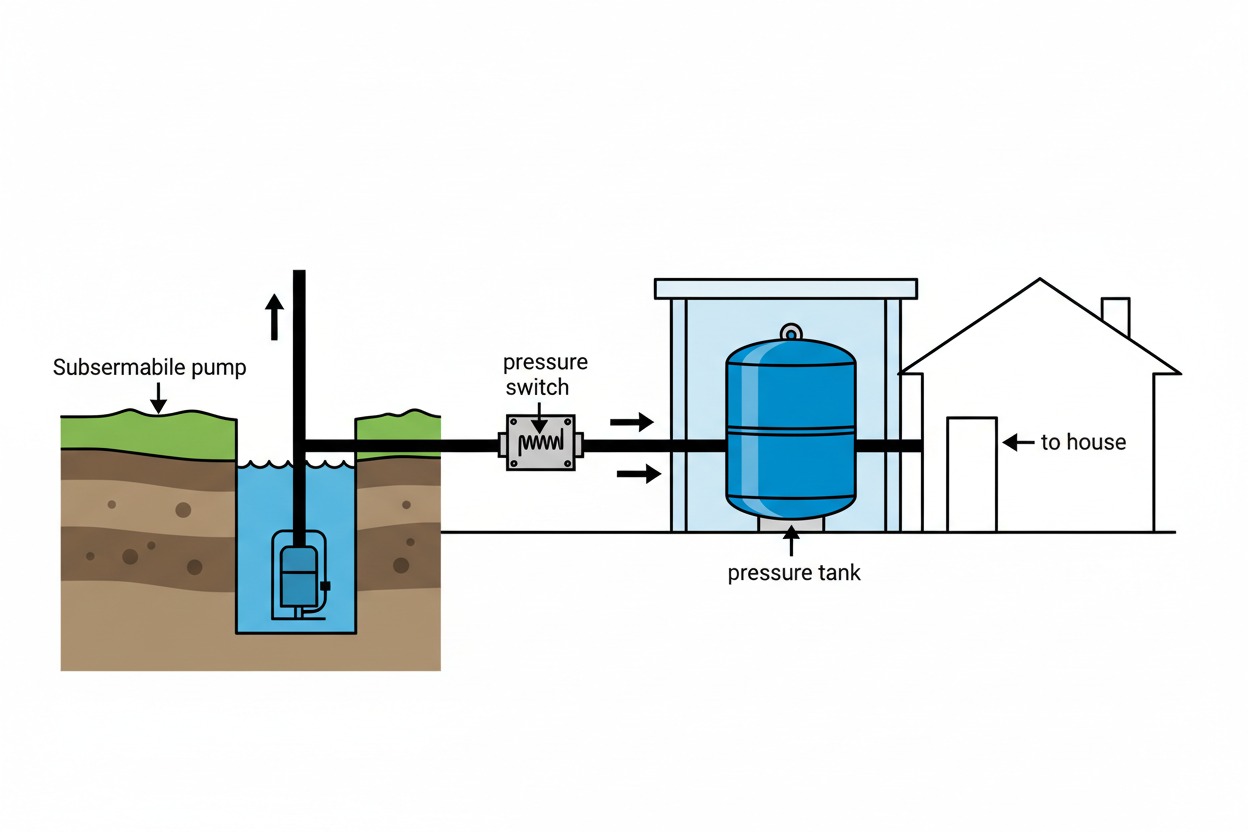
- Well pump or pressure tank issues. If you’re on well water, the tank’s pressure switch settings, or a pump that’s aging out, are usually the culprit.
- Sudden increase in household demand. Added a bathroom? Installed a sprinkler system? Hosting guests? More simultaneous use means more pressure drop at each fixture.
Knowing which of these applies to you determines which fix below is worth your time.
If your water pressure has improved but you’re still waiting too long for hot water, the problem may be with your water heater instead. Learn how long it takes for hot water to come back and which factors affect recovery time.
How to Increase Water Pressure in House From the Main (City Water Supply)
If your home connects to a municipal water system, your fixes generally start at the pressure-reducing valve and work outward.
Step 1: Check and Adjust the Pressure Reducing Valve (PRV)
The PRV is usually a bell-shaped brass fitting near your main shut-off valve, close to where the water line enters the house. It has an adjustment screw on top.
- Turning the screw clockwise increases pressure.
- Turning it counterclockwise decreases pressure.
Make small quarter-turn adjustments, then re-check pressure with your gauge after each one. Don’t rush this. Overshooting can push you above the safe 80 psi ceiling.
If the PRV won’t hold an adjustment, or the pressure fluctuates wildly no matter what you do, the valve itself has likely failed and needs to be replaced. This is a reasonable DIY job for confident homeowners, but if you’re not comfortable working near the main shut-off, it’s worth the cost of a plumber.
Step 2: Fully Open Your Main and Meter Valves
This sounds too simple to matter, but it’s one of the most commonly missed fixes. Locate the valve at your water meter (sometimes curb-side, sometimes in a basement or utility closet) and the main shut-off inside the house. Both should be turned to their fully open position. A valve that’s even a quarter-turn short of fully open can meaningfully restrict flow.
Step 3: Rule Out a Municipal Supply Issue
Sometimes the problem isn’t your house at all. Call your water utility and ask what the typical delivered pressure is for your street. If neighbors report the same issue, it may be a supply-side problem, aging municipal infrastructure, ongoing repair work, or a water main issue that no amount of home plumbing work will solve.
Step 4: Check for Leaks Along the Service Line
A leak between the meter and your house reduces the pressure available at your fixtures. Watch your water meter with everything in the house turned off; if it’s still spinning, you have a leak somewhere in the system.
How to Increase Water Pressure in House With Well
Well systems work differently, and this is where a lot of generic advice online falls short. Well pressure isn’t just about the pump; it’s about the balance between your well’s yield (how much it can supply) and your pressure tank settings (how that supply gets delivered).
Adjust Your Pressure Tank Settings
Most residential well systems ship with a default pressure switch setting of around 28/40 or 30/50 psi (the low number is when the pump kicks on, the high number is when it shuts off). According to McCall Brothers, bumping this up to a 40/60 psi setting, a common upper range for residential systems, can noticeably improve household pressure.
You’ll adjust this at the pressure switch mounted on or near your pressure tank, using a screwdriver to tighten or loosen the internal spring-tension nut. If you’ve never done this before, it’s worth watching a tutorial specific to your tank’s brand, since designs vary.
Check Your Pump’s Flow Rate (GPM)
Pressure and flow rate are different but connected. Well pumps are measured in gallons per minute (GPM). If your pump is too small for your home’s needs, like an 8 GPM pump for a house with three bathrooms and irrigation, you will notice a pressure drop when multiple fixtures are used at the same time.
Consider a Constant Pressure System
Traditional well tanks let pressure swing by roughly 20 psi between pump cycles. A constant-pressure system — using a variable-speed pump and electronic sensors. Keeps that swing to about 2 psi, according to industry sources such as Well Manager. The result feels much closer to municipal-style consistent pressure, though it comes at a higher upfront cost than a basic tank adjustment.
Add Storage Plus a Booster Pump for Low-Yield Wells
If your well simply doesn’t produce enough water fast enough (a low-yield well), pairing a storage cistern with a variable-speed booster pump is often recommended by extension programs, including Penn State Extension, as one of the most reliable long-term fixes. This setup protects the well from being pumped faster than it can recharge while still delivering strong, steady pressure to your home.
How to Increase Water Pressure in House Naturally (No Big Purchases)
Not every fix requires a tool purchase or a plumber visit. These are the lowest-cost, lowest-effort options worth trying first, especially if your pressure problem is isolated to one or two fixtures rather than the whole house.
Clean or Replace Clogged Aerators and Showerheads
Hard water leaves mineral deposits that clog the tiny mesh screens inside faucet aerators and showerheads. This is genuinely one of the most common causes of what feels like “low water pressure” but is really just restricted flow at a single fixture.
To clean one:
- Unscrew the aerator or showerhead by hand, or with pliers wrapped in a cloth to avoid scratching the finish.
- Soak it in a bowl of white vinegar for 30–60 minutes to dissolve mineral buildup.
- Use an old toothbrush to scrub out any remaining debris from the mesh screen.
- Rinse thoroughly and reattach.
If a fixture is old or heavily corroded, replacing it is often cheaper and faster than repeated cleaning.
Check Every Fixture’s Shut-Off Valve
Under-sink and behind-toilet shut-off valves are more often bumped or partially closed during other repairs than people realize. Make sure each one is fully open.
Flush Your Water Heater
Sediment collects at the bottom of a water heater tank over time, and in some setups, this can restrict flow enough to affect hot water pressure specifically (more on that below). Draining and flushing the tank once a year, per most manufacturer guidance, helps prevent this buildup.
Remove or Upgrade Flow Restrictors
Some showerheads and faucets include a small plastic flow-restricting disc, originally installed to meet the WaterSense efficiency standards set by the U.S. Environmental Protection Agency, which cap showerheads at 2.0 gallons per minute. These discs can sometimes be removed for a stronger spray, though doing so increases your water usage, which is worth weighing against your utility bill and any local water-conservation rules.
Worth noting: modern WaterSense-labeled fixtures aren’t automatically weaker. The EPA’s specification requires these showerheads to maintain a minimum flow rate even at low household pressure, using pressure-compensating technology built into the fixture. So if you’re replacing an old showerhead anyway, a WaterSense model can sometimes feel stronger than what you had, not weaker, while still using less water overall.
How Hard Water Quietly Reduces Pressure Over Time
This is the part most guides skip entirely, and it’s worth understanding if you live in an area with hard water, which affects a large share of homes in the country.
Hard water carries dissolved calcium and magnesium. Every time it passes through your pipes, fixtures, and water heater, a small amount of mineral scale is left behind. On its own, one day’s worth of buildup is nothing. Over five or ten years, though, that scale can measurably narrow the inside diameter of galvanized pipes and clog the internal screens of every aerator and showerhead in the house.
This matters because it explains a pattern many homeowners notice but can’t quite pin down: pressure that was fine when they moved in and has gradually crept downward every year since, with no single leak, valve, or regulator to blame. If that sounds like your situation, two things are worth doing:
- Test your water hardness. Many local water utilities publish annual water quality reports, or you can use an inexpensive test strip kit.
- Consider a whole-house water softener if hardness is confirmed. This won’t instantly fix pressure that’s already restricted by existing scale, but it prevents the problem from getting worse, and it protects any new fixtures, water heater, or booster pump you install afterward.
If you already have significant scale buildup in older pipework, a softener alone won’t reverse it. That typically requires descaling, fixture replacement, or, in older homes, repiping.
Quick-Reference Checklist Before You Spend Any Money
Before buying a booster pump or calling a plumber, run through this in order. It takes under an hour total and solves the majority of pressure complaints:
- Test your current psi with a gauge.
- Confirm your main and meter shut-off valves are fully open.
- Clean or replace clogged aerators and showerheads.
- Check your water meter for signs of an active leak.
- Locate and gently adjust your PRV (city water) or pressure switch (well water).
- Flush your water heater if hot water specifically is the problem.
- Only then consider a booster pump if pressure is still low.
How to Increase Water Pressure in House With a Pump (Booster Pump Guide)
When cleaning, adjusting, and troubleshooting haven’t solved it, or when your incoming supply pressure is simply too low to begin with, a booster pump is the most reliable fix.
How a Booster Pump Works
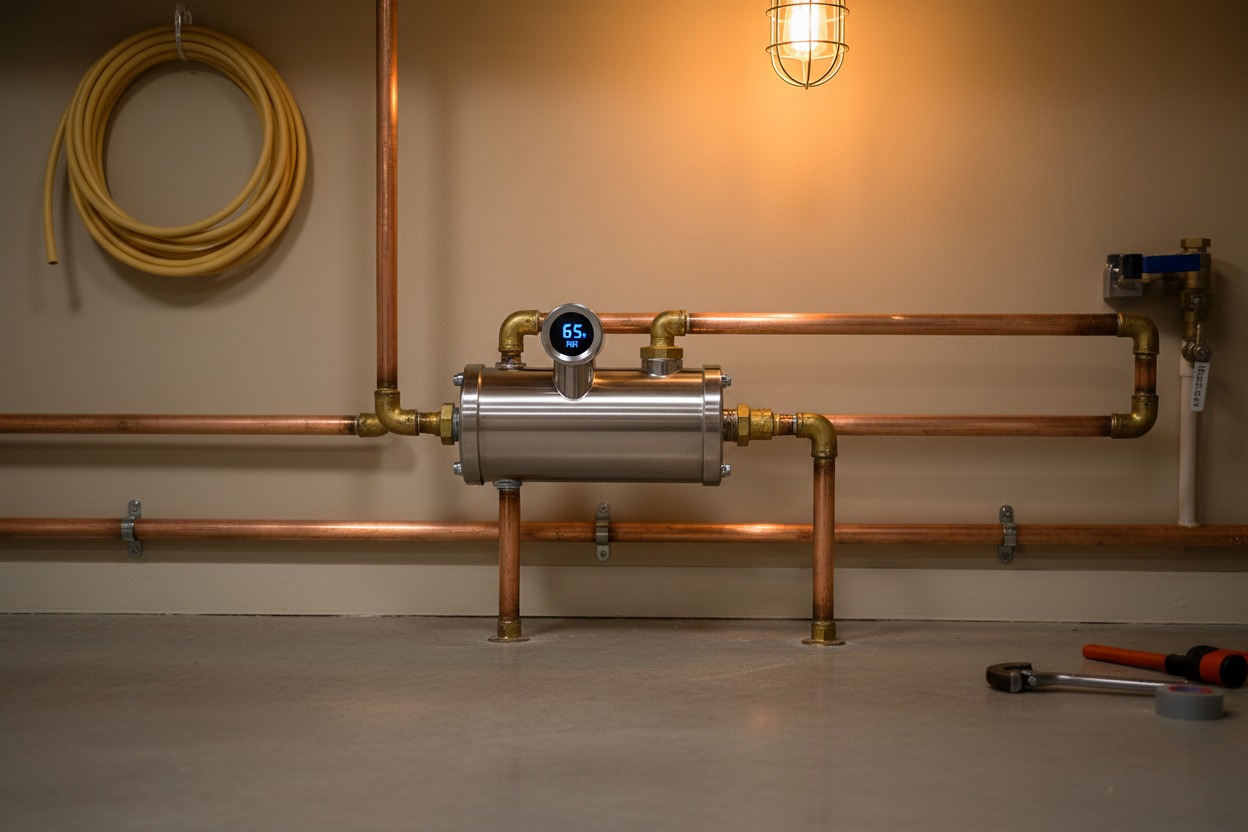
A booster pump sits in line with your main water supply and uses a motor-driven impeller to increase both flow and pressure before water reaches your fixtures. It’s a mechanical solution, not just an adjustment, which is why it works even when your incoming municipal or well pressure genuinely can’t be improved any other way.
Types of Booster Pumps
| Type | Best For | Notes |
|---|---|---|
| Single-stage pump | Single-family homes, one story | Simplest and most affordable option |
| Multi-stage pump | Larger homes, longer pipe runs | Multiple impellers for bigger pressure gains |
| Variable-speed pump | Homes with fluctuating demand, well systems | Adjusts output automatically, reduces cycling |
What It Costs
Based on current industry pricing data from Angi, a residential booster pump unit typically runs $60 to $300, depending on capacity, while full installed systems, including labor, can range from around $800 to $3,500, and up to $10,000 for complex whole-house well setups, according to Angi’s booster pump cost guide.
A separate estimate from Fresh Water Systems puts a typical mid-range booster pump plus professional installation at roughly $1,200 to $1,500 total — a useful middle-ground figure if you’re budgeting.
Sizing and Installation Notes
- Booster pumps should be sized to your household’s peak demand, not average use. Undersizing means you’ll still feel drops when multiple fixtures run at once.
- If your pump can add 30 psi or more, pair it with a pressure regulator downstream so you don’t accidentally push your home above the 80 psi safety threshold.
- Installation on the main line, near the meter or main shut-off, usually requires a licensed plumber, both for code compliance and to avoid damaging your existing plumbing.
How to Increase Hot Water Pressure in House (A Different Problem)
This is where a lot of guides conflate two separate issues. If your cold water pressure is strong but your hot water pressure specifically feels weak, the cause is almost never your main supply. It’s something in the hot water delivery path.
Sediment Buildup in the Water Heater
Over time, mineral sediment settles inside the tank and can partially block the outlet where hot water flows to your pipes. This is especially common in areas with hard water. Flushing the tank annually, as most manufacturers recommend, is the standard fix.
A Failing Dip Tube
Inside a tank water heater, the dip tube directs incoming cold water to the bottom of the tank. If it cracks or deteriorates, cold water can short-circuit straight to the hot outlet, which sometimes shows up as pressure or temperature inconsistency rather than a clean drop.
Clogged Hot Water Lines
Because hot water pipes run at higher temperatures, they can accumulate scale faster than cold lines in hard-water homes, gradually narrowing the usable pipe diameter on the hot side only.
A Partially Closed Valve at the Water Heater
Check the shut-off valve on the cold inlet side of your water heater. If it’s not fully open, it restricts how much water can enter the tank for heating and delivery, which reads exactly like a hot-water-only pressure problem.
Tankless Water Heater Flow Limitations
If you have a tankless system, low hot water pressure can also stem from the unit’s maximum flow rate being exceeded when multiple hot fixtures run simultaneously. This isn’t a defect. It’s a sizing issue, and the fix is either staggering hot water use or upgrading to a higher-capacity unit.
Fixing Pressure Problems Room by Room
A whole-house fix isn’t always necessary. Here’s a quick reference if your problem is isolated:
- Only the shower is weak: Clean or replace the showerhead first. If that doesn’t help, check for a kinked or restricted supply line behind the wall, or a scale-clogged shower valve cartridge.
- Only the kitchen faucet is weak: Clean the aerator, then check the faucet’s own shut-off valves under the sink.
- Only the upstairs is weak: This is often gravity and distance combined. Upper floors naturally see lower pressure than fixtures closer to the main supply. A booster pump is frequently the most effective fix here.
- Only one specific bathroom is weak: Isolate the problem by checking that bathroom’s individual shut-off valves before assuming it’s a house-wide issue.
Expert Tips: What Professionals Check That Homeowners Often Miss
- Test pressure at multiple times of day, not just once. A single morning reading can hide the fact that pressure is fine at 2 p.m. but drops sharply during evening peak demand.
- Don’t assume “low pressure” and “low flow” are the same problem. Pressure is the force behind the water; flow is the volume moving through. A clogged aerator restricts flow at one fixture without touching your home’s actual pressure reading elsewhere.
- Check your water meter for a leak before spending money on a booster pump. It’s a five-minute test that can save you an unnecessary purchase.
- Know your area’s typical main pressure before adjusting anything. Utilities can usually tell you what pressure they deliver to your street, which tells you whether the fix is inside your home or upstream of it.
- Never exceed 80 psi, even if it “feels” better. The IRC sets that ceiling for a reason — it protects your pipes, appliances, and water heater from premature failure.
Pros and Cons of Each Fix
| Method | Pros | Cons |
|---|---|---|
| Clean aerators/showerheads | Free or nearly free, takes minutes | Only fixes localized clogs, not whole-house pressure |
| Adjust PRV | No cost if you already have one, fast | Risk of overshooting past safe psi if rushed |
| Adjust well pressure tank | Low cost, noticeable improvement | Only works if your pump can handle the higher setting |
| Booster pump | Solves pressure at the source, works for the whole house | Higher upfront cost, usually needs professional installation |
| Water heater flush | Prevents hot-water-specific issues, protects heater’s lifespan | Doesn’t help cold water pressure at all |
| Replace corroded pipes | Permanent fix for older homes | Most expensive and invasive option |
When to Call a Plumber
Most of the steps above are safe for a confident DIYer. But bring in a licensed plumber if:
- You’re not comfortable working near your main shut-off or water meter.
- Pressure is inconsistent across the whole house despite trying the fixes above.
- You suspect corroded galvanized pipes, which usually require partial or full repiping.
- You need a booster pump installed on the main supply line.
- Your PRV keeps failing even after replacement, which may indicate a deeper supply-side issue.
A licensed plumber can also do something a gauge at home can’t: pressure-test individual sections of your plumbing to isolate exactly where a drop is happening, which matters most in older homes with a mix of pipe materials and ages. If you’re getting quotes, it’s reasonable to ask for a written estimate that separates diagnostic time from repair cost, since some pressure issues turn out to be a 20-minute valve fix rather than a major job.
Common Mistakes That Make Pressure Problems Worse
A few habits actually work against you when you’re trying to fix low pressure:
- Cranking the PRV as high as it will go. More pressure isn’t automatically better. Pushing past 80 psi shortens the life of your water heater, washing machine hoses, and pipe joints, and can trigger the exact leaks you’re trying to avoid.
- Ignoring a slow leak because “it’s not that bad.” Small leaks compound. A pinhole leak that seems minor today is often the same leak that’s quietly dropping your household pressure six months from now.
- Buying a booster pump before testing for simpler causes. It’s the most expensive fix on this list, and it won’t help if your real problem is a clogged aerator or a leak upstream of the pump.
- Skipping annual water heater maintenance. Sediment buildup is slow and easy to forget about, which is exactly why it becomes a bigger issue for homes that never flush the tank.
- Assuming every fixture in the house has the same problem. As covered above, isolated low pressure in one room usually has a different fix than a house-wide drop. Treating them the same wastes time and money.
FAQs
How do I increase water pressure in my house naturally?
Start with the free fixes: clean mineral buildup out of your aerators and showerheads, make sure all shut-off valves are fully open, and check for leaks. These address the most common causes at no cost.
What is considered good water pressure for a house?
Most sources, including Lowe’s, cite 40–80 psi as the safe range, with 60 psi as ideal for comfortable daily use.
Why does my house have low water pressure, but the water meter shows normal pressure at the street?
This usually points to an issue inside your home rather than your supply. Commonly, a partially closed valve, a failing PRV, clogged fixtures, or aging pipes restrict flow between the meter and your faucets.
Can I increase water pressure myself without a plumber?
Yes, for many common fixes, such as cleaning aerators, adjusting a PRV, checking valves, or adjusting a well pressure tank setting. Installing a booster pump or replacing pipes typically requires a licensed professional, both for safety and code compliance.
Will a booster pump increase both hot and cold water pressure?
Yes, if it’s installed on your main supply line before the water splits to hot and cold systems. If your issue is hot-water-only, though, the cause is more likely inside your water heater, and a whole-house booster pump won’t fix that on its own.
Final Thoughts
Low water pressure is annoying, but it’s rarely mysterious once you actually test it and work through the causes methodically. Start cheap, clean the fixtures, check the valves, and rule out leaks before spending money on anything mechanical. If you’ve done all that and pressure is still weak, a properly sized booster pump solves the problem for good.
If you’re already working through home fixes like this one, you might also find our guides on the Bathroom and Kitchen sections at Home Upright useful. That’s where we cover more of these everyday plumbing and maintenance issues, room by room. And if the fix you’re after involves outdoor spigots or irrigation lines, our Outdoor & Garden section has related maintenance guides worth a look.
Got a specific setup (old house, well water, apartment) that doesn’t quite fit the fixes above? Drop your situation in the comments, and I’ll help you figure out where to start.