


How to Remove Mildew Smell From Towels: The Complete Guide
You just washed your towels. They should smell clean. Instead, you pull them out and get a sour, musty whiff that smells almost worse than before you started. It’s confusing, and it’s frustrating, especially when you followed the instructions on the detergent bottle exactly.
Here’s the part most articles skip. That smell usually isn’t coming from the towels themselves. It’s coming from your washing machine, and the towels are just carrying the evidence out for everyone to smell. Fix the source, not just the symptom, and the smell stops coming back for good.
This guide covers how to remove mildew smell from towels using methods that actually address the cause, not just mask it. You’ll get the two-wash method, vinegar-free alternatives, HE washer-specific fixes, and the washing machine maintenance steps that most guides leave out entirely. By the end, you’ll know exactly why this keeps happening and how to stop it.
Why Towels Get That Mildew Smell in the First Place
Towels are thick, absorbent, and used in the most humid room in your house. That combination makes them one of the easiest fabrics to develop a musty smell. And it usually comes down to one simple problem: moisture that doesn’t leave fast enough.
Mildew and mold need three things to grow: moisture, warmth, and organic material to feed on. Towels supply all three. They trap water in their fibers, they’re often left in warm bathrooms or hampers, and they collect dead skin cells, body oils, and soap residue every time you use them, according to research summarized by the National Institute of Environmental Health Sciences.
If conditions are right, mildew can start forming on a damp towel within a day or two, not weeks, based on observations shared by Amba Products’ guide on mold and damp towels. That’s faster than most people expect, which is why a towel that seemed fine yesterday can smell musty today.
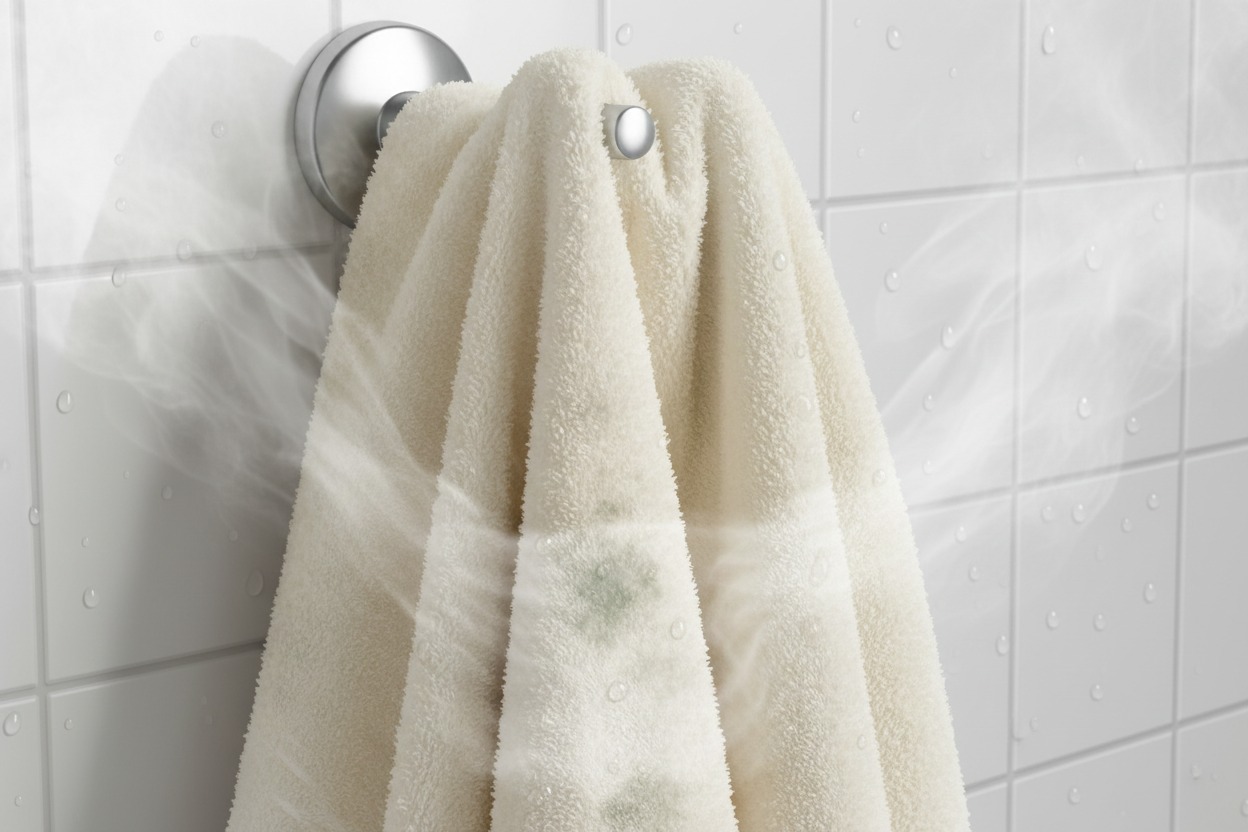
Why Do My Towels Smell Like Mildew After Just One Use?
This one catches people off guard. You use a clean towel once, hang it up, and by the next day it already smells off. A few things usually explain this:
- The towel wasn’t fully dry to begin with. If it came out of a washer that didn’t spin it dry enough, or it sat folded before it finished drying, it started damp.
- It’s hanging somewhere with poor airflow. A towel bunched on a hook in a small, steamy bathroom stays wet far longer than one spread out with air moving around it.
- The washing machine itself has residue or mold, and it transferred onto the “clean” towel during the wash. This is more common than people realize, especially with front-load washers.
- The towel is folded and stored while still slightly damp, which locks moisture inside the stack where it can’t evaporate.
If your towels smell musty after a single use, the towels usually aren’t the problem. Something in its environment or in the wash itself is.
Is Mildew on Towels Dangerous?
Mostly, mildew on towels is a nuisance rather than a serious health threat, but it’s not something to just ignore either, especially in households with allergies, asthma, or young children.
Mildew is a type of surface mold, and according to the CDC, exposure to mold in general can cause a stuffy nose, sore throat, coughing, wheezing, or skin irritation in sensitive individuals, with people who have asthma or mold allergies at risk of more severe reactions. People with weakened immune systems or chronic lung disease face a higher risk of respiratory infections from mold exposure.
Beyond mold itself, a damp, mildewy towel is also a breeding ground for bacteria. Reusing a towel that never fully dries between uses can reintroduce bacteria like Staphylococcus onto your skin, according to a report from WFPG’s Living Well series, which can contribute to breakouts, rashes, or minor skin infections in some people.
The good news: mildew is a surface-level fungus, and it’s generally much easier to fully remove from fabric than to remove deeper mold growth from walls or drywall. A proper wash, described below, is usually all it takes.
Quick comparison: mildew vs. mold
| Mildew | Mold | |
|---|---|---|
| Appearance | Powdery, flat, gray or white | Fuzzy, raised, black or green |
| Where it grows on towels | Surface of the fabric | Can penetrate deeper into fibers |
| How hard to remove | Usually washes out completely | Can require repeated treatment or discarding |
| Health risk | Mild allergic reactions in sensitive people | Can be more serious, especially long-term exposure |
How to Remove Mildew Smell From Towels (The Two-Wash Method)
This method consistently outperforms a single regular wash cycle because a single cycle often isn’t enough to fully break down the buildup that causes the smell.
What you’ll need:
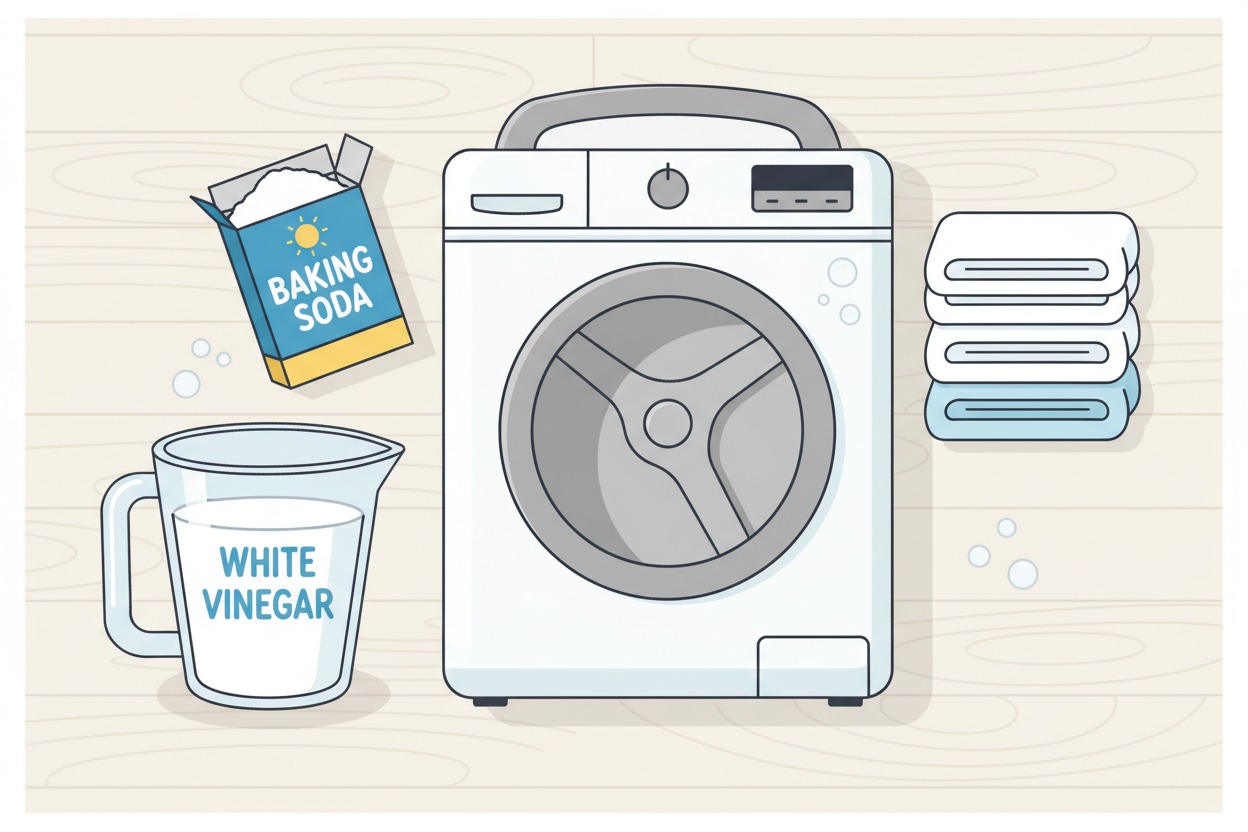
- 1 cup white distilled vinegar
- ½ cup baking soda (optional, for the second wash)
- Your regular detergent
- Hottest water your towels’ care label allows
Step 1: Wash with vinegar only, no detergent. Load your musty towels into the washer. Add 1 cup of white vinegar to the detergent compartment, or pour it directly into the drum if your washer doesn’t have one. Run a full cycle on the hottest water setting your towels can handle. Vinegar is acidic, which helps kill mildew, mold spores, and bacteria, and it also breaks down detergent and mineral buildup trapped in the fibers, as explained in Weezie Towels’ cleaning guide.
Step 2: Wash a second time with detergent (and baking soda if needed). Run a second full cycle, this time with your regular detergent. If the smell is still lingering after the vinegar wash, add ½ cup of baking soda directly to the drum along with the detergent. Baking soda helps neutralize odors that vinegar alone didn’t fully clear.
Step 3: Dry immediately and thoroughly. Move the towels to the dryer right away, or hang them somewhere with strong airflow and direct sunlight if you’re air-drying. Don’t let them sit damp in the washer, even for twenty minutes, since that’s exactly the environment that caused the smell in the first place.
Why two washes work better than one: A single cycle often just redistributes the odor-causing residue rather than fully rinsing it out, especially in towels that have been musty for a while. Splitting the vinegar and detergent into separate cycles gives each ingredient a full cycle to do its job, rather than competing with the other in the same wash.
How to Get Mildew Smell Out of Towels Without Vinegar
Not everyone wants to use vinegar, whether because of the smell, availability, or personal preference. Here are effective alternatives that don’t rely on it at all.
How to Get Mildew Smell Out of Towels With Baking Soda
Baking soda alone works well for mild to moderate odor, though it’s gentler than vinegar and may need an extra round for stronger smells.
- Add ½ to 1 cup of baking soda directly to the washer drum with your towels.
- Wash on the hottest cycle your towels can tolerate, using your regular detergent.
- If the smell persists, repeat with a slightly larger amount of baking soda, or follow with one of the methods below.
Borax
Adding a cup of borax to a hot wash cycle is another established option for eliminating musty smells, as noted in Linens & Hutch’s towel care guide. Borax works as a natural mineral cleaner and deodorizer, and it pairs well with your existing detergent rather than replacing it.
Oxygen-Based Bleach
Oxygen bleach (the kind that doesn’t contain chlorine) is color-safe and breaks down organic buildup, including the residue mildew feeds on. It’s a solid middle-ground option between a gentle baking soda wash and a full chlorine bleach wash.
Chlorine Bleach (White Towels Only)
For white, bleach-safe towels with a stubborn smell, adding chlorine bleach to a hot wash is highly effective at killing mildew and bacteria. According to Clorox’s own guide on musty towels, a laundry sanitizer added during the rinse cycle (not the wash cycle) kills the vast majority of odor-causing bacteria without needing full bleach for colored towels. Never use chlorine bleach on colored or dark towels unless the label confirms they’re bleach-safe, since it will fade or damage the fabric.
Comparing your options:
| Method | Best For | Colorfast Safe | Strength |
|---|---|---|---|
| Vinegar | Most towels, general mildew | Yes | Moderate to strong |
| Baking soda | Mild odor, sensitive noses | Yes | Mild |
| Borax | Moderate odor, mineral buildup | Yes | Moderate |
| Oxygen bleach | Stubborn smell, all colors | Yes | Strong |
| Chlorine bleach | White towels only, severe mildew | No (whites only) | Strongest |
How to Get Rid of Smelly Towels in Washing Machine
If your towels keep smelling musty no matter what you wash them with, the washing machine itself is very likely the actual source. This is the step most towel-focused articles skip entirely, and it’s often the real fix.
Front-load washers are especially prone to this because their airtight door seals and horizontal drums trap moisture far more than top-loaders do, which creates ideal conditions for mold, bacteria, and a sticky biofilm to build up inside, according to an analysis from Indoor Doctor’s washing machine research. Consumer Reports has documented thousands of complaints about mold specifically tied to front-load washer designs.
How to clean your washing machine to stop it from re-contaminating your towels:
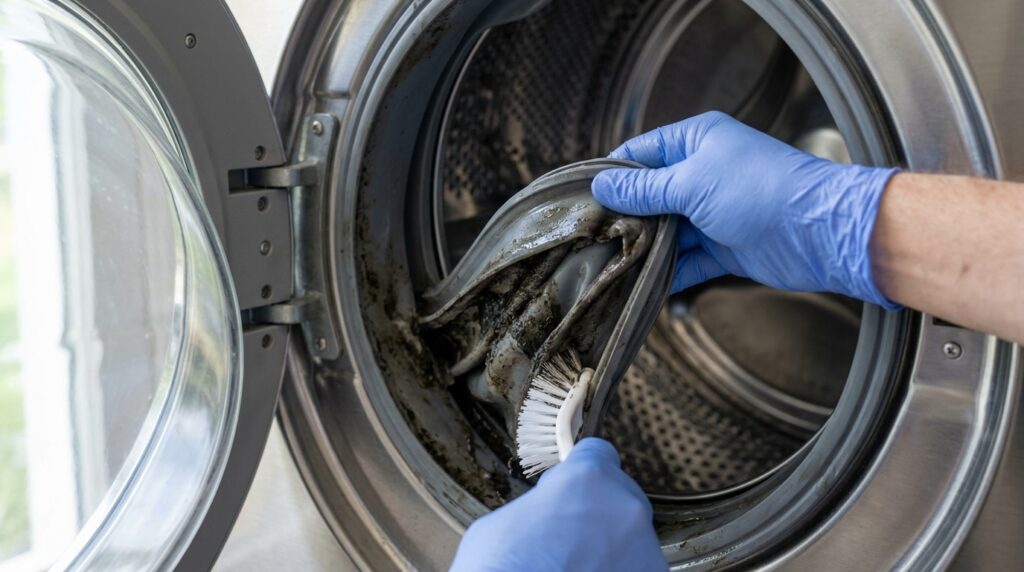
- Clean the rubber door gasket first. Pull back every fold and wipe out trapped lint, hair, and debris. This is where mold most commonly hides, and it’s usually invisible until you actually pull the rubber back.
- Wipe the gasket with a vinegar-water solution, or a mild bleach solution if your washer’s manual allows it. Let it sit for 10 to 15 minutes on visible mold before wiping and drying completely.
- Remove and clean the detergent drawer. Soak it in warm, soapy water and scrub with an old toothbrush, then wipe out the cavity it sits in, since that spot is often filthy and rarely checked.
- Check and clean the drain filter. A clogged filter causes standing water, which directly contributes to musty smells, even when everything else looks clean.
- Run an empty hot cycle with either 2 cups of vinegar, a washing machine cleaning tablet, or your machine’s dedicated “tub clean” cycle if it has one.
- Leave the door and detergent drawer cracked open between loads so the drum can actually dry out, rather than staying sealed shut in a dark, damp space.
A word of caution worth repeating from multiple safety sources: never mix bleach with vinegar, ammonia, or other cleaners when doing this. The EPA and CDC both warn that combining chlorine bleach with ammonia or other chemicals can produce dangerous fumes, so stick to one active cleaning agent per session.
How to Get Musty Smell Out of Towels With an HE Washer
High-efficiency (HE) washers use less water than older machines, which is great for your utility bill but can create a specific problem: there’s often not enough water flow to fully rinse detergent and body oils from thick towel fibers. That leftover residue is exactly what mildew feeds on.
HE-specific fixes:
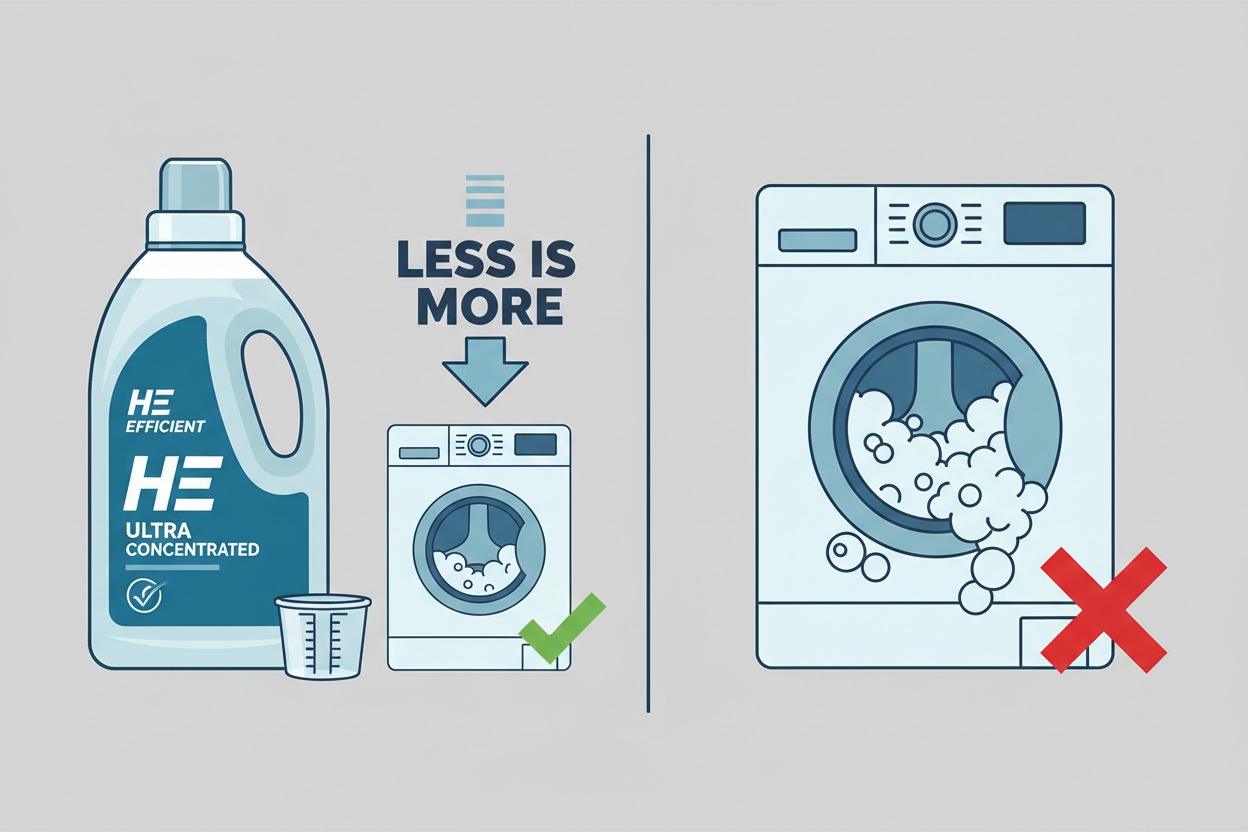
- Use HE-labeled detergent only, and use less of it than you think you need. Regular detergent creates excess suds in HE machines, and those extra suds trap residue in the drum and in your towels instead of rinsing it away.
- Skip liquid fabric softener. It leaves a waxy coating on towel fibers that traps moisture and odor and reduces absorbency over time. Wool dryer balls or a vinegar rinse work better for softness without the buildup.
- Don’t overload the drum. HE washers rely on tumbling action, not deep water, to clean effectively. An overstuffed load of towels can’t move freely enough to rinse clean, which leaves both soap residue and moisture behind.
- Mix in an occasional hot cycle, even if you normally wash on cold or warm. Cold water alone often can’t fully dissolve detergent or break down the oils and bacteria that build up in towel fibers over time.
- Run a monthly maintenance cycle designed specifically for HE machines, using either a washer-cleaning tablet or the vinegar-and-baking-soda method described earlier in this guide, but run empty rather than with a load of towels.
Why Do My Towels Smell Like Mildew After Washing?
If the smell shows up immediately after a wash, rather than after sitting for a day, a few very specific culprits are usually to blame.
- You left the load in the washer too long after the cycle ended. Even 30 to 60 minutes of sitting in a damp, closed drum is enough to trigger that sour smell.
- The washer itself smells musty, and it transferred that smell onto everything in the load, which is exactly why cleaning the machine matters as much as cleaning the towels.
- Too much detergent was used. It sounds counterintuitive, but excess detergent doesn’t rinse fully, especially in HE machines, and the leftover soap residue becomes a food source for bacteria and mildew.
- The load was too small or too large for a proper wash. Overloading prevents rinsing; underloading with too much water for a tiny load can also throw off the wash-to-rinse balance, depending on your machine.
- Fabric softener buildup traps moisture in the fibers, so even a properly washed towel doesn’t fully dry between uses.
If this is happening consistently, the fix usually isn’t a different detergent. It addresses the washer maintenance steps above, along with your washing habits.
Drying Towels the Right Way (This Step Matters More Than You Think)
You can do everything right in the wash and still end up with a musty towel if the drying step is rushed or incomplete.
- Dry towels immediately after washing, not hours later. If you can’t get to the dryer right away, at minimum hang the wet towels somewhere with airflow rather than leaving them balled up in the washer or a basket.
- Use a hot dryer cycle when the fabric allows it. Heat helps kill any lingering mildew spores or bacteria that a wash cycle alone might not fully eliminate.
- Line-dry in direct sunlight when possible. Sunlight has a natural drying and mildly antimicrobial effect that shaded, indoor drying doesn’t offer.
- Don’t fold towels while they’re even slightly damp. Folding traps residual moisture inside the stack, where it has no way to evaporate, which is one of the most common causes of towels smelling musty in the linen closet weeks after they were washed.
- Store towels in a dry, ventilated space, not a closed cabinet in a humid bathroom. If your bathroom itself struggles with humidity or hard water spots, it’s worth addressing the source, similar to how preventing calcium buildup on faucets stops a recurring problem rather than just wiping away the symptoms each time.
How Often Should You Wash Towels?
Washing frequency plays a bigger role in odor prevention than most people assume. The Cleaning Institute recommends washing bath towels after every three to five uses, based on guidance highlighted in ARM & HAMMER’s towel care guide, since body oils, sweat, and dead skin cells accumulate on the fabric with each use, even if the towel still looks and smells fine at a glance.
A simple washing schedule:
| Towel Type | Recommended Wash Frequency |
|---|---|
| Bath towels | Every 3–5 uses |
| Hand towels | Every 1–2 days |
| Kitchen towels | Every 1–2 days |
| Gym or workout towels | After every single use |
| Washcloths | After every use |
If you’re consistently washing towels on this kind of schedule and they still develop a musty smell quickly, that’s a strong sign the washing machine itself needs attention, not just the towels.
Expert Tips for Keeping Towels Smelling Fresh Long-Term
- Spread towels out to dry; don’t bunch them on a hook. A folded, crumpled towel on a single hook traps moisture in its center, which is often the exact spot where mildew starts.
- Wash towels separately from clothing. Towels are bulkier and shed more lint, and washing them with lighter fabrics can prevent both groups from getting a full, even rinse.
- Rotate a large enough supply of towels, so they have time to fully dry between uses rather than being pulled straight back into a damp bathroom.
- Avoid dryer sheets and liquid softener on towels specifically. Both leave a coating that reduces absorbency and traps moisture, which works against everything you’re trying to fix.
- Keep your washing machine’s door and detergent drawer cracked open between loads. This alone prevents a huge share of the musty buildup that eventually transfers onto your towels.
Common Mistakes to Avoid
- Using too much detergent. More soap does not mean cleaner towels. It usually means more residue left behind for bacteria to feed on.
- Mixing bleach with vinegar or ammonia. This creates hazardous fumes and should never be done, regardless of how stubborn the smell is.
- Leaving wet towels in the washer after the cycle ends. Even a short delay creates the exact damp, warm environment mildew needs.
- Assuming a single wash will fix a strong, established smell. Deep-set mildew odor almost always requires the two-cycle approach described earlier.
- Ignoring the washing machine itself. No amount of towel-specific cleaning will fully solve the problem if the washer is the actual source of the smell.
Signs Your Washing Machine Is the Real Problem
Sometimes it’s obvious the towels aren’t the issue at all. Here’s how to tell the difference between a towel problem and a washer problem, so you don’t repeat the same wash cycle without fixing anything.
- The washer smells musty even when it’s empty. Open the door the next time you walk past it, before starting a new load. If you catch a sour or mildew-like smell with nothing inside, the machine itself is the source.
- You see dark spots or a slimy film around the door seal. This is one of the clearest signs of mold or biofilm buildup, and it’s often hidden in the folds of the rubber gasket where people rarely look.
- Every load smells musty, not just towels. If bath towels, bedsheets, and regular laundry all come out with the same off smell, that points strongly to the washer rather than any one fabric.
- The smell comes back within days of a clean wash, even after you’ve tried different detergents or added vinegar. Fabric-level fixes can’t outpace a machine that’s actively recontaminating every load.
- Water pools at the bottom of the drum after a cycle finishes. Standing water is a strong sign of a clogged drain filter or a leveling issue, both of which create the exact damp conditions mildew needs.
If you notice two or more of these signs, skip straight to cleaning the washing machine before you spend more time or money experimenting with different towel-washing methods. It’s the faster fix, and it’s usually the one that actually sticks.
FAQs
How do I get rid of smelly towels in my washing machine for good?
Wash the towels using the two-cycle vinegar-and-detergent method, then clean the washing machine itself, focusing on the door gasket, detergent drawer, and drain filter. Doing both together, rather than just one, is what actually stops the smell from returning.
How do I get musty smell out of towels with an HE washer?
Use HE-specific detergent in smaller amounts than you normally would, skip liquid fabric softener, avoid overloading the drum, and include an occasional hot wash cycle. HE machines use less water, so residue that would normally rinse away in an older machine can linger and cause odor if these habits aren’t followed.
How do I get the mildew smell out of towels without vinegar?
Baking soda, borax, oxygen bleach, and chlorine bleach (for white towels only) are all effective vinegar-free alternatives. Baking soda works best for mild odor, while oxygen bleach and borax handle more stubborn smells.
Why do my towels smell like mildew after just one use?
This usually points to incomplete drying, poor airflow where the towel is hanging, or residue and mold already present inside the washing machine transferring onto the towel during the wash.
Is mildew on towels dangerous?
For most healthy people, it’s more of an unpleasant nuisance than a serious health risk, though it can trigger mild allergic reactions like sneezing, skin irritation, or a stuffy nose. People with asthma, mold allergies, or compromised immune systems should treat it more seriously and wash affected towels promptly.
Conclusion
Getting rid of mildew smell from towels really comes down to two things working together: a proper deep wash using vinegar, baking soda, or another effective agent, and a truly thorough dry immediately afterward. If the smell keeps coming back no matter what you try, stop troubleshooting the towels and start troubleshooting the washing machine, since that’s where most recurring odor problems actually live.
Run the two-wash method this weekend, give your washer’s gasket and drawer a proper clean while you’re at it, and get your towels drying somewhere with real airflow. Do that consistently, and musty towels become a problem you solved once, not one you keep fighting every laundry day.