


How to Unclog a Toilet Without a Plunger When the Water Is High
You flush. The water doesn’t go down. Instead, it climbs. Higher. Closer to the rim. And your stomach drops right along with it.
I’ve been in that exact spot, standing there with my hand hovering over the handle, silently begging the bowl not to overflow onto the bathroom tile. If you’re reading this with your phone in one hand and the other hand hovering over your own toilet handle right now, take a breath. You don’t need a plunger to fix this, and you don’t need to flush again either (please don’t flush again).
This blog post will explain exactly how to unclog a toilet without a plunger when the water is high, using things you almost certainly already have in your kitchen or under your sink. I’ll also explain why the water rises in the first place, what to do if there’s poop involved, when a plunger actually is worth grabbing, and the point where you stop DIYing and call a plumber.
Why Your Toilet Water Rises Instead of Draining
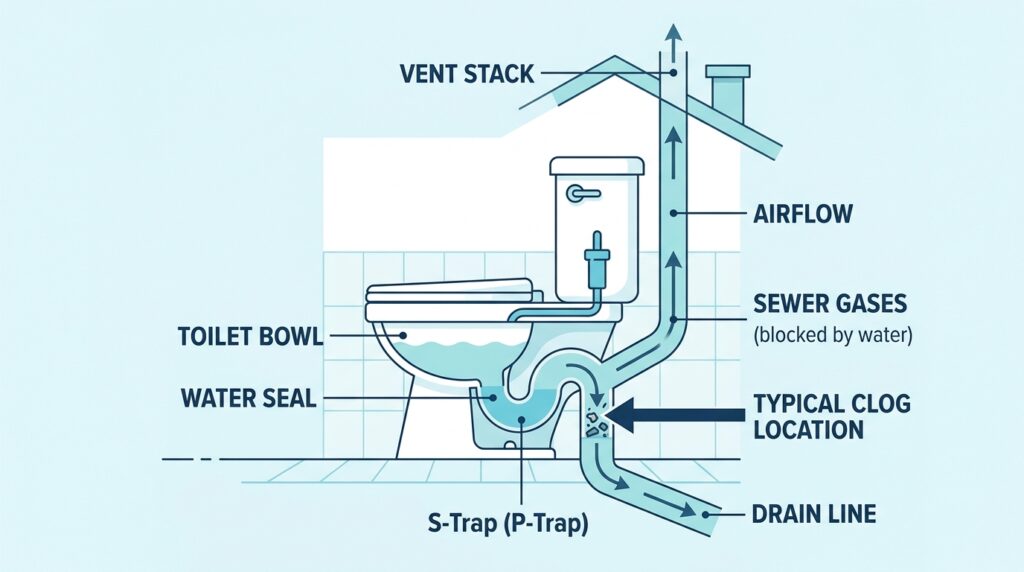
Here’s the part most articles skip. Your toilet bowl always holds a set amount of water because of the S-trap, the curved pipe behind the bowl that keeps sewer gas from creeping into your bathroom. When you pour water in, or flush, that trap is designed to let the extra water pass through and settle back at its normal level.
So when the water climbs and stays high, or almost spills over, it isn’t your imagination, and it isn’t your tank overfilling. Something below the bowl is blocking the path, whether that’s in the trap itself or further down the drain line.
The most common causes I’ve run into, and that plumbers confirm again and again, are:
- Too much toilet paper at once. This is by far the most common cause. A thick wad doesn’t break down fast enough and forms a temporary dam right in the trap.
- “Flushable” wipes. They’re not really flushable. Unlike toilet paper, they don’t disintegrate in water, so they sit in the trap and catch everything that comes after them.
- Non-flushable items. Cotton balls, dental floss, hair ties, kids’ toys, sanitary products. None of these break down.
- A partially blocked vent stack. Your plumbing needs airflow to let water drain properly. If the roof vent is blocked (leaves, a bird’s nest, ice in winter), water can back up even without a solid clog.
- A deeper clog in the main line. Less common, but if more than one fixture in your home is acting up at the same time, this is usually the culprit.
There’s also a less obvious cause that almost nobody mentions: your plumbing vent stack, the pipe that runs up through your roof, needs to let air into the system so water can drain smoothly. Think of it like a straw. If you cover the top of a straw with your finger while it’s full of liquid, the liquid won’t fall out, even upside down. Your drain pipes work the same way.
If that roof vent gets blocked by leaves, a nest, or ice, air can’t get in behind the water, and drainage slows down or stops even without a solid clog sitting in the pipe. This is a rarer cause than a straightforward clog, but it’s worth knowing about if you’ve ruled everything else out and the problem keeps coming back.
It also helps to understand what a partial clog actually looks like in practice, since it isn’t always as obvious as water refusing to move at all. Often you’ll flush and notice the water rises a little higher than usual, pauses, then slowly creeps back down over a minute or two. That’s usually the earliest sign of a developing clog. Left alone, it tends to get worse each time you flush, with the water rising a bit higher and taking a bit longer to recede, until eventually it stops draining altogether.
How Much Water You’re Actually Dealing With
This part surprises people. If your toilet was installed before the mid-2010s, it’s likely using close to 1.6 gallons per flush, the current federal standard, while newer WaterSense certified models use 1.28 gallons or less. So every panicked extra flush on a clogged, older toilet adds close to two liters of water into a bowl that’s already struggling to drain. Multiply that by three or four flushes, which is what most people do before they stop and Google a fix, and you can genuinely end up with several extra gallons sitting in a bowl that was never going to hold them. That’s the math behind why “just flush it again” is the worst instinct to follow here, and why stopping the water supply first, covered in the next section, matters so much.
One thing worth knowing, because it changes how you should react: every time you flush a clogged toilet, you’re pushing over a gallon of water into a system that already can’t drain. Flush it three or four times, and you’ve added several gallons on top of a blockage that isn’t going anywhere. This is exactly why the golden rule here is: stop flushing.
Toilets also aren’t a small slice of your home’s water use either. According to the EPA’s WaterSense program, toilet flushing accounts for nearly 30 percent of a home’s total indoor water consumption, which is part of why a repeat clog isn’t just annoying; it’s genuinely wasteful.
Step 1: Stop the Water Before You Do Anything Else
Before you try a single home remedy, you need to stop more water from entering the bowl. This is the step people skip when they’re panicking, and it’s the one that actually prevents a flood.
- Take the lid off the toilet tank and set it somewhere safe (a towel on the floor works well; porcelain lids crack if you set them on tile).
- Look inside. You’ll see a rubber or flapper valve at the bottom, connected to the flush handle by a chain or lift arm.
- Reach in (yes, this water is clean; it hasn’t touched the bowl) and push the flapper down so it seals the opening, or simply hold the fill valve float down for a few seconds if the tank is actively refilling.
- If you’re worried about the tank continuing to fill, find the water shutoff valve behind or beside the toilet, near the floor, and turn it clockwise until it stops.
I always tell people to do this even before Googling anything else. I once let a first flush sit “to see if it would go down” while I searched for a fix on my phone, and by the time I looked up, the water had crept another inch closer to the rim. Shutting off the supply first buys you time and peace of mind.
The Fastest No-Plunger Methods (Ranked by How Well They Work)

If the bowl is already close to overflowing, skip straight to the hot water and dish soap method below; it’s the safest option when there’s very little room to work with. If you have a bit more room in the bowl, work through these in order.
Method 1: Dish Soap and Hot Water (Best When Water Is Already High)
This is genuinely my go-to, and it’s the one I’d recommend first if the water in your bowl is right up near the rim. Unlike a lot of the other methods, it doesn’t require pouring anything extra into an already-full bowl.
- Squeeze about half a cup of ordinary dish soap directly into the bowl. Let it sink toward the drain opening rather than pooling on top.
- Let it sit for 10 to 15 minutes. The soap works its way down and coats the inside of the trap, acting as a lubricant.
- Heat a few cups of water on the stove or in the kettle until it’s hot to the touch but not boiling (boiling water can crack porcelain, especially on older toilets).
- Pour the hot water in slowly, from about waist height, so it has some force behind it without splashing.
- Wait another 15 to 20 minutes. If the level starts dropping, that’s your sign the clog is breaking up.
- Once the water has drained closer to normal, flush once to check.
I’ve used this exact combination on a stubborn toilet paper clog at 11 pm with houseguests asleep down the hall, and it worked without a single drop hitting the floor. The trick is patience. It’s tempting to flush again the second the water dips even slightly, but give it the full waiting period.
Method 2: Baking Soda and Vinegar
This won’t work on every clog, but it’s oddly satisfying, and it’s genuinely effective on softer, organic blockages.
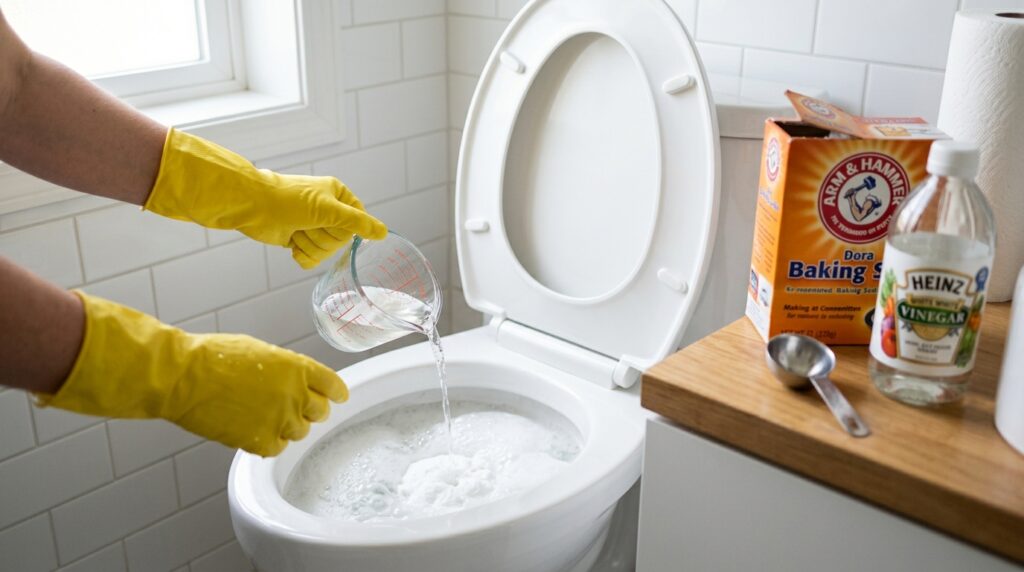
- Add one cup of baking soda to the bowl.
- Slowly pour in two cups of white vinegar.
- You’ll see it fizz almost immediately. Let that reaction run for 20 to 30 minutes with the lid closed if you can, to keep the fizzing contained.
- Follow with hot water, the same way as Method 1.
- Wait, then flush.
If your water level is very close to the rim, hold off on this one until you’ve brought the level down a bit with Method 1 first. Fizzing in a nearly-full bowl is a recipe for a mess.
Method 3: The Plastic Bottle Water Jet
This one mimics the pressure a plunger creates, without the plunger.
- Fill a large plastic water bottle (a 1 or 2-liter soda bottle works well) with warm water.
- Put on rubber gloves.
- Fit the open neck of the bottle down into the drain opening at the bottom of the bowl, as far as it will comfortably go.
- Squeeze the bottle hard and fast. The sudden rush of water acts like a mini pressure jet aimed straight at the clog.
- Repeat two or three times.
This method genuinely does replicate part of what a plunger does, forcing pressurized water directly at the obstruction, and it’s one I keep in my back pocket for smaller, softer clogs.
Method 4: The Wire Hanger Auger
If soap and hot water haven’t budged it, a bent wire hanger can act like a makeshift toilet auger.
- Straighten a wire coat hanger, leaving a small hook at one end.
- Wrap the hooked end in an old rag or paper towel and secure it with tape, so it doesn’t scratch the porcelain.
- Gently feed the hooked end into the drain opening, past the bend of the trap.
- Twist and push gently; you’re trying to snag or break up the clog, not force it further down.
- Pull back out slowly (have a trash bag ready) and flush to test.
Go slowly here. Porcelain scratches easily, and a scratched bowl collects grime faster afterward, so keep that rag wrapped snugly around the hook the entire time.
Method 5: The Cling Film Trick
This one sounds strange the first time you hear it, but it’s a lesser-known method that plumbing pros actually recommend, and it works especially well for toilets where the water is high but not overflowing.
- Dry off the top rim of the toilet bowl completely with paper towels. Wear gloves for this.
- Stretch two or three layers of plastic cling film tightly across the entire bowl opening, pressing down firmly around the rim to create a seal.
- Flush the toilet. The pressure from the flush has nowhere to escape, so the cling film will balloon upward like a balloon.
- As soon as it balloons, push down gently on the film with your palm. This reverses the pressure and pulls back on the clog, mimicking exactly what a plunger’s suction does.
- Peel the film away and check if the water has dropped.
I was skeptical the first time I tried this; it feels like it shouldn’t work, but the ballooning effect genuinely recreates the push-and-pull suction of a plunger using nothing but plastic wrap and the flush itself.
Method 6: The Toilet Brush Method
If nothing else is within reach, your regular toilet brush can double as a makeshift plunger in a pinch.
- Push the bristle end of the brush into the drain opening at the bottom of the bowl.
- Move it up and down firmly, the same motion you’d use with a plunger, to create some agitation and pressure against the clog.
- This works best on soft, minor clogs rather than solid blockages, so pair it with the hot water and dish soap method for anything more serious.
It’s not the most elegant fix, and I’d only reach for it as a last resort before the wire hanger, but when you genuinely have nothing else on hand, it’s better than standing there doing nothing.
What to Do When There’s Poop in the Bowl

Let’s be honest about this because every other article tiptoes around it. A toilet clogged with solid waste and high water is one of the more stressful bathroom situations there is, especially with guests in the house.
The good news: the exact same dish soap and hot water method works here, and it works well, because dish soap is designed to cut through grease and break down organic material. Here’s how I’d handle it specifically:
- Do not add anything else to the bowl first. Skip the vinegar and baking soda for this scenario, since fizzing on top of solid waste in a nearly-full bowl is unpleasant and messy.
- Squeeze in a generous amount of dish soap, more than you think you need, about three-quarters of a cup.
- Let it sit for a full 20 minutes minimum. This is not the moment to rush.
- Add hot (not boiling) water from waist height.
- Wait another 20 to 30 minutes.
- Flush once, gently, to test. If the level drops and it clears, you’re done. If it’s still slow, repeat the hot water step rather than reaching for the wire hanger, which is a worse tool to use around solid waste.
If after two full rounds of this the bowl still isn’t clearing, that’s usually a sign the clog is either larger or further down the line than a home remedy can reach, and it’s genuinely time for either a proper toilet auger or a plumber, which I cover further down.
If You Do Have a Plunger: Doing It Right
Since a lot of people search for this after their plunger has failed, it’s worth covering the correct technique, because a huge number of “failed” plunges are actually technique problems, not tool problems.
There are two main plunger types:
| Plunger Type | Best For | How to Tell |
|---|---|---|
| Cup (flat bottom) | Sinks, flat drains | Simple rubber dome, no folded flap |
| Flange (extended rubber flap) | Toilets specifically | Has a rubber flap that folds out from inside the dome |
If you’ve been using a standard cup plunger on a toilet, that’s often why it “isn’t working.” Flange plungers create a far better seal in the curved bowl opening.
To use one correctly:
- Make sure there’s enough water in the bowl to fully submerge the plunger head. If the water is low, add some so the seal works properly.
- Pull the flange out from inside the cup if it isn’t already extended.
- Position it directly over the drain hole and press down slowly at first, this pushes out trapped air, which is what ruins a lot of people’s technique.
- Once it’s sealed, plunge with firm, even strokes, up and down, keeping the seal intact the whole time.
- On the final upward pull, pull sharply. That reverse suction is often what actually dislodges the clog, more than the downward push does.
- Repeat 8 to 10 times before giving up on a set.
Tools That Work Almost as Well as a Plunger
If you’re the type who wants to be prepared next time (I got tired of researching this mid-crisis, so I finally bought a couple of these), here’s what’s genuinely worth keeping under the sink:
- A toilet auger (closet auger). This is a flexible metal cable in a tube, specifically designed to reach past the trap without scratching porcelain. It’s the closest thing to a plumber’s tool you can buy for home use.
- A wet/dry shop vacuum. If you have one, you can use it to remove excess water from an overly full bowl safely, which makes every other method easier and less messy. Never use a regular household vacuum for this.
- Enzyme-based drain treatments. These use bacteria or enzymes to slowly digest organic buildup and are safe for both pipes and septic systems, unlike harsh chemical drain cleaners.
When to Stop DIYing and Call a Plumber

I want to be straight with you here, because most home-remedy articles never mention this part. There’s a point where continuing to try DIY fixes just delays an inevitable repair, or makes it worse. Call a plumber if:
- You’ve tried two or more of the methods above and the water level hasn’t moved at all.
- Multiple drains in your home (a sink, a shower, another toilet) are backing up at the same time; this points to a main line issue, not a toilet-only clog.
- You hear gurgling from other drains when you flush.
- The clog keeps coming back every week or two, even after clearing it.
- Something you know shouldn’t have been flushed (a toy, a phone, a large object) caused the clog.
The cost of a residential plumber visit for a stubborn toilet clog typically runs anywhere from $150 to $350 depending on where you live and how accessible the clog is. Family Handyman spoke with a licensed plumber about exactly this kind of stubborn clog, and the consistent advice was the same one in this guide: try gentle, non-chemical methods first before anything more invasive. That’s a real cost, which is exactly why trying the free methods above first is worth the 20 minutes it takes.
How to Stop This From Happening Again
A little prevention saves you this entire stressful evening next time. A few habits that have genuinely cut down how often I deal with this:
- Keep a small trash can in the bathroom for wipes, cotton balls, and dental floss, even “flushable” wipes shouldn’t go in the toilet.
- Use less toilet paper per flush, or flush once partway through if you tend to use a lot.
- If your home has an older toilet, consider replacing it. Newer WaterSense labeled models are specifically engineered and independently tested for clog resistance while using less water, and can reduce a household’s toilet water use by 20 to 60 percent compared to old, inefficient units.
- If you’re on a septic system, be extra careful about what goes down, and keep an eye on your tank’s condition. I’ve written a full breakdown of what it actually costs to install a well and septic system if you want to understand how your toilet connects to that bigger picture.
- Have a plunger (the flange type) and a pair of rubber gloves stored in every bathroom, not just one.
And if you’re dealing with a slow drain elsewhere in the house too, like a shower that takes a while to clear, or you’re wondering how long it takes for hot water to come back after a big load on your system, those are usually separate plumbing issues worth understanding on their own.
Expert Tips
- Never mix chemical drain cleaners with the vinegar and baking soda method. If you’ve already poured a store-bought clog remover in, don’t add anything else on top; the chemical reaction can be genuinely harmful.
- Warm, not boiling. I mentioned this above, but it bears repeating: boiling water against cold porcelain can cause hairline cracks you won’t notice until months later.
- Always have a way to remove water first if the bowl is nearly overflowing. A small bucket and a disposable cup, worn with gloves, let you scoop out a few inches before you try anything else, giving every method below more room to work.
- Test the flapper valve while you’re in there. If your toilet clogs often, a worn flapper that’s letting inconsistent water into the bowl can actually make clogs harder to clear.
Pros and Cons of Each No-Plunger Method
| Method | Pros | Cons |
|---|---|---|
| Dish soap + hot water | Safe, gentle, works even with high water | Slower, needs 20 to 40 minutes |
| Baking soda + vinegar | Cheap, satisfying, good for soft clogs | Not ideal when bowl is nearly full |
| Plastic bottle water jet | Mimics plunger pressure directly | Requires gloves, a bit messy |
| Wire hanger auger | Reaches further than soap alone | Risk of scratching porcelain if unpadded |
| Toilet auger (tool) | Most effective non-chemical option | Costs money, one-time purchase needed |
FAQs
How do I unclog a toilet without a plunger in 5 minutes?
Realistically, most no-plunger methods need at least 15 to 20 minutes of sitting time to work properly. The fastest option is the plastic bottle water jet, since it uses direct pressure instead of a soaking period, but even that may need two or three attempts.
Can I unclog a toilet with just hot water?
Yes, for mild clogs, hot (not boiling) water alone can work, though pairing it with dish soap significantly improves your odds since the soap acts as a lubricant.
Is it bad to leave a clogged toilet overnight?
It’s not ideal, but it’s safer than repeatedly flushing a nearly-full bowl. Shut off the water supply valve, apply the dish soap method before bed, and check it in the morning.
Why didn’t my plunger work?
Usually it’s one of three things: not enough water in the bowl to create suction, using a flat cup plunger instead of a flange plunger, or not fully sealing the drain opening before plunging.
Are toilet clog removers safe for septic systems?
Enzyme-based treatments are generally safe for septic systems. Harsh chemical drain cleaners are not recommended for septic tanks, since they can kill the beneficial bacteria your system relies on.
What if I can’t find plungers near me right now?
If it’s late at night or you simply don’t own one, every method in this guide- dish soap and hot water, the plastic bottle trick, and the cling film method- was chosen specifically because it needs no special tool. Start with dish soap and hot water since it’s the gentlest option while you wait to pick up a proper flange plunger later.
Final Thoughts
A rising toilet bowl feels like an emergency, but it’s one of the most fixable bathroom problems there is. Shut off the water first, reach for dish soap and hot water if the bowl is already full, and work your way through the other methods above if you need to. I’ve relied on this exact order of steps more times than I’d like to admit, and it’s never once let me down.
If you found this useful, take a look around Home Upright’s bathroom and plumbing section for more real-world fixes like this one, the kind written by people who’ve actually dealt with the mess, not just theorized about it.