



How to Get Dry Erase Marker Out of Clothes
You were mid-sentence, marker in hand, explaining something important on the whiteboard. Then you turned around and felt that little sinking feeling. There’s a streak of ink across your sleeve, and it definitely was not there this morning.
If you’re searching for how to get dry erase marker out of clothes, you’re probably standing in your kitchen right now, staring at a stain and wondering if this shirt is done for. It’s not. I’ve pulled marker out of shirts, jeans, and even a couch cushion, and the fix is usually sitting in your bathroom cabinet already.
This guide walks you through exactly what works, why it works, and what to do if the stain has already been through the dryer. No guesswork, no wasted product, just a clear plan.
I first ran into this problem years ago while helping my son practice spelling words on a portable whiteboard propped against the couch. He turned around too fast, the marker swiped across his sleeve, and within seconds there was a purple streak on a shirt that had been white that morning. My first instinct was to grab a wet washcloth and scrub, which, in hindsight, was exactly the wrong move. Water alone barely touched it, and scrubbing only pushed the color deeper into the weave. It took some trial and error before I landed on a method that actually worked, and that same approach is what I’m walking you through here.
If you’re dealing with how to remove dry erase marker from clothes right now, don’t panic and don’t reach for the washing machine yet. Treating the stain before it ever hits a wash cycle, let alone the dryer, is the single biggest factor in whether it comes out completely or leaves a faint shadow behind.
Why Dry Erase Marker Is So Stubborn on Fabric
Dry erase ink is not built like a regular marker. It’s designed to sit on top of glass and whiteboards, never soaking in, so a dry cloth can wipe it away in seconds. That same trick that makes it erasable on a whiteboard is exactly what makes it a pain on cotton.
Modern dry erase ink is generally a mix of an alcohol carrier like ethanol or isopropanol, a pigment for color, and a release agent, usually a light silicone oil or similar compound with low surface energy, a formula explained in more detail in this overview of dry erase marker ingredients. On a whiteboard, that oily release agent stops the ink from bonding to the surface. On fabric, it does the opposite. The oil grabs onto the weave of the fibers while the pigment gets carried down into the threads, and once the alcohol evaporates, the color is left clinging to the fabric.
That’s the real reason plain water barely touches it. Water can’t break down an oil-based release agent. You need something that dissolves oil, alcohol, or both, which is exactly why the methods below are built around alcohol and oil-cutting ingredients rather than soap and water alone.
Older markers, before manufacturers cleaned up their formulas, actually used benzene-based solvents rather than alcohol. That switch happened because benzene raised health and safety concerns over the decades it was used in various household products.
Patents filed by marker manufacturers describe these release agents in more technical detail, listing ingredients like polydimethylsiloxanes, polyethylene glycols, and various fatty acid esters as the components responsible for making ink slide off a whiteboard surface. What all of these have in common is that they are oil-based rather than water-based, which is exactly why a splash of water does almost nothing while an alcohol or oil-cutting soap solution can break the bond within minutes.
This also explains why some marker colors seem harder to remove than others. Darker inks, particularly black and navy, tend to carry a higher concentration of pigment, which means there’s simply more colorant to dissolve and lift before the fabric looks clean again. It’s not that darker ink bonds differently; there’s just more of it to work through.

What You’ll Need Before You Start
Before diving into how to remove dry erase marker from clothes, grab a few things so you’re not scrambling mid-stain.
- Rubbing alcohol (70 percent isopropyl works fine)
- A few clean white cloths or paper towels
- Dish soap or a stain-fighting laundry detergent
- Cold water
- Hairspray or hand sanitizer as backup options
- A soft bristle brush or old toothbrush
You do not need bleach, and you should avoid it entirely on colored clothing. Bleach can set certain dyes rather than lift them, and it will absolutely ruin the color of anything that isn’t white.
Always Test First on Colored or Delicate Fabric
Before you apply anything to a visible part of your clothing, take thirty seconds to test it on a hidden spot, like an inside seam or the inner hem. Dab a small amount of your chosen product on that hidden area, let it sit for a minute, then blot and check whether any color transferred onto your cloth.
This step matters more than it seems like it should. Rubbing alcohol and hairspray are generally safe on cotton and polyester, but they can occasionally strip dye from certain synthetic blends or cause bleeding on fabrics dyed with less colorfast pigments. A quick test saves you from trading a marker stain for a bleach-like faded patch, which is a much harder problem to reverse.
Is Dry Erase Marker Actually Washable or Permanent?
This is where a lot of confusion comes from, and it’s worth clearing up before you start scrubbing. Dry erase marker is not the same thing as a “washable marker,” even though both are marketed toward classrooms and kids.
Washable markers, the kind made for coloring on paper or skin, are built around water-soluble dyes specifically, so they rinse out with plain water. Dry erase markers use an entirely different formula built around alcohol and an oily release agent so the ink stays put on a whiteboard until it’s wiped with a dry cloth, which means water alone does very little to it.
That difference explains why so many people assume dry erase marker “doesn’t come out” when really, it just needs the right solvent rather than more scrubbing. Once you match the ink chemistry to the right remover, alcohol or oil-cutting soap, it behaves a lot more cooperatively than its reputation suggests.
How to Get Dry Erase Marker Out of Clothes With Rubbing Alcohol
This is the method I reach for first, and it’s the one that handles the widest range of fabrics without much risk.
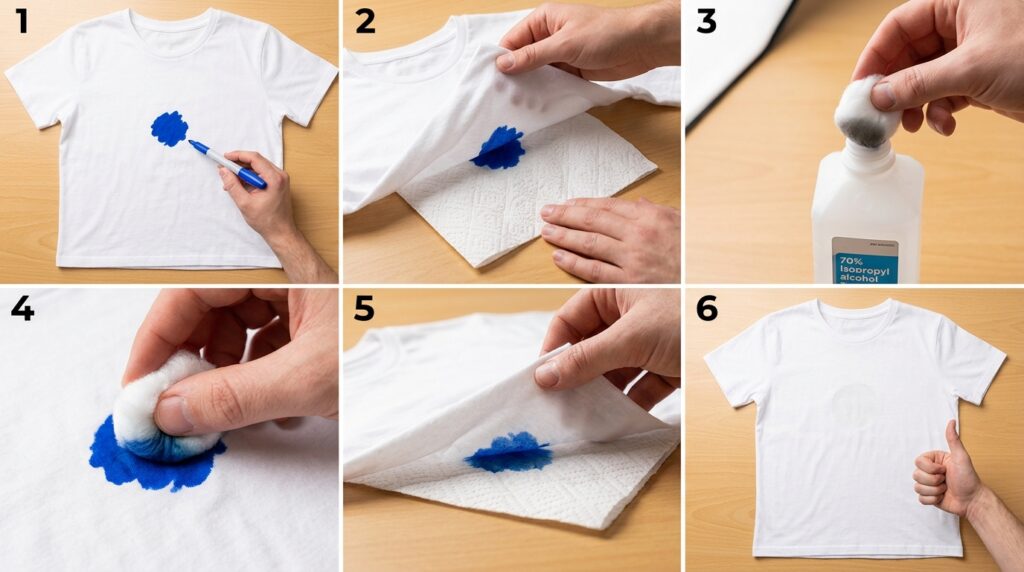
- Lay the stain face down on a clean white cloth or a stack of paper towels. This lets the ink transfer downward and out of the fabric instead of spreading further in.
- Dab rubbing alcohol onto the back of the stain using a cotton ball or clean cloth. Work from the outside of the stain toward the center so you’re not pushing ink outward.
- Blot, don’t rub. Rubbing pushes pigment deeper into the weave. Blotting lifts it up and transfers it onto the cloth underneath.
- Switch to a clean section of cloth as soon as color starts transferring onto it, and keep going until no more ink lifts.
- Rinse the area with cold water to flush out the alcohol and loosened pigment.
- Wash as usual in the warmest water the fabric care label allows, then check the spot before it goes anywhere near a dryer.
Rubbing alcohol works because isopropanol is a solvent that dissolves both the ink’s alcohol carrier and much of its pigment load, breaking the bond between the color and the fibers rather than just pushing it around.
How to Get Dry Erase Marker Out of Clothes Without Rubbing Alcohol
Not everyone keeps rubbing alcohol on hand, and some people prefer to avoid it on delicate fabrics like silk or wool, where alcohol can occasionally dull the finish or strip natural oils. If that’s you, here are solid substitutes.
Hand Sanitizer Method
Most hand sanitizers are built around the same alcohol base as rubbing alcohol, just in gel form, which actually makes them easier to control on a vertical stain since the gel won’t drip everywhere.
- Squeeze a dime-sized amount directly onto the stain.
- Gently work it in with your fingers or a soft cloth for about thirty seconds.
- Let it sit for two to three minutes.
- Rinse with cold water, then launder normally.
Check the label first. You want one with at least 60 percent alcohol content for this to actually pull its weight, which lines up with the CDC’s own guidance on effective hand sanitizer alcohol content and happens to overlap nicely with what’s needed to break down marker ink.
Hairspray Method
This one has been a laundry room trick for decades because many hairspray formulas still contain some alcohol content, though modern aerosol-free formulas vary quite a bit.
- Spray directly onto the stain until it’s visibly damp.
- Let it sit for one to two minutes.
- Blot with a clean cloth, working from the outside in.
- Rinse and wash as usual.
A quick heads up here: newer hairsprays, especially pump sprays and “clean” formulas, often have little to no alcohol, so results can be hit or miss depending on the brand you grab.
Dish Soap and Warm Water Method
If you’re out of alcohol entirely, straight dish soap can chip away at the oily release agent in the ink, even if it takes a bit more elbow grease.
- Apply a small amount of dish soap directly to the stain.
- Work it into the fabric with your fingers or a soft brush.
- Let it sit for five minutes.
- Rinse with warm water and repeat if needed before washing.
This method is gentler, so expect to repeat it two or three times rather than getting a one-pass fix.
Does Dry Erase Marker Come Out of Clothes After It’s Dried?
Here’s the part most guides skip past. Yes, dried dry erase marker can usually still come out, but your odds go down the moment that stain has been through a hot dryer.
Heat causes the ink’s pigment to bind more tightly to fabric fibers, essentially locking it in place the same way heat sets other stains like blood or grass. If the shirt already went through the dryer, treat it the same way you would a fresh stain, just expect to repeat the alcohol and blotting steps several times, and check progress in good natural light between attempts before rewashing.
If you have a similar situation with mustard stains that made it through the wash, the same rule applies: repeated treatment before drying again is the key, since a dryer cycle can permanently lock in almost any stain.
A few things that help with already-dried marker:
- Apply rubbing alcohol generously and let it sit for a full five minutes before blotting, rather than the quick dab you’d use on a fresh stain
- Use a soft toothbrush to gently work the alcohol into the fibers
- Repeat the entire process rather than assuming one round will finish the job
- Air dry between attempts so you can see exactly how much color is left
Removing Marker From Different Fabric Types
Not every piece of clothing responds to treatment the same way, so it helps to adjust your approach based on what you’re working with.
Cotton and cotton blends are the easiest to treat. The weave is loose enough that rubbing alcohol penetrates well, and cotton can typically handle several rounds of treatment without any damage to the fabric itself.
Denim holds onto pigment a bit more stubbornly because of its tight twill weave, so expect to repeat the alcohol treatment two or three times, especially on darker ink colors like black or navy.
Polyester and athletic wear react well to alcohol too, but these fabrics can sometimes hold onto oil-based residue longer, so a follow-up dish soap treatment before washing helps make sure nothing lingers once the fabric dries.
Silk, wool, and other delicates need a gentler hand. Skip straight rubbing alcohol here if you can, and start with the dish soap method instead, since alcohol can occasionally affect the natural sheen or texture of these fibers. If dish soap alone doesn’t fully lift the stain, a heavily diluted alcohol solution applied with a very light touch is the next step, always after testing on a hidden seam first.
Kids’ clothing, especially uniforms and school shirts, tends to see the most marker stains simply because that’s where whiteboards and markers live. Hand sanitizer is a great go-to here since most households already keep it stocked in a school bag or backpack, making it easy to treat a stain the moment it happens rather than waiting until you’re home.
Common Mistakes That Make the Stain Worse
A few habits tend to turn an easy fix into a much harder one.
- Scrubbing instead of blotting. Scrubbing drives pigment deeper into the fibers rather than lifting it out.
- Using hot water before the ink is gone. Heat sets pigment, so hot water at this stage works against you.
- Tossing the item in the dryer “just to check.” Once heat hits a partially treated stain, it can lock in whatever color remains.
- Skipping the back-of-fabric approach. Treating only the front pushes ink further into the weave instead of pulling it out and away.
- Assuming one round of treatment is enough. Dry erase ink, especially once it’s dried, often needs two or three passes before it’s fully gone.
Preventing Dry Erase Marker Stains Before They Happen
If markers are a regular part of your day, whether from a home office whiteboard, a classroom, or a kid’s art supplies, a little prevention goes a long way.
- Keep a small travel-size bottle of hand sanitizer near the whiteboard so a fresh stain can be treated within seconds
- Roll up sleeves or wear an old layer over good clothes when using markers for long stretches
- Store markers capped and away from soft furniture, since caps left off are the most common cause of surprise ink transfer
- Wipe whiteboard trays regularly, since dust and dried ink flakes there can transfer onto sleeves and clothing during everyday use
How to Get Dry Erase Marker Out of Carpet
Carpet fibers behave differently than clothing since carpet is usually a much thicker pile and often has a stain-resistant treatment on top that can actually help you here.
- Blot up any excess ink immediately with a dry cloth. Never rub carpet, since it can push the stain deeper into the padding underneath.
- Mix a few drops of dish soap with warm water.
- Dab the solution onto the stain with a clean cloth, working from the outer edge inward.
- Follow with a small amount of rubbing alcohol on a fresh cloth if color remains.
- Blot with plain water to rinse, then press dry towels over the spot and add lightweight to absorb remaining moisture.
Always test any cleaner on a hidden corner of carpet first, tucked in a closet or under furniture, since some carpet dyes and treatments react differently than clothing fabric does.

Comparing Every Method at a Glance
| Method | Best For | Speed | Fabric Safety |
|---|---|---|---|
| Rubbing alcohol | Fresh or set-in stains, most fabrics | Fast | Avoid on silk and wool |
| Hand sanitizer | Quick fixes, when out of alcohol | Fast | Generally safe, spot test first |
| Hairspray | Backup option, older alcohol-based formulas | Moderate | Check for alcohol content first |
| Dish soap | Gentle fabrics, kids clothing | Slower, may need repeats | Safe on nearly everything |
| Carpet method | Rugs and upholstery | Moderate | Always spot test first |
Expert Tips for Getting the Best Results
- Work from the back of the fabric, not the front. This pushes ink out and away rather than deeper in.
- Never use hot water before the stain is fully out. Cold water first, hot water only for the final wash once ink is gone.
- Skip the dryer until you’ve checked the stain in daylight. Indoor lighting can hide a faint remaining shadow of ink.
- Layer methods if one alone isn’t cutting it. Alcohol followed by a dish soap soak often finishes what alcohol alone left behind.
- Treat the stain the same day if at all possible. The longer marker ink sits, the more it behaves like a set-in stain rather than a fresh one, a point echoed in the American Cleaning Institute’s general stain removal guidance, which stresses acting fast on any fresh stain.
Pros and Cons of Each Approach
Rubbing Alcohol
- Pros: Fast, widely available, works on most stain ages
- Cons: Can affect delicate fabric finishes if overused
Hand Sanitizer
- Pros: Easy to control, gel form won’t drip
- Cons: Needs a decent alcohol percentage to actually work
Hairspray
- Pros: Common household item
- Cons: Modern formulas are inconsistent, not always alcohol based
Dish Soap
- Pros: Gentle, safe for almost any fabric including baby clothes
- Cons: Slower, may require several rounds
If you’re dealing with a similar oil-based stain, the same logic used against ink release agents also comes in handy for things like chocolate stains, where breaking down the fat content is the real key to getting the color out.
When You’ve Got Multiple Stained Items at Once
If a classroom activity or a busy home office day left you with more than one stained item, treat them in a batch rather than one at a time so nothing sits around getting more set in while you work on the others.
Lay each item flat, stain side down, on its own section of paper towels or a cloth. Work through the alcohol treatment on one, let it sit while you move to the next, then circle back. This assembly-line approach means every item gets treated within a similar window of time instead of the last one waiting an extra twenty minutes and becoming harder to lift.
Once every stain has had its blotting round, rinse each item and wash them together in a normal cold cycle, checking each one before it goes anywhere near the dryer. It takes a bit more organization up front, but it saves you from redoing the same steps repeatedly across separate laundry days.
Frequently Asked Questions
Does Expo marker come out of clothes?
Yes, Expo brand and most other dry erase markers use similar alcohol- and pigment-based ink, so the same rubbing alcohol or hand sanitizer method described above works well on Expo stains specifically.
How do you get dry erase marker out of clothes without rubbing alcohol?
Hand sanitizer with at least 60 percent alcohol, alcohol based hairspray, or plain dish soap worked in with warm water are all solid substitutes if you don’t have rubbing alcohol on hand.
Can dry erase marker stains be removed after they’ve already been washed and dried?
Often yes, though it takes more effort. Heat from the dryer sets the pigment more firmly, so you’ll likely need to repeat the alcohol treatment two or three times before it fully lifts.
Will dry erase marker ruin clothes permanently?
Rarely, as long as you treat it before it goes through multiple hot dryer cycles. Fresh stains almost always come out with the methods above, and even set-in stains usually respond to repeated treatment.
Is dry erase marker ink toxic if it gets on skin or clothes?
Modern dry erase markers are generally labeled non-toxic since manufacturers moved away from benzene-based solvents decades ago, though it’s still smart to wash any ink off skin promptly and keep markers away from young kids’ mouths.
How do you get dry erase marker off clothes if you’re in a rush?
Hand sanitizer is the fastest option since it’s already in gel form and needs no extra tools. Rub a small amount directly onto the stain, blot with a paper towel, and treat it more thoroughly once you have time, ideally before the item goes into a hot dryer.
Does dry erase marker wash out of clothes in a normal laundry cycle?
Not usually on its own. A standard wash cycle with regular detergent rarely removes dry erase ink completely, since detergent is built to handle water-soluble dirt and body oils rather than an alcohol- and silicone-based ink. Pretreating with alcohol or dish soap first makes a real difference before the item ever goes into the machine.
What’s the difference between dry erase marker and permanent marker stains?
Permanent marker uses a much stronger, more penetrating solvent designed specifically to resist erasing, so it bonds to fabric fibers more aggressively. Dry erase marker, by contrast, is built to be wiped away easily from non-porous surfaces, which is part of why it responds so well to alcohol based treatment on fabric once you know the right approach.
Final Thoughts
A dry erase marker stain feels like a disaster in the moment, but it’s one of the more fixable messes your clothes will run into. Grab rubbing alcohol or hand sanitizer, work from the back of the fabric, and be patient if the stain has already dried in. Most of the time, that shirt makes a full recovery.
If marker stains keep showing up in your house thanks to kids, whiteboards, or a home office setup, it might be worth keeping a small stain kit near your laundry area. A travel bottle of rubbing alcohol, a couple of clean white cloths, and a small tube of dish soap tucked into a drawer near your washing machine means you’re never caught off guard the next time a marker gets loose.
The bigger takeaway here is that dry erase marker isn’t actually the villain its reputation suggests. It’s simply built with a different kind of ink than what most people expect, and once you understand that it’s alcohol- and oil-based rather than water-based, the whole removal process stops feeling like guesswork. Blot instead of scrub, treat before you dry, and give it a second round if the first pass doesn’t finish the job completely.
For more real fixes to everyday messes around the house, check out our full cleaning guides for tips on everything from grass stains to trickier laundry situations like cleaning a weighted blanket without damaging the fill.