



How to Find Penny Items at Home Depot
I still remember the first time I heard someone whisper about a cart full of bathroom cabinets that rang up for a penny. My first thought was that it had to be a joke. It is not. Penny items are real, and once you know how to find penny items at Home Depot, you will never walk past a clearance shelf the same way again.
This is not one of those posts that tells you to just check the yellow tags and calls it a day. I am going to walk you through the actual markdown system Home Depot uses, the exact price endings that matter, the best days and times to shop, how to use the Home Depot app to confirm a price before you get to the register, and where real penny hunters are sharing live finds right now. By the end, you will have a repeatable system instead of a lucky guess.
Let’s get into it.
What Are Penny Items at Home Depot, Really?
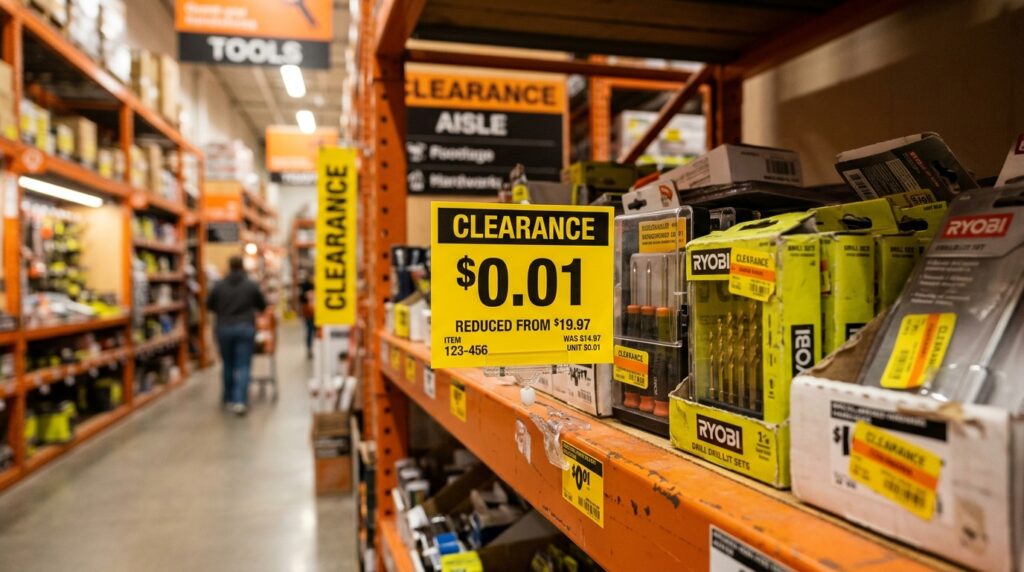
A penny item is a product that has been marked down through Home Depot’s clearance cycle so many times that it lands at $0.01. It is not a sale. It is not a coupon. It is the last stop on a markdown ladder that most shoppers never notice because it happens quietly, aisle by aisle, store by store.
Here is the part most articles skip. That penny price is not really meant to be sold to you at all. According to shopper reporting collected by Everyday Home Repairs, a penny tag is mainly an internal signal that tells associates an item has passed its final markdown, and technically a cashier is not supposed to sell it at that price without a manager stepping in first. Some cashiers scan it through anyway. Some call a manager over. Some registers reject the sale outright. That inconsistency is exactly why penny hunting feels like a game of chance, even though the system behind it is very predictable.
Home Depot has never published or endorsed an official penny list, and coverage from The Krazy Coupon Lady notes that many penny items were probably meant to be pulled from shelves long before ever reaching that one-cent price. So when you go hunting, you are not chasing a promotion. You are looking for a gap in the system that has not been caught yet.
The Real Price Tag Code: How Markdowns Actually Work
If you want to know how to find penny items at Home Depot, you need to learn the language of the tags first. This is the single most useful section in this whole guide, so read it twice if you need to.
Home Depot clearance items are marked with yellow tags, and the price itself tells you exactly where a product sits in the markdown cycle.
| Price Ending | What It Means | What You Should Do |
|---|---|---|
| .00 | First markdown, still a while before the next drop | Buy only if you need it right now |
| .06 | Second markdown, roughly a fifty percent discount | Worth grabbing if the deal already looks good |
| .03 | Final markdown before removal | Grab it now; this is the lowest it will go |
| .01 | Penny status, item is being pulled from the system | Try scanning it; results vary store to store |
| .88 | Not clearance, a “special buy” promotional price | Can roll into clearance later if it does not sell |
A local news breakdown picked up by Daily Dot explains it simply: a price ending in .06 usually means about a fifty percent discount with roughly six weeks left before another drop, while an ending of .02 or .03 marks the lowest price the item will ever hit, so if you need it, that is the moment to grab it.
I want to be upfront about the .88 pricing too, since a lot of guides skip it. As explained by Groupon’s deal blog, .88 endings are not clearance at all; they are special buy promotional prices on popular items, more like limited-time deals than discontinued stock, though they can eventually roll into real clearance if the product does not sell through. So if you spot a .88 item you like but do not need immediately, there is a chance, though not a guarantee, that it shows up marked down later.
If you are also the type to track small home upgrades while you shop, this same “know the code before you buy” mindset applies to lighting decisions too. We broke down a similar decision in our guide on soft white versus warm white bulbs, which pairs nicely if this hunt turns up discounted light fixtures.

Where Penny Items Actually Hide in the Store
Now that you can read the tags, you need to know where to point your eyes.
- End caps in the middle of the store. Clearance tends to cluster on the endcaps of aisles around the middle sections rather than near the entrance.
- Damaged or open box carts. These get parked near customer service or tucked into back corners of a department.
- Seasonal transition zones. Garden, holiday decor, and outdoor furniture rotate hard by season, creating the most markdown activity of any department.
- Back stock shelves near the top of aisles. Associates sometimes push slow-moving clearance up high to free space below.
- Overstock bays near lumber or the garden center. According to ManMadeDIY, you usually will not spot these tags at eye level in the main aisles, so check the less traveled parts of the store, including clearance bays tucked near lumber or garden sections that can look messy but often hide the best final markdowns.
Every store organizes clearance a little differently. A detailed breakdown from Penny Pinchin’ Mom points out that each location handles clearance on its own terms, with some stores scattering yellow-tagged items throughout while others keep a dedicated clearance section. That means your first trip to a new store is really a scouting trip. Walk the whole perimeter once, note where clearance tends to sit, and every visit after that moves faster.
Timing Your Trip: Days, Hours, and Seasons That Matter
This is where a lot of penny hunters leave easy wins on the table. Timing is not superstition here; it lines up directly with how retail markdown cycles and overnight restocking actually work.
Best days to go. Tuesday through Thursday tend to be the quietest shopping days at most locations, according to a full seasonal breakdown from Endless, which means less competition and more time to scan items without feeling rushed.
Best time of day. Early morning trips give you the best shot at catching freshly marked-down items before other shoppers get there first. Most locations open around 6 AM, and those first hours tend to have the least foot traffic.
Best time of month. The end of the month is when stores often push through additional markdowns to hit inventory targets, which makes the last week of each month a prime window for penny hunting.
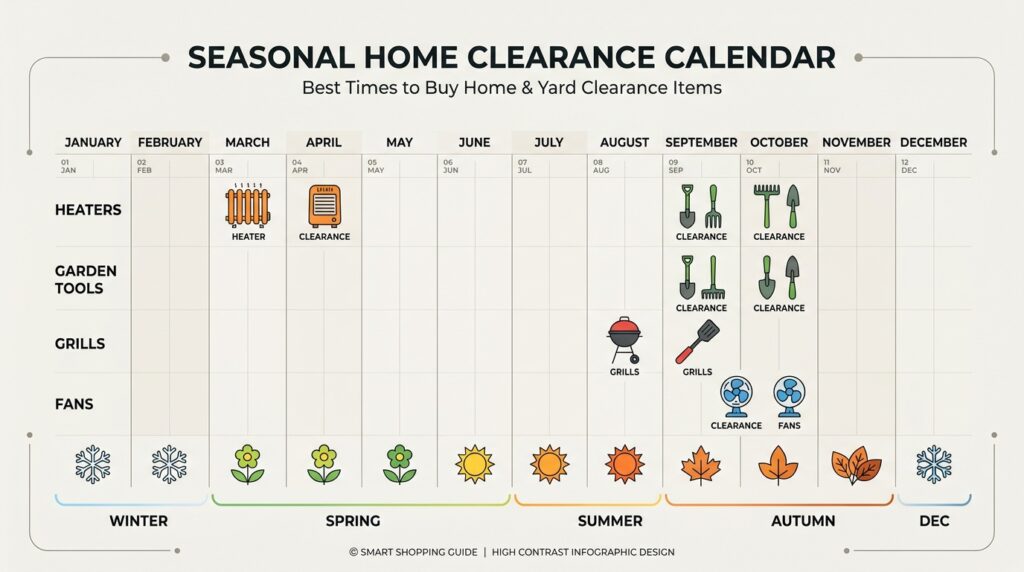
Seasonal patterns worth building your calendar around:
| Time of Year | What Tends to Hit Clearance |
|---|---|
| January to February | Holiday decor, winter items, space heaters |
| March to April | Snow removal equipment, winter garden supplies |
| May to June | Early spring decor, first wave garden items |
| July to August | Spring and summer seasonal goods, grills, patio furniture |
| September to October | Summer clearance, fans, air conditioners |
If you are shopping the outdoor and garden clearance window, it is worth pairing that trip with a plan for what you are actually building. We put together sizing guidance in our post on choosing the right size garden shed for your backyard, which comes in handy if you find discounted shed hardware or storage accessories during a fall clearance run.
How to Find Penny Items at Home Depot Using the App
This step separates a lucky guess from a confirmed find, and it answers one of the most searched versions of this question: how to find penny items at Home Depot online and through the app.
- Open the Home Depot app before you leave the clearance aisle.
- Scan the barcode of any item that looks like a clearance candidate.
- Compare the scanned price against the shelf tag price. Sometimes the tag has not caught up with the system yet.
- If you are unsure whether an item truly rings up at a penny, scanning the barcode is really the only reliable way to confirm it before checkout.
- Watch for yellow stickers on the shelf or product as your first visual cue before you even pull out your phone.
A quick reality check here. Home Depot does not run this as a marketing feature. These markdowns are never promoted anywhere; you will not see them in a weekly ad, on the website, or in an email newsletter, because the system exists purely as an internal inventory tool. That is exactly why the app scan step matters so much. It is the only official confirmation you have before you commit to a purchase.
If you are into small tool upgrades in general, our tools and hardware category covers a lot of the areas where clearance markdowns show up most often, so it is worth a browse before your next trip.
Home Depot Penny Items Online, Reddit, and Community Lists
A lot of people search for how to find penny items at Home Depot online because walking every aisle in every store is not realistic. Communities have built tools specifically for this.
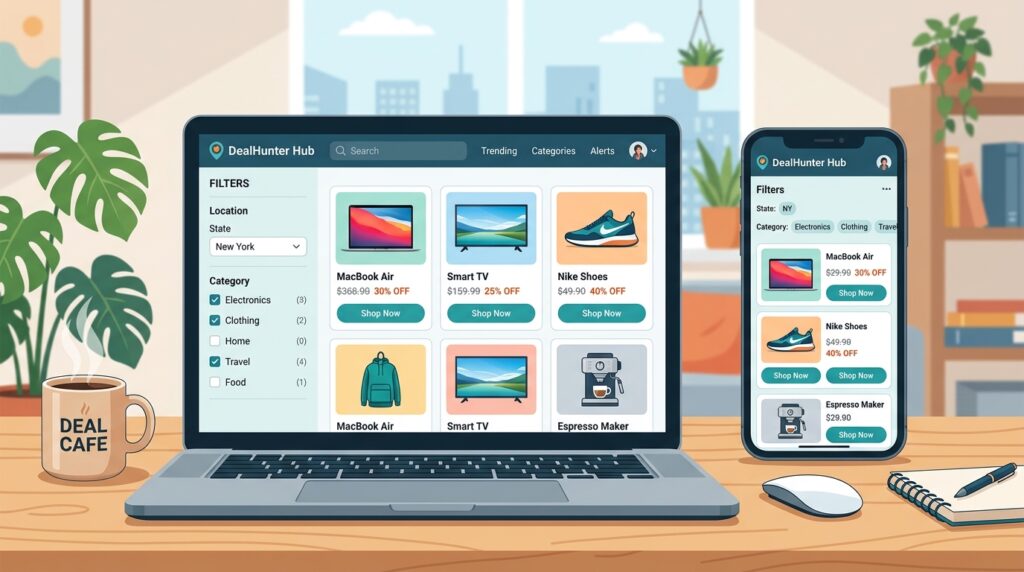
There are dedicated penny hunting communities that crowdsource live finds. One community built around Home Depot one-cent items, tracked by PennyCentral, has grown past 140,000 members who submit finds that get organized into a searchable list you can filter by state, date, and SKU, usually updated within about five minutes of a new submission.
That said, treat these lists as leads rather than guarantees. They describe themselves honestly as a live lead board, not a guaranteed checkout list, which means you should always verify the price in store before you commit to buying. Pricing can vary widely by region and even by individual store, which is why the app scan step from the last section still matters even after you find a promising lead online.
For the how to find penny items at Home Depot Reddit crowd specifically, deal-focused subreddits and Facebook groups tend to move faster than blogs because members post photos of receipts and tags in near real time. Search directly within those communities for your state name plus “penny” to narrow results down to your region.
How to Find Penny Items at Home Depot Canada
If you are shopping across the border, keep in mind that policies and markdown cycles are set locally, and Canadian stores run their own clearance timing independent of the US system. The core strategy does not change. Look for yellow tags, learn the price ending code, check end caps and back corners, and scan with the app before checkout. What does change is availability of tips. Fewer hunters means fewer crowdsourced reports for Canadian locations, so leaning on in-person scouting matters even more north of the border.
Home Depot Penny Items vs Lowe’s Clearance: What’s Different
If you shop both stores, you will notice the systems are not identical.
| Feature | Home Depot | Lowe’s |
|---|---|---|
| Tag color | Yellow | Varies by region, often red or orange |
| Markdown code | Price endings like .06 and .03 | Different regional codes, less standardized publicly |
| Penny stage | Exists, inconsistent store to store | Also exists, similarly inconsistent |
| Official penny list | None | None |
| Best confirmation method | App barcode scan | In-app or self-checkout scan |
Neither retailer publishes an official penny program, so the same rule applies everywhere you shop. The confirmed price at the register, not the shelf tag, is the only price you can actually count on.
Is It Free? Understanding the “For Free” Version of Penny Hunting
People searching how to find penny items at Home Depot for free usually want to know if there is a cost to any of this. There is not. Walking the clearance aisles costs nothing. The Home Depot app is free to download and scan with. Community penny lists are typically free to browse, with some offering optional paid tiers for extra features like saved alerts. The only real cost is your time and gas money if you are driving between multiple stores chasing leads.
Which Categories Turn Up the Most Penny Finds
Not every department clears out the same way. Based on the seasonal patterns above and repeated shopper reports, a few categories consistently produce the strongest results.
- Seasonal decor and lighting. Holiday items, string lights, and patio fixtures move through markdowns fast once the season ends.
- Garden and outdoor tools. Rakes, hoses, and planters that did not sell through spring often show up marked down by early fall.
- Paint and hardware accessories. Discontinued color mixes and odd-sized hardware packs are common late-stage clearance candidates.
- Small appliances and fans. Seasonal cooling and heating units are some of the most talked about penny finds online, partly because they hold real resale value.
- Storage and organization bins. Overstocked or discontinued sizes tend to sit on clearance the longest before hitting a penny.
Knowing which departments to prioritize saves you from wandering the entire store on every single visit.
Common Mistakes First Time Penny Hunters Make
A few habits quietly ruin most first attempts at penny hunting.
- Assuming the shelf tag is final. Tags lag behind the system price constantly. Always scan before you get excited.
- Shopping only on weekends. Weekend crowds mean picked-over shelves and staff who are too busy to help sort out a pricing question.
- Ignoring damaged box sections. Some of the best final markdowns sit quietly in the open box or damaged packaging carts near customer service.
- Getting frustrated at the register. Arguing with a cashier rarely changes the outcome and makes future trips to that store more awkward.
- Buying without a use case. Grabbing everything that scans low leads to clutter fast, which is why the filter in the next section matters.
Expert Tip: Use a “Worth It” Filter Before You Buy
Experienced penny hunters do not grab everything that rings up at a penny. They filter first. A practical framework worth borrowing goes like this. Keep an item if it solves a real need in your home within the next 30 days, if you already have someone specific in mind who will use it soon, or if a local school or nonprofit can use it quickly. Skip it if there is no clear use case, if it is a bulky storage burden compared to its likely value, or if it shows damage, missing parts, or a high return risk.
I like this filter because it turns penny hunting from clutter collecting into intentional shopping. You are not trying to fill your garage. You are trying to make good decisions faster than the next shopper.

Pros and Cons of Penny Hunting at Home Depot
Pros
- Genuine savings on functional home goods, tools, and seasonal items
- A fun, almost treasure hunt-style shopping experience
- Great for stocking a rental property, workshop, or garden on a tight budget
- Community lists mean you are not walking in blind
Cons
- Most trips end with zero penny finds
- Store policy on whether cashiers will honor the penny price varies widely
- Items are often damaged, discontinued, or missing pieces
- Requires flexible timing, which is not realistic for every schedule
Most hunts genuinely end with nothing to show for them, and that does not mean you are doing anything wrong. This is a pattern and discipline game, not a guaranteed instant savings method, so go in expecting empty trips and the occasional dead end along the way.
Store Etiquette: Shop Smart Without Causing Problems
A responsible penny hunter does not create headaches for staff or other shoppers. Keep these ground rules in mind.
- Never confront or argue with a cashier who declines to honor a penny price. It genuinely is not their call in most cases.
- Do not move or hide items from shelves for a later visit. That practice is against store policy everywhere.
- Ask a manager politely if you are unsure about a price rather than assuming the worst.
- Leave the clearance area as tidy as you found it so the next associate does not have to redo the whole shelf.
Good penny hunting communities echo the same idea. They are built around practical, community-verified guidance on penny items, clearance patterns, and respectful in-store behavior, and they explicitly do not encourage policy violations, employee confrontation, or misuse of retail systems.
Why Items Enter the Markdown Pipeline in the First Place
Understanding why a product ends up on this path helps you predict where to look next, instead of just reacting to what you happen to see on a shelf.
Discontinued items. When Home Depot stops carrying a product line entirely, every remaining unit across every store enters clearance at roughly the same time. These are usually your best finds because the markdown moves fast and consistently across locations.
Overstock and returns. A store that ordered too much of something, or received a wave of customer returns, needs to clear that inventory to free up shelf and back stock space. These items often start clearance at a smaller discount and take longer to reach a penny.
Seasonal rotation. This is the most predictable category by far. Once fall arrives, summer patio furniture has to go, regardless of how much stock remains. This is why the seasonal calendar earlier in this guide is worth building your shopping trips around.
Damaged packaging. A dented box or torn label does not always mean the product inside is damaged. These items often move through clearance faster simply because they look less appealing on a shelf, which makes them some of the best value finds if you do not mind imperfect packaging.
Recognizing which category a product falls into gives you a rough sense of timeline. Discontinued and seasonal items tend to move through the markdown stages quickly. Overstock and returns tend to linger longer, sometimes sitting at the .06 stage for weeks before anything changes.
Building a Simple Penny Hunting Route for Your Local Store
Once you have scouted a store a couple of times, it helps to turn what you learned into an actual route instead of wandering aimlessly. A route like this works well for most locations.
- Start at the seasonal department nearest the garden center, since it turns over the fastest.
- Walk the end caps down each main aisle, scanning for yellow tags as you go.
- Check the open box or damaged goods area near customer service.
- Swing by the lighting and hardware sections, since small discontinued items often get overlooked there.
- Finish near checkout, where clearance carts sometimes get parked temporarily by staff restocking other areas.
A route like this takes most shoppers under fifteen minutes once they know their store’s layout, which makes it realistic to fit into a normal errand run rather than a dedicated hunting trip.
Frequently Asked Questions
Is it legal to buy penny items at Home Depot?
Yes. If the register scans the item at $0.01 and the cashier processes the sale, it is a legitimate transaction. There is nothing illegal about it, though some stores may choose not to honor the price and mark it up instead.
Why does Home Depot mark items down to a penny instead of just removing them?
It works as an internal inventory flag rather than a sale. Once a product is discontinued, seasonal, overstocked, or has damaged packaging, it enters a markdown pipeline where the price drops in stages over several weeks until it hits one cent, at which point it is essentially cleared to make room for new inventory.
How do I know if a Home Depot near me has penny items today?
There is no way to know for certain without checking in person or through a community list, since crowdsourced penny reports work as a live lead board rather than a guaranteed checkout list. Always verify the price in store before purchasing.
What is the fastest way to find penny items near me?
Combine the two methods in this guide. Start with a community list filtered to your state for leads, then confirm with an app barcode scan the moment you arrive at the store.
Does the Home Depot app show penny prices before I go to the store?
Not directly as a search filter, but you can scan any specific item once you are in the store to confirm its real-time price, which is the most reliable way to check.
Final Thoughts
Learning how to find penny items at Home Depot really comes down to three habits. Learn to read the yellow tag price endings so you know exactly where an item sits in the markdown cycle. Time your trips around quiet weekdays, early mornings, and the last week of the month. And always confirm with an app scan before you get excited about a shelf tag.
You will not furnish an entire house for pennies. But with a little patience and the right system, you will walk out with real savings on things you actually need. If you want more ways to stretch your home budget further, browse our outdoor and garden category for more practical, money-saving home projects.